Welcome to Late Night Retro Television Reviews, a feature where we review some of our favorite and least favorite shows of the past! On Fridays, I will be reviewing SLEDGE HAMMER!, a cop comedy which ran on ABC from 1986 to 1988. The entire series can be found on Prime!
This week, the liberal media comes after Sledge Hammer!
Episode 1.2 “Hammer Gets Nailed”
(Dir by Charles Braverman, originally aired on September 26th, 1986)
“HAMMER!” shouts Lt. Trunk as the episode begins.
Trunk is concerned because nosy news reporter Phil Gumm (Ronnie Schell) wants to do a ride along with Sledge Hammer. The Mayor is thinking about laying off a large percentage of the force. (I guess he’s not that grateful to the police for finding his daughter.) If Hammer screws up on camera, that’ll give the Mayor the excuse that he needs. Doreau is assigned to keep Hammer out of trouble.
So, of course, Hammer screws everything up. After forcing a convenience store thief to eat all of the store’s expired food, Hammer gets into a high-speed chase and crashes his car. Phil Gumm ends up with broken arms and a bad attitude. The Mayor promptly starts laying people off …. including Sledge Hammer!
Hammer gets a job as a crossing guard. (He even continues to wear his suit.) However, when a group of terrorists call in a bomb threat, Hammer is the one who heads down to the clock store to try to disarm it. The bomb is ticking. Unfortunately, so is every clock in the store.
“Go Hammer go!” the people watching chant.
“Go bomb go,” Trunk mutters in his office.
Fortunately, Hammer is able to find and disarm the bomb. The store is saved and so is Hammer’s job.
Yay!
This episode wasn’t quite as funny as last week but it still had plenty of laughs. David Rasche delivers his berserk lines with so much earnestness that they actually start to make a strange sort of sense. When Hammer stepped into the store and saw every clock ticking back and forth, I laughed harder than I’ve laughed in a while.
The important thing is that Hammer outsmarted the media.
Welcome to Retro Television Reviews, a feature where we review some of our favorite and least favorite shows of the past! On Fridays, I will be reviewing St. Elsewhere, a medical show which ran on NBC from 1982 to 1988. The show can be found on Daily Motion.
This week, John Doe No. 6 returns.
Episode 4.7 “Close Encounters”
(Dir by Eric Laneuville, originally aired on November 20th, 1985)
This episode begins with a jolt. Dr. Victor Ehrlich is actually choosing to be ethical as opposed to just kissing up. Ehrlich is currently doing a rotation in plastic surgery, where he’s working with Bobby Caldwell. Caldwell already disliked Ehrlich before Ehrlich even joined the department. Caldwell’s opinion is not improved when he discovers that Ehrlich has talked a patient out of getting an eye tuck that Caldwell recommended. When Caldwell confronts him, Ehrlich argues that the surgery wasn’t necessary and that Caldwell manipulated the man into agreeing because Caldwell’s department is currently on the chopping block. When Ehrlich threatens to go to Dr. Craig, Caldwell sneers. Dr. Craig is the one who personally recruited Caldwell to come to St. Eligius. Ehrlich, on the other hand, is just “the hospital clown.”
Yikes. When Bobby Caldwell was introduced two seasons ago, he was mild-mannered and likable and clearly on the show because Mark Harmon looked good without a shirt on. This season, Caldwell has been arrogant and self-destructive. The fresh scar on his face has become a symbol for the scar on his soul. Personally, I think Bobby is a much more interesting character now. Every soap opera needs a villain and, by the time the fourth season started, St. Elsewhere had definitely become a soap opera.
As for Dr. Craig, he’s not there to talk to Ehrlich because he’s accompanied his daughter-in-law to her hometown in Clinton, New York. Yvonne (Suzanne Lederer) has been in a coma ever since Stephen Craig flipped their car. In this episode, she finally opens her eyes but she still isn’t speaking or mobile. Along with helping to transfer Yvonne to a new hospital, Craig has another reason for going to New York. He’s promised Ellen that he will return with their granddaughter, Barbara. However, when Dr. Craig spends the night there, he discovers that Yvonne’s parents aren’t the backward monsters that he assumed they were. He sees that they love Barbara and that they are taking care of her. Though he doesn’t say it, one gets the feeling that Dr. Craig realizes that Ellen mostly just wants custody of Barbara so she can have a part of Stephen. In New York, Dr. Craig finally starts to understand why Stephen and Yvonne designated Yvonne’s parents as Barbara’s legal guardians. Dr. Craig returns to Boston without Barbara. “I hate you for this, Mark,” Ellen says.
Meanwhile, astronaut Col. Chuck Cochrane (David Ackroyd) has decided that his seizure and subsequent dream were all signs from God telling him not to return to space. NASA, concerned that Cochrane is going to give the program a bad name, sends Captain Gloria Neal (Betty White) to the hospital. (Gloria mentions that she was sent by Major Healey, which is undoubtedly a reference to Roger Healey from I Dream of Jeannie.) Because Gloria went to medical school with Dr. Westphall, NASA thinks that she’ll be able to influence him to discharge Cochrane from the hospital so that he can be taken back to Walter Reed and forced to rejoin the space program. Westphall, however, decides to support Dr. Morrison’s decision not to discharge Cochrane. Westphall goes on to tell Gloria that she’s not much of a doctor anymore. She’s just a PR agent for the government. “So, I guess we won’t be sleeping together,” Gloria replies.
Ugh, Westphall. I know that I spent a lot of time complaining about Dr. Westphall, but this episode really epitomized everything that I dislike about the character. When he’s not depressed, he’s self-righteous. Whenever anyone disagrees with him, he starts talking about his experiences volunteering at a clinic in Ethiopia, as if that experience automatically makes his opinion superior to anyone else’s. In this episode, he decides that it’s his place to judge Gloria’s life decisions. Seriously, Westphall is the worst!
Finally, John Doe No. 6 (Oliver Clark) is back. He’s recovered from the surgery that initially left him comatose. He can speak and move again but he still has amnesia. He’s back in the psych ward. While watching television, he suddenly realizes who he is. He’s Mary Richards from The Mary Tyler Moore Show! He decides that a fellow patient, Mr. Carlin (Jack Riley), is Mary’s friend Rhoda. Dr. Auschlander is Mary’s co-worker, Murray. He tries to throw a party in the psych ward and it’s awful because Mary’s parties are always awful! When he sees Gloria Neal walking down the hospital hallway, he thinks that she’s Sue Ann Nivens, the happy homemaker! “Excuse me?” Gloria asks, confused.
Of course, Betty White did play Sue Ann Nivens on The Mary Tyler Moore Show. (St. Elsewhere itself was produced by Mary Tyler Moore’s production company.) Even more interesting, however, is that Jack Riley previously played Mr. Carlin on The Bob Newhart Show. Oliver Clark also appeared on The Bob Newhart Show, playing Mr. Herd, who was a member of the same therapy group as Mr. Carlin. As such, viewers who had previously seen The Bob Newhart Show (whether during its original run or, if you’re like me, via reruns) would have known that John Doe No. 6 was actually Mr. Herd. The episode’s biggest mystery is easily solved by those with a knowledge of television history. At the same time, it’s also interesting to note that Mr. Carlin presumably recognizes John Doe No. 6 but has yet to let anyone know.
It makes for a bizarre but enjoyable episode. Bobby is turning into a monster. The Craigs are headed for divorce. Dr. Westphall just insulted Betty White. But even with all that, it’s hard not to get caught up in John Doe No. 6’s joy. He’s going to make it after all!
Welcome to Late Night Retro Television Reviews, a feature where we review some of our favorite and least favorite shows of the past! On Thursdays, I will be reviewing Hunter, which aired on NBC from 1984 to 1991. The entire show is currently streaming on Tubi and several other services!
This week, Hunter helps an ex-girlfriend.
Episode 1.17 “The Last Kill”
(Dir by Bruce Kessler, originally aired on April 20th, 1985)
Internationally famous model Christine Le Masters (Stephanie Blackmore) thinks that her husband, Kerry (Madison Mason), is cheating on her. Christine tells Kerry that she’s heading to the airport to catch a flight for Europe and a new ad campaign. Instead, she follows Kerry when he heads over to a cheap motel. Christine is expecting to catch her husband with his mistress. Instead, she finds a prostitute who has been shot in the back of the head by a hitman.
Not wanting her husband to know that she lied about leaving the country, Christine goes to an ex-boyfriend for help. The name of that ex-boyfriend? Rick Hunter.
Hunter and McCall do investigate and discover that the prostitute is just one of many low-level criminals who have apparently all been killed by the same assassin. Hunter uses his little-mentioned mob contacts to dig into the murders and finds out that there’s a hitman named George who has been killing everyone involved in a plot to blackmail a mob boss. However, George appears to be doing this out of the kindness of his heart. Hunter suspects that George is just trying to get close to the mob boss so that he can kill him. He also suspects that George is actually Kerry Le Masters!
Is Hunter just jealous that Kerry is married to his ex-girlfriend, or is he correct about Kerry being a killer? It turns out that both things can be true! Don’t worry, though. Even though Kerry is holding a gun at his wife’s head at the time, Hunter is still able to shoot him without hurting Christine. Hunter tells police dispatch to send “the coroner’s wagon.” The police dispatcher doesn’t sound surprised. Hunter kills an average of three people a day.
This episode never really made it clear why Kerry would decide to become a hitman in the first place. I mean, he’s already rich. But I did appreciate that the Hunter family’s mob ties were mentioned again and that we got to learn a little about his past. When Kerry told Hunter that the two of them were heading for a standoff that only one would survive, Hunter replied, “Works for me.” It was a cool moment on an otherwise standard episode of Hunter.
Welcome to Retro Television Reviews, a feature where we review some of our favorite and least favorite shows of the past! This Thursday, I will be reviewing Harry’s Battles, which aired its only episode on ABC in 1981. The show can be found on YouTube!
Episode 1.1 “Pilot”
(Dir by Adam Rafkin, aired on June 8th, 1981)
Harry Fitzsimmons (Dick Van Dyke) is a grocery store manager who doesn’t understand why life has to be so complicated. During the opening credits, we watch as a gas station attendant (Joe Regalbuto) changes the price of unleaded while Harry is filling up his tank. We watch as the car-wash guy (Joe Regalbuto again) changes the radio station in his car. We watch as a postman (played by, you guessed it, Joe Regalbuto) clumsily tosses Harry’s package into the street after Harry tells him that it’s fragile.
Harry is easily frustrated, and anyone who has ever had to deal with any sort of bureaucracy will be able to understand where he’s coming from. In this episode, he and his wife, Mary Carol (Connie Stevens), are planning a night at the theater with their best friends, Herb (Danny Wells) and Diane (Marley Sims). They’re going to see Kate Jackson in Evita. But then Mary Carol gets something in her eye, and Harry decides to run her by the emergency room to get it checked out. It should only take a few minutes….
Two hours later, Harry is demanding to know where his wife is, the nurse on duty (Brooke Alderson) is more interested in talking on the phone than talking to him, and Dr. Harwood (Joe Regalbuto) is making jokes like, “We may lose patients on the operating table but not in the halls.”
It turns out the ER is short-staffed because everyone is at a party for the departing head of psychiatry. Harry talks to the incoming head of psychiatry, Dr. Jorgensen (David Ruprecht), who starts talking about the wrath that he’s going to bring down on the world. Only Harry seems to notice that the incoming head of psychiatry is apparently insane.
When Dr. Harwood announces that he’s found Harry’s wife, he rolls out an elderly woman (Florence Halop) in a wheelchair. When Harry insists that the woman is not his wife, both Dr. Harwood and the nurse reply that the woman is named “Mrs. Fitzsimmons” and therefore she is Harry’s wife. Eventually the woman announces that she’s escaping and rolls out of the hospital. Only then does it occur to the doctor and the nurse that the woman might not be Harry’s wife despite her last name. They have a good laugh over it.
When Mary Carol is finally found, she’s on a gurney and can barely walk or talk because of the painkillers she’s been given for her broken collarbone. “See,” Harwood says, looking at the X-ray, “look at that finger-shaped bone!” “That is my finger!” Mary Carol finally manages to say. Harry loses it and accuses Dr. Harwood of being incompetent. The doctor responds that not everyone can afford to go to the theater and that he is proud to be a doctor for those people. All of the patients in the ER applaud….
I’ve watched a lot of pilots for this feature and most of them are pretty bad. Harry’s Battles is actually really good and still funny and relatable nearly 45 years after it first aired. (It’s amazing to think that Dick Van Dyke, who was in his fifties when he did this pilot, is still with us.) Harry’s anger is the anger that everyone feels while dealing with incompetence. His frustration with paperwork and bureaucratic nonsense remains relatable. If anything, it’s probably even more relatable today than when this pilot first aired. We live in an overly regulated society and, sadly, there are a lot of people currently running for office who want to make things even more regulated. Dick Van Dyke may be a DSA supporter, but Harry Fitzsimmons definitely would have known better. I also really like the idea of Joe Regalbuto playing everyone who annoys Harry. Watching this pilot, it was easy to imagine week after week of various Regalbuto characters making Harry’s life difficult.
Sadly, this pilot was not turned into a television series. If Harry’s Battles had become a series, it probably would have been a classic. As it is, we’ve got this one episode that encourages us to consider what could have been.
“I’ve been accused of being a lot of things, inarticulate ain’t one of them.” — Boyd Crowder
Boyd Crowder, as portrayed by Walton Goggins in Justified, stands as one of television’s most compelling villains, a character whose depth and complexity elevate him far beyond the typical antagonist. What makes Boyd so fascinating is his multidimensionality—he is at once a criminal mastermind, a charismatic preacher, and a man deeply rooted in the moral ambiguities of his Kentucky upbringing. Unlike one-dimensional villains who exist solely to oppose the hero, Boyd is a fully realized character with his own code of honor, twisted though it may be. His intelligence, wit, and ability to manipulate those around him make him a constant challenge for Raylan Givens, the show’s protagonist. Boyd doesn’t just oppose Raylan; he understands him, often mirroring his quick thinking and sharp tongue, which creates a dynamic tension that drives the series forward.
What truly sets Boyd apart is his ability to evolve throughout the series. He begins as a white supremacist with a violent streak, but his character arc takes him through a journey of self-discovery, reinvention, and even moments of redemption. Walton Goggins’ performance is a masterclass in balancing menace with charm, making Boyd both terrifying and oddly likable. His speeches, often laced with biblical references and folksy wisdom, reveal a man who sees himself as a kind of outlaw philosopher, justifying his actions through a warped moral lens. This intellectual and verbal sparring with Raylan—another man of sharp intellect and a complicated past—creates some of the show’s most electric scenes. Their relationship is less about good versus evil and more about two sides of the same coin, each man representing a different path taken from the same starting point.
Boyd’s role as a foil to Raylan is central to Justified’s appeal. Where Raylan is the cool, collected lawman who operates by a strict personal code, Boyd is the chaotic force who bends the rules to his will. Yet, both men share a deep connection to Harlan County and its culture of violence, loyalty, and survival. Their mutual respect, and even affection, adds layers to their rivalry. Boyd doesn’t just hate Raylan; he enjoys their cat-and-mouse game, often taunting him with a grin that suggests he’s always three steps ahead. This dynamic keeps the audience guessing—who will outsmart the other? Their confrontations are less about physical violence and more about psychological warfare, with Boyd frequently getting under Raylan’s skin by exposing his vulnerabilities.
Another aspect of Boyd’s greatness as a villain is his unpredictability. Just when it seems he’s cornered, he finds a way to flip the script, whether through sheer audacity, manipulation, or brute force. His ability to command loyalty from his followers, even as he betrays and discards them, speaks to his magnetic personality. Walton Goggins imbues Boyd with a physicality that’s both intimidating and mesmerizing—whether he’s calmly negotiating or exploding into rage, every movement feels deliberate and dangerous. This unpredictability makes him a constant threat, but it also makes him endlessly watchable. The audience is drawn to him, even as they root for Raylan to bring him down.
Ultimately, Boyd Crowder’s brilliance as a villain lies in his humanity. He’s not a monster; he’s a man shaped by his environment, his past, and his own flawed sense of justice. His relationship with Raylan is the heart of Justified, a dance between two men who are more alike than either would care to admit. Boyd forces Raylan to confront his own demons, while Raylan represents the path Boyd could have taken—if only he had chosen differently. Their final confrontation is a testament to the power of their dynamic: it’s not just about winning or losing, but about the legacy each leaves behind. Boyd Crowder, as written and performed, is a villain for the ages—one who challenges, fascinates, and lingers in the mind long after the screen fades to black.
“You make me pull, I’ll put you down.” — Raylan Givens
U.S. Marshal Raylan Givens stands as one of television’s most compelling modern heroes, a character who embodies the contradictions of the American frontier in a contemporary setting. Created from the imagination of crime novelist Elmore Leonard, Raylan is a man who wears a Stetson and cowboy boots in an era of SUVs and cell phones, yet this anachronistic quality is not mere affectation but a statement of his character’s core philosophy. He seems to be a type of lawman born a century late, a man who would appear far more at home in the untamed frontier of the Old West than in the boardrooms and courthouses of modern Kentucky. He is an old-school lawman who lives by a personal code, a man who is as quick with a dry, cutting quip as he is with the Glock 17 he carries on his hip. His introduction in the series pilot, a showdown in a Miami restaurant, immediately establishes him as a man who operates on the edge, a true-blue hero who is nevertheless irresponsible, impatient, and troubled by his past. It is this tension between his heroic aspirations and his human flaws that makes him so fascinating to watch.
Raylan’s compelling nature is deeply rooted in the fact that he is not a clean-cut paragon of virtue but a man driven by a profound, barely concealed rage. As his ex-wife Winona observes, he is the angriest man she has ever known. This anger is the product of his harsh upbringing in Harlan County, Kentucky, where he was raised by a criminal father, Arlo, a man Raylan has spent his entire life trying not to become. The series constantly examines whether the sins of the father are visited upon the son, forcing Raylan to confront his own inherited demons. He suppresses his fury behind a calm, self-effacing demeanor, but it erupts in acts of incredible violence, which are almost always technically justified by his badge. This internal conflict makes him a psychologically rich character, as he struggles to be a good guy while wrestling with a brutish nature that often compels him toward the very lawlessness he is sworn to fight.
The brilliance of Raylan’s characterization is further enhanced by the world he inhabits, particularly his fraught relationship with his nemesis, Boyd Crowder. Boyd is not merely a villain but a mirror image of Raylan, a man who took a different path from the same origins. Their bond, forged in the coal mines of their youth, creates a relationship of mutual respect, intellectual equality, and inevitable, tragic conflict. The show was built around the idea that he and Boyd took opposite paths from the same origin. Where Raylan represents law tainted by hubris, Boyd represents crime tempered by a strange moral code, and their philosophical debates and cold-blooded confrontations elevate the show beyond a simple procedural. The viewer is left uncertain whether these two men are fated to kill one another or save one another, a tension that is central to the show’s enduring appeal.
This anachronistic quality is what truly separates Raylan Givens from the archetypal Western heroes of old, yet it also positions him as their spiritual heir. He is more akin to legendary Old West lawmen such as Wyatt Earp, Bass Reeves, and Seth Bullock—men who operated in territories where the law was often a suggestion and justice was dispensed at the barrel of a gun. Like Earp, Raylan possesses a quiet, intimidating presence that commands respect without demanding it. Like Reeves, he navigates a morally ambiguous world where the line between right and wrong is frequently blurred by personal history and regional loyalties. And like Bullock, he is a man of few words but swift action, quick to anger and quicker to draw. Raylan may wear a modern suit and carry a contemporary sidearm, but his soul belongs to the dusty streets of Dodge City or Deadwood. As his character evolves, especially in the revival Justified: City Primeval, he becomes a man fighting to come to terms with aging, fatherhood, and obsolescence, further testing whether his brand of frontier justice can apply beyond his home turf. This evolution ensures that the gunslinger myth is retooled for a modern audience, proving that the values of independence and ruggedness are not geographical but a matter of attitude.
Ultimately, Raylan Givens is a compelling hero because he refuses to be a simple one. He is a man who perpetually subverts his own archetype, a lawman who bends the law, a gentleman who is polite but ready to be brutal at the drop of a Stetson, and a loner who is inextricably tied to the people and place he desperately wants to escape. He is a hero for a cynical age, a man who makes the audience wrestle with the question of whether the ends truly justify the means—a question that is the very title of his show. By embodying the contradictions and complexities of modern life while carrying the spirit of the Old West in his bones, Raylan Givens proves that the Western is not dead; it simply evolved into a man in a Stetson, walking the thin line between law and justice.
“You do a good job of hiding it. And I suppose most folks don’t see it. But honestly? You’re the angriest man I have ever known.” — Winona Hawkins (describing Raylan Givens)
Justified is one of those rare TV shows that feels like a perfectly aged whiskey—smooth, rich, and with a kick that lingers long after you’ve finished a glass. Adapted from Elmore Leonard’s stories featuring the sharp-shooting, quick-witted U.S. Marshal Raylan Givens, the FX series is a masterclass in character-driven storytelling, sharp dialogue, and the kind of moral ambiguity that makes you question who you’re really rooting for. At the heart of it all is Timothy Olyphant as Raylan, a man who carries the weight of his past like a well-worn leather jacket, and Walton Goggins as Boyd Crowder, the charismatic, Bible-quoting criminal who might just be the most compelling villain—or antihero—you’ve ever seen on screen.
What makes Justified stand out in a sea of crime dramas is its refusal to take itself too seriously, even when the stakes are life-or-death. The show thrives on its dialogue, which crackles with the kind of wit and rhythm you’d expect from Leonard’s work. Raylan’s dry, understated humor is a constant delight, whether he’s trading barbs with a suspect, outsmarting a room full of criminals, or just trying to keep his cool in the face of his own family’s dysfunction. Olyphant delivers every line with a mix of charm and menace, making Raylan feel like a man who’s seen it all but hasn’t lost his sense of humor—or his moral compass, however bent it might be. There’s a scene early in the series where Raylan gives a criminal 24 hours to leave town, and the way Olyphant sells the quiet intensity of that moment is a testament to his ability to command the screen without raising his voice. He’s the kind of hero who doesn’t need to shout to be heard.
But as good as Olyphant is, Justified might just belong to Walton Goggins as Boyd Crowder. Boyd is the kind of character who could’ve been a cartoonish villain in lesser hands, but Goggins turns him into something far more fascinating. A former coal miner turned criminal mastermind, Boyd is equal parts philosopher, showman, and cold-blooded killer. He quotes the Bible one minute and pulls a trigger the next, all while delivering monologues that somehow make his twisted logic sound almost reasonable. Goggins’ performance is electric, and his chemistry with Olyphant is the kind of alchemy that elevates the entire series. Their dynamic is a dance—sometimes a waltz, sometimes a knife fight—where neither man is entirely sure who’s leading. Boyd isn’t just a thorn in Raylan’s side; he’s a dark reflection of him, a man who also grew up in the same rough-and-tumble world of Harlan County, Kentucky, but chose a different path. Their rivalry is the backbone of the show, and every scene they share is a masterclass in tension and subtext.
Then there’s Ava Crowder, Boyd’s sister-in-law and a force of nature in her own right, portrayed with fierce intelligence by Joelle Carter. Ava’s relationship with Boyd is a rollercoaster of love, hate, and everything in between. Their dynamic is just as compelling as the one between Raylan and Boyd, filled with a volatile mix of loyalty, betrayal, and an undeniable connection that neither can fully shake. Ava’s journey from a woman trying to escape her family’s criminal past to a power player in her own right is one of the show’s most compelling arcs. She’s tough, resourceful, and just as morally complex as the men around her, and her interactions with Boyd crackle with the same energy and tension as his showdowns with Raylan. Whether they’re working together, scheming against each other, or caught in some messy in-between, their relationship adds another layer of depth to the show’s already rich tapestry of characters.
The supporting cast is just as strong, filled with characters who feel like they’ve been lifted straight out of a Leonard novel. There’s Art Mullen, Raylan’s boss and the closest thing he has to a father figure, played with gruff warmth by Nick Searcy. And let’s not forget the various criminals, informants, and eccentric locals who populate Harlan County, each one memorable in their own right. Whether it’s the hilariously unhinged Dickie Bennett or the stoic, loyal Limehouse, the show’s roster of side characters ensures that every episode is packed with personality.
What’s so refreshing about Justified is that it never feels the need to over-explain itself. The dialogue is sharp and efficient, often delivering character development and plot twists in the same breath. The show trusts its audience to keep up, and it rewards that trust with some of the most satisfying writing on television. The banter isn’t just clever—it’s purposeful, revealing layers of the characters and their relationships without ever feeling like exposition. And the action? It’s as tight and precise as Raylan’s aim. The shootouts are sudden and brutal, but they’re never gratuitous. Every pull of the trigger feels earned, and the tension leading up to those moments is often as gripping as the violence itself.
The setting of Harlan County is almost a character in itself. The show paints a vivid picture of a place where the law is more of a suggestion than a rule, and where family loyalty often trumps justice. The rugged, coal-dusted landscape mirrors the moral grayness of the stories being told. This isn’t a world of clear-cut heroes and villains; it’s a world where everyone has their own code, and where the line between right and wrong is as blurry as the smoke from a freshly fired revolver. Raylan himself is a product of this environment, and his struggle to reconcile his past with his present is one of the show’s most compelling threads. He’s a man who left Harlan to become a marshal, but Harlan—and its ghosts—never really left him.
One of the show’s greatest strengths is its ability to balance humor and darkness. Even in its grimmest moments, Justified never loses its sense of fun. The writers have a knack for undercutting tension with a well-placed joke or a bit of absurdity, and the result is a show that’s as entertaining as it is thought-provoking. Whether it’s Raylan’s deadpan reactions to the chaos around him or Boyd’s theatrical antics, there’s always a moment to lighten the mood, even when the stakes are at their highest. This balance keeps the show from ever feeling too heavy, and it makes the darker moments hit even harder when they do arrive.
If there’s one thing Justified doesn’t get enough credit for, it’s its consistency. Over six seasons, the show rarely misfires. The writing remains sharp, the performances stay top-notch, and the stories continue to surprise. Even when it dips into more serialized storytelling in its later seasons, it never loses sight of what makes it special: the characters and their relationships. And when the series finally reaches its conclusion, it does so in a way that feels both satisfying and true to everything that came before. There are no easy answers in Justified, no neat bows tied around its themes. Instead, it leaves you with the sense that life—and justice—is messy, complicated, and often unfair.
At its core, Justified is a show about men and women shaped by their pasts, trying to carve out a future in a world that doesn’t always make it easy. Raylan Givens is a hero, but he’s not a saint. Boyd Crowder is a villain, but he’s not without his own twisted sense of honor. Ava Crowder is a survivor, navigating a world where loyalty is a currency and trust is a luxury. The beauty of the show is that it lets these characters exist in all their complexity, never forcing them into boxes they don’t fit into. And with dialogue that snaps like a twig underfoot and performances that bring every word to life, it’s a series that’s as rewarding to revisit as it is to experience for the first time. If you’re a fan of stories where the characters are as rich as the plot, and where every line of dialogue feels like it’s been polished to a shine, then Justified is the kind of show you’ll want to savor. It’s a modern classic, plain and simple.
Welcome to Late Night Retro Television Reviews, a feature where we review some of our favorite and least favorite shows of the past! On Wednesdays, I will be reviewing 1st and Ten, which aired in syndication from 1984 to 1991. The entire series is streaming on Tubi.
The undefeated season continues!
Episode 4.13 “The High and Mighty”
(Dir by Stan Lathan, originally aired on December 28th, 1988)
In this week’s episode, we watch as the Bulls fly to and then from their latest game.
On the flight to the game, Denardo worries about whether or not he has what it takes to eventually win the Championship game. (That’s this show’s equivalent of the Super Bowl.) On the flight back, Denardo’s confidence has been restored and he can’t wait to start planning for the big game.
TD Parker (played by OJ Simpson) spends the flight back flirting with a flight attendant. OJ Simpson’s performance in this episode is perhaps the worst that he’s given since he first joined the cast. I think the problem is that Parker is supposed to be drunk and Simpson was incapable of playing any emotion or condition beyond bland amiability.
Bubba is terrified of flying and has a nightmare that Mad Dog is flying the plane.
Zagrib and a ringer (James Hampton) hustle all of the players in a poker game on the first flight. On the return flight, Zagrib loses all of the money he won and then begs Mad Dog not to kill him. Mad Dog says that he won’t hurt Zagrib because the team needs a good kicker.
Executives Gail (Shanna Reed) and Michael (Paul Tuerpe) argue over where the new Bulls Stadium should be located. Michael thinks that he has found the perfect spot but, on the flight back, Gail lies to him and tells him that the spot used to be a toxic waste dump. Michael calls the head of the Dodds Corporation and tries to take credit for finding the location where Gail wants to put the stadium. This storyline would have been more effective if Michael and Gail were interesting characters.
Finally, Doug falls for an obsessive flight attendant who later tells him that she poisoned his coffee. Doug panics, though he doesn’t actually die or anything so I think she was just lying to him.
I actually kind of liked this episode because I thought it was interesting to see how the members of the team distracted themselves before the game and how they celebrated after they won. This episode was all about big personalities in a confined location and, with the exception of OJ, it featured some fine ensemble work from the cast. Considering how much this show has struggled with finding a consistent tone from not only episode-to-episode but also from scene-to-scene, this was an unusually disciplined episode.
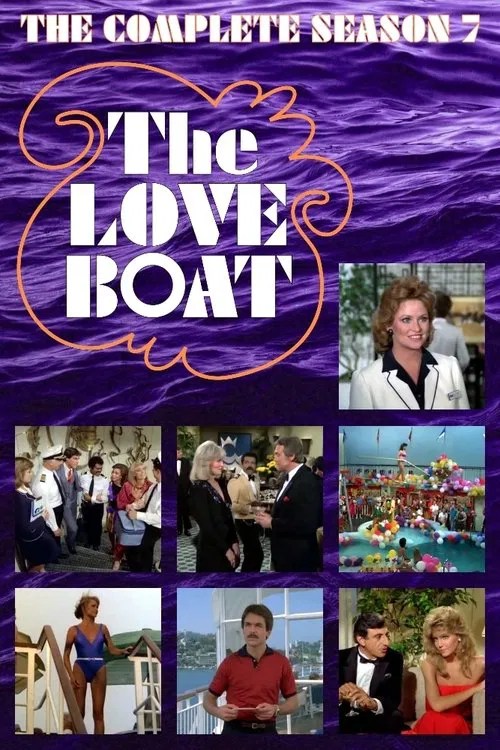
Welcome to Retro Television Reviews, a feature where we review some of our favorite and least favorite shows of the past! On Wednesdays, I will be reviewing the original Love Boat, which aired on ABC from 1977 to 1986! The series can be streamed on Paramount Plus!
It’s love! Welcome aboard, it’s love!
Episode 8.7 “And One to Grow On/Seems Like Old Times/I’ll Never Forget What’s Her Name”
(Dir by Jack Arnold, originally aired on October 27th, 1984)
Ruth Justin (Morgan Brittany) boards the ship with her ex-fiancée, Arthur (Richard Kline). Arthur has been suffering from amnesia ever since Ruth ended their engagement and Ruth hopes that she can help cure his condition by taking a cruise with him. But what if Arthur is just faking his condition because he wants to get back together with Ruth?
Private detective Johnny Bonilla (Alex Rocco) boards the ship with his client, Deborah Marshall (Joan Van Ark). Deborah hired Johnny to help her tack down Larry Peters (Robert Reed), a man who she once had a crush on. But what if Larry is just an overage playboy and Johnny is the one who truly loves Deborah?
Those two stories, while handled competently, were pretty much just standard Love Boat plotlines. The story that one truly remembers from this episode belongs to Vicki and Captain Stubing. Vicki is finally turning 18 and the Captain throws her a big surprise party on the boat. Vicki is happy and the Captain is proud …. or, at least, he is until he catches Vicki with a bottle of champagne. The Captain ends up yelling at Vicki. Vicki runs off, with tears in her eyes. Doc Bricker suggests that it’s time that the Captain tell Vicki the truth about his alcoholism.
Captain Stubing is scared to do so. He fears that, if he tells Vicki that he was an angry drunk who once nearly hit a kid while driving while intoxicated, she’ll lose all respect for him. But, in a wonderfully-acted scene, Stubing does tell her. And, once the shock wears off, Vicki comes to see her father as being more of a hero than ever. She now understands why the Captain doesn’t drink and, importantly, the Captain himself understands why he overreacted to seeing Vicki tipsy.
In the past, I’ve always wondered about whether or not Vicki had a life outside of the ship and, to be honest, I still wonder that. Even when she celebrates her 18th birthday, there’s no one her own age around. Instead, she celebrates with the much older crew and a bunch of elderly passengers. That doesn’t seem quite fair to Vicki. Because The Love Boat is …. well, the Love Boat, it’s easy to ignore the fact that Vicki pretty much gave up her childhood to work on a cruise ship.
That said, Captain Stubing and Vicki’s father-daughter relationship has always, somewhat surprisingly, been one of the strongest elements of The Love Boat and that’s almost entirely due to the performances of Gavin MacLeod and Jill Whelan. One sees that in this episode. Gavin MacLeod was a recovering alcoholic in real life and his performance the scene in which he talks to Vicki about his struggles has an authenticity to it that keeps it from getting mawkish or preachy.
(I cried as I watched. I’m missing my dad today.)
This was a good cruise, even if Ace was strangely not on the boat this week. Where were you Ace?
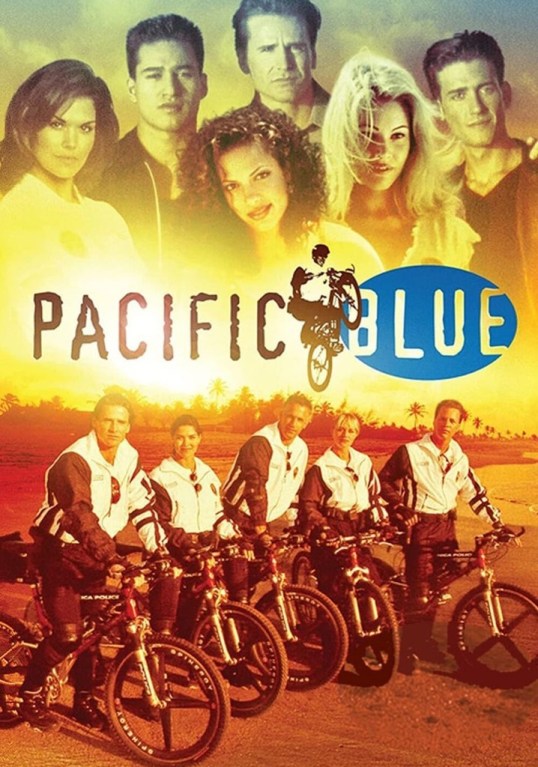
Welcome to Late Night Retro Television Reviews, a feature where we review some of our favorite and least favorite shows of the past! On Tuesdays, I will be reviewing Pacific Blue, a cop show that aired from 1996 to 2000 on the USA Network! It’s currently streaming everywhere, though I’m watching it on Tubi.
This week, Pacific Blue is all about the guest stars,
Episode 4.15 “Stargazer”
(Dir by Sara Rose, originally aired on January 24th, 1999)
When he was younger, Johnny Osiris (Danny Bonaduce) was a teen idol and the star of Stargazer, a show about a singing family that lived in outer space. As an adult, Johnny is a drug addict and an alcoholic who can’t pay his rent and who eventually turns to robbing stores and pharmacies. It’s difficult to be a criminal when everyone immediately recognizes you. However, when both he and Steve Gugliermo (Noah Blake) try to rob the same pharmacy at the same time, they decide to team up. Of course, Steve is hardened master criminal while Johnny is still an amateur.
This was a bit of a melancholy episode. Chris and Cory can’t say Johnny’s name without screaming but they’re still trying to put him in jail. The younger cops don’t have the slightest idea who Johnny was. As for Johnny, his criminal career makes him a celebrity again but the episode still ends with him heading off for prison. Along with Bonaduce, the episode features Susan Olsen as Johnny’s sister, Erik Estrada as Johnny’s lawyer, and Adam West as Johnny’s father. The entire thing is full of actors who probably never thought they would someday be appearing on a show about cops who rode bikes. The whole thing feels sad.
This episode also firmly establishes that Cory and Bobby are now a couple and that everyone pretty much knows about it. Hey, Victor’s dead so I guess Cory might as well move on. Still, some of the scenes of Bobby and Cory making out generated some heat. They’re a good couple so hopefully, the show won’t screw things up.
This episode also featured a discussion of sex-ceptions, i.e. celebrities that you’re allowed to fool around with even if you’re already in a relationship. For Chris, her sex-ception was Johnny Osiris, though it never actually came down to that. For Cory, it was Mel Gibson. Granger selected Winona Ryder, Bobby went with Salma Hayek, and Jamie said Denzel Washington. Myself, I have to wonder why they assumed Salma Hayek or Denzel Washington would have anything to do with a Santa Monica bicycle cop.
Anyway, this is kind of a depressing episode. Johnny was a star but then his entire life fell apart when he wasn’t. He made a few bad decisions and he never recovered. He should have auditioned for Baywatch. Live and learn.