Retro Television Review: Crime Story 1.2 “Final Transmission”


Welcome to Retro Television Reviews, a feature where we review some of our favorite and least favorite shows of the past!  On Mondays, I will be reviewing Crime Story, which ran on NBC from 1986 to 1988.  The entire show can be found on Tubi!
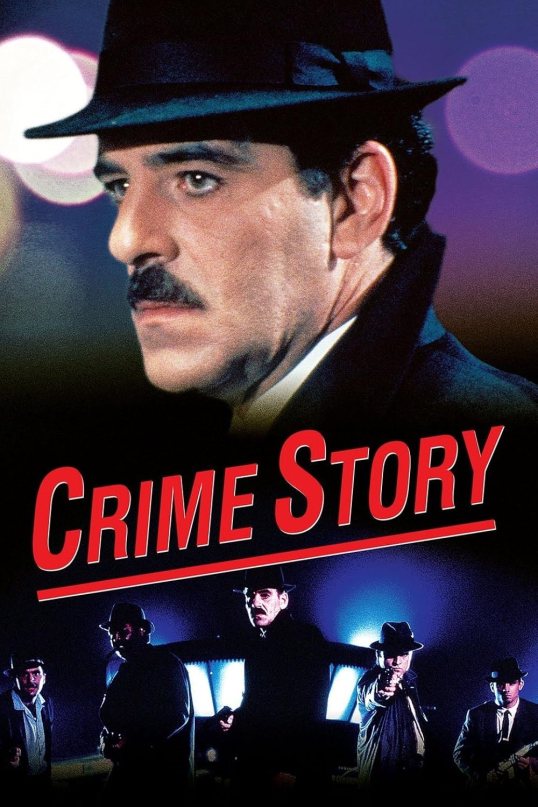
This week, Torello and company search Chicago for a serial killer.

Episode 1.2 “Final Transmission”

(Dir by Leon Ichaso, originally aired on September 19th, 1986)

Mike Torello and the members of the MCU would really like to go after Luca and his crew but, unfortunately, there’s a serial killer on the loose in Chicago.  Realizing that the MCU is going to be tied up trying to track down Ray Pernell (John Snyder) before he kills again, Luca orders his crew to commit even more robberies.  Luca explains to a crestfallen Paulie that Luca will no longer be taking part in the robberies.  Luca is the boss and the boss doesn’t get his hands dirty.  Instead, Luca spends most of this episode meeting with Murray Weisbord’s man in Chicago, Max Goldman (Andrew Dice Clay).

This was an odd episode.  On the one hand, the show went out of its way to recreate Chicago in the early 60s.  The soundtrack was early rock and roll.  The cars all had tailfins.  The suits, the cigarettes, Luca’s haircut, all of the details screamed 1960s.  But then the episode revolved around a serial killer who thought his mother was addressing him through the television and who looked and dressed like a late 70s punk rocker.  I assume that Ray Pernell was based on Richard Speck, the notorious Chicago serial killer who, in 1966, murdered 8 student nurses.  Like Speck, Pernell had an identifying tattoo and both men were traced through the National Maritime Union.  That said, Pernell just seemed so out-of-place, with his sleeveless shirt and his punkish haircut that he just didn’t seem to belong in the world of Crime Story.

That said, I will give this episode some credit.  In the pilot, Luca often seemed like a clueless punk.  In this episode, he quickly realized that the MCU would be too busy hunting for Pernell to devote much time to him and he took advantage of that fact.  Luca’s not quite as dumb as he sometimes seems.  This episode also showed that he was capable of thinking ahead.  When he suspects that someone is listening in on his conversation with Goldman, he resists the temptation to burst into the room next door with his gun drawn.  (If he had, he would have run straight into Torello and Danny.)  This episode shows that Luca is learning and growing.  He not the buffoonish hothead that Torello originally assumed him to be.  In fact, he’s even more dangerous.

This episode ends with Pernell somehow (it’s not really clear how) taking an entire television news broadcast hostage.  Torello takes him down as the cameras roll and the entire city of Chicago watches.  It’s not a bad ending but it just doesn’t feel right for the show.  It’s a Miami Vice ending.  This is Crime Story!

Retro Television Review: Crime Story 1.1 “Pilot”


Welcome to Retro Television Reviews, a feature where we review some of our favorite and least favorite shows of the past!  On Mondays, I will be reviewing Crime Story, which ran on NBC from 1986 to 1988.  The entire show can be found on Tubi!

In 1986, riding high on the success of Miami Vice, Michael Mann signed on as executive producer of Crime Story, a cop show that Mann imagined would run for five seasons and which would follow a group of cops and gangsters from 1960s Chicago to 1980s Las Vegas.  The show was co-created by former Chicago cop Chuck Adamson and it starred another former Chicago cop, Dennis Farina.

Though generally well-received by critics, Crime Story struggled in the ratings.  The show’s highly serialized-nature made it difficult for audiences to follow.  (This was in the pre-streaming age, when viewers couldn’t just get online and catch up with what they may have missed.)  Crime Story only lasted for two seasons but it has since developed a strong cult following and is now regularly listed as one of the best cop shows ever made.

I’m going to find out if that’s true over the next few months.  Two weeks ago, I finished up Miami Vice.  Now, it’s time for Crime Story.

Episode 1.1 “Pilot”

(Dir by Abel Ferrara, originally aired on September 18th, 1986)

In Chicago, on a rainy night in the early 1960s, a group of masked robbers hold up a fancy restaurant and then try to escape with a group of terrified hostages.  On the scene is the Major Crimes Unit, led by the grim Lt. Torello (Dennis Farina, a former real-life cop).  The end result is that all of the robbers end up dead, the hostages end up traumatized, and one of Torello’s men, the obviously doomed Wes Connelly (William Russ), appears to be losing his mind over the violence that he has to deal with every day.

The plot of the pilot is actually pretty simple.  A gang of thieves is holding up restaurants, banks, and stores in Chicago.  Torello believes that an ambitious gangster named Ray Luca (Tony Denison) is behind the robberies and Torello is correct.  The cool and sociopathic Ray is working with Johnny O’Donnel (David Caruso).  O’Donnel may be a childhood friend of Luca’s but his parents are friends with Torello.  When gangster Phil Bartoli (Jon Polito) orders Luca to kill O’Donnel after the latter robs one of Bartoli’s jewelry stores, it’s personal all-around.

Plot-wise, it’s pure Michael Mann.  The cops and the gangsters are both obsessive.  Luca will kill anyone to get ahead in the underworld.  Oddly, his only real loyalty seems to be to his dumbest henchman, Pauli Taglia (John Santucci, a real-life former jewel thief who was once arrested by Dennis Farina).  Torello may be fighting on the side of the law but he’s often just as quick to resort to violence as Luca.  Director Abel Ferrara’s style can be seen in a scene where Torello is visited by the ghost of the recently murdered Wes Connelly.  Torello is burned out and paranoid, flying into a rage when he sees his wife, Julie (Darlanne Fluegel), dancing with another man at a wedding.  (The man in question turns out to be Torello’s cousin, whom Torello didn’t even recognize because he apparently doesn’t have much of a connection to anyone outside of the police force.)  Towards the end of the episode, there’s a shoot-out in a department store and it’s hard not to notice that neither the crooks nor the cops seem to be all that concerned with the innocent bystanders trying to not get caught in the crossfire.

The pilot is dark, gritty, and, in its way, as stylized as any episode of Miami Vice.  It never seems to stop raining and, even during the day, the skies are permanently gray and dark.  The early 60s are recreated like a fever dream of pop culture, with rock and roll on the soundtrack, cars with tail fins screeching down the street, and Bartoli living in a house that looks more like a tacky diner then a true home.  Torello and his men wear their dark suits and trenchcoats the way that soldiers wear their uniforms.

It’s an effective pilot, though we don’t really get to know much about the men working with Torello at the Major Crimes Unit.  Bill Smitrovich, in the role Detective Danny Krycheck, establishes himself as being Torello’s second-in-command but that’s about it.  Stephen Lang appears in a handful of scenes as David Abrams, a liberal public defender who is the son of a prominent gangster.  Both Luca and Torello seem to want to make David into an alley and the episode hints that he will eventually have to make a choice.  The episode ends with Luca in sunny Florida, meeting with veteran gangster Manny Weisbord (Joseph Wiseman).  Torello, meanwhile, remains in dark Chicago.

The Crime Story pilot was deemed good enough to be released as a feature film in Europe.  It also led to a series on NBC, which I will be reviewing here, every Monday!  On the basis of the pilot, I’m looking forward to it.

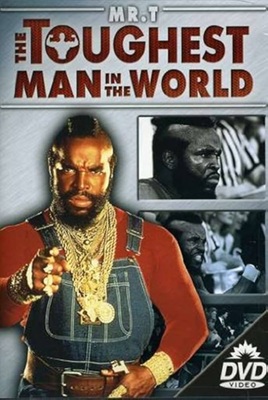
The Toughest Man In The World (1984, directed by Dick Lowry)


Bruise Brubaker (Mr. T) spends his nights as a bouncer at a club owned by his best friend (Dennis Dugan) and his days running a center for at-risk youth.  Bruise is a former Marine drill sergeant who is now determined to make Chicago a better place.  He’s so cool that his name is Bruise and he even has his own theme song, which plays whenever he patrols the streets and alleys of Chicago.  But when it looks like the youth center is going to get closed down unless it can quickly raise some money, Bruise faces the challenge of a lifetime when he enters a competition to prove that he’s the toughest man in the world!

Is Mr. T the toughest man in the world?  I pity the fool who even has to ask.

This made-for-TV movie is exactly what you think it is.  Mr. T barks out his dialogue with his signature growl but he still seems utterly sincere when he orders the kids to say in school and stop trying to mug old men in the alleys.  At first, it seems like Bruise should be able to easily win the Toughest Man competition but it turns out to be tougher than he thought.  There’s an extended sequences in which Bruise tries to learn how to box and it turns out that he’s no Clubber Lang.  There’s also an extended subplot about some broadly-played mobsters who are hoping that can drug Bruise so he’ll lose the contest.

Probably the funniest thing about the movie is the idea that everyone in Chicago would stop what they were doing so that they could gather around the television and watch the Toughest Man contest.  The second funniest thing is Dennis Farina showing up in a small role and reminding us that it takes all types of actors to make a movie.

Mr. T was never a good actor but he was a great personality and that personality is on full display here.  The Toughest Man In The World will make you nostalgic for a more innocent time.

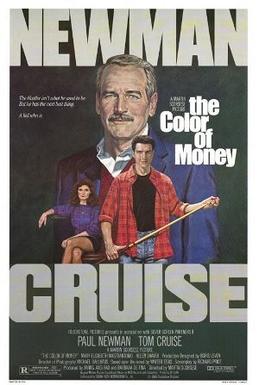
The Color of Money (1986, directed by Martin Scorsese)


ÀW

If you grew up in the 80s or 90s, you probably had at least one friend whose father kept a pool table in the garage.  This movie was probably the reason why.

Fast Eddie Felson (Paul Newman) was once The Hustler, the legendary pool player who recovered from having his fingers broken with a bowling ball and went on to defeat the legendary Minnesota Fats.  That was a long time ago.  Now, Fast Eddie is a slick liquor salesman in Chicago.  Eddie stills hangs out at the pool halls, despite his bad memories of the game.  When he sees a cocky young player named Vincent (Tom Cruise) and his girlfriend Carmen (Mary Elizabeth Mastrantonio), he takes them under his wing and teaches them how to hustle.  It’s not always easy because Vincent doesn’t like to lose, even if it means a chance to score an even bigger victory later on.  Eddie finds himself being drawn back into the game, even as he starts to wonder who is hustling who.

I always forget that The Color of Money is a Martin Scorsese films.  It’s a film that Scorsese made at a time when he had a reputation for only being able to make art films that critics loved but audiences stayed away from.  After the box office failure of The King of Comedy and his abortive first attempt to make The Last Temptation of Christ, Scorsese took The Color of Money to prove that he could work with a studio.  This is a Disney Scorsese film, with his signature camera moves but not much of his religious torment.  Even if it’s not one of his personal films, Scorsese makes pool look exciting, a battle that is as much about psychology as physicality.  Watching The Color of Money, you can smell the chalk on the tip of the pool cue.

Scorsese brings the seedy pool halls to life but it’s Paul Newman’s performance that dominates.  The Color of Money won Newman his first and only Oscar and he deserved it.  Newman had first played Fast Eddie Felson in 1961, in The Hustler.  Returning to the role twenty-five years later allowed Newman to show what would eventually happen to the angry young men that he played in the 60s.  Eddie has grown up and he’s got a comfortable life but he’s not content.  He finally has stability but he misses the game.  He needs the thrill of the hustle.  Newman is at his best in The Color of Money, building on The Hustler but also revealing new sides of Eddie Felson.

Newman is so good that Tom Cruise often gets overlooked but both Cruise and Mastrantonio hold their own against Paul Newman.  Cruise especially does a good job as Vincent, playing him as someone who is too cocky for his own good but also not as dumb as he looks.  Just when you think you’ve got Vincent figured out, Cruise surprises you.  The Color of Money came out the same year as Top Gun and Cruise’s Vincent feels like a commentary on the talented, troubled, but cocky characters that Cruise was playing at that time.  Cruise, Scorsese, and Newman make a good team in this more-than-worthy sequel.

ABOVE THE LAW – Steven Seagal’s action star debut! 


Did any actor have a better opening act than Steven Seagal? His first five movies are all star turns in high quality, enjoyable action films, beginning with ABOVE THE LAW, and then moving forward to HARD TO KILL, MARKED FOR DEATH, OUT FOR JUSTICE and UNDER SIEGE. While UNDER SIEGE has been described as “Die Hard on a boat” and OUT FOR JUSTICE occupies the top spot as my personal favorite Steven Seagal film, today we will focus on the movie that started it all, ABOVE THE LAW, from 1988. 

ABOVE THE LAW begins with Nico Toscani (Steven Seagal) providing a voiceover of his early years as a kid in Chicago who became obsessed with the martial arts and who found himself studying with the masters in the orient by the age of 17. He’s clearly a badass. By 22, he’s been recruited by the CIA and is completing missions in Viet Nam. While on a mission, he runs into Zagon (Henry Silva), a CIA torturer, who seems to be able to do whatever he wants with no consequences. After knocking the crap out of Zagon, Toscani quits on the spot and heads back to Chicago to become a tough cop and marry Sara (Sharon Stone). While working a touchy family situation in the Windy City, he stumbles upon a potential drug deal going down soon in the city. He and his partner Delores (Pam Grier) set up the bust, but the product of choice turns out to be C4 explosives, not drugs. Wouldn’t you know that the folks behind these C4 explosives are the CIA and Toscani’s old pal Zagon. Can he stop his old adversary this time and still protect his family?!! 

My favorite Chuck Norris film is from 1985 and is called CODE OF SILENCE. I mention that because there are quite a few similarities between ABOVE THE LAW and CODE OF SILENCE. First, Andrew Davis directed both films. He’s a talented filmmaker who would later direct such solid action films as THE PACKAGE (Gene Hackman & Tommy Lee Jones), UNDER SIEGE (Seagal & Tommy Lee Jones), and THE FUGITIVE (Harrison Ford and an Oscar winning Tommy Lee Jones). I wonder now how this film was made without Tommy Lee Jones?!! Second, both films feature a tough cop who practices martial arts and beats the crap out of corruption within law enforcement. In the case of CODE OF SILENCE, it was the police force itself; in ABOVE THE LAW, it’s the Central Intelligence Agency. It’s my personal opinion that CODE OF SILENCE is Chuck Norris’ finest hour. Steven Seagal gets this same kind of bravado and credibility in his very first film role. That’s truly unique. And finally, both movies feature the awesome Henry Silva as the bad guy. Silva has been a bad guy in so many movies, and he’s just damn good at it. I recently watched him in THE TALL T with Randolph Scott from way, way back in 1957. Damn, his Chink’s a psycho. Combine that with his turn as Billy Score in SHARKY’S MACHINE with Burt Reynolds, and you have a guy who deserves to be in the villain hall of fame. These tried and true elements all help produce a fine feature film debut for Seagal! 

Just one final comment about the movie’s theme… we all would like to think that no one is above the law in the real world. Unfortunately, all we have to do is watch the news to know that’s simply not the case. Our world is full of people who actually are above the law. One of the best things about a movie like ABOVE THE LAW is that we can watch the movie, munch our popcorn, and just pretend for 100 minutes that justice does exist. It may not be completely realistic, but it’s definitely a satisfying thought!

A Movie A Day #304: Code of Silence (1985, directed by Andrew Davis)


It’s life and death in the Windy City.  It’s got Chuck Norris, Henry Silva, Dens Farina, and a robot, too.  It’s Code of Silence.

Chuck plays Eddie Cusack, a tough Chicago policeman who is abandoned by his fellow officers when he refuses to cover for an alcoholic cop who accidentally gunned down a Hispanic teenager and then tried to place a gun on the body.  This the worst time for Cusack to have no backup because a full-scale gang war has just broken out between the Mafia and the Comachos, a Mexican drug gang led by Luis Comacho (Henry Silva).  When a cowardly mobster goes into hiding, Luis targets his daughter, Diana (Molly Hagan).  Determined to end the drug war and protect Diana, Eddie discovers that he may not be able to rely on his brothers in blue but he can always borrow a crime-fighting robot named PROWLER.

Despite the presence of a crime-fighting robot, Code of Silence is a tough, gritty, and realistic crime story.  Though Chuck only gets to show off his martial arts skills in two scenes (and one of those scenes is just Eddie working out in the gym), Code of Silence is still Norris’s best film and his best performance.  The film draws some interesting comparisons between the police’s code of silence and the Mafia’s omerta and director Andrew Davis shows the same flair for action that he showed in The Fugitive and Above the LawCode of Silence‘s highlight is a fight between Chuck and an assassin that takes place on top of a moving train.  Norris did his own stunts so that really is him trying not to fall off that train.

Davis surrounds Norris with familiar Chicago character actors, all of whom contribute to Code of Silence‘s authenticity and make even the smallest roles memorable.  (Keep an eye out for the great John Mahoney, playing the salesman who first introduces the PROWLER.)  Norris’s partner is played by Dennis Farina, who actually was a Chicago cop at the time of filming.  After Code of Silence, Farina quit the force to pursue acting full time and had a busy career as a character actor, playing cops and mobsters in everything from Manhunter to Get Shorty.  As always, Henry Silva is a great villain but the movie is stolen by Molly Hagan, who is feisty and sympathetic as Diana.  To the film’s credit, it doesn’t try to force Eddie and Diana into any sort of contrived romance.

Unfortunately, none of Chuck Norris’s other films never came close to matching the quality of this one.  Code of Silence is a hint of what could have been.