Film Review: Paths of Glory (dir. by Stanley Kubrick)


“One way to maintain discipline is to shoot a man now and then.” — Maj. Gen. Georges Broulard

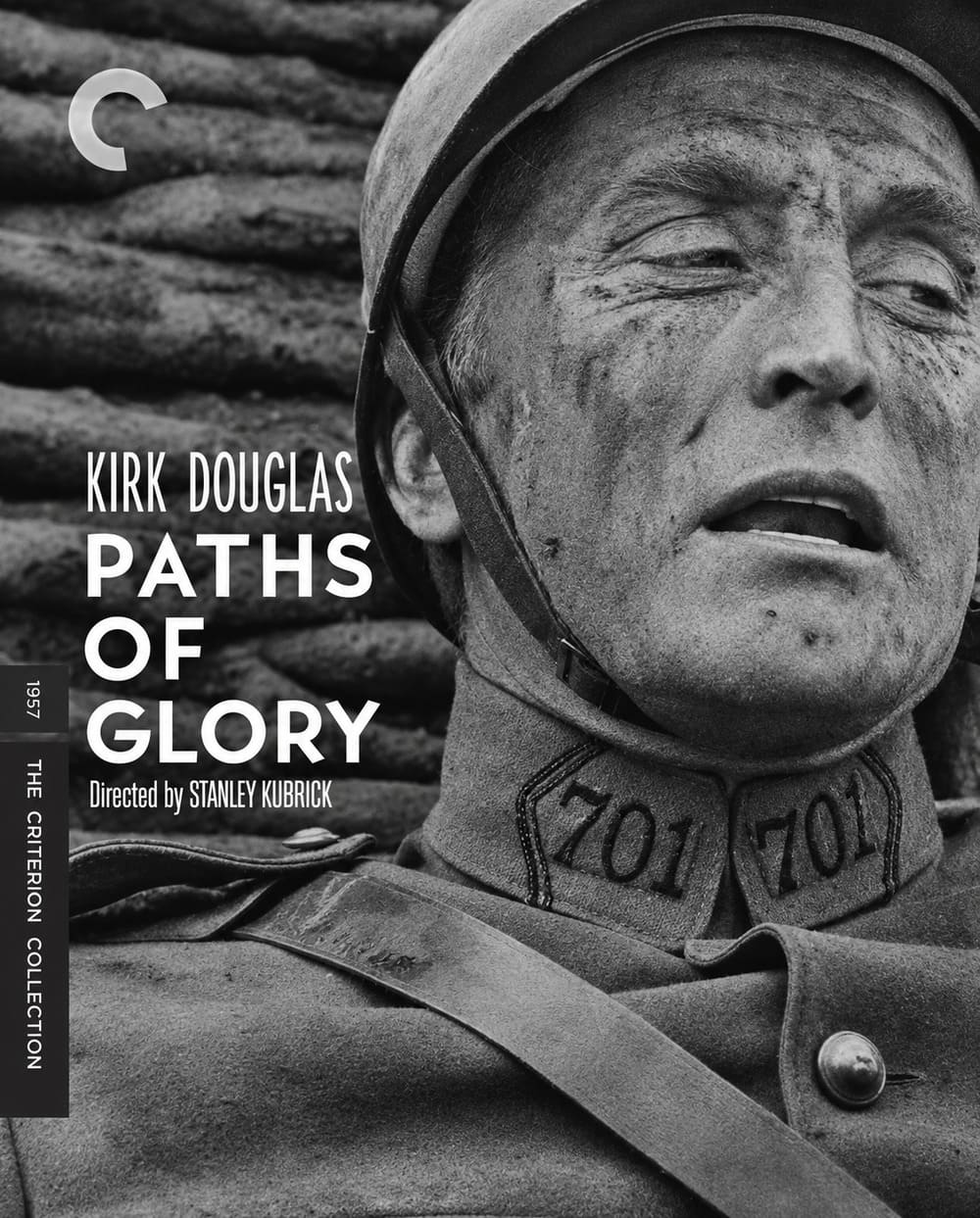
Stanley Kubrick’s Paths of Glory (1957) is a war movie with very little interest in making war look heroic. Its real target is the language that turns suffering into something supposedly noble: duty, sacrifice, honor, and, of course, glory. Those words sound impressive until you notice who gets to say them and who gets killed because of them. Starring Kirk Douglas as Colonel Dax, the film turns a failed military attack into a furious examination of institutional cruelty. What makes it so upsetting is not simply that innocent men suffer. It is that their suffering becomes useful to people who know how to make selfish decisions sound like necessary ones. Kubrick shows a world where authority protects itself first and then calls that protection patriotism.

The story takes place on the French front during World War I, where General Broulard encourages General Mireau to attack a heavily defended German position known as the Anthill. Mireau initially recognizes that the operation is unlikely to succeed. His soldiers are exhausted, the enemy is well positioned, and the expected losses are enormous. Then Broulard introduces the possibility of career advancement, and Mireau’s assessment becomes noticeably more optimistic. Nothing about the battlefield has changed. The only new factor is what Mireau might personally gain. It is an especially effective introduction because Kubrick does not need a dramatic confession of corruption. We watch a man talk himself into believing that his ambition and his military duty are conveniently the same thing.

Dax must lead the assault despite understanding how unrealistic the objective is. When the attack falls apart, the generals do not seriously reconsider the judgment that produced it. Instead, they turn the failure into a question of the soldiers’ courage. Three men are selected to face a court-martial for cowardice, with their punishment supposedly restoring discipline and defending the army’s reputation. Dax, a criminal lawyer before the war, takes on their defense. At that point, Paths of Glory shifts from a battlefield story into a courtroom drama, but the underlying conflict stays the same. The men have very little control over their lives in either setting. Whether they are ordered toward enemy guns or brought before military judges, decisions made above them determine their chances of survival.

The selection of three men for execution brings to mind the Roman military practice of decimation, in which one in ten soldiers from a disgraced unit was chosen by lot and killed to punish the group and frighten the survivors into obedience. The punishment in Paths of Glory is not literally decimation, but it operates through a similar logic: make a few men pay so everyone else gets the message. What matters is not establishing each soldier’s responsibility but demonstrating the power of command. That connection makes the court-martial feel less like a search for justice than an old form of intimidation wearing a modern uniform. The paperwork and formal proceedings do not remove the brutality. They give it an official appearance.

The story becomes even harder to dismiss when you consider its historical foundation. The film adapts Humphrey Cobb’s 1935 novel Paths of Glory, which was inspired by the Souain corporals affair. In March 1915, four French corporals were executed following a failed attack near Souain. The film uses three condemned soldiers and fictionalized characters, so it should not be treated as a literal reconstruction of that event. Still, the connection matters because it prevents the premise from feeling like cruelty invented purely for dramatic effect. The story grows out of a real example of military authority turning against its own men. Its anger is not based only on the idea that such injustice could happen, but on the knowledge that something like it did.

Honor and glory are the film’s central targets, although Kubrick is careful to separate genuine courage from the official language used to celebrate it. Dax accepts danger alongside his men and later risks his standing by defending them. Mireau, by contrast, treats honor as something that belongs to his rank and must be protected from embarrassment. Once the assault fails, the soldiers’ deaths become a way to preserve his version of events. If the men were cowards, then perhaps the plan was not the problem. Punishment offers a convenient explanation that leaves his judgment intact. The soldiers become expendable twice: first when their lives might purchase him advancement, and again when their deaths might protect him from blame.

That is what makes the film’s criticism more pointed than a general statement that war is terrible. It examines how institutions can reward the people who transfer the consequences of their decisions onto others. Mireau can describe the assault as a matter of national importance while privately responding to the possibility of promotion. He can demand executions in the name of discipline while avoiding an honest examination of his own conduct. The gap between his public explanations and personal motives is where the film finds much of its fury. Kubrick is not suggesting that ideals are automatically meaningless. He is showing how easily powerful people can borrow the language of ideals to make their own interests harder to challenge.

Broulard is arguably even more disturbing because he does not share Mireau’s obvious bluster. Adolphe Menjou plays him with a relaxed charm that makes his moral emptiness seem almost ordinary. He can discuss terrible outcomes with the ease of someone settling a minor professional disagreement. Where Mireau becomes defensive and angry, Broulard remains adaptable. He understands that careers can survive ugly situations as long as the right people are blamed and the necessary arrangements are made. His composure is frightening because it suggests experience. This is not a man overwhelmed by an exceptional moral crisis; he seems perfectly comfortable managing one.

His misunderstanding of Dax brings that attitude into sharp focus. Broulard assumes that Dax’s objections must conceal a professional ambition, as though defending the condemned men were simply an indirect way of seeking a better position. He cannot easily recognize outrage that is not part of a negotiation. That assumption tells us how thoroughly his world has been shaped by self-interest. He does not just behave cynically; he expects everyone else to do the same. Dax’s refusal to accept that logic creates a deeper conflict than a disagreement over military procedure. One man believes there are limits to what a person should do for advancement. The other barely seems to understand why anyone would impose those limits.

Douglas gives Dax the force needed to stand against these men without turning him into an unbeatable hero. His physical confidence makes him convincing as an officer, but there is also frustration beneath his authority. In the courtroom, his anger comes from recognizing that the proceedings are dishonest while still having to work within them. He argues as though evidence and reason should matter, even as the trial makes their irrelevance increasingly obvious. A more reassuring movie might allow his intelligence, courage, and powerful speeches to change the outcome. Kubrick denies us that comfort. Being able to expose an injustice is not the same as being able to stop it, especially when the people listening benefit from leaving it in place.

The courtroom scenes are devastating because the trial has the outward shape of fairness without its substance. The defendants are present, a defense is permitted, and officers sit in judgment, but those formalities do not create a meaningful opportunity for justice. Instead, they help the institution describe punishment as the result of a legitimate process. That distinction is essential to the film. The army does not simply seize three men and openly announce that their lives are convenient sacrifices. It gives their deaths a procedural explanation. Kubrick makes us watch how an institution can use the appearance of reason to conceal a decision that reason would never justify.

The condemned soldiers also keep the film from becoming only an argument between powerful officers. For the generals, they are examples, disciplinary problems, or pieces of an embarrassing situation. For the audience, they are frightened people trying to understand what is happening to them. Their reactions do not fit a single heroic pattern, and that makes their predicament more affecting. Fear does not become less real because someone wears a uniform, and facing death does not automatically produce dignity or clarity. By giving space to their distress, the film restores the individuality that the military process tries to erase. These are not interchangeable representatives of a failed attack. Each man has a life that cannot be replaced by an official explanation.

Kubrick’s visual choices reinforce these divisions without needing to announce them. The trenches are cramped, muddy spaces where bodies crowd together and danger feels close. The officers’ grand interiors offer room to walk, talk, and consider other people’s deaths at a comfortable distance. Those settings create two different experiences of the same war. For the soldiers, war is immediate and physical. For the generals, it can become a matter of reports, reputation, and carefully managed conversations. The contrast is especially bitter because the people with the most room to maneuver are the ones deciding the fate of those who have almost none.

The tracking shots through the trenches make that hierarchy feel physical. As Dax moves past his men, the camera gives a sense of the crowded human reality behind military plans. An order that sounds neat in a spacious room must eventually pass through these bodies. The assault then strips away any possibility of treating the operation as an exciting adventure. Moving forward is exhausting and dangerous, and determination cannot make the conditions less impossible. The sequence challenges the easy assumption that sufficient bravery can overcome any obstacle. Sometimes an order is simply disastrous, and blaming the men who cannot carry it out becomes another form of dishonesty.

Mireau’s attempt to have artillery fire on his own troops when they cannot advance is the clearest expression of that dishonesty. In his mind, the soldiers stop being people he is responsible for and become obstacles to his authority. Their inability to fulfill his expectations feels to him like an offense deserving punishment. The moment collapses the comforting distinction between danger from the enemy and protection from one’s own commanders. It also exposes the emptiness of his concern for military honor. If maintaining the appearance of obedience requires destroying the very men under his command, he is willing to consider it. His reputation has become more important than the purpose his authority supposedly serves.

If the film has a limitation, it is that its moral divisions can feel extremely sharp. The generals’ corruption leaves little uncertainty about where our sympathies should fall, and some dialogue makes explicit what the images and performances have already established. At times, the characters function as clear expressions of opposing moral positions. Still, that directness largely suits the material. The film is not asking us to puzzle over whether sacrificing innocent men for professional convenience might be defensible. It is asking us to sit with the fact that obvious injustice can continue even when someone names it accurately. Its bluntness gives that argument an anger that a more detached treatment might lose.

Then the final scene changes the emotional register. A frightened German woman sings before a roomful of French soldiers who initially respond with jeers. Gradually, their behavior changes. They grow quiet, listen, and begin humming along. After watching military authority reduce people to categories—cowards, officers, examples, casualties—we see a moment in which those divisions briefly loosen. The woman belongs to the enemy nation, but her vulnerability and her song reach the men in a way that official speeches have not. The scene does not suggest that suffering automatically makes people compassionate. Their first response is cruel. What matters is that they remain capable of moving beyond it.

That ending is tender without pretending to repair anything. The condemned men are not restored, the army has not become just, and Dax has not defeated the machinery around him. The song offers a brief experience of shared feeling rather than a solution. That restraint is what makes Paths of Glory so powerful. Kubrick tears apart the grand language used to justify sacrifice while refusing to treat ordinary human feeling as foolish or irrelevant. The film leaves honor looking less like a medal, a title, or a successful career than the difficult act of recognizing another person’s humanity when the institution around you finds it convenient not to.
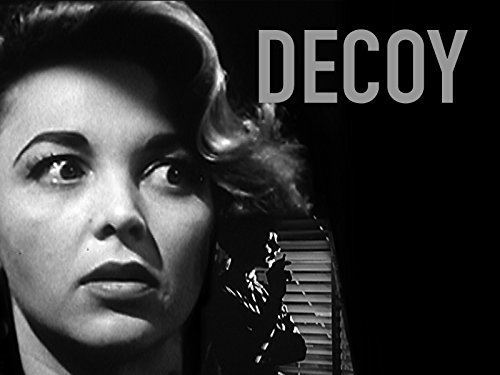
Retro Television Review: Decoy 1.30 “The Gentle Gun-Man”


Welcome to Retro Television Reviews, a feature where we review some of our favorite and least favorite shows of the past!  On Thursdays, I will be reviewing Decoy, which aired in Syndication in 1957 and 1958.  The show can be viewed on Tubi!

In this episode, Casey goes after a gun dealer.

Episode 1.30 “The Gentle Gun-Man”

(Dir by Michael Gordon, originally aired on May 5th, 1958)

After a man is shot dead while committing a liquor store robbery, Casey goes undercover as his widow.  The police don’t just want the man’s accomplice.  They want to know where the man got his specially-modified gun.  The accomplice turns out to be a rather gentle deli owner named “Knish” Levin (Ludwig Donath).  And the gun dealer turns out to be Mr. Johnson (James O”Rear), the same gun dealer who sold Casey her first gun.  (This episode implies that members of the police force have to buy their own guns, which sounds a bit odd.)  Needless to say, when Casey convinces Knish to introduce her to his dealer, Johnson immediately recognizes her.

This episode had a lot of New York location footage.  The scene where Knish leads Casey to Johnson took us from Wallstreet to the waterfront.  Indeed, the locations shots were the best thing about this episode.  The acting in this episode was, by Decoy standards, subpar, with even the usually reliable Beverly Garland struggling to sell her lines.  Unfortunately, this episode’s plot required Casey to make a lot of foolish mistakes, like going to see the gun dealer without proper backup.  I liked the fact that Knish wasn’t portrayed as being a typical thug but otherwise, this episode just didn’t work.

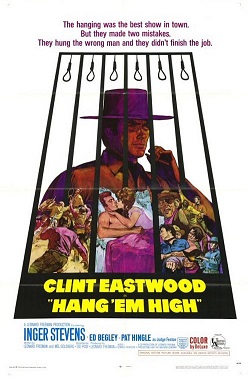
Hang ‘Em High (1968, directed by Ted Post)


1889.  The Oklahoma Territory.  A former lawman-turned-cattleman named Jed Cooper (Clint Eastwood) is falsely accused of working with a cattle thief.  A group of men, led by Captain Wilson (Ed Begley) lynch him and leave Cooper hanging at the end of a rope.  Marshal Dave Bliss (Ben Johnson) saves Cooper, cutting him down and then taking him to the courthouse of Judge Adam Fenton (Pat Hingle).  Fenton, a notorious hanging judge, is the law in the Oklahoma territory.  Fenton makes Cooper a marshal, on the condition that he not seek violent revenge on those who lynched him but that he instead bring them to trial.  Cooper agrees.

An American attempt to capture the style of the Italian spaghetti westerns that made Eastwood an international star, Hang ‘Em High gives Eastwood a chance to play a character who is not quite as cynical and certainly not as indestructible as The Man With No Name.  Cooper starts the film nearly getting lynched and later, he’s shot and is slowly nursed back to health by a widow (Inger Stevens).  Cooper is not a mythical figure like The Man With No Name.  He’s an ordinary man who gets a lesson in frontier justice as he discovers that, until Oklahoma becomes a state, Judge Fenton feels that he has no choice but to hang nearly every man convicted of a crime.  (Judge Fenton was based on the real-life hanging judge, Isaac Parker.)  Over the course of this episodic film, Cooper becomes disgusted with frontier justice.

Hang ‘Em High is a little on the long side but it’s still a good revisionist western, featuring a fine leading performance from Clint Eastwood and an excellent supporting turn from Pat Hingle.  The film’s episodic structure allows for Eastwood to interact with a motley crew of memorable character actors, including Bruce Dern, Dennis Hopper, L.Q. Jones, Alan Hale (yes, the Skipper), and Bob Steele.  Hang ‘Em High has a rough-hewn authenticity to it, with every scene in Fenton’s courtroom featuring the sound of the gallows in the background, a reminder that justice in the west was often not tempered with mercy.

Historically, Hang ‘Em High is important as both the first film to be produced by Eastwood’s production company, Malpaso, and also the first to feature Eastwood acting opposite his soon-to-be frequent co-star, Pat Hingle.  Ted Post would go on to direct Magnum Force.

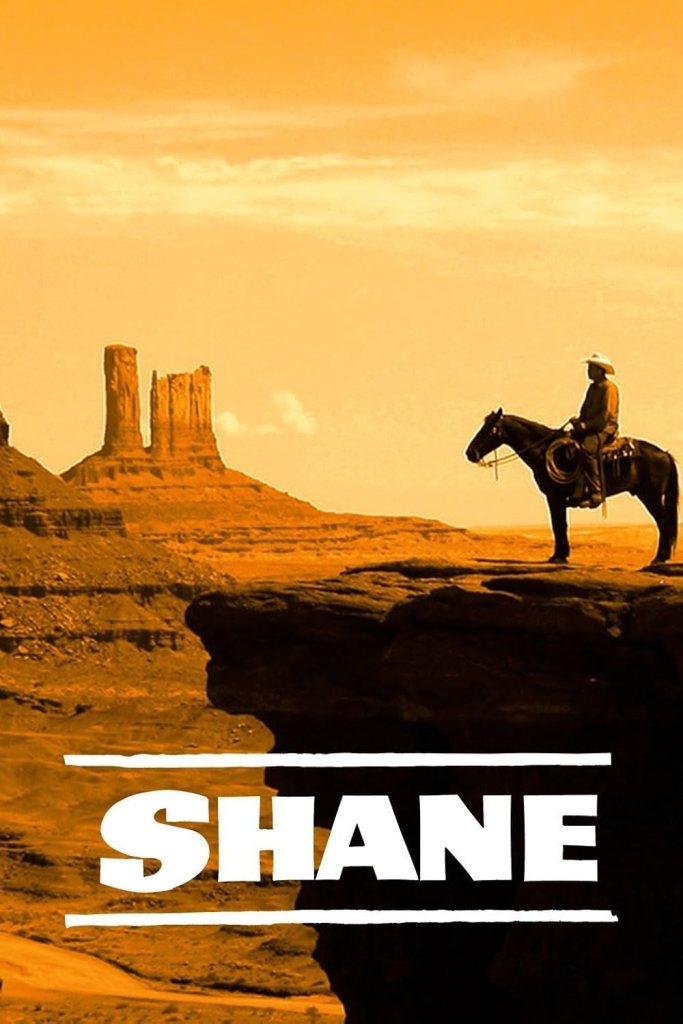
SHANE (The TV Series) – Episode 17: A Man’d Be Proud (originally aired December 31st, 1966) – Series Finale


Episode 17, the final episode of this short lived TV series, begins with Rufe Ryker (Bert Freed) in serious need of a cook at his cattle ranch. While lamenting the horrible state of the vittles that he and his men are being forced to consume to Sam Grafton (Sam Gilman), it’s suggested that he consider asking Marian Starett (Jill Ireland) to be his cook. Ryker ends up taking Sam’s advice and heads out to the Starett ranch to see her and even gets invited to stay for dinner. None of this is setting well with Shane (David Carradine) or Tom Starett (Tom Tully), as neither man trusts Ryker, especially since he has spent the better part of the first 16 episodes of the series wanting to take the ranch away from them. They make their feelings very obvious as Ryker plays nice and Marian seems to appreciate his suddenly more caring and complimentary nature. Later at Sam’s bar, Ryker begins telling Sam about how good it would be to have a woman to spend his time with. Sam tells him “You’re talking like a man in love.” It really seems that Ryker may be falling for Marian. He even gets a fresh shave and haircut. Shane walks in on Ryker getting his haircut and gets pissed all over again. He heads back to the ranch and tells Marian, who offers to give Shane his own haircut, that Ryker is “trying to court you,” hoping that she’ll put down the idea. Sensing what Shane is up to, Marian decides to play devil’s advocate and acts like dating Ryker isn’t such a bad idea. It drives Shane crazy, which seems to be making Marian quite happy. Ryker keeps pressing forward, even bringing Marian some excellent peanut brittle. As a jealous Shane tries to warn Marian that Ryker is dangerous, she asks Shane why he cares, clearly wanting him to answer honestly, which he doesn’t. Will Shave ever admit to Marian that he loves her?!! Will Ryker be able to convince her that he can give her a good life at his ranch? Will Tom threaten to kick Shane’s ass if he doesn’t handle his business with Marian? The good news is that all such questions are answered in this final episode.

While episode 17 presents a strange conundrum, Shane vs. Rufe Ryker for Marian’s attention, I must admit that I found it an excellent conclusion to the series for several reasons. First, Rufe Ryker’s best nature is finally revealed. Throughout the series Ryker has been a lot of bluster, but with a couple exceptions, he has mostly been a reasonable man and has even worked with the Starett’s multiple times for the good of the valley. His feelings for Marian bring out a sensitivity and kindness in him that we have not seen before. Being one of the more interesting characters, I liked that he was given even more depth this late in the series. Second, there’s a scene late in the episode where Tom confronts Shane, chews his ass out and tells him he’d kick that same ass if he was a little younger since he’s not “man enough” to take care of his business. So many times people dance around and do everything possible NOT to tell people how they feel in these shows. Not this time, as Tom tells Shane exactly how he feels and he doesn’t pull a punch even slightly. It pisses off an already pissed off Shane even farther, but these are words he needs to hear, and they spur him to action. I’ve mentioned some of Tom Tully’s excellent moments in the past, but he saved the best for last. I found it to be one of the best individual moments of the entire series. Finally, you’d think this storyline and the fact that it’s the very last episode would force Shane to finally tell Marian how he fills about her. I’m not going to spoil the ending, but throughout the entire series, Shane has been shown to be a man of action, not of words, and that aspect of his character remains unchanged to the very end. You’ll have to watch for yourself to find out exactly what I mean with that last statement.

I started watching this series for two reasons; I loved the 1953 movie SHANE with Alan Ladd, and I wanted to watch Jill Ireland in an on-screen role that does not rely on Charles Bronson. After watching every episode, I can confidently state that SHANE is a solid TV series, and that Jill Ireland does a fine job as the beautiful Marian Starett. And even better, it’s been a lot of fun sharing my thoughts with the readers of The Shattered Lens. Thanks to all who have joined me!

SHANE (The TV Series) – Episode 16: The Great Invasion – Part 2 (originally aired December 24th, 1966)


Episode 16 opens with Shane (David Carradine) back in Cheyenne, WY. He has joined up with Major Hackett’s (Bradford Dillman) outfit to try to find out the Major’s plans for attacking the homesteaders. The first thing he has to do is have it out with Jed (Charles Grodin) who is still smarting from the ass-whoopin’ he took in the last episode. The two men get into another brawl that ends when Major Hackett shoots Jed in the knee and discharges him from his service for good. The next day, Major Hackett, Shane, the men, and the Gatling Gun head towards the valley after rustlers and homesteaders. Major Hackett assigns Shane to advance scout their next target, Bull O’Reilly. Shane heads out and forces O’Reilly to leave his home before the other men arrive. Shane tells them O’Reilly was gone before he got there, but Major Hackett doesn’t appear to be buying what Shane is selling and tells his men to keep an eye on him. When Shane finds out they are headed for the valley the next day, he beats up the guy he’s on night watch duty with and rides all night back to the Starett ranch. With Tom (Tom Tully) and Marian’s (Jill Ireland) help, he is finally able to convince the homesteaders and the cattlemen, led by Rufe Ryker (Bert Freed), to stand together and take on Major Hackett and his men. But do they have any chance against that gun? 

Part 1 of the Great Invasion spent most of its running time setting up the backstory for Major Hackett’s invasion of the valley in order to get rid of all the rustlers and homesteaders. With all of that out of the way, Part 2 mainly focuses on the actions Shane takes in trying to stop Major Hackett from within. He engages in two fistfights. He convinces an old man to leave his home as soon as possible, giving him time to put on his boots but not time to put on his pants, which gave me a chuckle. And he stands with the homesteaders and the cattlemen as they trick Major Hackett into thinking the Ryker ranch is abandoned so they can attack with an element of surprise. David Carradine, of course, handles all of the action and drama very well. Part 2 is a pretty solid episode, but after the setup from Part 1, I was hoping for a little more. I can’t help but question Major Hackett’s judgement when it comes to Shane. There were plenty of red flags that would indicate Shane wasn’t very trustworthy when it came to executing the plan, but Hackett seemed willing to give him the benefit of the doubt anyway. His cockiness and over confidence in his ability to control the Gatling Gun also knocked him down a notch or two. Major Hackett turned out not to be as smart as we originally thought him to be, which was a little disappointing, especially with Bradford Dillman’s interesting performance. On a positive note, I was glad that Little Joey (Christopher Shea) gets a sweet moment in this episode. He’s mostly a background piece in the series but his childlike wisdom comes in handy at one point. He overhears the adults questioning whether or not Shane has really joined the invaders. Joey tells them matter of factly that he knows that Shane has a plan that will help everyone and finishes his statement with, “Y’all just don’t know him as well as I do.” Tom and Marian can’t help but smile with that innocent truth-bomb, and from that point never doubt Shane again. Tom Tully gets another opportunity to shine as well, as his Tom Starett gives an impassioned speech to his fellow homesteaders asking them join together and fight the invaders. It was a good moment for him. 

Overall, “The Great Invasion” is an episode that builds a solid foundation in the first part that it doesn’t completely capitalize on in the second. It has its moments, though, especially with some good character moments from both the main cast and its guest stars. I also found the very final shootout to be exciting. The relationship between Shane and Marian does seem to be reaching a breaking point as her patience is wearing thin with his inability to share his true feelings with her. We only have one episode to go, so I’m expecting some sort of action in that department as the series reaches its conclusion.  

SHANE (The TV Series) – Episode 15: “The Great Invasion – Part 1” (originally aired December 17th, 1966)


Episode 15 opens with Shane (David Carradine) at a hotel in Cheyenne, WY. He hears a ruckus in the next room where a guy named Jed (Charles Grodin) is holding court with a group of men and women. Jed, who has clearly been drinking way too much, is going on about the honor of serving with Captain William Quantrill. He asks Shane to have a drink with him and Shane declines. Offended by this, Jed challenges Shane only to get his ass thoroughly kicked in about 10 seconds flat. One of the men in the group recognizes Shane as the great gunfighter. Soon the men force Shane at gunpoint to go see their boss, Major George Hackett (Bradford Dillman). It seems Hackett is putting together a group of men for a project and offers Shane the large sum of $75 per week to join up. Sensing something bad, Shane turns down his offer and leaves. Shane is right to leave as we soon learn that Hackett’s “project” is to eliminate any homesteaders who are not a part of the Cattlemen’s Benevolent Association, a large outfit out of Chicago.

While in Cheyenne, Shane also runs into his old friend Longhorn Jenny (Constance Ford) who is in town selling a herd of cattle. She’s accompanied by her assistant Dan (Archie Moore). The two swap some old stories, with Shane even asking how she came across that herd of cattle. They seem to hint that she didn’t necessarily come across them legally. Shane says goodbye and starts the journey back to the ranch. Before leaving Cheyenne, he reads a story in the paper that specifically mentions Longhorn Jenny, implying that she’s a rustler. The story in the paper, which seems to back the Cattlemen’s Association, plus Major Hackett’s offer convinces Shane that something truly bad is on the way. When he gets back to the ranch, he tells Tom (Tom Tully), Marian (Jill Ireland) and a few other local homesteaders that he’s concerned that they may all be in danger. Unfortunately, everyone he speaks to in the valley about this situation, including cattleman Rufe Ryker (Bert Freed), think he’s overreacting and don’t seem concerned at all. Then Major Hackett and his men ride out to Jenny’s ranch, unveil their Gatling Gun and proceed to kill Jenny and Dan, ultimately hanging her at the gate with a sign that says “Rustler.” Even after Jenny is killed, no one in the valley will listen to Shane and prepare to defend themselves. Marian tells Shane that she’ll prepare to defend their ranch, but she is not leaving. Not knowing what to do to keep those he loves safe, Shane heads back to Cheyenne and accepts Hackett’s offer to work for him. Credits roll for the end of Part 1.  

A lot happens in the “The Great Invasion: Part 1.” All the main people are introduced, with Hackett and his plan coming into light. We also spend an inordinate amount of time with Longhorn Jenny as we meet her, learn about her and ultimately see her die. This being the first part of a two part episode, I’ll withhold my larger analysis for the next review, but I am looking forward to seeing where the story goes. I find the characters quite interesting. Bradford Dillman comes off as very odd and extremely dangerous as Major Hackett, a man who seems to relish the opportunity to use his Gatling Gun. Charles Grodin’s Jed appears to be your typical loudmouth killer at this point, but it will be interesting to see what happens to him. And I’m looking forward to seeing what Shane does to stop the madness before it takes out the people in their valley. There’s no way they can compete with Hackett’s Gatling Gun, so Shane will have to figure out a way to stop things from within. 

There were a few other interesting things I noted while watching this episode. First, when Shane is heading back to the ranch from Cheyenne, we see the Grand Teton Mountain range behind him for the first time in the series. If you remember, the Tetons are prominently featured in the classic 1953 film SHANE, and it was cool seeing them here. Second, Shane goes on a rant to Marian at one point about how newspapers spin the facts in a way that distorts the truth. Just in case anyone thought that a dishonest media was only a current issue, this should lay that theory to rest. And finally, Marian Starett flat out asks Shane why he continues to stay at the ranch. She’s clearly wanting to know if it’s for her. Once again he won’t give her the satisfaction of confirming her thoughts, and it appears that his reluctance to be honest with her is starting to wear thin. Couple that with a crying Joey who doesn’t understand why Shane left and the interpersonal emotions are running high as the episode fades out. I’m all in for seeing how it plays out. 

SHANE (The TV Series) – Episode 14: The Big Fifty (originally aired December 10th, 1966)


Episode 14 begins with one of Rufe Ryker’s men, Ed Bain, cutting barbed wire fence on the Starett ranch so their herd of cattle can go to a watering hole. As he’s cutting the fence, the sounds of gunshots from a “Big 50” rifle ring out as he’s shot and falls over. Shane (David Carradine) and Joey (Christopher Shea), who are riding through the area, hear the shots and find the wounded man. He rushes him to Sam Grafton’s saloon to see if Sam (Sam Gilman) can do anything to save him. Unfortunately the man was shot in the gut and there is no hope. About the time he dies, Rufe Ryker (Bert Freed) and his men come into the bar. He immediately asks Shane why he killed him. Shane, picking the wrong time to be a smartass, tells Ryker that if he had killed him it would have been for his cutting their fence, but that he didn’t do it. Ryker doesn’t believe him and neither do his men. They decide that Ed Bain deserves justice because “he was not only a good hand, but he was a good man.” Out for blood, Ryker decides he’s going to put Shane on trial for murder right then and there with only his men as the witnesses and jury. I call this the “Saint Bain” portion of the story. Harve (Lawrence Mann) tells us what a brave and hardworking man Bain was. Bain’s best friend Greevey (a guest starring Wayne Rogers) tells about all of their good times and card playing together. It seems that Bain is such a good guy that Shane clearly deserves to die even though none of them actually saw him shoot the man. 

While the sham of the trial is going, the saloonkeeper Ben (Owen Bush) slips out the back and rides out to the Starett ranch to tell Tom (Tom Tully) and Marian (Jill Ireland) what’s going on. The two immediately set about trying to round up some of the homesteaders to go into town with them to try to stop Ryker and his men from hanging Shane. One by one, each of the homesteaders turn them down because “this is not their fight” and reason that Shane probably did it because “he’s a gunfighter.” Knowing they have zero chance against Ryker on their own, Tom and Marian come up with a plan. He’ll head to Laramie to get the U.S. Marshall, and she’ll go try to buy some time from Ryker with the only bargaining chip they have, the deed to the family ranch. 

Episode 14 of Shane is a bit of a mixed bag. On the positive side, the gun that is used to kill Ed Bain at the beginning is a unique and interesting element of the story. The weapon is a Sharps “Big 50,” a .50 caliber rifle that was designed for buffalo hunting and introduced in 1872 by the Sharps Rifle Manufacturing Company. The Big 50 joins a tradition of powerful weapons in filmed entertainment that provide their users with an advantage over their adversaries. Other examples include the Winchester 73 rifle, Dirty Harry’s 44 Magnum and Paul Kersey’s 357 Wildey Magnum in DEATH WISH 3. At one point, the killer is firing the Big 50 into the Starett cabin at Shane, Marian and Joey. Based on the power of the gun as already shown, there is a real sense of danger that someone could be seriously hurt. There was also one good scene centered around the unspoken love between Shane and Marian, even if Shane wasn’t a part of it. With Shane’s life seriously in jeopardy, Tom reassures his daughter-in-law, “honey, you’ve only been in love with 2 men in your whole life. I’m gonna make sure you don’t lose them both.” She sure doesn’t protest. It was a sweet scene and I enjoyed that as well. 

On the negative side, episode 14 featured the most lazy storytelling thus far in the series. The series has gone to great lengths to show Rufe Ryker as a man who’s hard-as-nails, but also mostly reasonable. The writers throw that out the window in this storyline and require him to behave completely irrational in his quest for vengeance for his hired man. It would be one thing if Ed Bain was his son or something, but Ryker’s line about him being a “good man” doesn’t get close to explaining the turnaround in his behavior. And not only do they present him as irrational, they make him incompetent to boot. Joey rides up and convinces Ryker that he’s only there to take Shane some food. Ryker even checks his slicker for a gun before letting him go in. Turns out Joey did have a gun under his jacket and Ryker just didn’t find it. The show had seemed to really be hitting its stride before this episode and the lazy storytelling surprised me. They should have introduced a new character if they were going to make him so irrational and incompetent. That description just doesn’t fit the Ryker of the first 13 episodes. 

Overall, this may have been the least enjoyable episode so far. While it did have some good moments, I’m still struggling to let go of the way they changed Ryker’s character so completely for this one. We’ll see what happens with him over the last few episodes of the series. While I’m slightly disappointed with episode 14, I’m still looking forward to seeing what happens next. 

SHANE (The TV Series) – Episode 12: The Silent Gift (originally aired November 26th, 1966)


Episode 12 opens with Shane (David Carradine) and Rufe Ryker (Bert Freed) looking over a beautiful Appaloosa colt. Shane wants to buy it for Joey (Christopher Shea) and offers Ryker $50. Ryker gets a good laugh at that, but he does make Shane a counteroffer: if Shane will work at his cattle ranch for one month, he’ll then let Shane have the colt for $50. Shane doesn’t really want to do it, but it’s important to him to get Joey the colt, so he agrees. Ryker allows Shane to go ahead and take the colt to the Starett ranch and give him to Joey. Of course, Joey is ecstatic and can’t wait to start taking care of him. Marian Starett (Jill Ireland) isn’t that happy with Shane about the deal to work for Ryker for a month, but it’s soon clear that no amount of protesting from her will stop Shane from doing this for Joey. 

The next day Shane is moving into Ryker’s bunkhouse for the month, and we begin getting a feel for the various men working for Ryker. The foreman Kyle (Jack Ging) immediately takes a disliking for Shane for no particular reason other than jealousy, I guess. He’s a real jerk, and he seems to have some kind of inferiority complex. In more modern times, it seems possible that Kyle might drive a big truck with swinging testicles attached to the trailer hitch. We also meet Jingles (J. Pat O’Malley), an older man who the other cowboys pick on for sport. He takes it because he doesn’t want to ruffle any feathers or get turned out by Ryker. Jingles tells Shane that this job is the only thing he has in life, and he doesn’t know what he’d do if he were to lose it. That night Ryker comes into the bunkhouse and tells Shane that there will be no fighting, and that if he puts his hands on one of his men, he’ll be fired and the deal for the colt is off. Shane just wants to keep his head down and work out his month and then get back to his life at the Starett ranch. Even though Shane works extremely hard and proves to be a good “hand,” it becomes clear that foreman Kyle is going to do everything he can to make his life a living hell. Will Shane be able to finish out a month at Ryker’s place and pay for Joey’s gift? Will Jingles tell the truth when Kyle picks a fight with Shane? Will Joey learn valuable lessons in life from the colt? Will Marian admit to Shane how much she misses him when he’s gone? All good questions: episode 12 has the answers! 

While it may be a slight step down from the sheer awesomeness of the prior installment, episode 12, “The Silent Gift,” is another fine episode of the Shane TV series. I mention the name of the episode because its use of the word “silent” captures part of what I enjoy so much about the series. Shane doesn’t say a lot throughout the entire series, but he continuously lets his actions prove out who he is as a person. In this case, his love for Joey is on full display because of what he does for him in this episode. Now don’t get me wrong, words are important, and I still tell my wife and children that I love them daily. But words are hollow if they’re not backed up by actions. Shane always backs up his words. Shane’s motives are the antithesis of a person like the foreman Kyle, who’s outwardly all bluster and bravado, but whose actions are fueled completely by lies and deceit. The character of Jingles, who seems like a nice enough old guy, is also shown to be in sharp contrast to Shane. Jingle’s life is controlled by fear and his actions are all about self-preservation. The sad truth is the fact that there are a lot more Kyle’s and Jingle’s in this world than there are Shane’s. On a positive note, the character arc of Jingles ultimately gives us hope that it’s never too late for any of us to do the right thing. 

The main guest stars in this episode, Jack Ging and J. Pat O’Malley, both caught my attention. Ging, who played foreman Kyle, looked very familiar to me. A look at his filmography shows he was the dad in WHERE THE RED FERN GROWS (1974) and appeared in three different Clint Eastwood films a few years after appearing in this episode. One of the first books I remember reading purely for pleasure was “Where the Red Fern Grows.” I loved it so much and watched the movie many times growing up. To be honest, I haven’t thought about it for years, but now I’m hankering for a rewatch. And O’Malley, who played Jingles, also has an interesting filmography. He provided voiceover work for many classic animated films like ONE HUNDRED AND ONE DALMATIONS (1961) and THE JUNGLE BOOK (1967). And what really amazes me is the fact that he voiced characters in Disney’s “Pirates of the Caribbean” attraction, including one of the prisoners coaxing the dog with the keys in his mouth. When you’ve been to Disney World as many times as I have, I now see O’Malley as a rock star! 

Shane’s relationship with Marian has one really good moment in this episode. When Shane is visiting the Starett ranch one night, Marian tells him how much they miss him, how much SHE misses him, when he’s gone. I believe she would have been open to a big kiss if Shane would have gone for it, but instead he just said “that’s nice to hear” before saying goodnight. Here’s one time I don’t agree with the action Shane takes. With only five more episodes to go, the romantic in me is still hoping for a big-time payoff in love! 

SHANE (The TV Series) – Episode 11: The Day the Wolf Laughed (originally aired November 19th, 1966)


Episode 11 of Shane opens with a group of outlaws making their way across the valley after pulling off a lucrative robbery. Needing a couple of days to lay low and rest their horses, they decide to take over Sam Grafton’s bar to drink and blow off some steam. They reason it’s a safe place to stay since there doesn’t appear to be any law in the area. Their leader is Reno (J.D. Cannon), with Augie (Skip Homeier) as his right-hand man, Grant (Daniel J. Travanti) as his enforcer, and a couple of others for good measure. Shane (David Carradine) and Marian (Jill Ireland) happen to be shopping in Sam’s general store when Reno and his men come into the bar. They can hear them breaking bottles and bullying Sam around in the next room. Sam comes into the general store and asks his employee Ben (Owen Bush) to ride out to Rufe Ryker’s ranch and ask him if he will come help with these guys. Soon the outlaws walk into the general store, where Shane and Reno immediately recognize each other. It seems the two gunslingers grew up together under the tutelage of an old man they called “The Wolf,” who taught them everything they know. Because Shane knows how skilled and dangerous Reno is, he asks Sam to let them stay for the next couple of days, and Reno agrees to pay Sam well for his trouble. Sam reluctantly agrees and Shane and Marian head back to the ranch. 

A little later Rufe Ryker (Bert Freed) and his men ride into town and enter Sam’s bar. Reno gets the drop on them and sends them back out with their tails between their legs. They regroup back at Ryker’s ranch and decide to go back to town and try force the outlaws out of the bar. On the way, Ryker stops off at the Starett’s ranch to try to convince Shane to help. Shane tells Ryker that the best thing he can do is leave Reno and his men alone and wait for them to leave in a couple of days. With his pride hurt, Ryker is in no mood for listening and heads to town anyway. When the shooting starts, Ryker and his men are caught in a deadly crossfire. Trying to retreat, Ryker is shot and severely injured by Reno. While Ryker tries to recover, his men decide they are going to stake out the bar so they can be in position to kill Reno and his men when they try to leave. Feeling trapped, Reno instructs a couple of his guys to go to the nearest ranch and get a hostage to help them with their escape. When the guys grab a local girl named Shirley and Marian, who was in the area looking for their cow Katrina at the same time, Shane finally decides to enter the fight against Reno. Their old mentor “The Wolf” always predicted that their relationship would end with one of them killing the other. It looks like he just may be right. 

“The Day the Wolf Laughed” is my favorite episode of the TV series SHANE so far, as it really leans into Shane’s skills as a gunfighter and pits him against a man in Reno who’s every bit as skilled. When the two men first see each other in Sam’s general store you can tell that they really do respect each other. Reno goes so far as to tell Marian that “you have a good man. He’ll fight for you.” As soon as you hear those lines, you know Shane will end up having to prove those words to be true. Even though Shane spends most of the episode trying to convince other people that they just need to leave Reno alone, he doesn’t hesitate to take matters into his own hands the moment Marian is put in danger. This is the first episode of the series where Shane really lives up to the reputation that is always being hinted at in the series, and I loved it! 

Episode 11 is also elevated by its game cast of guest stars. J.D. Cannon (DEATH WISH II) is an especially strong adversary for Shane. He can be extremely cold blooded, but he’s also respectful, somewhat likable, and you believe that his word means something. You almost hate it when the two end up squaring off at the end. Daniel J. Travanti (HILL STREET BLUES), with a thick mustache, is quite intimidating as the enforcer of the gang. He seems quiet and laid back until he’s called upon by Reno. His countenance then completely changes, and you don’t really want to be on the other side of his gun at that point in time. It was also nice seeing Skip Homeier show up as Reno’s right-hand man, Augie. Homeier appeared in the excellent 1957 Budd Boetticher/Randolph Scott western THE TALL T, and he provides good support here as well. As far as the main cast, David Carradine and Bert Freed take center stage in this episode, with both men doing a great job. Freed, in particular, has created a strong, complex character in Ryker over the course of the first 11 episodes, and I’ve actually grown to like him.

Overall, for a fan of badass western action, this episode was right down my alley. Shane and Marian may not have shared any long, lustful looks, but Shane proves his love by putting his life on the line for her against Reno’s gang. We only have 6 more episodes to go, and it will be fun to see where we go from here.  

SHANE (The TV Series) – Episode 10: High Road to Viator (originally aired November 12th, 1966)


Episode 10 begins with Marian Starett (Jill Ireland) and her son Joey (Christopher Shea) shopping for fabric in Grafton’s Store. Joey’s not that excited about the shopping experience so he’s just goofing around when he comes across a flyer for a dance in the town of Viator, WY. He shows the flyer to his mom, and you can immediately tell that she would love to go to a dance, even if she won’t say it out loud. Shane (David Carradine) notices how Marian’s face brightens up when the dance is brought up again later that night back at the ranch. He decides right then and there that the family is going to that dance, even though it’s a three-day ride by carriage. Tom Starett (Tom Tully) doesn’t see how they can abandon the work that needs to be done at the ranch, but he relents to Shane when he sees how important the dance is to Marian. 

So, the family heads out on the three-day trip to Viator. They sing and laugh and are having the best time as they make camp on the first night. Unfortunately, a group of thieves attack them and steal their food and many of their other belongings. Not to be deterred, Shane convinces the family to keep moving forward to Viator. Thanks to some brave work from Joey and Shane, Marian still has the special dress that she plans to wear to the dance. As they close in on their destination, Shane goes ahead to make arrangements for the family. When he arrives, he finds that Viator is now a ghost town and that the flyer was actually from the year before. The community’s mine flooded about six months earlier and just about everyone left to restart their lives elsewhere. Will Marian still get to dance? Will Joey get to see his mom happy? Will Tom stop thinking about chores? The answers are all here for those who are truly interested! 

Episode 10 is the most romantic episode of the SHANE TV series that I’ve encountered so far. The needs and desires of Marian Starett take center stage and Jill Ireland is quite wonderful in the episode. Every action Shane takes is to make Marian happy. When Marian won’t admit that she even wants to go to the dance, Shane knows her true feelings and he’s going to take her no matter who objects. When the thieves steal Marian’s dress and conk her on the head, Shane risks his life to get it back because he knows it carries a special meaning in her life. When they make it to Viator, even though they got the date wrong and the dance hall is now a dusty, cobweb filled mess, Shane wants Marian to wear her dress. He asks her if he can remove the wrap that she is wearing, revealing her in her dress, and for the first time in the series, we see Jill Ireland at her most beautiful. She’s stunning. Shane sweetly begins pretending that there are people and music in the dance hall just so Marian can enjoy herself. She happily plays along and Shane and Marian dance together to the music in their minds and stare happily into each other’s eyes. Tom and Joey walk in and watch them dance. Joey asks his grandpa, “How can they dance? There isn’t any music.” Tom replies “Don’t be too sure of that boy.” It’s an endearing exchange and a testament to just how happy Shane and Marian are in that moment. Next week Shane can get back to being a badass. In Episode 10, he just wanted to make Marian happy, and he did.