Icarus File No. 31: The Adventures of Brisco County, Jr.


“I’m looking for the coming thing.” — Brisco County, Jr.

Few television series embrace their own oddness as joyfully as The Adventures of Brisco County, Jr.. Blending frontier shootouts, pulp-serial adventure, broad comedy, sci-fi weirdness, and old-fashioned heroics into one deliberately unruly package, the short-lived Bruce Campbell vehicle has only grown more distinctive with time. It ran for a single season between 1993 and 1994, produced 27 episodes, and then vanished from network television before it had the chance to fully grow into the strange, funny, action-packed cult institution it deserved to be. That short life is part of its legend now. The show remains a wonderfully odd hybrid: a Western, an adventure serial, a sci-fi mystery, a screwball comedy, a buddy show, and a loving parody of old-fashioned television heroics. It was never content to simply be one thing, and that creative restlessness is exactly why it was so distinctive.

Bruce Campbell stars as Brisco County, Jr., a Harvard-educated lawyer who becomes a bounty hunter after the murder of his father, legendary lawman Brisco County, Sr. At first glance, that setup sounds like the foundation for a hard-edged revenge Western. Brisco is hired by a group of wealthy robber barons to track down John Bly, a charismatic outlaw who escaped after killing Brisco’s father. The show does not ignore that emotional hook, either. Campbell gives Brisco just enough sincerity that the character’s grief and desire to live up to his father’s reputation land when they need to. But the series almost immediately makes clear that it has no interest in being grim prestige television before prestige television was even a common phrase. Brisco may be motivated by vengeance, but he is also a cheerful idiot at times, an inventor’s dream customer, a romantic disaster, and a man genuinely enthusiastic about the future.

That optimism is one of the show’s most charming qualities. Brisco lives in 1893, but he is obsessed with modernity: bicycles, early automobiles, telephones, scientific gadgets, anything that might make the Old West feel less old. He repeatedly calls these new inventions “the coming thing,” often with the confidence of someone who knows history is on his side even when the technology in front of him is barely functional. It is a funny recurring bit, but it also gives the series an unusual personality. Brisco is not a traditional Western hero longing for a disappearing frontier. He is a cowboy-lawyer-adventurer who wants to survive the frontier and help drag it toward the twentieth century.

Campbell is the ideal actor for that balancing act. He had already built a devoted following through the Evil Dead films, where he proved he could sell broad physical comedy, cartoonish bravado, and genuine intensity all at once. The Adventures of Brisco County, Jr. puts those qualities to excellent use. Campbell looks like the square-jawed hero of a classic matinee serial, but he plays Brisco with a sly awareness of how ridiculous the genre can be. He can throw a punch, ride a horse, fire a gun, and deliver a tough-guy line, then immediately get tangled in a rope, outsmarted by a con artist, or humiliated by one of his own overconfident schemes. The show never treats him as incompetent exactly; Brisco is clever, brave, and unusually resourceful. But it understands that a hero is more entertaining when the universe keeps refusing to cooperate.

The early arc involving John Bly gives the show a memorable villain and a sense of forward momentum. Billy Drago, a genre veteran with one of the most instantly sinister faces and voices in film and television, plays Bly as a quietly unnerving outlaw rather than a loud, swaggering gunslinger. Drago had already become familiar to audiences through roles in crime thrillers, Westerns, horror, and action stories, and his presence adds serious genre street credibility to the series. He is particularly good at making Bly feel unpredictable. The character is intelligent, dangerous, and often strangely philosophical, with Drago giving even a casual line enough menace to make it sound like a threat. His addition helps sell the idea that, beneath the jokes and gadget-driven chaos, Brisco really is moving through a world populated by lethal people.

The show’s supporting cast is equally important to its success. Julius Carry’s Lord Bowler is the real secret weapon. Initially a rival bounty hunter with a powerful need to claim rewards before Brisco does, Bowler evolves into Brisco’s closest partner and one of the series’ most dependable sources of cool. Carry plays him with perfect deadpan timing, making Bowler’s irritation at Brisco’s eccentricities endlessly funny. Their chemistry is the foundation of the series. Brisco talks too much, overthinks everything, and barrels into trouble; Bowler observes, grumbles, and then saves the day when necessary. Their partnership has the rhythm of a classic buddy-action pairing, except it exists in a world where a frontier saloon might contain a mad inventor, an escaped criminal mastermind, and a mysterious glowing orb all in the same episode.

That orb is one of the show’s boldest ideas. Known as the Orb, it becomes the central sci-fi element in a series already packed with anachronistic comedy and pulp adventure. It possesses strange powers, influences human behavior, and hints at a much bigger mythology than the show ever had time to fully explain. The Orb plotline is not always the cleanest element of the series, but it matters because it shows how willing the creators were to push beyond ordinary Western storytelling. One week, Brisco might be hunting a gang of outlaws; the next, he might be dealing with supernatural powers, secret conspiracies, bizarre inventions, or stories that feel pulled from a 1930s adventure comic. The result is a show that can feel like The Wild Wild West, Indiana Jones, and a Saturday-morning serial filtered through a 1990s sitcom sensibility.

In that sense, The Adventures of Brisco County, Jr. was ahead of its time in the way it fused different genres into one coherent theme and narrative. The series never treated its Western setting, science-fiction mythology, slapstick humor, action serial influences, and detective-story plotting as separate gimmicks awkwardly stapled together. All of those elements were filtered through Brisco himself: a hero caught between an old frontier world and the uncertain promise of the future. His fascination with progress, invention, and “the coming thing” gave the show a thematic center strong enough to make even its strangest detours feel like part of the same larger adventure. What might have looked like a mess on paper usually plays as a deliberate expression of the show’s central idea: the Old West was changing, and Brisco was exactly the kind of eccentric hero built to stumble, joke, and fight his way into that change.

That same genre blending, however, likely confused audiences when the series first aired. In 1993, viewers and network marketers generally had a much easier time selling a show that could be described in one clean sentence. A Western was a Western. A sitcom was a sitcom. A science-fiction series was a science-fiction series. Brisco was all of those things at once, sometimes within the same episode. Its tonal shifts were part of the fun for viewers who connected with it, but they may have made it difficult for casual audiences to know what kind of show they were committing to every week. It was too playful and surreal for people expecting a straight Western, but its period setting could also make it seem less accessible to viewers looking for a more conventional action-comedy or sci-fi series.

Critics largely recognized how clever this mixture was. The show earned praise for its humor, its self-aware but affectionate approach to genre material, its charismatic cast, and its willingness to combine Western action with science fiction and absurdist comedy. Yet those very strengths also help explain why it was so short-lived. The Adventures of Brisco County, Jr. was difficult to market in the conventional network-TV landscape. Its placement did not help, either. The show aired on Fox during a period when the network was still building an identity and competing for viewers against much more established broadcasters. It arrived alongside other ambitious but unconventional Fox programming, including The X-Files, but Brisco did not become the breakout hit that its better-known network sibling did.

There is a strong argument that the series would have found a much bigger audience at the turn of the century, or even later. By the late 1990s and early 2000s, audiences had become increasingly comfortable with shows that mixed tones, genres, mythology, comedy, and serialized storytelling. Viewers were more willing to follow eccentric high-concept series whose worlds did not fit neatly into one category, especially as cable television, DVD collections, online fandom, and eventually streaming made it easier to discover a show outside its original broadcast slot. Brisco could have benefited enormously from that environment. Its episodic adventures would have made it easy to casually enjoy, while the larger mysteries around John Bly and the Orb would have rewarded devoted viewers. It is easy to imagine the show building a far larger fanbase through word of mouth, repeat viewing, and a culture more eager to embrace unapologetically nerdy genre experimentation.

That mismatch between quality and ratings is why the show became such a cult fan favorite. Fans who found it did not merely enjoy it; they tended to become attached to its specific flavor. The series offers a version of television adventure that feels generous rather than cynical. It wants to entertain first. Its jokes are broad but rarely mean-spirited, its action is energetic without becoming joyless, and its heroes are allowed to be capable, kind, foolish, and enthusiastic at the same time. Campbell’s performance became central to his larger cult-TV identity, while Carry’s Bowler remains one of the great underrated sidekicks in genre television. Even the show’s oddities—the Orb, the outlandish gadgets, the deliberately pulpy villains, the historical inaccuracies played for laughs—are not flaws to fans. They are the reason the series has lasted in memory.

Ultimately, The Adventures of Brisco County, Jr. is a lovable one-season wonder because it refuses to fit neatly into a box. It is a Western that looks toward the future, an action series that enjoys making its hero the punchline, and a sci-fi adventure that never loses sight of the human fun of two bounty hunters bickering their way across the frontier. Its cancellation remains disappointing because there was clearly more territory to explore, especially with Brisco, Bowler, Bly, and the Orb mythology. But the short run also preserves the show’s charm. It never had time to become routine. It remains a fast, funny, deeply peculiar burst of television imagination—and a reminder that sometimes the most enduring cult shows are the ones too weird, too ambitious, and too specific to become ordinary hits.

Previous Icarus Files:

  1. Cloud Atlas
  2. Maximum Overdrive
  3. Glass
  4. Captive State
  5. Mother!
  6. The Man Who Killed Don Quixote
  7. Last Days
  8. Plan 9 From Outer Space
  9. The Last Movie
  10. 88
  11. The Bonfire of the Vanities
  12. Birdemic
  13. Birdemic 2: The Resurrection 
  14. Last Exit To Brooklyn
  15. Glen or Glenda
  16. The Assassination of Trotsky
  17. Che!
  18. Brewster McCloud
  19. American Traitor: The Trial of Axis Sally
  20. Tough Guys Don’t Dance
  21. Reach Me
  22. Revolution
  23. The Last Tycoon
  24. Express to Terror 
  25. 1941
  26. The Teheran Incident
  27. Con Man
  28. Looker
  29. 1776
  30. Here

Late Night Retro Television Review: Pacific Blue 4.18 “Thicker Than Water”


Welcome to Late Night Retro Television Reviews, a feature where we review some of our favorite and least favorite shows of the past! On Tuesdays, I will be reviewing Pacific Blue, a cop show that aired from 1996 to 2000 on the USA Network!  It’s currently streaming everywhere, though I’m watching it on Tubi.

This week, the Pumpkin Man strikes!  It’s even dumber than it sounds.

Episode 4.18 “Thicker Than Water”

(Dir by Scott Lautanen, originally aired on March 21st, 1999)

A mob lawyer and his wife have been murdered, and for some reason the bicycle patrol is investigating the case instead of Homicide. When it becomes apparent that the lawyer’s son, Andy Jr. (Scotty Cox), has disappeared, Cory makes it her mission to track him down. This is yet another episode where Cory is willing to do whatever it takes to solve the case. Of course, in Cory’s case, that usually means walking around and glaring at people.

Cory discovers that Andy Jr. is with his real mother, a stripper named Angela (Angela Marsden). Angela was the dead lawyer’s mistress. When Cory tracks down Angela, she learns that Andy doesn’t know his father is dead, but he does know that “the Pumpkin Man” came to the house. Meanwhile, the FBI sends over an agent who is big and bald… JUST LIKE THE LEAD SINGER OF SMASHING PUMPKINS!

You may think that I’m making this up, but no, it’s very, very true. Andy calls the killer the Pumpkin Man because he thinks the killer looks like Billy Corgan. When he sees the FBI agent, Andy shouts, “The Pumpkin Man! SMASHING PUMPKINS!”

Because Cory is currently in hiding with Angela, the bicycle patrol decides to go undercover. Monica gets a job dancing at the strip club. Well, of course she does. Whenever T.C. says that someone is going undercover, that means Monica is going to be looking for clues while undressed. One of the more annoying things about this season is that Monica always does a good job while she’s undercover, but no one ever gives her any credit for it. Instead, the other members of the bike patrol just roll their eyes and give an exasperated sigh whenever Monica says something. If they have a problem with Monica constantly flirting with all of the bad guys, they might want to talk to T.C., since he’s the one who keeps assigning her to do it.

This episode was dumb even by Pacific Blue standards. I already mentioned that it makes no sense for a bunch of uniformed bicycle cops to be investigating a high-profile murder. It also doesn’t really make any sense for a bike cop to go undercover at a strip club. I mean, isn’t that what Vice is for? There’s also a moment where T.C. tells off the FBI for trying to interfere with the investigation. I think the FBI ranks higher than the bike patrol. Finally, the kid playing young Andy was an absolutely lousy actor, and that crooked FBI agent may have been bald, but he still didn’t look that much like Billy Corgan.

Someday I’m going to run out of Pacific Blue episodes to review. It can’t come soon enough.

Retro Television Review: Saved By The Bell: The New Class 2.17 “Wanna Bet?”


Welcome to Retro Television Reviews, a feature where we review some of our favorite and least favorite shows of the past!  On Tuesdays, I will be reviewing Saved By The Bell: The New Class, which ran on NBC from 1993 to 2o00.  The show is currently on Prime.

This week, we’re back at the ranch.

Episode 2.17 “Wanna Bet?”

(Dir by Don Barnhart, originally aired on November 5th, 1994)

Uncle Lester and Cousin Clint are out-of-town for some reason and Screech has been left in charge of the dude ranch.

This is already the stupidest episode of Saved By The Bell: The New Class yet.

It’s up to Screech to set up the end-of-the-week square dance but when he gets to be too bossy, Mr. Belding refuses to work with him.  Screech tells Lindsay to tell Belding that he’s no longer speaking to him.  Lucky Mr. Belding.

Less lucky are the members of the Gang, who are hustled by two con artists and lose all of their summer earnings in a crooked poker game.  Megan has a crush on one of the con artists but she changes her mind when he refuses to give back the money.  Luckily, the sheriff is looking for the con artists so all Screech and Belding have to do is keep them from leaving the ranch, which they do by challenging the con artists to a poker game.  Screech is such a bad poker player that the sheriff arrives before the first hand has even been successful dealt.

Belding hopes that the Gang has learned an important lesson about gambling.  Tommy D swears that he’s never going to gamble again.

“You can bet on it!” Bobby says.

I think I lost brain cells watching this crap.

Late Night Retro Television Review: CHiPs 6.7 “This Year’s Riot”


Welcome to Late Night Retro Television Reviews, a feature where we review some of our favorite and least favorite shows of the past!  On Mondays, I will be reviewing CHiPs, which ran on NBC from 1977 to 1983.  The entire show is currently streaming on Prime!

This week, it’s Balboa Day!

Episode 6.7 “This Year’s Riot”

(Dir by Richard A. Colla, originally aired on November 28th, 1982)

It’s Balboa Day weekend, and that means the beach is going to be full of drama and bikinis.  (Full disclosure: Before this episode, I had never heard of Balboa Day before.  I guess it’s a California thing.) Ponch and Bobby are assigned to keep an eye on things on a small island off the California coast. When an irate homeowner pulls a shotgun on teenagers who keep trespassing on his property, it’s up to Ponch and Bobby to talk him down before someone gets hurt. When a wealthy woman (Julie Newmar) tries to establish a nude beach, it’s up to the Highway Patrol to tell everyone to put some clothes on.

Meanwhile, Doc (Gary Morgan) is selling drugs on the beach and causing trouble. He even sells some to Grossman’s socially awkward nephew, Russell (Robbie Rist). Luckily, Ponch is there to chase Doc down. When Doc makes it onto a barge, he thinks he’s escaped. He grins and mockingly waves goodbye. Ponch rides his motorcycle off the dock, glides through the air, and lands on the barge.

“And he calls me a hot dog!” Bobby says, watching.

And really, that’s all Bobby can do. It’s certainly not as if Bobby or any other member of the Highway Patrol would have been allowed to take down the episode’s main villain. That’s not how things work when Ponch is around. When Larry Wilcox said that he was tired of the producers always favoring Erik Estrada and left after season 5, the producers could have taken that as a sign that the show didn’t always have to be exclusively the Ponch Show. Instead, they appear to have learned the opposite lesson. During the sixth and final season, the series is more about Ponch than ever. Of course, in the role of Bobby, Tom Reilly isn’t exactly the most convincing cop in the world. He comes across as a bit spacey, like a California beach bum who somehow got through the Police Academy. Larry Wilcox was always believable as a cop. When it came to riding a motorcycle and looking manly while writing tickets, Wilcox could easily keep up with Estrada. Reilly, on the other hand, always seems like he’d rather be surfing.

Ponch gets the bad guy in this one and makes the beach safe for people of all ages. Seriously, is there anything Ponch can’t do? As for the episode itself, it was bland but likable, largely because of the beach scenery. Robbie Rist is best remembered for playing Cousin Oliver on The Brady Bunch. He’s even more annoying as Russell here. Not only is he rude to his uncle, he’s also dumb enough to take drugs before trying to go sailing. What a dummy. It’s a good thing this is the Ponch Show and Ponch can do no wrong. Otherwise, Russell would have been in a lot of trouble.

Next week, Ponch falls in love.

Retro Television Review: Crime Story 1.18 “The Survivor”


Welcome to Retro Television Reviews, a feature where we review some of our favorite and least favorite shows of the past!  On Mondays, I will be reviewing Crime Story, which ran on NBC from 1986 to 1988.  The entire show can be found on Tubi!

This week, a future Oscar winner briefly joins the cast.

Episode 1.18 “The Survivor”

(Dir by Alan Myerson, originally aired on February 13th, 1987)

Torello has managed to get an undercover FBI agent into Luca’s casino. Jack Claymore (James Gammon) is a tough, rough-hewn character who immediately befriends Pauli. The only thing that both Torello and Jack worry about is that someone Jack previously busted might get hired at the casino and blow Jack’s cover. Abrams’s assistant, Steve Altman (William Converse-Roberts), has been assigned to keep an eye on who Luca is hiring.

Steve, however, is a bit distracted by the fact that Torello is dating his ex-wife, Lisa (Hannah Cox). When Steve married Lisa, he adopted her teenage daughter, Tracy (played by a very young Julia Roberts). Tracy, however, hates Steve. When Lisa reads Tracy’s diary, she discovers why: Steve spent their entire marriage sexually abusing Tracy.

When Torello confronts Abrams with this information, Abrams offers to kick Steve off the task force, but Torello is worried about the publicity. (Is he worried about Tracy having to testify, or is he worried about the task force being exposed? The episode doesn’t make it clear, but knowing Torello, it’s possible that both things are true.)

For his part, Steve gets so angry and distracted that Jack’s cover is nearly blown when someone he previously arrested shows up at the casino without warning. Luckily, a member of Torello’s old MCU, Nate Grossman (Steve Ryan), just happens to be at the casino, so Jack punches him out and gets himself arrested. Luca is impressed that Jack hit a cop and, as a result, Jack moves up in the casino’s hierarchy.

As for Steve, he has a psychotic break. He breaks into Torello’s apartment and, while holding a tape recorder, demands that Tracy say she was lying about him. Terrified, Tracy does so. However, everything about the way Steve talks to her and the way Tracy reacts proves that she didn’t lie at all. After a high-speed chase with Torello, Steve kills himself in his motel room.

There’s an interesting moment toward the end of the episode where a Las Vegas detective insinuates that Torello murdered Steve and made it look like a suicide. When Abrams and the rest of the former MCU members object, Torello tells them to stop. “He’s just doing what I would do,” Torello says. It’s a moment that reminds us that being a cop means trusting no one.

This is a powerful episode. It was also Julia Roberts’s very first role. There’s not much about her performance that would make you think she was destined to become a big star. She was obviously inexperienced when it came to acting on camera. That said, her awkwardness is perfect for the character.

This episode ends with Lisa and Tracy leaving Vegas. Torello, once again, is alone. His only constant companion is his obsession with Ray Luca.

Late Night Retro Television Review: Degrassi: The Next Generation 3.9 “Against All Odds”


Welcome to Late Night Retro Television Reviews, a feature where we review some of our favorite and least favorite shows of the past!  On Sunday, I will be reviewing the Canadian series, Degrassi: The Next Generation, which aired from 2001 to 2015!  The series can be streamed on YouTube and Tubi.

This week, Emma and Manny go to a rave and have another big fight.

Episode 3.9 “Against All Odds”

(Dir by Stefan Scaini, originally aired on November 5th, 2003)

When Ms. Kwan asks Sean for his thoughts on Julius Caesar, he dismisses Shakespeare as someone who has no relevance to his life. Another student, Chris Sharpe (Daniel Morrison), speaks up and says he loved the play because it was all about betrayal. Ms. Kwan says she’s glad Chris got something out of it. Chris replies, “Unlike my friend Slim Shady over there, I actually read the play.”

That’s all it takes for Emma to decide that she’s in love.

Manny is super excited about the idea of attending a rave. (Woo hoo!) According to the flyer, the DJ is going to be DJ Jacob Sharpe, Chris’s cousin, who always lets Chris spin at least one set at every rave. Manny convinces Emma to come with her. She also convinces Emma to actually dress up. Emma puts on a blue top and a knee-length pink skirt and then worries that her modest outfit is going to make everyone look at her. Manny, who has fully embraced her new wardrobe of crop tops and visible thongs, tells her that the idea is to get people to look at her. Emma and Manny sneak out of Emma’s basement bedroom to go to the rave. As Emma explains it, she doesn’t want her mom to see her new outfit. Personally, I think it’s more probable that it was Amanda Stepto’s week off and the show’s producers needed an excuse for why Spike, for once, is not clinging to her daughter and demanding to be her best friend.

The rave is kind of lame, and Chris doesn’t really seem to be that great of a DJ, but he sure is excited to see Emma. He even forgives her after she trips over a wire and unplugs his sound system. The only problem is that Chris has a girlfriend, and Emma doesn’t believe in cheating. Manny, however, does believe in cheating, which is why she invites Craig to the rave and then abandons Emma, heads back to the Nelson/Simpson household, and ends up fooling around with Craig in the basement. When Emma finally arrives home (she had to take a cab), she stumbles in on Manny and Craig and, needless to say, she is not happy. Normally this is where I would make a joke about Emma never being happy, but for once Emma is kind of justified in being upset.

Meanwhile, Marco and Spinner go over to Jimmy’s apartment so they can study for an important test. Spinner is worried that Marco is going to hit on him, and then he’s offended when Marco informs him that he isn’t Marco’s type.

The next day, Spinner is ready for his test. Yay! However, Emma is not ready to forgive Manny. When Manny lets it slip that she and Craig have been cheating for a while, Emma accuses Manny of not caring that Craig is dating Ashley. Manny says she doesn’t want to be Emma’s friend anymore. She calls Emma a judgmental prude, and Manny isn’t wrong. Emma then replies that she’s not interested in being friends with the “school slut.”

OUCH!

Oh, this episode. There was a lot about it that left me cringing because it brought back a lot of memories of my own time in high school. (Let’s just say that I was very much aware of how to climb out of my second-story window and make it to the ground without breaking my ankle, and leave it at that.) On the one hand, Emma has every right to be upset over Manny ditching her at the rave and then using her basement as a place to hook up with Craig. On the other hand, from the very first episode of Degrassi, Emma has basically been ordering Manny around and freaking out anytime Manny showed the slightest hint of independence. (Remember when Emma threw a fit just because Manny wanted to join the Spirit Squad?) Emma has spent two and a half seasons giving people the Emma Nelson Death Stare, and Manny has every right to be tired of it. Emma continually demands to be allowed to live her own life and make her own decisions, but when Manny does the same thing, Emma calls her a slut. In the end, Emma’s the hypocrite here.

As for the Spinner/Jimmy/Marco storyline, it was cute. I like anything involving Spinner, and it always amuses me how, whenever anyone goes to Jimmy’s apartment, the show uses the exact same ominous establishing shot of a huge building set off a freeway. Jimmy’s parents are rich and they’re never around, and the inside of the apartment is always oddly dark, as if Jimmy is scared to turn on all the lights. In this episode, Jimmy spends most of his time watching an adult movie on his television. “Thank God for satellite!” he says, before adding, “You are looking at the future Mrs. Jimmy Brooks.” It’s one of those things that probably wouldn’t be memorable except for the fact that Jimmy is being played by Drake.

As for Chris, he’s a nice guy, but even in this episode it was already obvious that Emma was just using him as a substitute for Sean.

This was a good episode, but it ended on a dark note. Allow me to lighten things up by noting that the episode is named after a song by Phil Collins. The summer after I graduated from high school, my sisters and I took a trip to Europe. While we were in Switzerland, we stayed in a ski lodge. Our host told us that the chateau next door was rumored to belong to Phil Collins. That night, I went out on the balcony of my room and noticed that there was a light on in the chateau. At the top of my lungs, I started to sing, “Well, take a look at me now!” I wasn’t really sure how the whole song went, so I mostly just focused on the chorus and tossed in a few lyrics from “In the Air Tonight.” The light in the chateau went dark while I was singing. Did Phil Collins personally turn off the living room light while I was singing? I have no way of definitively saying, but .… yeah, I’m pretty sure he did.

Next week on Degrassi, Rick Murray shows his true colors and sets in motion a drama that won’t be resolved until halfway through the fourth season.

Retro Television Review: Homicide: Life On The Street 6.2 “Blood Ties, Part Two”


Welcome to Retro Television Reviews, a feature where we review some of our favorite and least favorite shows of the past!  On Sundays, I will be reviewing Homicide: Life On The Street, which aired from 1993 to 1999, on NBC!  It  can be viewed on Peacock.

This week, the investigation into Melia’s murder continues.

Episode 6.2 “Blood Ties: Part 2”

(Dir by Nick Gomez, originally aired on October 24th, 1997)

Detectives Munch and Kellerman investigate a murder at Camden Yards, where the Orioles are playing the A’s and also where someone beat a loudmouth New Yorker to death in the stairwell.  Munch and Kellerman’s investigation is hindered by the fact that there’s a baseball game going on and every single witness would rather watch the action on the field then discuss the murder.  In fact, most of them don’t even consider it a crime to kill a Yankees fan.  Eventually, even Kellerman decides that he’d rather just watch the game.

In the end, though, Kellerman and Munch do make an arrest.  The murderer turns out to be another Yankees fan who was upset because he thought the Yankees were going to be playing the Orioles.  He’s even willing to sign a confession as long as he’s allowed to watch the end of the game.

Meanwhile, Pembleton and Bayliss continue to investigate the murder of Felix Wilson’s maid, Melia.  While Ballard and Gharty think that Pembleton should be looking at the Wilsons (and Gharty specifically feels that Pembleton is biased because the Wilsons are black and rich), Pembleton theorizes that the maid was killed by her abusive ex-boyfriend.  However, when it turns out that the boyfriend is still in prison in Haiti, Pembleton finally calls in Felix Wilson.

In the Box, Pembleton tells Felix that Melia had sex before she was murdered and that he needs a blood and hair sample so that both Felix and his son Hal (Jeffrey Wright) can be  eliminated as suspects.  “I had sex with her,” Felix says.  Felix goes on to say that he didn’t kill her.  Later, Felix’s attorney shows up at the station and announces that Felix has not only exercised his right to legal counsel but he will also not be submitting either his blood or his hair without a court order.  Both Pembleton and Giardello are left shaken.  Could Felix Wilson, a man admired by both of them, be a murderer?

This episode was an improvement on last week’s episode.  Munch and Kellerman got a decent, non-Luther Mahoney storyline.  The Wilson storyline is bringing out the best in both Yaphet Kotto and Andre Braugher and the great James Earl Jones is perfectly cast as Felix Wilson.  Ballard and Gharty held their own against Pembleton and Bayliss and, as opposed to last week, both of them seemed like they actually belonged in the Homicide Unit.  There was a great breakroom confrontation between the four detectives.  Even better, there was a genuinely funny scene in which Bayless called in his junior high French teacher to talk to the police in Haiti.

And yet, we still had to sit through a bunch of nonsense with Detective Falsone.  Falsone is still investigating the Luther Mahoney shooting, even though no one has asked him to do and all of the detectives involved were cleared of any wrongdoing.  Why, Falsone, why?  Why is Falsone so determined to prove that Lewis and Kellerman did something wrong in the shooting?  Why are we expected to sympathize with a character like Falsone?  This episode even features Falsone having a chance meeting with Dr. Cox and flirting with her.  Hey, Falsone — that’s Kellerman’s routine!  What the Hell!?

This would be a fine episode if not for Falsone and his vendetta against his fellow cops.  The show is really determined to try to make me like Falsone but …. I don’t think it’s going to happen.

Late Night Retro Television Review: Saved By The Bell 3.4 “The Last Dance”


Welcome to Late Night Retro Television Reviews, a feature where we review some of our favorite and least favorite shows of the past!  On Saturdays, I will be reviewing Saved By The Bell, which ran on NBC from 1989 to 1993.  The entire show can be purchased on Prime!

This is the episode that has traumatized thousands of viewers.

(I should note that the IMDb and Wikipedia list this as being this first episode of season 3.  Amazon, Tubi, and just about every other streaming site that I’ve seen lists it as being 3.4.  In order to keep things simple and to not trigger my ADD, I’m following what the streaming sites say.)

Episode 3.4 “The Last Dance”

(Dir by Don Barnhart, originally aired September 14th, 1991)

Where were you the first time you watched Kelly break up with Zack?

This is the episode. Kelly applies for a waitressing job at The Max and is hired by the new manager, handsome college guy Jeff (Patrick Muldoon). Zack is excited because Kelly will be able to afford a costume for Bayside’s costume dance. Plus, Zack Attack is going to perform. Zack is looking forward to being named king of the dance with Kelly as his queen. Kelly is feeling guilty because she has a huge crush on Jeff. While they’re dancing, she accidentally calls him “Jeff.” Everyone remembers Zack and Kelly talking outside the school, Kelly crying as she asks if they can still be friends.

In my experience, most people blame Jeff for breaking up Zack and Kelly. Jeff is actually pretty sympathetic in this episode and the next. Yes, he kisses and then dates Kelly while also being her boss. That’s a problem. But he doesn’t set out to break them up. For most of this episode he’s polite and professional. Zack, meanwhile, is possessive and fairly immature. When Kelly says she has to get a job because her family is poor, Zack acts as if she’s suddenly speaking a foreign language. Kelly is worried about helping her family. Zack is worried about the school dance. On top of that, he’s the one who decides they should go as Romeo and Juliet, and he doesn’t even help her pay for the costume.

Then there’s Jeff. Yes, he will eventually cheat on Kelly and try to convince her it’s no big deal. That’s later. In this episode he really does seem like a catch. He’s older, but not so much older that it would be a real issue. He’s responsible enough to manage The Max even though he hasn’t graduated from college. Like Kelly, he actually has to work for a living. He stands up for her when customers are rude. He goes out of his way to accommodate her so she can go to the dance. And, on top of all that, he looks like Patrick Muldoon.

I don’t blame Kelly for dumping Zack at all. You can date a hot guy who will stand up for you, or you can date the cute guy who still spends all his spare time with Screech. Who are you going to pick? Be honest.

It’s still hard to watch them break up. Mark-Paul Gosselaar’s most serious SBTB relationship was reportedly with Lark Voorhies, but he and Tiffani Thiessen did date at one point, and there does seem to be genuine emotion in that scene outside the high school. This is one of those rare SBTB moments that actually feels real. The emotions feel earned. I support Kelly’s decision, but if this episode traumatized you, I understand why.

The breakup is such a big deal that it’s easy to overlook that this episode also introduced Zack Attack. It always cracks me up when Zack says the band will play for free and everyone acts so excited. It’s a school dance, and Zack has basically decided all of his friends are working for nothing that night. When Slater steps out from behind the drum set and duets with Jessie, he’s replaced on drums by Ollie, the nerd with the froggy voice. It’s a shame Ollie wasn’t included in the rockumentary.

Well, Zack is single again. How will he handle it? We’ll find out next week.

Lisa Marie’s Week In Television: 8/30/26 — 9/5/26


Hi, everyone!

As is the tradition here at the TSL Bunker, this month has been all about getting ready for the annual October Horrorthon!  As a result, I’ve spent the previous few days watching a lot of horror movie and not a lot of television.  Here’s a few thoughts on what little I did watch.

I am still watching and occasionally writing about Big Brother 28.  I say that I’m “occasionally” writing about it because, even though I have a whole other blog devoted to the show, I have to admit that I’m kind of over this season of Big Brother.  The houseguests are not particularly likable.  The twists are even lamer than usual.  I’m still not sure why Julie Chen Moonves is still the host.  This show has been on the air for 26 years and Julie still seems to struggle with the basics.  I was happy that Devens survived this week.  Go Devens!  You can read my thoughts on Big Brother at Reality TV Chat Blog.

Along with Big Brother, I watched an episode of Big Brother Unlocked, which is the companion series that also airs on CBS.  It’s not much of a show but it’s still obvious that co-host Jerry O’Connell is being groomed to take over the main show when and if Julie ever quits.  This week, Jay Mohr was a special guest.  Jay said he was a Big Brother superfan but he did not sound very convincing.  The other guest was Zingbot.  I have no idea what Zingbot had to say about the show.  I can never understand a word that stupid robot is saying.

Why do I  still watch Big Brother if I hate it so much?  It’s a case of nostalgia.  When I was growing up, I watched Big Brother with my mom.  It was our little tradition.  When I watch the show today, it brings back a lot of memories.  Plus, I’m pretty sure mom would have hated this season as well.  This was our favorite show to complain about.

On Thursday, I watched a Rangers game with my sister, the dazzling Erin,  The Rangers won!  Yay!  I’m not a big baseball fan but, as all of our regular readers should know by now, my sister is.  When the Rangers win, that makes her happy and it makes me happy for her.

On Wednesday, as I watched for Big Brother to start, I watched episodes of Jeopardy and Wheel of Fortune.  I took some pride in the fact that I was apparently smarter than the contestants on Jeopardy.  As for Wheel of Fortune, it just didn’t feel right for the show to be hosted by anyone other than Pat Sajak.  The day after I watched, I read that the Wheel of Fortune announcer was kicked off a plane for looking at an inappropriate site.  Yikes!

On Friday night, Jeff and I joined our friend Pat in watching three episodes of a British sitcom called Robin’s Nest.  It was a show about a swinging guy in London who ended up living in a tiny flat with two single women.  The landlord thought he was gay and I thought he needed a haircut.  The show was later adapted for American audiences as Three’s Company.  I’ve only seen a few episodes of Three’s Company and I have to admit that I’ve never really cared much for it, if just because the constant misunderstandings were a bit stressful to watch and gave me a headache.

After Robin’s Nest, we watched a show called called Midnight Rider on Night Flight Plus.  It was a deliberately surreal sketch comedy show that was obviously designed to be a “cult” hit.  We all agreed never to watch the show again.  It was annoying.

SCTV, a Canadian comedy show from the late 70s and early 80s, is now available on Netflix!  I watched a few episodes on Friday and Saturday and, despite being 50 years old, the show is still very funny.  My favorite character was Count Floyd.  I had to force myself to stop watching because it was distracting me from doing my Horrorthon reviews.  However, I look forward to returning to SCTV in November!

As for my Retro Television reviews, I watched episodes of Degrassi, CHiPs, Pacific Blue, 1st & Ten, Hunter, Sledge Hammer, and Saved By The Bell this week!  I’m trying to get all of my Retro Television Reviews for October written in September so I can devote October solely to horror.   Wish me luck!


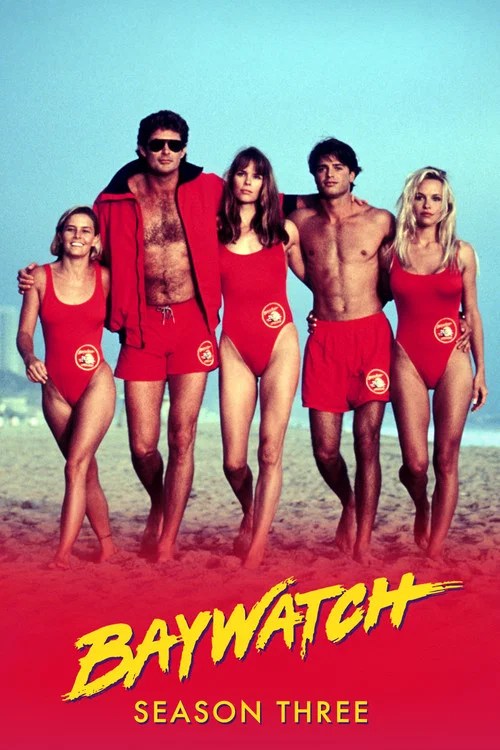
Retro Television Review: Baywatch 2.18 “Sharks Cove”


Welcome to Retro Television Reviews, a feature where we review some of our favorite and least favorite shows of the past!  On Saturdays, I will be reviewing Baywatch, which ran on NBC and then in syndication from 1989 to 2001.  The entire show can be viewed on Tubi.

This week, we meet Eddie’s never-before mentioned brother.

Episode 2.18 “Sharks Cove”

(Dir by Monte Markham, originally aired on April 20th, 1992)

Shauni’s friend Debbie Kent (Monica Lacy) throws a party on the beach with her boyfriend, Zack (Spencer Rochfort). When Debbie and Zack get in the water, Debbie suddenly yells out Zack’s name and is then apparently pulled below the surface by something. Zack runs back to the beach and says that a shark got Debbie.

Shauni, who is still haunted by Jill’s shark-related death in season one, insists on investigating this one on her own. She quickly figures out that Debbie faked her death because her father (Ernie Lively) was putting too much pressure on her to become a competitive, Olympic-class swimmer. It turns out that Debbie has just been hiding out in Zack’s trailer for the past few hours.

Meanwhile, Eddie decides to bring his older half-brother, Bobby (Blake Gibbons), to the beach. Bobby is schizophrenic and lives on a ranch, but his therapist thinks it would be a good idea for Bobby to spend the weekend with Eddie. Bobby ends up stealing a lifeguard outfit and running off. When Eddie eventually finds him, Bobby is on the edge of the pier, trying to rescue someone who isn’t really there. Bobby plunges into the ocean. Eddie saves his life, and hopefully he pays to get Bobby a new therapist, because this one obviously had no idea what she was talking about.

This was a strange episode. Baywatch previously established Eddie as a former juvenile delinquent from Philadelphia who came to Malibu to get away from the gang life. This episode features flashbacks of Eddie and his brother growing up in California, and Eddie is presented as the one who pays for Bobby to stay at the ranch, despite the fact that Eddie was previously portrayed as having come to California without a dime to his name.  (Eddie even slept in his lifeguard tower until Gina and Craig agreed to take him in.)  The first season also established that Eddie had a younger sister who drowned.  In this episode, he has an older half-brother who was schizophrenic and, in the flashbacks, there’s no sign of a sister.  Baywatch is not exactly a monument to continuity.

As for Debbie, she returns home and is forgiven by her father. Considering that lifeguards and police officers have been spending the last day or so searching for her, I assumed she would be in a bit more trouble than she was. Faking your own death is not something that I would recommend.

The Hoff was barely in this episode. Maybe it was his week off.