Retro Television Review: St. Elsewhere 4.3 “Haunted”


Welcome to Retro Television Reviews, a feature where we review some of our favorite and least favorite shows of the past! On Fridays, I will be reviewing St. Elsewhere, a medical show which ran on NBC from 1982 to 1988.  The show can be found on Daily Motion.

I apologize for the delay in posting this review.  I was feeling under the weather last week.  This week, I feel well enough to share this review of one of the most emotional hours of television that I’ve ever watched.

Episode 4.3 “Haunted”

(Dir by Mark Tinker, originally aired on October 23rd, 1985)

This episode begins where the previous one ended.  After crashing his car, Stephen Craig and his wife, Yvonne, are rushed to the Emergency Room.  Despite the best efforts of Drs. Chandler and Axelrod, Stephen dies in the ER.  Yvonne goes into labor, eventually giving birth to Dr. Craig’s granddaughter.  Dr. Mark Craig and Ellen show up shortly after Stephen has been pronounced dead.  While Ellen immediately slips into denial (“That’s not Stephen!”), Dr. Craig calmly tells Chandler that he knows Chandler did everything that he could.

Throughout the episode, Ellen struggles with her grief while Mark holds back his emotions.  He suspects that Stephen was once again using drugs and he even goes to the autopsy to see for himself.  While Stephen’s organs are being weighed, Dr. Craig starts to talk about how he was never close to his son but how, when Stephen was young, they used to read Dr. Seuss together.  “Thank you Sam I Am,” Dr. Craig recites under his breath, right before hearing that Stephen had used cocaine shortly before dying.

For Dr. Craig, Stephen’s renewed drug use is an excuse to refuse to mourn for him.  For Ellen, Stephen’s drug use is proof that his father was too critical and pushed him too hard.  Ellen tells Mark that he never cared about Stephen except for when Stephen said he wanted to be a doctor.  As the episode ends, Dr. Craig sits in his office and thinks about the words of Dr. Seuss and finally, he starts to cry.

I cried too.  I cried a lot while watching this episode.  This was the most emotional episode of St. Elsewhere that I’ve watched so far.  Both William Daniels and Bonnie Bartlett were heartbreaking as a couple who each dealt with their grief in their own way.  It was hard to watch Ellen fall apart in the Emergency Room but it was even harder to watch Dr. Craig fall apart as he realized that his wife was right.  When Stephen was young, the only time they were close was when they read that Dr. Seuss book.  And now, that memory is all Dr. Craig has left.

There were other things that happened in this episode, of course.  One thing about St. Elsewhere is that there are always several stories going on at once.  Elliot worried about his weight, even after discovering that his girlfriend liked the fact that he wasn’t thin.  Dr. Caldwell spent the weekend at a recently purchased house in Cape Cod and Fiscus showed up unannounced.  Dr. Morrison encouraged the other male residents to donate sperm.  Dr. Westphall continued to try to push through his efforts to make St. Eligius a community-centered hospital.  But none of the other stories could match the power of Mark and Ellen Craig losing their son.  In fact, I found myself resenting being taken away from the Craigs.  “Who cares about Cape Cod!?” I said, “The Craigs have lost their son!”

This was not an easy episode to watch but, in the end, it was powerful, it was touching, and it made me cry.


Villain of the Day: Kai Proctor (Banshee)


“At some point, in the very near future, you’ll be made to understand how badly you misjudged me today. And when that time comes and you’re begging me for mercy, I want you to remember this moment because this is the moment you’ve sealed your fate.” — Kai Proctor

Banshee’s Kai Proctor, played with quiet menace by Ulrich Thomsen, distinguishes himself from the familiar lineup of television crime bosses precisely because his authority is defined by contradiction. On the surface, he fits the archetype: a man who controls Banshee’s underworld through legitimate fronts, compromised law enforcement, and an unflinching readiness for brutality. Yet what makes Proctor compelling isn’t the structure of his empire—it’s the tension beneath it, the sense that every assertion of control doubles as a form of self-justification for a man who has never truly stopped answering to the community he claims to have left behind.

That tension is rooted in his Amish upbringing. Proctor’s departure from that world was not a clean break but something closer to an amputation. He retains its language, discipline, and moral rigidity even as he has constructed a life in direct opposition to its teachings. He speaks Pennsylvania Dutch, invokes scripture, and adheres to a personal code of order and restraint that feels almost monastic against the backdrop of his violence.

At the same time, that code should not be mistaken for conventional morality. Proctor is, first and foremost, a brutal crime lord. He traffics in narcotics, prostitution, and murder—violence he is fully willing to carry out with his own hands—and sustains his power through a network of entrenched criminal enterprises. His discipline does not temper his cruelty; it organizes it.

This contradiction becomes even more pronounced in the alliances he chooses to make. The same man who carries remnants of Amish restraint will readily conduct business with Colombian drug cartels or neo-Nazi gangs if it strengthens his control over Banshee and the surrounding counties. His worldview is not governed by external ethics but by an internal logic that allows him to reconcile seemingly irreconcilable acts in service of power and order.

What further complicates Proctor is the way that same internal logic extends beyond self-interest. Time and again, he protects the Amish community that excommunicated him, intervening against outside threats on behalf of people who refuse even to acknowledge him. He does this without expectation of gratitude or reconciliation, suggesting that what drives these actions is not redemption but something more instinctive—an inherited sense of duty he cannot discard. In effect, he continues to guard a flock that has already cast him out.

By the series’ end, Proctor remains a man without a true home—too violent for the Amish world, yet too disciplined and burdened by it to fully belong to the criminal one. His arc does not resolve these contradictions so much as deepen them, and that unresolved tension is precisely what makes him endure. He is not simply a crime boss or a villain, but a figure defined by the uneasy coexistence of brutality and belief, control and longing—someone whose humanity, however obscured, keeps him from ever becoming reducible to a monster.

Villain of the Day

Scenes I Love: Banshee


The Hood vs. Damien Sanchez fight in Season 1, Episode 3 is the moment Banshee stops teasing its brutality and just commits to it—and that’s why it sells you on the series. It isn’t stylized, choreographed “hero wins clean” violence; it’s ugly, exhausting, and morally messy, exactly the kind of sequence that tells you this show won’t flinch. Once Hood (played by Antony Starr who will later portray Homelander in the show The Boys) walks into that casino floor and picks a fight with a professional MMA fighter, the series effectively says: “This is what we are. If you’re still here after this, you’re one of us.”

What makes the scene so gripping is how it reframes both characters through pure physical storytelling. Sanchez starts off dismissive, treating Hood like a joke, and for a good chunk of the fight he is outclassed—technically superior, faster, and more precise. But Hood’s violence isn’t about skill; it’s about will, rage, and a complete disregard for his own body. The moment he shifts from “trying to win a fight” to “I will break you even if I break myself” is the thesis of the whole show: in Banshee, power doesn’t come from being the better fighter, it comes from being the one most willing to go too far. That raw, pragmatic brutality—elbows, smashes, no rules—feels shockingly real compared to typical TV brawls, and it cements Hood as a man whose moral code is written in concussions and blood.

This is also the scene that locks in the show’s tone for the long haul. It’s not just “violent”; it’s specifically consequential violence. Hood walks away badly hurt, Sanchez’s career is effectively over, and the repercussions ripple into Hood’s relationship with Kai Proctor and the wider power structure of the town. For you as a viewer, that’s the hook: the series proves it will follow its own logic to brutal ends, and that the stakes aren’t just emotional but physical and permanent. Once you’ve seen Hood willingly turn himself into a weapon against a trained professional fighter and pay the price, you know Banshee won’t pull punches later—so if you loved this scene, you were already braced for everything the rest of the series throws at you.

Late Night Retro Television Review: Hunter 1.13 “Snow Queen: Part One”


Welcome to Late Night Retro Television Reviews, a feature where we review some of our favorite and least favorite shows of the past!  On Thursdays, I will be reviewing Hunter, which aired on NBC from 1984 to 1991.  The entire show is currently streaming on Tubi and several other services!

This week, we have part one of a two part story.

Episode 1.13 “Snow Queen: Part One”

(Dir by Tony Mordente, originally aired on March 23rd, 1985)

This week’s episode features two tough guys who are both named Dennis.

Dennis Farina appears as Vic Terranova, a gangster who owns a nightclub and who loves country music.  McCall is working undercover as a country-western singer in order to take both him and his cocaine-dealing operation down.

Meanwhile, Dennis Franz appears as Sgt. Jackie Molinas, a sleazy detective from New York who comes to Los Angeles to extradite Sally LaPone (Lycia Neff), a former New York drug dealer who relocated to Los Angeles after she witnessed a murder in the Big Apple.  Sally is now the exclusive drug dealer for rock star Darby Slash (Brendan Hughes).  When she’s arrested at a raid on one of Terranova’s clubs, Molinas demands that she be turned over to him.  Correctly assuming that Molinas is planning on killing her, Sally escapes his custody.  Molinas’s search for Sally leads to him apparently killing both Darby Slash and also one Hunter’s informants.

Hunter can’t prove that Molinas is the killer but he suspects it.  It seems like he could just ask his Mafia relatives if Molinas is working for the Mob but this show has kind of forgotten that Hunter has relatives in the Mafia.

This episode was part one of two so this review is going to feel incomplete.  When the episode ended, McCall had gotten a job singing for Terranova and Molinas was closing in on Sally.  We’ll see how it all plays out next week.  For this week, I’ll simply say that Dennis and Dennis delivered.  Dennis Farina was properly smooth as Terranova.  Meanwhile, Dennis Franz turned Jackie Molinas into one of the sleaziest, most obnoxious characters that I’ve ever seen.  He’s the type of guy who walks into a place, insults all of the men, crudely hits on all of the women, and then attempts to murder a stranger.  Franz made Molinas into a character worthy of loathing.

I always find it interesting when Rick Hunter has to deal with a bad cop.  It’s like the show is saying, “Yes, Rick kills a lot of people but at least he’s not that guy!”

We’ll see how things work out next week.

Retro Television Review: Decoy 1.39 “The Lost Ones”


Welcome to Retro Television Reviews, a feature where we review some of our favorite and least favorite shows of the past!  On Thursdays, I will be reviewing Decoy, which aired in Syndication in 1957 and 1958.  The show can be viewed on Tubi!

This week, Decoy comes to an end.

Episode 1.39 “The Lost Ones”

(Dir by Arthur H. Singer, originally aired on July 7th, 1958)

The final episode of Decoy finds Casey dropping in on Elsa Kramer (Phyllis Newman), a recently-released juvenile offender who Casey previously arrested.  Casey just wants to check on her and to welcome her back to society.  But, when Casey steps — unannounced, which may be okay in New York but seems rather rude to my Texas sensibilities — into the family’s small kitchen, she discovers Elsa’s abusive father is dead and Elsa is holding the gun.  Elsa makes a run for it.  Elsa’s mother (Adelaide Klein) and brother (Morton Lighter) say that Elsa shot her father in self-defense.

Casey doesn’t think Elsa pulled the trigger and is determined to find Elsa and learn the truth before Elsa is arrested again.  Not surprisingly, Casey’s right.  It was her brother who killed their father.  Elsa took the blame because her brother was going to medical school whereas Elsa really didn’t have much of a future to lose.

In some ways, this episode is an appropriate send-off for Casey and Decoy.  It has some location footage of New York, which was always the show’s main appeal outside of Beverly Garland’s lead performance.  It features Casey trying to prove that a seemingly guilty person is actually innocent.  That’s certainly preferable to what we saw last week.

At the same time, this episode had some of the same flaws that were present in quite a few of Decoy’s final episodes.  The dialogue was a bit overbaked.  Even worse, the acting from the supporting cast was not particularly impressive.  Morton Lighter was so twitchy as Elsa’s brother that there wasn’t much doubt as to who the guilty party was.  This episode also featured Casey meeting with the least intimidating street gang in New York history.  The whole thing lacked the authenticity that distinguished Decoy at its best.  I’m not really sure if the show’s producers knew that this would be the final episode of the series.  If they did, they allowed to show to end on a bit of anticlimactic note.

So, that’s it for Decoy.  For the most part, it was a good show.  The last few episodes were perhaps a bit too melodramatic for their own good.  One got the feeling that the show’s writers were under orders to “liven” things up.  But the early episodes made great use of the New York setting and, throughout the series, Beverly Garland gave a great performance as the tough but compassionate Casey Jones.

What will I be watching next?  I’ll let you know next week!

Late Night Retro Television Review: 1st & Ten 4.9 “Team Picture”


Welcome to Late Night Retro Television Reviews, a feature where we review some of our favorite and least favorite shows of the past! On Wednesdays, I will be reviewing 1st and Ten, which aired in syndication from 1984 to 1991. The entire series is streaming on Tubi.

Welcome to 2013!

Episode 4.9 “Team Picture”

(Dir by Stan Lathan, originally aired on November 30th, 1988)

Weird, weird episode.

Taking place 25 years in the future, this episode features the ’88 California Bulls reuniting in 2013.  Of course, since this episode was made in 1988, its version of 2013 is a bit different from the one that we all lived through.  The 2013 of this episode is a dark and depressing dystopia, with militarized police and …. well, maybe it wasn’t that much different from what we lived through.

In 2013, former wide receiver Billy Cooper is a reporter who is hoping to go from the sports desk to the anchor desk.

TD Parker (OJ Simpson) is now the mayor of Los Angeles.

Zagreb is still playing in the NFL.

Doug Clayton is a Nobel prize-winning scientist.

Dr. Death works at a lumber yard.

Mad Dog owns twenty-five “sex discos.”

Bubba Kincaid is now the “King of Beer.”  After his bar was shut down and demolished, he started Bubba Beer, which we are told is the “last American beer.”

And Jethro — well, no one has seen Jethro for ten years.  Bubba tried to get Jethro to join him in his Bubba Beer business but Jethro refused.  He went into wrestling and then he vanished.  Most of his teammates are angry with him.  They view him as being a crybaby who needs to man up.

In this episode, Jethro resurfaces at the Dodds Corporate Headquarters in Los Angeles.  He’s got a bomb strapped to his chest and he’s threatening to blow the whole place up.  TD and Billy both try to talk to him but Jethro doesn’t want to hear what they have to say.  Dr. Death approaches him and encourages him to blow himself up.  Finally, Bubba goes to Jethro and apologizes for abandoning him.  Unfortunately, Bubba gets shot by a robot sniper and is transformed into a pile of blue ash as Jethro watches.

And that’s how the episode ends!

I appreciated the fact that this episode was so weird.  It pretty much came out of nowhere and I’ll be surprised if it’s ever referenced again.  Probably the most interesting thing about it is that all of the Bulls ended up becoming jerks.  No one seems to really care that Jethro might die.  For that matter, Jethro isn’t that upset when Bubba gets killed.

I imagine when this episode aired, it was meant to be a commentary on how uncertain the life of a pro-athlete can be once they’re no longer playing.  For every success story, there’s someone else who ends up losing all of their money and being exiled to the fringes of society.  Seen today, it’s hard to watch Jethro without thinking about CTE and all of the former players who have succumbed to it.

This episode was so odd that it defies a traditional “good or bad” classification.  I appreciated it for trying to do something different.

Retro Television Review: The Love Boat 8.2 and 8.3 “Vicki and the Fugitive/Lady in the Window/Stolen Years/Dutch Treat”


Welcome to Retro Television Reviews, a feature where we review some of our favorite and least favorite shows of the past!  On Wednesdays, I will be reviewing the original Love Boat, which aired on ABC from 1977 to 1986!  The series can be streamed on Paramount Plus!

This week, we have a two-hour episode of The Love Boat!

Episodes 8.2 and 8.3 “Vicki and the Fugitive/Lady in the Window/Stolen Years/Dutch Treat”

(Dir by Robert Scheerer, originally aired on September 29th, 1984)

This week, the crew is assigned to a European cruise!  Aboard the Royal Viking Sky, the crew and their passengers sail from England to the Netherlands and back again.  This is one of those episodes that was shot on location and, as always, the scenery is lovely.

The stories on the other hand….

Vicki falls for a deckhand named Peter (Patrick Cassidy).  In fact, Vicki even finds herself falling in love with him.  (In this episode, it’s established that Vicki is now 17.  Is she old enough now to actually get paid a salary for all the work she does on the boat?)  However, Peter is actually Anton, a young man who is being pursued by Interpol.  The show spends a lot of time trying to make it appear as if Antono is a criminal of some sort.  Actually, he’s just a royal prince who ran off because he wasn’t ready to accept his official duties.  Vicki is happy to discover that Anton isn’t a criminal but unhappy that he now has to stay behind and rule a kingdom in Europe.

Captain Stubing probably could have helped Vicki during all of this but he was too busy pursing a romance with Inga Van Damme (Elke Sommer), a mysterious passenger who, much like Anton, appeared to be keeping a secret from her romantic partner.  Telling Stubing that she couldn’t be with him, Inga left the ship early.  Stubing wandered all over Amsterdam, searching for her.  And he discovered her …. working as a madam.  “It is legal here,” Inga explains.  “But is it morally right?” Stubing replies.

Speaking of being morally right, Dr. Foster (Pat Harrington, Jr.) finds himself on the boat with both his wife (Eileen Brennan) and his mistress (Teri Copley)!  Wow, how many times can the exact same thing happen on the Love Boat?  As always with this show, the husband went back to his wife but, fortunately, his mistress met someone while leaving the boat.  “Can I help you with your bags?” the charming stranger asks.  “Are you married?” the former mistress replies.

Finally, Danish Lisa Anderson (Cloris Leachman) meets Erik Larsen (George Kennedy), another Dane, on the boat.  (George Kennedy speaks with his normal American accent.)  Erik falls in love with Lisa (Hey!  That’s my name!) but Lisa is haunted by memories of her former lover (Tim Robbins) being dragged away by the Nazis during World War II.  At first, it seems that Lisa is too haunted by what happened to move on.  However, it is eventually revealed that her former lover is Erik Larsen!  Somehow, Tim Robbins grew up to be George Kennedy.  In her memories, it appears that Lisa betrayed Erik but actually, by pointing him out to the Nazis, she bought him time.  While everyone else in the town square was being executed, Erik was being interrogated and, because of this, he was still alive when the Americans returned.

So, here’s the problem.  Cloris Leachman, not surprisingly, gives a great performance as Lisa.  And George Kennedy, once you get over the idea that he’s supposed to be Danish, gives a pretty good performance as Erik.  But flashbacks of Nazi atrocities feel very much out-of-place when mixed in with scenes of Vicki dating a prince and the doctor trying to balance being on a cruise with both his wife and his mistress.  Tonally, this episode is all over the place.

That said, the scenery’s lovely (am I repeating myself) and Ted McGinley fit in nicely with the rest of the crew.  Pat Klous isn’t bad as Judy but, at least at this point in the season, she doesn’t have the same sort of brother/sister chemistry that Lauren Tewes had with Fred Grandy and Bernie Kopell.  McGinley, of course, had the advantage that, while he was new, he still wasn’t replacing anyone.  Poor Pat Klous still has to escape from the shadow of the former cruise director.

Late Night Retro Television Review: Pacific Blue 4.11 “Broken Dreams”


Welcome to Late Night Retro Television Reviews, a feature where we review some of our favorite and least favorite shows of the past! On Tuesdays, I will be reviewing Pacific Blue, a cop show that aired from 1996 to 2000 on the USA Network!  It’s currently streaming everywhere, though I’m watching it on Tubi.

This week, the entire police force is worthless.

Episode 4.11 “Broken Dreams”

(Dir by Scott Lautanen, originally aired on December 6th, 1988)

While pursuing a pure snatcher, Cory accidentally runs over the victim on her bicycle.  I know that probably sounds like a joke but that’s actually how this episode begins.  It turns out that the victim is deaf and couldn’t hear Cory screeching at her to get out of the way.  It turns out that Monica knows sign language.  When Cory demands to know why Monica knows how to sign, Monica refuses to tell her.

(And really, it’s none of Cory’s business.)

Cory and a reluctant Monica investigate a series of robberies that have targeted deaf beggars on the pier.  Cory learns that there is an entire deaf community that simply wants the hearing world to leave them alone.  (Cory apparently doesn’t get out much.)  Monica eventually admits that her mother is deaf and Cory eventually admits that Monica can be a good cop when she tries.  That’s nice of Cory to finally since that was already established during Monica’s first episode.  One gets the feeling that the show’s writers weren’t really sure what to do with Monica as a character.  She started out as a badass undercover cop and then was quickly transformed into an emotionally unstable, selfish bicycle cop.

While Cory and Monica learn to work together, Bobby finds himself temporarily transferred to the horse patrol.  (A member of the horse patrol is also reassigned to ride a bicycle.)  Why exactly anyone thought this was a good idea, I don’t know.  It turns out that Bobby can’t ride a horse to save his life.  His supervisor thinks that’s hilarious but you have to wonder how many crimes are being committed while all the cops are standing around and laughing at Bobby?

Bobby and TC spend most of this episode trying to catch two kids who keep shooting off a potato cannon.  They never really catch them, largely because Bobby can’t control his horses.  Instead, the kids knock themselves out when they blow up a watermelon.  Their reign of terror is ended but it’s not really because of anything done by the members of Pacific Blue.  The kids themselves just go too ambitious.

The theme of this episode was that every cop was extremely incompetent.  I’ve never been a “defund the police” person but, in this case, I doubt it would make much difference.  Defund Pacific Blue!

Retro Television Review: Saved By The Bell: The New Class 2.10 “A Matter of Trust”


Welcome to Retro Television Reviews, a feature where we review some of our favorite and least favorite shows of the past!  On Tuesdays, I will be reviewing Saved By The Bell: The New Class, which ran on NBC from 1993 to 2o00.  The show is currently on Prime.

This week, it’s all for charity!

Episode 2.10 “A Matter of Trust”

(Dir by Don Barnhart, originally aired on October 8th, 1994)

Oh crap, it’s another country club episode.

It’s time for the annual charity event!  The male employees of the club are auctioned off to various women bidders so that they can compete together in a contest.  The winning team gets a hot air balloon ride.  Mr. Belding makes it sound like a big deal but it’s hard not to notice that hardly anyone outside of the main group seems to take part.  Apparently, this is a charity being funded exclusively by teenagers with summer jobs.

Bobby asks Megan to bid on him because he thinks it’ll make him more attractive to the woman who he hopes will buy him.  Instead, Megan bids too much and she wins Bobby.

Lindsay wins her boyfriend, Tommy D.  Lindsay is excited but Tommy is worried because he’s scared of heights.

Because Mr. Belding says that Screech has too many responsibilities to be auctioned off, Screech can only watch as his girlfriend, Alison, purchases Brian.

Brian’s girlfriend, Rachel, buys Hubert Dweebly (Mark David) because she feels sorry for him.  That’s something that I would definitely do.  Hubert then turns out to be a total perv who spends the entire competition pawing Rachel and trying to get her to kiss him.  This would perhaps have been funnier if Sarah Lancaster had been older than 14 when she played Rachel.

Anyway, Screech gets jealous and tries to get Brian in trouble so that he can take Brian’s place.  And Tommy doesn’t want to win so he tires to help Bobby cheat but everything gets screwed up and Tommy and Lindsay win anyways.  It’s a typical Saved By The Bell episode, you can probably already guess everything that happens.  Allison turns out to be very forgiving.  Allison might not be that smart.

The main problem with this episode is that it asks us to believe that Allison would find needy, uberemotional, shrill-voiced Screech to be in any way attractive.  During the second season, Dustin Diamond’s performance was nowhere near as obnoxious as it would eventually get.  But his version of Screech was still too cartoonish to be taken seriously.  His performance in this episode is …. well, it’s just bad.  There’s no other way to put it.  You really do find yourself thinking, “Allison and Brian actually make a lot more sense than Allison and Screech.”

It’s funny to me that the first Country Club episode was all about the importance of working hard when you have a job and we haven’t actually seen anyone doing their job since.

Late Night Retro Television Reviews: CHiPs 5.27 “Force Seven”


Welcome to Late Night Retro Television Reviews, a feature where we review some of our favorite and least favorite shows of the past!  On Mondays, I will be reviewing CHiPs, which ran on NBC from 1977 to 1983.  The entire show is currently streaming on Prime!
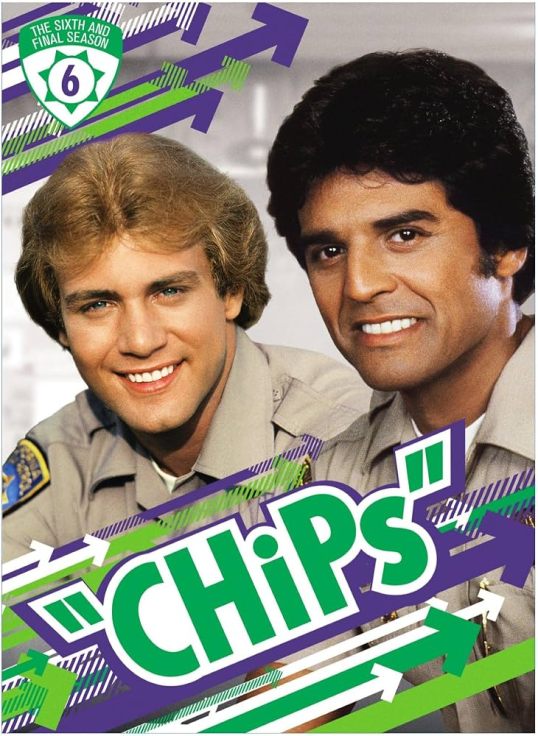
This week, the fifth season comes to an end.

Episode 5.27 “Force Seven”

(Dir by Leslie H. Martinson, originally aired on May 23rd, 1982)

When evil rich guy Nakura (John Rhys-Davies) steals a short-range missile from a military convoy,  he informs the Mayor of Los Angeles that he will fire that missile at the city unless he’s paid a healthy ransom.  The Mayor wants to send in the SWAT Team but one-eyed Lt. John Legarre (an eyepatch wearing Fred Dryer — yes, the star of Hunter) objects.  Guns won’t do the job, Legarre explains.  Why not send in Force Seven?

Led by Legarre, Force Seven is a secret division of the LAPD.  Including Legarre, there’s only four of them.  (So, why aren’t they Force Four?)  Sly (Tony Longo — hey, Mad Dog from 1st & Ten) is tough and strong and also a ventriloquist.  Cindy (Dona Kei Benz) is small but fast and doesn’t have a sense of humor.  Rick Nichols (Tom Reilly) is a rebel cop who does things …. HIS WAY!  What do they all have in common?  They all know karate!

This doesn’t sound like an episode of CHiPs, does it?

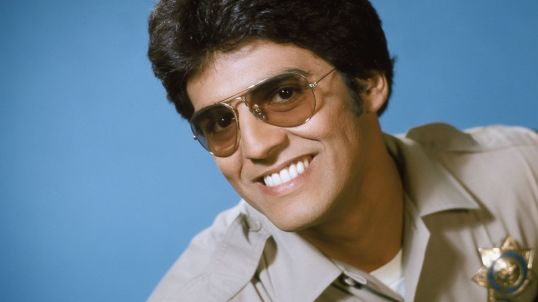
Well, technically, it’s not.  It’s a backdoor pilot.  Ponch and Baker appear at the start of the episode, arresting an engineer who is carrying the schematics for the stolen missile.  And they also appear at the very end of the episode, in which Getraer asks them if they remember that engineer they pulled over.  However, neither Ponch nor Baker interact with anyone from Force Seven.  I get the feeling that the Force Seven pilot was shot and then someone decided, “Why don’t we add Erik Estrada and Larry Wilcox and disguise this as an episode of CHiPs?”

Imagine if you were a CHiPs fan in 1982.  It’s the night of the season finale.  You turn on the TV because you want to watch motorcycle chases and car crashes.  Instead, you find yourself watching Fred Dryer wearing an eye patch and Tony Longo using a puppet to discuss elements of Eastern philosophy.  That’s one reason why backdoor pilots have never made sense to me.  They always seem like they would have just ticked off anyone who was watching.

Force Seven did not become a show.  From watching this episode, I think it probably would have been enjoyably dumb if it had led to a series.  As I already mentioned, Fred Dryer wears an eye patch.  Tony Longo is made up to look like Sylvester Stallone.  (His character is even named Sly!)  There’s something kind of amusing about two guys who are so big that they could obviously just take anyone out with one punch instead choosing to drag out every fight with karate.

(Amusingly enough, in Force Seven, the mayor of Los Angeles was played by former real-life mayor Sam Yorty, who ran for President in 1972.  The police commissioner was played by Ed Davis, the real life former chief of the LAPD who was serving in the California State Senate at the time and who later ran for the U.S. Senate in 1986.)

It is a little sad that this was Larry Wilcox’s final episode of CHiPs.  Fed up with Estrada getting all of the good storylines, Wilcox did not return for Season 6.  (His replacement would be played by Force Seven‘s Tom Reilly, though as a different character.)  For the first two seasons, Wilcox was the main character while Erik Estrada was the comedic sidekick.  However, by the time season 5 rolled around, it was clear that the producers were far more interested in Estrada than Wilcox.  As an actor, Wilcox wasn’t a showy as Estrada but he was more believable a cop.  In his final episode, Wilcox gets not a grand goodbye but instead appears only in two brief scenes.

Next week, we’ll start the sixth and final season!