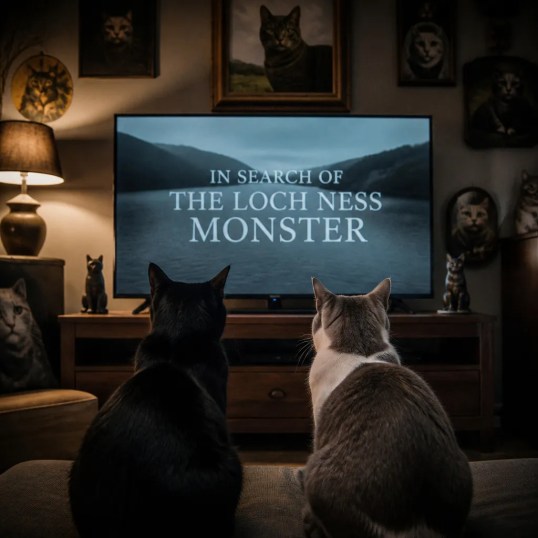
Tonight, on In Search Of, Leonard Nimoy tells us about the search for the Loch Ness Monster. Can you prove Nessie doesn’t exist?
Tonight, on In Search Of, Leonard Nimoy tells us about the search for the Loch Ness Monster. Can you prove Nessie doesn’t exist?
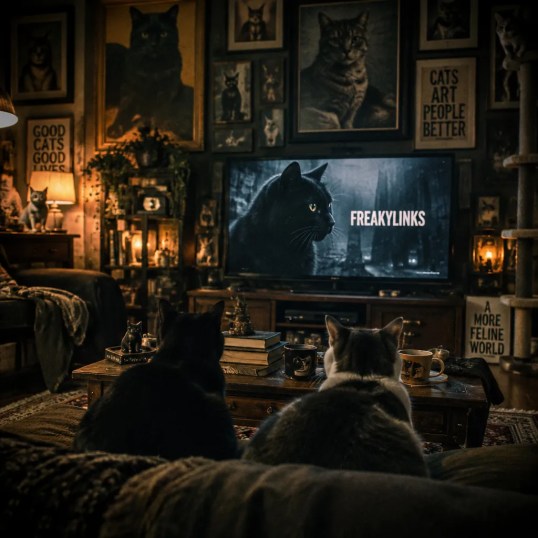
For tonight’s episode of Freakylinks, we have a little something called Still I Rise. It has a zombie theme to it. Towards the end of the episode, Ethan Embry goes a little crazy, as if it’s Rex Manning Day all over again.
This episode originally aired on January 12th, 2001. And you can watch it below!
Welcome to Retro Television Reviews, a feature where we review some of our favorite and least favorite shows of the past! On Saturdays, I will be reviewing Baywatch, which ran on NBC and then in syndication from 1989 to 2001. The entire show can be viewed on Tubi.
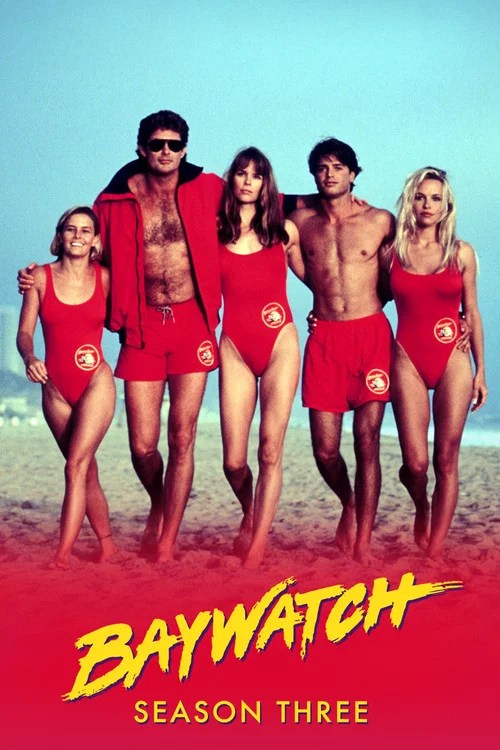
This week, we start the third season!
Episodes 3.1 and 3.2 “River of No Return”
(Dir by Douglas Schwartz, originally aired on September 14th, 1992)
The third season of Baywatch begins with Mitch learning of the death of his uncle, an eccentric old prospector who always claimed that he was going to find gold. Mitch and Hobie decide to head to Northern California to investigate, and Eddie and Shauni agree to join them. For Eddie, it’s a chance to have one last adventure with Mitch before he heads off to Australia as part of the lifeguard exchange program. For Shauni, it’s a chance to reveal to Eddie that he knocked her up. For the show, it’s a chance to introduce CJ Parker (Pamela Anderson), a river guide who plays the saxophone and who gives good relationship advice.
Yes, this episode was Pamela Anderson’s first appearance on Baywatch. It turns out that, before she was a sax-playing river guide, CJ was a lifeguard, and Mitch would love it if she would return to the beach. Oddly, even though everyone already knows CJ, no one has ever mentioned her before. Considering that she was apparently a legendary lifeguard, you would think that she would have been mentioned in the past.
However, before CJ can return to the beach, she has to help Mitch and the gang find the gold mine that Mitch’s uncle found shortly before he died. Unfortunately, Drew (Bill McKinney) and Lonny (Mickey Jones), two no-good rednecks, also want to find the mine.
Meanwhile, back at the beach, Summer Quinn (Nicole Eggert) and her mother, Jackie (Susan Anton), have moved to Los Angeles to get away from Jackie’s abusive ex, Jed (Geoffrey Scott). Jed follows them but, fortunately, he’s put in his place by Matt Brody (David Charvet), a rich kid who is hoping to become a lifeguard. Like all of the other prospective lifeguards, Matt Brody is curious about “Bobby Quinn,” who is new to California and who was apparently a champion swimmer back in Pennsylvania. At the lifeguard try-out, Summer tells Matt that Summer is just a nickname and her first name is actually Roberta.
This two-part episode largely exists to introduce Pamela Anderson, Nicole Eggert, and David Charvet as regulars. All three of them do pretty well for their first episode. They all seem like they actually want to be there, which is quite a contrast to Billy Warlock and Erika Eleniak, both of whom have subsequently been pretty vocal about not being happy with the direction the show took during the second season. Of course, as soon as Eggert and Charvet show up, it’s easy to see that there’s no longer going to be room for Warlock and Eleniak. So, it’s not a shock when this episode ends with Shauni and Eddie marrying and leaving Baywatch.
This was a good way to start the season. Yes, the whole gold mine thing was a bit silly, but it gave David Hasselhoff a chance to do the earnest action hero thing, and it also introduces Pamela Anderson, who—in this episode at least—comes across as being surprisingly natural and down-to-earth in the role of CJ.
Next week, Matt goes undercover and meets even more new characters!
Welcome to Late Night Retro Television Reviews, a feature where we review some of our favorite and least favorite shows of the past! On Fridays, I will be reviewing SLEDGE HAMMER!, a cop comedy which ran on ABC from 1986 to 1988. The entire series can be found on Prime!

Sledge Hammer says to trust him. Does that mean he’ll be able to find a bunch of missing babies?
Episode 1.10 “If I Had A Little Hammer”
(Dir by Kim Manners, originally aired on November 29th, 1986)
Someone has abducted all of the newborn babies from the local hospital. Captain Trunk suspects that the babies are going to be sold to couples looking to adopt. “You mean like a mom and pop operation?” Hammer asks. Doreau asks to be assigned to the case and Trunk reluctantly agrees. He has full faith in Doreau. It’s her partner that worries him.
Most of the humor in this episode comes from the fact that Hammer doesn’t like babies. The reason why the humor works is because Hammer never changes his mind. Hammer dislikes babies just as much at the end of the episode as he did at the start. It provided a nice contrast to not only every other character on the show but also to what we usually expect from television shows.
(Personally, I love babies but I get tired of seeing them in commercials where the whole joke is that they need their diapers changed.)
The babynappers are a brother/sister team. Brion James plays the brother and it was nice to see that he could handle comedy just as well as drama. He fit right in with the Sledge Hammer universe. The big confrontation between him and Sledge Hammer took place inside the warehouse of baby products supplier. Hey, it made laugh!
This was perhaps the most wholesome show about kidnapping and illegal adoption that I’ve ever seen.
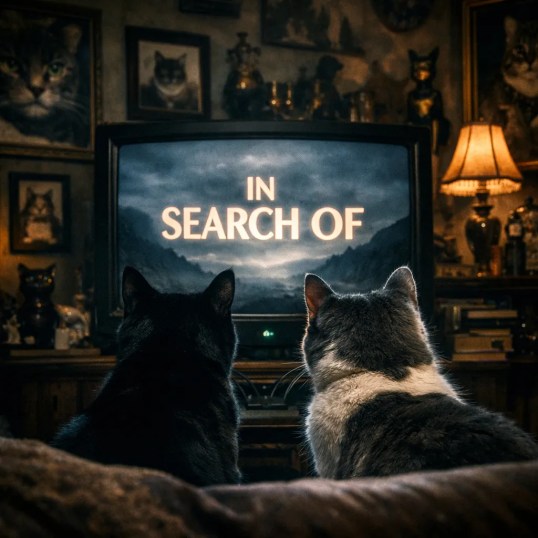
What was the Siberian fireball?
One of the more intriguing mysteries of history is investigated in this episode of In Search Of…. Leonard Nimoy narrates!
(It’s always strange to me that there hasn’t been hundreds of movies made about the Tunguska event. I know that the current popular theory is that it was a comet or, at the very least, a really big asteroid. Personally, I like the theory that it was Nikolai Tesla testing out a death ray.)
Welcome to Retro Television Reviews, a feature where we review some of our favorite and least favorite shows of the past! On Fridays, I will be reviewing St. Elsewhere, a medical show which ran on NBC from 1982 to 1988. The show can be found on Daily Motion.
This week, Bobby Caldwell returns.
Episode 4.15 “Family Feud”
(Dir by Mark Tinker, originally aired on January 29th, 1986)
After being gone for the last few episodes, Bobby Caldwell (Mark Harmon) returns to St. Eligius. As he explains it, he’s spent the last month or so with his family in Baltimore. He worked on his family’s farm and got in touch with what actually matters in life. Westphall is so happy to hear this that he immediately starts talking about the time he spent volunteering in Ethiopia.
Caldwell is ready to get his facial scar taken care of. He meets with an old colleague from medical school, Dr. Duncan Harper (Kip Gilman). Harper says that the operation should be simple and quick and then Caldwell will be ready to hit the bars again. As a precaution, Caldwell gives blood, just in case it’s needed during the surgery.
Later, a shaken Harper comes to St. Eligius and meets privately with Caldwell. Harper says that the lab did some standard tests on Caldwell’s blood and that it appears that Caldwell might have AIDS. Caldwell says there has to be some sort of mistake, but Harper shakes his head. Harper retested the blood himself. He asks if Caldwell has any lesions. Caldwell looks down at a spot on his hand and says, “I thought it was just an infection.”
Caldwell tells Westphall about his diagnosis. Westphall tells Caldwell not to give up hope, that a cure might be right around the corner. Caldwell replies that he’s probably got 15 months to live and he’s not going to stop working. After Caldwell leaves, Westphall meets with Auschlander and they both agree that they have no idea what to do.
Meanwhile, it’s Jack Morrison’s birthday! Clancy arranges for him to have a birthday party in the doctor’s lounge. She also continues to flirt with Fiscus. You might expect Morrison to be upset about that, but Morrison is too busy flirting with Mona, Fiscus’s ex! Yeah, we’ll see how that works out….
Finally, Augusta Endicott previously told Dr. Craig that she didn’t want to have a bypass, even if it meant that she would die otherwise. However, when the entire Endicott family comes to visit her, she changes her mind. (During the operation, Dr. Wade comments that Dr. Craig must really be looking forward to the next Endicott presidential campaign. Craig snorts and says that the Endicotts are a bunch of bleeding-heart liberals and he wouldn’t vote for them in a million years. I love Dr. Craig.) Sen. Gordon Endicott (Charles Cioffi) goes to the chapel to pray and ends up getting shot by a lone gunman.
Gee, who saw that coming?
The Endicotts continue to bore me. They’re just not that interesting as either characters or as thinly-veiled stand-ins for the Kennedy family. On the other hand, Bobby Caldwell’s storyline was powerful and Mark Harmon gave an especially good performance. (I just wish the show had made it clear that AIDS wasn’t meant to be some sort of narrative punishment for Caldwell’s previous bad behavior.) It will be interesting to see how the hospital deals with Caldwell’s diagnosis. Will he actually be allowed to continue to do his job? We’ll find out next week.
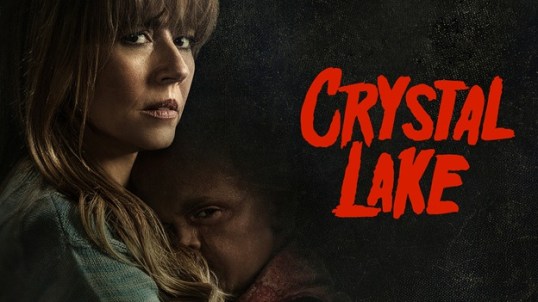
Crystal Lake is a thousand times better than Carrie.
Whoops. Did I say a thousand? I meant to say a million.
I say this despite the fact that Crystal Lake pretty much falls apart during its final two episodes. If the first six episodes constitute an enjoyable and, at times, even loving homage to the Friday the 13th films, the final two episodes go off the rails by giving Jason Voorhees, the epitome of an old-school slasher villain and the symbol of unelevated horror, a very 21st-century, American Horror Story-style origin story. It’s a thoroughly unnecessary addition to the Jason saga, one that exists to plug the plot holes that most Friday the 13th fans have always been happy to ignore. It’s just as bad as Jason Goes to Hell’s insistence that Jason was actually a space slug who could possess people. Personally, I think that we should do what true Friday the 13th fans always do whenever we come across something that doesn’t work and just ignore it.
Even taking that into account, Crystal Lake is still infinitely better than Carrie.
The difference between Crystal Lake and Carrie is that Crystal Lake isn’t trying to be something that it isn’t. Crystal Lake isn’t ashamed of being a pulpy, sordid, and rather bloody horror miniseries. Carrie was made to win Emmys and critical plaudits. Crystal Lake was made to make you put your hands over your eyes whenever Pamela Voorhees (Linda Cardellini) hacks someone’s face off. Crystal Lake fully embraces the horror. Crystal Lake obviously loves the Friday the 13th films, with all of their flaws. Carrie is a series made by and for people who think that they’re better than the horror genre. Crystal Lake is not.
Crystal Lake serves as a prequel to the first Friday the 13th film. Pamela Voorhees is the cook at Camp Crystal Lake and, in the first episode, her son, Jason, disappears while swimming. The camp counselors who were supposed to be watching him were making love. Pamela snaps. She refuses to accept that her son has drowned. She watches angrily as the town moves on. When she hears that the Christys are going to reopen the camp, she is not pleased. That said, she’s snapped long before that. Unlike Carrie, which went out of its way to absolve the character of any sort of responsibility, Crystal Lake does not shy away from presenting Pamela as an unhinged killer. She kills two mysterious men who show up at her house. She kills the abusive mother of Grace (Gwendolyn Sundstrom), who was Jason’s only friend at camp. When a group of Marxist hippies show up and try to convince the now-orphaned Grace to run away with them, Pamela goes after them as well. Pamela kills a lot of people in this miniseries, but she remains a compelling character because of Linda Cardellini’s wonderful performance in the lead role. Her love for Jason is real, and it’s easy to understand why she would feel such rage at a town that is pretending he didn’t exist or why she would have no sympathy for a mother who abuses her child. Cardellini gives such a strong performance that it’s disappointing that the final two episodes let the series down.
As someone who has seen all of the Friday the 13th films, I appreciated how carefully and exactly Crystal Lake recreated the feel and the visuals of the first two entries. Its version of Crystal Lake looks identical to the one that poor Annie discovered during the first film. Even the minor characters are made up to almost exactly resemble the actors who played them in the first film. I immediately knew who was supposed to be Enos. I knew who was supposed to be the waitress with whom Steve Christy would eventually share one of his final conversations. (Steve Christy is seen a few times in Crystal Lake, as a very ’70s teenager.) A wonderful actor named Nick Cordileone played the role of “Crazy” Ralph and, whenever he was on screen, I could immediately see him becoming the character that Walt Gorney played in the first two films. A lot of love and care went into recreating the town of Crystal Lake and the camp. The series does, admittedly, move things up chronologically. In the first film, Jason disappeared in the ’50s. In the series, it happens in the ’70s. That’s no big deal, though. The show has a lot of fun both recreating the ’70s and poking fun at the decade’s unique culture. One need only watch the scene where Pam is dragged to a seminar given by a self-consciously hip self-help guru to understand why the decade gave rise to the unapologetically cynical slasher boom of the ’80s.
Now again, the Jason origin story that is presented in the seventh episode is a problem. And if Crystal Lake returns for a second season, I sincerely hope that it will be ignored in much the same way that the franchise has traditionally ignored its mistakes. If it doesn’t, it’s not going to bode will for the future of this series. Still, flaws and all, Crystal Lake is an enjoyably sordid and bloody show. It makes no apologies for being what it is. Other horror shows could stand to learn from it.
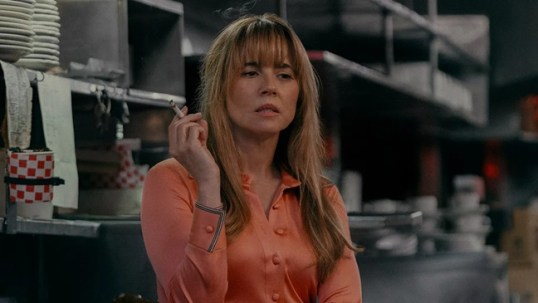
Welcome to Late Night Retro Television Reviews, a feature where we review some of our favorite and least favorite shows of the past! On Thursdays, I will be reviewing Hunter, which aired on NBC from 1984 to 1991. The entire show is currently streaming on Tubi and several other services!
This week’s episode is a difficult one.
Episode 2.6 “Rape and Revenge: Part 1”
(Dir by Gary Winter, originally aired on November 2nd, 1985)
I nearly didn’t watch this episode.
When I saw the title of this episode and then read the plot description on the IMDb, my first instinct was to try to find an excuse to get out of having to watch and review it. The plot description read: McCall is raped by a visiting diplomat and her colleague’s hands are tied when he claims diplomatic immunity. Nearly every episode of Hunter so far has featured McCall getting into some sort of trouble. She’s been kidnapped countless times. She’s been shot at least three times. She’s been in more than a few fights. In the past, that didn’t bother me because no one is going to mistake Hunter for a realistic show. But when I read what was going to happen to her in this week’s episode, I immediately imagined that the show would handle it in the worst and most insensitive way possible.
Still, I watched the episode because I’m a completist. And you know what? I was wrong.
This episode opens with Hunter and McCall investigating the discovery of a dead woman at the Curaguayan Consulate in Los Angeles. (Curaguaya is a fictional country in South America.) One of the consuls, Raoul Marino (Richard Yniguez), immediately starts hitting on McCall, despite the fact that she’s conducting a police investigation. Later, Raoul sends three different flower deliveries to McCall’s house. When Raoul then shows up at McCall’s house, she tells him to leave. He rapes her and then flees. McCall calls Hunter, who rushes over to her house and then takes her to the hospital.
Because he has diplomatic immunity, Raoul thinks that he can get away with rape. He also thinks that he can get away with shooting Hunter in the shoulder when the latter confronts him. And it turns out that Raoul is correct. With both McCall and Hunter temporarily out of action, he boards a plane to Curaguaya and returns home.
To the show’s credit, it handles McCall’s rape sensitively. Stepfanie Kramer gives a strong performance as McCall. The scenes at the hospital, where the still bruised McCall is examined by doctors and investigators, capture the fact that the trauma of being raped doesn’t just end with the act. My fear was that this episode would have McCall magically recover at the end of the hour. It didn’t. Instead, we watch as McCall goes through therapy and as she slowly reaches the point where she feels that she can return to work. But even when she does return, the pain and the trauma are still there. This episode doesn’t simplify rape or use it as just another melodramatic plot twist. For that, it deserves a lot of credit.
(My only real issue that, during a recovery montage, the scenes of McCall in therapy are mixed with scenes of Hunter recovering from being shot in the shoulder. I feel like McCall deserved to have that montage to herself.)
This is a two-part episode. The first hour ended with McCall realizing that Hunter had traveled down to San Pablo, Curaguay to get revenge on Raoul. (Hunter previously told McCall that he was taking a few days off to go fishing.) McCall then made a reservation on the next flight to San Pablo. The story concludes next week!
I share this 1997 episode of Baywatch Nights every October because it’s just wonderfully strange. Two 900 year-old Vikings have been unfrozen and are causing chaos in Los Angeles! Who can stop them?
David Hasselhoff, of course!
(You can read my review of this beautifully odd episode here. Valhalla!)
Are there mole people living in the New York subway system?
Of course there are. Everyone knows that. Still, watch tonight’s episode of Freakylinks and find out for sure!
This episode originally aired on October 20th, 2000.

