Retro Television Review: Decoy 1.33 “The Lieutenant Had A Son”


Welcome to Retro Television Reviews, a feature where we review some of our favorite and least favorite shows of the past!  On Thursdays, I will be reviewing Decoy, which aired in Syndication in 1957 and 1958.  The show can be viewed on Tubi!

Episode 1.33 “The Lieutenant Had A Son”

(Dir by David Alexander, originally aired on May 26th, 1958)

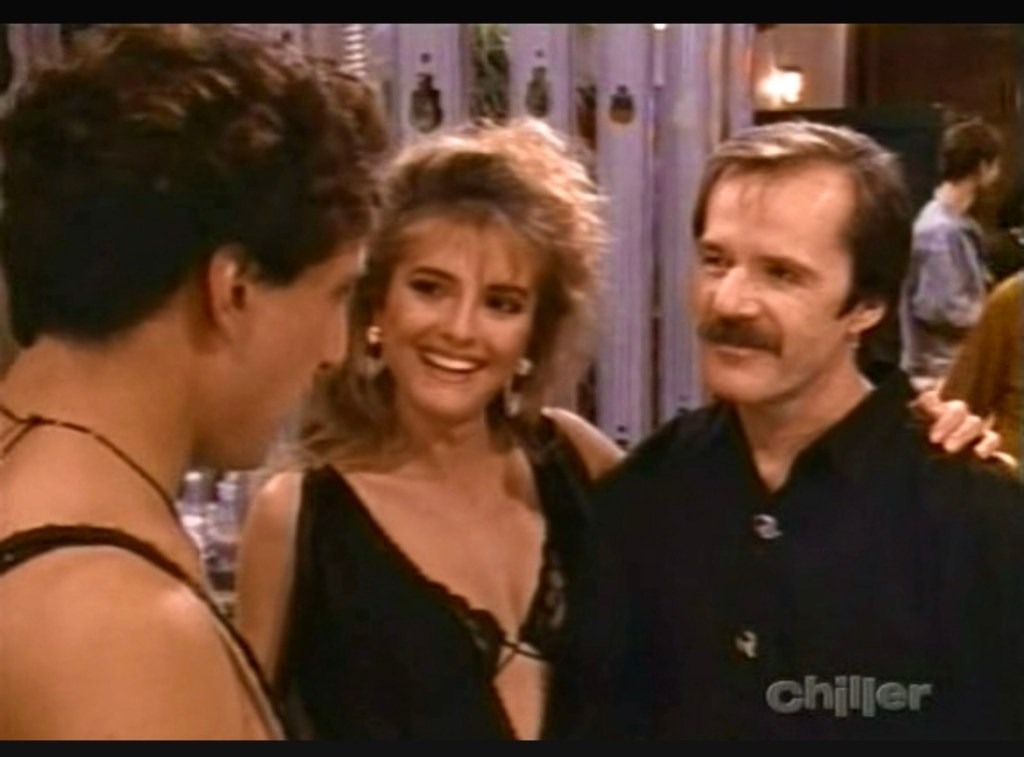
After spending five years overseas, career soldier Lt. Larry Hayes (Leo Penn) returns to New York City.  He wants to see the son that he’s never met and he’s not happy when he discovers that, in his absence, his wife (Loretta Leversee) has married another man (Will Kuluva).  His wife goes to the police for protection but, once it becomes obvious that she committed bigamy, Casey has to try to sort out who is married to who and who Larry, Jr. (Robie Grant) belongs with.

This was an odd episode.  Absolutely no one was sympathetic.  I even got annoyed with Casey for getting involved with these people.  Lt. Hayes was a self-righteous martinet.  His wife was a flake who simply didn’t seem to understand why she wasn’t being given a pass on the whole bigamy thing.  Five year-old Larry, Jr. was played by a child named Robie Grant.  I was not surprised to discover that this was Grant’s only credit because he was beyond lousy in the role.  I have never been more annoyed by a five year-old.

The most interesting thing about this episode is that Larry Hayes is played by Leo Penn, the father of Sean, Chris, and Michael Penn.  Leo Penn gives a believable performance as Larry.  It wasn’t his fault that the character wasn’t particularly likable.

Late Night Retro Television Review: 1st & Ten 4.3 “Caught In The Draft”


Welcome to Late Night Retro Television Reviews, a feature where we review some of our favorite and least favorite shows of the past! On Wednesdays, I will be reviewing 1st and Ten, which aired in syndication from 1984 to 1991. The entire series is streaming on Tubi.

This week, it’s for the draft.

Episode 4.3 “Caught In The Draft”

(Dir by Stan Lathan, originally aired on October 19th, 1988)

The Bulls attend the draft and screw everything up.  It turns out that allowing the players to own the team was a really bad idea.  In fact, it goes so badly that TD Parker (OJ Simpson) really deserves to be fired for suggesting it in the first place.  But, nobody wants to get on TD’s bad side, for some reason.

How badly does it go?

The Bulls need a linebacker.  Sonny Cowers, the phenom out of Louisiana, is available in the first round.  Unfortunately, Mad Dog worries that, if he drafts Sonny, the Bulls will then either release or trade him.  Seeing as how Mad Dog owns the team, I’m not really sure how he could be traded or released but whatever.  Mad Dog picks a player that the team doesn’t need and Sonny is picked by another team.

Meanwhile, Jethro and Bubba insist on drafting an unheralded running back because they’re convinced the man is in their hotel room and threatening to commit suicide if he’s not drafted.  It turns out that the man in the hotel room was just an actor and that the Bulls just got conned into drafting some fat guy from Tennessee.

The Bulls do get a new head coach when TD trades a sixth round draft pick for the new coach of Houston’s term, Ernie Denardo.  That’s right, Denardo’s back!

The draft is such a disaster that the bank cancels their loan and the players are forced to sell the team to the fast food company that they were trying to avoid being purchased by in the first place.

I actually liked this episode.  I enjoyed the chaos of the draft and it was hard not to laugh at the earnest stupidity of the players.  Shouldn’t you guys be trying to draft a quarterback? I thought at one point and, for a second, I felt like a sports expert.

Seriously, they need do need to get a quarterback.

Retro Television Review: The Love Boat 7.22 “The Lady and the Maid/Love Is Blind/The Babymakers”


Welcome to Retro Television Reviews, a feature where we review some of our favorite and least favorite shows of the past!  On Wednesdays, I will be reviewing the original Love Boat, which aired on ABC from 1977 to 1986!  The series can be streamed on Paramount Plus!

This week, it’s all about maids and bartenders!

Episode 7.22 “The Lady and the Maid/Love Is Blind/The Babymakers”

(Dir by Richard Kinon, originally aired on March 3rd, 1984)

This week, it’s a busy cruise!

Dorothy Fielding (Luise Rainer) boards the boat and immediately runs into her twin sister, Maggie (also played by Rainer).  Maggie is working as a maid and she resents her sister.  But when Dorothy agrees to switch places with Maggie, Maggie gets to date the charming and rich Stewart Coolidge (Don Ameche).  This storyline features not one but two Oscar winners.  Ameche won an Oscar for his role in Cocoon, albeit after this show aired.  Rainer won two Oscars, back-to-back, in the 30s and then seemingly vanished from film screens.  Unfortunately, while Ameche is charming, Rainer comes across as if she would rather be anywhere than playing twins on an episode of The Love Boat.  There were several scenes in which Rainer spoke with Rainer.  They were obviously included to show off the show’s split-screen approach but, unfortunately, Rainer never seemed to be sure which direction either twin should be looking while interacting with the other.

Sheila (Jennilee Harrison) is desperately trying to get pregnant.  Doc mentions to her husband (Kim Shriner) that most babies are conceived during makeup sex.  Guess who starts a totally random argument with his wife?  This was a silly story but, to be honest, the main appeal of this show has always been its silliness.  Harrison and Shriner were beyond adorable.

Finally, Isaac’s blind friend, Darnell Hall (LeVar Burton), boards the ship and takes part in Isaac’s bartending school.  Darnell and Isaac also compete for the attention of Terry Cook (Shari Belafonte).  And before anyone says anything — yes, I know Burton played a blind guy on Star Trek: The Next Generation.  I don’t care.  As for who Terry picks …. well, Isaac is a regular character and Terry isn’t.  It’s not that hard to guess how things are going to turn out.

That said, I know what you really want to know.

Julie doesn’t do much in this episode but she does sound rather excited about wishing everyone a happy day in Mexico.  I’m going to say seven out of ten.

Late Night Retro Television Review: Pacific Blue 4.5 “Overkill”


Welcome to Late Night Retro Television Reviews, a feature where we review some of our favorite and least favorite shows of the past! On Tuesdays, I will be reviewing Pacific Blue, a cop show that aired from 1996 to 2000 on the USA Network!  It’s currently streaming everywhere, though I’m watching it on Tubi.

It’s time for another stupid trip to L.A.

Episode 4.5 “Overkill”

(Dir by Sara Rose, originally aired on August 23rd, 1998)

Jamie is learning martial arts from Master Soo Han (Yoshi Jenkins).  When she is saved from a group of muggers by a fellow classmate named Kyle (Matty Liu), she starts to fall in love with him.  Soon, he is teaching her how to be a better fighter.  For some reason, Jamie doesn’t tell Kyle that she’s a cop.  That makes things awkward when Kyle realizes that 1) the man who killed his mother is a student in the class and 2) Kyle is being groomed to be a government assassin.

I’ve always said that you can tell when a show has cast a professional athlete in a guest role because the athlete is always the worst actor in the episode.  That was certainly the case here.  At first, I was sure that Matty Liu was a professional martial artist.  It turns out that he’s actually a pro surfer but still, my point stands.  It doesn’t matter how many camera tricks or jump cuts the show uses to make Liu look like a badass, he’s still an amazingly stiff actor.  The scenes of him and Jamie falling in love don’t work because he’s not capable of showing any emotion, let alone love.

Speaking of love, Chris is still mad that her husband didn’t select her to be promoted to sergeant.  When she discovers a murder victim, she impresses Homicide Detective Thomas (Carl T. Evans) by figuring out that the victim died from a — wait for it — broken neck.  WOW!  Amazing deduction, Chris!  I mean, how difficult is it to spot a broken neck?  Even though Chris is neither a medical examiner nor a detective, Thomas invites her to fill in for a sick Homicide detective.  Chris accepts.

TC’s not happy about that!  Actually, TC’s never happy.  He’s been in charge of Pacific Blue for five episodes now and he hasn’t smiled once.  He has spent a lot of time glaring.  In fact, both he and Cory spend most of their time glaring at other people now.  I guess that’s what you do when you’re in charge,  management by glaring.

Finally, Bobby and Spazz compete over — wait a minute, I got a name wrong there.  What is Spazz’s real name?  Is it Granger?  Yeah, okay, sorry about that.  Bobby and Granger serve as body guards for a French actress (Lydie Denier), who claims that she’s being stalked.  Bobby has seen all of her films but she’s more attracted to Spazz, for some reason.  Sorry, Bobby!  I would have picked you.

Anyway, this was one of Pacific Blue’s dumbest episodes yet.  Chris is even more whiny than usual.  TC and Cory are useless.  Jamie and Kyle’s fight scenes are edited in such a way that one gets dizzy trying to follow them.  This episode featured bad acting and worst direction,  No wonder Chris wants to transfer to Homicide.

Retro Television Review: Saved By The Bell: The New Class 2.4 “Blood Money”


Welcome to Retro Television Reviews, a feature where we review some of our favorite and least favorite shows of the past!  On Tuesdays, I will be reviewing Saved By The Bell: The New Class, which ran on NBC from 1993 to 2o00.  The show is currently on Prime.

This week, it’s time to learn a lesson about giving blood.

Episode 2.4 “Blood Money”

(Dir by Don Barnhart, originally aired on September 17th, 1994)

Megan is running the school blood drive but no one wants to give blood.  Mr. Belding tries to teach everyone a lesson by volunteering but he’s informed by nurse Penny Brady (Emma Caulfield) that he has high cholesterol.  Not only does Belding need to start an exercise regimen but he’s apparently too fat to chaperone the school’s hiking trip.

Not wanting the school’s butch gym teacher to chaperone the trip, Brian decides that Screech should be the chaperone.  However, Screech is depressed because he has a crush on Penny but he can’t work up the courage to ask her out.  Brian tells Penny that he’ll get everyone in the school to donate blood if she agrees to go out with Screech….

Ugh.  This is another Screech-is-in-love episode.  Dustin Diamond was nowhere near as bad during season 2 as he would be in later seasons but still, watching the previously asexual Screech date someone is not a pleasant experience.  Penny discovers that she actually likes Screech (why?) but then Screech hears that she was bribed to go out with him and he gets his feelings hurt.

BUT WHAT ABOUT THE HIKING TRIP?

Seriously, screw the hiking trip.  Why is this school always sponsoring a trip somewhere?  Just give people their diplomas and stay out of their lives….

Oh no, Tommy D’s previously unseen best friend was in a motorcycle accident!  And he has a very rare blood type!  Only Screech can save him!  Screech gives blood, everyone apologizes for setting him up, and Screech agrees to chaperone the trip and to continue dating Penny.  I’m going to guess that didn’t last since Screech ended up dating Allison while working at the country club over the summer.

Meanwhile, some poor biker has gallons of Screech inside of him.

What an episode.  The whole problem with the first season is that the students were not very likable.  Now, the show actually has likable students but all of the attention is on Screech.  It’s like this show just wanted to fail!

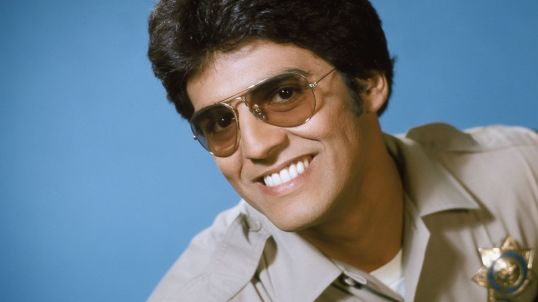
Late Night Retro Television Review: CHiPs 5.21 “The Game of War”


Welcome to Late Night Retro Television Reviews, a feature where we review some of our favorite and least favorite shows of the past!  On Mondays, I will be reviewing CHiPs, which ran on NBC from 1977 to 1983.  The entire show is currently streaming on Prime!
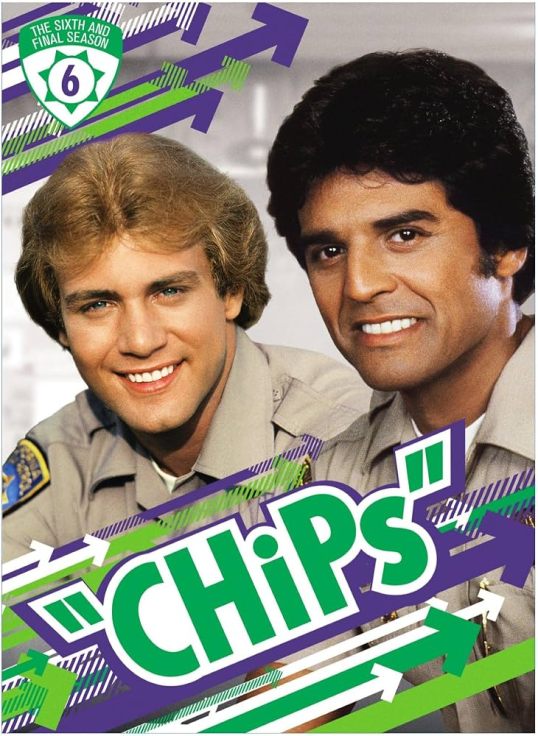
This week …. it’s jet pack time!

Episode 5.21 “The Game of War”

(Dir by Gordon Hessler, originally aired on March 14th, 1982)

While the members of the Highway Patrol try and fail to beat Harlan at chess, Peter J. Stoler (Clu Gulager) plots a prison break.  Stoler is one of the leading members of a group of former soldiers.  On the weekends, they engage in war games.  During the week, they plot to spring their former leader, Rascoe (Johnny Seven), from prison.  Peter has just received a jet pack.  Unless the Highway Patrol can stop them, Rascoe is going to fly to freedom.

Meanwhile, a process server named Darla Mason (Sandra Kerns) goes to ludicrous lengths to serve her targets.  She pretends to have car trouble.  She wears old person makeup.  She does whatever she needs to do to get her target to lower their defenses so that she can hand them their court papers and say, “You’ve been served.”  Process servers are a necessary part of our legal system but I’ve never cared much for any of the ones that I’ve known.  It takes a certain amount of cruelty to get close to someone just so you can give them a summons.  Darla is a fairly annoying character and I certainly wasn’t upset when Rascoe’s militia abducted her.  And when the episode ended with her getting served, it felt like poetic justice.

This episode was nothing special but it held my attention.  I mean, how can you not enjoy a little jet pack action?  Clu Gulager was actually somewhat sympathetic as the main bad guy.  Personally, I think Ponch and Baker should have let him go.  Just give him his jet pack and let him fly away.  He didn’t mean any harm!

Seriously, they should have given Clu his own show.


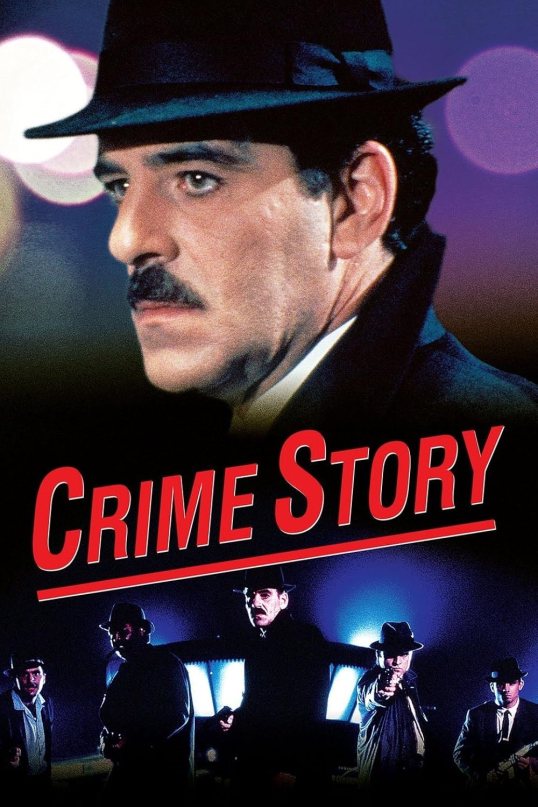
Retro Television Review: Crime Story 1.5 “The War”


Welcome to Retro Television Reviews, a feature where we review some of our favorite and least favorite shows of the past!  On Mondays, I will be reviewing Crime Story, which ran on NBC from 1986 to 1988.  The entire show can be found on Tubi!

This week, Luca has to prove himself.

Episode 1.5 “The War”

(Dir by Leon Ichaso, originally aired on October 7th, 1986)

Luca is in trouble.

Last week’s episode ended with Max Goldman on the receiving end of a beating from Noah Ganz’s goons.  Goldman survives and returns with a message.  Ganz is not happy that Luca tried to steal his book.  Bartoli, Weisbord, and Fosse all inform Luca will have to resolve the Ganz situation on his own.

Luca tries to get public defender David Abrams (Stephen Lang) to act as a negotiator for him but David doesn’t want to get involved in the mobster lifestyle that made his father rich.  David just wants to defend the poor and play sax in a jazz club.  When Luca is attacked while driving in Chicago, he realizes that negotiating with Ganz is a dead end.

Instead, he just kills Ganz.  In a bravura sequence, Luca shows up at a hotel and, with the help of sniper, takes down Ganz’s bodyguards.  Then he uses a bomb to take out Ganz while the latter is holding court in an elevator.  A plume of white smoke puffs out of the hotel’s exhaust vent.

Having taken care of the issue, Luca is welcomed back into the family.  Weisbord says, “Call me Mac.”  Fosse (played by Michael Madsen) nods and slowly smokes a cigarette.

Meanwhile, Torello’s wife miscarries.  This is the episode that features the clip of Torello walking down a lonely Chicago street on a rainy night.  (The clip is prominently featured during the show’s opening credits.)  In fact, both Torello and Luca end up spending a good deal of time walking around at night while David Abrams plays his saxophone.  It’s a scene that is so overstylized that it shouldn’t work but somehow, it does.  If nothing else, it reminds us that Crime Story of two dangerously obsessed men on a collision course.

This was a good episode, if just because it showed that Luca can be a clever criminal when he needs to be.  Before this episode, Luca seemed to be clearly outmatched by Torello.  With this episode, Luca proved himself to be Torello’s equal.

Review: Band of Brothers


“A lot of those [German] soldiers, I’ve thought about this often, that man and I might’ve been good friends. We might’ve had a lot in common. We might’ve liked to fish, you know, he might’ve liked to hunt. You never know. You know. Of course, they were doin’ what they were supposed to do, and I was tryin’ to do what I was supposed to do. But, under different circumstances we might’ve been good friends.” — Darrell “Shifty” Powers

When we look back at the landscape of modern television, it is easy to take the concept of cinematic TV for granted. We live in an era where massive budgets, sweeping orchestral scores, and A-list Hollywood talent are regularly deployed on the small screen. But if you trace this golden lineage back to its true modern genesis, all roads inevitably lead to a singular, towering achievement: the 2001 HBO mini-series Band of Brothers. Produced by Tom Hanks and Steven Spielberg, this ten-part masterpiece did not just recount the harrowing journey of Easy Company, 506th Parachute Infantry Regiment, 101st Airborne Division during World War II; it fundamentally altered the DNA of television storytelling. Watching it today, a quarter-century after its initial broadcast, the series remains as potent, heartbreaking, and visually stunning as it was when it first shocked audiences. It exists as a perfect bridge between the classical Hollywood war epics of old and the uncompromising, gritty realism of twenty-first-century media. By committing to an unprecedented budget and an absolute refusal to sanitize the psychological horrors of combat, Band of Brothers set a high-water mark that few series have ever managed to touch, let alone surpass.

To understand the visual language and visceral power of Band of Brothers, one must first look at the cinematic earthquake that preceded it three years earlier: Steven Spielberg’s 1998 masterpiece Saving Private Ryan. That film rewrote the rules of how cinema captures warfare, abandoning the steady, heroic, brightly lit panoramas of mid-century studio pictures in favor of a terrifyingly immersive, chaotic style. Spielberg utilized desaturated colors, shutter-angle manipulation to create a jittery, hyper-real sense of motion, and handheld cameras that made the audience feel like they were ducking bullets in the surf of Omaha Beach. When Hanks and Spielberg pivoted to television to adapt Stephen E. Ambrose’s non-fiction book Band of Brothers, they brought this exact aesthetic blueprint with them. The impact of Saving Private Ryan on the mini-series cannot be overstated; it acts as the structural and aesthetic godfather of the entire project. Directors like Phil Alden Robinson, Richard Loncraine, and David Nutter utilized the same bleach-bypass film processing techniques to strip away vibrant primaries, leaving a color palette dominated by icy blues, muddy browns, and sickly olive drabs. This was not just a stylistic gimmick; it was a psychological tool that pulled the viewer out of the comfort of their living rooms and dropped them into the frozen, unforgiving forests of Bastogne or the smoke-choked ruins of Carentan. The camera became a participant in the war, getting splattered with mud, shaking violently during artillery barrages, and refusing to look away from the gruesome reality of what high-explosive shrapnel does to human flesh.

Yet, while it shared a visual vocabulary with Saving Private Ryan, Band of Brothers achieved something that a two-and-a-half-hour feature film simply never could, owing entirely to the expansive canvas of the mini-series format. A film must ultimately compress its narrative arc, often relying on archetypes and rapid pacing to reach a resolution. Over the course of ten hours, Band of Brothers allows its characters to breathe, change, harden, and break. Crucially, some of the show’s most powerful, lasting stories have absolutely nothing to do with active battles, but rather unfold in the quieter moments between the chaos. We do not just see these men in the heat of a firefight; we watch them suffer through the mundane, soul-crushing basic training regime of Camp Toccoa under the tyrannical eye of Captain Sobel, played with a brilliant, tragic insecurity by David Schwimmer. We sit with them in the agonizing, silent darkness of C-47 transport planes, listening to the vomit hitting the floorboards and watching the sheer, unadulterated dread on their faces before the jump over Normandy. We freeze with them in foxholes during the long, static winter in the forests of Bastogne, sharing the psychological numbness of isolation and the simple, desperate human desire for a dry pair of socks or a warm cup of coffee. This structural patience transforms the viewing experience from simple passive entertainment into an emotional marathon. We have known these men through their triumphs and their absolute lowest points, making their losses hit with the weight of personal bereavement.

While these quiet stretches build a deep, slow-burning empathy, the absolute biggest gut punch of the entire series arrives in Episode 9, titled Why We Fight. Throughout their march across Europe, the men of Easy Company—and by extension, the audience—have become somewhat cynical and battle-weary, numbly pushing forward simply to survive and get the job done. That numbness is completely shattered when a patrol stumbles across an sub-camp in the woods near Landsberg, which itself was part of the larger Dachau concentration camp complex. Up until this point, the war had been about geopolitical strategies, territory, and survival; suddenly, the men are brought face-to-face with the industrial scale of Nazi atrocities. The direction in this sequence is devastatingly restrained. There are no swelling orchestrations or heroic monologues, only the bewildered horror of soldiers looking at skeletal survivors wandering the camp in striped uniforms. Watching tough, battle-hardened paratroopers like Captain Nixon and Major Winters reduced to breathless, disbelieving silence as they uncover the truth of the Holocaust anchors the narrative in an entirely different tier of tragedy. It is an episode that completely recontextualizes the title of the series, showing that their ultimate purpose transcended military victory; they were liberating humanity from an unimaginable nightmare.

The casting of the series is another stroke of absolute genius that looks even more miraculous in hindsight. The producers deliberately avoided casting massive, distracting superstars for the main roles, opting instead for relatively unknown British and American theater and character actors. This decision was crucial for maintaining the show’s documentary-like authenticity; if Tom Cruise or Brad Pitt had been jumping out of those planes, the illusion would have been instantly shattered. Instead, we got Damian Lewis as Major Richard Winters, delivering a performance of quiet, stoic, and deeply principled leadership that serves as the moral anchor of the entire narrative. Alongside him was Ron Livingston as Captain Lewis Nixon, embodying the weary, cynical, and battle-fatigued intellect of a man seeking refuge from the horrors of war in a bottle of Vat 69. The ensemble is a treasure trove of talent, featuring early-career appearances from actors who would go on to become household names, including Tom Hardy, Michael Fassbender, James McAvoy, Simon Pegg, and Michael Cudlitz. Because the show focuses on an entire company, the perspective shifts naturally from episode to episode. One week we are viewing the war through the eyes of a terrified replacement medic in Bastogne, and the next we are embedded with the cynical, battle-hardened sergeant Carwood Lipton in The Breaking Point. This shifting focus ensures that the series never feels like a traditional Hollywood star vehicle, but rather a collective portrait of brotherhood where the company itself is the true protagonist.

The emotional resonance of Band of Brothers is amplified tenfold by the brilliant inclusion of interviews with the actual surviving veterans of Easy Company at the beginning of each episode. Kept anonymous until the very final moments of the series, these elderly men sit in simple chairs against dark backgrounds, their voices trembling and eyes misting over as they recall events that occurred more than half a century prior. There is a heartbreaking disconnect between the frail, weathered men on screen and the vibrant, muscular young actors portraying them in the dramatization. These interviews ground the cinematic spectacle in an undeniable, sobering reality. They serve as a constant reminder that the explosions, the blood, and the impossible acts of bravery we are witnessing were not the inventions of a Hollywood writers’ room, but the actual lived experiences of ordinary boys who were plucked from small-town America and dropped into the middle of the apocalypse. When the real-life winter veteran Dick Winters quotes his friend’s letter at the end of the series—saying, “Grandpa, were you a hero in the war? And Grandpa said no, but I served in a company of heroes”—it is impossible not to be moved to tears. It is a rare instance where a piece of media successfully honors historical figures without falling into the trap of cheap, unearned sentimentality or jingoistic propaganda.

Beyond its historical and emotional triumphs, the legacy of Band of Brothers is woven directly into the fabric of what we now refer to as prestige television. Before 2001, television was largely viewed as cinema’s lesser sibling—a medium defined by low budgets, procedural structures, and compromised production values meant to fit the square dimensions of old cathode-ray tube television sets. HBO had already begun to challenge this status quo with groundbreaking dramas like The Sopranos and Oz, but Band of Brothers was the project that proved television could match, and perhaps even exceed, the scale and artistic ambition of Hollywood blockbusters. With a staggering budget of over one hundred and twenty million dollars, it was the most expensive television miniseries ever produced at the time. The immense financial gamble paid off spectacularly, demonstrating to network executives and creators alike that audiences were hungry for complex, serialized, and visually uncompromising narratives that demanded to be treated as high art. The success of the show cleared the path for future cinematic television epics, directly inspiring sister projects like The Pacific and Masters of the Air, while setting the production standards that would later allow shows like Game of Thrones, Chernobyl, and Succession to flourish. It proved that the small screen was capable of housing massive, global historical narratives without losing the intimate character dynamics that make long-form storytelling so uniquely compelling.

Ultimately, Band of Brothers stands as a definitive milestone because it perfectly balanced the macro-scale horror of global warfare with the micro-scale beauty of human connection. It stripped away the romanticized myths of World War II to expose the sheer, terrifying randomness of survival, while simultaneously validating the profound love and loyalty that can only be forged in the crucible of shared suffering. It did not glamorize combat; instead, it illuminated the heavy, permanent psychological toll extracted from those who survived it. Through its hyper-realistic visual language inherited from Saving Private Ryan, its impeccable ensemble casting, and its revolutionary impact on the medium of television, the series achieved a timeless quality. It remains a definitive piece of cultural touchstone media that demands annual rewatches from millions of viewers around the globe. It is not just a historical chronicle, nor is it merely a well-executed piece of premium television; it is a monument to the human spirit, an artistic triumph that continues to remind us of the immense sacrifices made by an ordinary generation of heroes who stood together when the world was falling apart.

Late Night Retro Television Review: Degrassi: The Next Generation 2.18 “Dressed in Black”


Welcome to Late Night Retro Television Reviews, a feature where we review some of our favorite and least favorite shows of the past!  On Sunday, I will be reviewing the Canadian series, Degrassi: The Next Generation, which aired from 2001 to 2015!  The series can be streamed on YouTube and Tubi.

This week, Ashley is back with Jimmy.  But for how long?

Episode 2.18 “Dressed in Black”

(Dir by Gavin Smith, originally aired on January 19th, 2003)

This episode of Degrassi features one of my favorite opening scenes.  Ashley, in full goth mode, sings a depressing and rather overwrought song to Jimmy, who she is finally dating again.  Jimmy listens and is obviously struggling to appear interested.  After Ashley finishes, Jimmy tells her that it was a great song.  Ashley asks him if he really understood it.  Jimmy nods.  Ashley says that she’s going to sing another one.  Jimmy gets a panicked look on his face….

While Ellie has always been the character to whom I’ve related (we’re both reheads!), I have to admit that I was probably more like Ashley in high school.  I wrote my share of emo poetry and I always made sure to ask my friends whether or not they got what I was truly trying to say.  One reason why I would ask was that I really wasn’t sure what I was trying to say.

Anyway, this episode features Ashley and Jimmy back together for a short time.  Unfortunately, Jimmy wants to bring back the old Ashley while Ashley wants to be the new Ashley.  Ashley also has a pretty obvious crush on Craig, who captures her attention by discussing how Shakespeare was actually a misogynistic creep.  For their English class, Jimmy and Hazel and Craig and Ashley are instructed to reinterpret Taming of the Shrew for a modern audience.  Jimmy and Hazel come up with a silly love story, complete with Hazel doing a cheer.  Craig and Ashley interpret the play as a harrowing portrait of domestic abuse.

At the end of the episode, Ashley gives Jimmy a poem and breaks up with him.  I once did the same thing in high school.  I still feel kind of bad about it.  I worked way too hard to make it rhyme.

Meanwhile, after sitting through a sex ed class, Toby and JT buy condoms.  Spinner finds out and, seeing as how Toby is dating Spinner’s adopted sister, he is not amused.  Spinner tells Toby that there’s already too much pressure on young women to be sexually active.  Wow, that’s a good message but also totally out-of-character for Spinner!

This storyline …. eh.  Toby’s storylines were always kind of boring, largely because Toby never got to do much other than try to hide in the hallways.  I’m glad he’s no longer pining over Emma but still, he’s not a particularly interesting character and the writers never seemed to really know what to do with either him or Kendra.

This episode is a lot more interesting if you know that Ashley and Craig are eventually going to become a couple and that Craig’s going to end up on the streets after trying to kill Joey during a manic episode.  And let’s not even talk about the fact that Ashley is going to eventually steal Jimmy’s music and use it to launch her own career.  As a stand-alone episode, it’s a bit blah but it definitely foreshadows the show that Degrassi is going to become.

Retro Television Review: Homicide: Life On The Street 5.11 “The Documentary”


Welcome to Retro Television Reviews, a feature where we review some of our favorite and least favorite shows of the past!  On Sundays, I will be reviewing Homicide: Life On The Street, which aired from 1993 to 1999, on NBC!  It  can be viewed on Peacock.

This week, Brodie reveals his film!

Episode 5.11 “The Documentary”

(Dir by Barbara Kopple, originally aired on January 3rd, 1997)

On December 31st, the detectives are gathered in the squad room and waiting for the big ball to drop in New York.  The phones have not rung all night but, as Munch keeps reminding everyone, that is soon going to change.  Brodie comes in with a VHS tape and shows the detectives the documentary that he’s filmed about them.  Finally, we learn why Brodie has been filming random corners of the station for the past few episodes.

I have to admit that I was expecting this to be a clip show and there is one lengthy montage that is made up of scenes taken from previous episodes.  But, for the most part, the documentary is all new footage.  We watch as Bayliss and Pembleton investigate a murder committed by a mortician who didn’t want people to learn that he was dressing up the dead and posing with them.  (Yikes!)  All of the detectives take a turn explaining how the Miranda rights work, with their dialogue lifted pretty much intact from the David Simon book that inspired the show.  In a parody of Homicide’s signature visual style, the same clip of Lewis and Kellerman walking into a bar is shown three times in a row.  At one point, Lewis, Kellerman, and Brodie chase a suspect and run into a Barry Levinson-led film crew that is filming a show called Homicide.  “Real cops don’t yell ‘freeze,'” Brodie tells Levinson.

It’s a clever episode, made all the more so by the reactions of the detectives watching themselves on screen.  Pembleton confesses to Bayliss that it’s hard for him to watch footage of himself before his stroke because Pembleton doesn’t recognize the young and angry detective that he used to be.  All of the detectives object to footage of them joking about their job.  As the documentary ends, Giardello asks for the original copy for “safe keeping.”  Brodie reveals that he already sold the documentary to PBS.  “You can’t show us joking about dead people!” Munch says.  “It’s an invasion of privacy!” Bayliss says.  Brodie starts to defend himself but then the ball drops, the new year begins, and the phones start ringing.

This was a good ensemble episode.  If, for some reason, you only wanted to watch the later episodes of Homicide, this would be a good one to start with because the documentary re-introduces us to everyone.  Funny, dramatic, and eventually quite emotional, this episode was Homicide at its best.