Retro Television Review: Warden Duffy Of San Quentin 1.1 “The Hostages”


Welcome to Retro Television Reviews, a feature where we review some of our favorite and least favorite shows of the past!  This Thursday, I will be reviewing Warden Duffy of San Quinten, which aired its only episode on NBC in 1952.  The show can be found on YouTube!

The real-life Warden Clinton Duffy

Episode 1.1 “The Hostages”

(Dir by Walter Doniger, originally aired in 1952)

“Welcome to my hometown,” Warden Clinton Duffy (Paul Kelly) narrates over a montage of still shots of California’s San Quentin Prison. Duffy explains that San Quentin has its own fire department, its own athletic field, its own hospital, and even its own jail, reserved for the prisoners who are too dangerous to be allowed in the general population.

Shot in a noir style, this episode follows one prisoner (John Ireland) who masterminds an attempted jailbreak. He gets his brother (Charles Nolte) to smuggle in a gun. He and his accomplice (Lawrence Tierney) take two members of the prison board hostage and kill a guard. The dapper Clinton Duffy, well known as an advocate for prison reform, tries to negotiate. Negotiations don’t go well, and the episode ends with Tierney, Ireland, and their accomplices dead on the floor of their cell.

Warden Clinton Duffy was a real person. He served as San Quentin’s warden from 1940 to 1952 and had a reputation as a liberal-minded reformer who tried to treat the prisoners with as much humanity as possible. Duffy wrote several books about his time as warden and was also known as an opponent of capital punishment. This show presents him as someone who wants the best for his prisoners but is still willing to give the order to shoot if that’s what is needed to protect innocent lives. Indeed, one gets the feeling that the prisoners’ biggest mistake was taking hostages. If the hostages’ lives hadn’t been in danger, Duffy probably would have been more willing to talk.

Interestingly, Paul Kelly, the actor who plays Duffy, was himself a former San Quentin inmate. Kelly was convicted of manslaughter in 1927 after he beat another actor, Ray Raymond, to death. (Kelly was having an affair with Raymond’s wife and claimed that he had no idea how hard he had hit Raymond when the other actor confronted him.) Kelly served 25 months in San Quentin and, when he was released, was told that while on parole he could take acting jobs, but only if they paid no more than $30 a week. Amazingly, his manslaughter conviction didn’t seem to slow his career at all. Nowadays, an unconfirmed rumor of cannibalism is enough to force a once-prominent actor to start working with Uwe Boll.

As for the pilot, it wasn’t picked up for a series, and it’s easy to see why. The pilot has a noir look that I liked, but the action moved slowly. Stories about hostage negotiations often seem dramatically inert, if only because they always seem to go through the exact same beats. Dog Day Afternoon is the exception to the rule. That said, director Walter Doniger obviously liked the idea of putting Duffy’s story on screen, because he later directed the 1954 film Duffy of San Quentin. In the film, Warden Duffy was again played by Paul Kelly.

Paul Kelly died of a heart attack in 1956, at the age of 57. Clinton Duffy retired as warden of San Quentin in 1952, the same year this pilot aired. He died in 1982.


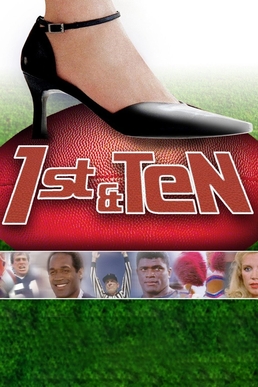
Late Night Retro Television Review: 1st & Ten 5.1 “The Book of Zagreb”


Welcome to Late Night Retro Television Reviews, a feature where we review some of our favorite and least favorite shows of the past! On Wednesdays, I will be reviewing 1st and Ten, which aired in syndication from 1984 to 1991. The entire series is streaming on Tubi.

This week, we start season 5!

Episode 5.1 “The Book of Zagreb”

(Dir by Stan Lathan, originally aired on October 11th, 1989)

It’s time for another season of football with the California Bulls.

In the wake of the Bulls finally winning the championship, Zagreb has written a tell-all book about his teammates. He spills that Bubba cheats on his wife, that Dr. Death smokes weed, and that, during the previous season, one member of the Bulls was killed by a bull. Solid continuity from 1st & Ten. About time.

T.D. Parker (O.J. Simpson) is described as a chronic womanizer who collects the underwear of secretaries. T.D. is so furious he could kill someone. Before he does, though, he has to keep the Bulls functioning. Help arrives in the form of a new general manager sent by the Dodds Corporation: Kristy Fulbright (Shannon Tweed). Kristy wants the Bulls to become the first team to win two championships in a row. Coach Denardo agrees.

A few familiar faces are missing from the locker room. Mad Dog has been traded to New York. Former quarterback Doug Clayton is mentioned as having been murdered after the big game. (Yikes. What exactly did he say to T.D.?) Dr. Death is now working as a professional wrestler, but he walks away from the ring the moment he’s told to take a fall.

If this review feels a little random, that’s because the episode is too. As usual with 1st & Ten, there isn’t much of a real plot. Everyone is furious at Zagreb, then they get over it. Dr. Death is done with football, then he gets over it. Bubba is terrified his wife will leave him, then she doesn’t. The show is about football; the characters barely have lives off the field.

The best things here are John Kassir’s handful of funny lines as Zagreb and Shannon Tweed’s red dress, which is to die for. We’ll see how the rest of the season plays out.


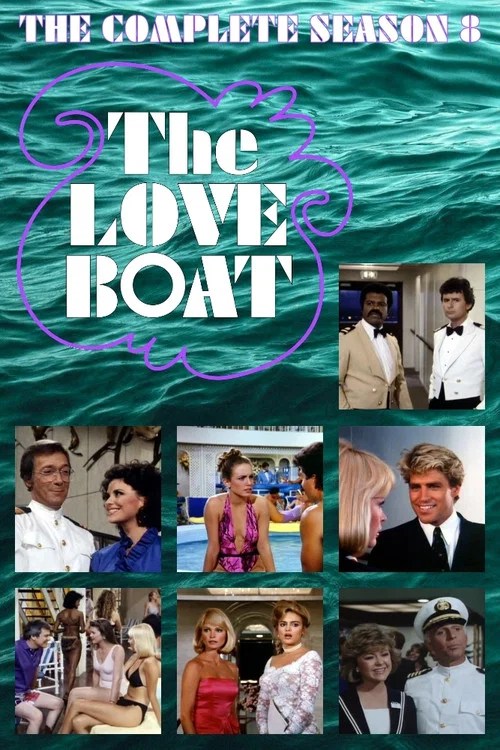
Retro Television Review: The Love Boat 8.9 “The Last Heist/Starting Over/Watching the Master”


Welcome to Retro Television Reviews, a feature where we review some of our favorite and least favorite shows of the past!  On Wednesdays, I will be reviewing the original Love Boat, which aired on ABC from 1977 to 1986!  The series can be streamed on Paramount Plus!

And looooooove, won’t hurt anymore….

Episode 8.9 “The Last Heist/Starting Over/Watching the Master”

(Dir by Ted Lange, originally aired on November 10th, 1984)

Recent law school graduate Paula (Julia Duffy) boards the boat with the man who paid for her education, Uncle David (Patrick Macnee).  Paula thinks David is a businessman but, as David explains to her once they’ve reached their cabin, he’s actually a jewel thief.  Paula asks David to retire from stealing but David explains that he’s going to pull off one final big score by stealing a necklace owned by Martha Parker (Abby Dalton).  He’s even had a replica of the necklace made so that Martha will never notice that the real one has been stolen,

Needless to say, Paula has a lot on her mind when stockbroker Andy Brooks (Douglas Barr) first tries to hit on her.  But what if Andy isn’t a stockbroker?  Shortly after David steals the necklace, Andy shows up at his cabin.  Andy explains that he’s actually an insurance investigator and that David will be turned over to the authorities as soon as the ship docks in Los Angeles.  Oh no!

However, because Andy has fallen in love with Paula, he later tells them that he won’t turn David in as long as David both returns the necklace and retires from being a thief.  David agrees.  What David doesn’t realize is that Andy actually is just a stockbroker and the whole thing was a set-up engineered by Paula to get him to retire.

Meanwhile, Doc is excited because his new girlfriend, Gloria (Delta Burke), is going to be on the cruise. Unfortunately, Hal Winston (William Christopher) is also on the boat.  Hal is marrying one of Doc’s ex-wives and he’s on the cruise so he can observe Doc and learn to be more like him.  Doc gets annoyed.  Gloria falls in love with Hal.  “I guess I’m still paying alimony,” Doc says as he watches Hal and Gloria leave the boat together.

These first two stories were really charming.  I especially liked the story involving David, Andy, and Paula.  Patrick Macnee had just the right twinkle in his eye.  Julia Duffy and Douglas Barr had the type of carnal chemistry that was rarely seen on the G-rated Love Boat.  As for Doc’s story, it was funny in its dopey way.

Unfortunately, those two stories were overshadowed by the third story.  Beth Reed (Deborah Adair), an old friend of Judy’s, boards the cruise.  Beth is recently divorced.  When another passenger, Joe (Brodie Greer), starts to hit on her, Beth says she’s not interested.  At first, Joe thinks that it’s because he’s been coming on too strong and Judy assumes that Beth is struggling to adjust to being divorced.  However, Beth eventually explains that she got divorced because her husband could not handle the fact that she was raped by a stranger.  At first, Joe seems understanding but then he freaks out when Beth says that, when she returns to Los Angeles, she will be testifying against her rapist.  That’s going to be so embarrassing for you!, he says.  Joe goes on and on about how Beth shouldn’t testify.  In fact, Joe was so adamant that I was almost expecting it be revealed that Joe was the brother or a friend of the man who raped her.

Instead, it just turns out that Joe’s a jerk.  Beth says that she never wants to see Joe again and that’s really where this story should have ended.  Joe goes from coming on way too strong to basically ordering Beth not to testify against a rapist.  Joe should have been dumped and Beth should have left the boat alone but proud that she stood up for herself.  Instead, Joe offers up a half-assed apology and Beth not only takes him back but agrees to marry him.

NO!  Joe does not deserve to be taken back.  NO!  Do not marry the guy who, after knowing you for two days, tries to tell you how to live your life.  It seems like Beth is just going from one jerk to another and her friend Judy doesn’t do anything to stop her.

I have no doubt that there were good intentions behind this story.  But, seen today, the best thing you can say about the story is that it was tone deaf and insensitive.  Brodie Greer, who was likable as Baricza on CHiPs and on a previous episode of The Love Boat in which he appeared, gives a rather stiff performance, almost as if he himself couldn’t believe some of the lines that had been written for him.

Two of the stories were charming but they were both overshadowed by the third story and it brought the entire episode down.

Late Night Retro Television Review: Pacific Blue 4.17 “Scarlet Rose”


Welcome to Late Night Retro Television Reviews, a feature where we review some of our favorite and least favorite shows of the past! On Tuesdays, I will be reviewing Pacific Blue, a cop show that aired from 1996 to 2000 on the USA Network!  It’s currently streaming everywhere, though I’m watching it on Tubi.
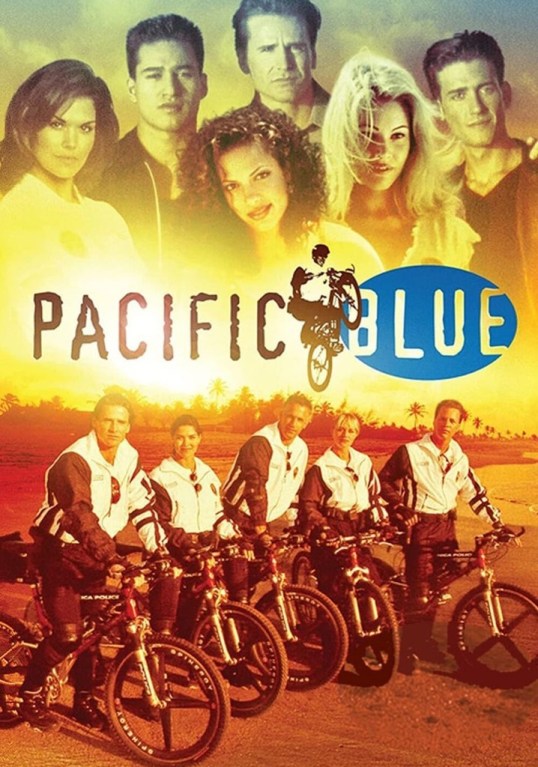
This week, the bicycle cops investigate a 50 year-old cold case.

Episode 4.17 “Scarlet Rose”

(Dir by Paul Brown, originally aired on March 7th, 1999)

In the 1940s, Santa Monica was shaken by the brutal murder of an actress nicknamed the Scarlet Rose. Her ghost is said to haunt the ballroom where she used to dance and where it’s believed she met her still-unknown murderer. Now, after nearly 50 years, the ballroom is reopening as the Scarlet Rose Ballroom.

Bobby Cruz, who has long been haunted by the stories about the Scarlet Rose, attends the grand opening, where everyone is dressed like it’s the 1940s and swing dancing. When he meets Lily (LuAnne Ponce), he’s stunned because she looks just like the Scarlet Rose. Lily explains that she is Scarlet’s granddaughter and that she’s looking not only for the truth about who killed her grandmother, but also for what happened to a valuable necklace Scarlet owned.

Bobby suspects that Walter (William Schallert), an older man who hangs around the club, might have had something to do with Scarlet’s murder. He also suspects that it might somehow be linked to a recent robbery at a jewelry store. He takes his suspicions to T.C.

“We are going undercover!” T.C. announces.

Yes, this is yet another episode in which the members of Pacific Blue go undercover. These episodes never make sense to me, because the members of Pacific Blue are bicycle cops. They’re not detectives. They’re not trained to go undercover. They’re trained to ride around on their bikes, hand out traffic tickets, and secure crime scenes until the real detectives can show up.

In this episode, going undercover means that Monica gets a job singing at the club while Cory and Jamie hang out at the bar and glare at everyone like the two biggest killjoys in existence. It isn’t just that it doesn’t make any sense for these people to be working undercover. It’s also that none of them are particularly good at it. Cory and Jamie may be dressed up like 1940s femme fatales, but they still give off an immediate cop vibe.

For the record, the case of the Scarlet Rose is solved. It turns out that she was murdered by an associate of Los Angeles gangster Mickey Cohen. Considering that Cohen was a real person, it feels a little unfair to pin a fictional murder on him, but I guess Pacific Blue felt that, since he wasn’t around to complain, it wouldn’t be a problem.

(The Scarlet Rose was clearly based on the Black Dahlia murder case. It seems like every few years, someone publishes a book claiming to have solved the Black Dahlia case. Former LAPD detective Steve Hodel built an entire literary career out of accusing his late father of being responsible for the Dahlia’s murder and practically every other unsolved murder in California.)

A few positive things can be said about this episode. The 1940s-style costumes were to die for. The real-life band Jumpin’ Jimes provided the episode with a great soundtrack, and the swing dance scenes were nicely choreographed. The Scarlet Rose Ballroom looked like a fun place to hang out. Not even the dour presence of Cory and Jamie could suck the fun out of that place. Finally, old pro William Schallert gave a good performance as a potential suspect who wasn’t entirely what he seemed to be.

In other words, this was actually a pretty good episode of Pacific Blue. I’ll never understand why the bicycle cops were investigating a 50-year-old cold case, but whatever. It was still an entertaining episode.

Retro Television Review: Saved By The Bell: The New Class 2.16 “Back At The Ranch”


Welcome to Retro Television Reviews, a feature where we review some of our favorite and least favorite shows of the past!  On Tuesdays, I will be reviewing Saved By The Bell: The New Class, which ran on NBC from 1993 to 2o00.  The show is currently on Prime.

It’s the summer that will never end!

Episode 2.16 “Back at the Ranch”

(Dir by Don Barnhart, originally aired on October 29th, 1994)

Mr. Belding had so much fun working with the Gang at Palisades Country Club that he decides to take them on a week-long trip to a real-life, functioning “dude ranch” that is owned by Screech’s uncle, Lester (Lewis Arquette).

Uhmmm …. okay.  Sure, that makes sense.  Whatever.

Actually, it makes no sense.  Do these kids not have families?  It’s the summer so they all get jobs working for their principal and now they’re going to a ranch with him?  And apparently, they’re going to be working as ranch hands or something?  I mean, what the Hell?  TAKE A REAL VACATION, KIDS!

Plus, since when has Screech had an Uncle Lester who owned a dude ranch?  This has never been mentioned before.  Screech apparently grew up around horses.  Really?  We’re talking about Screech here.

Anyway, Screech is excited to be at the ranch until he sees his cousin, Clint (Bart Johnson).  Clint used to bully Screech when he was a kid and Clint still acts like he knows more about horse-riding and gold-prospecting than Screech.  While Uncle Lester and Mr. Belding drive into town, Clint takes the Gang to search for gold in the hills.  Screech stays at the ranch and has a dream where he’s in an old-timey western.  Oh look!  The townspeople are all played by members of the Gang!  Tommy’s the blacksmith.  Wow.

Screech wakes up and sees that the horses have returned but the gang hasn’t.  That’s because Tommy didn’t adequately tie up the horses at the gold mine and they all ran off.  Clint was heading back to the ranch when he got thrown from his horse.  Now, he’s got a sprained ankle and there’s a rattlesnake nearby.  It’s a good thing that Screech has got his bicycle so he can ride up into the hills and save everyone!

This was one of the stupidest things that I’ve ever seen in my life.  And seriously, that’s all I’m going to say about it.

Late Night Retro Television Review: CHiPs 6.6 “Something Special”


Welcome to Late Night Retro Television Reviews, a feature where we review some of our favorite and least favorite shows of the past!  On Mondays, I will be reviewing CHiPs, which ran on NBC from 1977 to 1983.  The entire show is currently streaming on Prime!

This week, a man rides a motorcycle and jumps over a plane.  Also, God bless Eunice Kennedy Shriver.

Episode 6.6 “Something Special”

(Dir by Charles Bail, originally aired November 21st, 1982)

Ponch is working with the Special Olympics and is upset to discover that Mr. Grieve (Bert Kramer) isn’t even planning on coming out to see his son, Nicky (Ricky Wittman), compete. Ponch does some research and discovers that, in his youth, Mr. Grieve was an Olympic runner. Ponch tells Mr. Grieve that his son is an athlete too, just in his own way. Personally, I think Ponch should have beaten the hell out of Mr. Grieve and then arranged to adopt Nicky himself, but that’s just me.

Yes, this was yet another story where Ponch was the all-knowing wise man who knew how to fix everything. As I’ve said before, CHiPs eventually became The Ponch Show, and Ponch could do no wrong. Sometimes that could get annoying. In this case, though, I’m fully on Ponch’s side. I should mention that this has more to do with the Special Olympics than with any sudden affinity for Ponch as a character. The Special Olympics are one of the few good things that the Kennedy family has given us, and they always make me tear up. That was certainly the case with this episode.

This episode also featured a motorcycle daredevil! Now, I have to admit that I have a weakness for motorcycle daredevils. My inner country girl loves watching men risk their lives by jumping over wrecked cars and through rings of fire. In this episode, Shake Patterson (Robbie Knievel) wants to jump over a moving airplane, and his old friends Bobby and Bruce Nelson agree to work as his pit crew. There wasn’t much to this story, but I still got a little excited when Shake managed to clear the plane.

With Ponch coaching the Special Olympics and the Nelson brothers helping Shake risk his life, you may wonder if anyone actually did any police work in this episode. Klane (Charles Napier) has recently been laid off from his job at an auto factory. Now he is seeking revenge by vandalizing Japanese and German cars. Eventually, the Highway Patrol tracks him down to a warehouse. Klane has a bottle labeled “Nitroglycerin,” and he’s threatening to break it. Fortunately, Kathy Linahan (Tina Gayle) is able to convince him to give her the bottle and surrender.

Poor Klane! As played by Charles Napier, you couldn’t help but feel a little sorry for the guy. He wasn’t evil. He was someone who had lost his job and now felt like he didn’t have anything left to contribute to the world. He lost the one thing that gave his life meaning.

You know what? Considering that this is a final-season episode of a show that was definitely showing its age, “Something Special” is actually pretty good! (You thought I was going to say it was something special, didn’t you? I was tempted, but I decided that was too easy.) This was a throwback to what CHiPs did best. There was a daredevil stunt. There were plenty of chases. There was a lot of California scenery. And finally, there was that last title card, thanking the athletes of the Special Olympics.

The was a good episode.

Retro Television Review: Crime Story 1.17 “The Battle of Las Vegas”


Welcome to Retro Television Reviews, a feature where we review some of our favorite and least favorite shows of the past!  On Mondays, I will be reviewing Crime Story, which ran on NBC from 1986 to 1988.  The entire show can be found on Tubi!

This week, Frank Homan returns.

Episode 1.17 “The Battle of Las Vegas”

(Dir by Aaron Lipstadt, originally aired on February 6th, 1987)

The hotel and resort workers of Las Vegas are going on strike, and when union leader Slim Mahoney (Frederick Coffin) tells Luca that the unions have no interest in working with the mob (ha!), Luca responds by having Pauli use a big truck to run Slim over.

With Slim dead, Luca tries to maneuver a mob stooge named Sam Taylor (Lee Ving) into the presidency of the union. When Mahoney’s protégé, Roger Jankowski (Anthony Heald), argues that the union cannot sell out to the mob, Abrams and Torello show up at a union meeting to reveal that Sam is crooked and to lead everyone in a pro-union chant. Really?

Okay, the union stuff was a little bit too on-the-nose and silly. That said, at least Stanley Tucci showed up as a bombmaker who was recruited to make trouble for the striking workers. Unfortunately, for those hoping to see him in future episodes, he ended up getting arrested and apparently hanged himself in his cell.

The highlight of this episode wasn’t any of the union stuff. It was the return of Frank Holman (Ted Levine). When we last saw Holman, he was testifying that Luca was a crime boss (true) and that Torello was on the take (false). When Luca and Pauli come across Holman performing with a rock-and-roll band in Vegas, they have a surprising reaction. They drive Holman out to the middle of the desert and .… forgive him. Of course, Holman does make the claim that the only reason he lied about Torello was so that the case against Luca would fall apart. Could Holman be telling the truth? I doubt it. Holman doesn’t seem to be that smart. But Luca decides that he doesn’t care one way or the other, and he welcomes Holman back into his organization.

Why is Luca so forgiving? My personal theory is that Holman, like Pauli, is a symbol of everything that Luca gave up to become a power in Las Vegas. Luca was probably at his happiest when he was breaking into houses with Pauli and Holman. Now that he’s the boss, he doesn’t get to do the dirty work anymore. And yet, it’s obvious that Luca misses it. He’s a born criminal. For that reason, he’s willing to keep Holman and Pauli around, regardless of how much they screw up. In his way, Luca is the most sentimental character on the show.

Of course, Luca isn’t one to let sentiment get in the way of making money. Some things just take precedence.

Review: Deadwood (by David Milch)


“Be in my joint in two hours—we’re forming a fuckin’ government.” — Al Swearengen

David Milch’s Deadwood is one of those rare television series that feels less like a conventional prestige drama and more like being dropped into a living, breathing, filthy historical world. Set in the rough gold-rush settlement of Deadwood, South Dakota, during the 1870s, the HBO series takes the familiar pieces of the Western—lawmen, gunfighters, prospectors, saloons, prostitutes, corrupt businessmen, and murder—and turns them into something far richer than a genre exercise. It is a Western, but it is also a story about the difficult, often ugly process of creating a society in the middle of chaos. Civilization in Deadwood is not built by noble speeches or clean acts of heroism. It is assembled through greed, fear, business deals, compromise, bloodshed, exploitation, loyalty, and the occasional act of real compassion.

The show’s biggest strength is its ability to make Deadwood itself feel like one of television’s great settings. At the beginning, the camp exists outside the reach of formal American law, which means everyone who arrives sees an opportunity. Some people come looking for gold. Others come looking to escape old lives, make money, gain power, or take advantage of people too desperate to protect themselves. Every character has a different idea of what Deadwood should become, and the series finds drama in the collision between those competing visions. A claim dispute, a murder, a business arrangement, an illness, a newspaper article, or even a random rumor can become part of the larger struggle over who gets to shape the town’s future.

At the center of that struggle is Seth Bullock, played by Timothy Olyphant with an intensity that makes him seem like he is always one bad conversation away from throwing somebody through a window. Bullock arrives in Deadwood with his friend and business partner Sol Star, hoping to start a hardware business and leave behind his past as a lawman. He wants a calmer, more stable existence, but the town almost immediately drags him back toward violence and public responsibility. Bullock has a powerful sense of justice, but he is not a smooth, patient hero. He is rigid, angry, stubborn, and frequently driven by instinct before reflection. Olyphant gives him a clenched physicality—the hard stare, the tense posture, the barely restrained frustration—that makes it clear Bullock is always fighting to keep the more destructive side of himself under control.

That is what makes Bullock such a compelling protagonist. Deadwood never treats him as a simple white-hat sheriff who comes to tame the frontier. He is more decent than many of the people around him, but he is not uncomplicatedly good. His moral certainty can become self-righteousness, and his willingness to defend the vulnerable can slide into an urge to control a situation through force. At times, Bullock’s anger is justified; at other times, it is frightening. Olyphant’s performance works because he does not try to make Bullock effortlessly likable. Instead, he makes him believable as a man who wants order, justice, and dignity in a place that seems designed to expose every violent impulse he is trying to bury.

If Bullock represents Deadwood’s rough version of moral order, Ian McShane’s Al Swearengen represents its ruthless understanding of power. As the owner of the Gem Saloon, Swearengen initially appears to be the obvious villain: a man who profits from vice, manipulation, intimidation, and murder. McShane gives him such enormous control over the role that every scene becomes more charged when Swearengen walks into it. His speech has a strange, unforgettable rhythm, moving between elaborate insults, sly observations, sudden bursts of rage, and dry comedy. He is part Shakespearean king, part criminal entrepreneur, and part exhausted manager trying to hold together a business and a town full of people who are constantly making life harder for him.

What makes Swearengen one of television’s greatest characters is that the series refuses to flatten him into a conventional bad guy. He is undeniably brutal, often monstrous, and capable of treating human beings as disposable pieces in a larger game. The show never asks the audience to forget that. But as Deadwood faces pressure from outside business interests, political maneuvering, and wealthy figures who see the camp as a resource to be absorbed, Swearengen’s investment in the town becomes clearer. He does not become a hero, but he develops into something more complicated: a man whose selfish ambition is inseparable from a practical, almost territorial loyalty to Deadwood. He understands that the camp can only survive if its people occasionally work together, even if he usually has to manipulate them into doing so.

The relationship between Bullock and Swearengen gives the series much of its electricity. They are rivals, reluctant allies, ideological opposites, and men who recognize certain necessary qualities in each other. Bullock sees Swearengen as a moral disease at the center of the camp. Swearengen sees Bullock as an unpredictable nuisance, but also as someone with the strength and authority to be useful. Their confrontations work because neither man can completely dominate the other. Olyphant and McShane create a tension that goes beyond physical threat. Their conflict reflects the show’s larger question: can Deadwood become a place governed by something closer to law and principle, or will it always belong to the people with the most money, violence, and influence?

Still, Deadwood would not be nearly as great if it were only the Bullock and Swearengen show. Its ensemble is one of HBO’s best, filled with actors who make the camp feel populated by people with histories, grudges, private fears, ambitions, and complicated ties to one another. John Hawkes is excellent as Sol Star, Bullock’s business partner and closest friend. Sol is quieter and more patient than Bullock, but Hawkes never lets that quietness fade into the background. He gives Sol an intelligence and decency that make him a crucial moral and emotional counterweight to Bullock’s volatility. His friendship with Bullock is one of the show’s most believable relationships because Sol understands the good in Bullock without ignoring the damage Bullock’s anger can cause.

Molly Parker is equally strong as Alma Garret, a wealthy widow who gradually becomes much more than an outsider caught in Deadwood’s orbit. Alma could have been written as a standard symbol of refinement in a crude frontier town, but Parker gives her tremendous resolve, intelligence, and emotional restraint. Her story is about survival in a different but no less dangerous form. She is forced to navigate grief, addiction, business interests, motherhood, and the expectations placed on a woman in a violently male world. Her relationship with Bullock is complicated in the best way because it is built from longing, frustration, guilt, repression, and circumstance rather than easy romance.

Anna Gunn brings similar depth to Martha Bullock, who becomes increasingly essential as the series develops. Martha could have been pushed aside as merely the protagonist’s wife, but Gunn makes her one of the clearest-eyed people in the camp. She understands the weight of family, grief, responsibility, and compromise, and she gives the character an emotional firmness that Bullock himself often lacks. Martha does not need grand speeches to establish her strength. Her endurance and intelligence gradually make her one of the show’s most quietly powerful figures.

Robin Weigert’s Calamity Jane is another unforgettable character, and one of the series’ most heartbreaking. Jane is loud, drunk, funny, self-destructive, and seemingly incapable of admitting how deeply she cares about people without covering it in profanity or sarcasm. Weigert finds the sadness beneath every messy outburst. Her love for Wild Bill Hickok, her loyalty to those who treat her with kindness, and her profound discomfort with herself make Jane much more than a colorful Western side character. She can be hilarious one minute and devastating the next, which is exactly the emotional balance Deadwood handles so well.

The supporting cast is so strong that the show continually finds new ways to make minor characters feel essential. Gerald McRaney brings a cold, weathered authority to George Hearst, the wealthy mining magnate whose arrival makes Deadwood’s conflicts larger and more dangerous. Hearst is not simply another local schemer. He represents the corporate and political forces that can crush a place like Deadwood from the outside, turning its chaos into something colder and more organized. McRaney plays him with a calm menace that is often more unsettling than open rage. He does not need to shout to make it clear how much power he has.

Brian Cox is terrific as Jack Langrishe, the theatrical and charismatic impresario whose arrival adds another kind of intelligence to the camp. Langrishe can be charming, funny, and seemingly generous, but Cox always lets the audience see the calculation behind the performance. He understands how to survive around men like Swearengen and Bullock because he knows that people are always playing roles, especially when power is on the line. Garrett Dillahunt also does remarkable work in two very different roles. He first appears as Jack McCall, the disturbed and dangerous killer whose actions leave a permanent mark on the camp. Later, he returns as Francis Wolcott, a polished, educated, deeply unsettling man whose manners barely conceal something vicious underneath. Dillahunt’s ability to make those roles feel so distinct is one of the more impressive acting achievements in the series.

Keith Carradine gives Wild Bill Hickok a tired, melancholy gravitas that makes the legendary lawman feel human rather than mythical. He is aware of his reputation, perhaps exhausted by it, and Carradine captures the loneliness beneath the public image. Jeffrey Jones is wonderfully eccentric as A. W. Merrick, Deadwood’s nervous but idealistic newspaper editor. Merrick’s love of language and belief in the importance of a free press make him both funny and unexpectedly vital. In a town shaped by violence and backroom deals, the act of recording events and trying to tell the truth becomes its own form of resistance.

Kim Dickens is excellent as Joanie Stubbs, a woman carrying deep emotional scars while trying to carve out independence in a world that treats vulnerability as an invitation to exploit someone. Her performance brings tenderness and pain to a character who could have easily been reduced to a plot device. Brad Dourif is another major presence as Doc Cochran, the camp’s exhausted, haunted physician. Dourif makes him funny, strange, compassionate, and spiritually worn down by everything he has seen. Jim Beaver is equally memorable as Whitney Ellsworth, the gruff prospector who gradually reveals himself to be one of the show’s warmest and most honorable people. Powers Boothe’s Cy Tolliver, meanwhile, offers a sharp contrast to Swearengen. He is just as ambitious and cruel, but he lacks Swearengen’s strange capacity for loyalty and for understanding that a town, however dirty and violent, is still an ecosystem that must be maintained.

Milch’s writing is famous for its dense, ornate, profanity-heavy dialogue, and it can take a little time to adjust to the show’s rhythm. These characters do not speak in the clean, direct language of a standard television Western. They circle around their meanings, launch into bizarrely poetic insults, turn routine negotiations into verbal duels, and sometimes say more through implication than through plain statements. But once the language clicks, it becomes one of Deadwood’s greatest pleasures. The dialogue gives the show its own identity. It makes the town sound as alive and unpredictable as it looks.

That stylized language also supports what Deadwood is really about. The series is not interested in selling a clean myth of American rugged individualism. It shows the frontier as a collision between people who need one another and often cannot stand one another. Deadwood grows through compromise, manipulation, sacrifice, corruption, and a slow recognition that nobody can survive entirely alone. Even the most vicious people become tied to a larger network of obligations. The show understands that communities are not built by saints. They are built by flawed, wounded, selfish people who occasionally discover that cooperating is better than destroying each other.

The original series ended after three seasons, which leaves it with an undeniably unfinished quality, but that does not lessen its accomplishments. If anything, the lack of a neat conclusion suits the show’s view of history. Deadwood is always changing, always threatened, and never fully settled. The later film provides a welcome return to the characters and offers some emotional closure, but the series remains the core achievement.

Deadwood is demanding television, but it is never hollow television. Its violence has consequences, its humor is vicious and surprisingly warm, and its characters become richer the more time the audience spends with them. Timothy Olyphant gives Seth Bullock the rage of a man trying to force order onto a world that resists it. Ian McShane turns Al Swearengen into a full, contradictory human being rather than a one-note villain. Around them, Milch assembled an extraordinary ensemble that makes every saloon, storefront, street, and muddy patch of ground feel inhabited. People may start the show for the gunfights, the outlaw mythology, and the famously inventive profanity, but the reason Deadwood endures is its people. It understands that civilization is not born cleanly. It is dragged into existence, often unwillingly, by damaged people trying to make a home in a place that barely resembles one.

Late Night Retro Television Review: Degrassi: The Next Generation 3.8 “Whisper to a Scream”


Welcome to Late Night Retro Television Reviews, a feature where we review some of our favorite and least favorite shows of the past!  On Sunday, I will be reviewing the Canadian series, Degrassi: The Next Generation, which aired from 2001 to 2015!  The series can be streamed on YouTube and Tubi.

This week is Degrassi at its best and most important.

Episode 3.8 “Whisper to a Scream”

(Dir. Philip Earnshaw; originally aired November 12th, 2003)

Ellie is dealing with more than any teenager should have to.

Her father, Colonel Nash (Daniel Lévesque), is deployed overseas, leaving her to take care of her self-centered, alcoholic mother (Kirsten Kieferle). Ellie is up for an internship with Caitlin Ryan, but to get it she’ll have to beat out none other than Paige. Despite the fact that Paige starts wearing glasses to look smarter and “accidentally” spills a drink on Ellie’s shirt, Ellie still manages to get the internship. “I guess she really did feel sorry for you,” Paige says.

The internship is Ellie’s dream job, but now she has to balance it with school and taking care of her mom. Her grades struggle. The ladies in the front office start giving her nasty looks whenever she comes in for a late slip. Whenever the stress gets to be too much, Ellie cuts herself.

This episode is difficult for me to watch. For a time, Degrassi was advertised as the show that “goes there,” and this episode has always hit close to home for me. When I was much younger and blaming myself for my parents’ divorce and the fact that my mom usually had to work more than one job to support me and my sisters, I used to manage my stress in much the same way Ellie did, though I was usually too afraid of scars to actually break the skin. Cutting is a sensitive subject, and not one that is easy for other people to understand or for people who cut to really explain. This episode approaches the subject with intelligence and sensitivity, and Stacey Farber gives a commendable performance.

To the show’s credit, Ellie does not magically get over being a cutter in just 20 minutes. Even after her former rival, Paige, sees the scars on Ellie’s arms and encourages her to talk to the school counselor, Ellie isn’t suddenly better. In a future episode, Ellie will admit, “I’ll always be a cutter,” regardless of whether she’s actually cutting or not. It’s one of those honest moments that sets Degrassi apart from most other teen shows.

I should admit that when Ellie cuts herself, she does so with a drawing compass, and it’s obvious that the point is very dull. This was apparently done on purpose to keep the episode from becoming a “how-to” video. I can understand that. Degrassi shows the dangers of cutting, but it doesn’t shy away from admitting that it also provides an outlet for Ellie’s stress.

This episode’s B-plot is important as well. Someone has been leaving flowers at Terri’s locker. Terri fears that her secret admirer is Toby, and Toby doesn’t help things by saying stuff like, “I don’t know, am I?” Fortunately, it turns out that Toby is not her secret admirer and is just acting weird because he’s trying to test whether or not she has ESP. Instead, Terri’s secret admirer is cute, shy Rick Murray (Ephraim Ellis).

Considering Rick’s ultimate legacy as a Degrassi student, it’s always a bit surprising to be reminded that, in his first appearance, he just came across as a sweet romantic. “Awwww! He left her a poem!” When you already know that Rick is destined to (1) put Terri in a coma and (2) shoot Jimmy in the back, it completely changes how you react to Rick’s courtship of Terri.

Next week, Emma’s back and she’s trying to move on from Sean. Yeah, good luck with that!

Retro Television Review: Homicide: Life On The Street 6.1 “Blood Ties, Part One”


Welcome to Retro Television Reviews, a feature where we review some of our favorite and least favorite shows of the past!  On Sundays, I will be reviewing Homicide: Life On The Street, which aired from 1993 to 1999, on NBC!  It  can be viewed on Peacock.

This week, we start season 6.

Episode 6.1 “Blood Ties: Part 1”

(Dir by Alan Taylor, originally aired on October 17th, 1997)

It’s a new season of Homicide and, while Pembleton and Bayliss have been off working in the robbery division, some changes have occurred.  Sgt. Howard has left Homicide to work in another division.  Brodie’s documentary won an Emmy and he’s moved to Los Angeles.  Melissa Leo and Max Perlich are no longer a part of the cast.

Instead, we have three new detectives.  Gharty and Falsone (ugh!) are now full-time members of the squad.  Joining them is Laura Ballard (Callie Thorne), a recent transfer from Seattle.  When Pembleton and Bayliss return to Homicide, the first that they see is Ballard and Gharty being given a commendation for solving “the Rico case.”  Meanwhile, Falsone is walking around the squad room like he owns the place.  Giardello praises the new detectives and basically acts as if Pembelton and Bayliss are useless.

And listen, as much as I dislike Falsone and Jon Seda’s mumbling performance in the role, I do think that Peter Gerety is well-cast as Gharty.  And Callie Thorne seems like she’ll do a good job as Ballard, even if this episode does spend a bit too much time trying to convince us that she’s the greatest detective since Frank Pembleton.  But, when it comes to Homicide, I want to follow detectives like Munch, Lewis, Pembleton, and Bayliss.  I want to watch as Kellerman battles his demons and Giardello battles his superiors.  My point is that I don’t care about these new people.  I don’t care that Ballard is a hotshot detective.  I don’t care that Gharty is a blue-collar guy who is looking to prove himself.  I can’t stand Falsone.  I don’t want any of these people to be the new lead characters on the show.  I want Melissa Leo with her weird accent.  What are we even doing here, Homicide?

This episode, however, seemed to be determined to force the new characters on me.  For instance, Georgia Mahoney (Hazel Goodman) is in town, looking to get revenge for the death of her brother Luther.  She’s got people shooting at Lewis, Kellerman, and Terri Stivers.  Needless to see, Lewis and Kellerman get involved in tracking down and arresting not only Georgia but also Junior Bunk (Mekhi Phifer), Luther’s incompetent nephew.  However, Falsone gets involved too.  This means that we have to sit through an entire scene of Falsone attempting to interrogate Kellerman about the Mahoney shooting and the inconsistencies in the statements given by Lewis, Stivers, and Kellerman..  Hey, Falsone — YOU’RE THE NEW GUY!  WE LIKE KELLERMAN!  LEAVE HIM ALONE, YOU MUMBLING DOUCHEBAG!

Meanwhile, at a banquet honoring distinguished businessman and civil right activist Felix Wilson (James Earl Jones), a young Haitian woman is found beaten to death in the men’s room.  Her name is Melia and she worked for the Wilsons.  Now, in this case, Pembleton and Bayliss are the primaries but Ballard and Gharty still come along to provide support and soon, Ballard and Pembleton are arguing about the best way to handle the investigation.  Ballard thinks that Pembleton is going easy on Felix Wilson because of Wilson’s standing in the black community.  Pembleton thinks that Ballard should remember who the primary investigator is.  And myself, I’m wondering why Pembleton and Ballard are having the type of conversations that Pembleton used to have with Bayliss.  Whenever Pembleton and Bayliss debate prejudice, it works because we know who Pembleton is and we know how Bayliss is.  We don’t know enough about Ballard for her debate with Pembleton to really mean anything.

Apparently, Homicide was nearly cancelled after the end of season 5.  When it was renewed, it was done on the condition that had to improve its rating and win its time slot.  This episode feature a lot of action.  A man on a motorcycle fires at Falsone and Lewis.  A sniper hits Kellerman in the arm.  The cops stop Georgia’s private plane from taking off and arrest her.  Visually, this episode is brightly lit and there’s none of the odd camera angles that dominated the previous few seasons.  Comparing this episode to the episodes that came before it creates a tonal whiplash that can only be compared to going from the Steve Carell-led Office to the Ed Helms version.  It’s not necessarily bad but it just doesn’t feel right.

This episode ends with Georgia in jail and Pembleton still investigating the death of Melia.  Season 6 is off to a start and I’m not really happy about how it’s going so far but we’ll see what happens.