Welcome to Late Night Retro Television Reviews, a feature where we review some of our favorite and least favorite shows of the past! On Saturdays, I will be reviewing Saved By The Bell, which ran on NBC from 1989 to 1993. The entire show is currently streaming on Tubi!
This week, Mr. Belding takes his job too seriously.
Episode 3.2 “Breaking Up is Hard To Undo”
(Dir by Don Barnhart, originally aired on December 16th, 1990)
Slater and Jessie make it official! They’re now a couple. Slater wants to celebrate by going to a football game. Jessie wants to celebrate by going to the ballet. Suddenly, Slater and Jessie are no longer a couple.
Zack is looking forward to celebrating his anniversary with Kelly. However, Kelly is planning on having dinner with her ex-boyfriend, Todd. Todd is rich and “looks like Mel Gibson.” Zack forbids Kelly to see Todd. Kelly and Zack break up.
When a student council meeting falls apart due to Jessie and Kelly’s attempts to defund the football team and start a dance department at the school, Mr. Belding ends up breaking his gavel. (“I broke my gavel” is the funniest line in the episode but nobody laughs.) When Mr. Belding and his wife get into an argument over her mother-in-law staying with the Beldings and Mr. Belding ends up getting kicked out of his house, Mr. Belding decides to hang out with Zack, Slater, and Screech. Zack comes home and discovers Belding hanging out in his bedroom….
Uhmm, what?
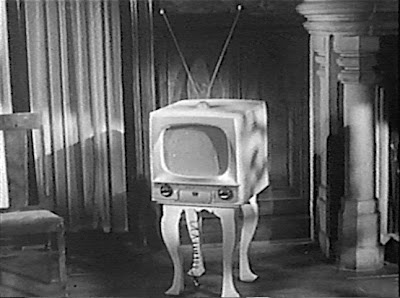
This is a weird episode. The break-ups are one thing. I could believe that part of the episode. But why are Zack’s parents allowing his principal to live in Zack’s bedroom? In the real world, principals and teachers get fired and worse for that sort of thing. Seeing as how this episode also features a moment in which Zack stops time so that he can order some flowers for Mr. Belding “from Mrs. Belding,” I’m going to assume that this is a dream episode.
The dream comes to a conclusion at the Max, in which Slater and Zack before demonstrate how they should have reacted to Jessie and Kelly. Slater announces that doesn’t care about football, strips down to a skintight leotard, and dances around the Max with Lisa (who is wearing a Jessie wig). Screech then dressed up like a cheerleader so Zack can tell Screech that he trusts him and it’s okay if Screech wants to have dinner with Todd.
This was a weird episode. Slater dancing was a great moment but Mr. Belding moving in with Zack asked for a little too much suspension of disbelief, even by the standards of Saved By The Bell.Couldn’t Mr. Belding have moved in with Rod instead?
Last week was the last big primary night of 2026. I mostly watched the results from Florida. The defeat of Alex Vindman in Florida should be all the proof that one needs that the Resistance era is over.
Darke of the Night (YouTube)
My review of this unsold pilot will drop in September.
Homicide: Life On The Street (Peacock TV)
I binged several episodes of Homicide this week and wrote and scheduled reviews of each one.
Juvenile Court (YouTube)
My review of this unsold pilot will drop next week.
Law & Order (Hulu)
I watched an episode of Law & Order that served as a crossover with Homicide. My review of both episodes will drop at some point in September.
Radio 1990 (Nightflight Plus)
I watched an episode of this 80s music video show on Friday night.
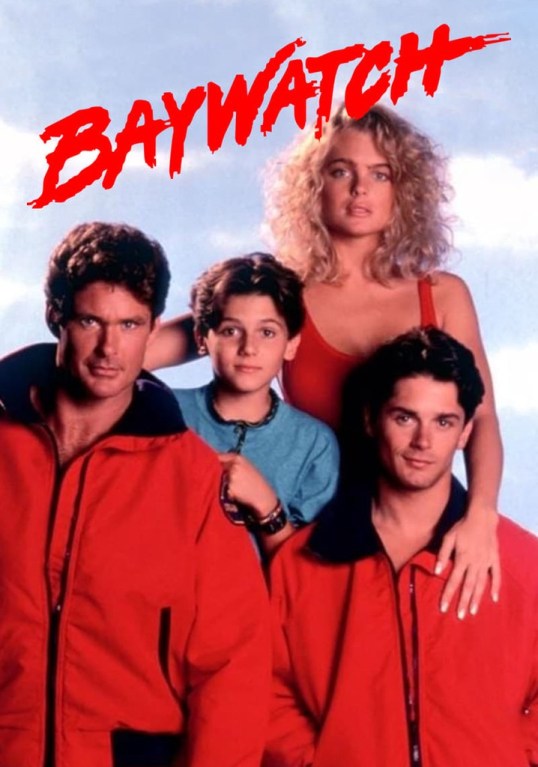
Welcome to Retro Television Reviews, a feature where we review some of our favorite and least favorite shows of the past! On Saturdays, I will be reviewing Baywatch, which ran on NBC and then in syndication from 1989 to 2001. The entire show can be viewed on Tubi.
This week, a floating drug lab means trouble!
Episode 2.16 “Sea of Flames”
(Dir by Gregory J. Bonnan and Douglas Schwartz, originally aired on February 17th, 1992)
Hobie has a nightmare in which he sees Mitch floating in the ocean and looking confused as a speedboat roars up behind him. “BEHIND YOU, DAD!” Hobie yells right before waking up.
Mitch says that the bad dream is no big deal, but Hobie is convinced that he’s seen the future. Mitch laughs off Hobie’s concerns. Mitch is more worried about convincing the city council to approve a funding increase so the lifeguards can buy some supercool wave runners.
Mitch should be worried about Eddie, who is such a terrible lifeguard that he doesn’t even notice that Scorch (Devino Tricoche) is wandering around the beach and setting fires. Scorch is a street performer who eats fire as part of his act. But after he gets a batch of bad designer drugs, he sets Eddie’s lifeguard tower on fire. Even though Eddie is sitting in the tower at the time, he doesn’t notice the flames until it’s nearly too late. After jumping off the tower in slow motion, Eddie drags Scorch to safety. “Sumo! Sumo! Sumo!” Scorch says.
Hey, there’s a boat called Sumo that’s docked in the harbor. Could it be a floating drug lab? Of course it is! When the drug dealers decide to sail away, Mitch gets a chance to show off on a wave runner! But when Mitch falls off the wave runner, he finds himself stranded in the ocean. Uh-oh, there’s a speedboat coming up behind him!
Mitch ducks out of the way just in time. OH MY GOD, HOBIE IS MAGIC!
While Mitch is busy capturing the drug dealers, Ben is once again depressed over getting old. When he investigates a house that has supposedly been empty for decades, he meets the actress (Constance Towers) who once lived there. Back when he was a young lifeguard, Ben had a crush on her. When she invites him into the house, he discovers that she has a framed picture of him that she took when he was young and standing on his lifeguard tower. She had a crush on him as well, but back then, dating a lifeguard would have led to a career-ending scandal. And now they’re both old, so what can anyone do? Oh well. Sorry, Ben, your life sucks.
But Mitch’s life is great! At the end of the episode, he thanks Hobie for having his nightmare. Hobie says he also had a dream where Mitch got married. “Blonde or brunette?” Mitch asks.
This was another silly episode of Baywatch, but as we all know, this series is at its most entertaining when it’s silly. As usual, Hasselhoff delivers even the most ludicrous of lines with an earnestness that is actually kind of charming in its own weird way. Ben’s storyline was kind of sad, but since the only reason Ben is on this show is to show that getting older sucks, it’s to be expected.
The important thing is that Mitch gets his wave runners and the ocean is now a safer place.
“Put on your Sunday best, kids. We’re going to Sears.”
Ah, the 70s. Or actually the 90s. All I know is that the Sears that was located near our house closed in 2014 and the empty parking lot briefly became a flea market before the police showed up and told everyone to go home.
Today’s scene that I love is from 1995’s The Brady Bunch Movie.
4 Shots From 4 Films is just what it says it is, 4 shots from 4 of our favorite films. As opposed to the reviews and recaps we usually post, 4 Shots From 4 Films lets the visuals do the talking.
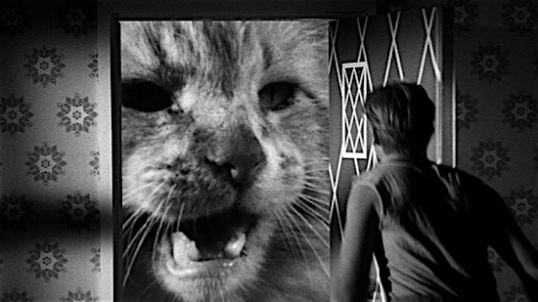
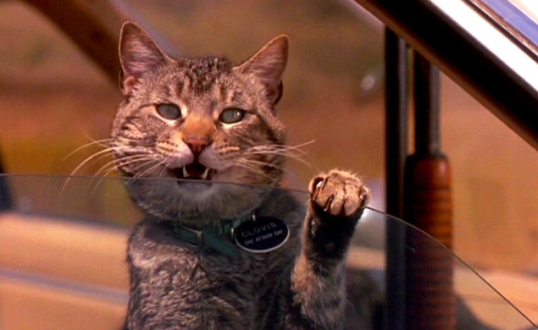
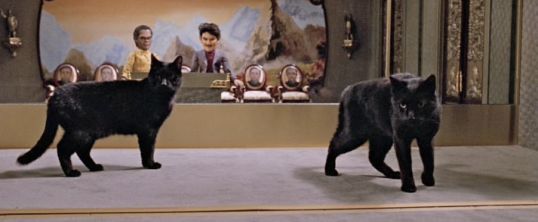
Let’s celebrate cats!
4 Shots From 4 Films
The Incredible Shrinking Man (1957, dir by Jack Arnold)
Sleepwalkers (1992, dir by Mick Garris)
Team America: World Police (2004, dir by Trey Parker)
Captain Marvel (2019, dir by Anna Bolden and Ryan Fleck)
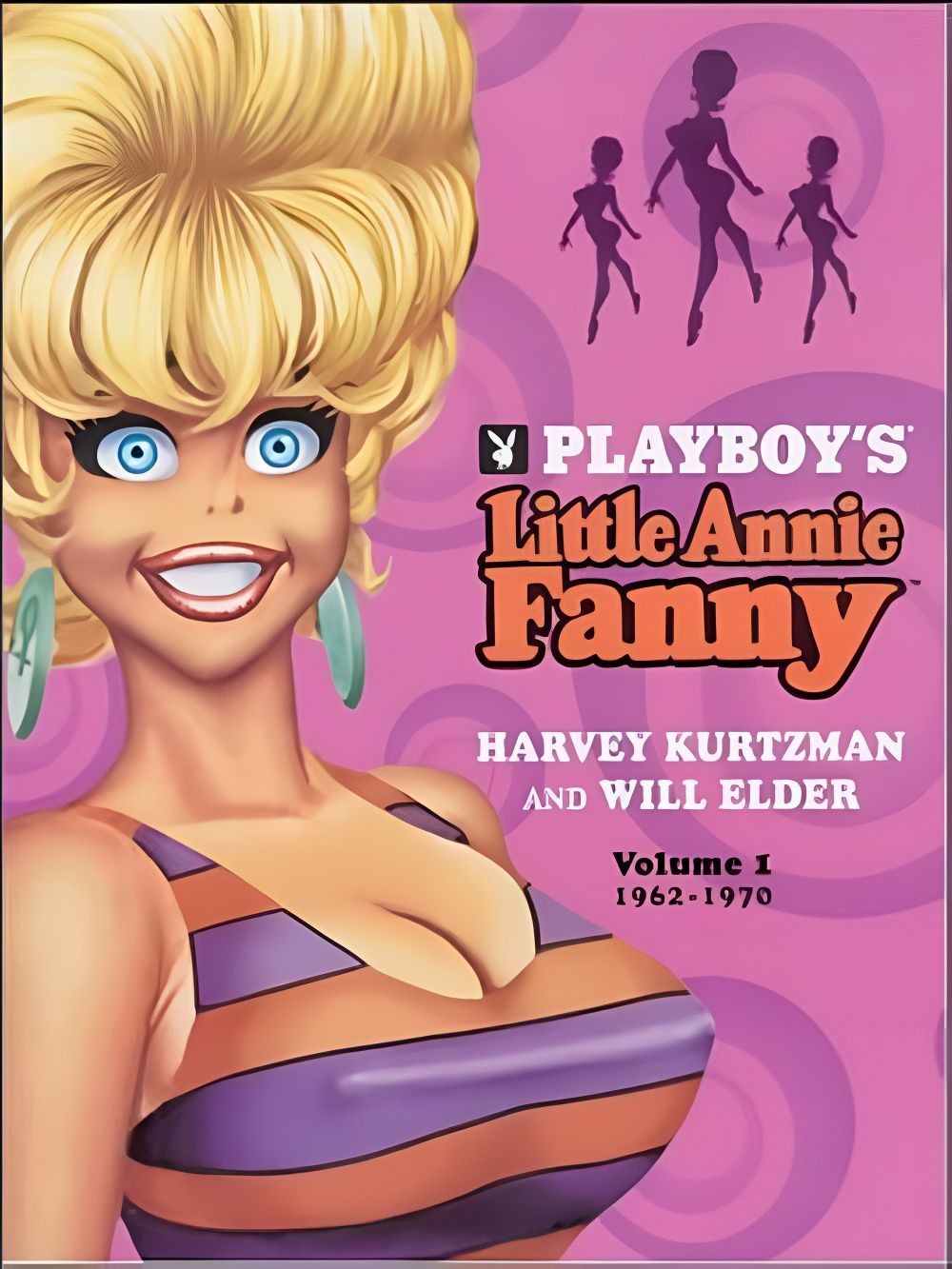
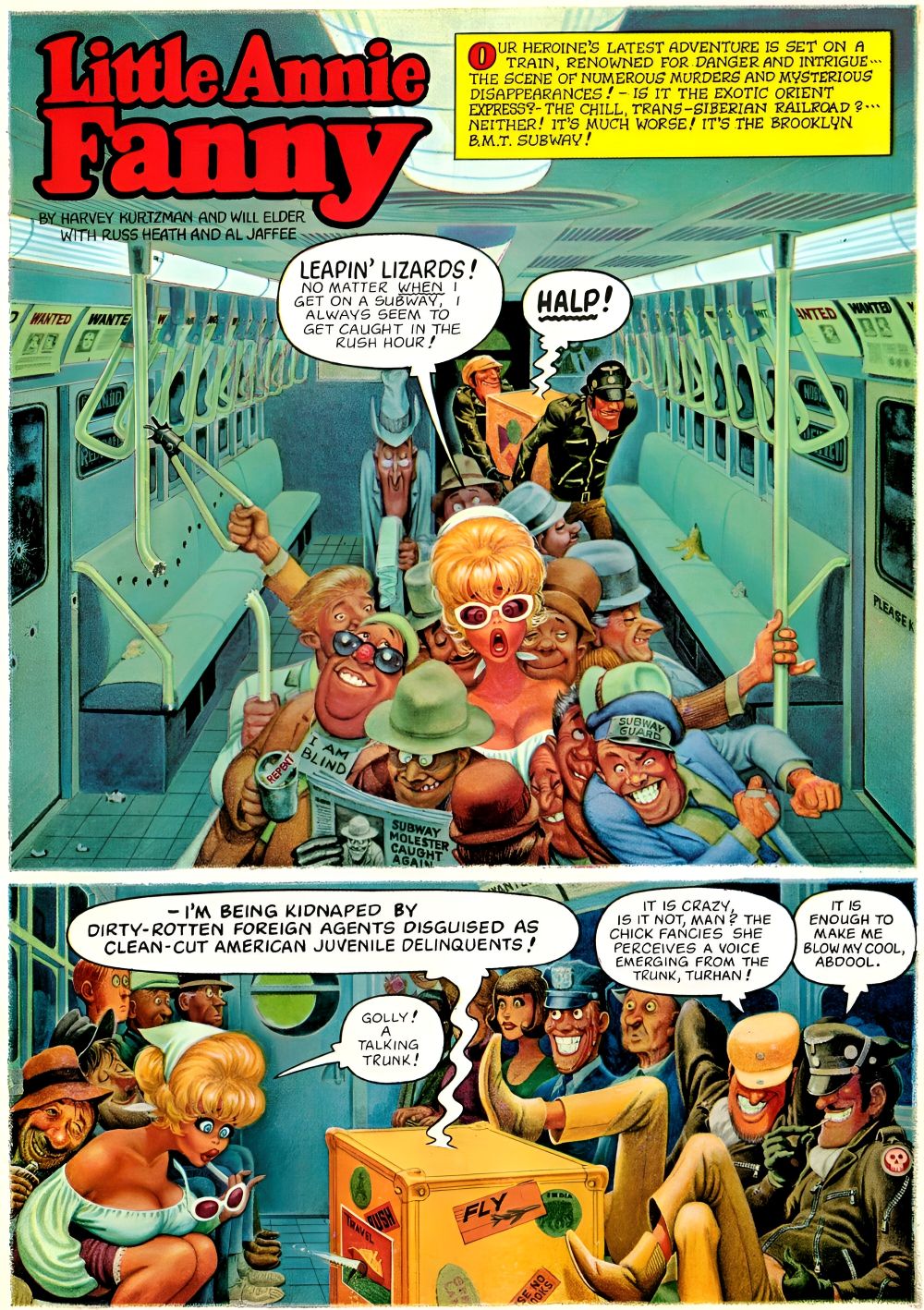
Harvey Kurtzman and Will Elder’s Little Annie Fanny is one of the strangest, most technically dazzling, and culturally revealing comic series ever to run in a mainstream American magazine. Published in Playboy from 1962 to 1988, its basic premise was deceptively simple: Annie Fanny, a gorgeous and spectacularly underdressed young woman, wanders into the social fashions, political anxieties, entertainment crazes, and sexual hypocrisies of the modern United States. Each installment then turns into a lavish full-color farce—part pinup, part Mad-style parody, part period satire, and part frantic visual scavenger hunt.
At a glance, it is easy to dismiss Little Annie Fanny as upscale smut for the Hugh Hefner readership: a glossy excuse to place a naked blonde in absurdly elaborate situations. And, to be fair, nudity was indisputably the commercial engine. Annie’s body is constantly on display, and the series depends on a recognizably male-gaze-centered Playboy sensibility. But that description alone misses why the strip endured for 26 years, or why the names Kurtzman and Elder matter. This was not merely an illustrated centerfold with punch lines. It was a sustained comic chronicle of postwar American fantasy, packaged in airbrushed color and crowded with some of the busiest, funniest, most viciously observant artwork in magazine comics.
Kurtzman had already helped create the language of modern American satire through Mad, while Elder was one of the great comic illustrators: capable of drawing beautiful people, grotesques, slapstick chaos, fake advertising, background gags, and social types all in the same image without losing the picture’s momentum. Their collaboration gives Little Annie Fanny a peculiar tension. The comic invites readers to look at Annie as an object of desire, then surrounds her with a world so ridiculous that the reader’s own desire becomes part of the joke. Annie may be the apparent target of everyone’s attention, but the real targets are the industries, subcultures, politicians, celebrity machines, and self-important movements that use sex, youth, rebellion, or status as branding tools.
The central comic mechanism comes directly from the Kurtzman/Elder school of satire: take a recognizable cultural phenomenon, exaggerate it just enough, and fill every inch of the panel with visual evidence that the whole thing is already absurd. An Annie story is rarely about plot in the conventional sense. Instead, it is a comic demolition derby of styles and attitudes.
One issue might send Annie into a parody of Hollywood, another toward fashionable psychology, youth culture, television, advertising, political campaigning, or a new spiritual fad. The stories often treat Annie as an innocent visitor entering a supposedly sophisticated environment. She is not exactly naïve—she is too adaptable and too knowingly glamorous for that—but she functions as a blank surface onto which the era projects its competing fantasies. Everybody wants Annie to be something: liberated woman, celebrity accessory, corporate mascot, hippie goddess, suburban temptation, political prop, or consumer-product spokesperson.
That flexibility was the strip’s key strength. The character did not need a rigid continuity because Annie was really a cultural barometer. Her changing hairstyles, outfits, settings, and social circles told the reader what America was obsessed with at any given moment. In that sense, Little Annie Fanny was less like a daily newspaper comic and more like a monthly satirical illustrated essay.
Elder’s art is especially essential to that effect. Even when the writing takes a broad, obvious swing at a target, the images add layers of parody. You can linger over a panel and find corrupt executives, ridiculous brand knockoffs, celebrity caricatures, awkward spectators, and small visual jokes functioning at the margins. The comic’s surfaces are glossy, but its worldview is densely cluttered. America in Little Annie Fanny is a carnival of people selling things, performing identities, chasing erotic freedom, and discovering that every supposedly spontaneous cultural movement somehow has merchandise attached to it.
The strip arrived at a perfect moment for Playboy. The early 1960s were still shaped by Cold War respectability, corporate conformity, suburban aspirations, and an increasingly polished mass-media culture. Yet beneath that surface, sexual attitudes, youth identity, popular music, civil rights activism, antiwar politics, and drug culture were transforming the country. Little Annie Fanny made all of this grist for its satirical mill.
Its version of the counterculture is not reverent. Kurtzman was too suspicious of slogans and Elder too alert to visual pretension for that. Hippies, gurus, psychedelic entrepreneurs, radicals, and bohemians appear as part of a world that wants to overthrow the establishment while rapidly developing its own uniforms, poses, and commercial opportunities. The series understood something many period commentators missed: rebellion could be sincere, necessary, theatrical, and exploitable at the same time.
Annie herself could be read as a conflicted symbol of the sexual revolution. On one level, she embodies Playboy’s ideal of sexual availability: glamorous, cheerful, and perpetually presented for heterosexual male consumption. On another, she moves with a freedom that was still startling in American popular culture. She has agency in the loose, comic-strip sense—she travels, experiments, participates, adapts, and refuses to remain confined to the domestic roles older mainstream media had assigned women. The problem is that this “freedom” is filtered through a magazine created largely for men.
That contradiction is one reason the strip is more interesting now than it may have seemed to its original audience. Little Annie Fanny does not stand outside the culture it mocks. It is deeply implicated in it. Its satire of commodified sex runs inside one of the country’s most famous commercial sex-and-lifestyle brands. The comic can laugh at male vanity and consumer lust while simultaneously feeding both. Rather than invalidating the series, that tension makes it an unusually revealing artifact of the era’s confused ideas about liberation.
By the 1970s, the national mood had changed. Vietnam, Watergate, inflation, oil shocks, institutional distrust, and general exhaustion had eroded the breezier confidence of the previous decade. Little Annie Fanny was well suited to this shift because Kurtzman’s comedy had always assumed that authority was partly a performance and that institutions were vulnerable to humiliation.
The 1970s version of the strip feels less enchanted by the promise of social change and more aware of bureaucracy, cynicism, fad culture, and the collapse of public trust. Government becomes an especially ripe target: not a grand moral force, but a machine full of evasive officials, empty rhetoric, paperwork, and people trying to turn scandal into public relations. In a country where political credibility had become a punch line, Annie’s comics could make officialdom look exactly as ridiculous as it felt.
The old counterculture also becomes a target of nostalgia, burnout, and commercialization. What once looked revolutionary now risks becoming a costume, a self-help brand, or an aging generation’s memory of its own glamour. This is where the series’ cynical streak becomes sharper. Kurtzman and Elder do not suggest that the establishment was redeemed; they suggest that American culture has an extraordinary capacity to absorb, neutralize, and resell its critics.
The final stretch of Little Annie Fanny lands in the Reagan 1980s, a decade that practically begs for Elder’s luxuriant visual excess. The cultural vocabulary had shifted again: wealth was louder, celebrity became more aggressively marketable, image management intensified, and the language of success increasingly revolved around luxury, ambition, consumption, and personal branding.
Annie fits naturally into this world because she had always been a glossy fantasy figure. But now the world around her starts to resemble an expanded version of the fantasy: power suits, high-end indulgence, media spectacle, fitness crazes, corporate opportunism, and a renewed confidence in money as a public identity. The strip’s satire becomes less about the dream of breaking free from conformity and more about what happens when conformity itself becomes glamorous, expensive, and aspirational.
There is something almost elegiac about the series ending in 1988. By then, the comic’s foundational ingredients—sexual satire, celebrity parody, consumer mockery, political caricature—were no longer unusual. Television, stand-up, magazines, and eventually the internet would make those modes ubiquitous. Yet few later works matched the tactile labor and visual density of Kurtzman and Elder’s pages. They made satire that looked expensive because it was expensive in attention, craft, and accumulated detail.
Little Annie Fanny remains messy, dated, funny, exploitative, sophisticated, and often astonishing to look at. It is not a cleanly progressive artifact, nor is it simply a relic of old-school Playboy sexism. It is both an expression of its magazine’s fantasies and a critique of the larger culture that produced them. Its real legacy lies in that contradiction: it captured America’s changing self-image from the optimistic, libidinal 1960s through the disillusioned 1970s and into the gold-plated theatricality of the Reagan era—always with Annie at the center, and always with the joke spreading outward until it included nearly everyone.
As some of our regular readers undoubtedly know, I am involved in a few weekly live tweets on Twitter and Mastodon. I host #FridayNightFlix every Friday, I co-host #ScarySocial on Saturday, and I am one of the five hosts of #MondayActionMovie! Every week, we get together. We watch a movie. We tweet our way through it.
Tonight, at 10 pm et, #ScarySocial presents The Monster That Challenged The World!
If you want to join us this Saturday, just hop onto twitter, start the movie at 10 pm et, and use the #ScarySocial hashtag! It’s a friendly group and welcoming of newcomers so don’t be shy.
The Monster That Challenged The World is available on Prime! See you there!
Twist and Shout is a song that has been a hit for a lot of artists. Rodney Dangerfield took a swing at it 1987, performing the song for the Back to School soundtrack. The video is largely made up of scenes from Back to School and introduced a whole generation of MTV viewers to not only Rodney Dangerfield but also Sally Kellerman, Burt Young, and Ned Beatty. They probably already knew Sam Kinison.