Late Night Retro Television Review: Sledge Hammer! 1.1 “Under the Gun”


Welcome to Late Night Retro Television Reviews, a feature where we review some of our favorite and least favorite shows of the past! On Fridays, I will be reviewing SLEDGE HAMMER!, a cop comedy which ran on ABC from 1986 to 1988. The entire series can be found on Prime!

My friend Pat McCurry introduced me to Sledge Hammer earlier this year.  Starring David Rasche as Detective Sledge Hammer, this show was a parody of Dirty Harry and Hunter.  Since I’m currently reviewing Hunter on Thursday night, it seems only appropriate to review Sledge Hammer on Friday night!

Episode 1.1 “Under the Gun

(Dir by Martha Coolidge, originally aired on September 23rd, 1986)

“HAMMER!” shouts police Captain Trunk (Harrison Page), “YOU COULDN’T RESIST BLOWING UP A BUILDING ON YOUR WAY TO WORK THIS MORNING, COULD YOU!?”

Captain Trunk yells a lot but that’s just because he’s been put in charge of managing Detective Sledge Hammer (David Rasche), a San Francisco cop who talks to his gun and who is currently on suspension for shooting a robber at a grocery store before then buying some eggs and “those little cocktail weenies.”  When asked by a reporter if his response was too violent, Hammer replied that he really needed his groceries.

For the record, Trunk is correct.  Hammer did blow up a building on his way to work.  There was a sniper on the roof so Hammer pulled a rocket launcher out of the back of his car and took care of the problem.

Despite all of that, the mayor (John Vernon, who previously played San Francisco’s mayor in Dirty Harry) orders that Sledge Hammer be taken off suspension.  The Mayor’s daughter, Francie (Judie Aronson), has disappeared.  (“She was either kidnapped or she is just very good at hiding.”)  The police think that she was taken by the Allied Violent Offence Network (AVON), a terrorist group led by Weird Willy Luxley (D.W. Brown).  Weird Willy is so evil that his own parents gave him up for adoption three years before he was born.  The Mayor thinks that Sledge Hammer’s unapologetic embrace of violence is the way to go.

Hammer is assigned a partner, Dori Doreau (Anne-Marie Martin), an expert in negotiation and criminal psychology.  At first, Hammer is uneasy about working with a woman.  But, when he sees her beat up a man with a shotgun, he’s impressed.  “That was excessively violent and totally unnecessary.  I loved it.”  Doreau mentions she was at the top of her class in hand-to-hand combat.  “I’d like to fight you sometimes, Doreau,” Hammer replies.

Hammer promises to bring back “the mayor’s daughter, dead or alive.”  Reasoning that it’s usually a member of the family who is to blame in cases like this, Hammer arrests and interrogates the Mayor’s wife.  That gets Hammer suspended again but it turns out that Hammer was half-right.  It wasn’t the Mayor’s wife.  Instead, in true Patty Hearst manner, it turns out that Francie Flambo is a member of AVON and she arranged her own kidnapping!

It all leads to a shootout in a warehouse, as these things often do.  When AVON makes their ransom demand, Doreau is sent to deliver the money.  (She’s actually given a suitcase full of shredded paper.)  Sledge Hammer crashes through a skylight and lands on a box, grinning.

“Why are you smiling!?”  Weird Willie Luxley demands.

“I’m trigger happy, that’s why!” Hammer replies.

Soon, all of the members of AVON have been subdued and Francie has been arrested.  The Mayor offers Doreau a promotion but Doreau refuses to accept it because she feels that Hammer is not being given the recognition that he deserves.

This seems like the start of a beautiful friendship.

The first episode of Sledge Hammer may be 40 years old but it’s still feels relevant and the laughs still feel earned.  As played by David Rasche, Sledge Hammer is the perfect parody of every unapologetically violent action hero.  Though there are hints of attraction between him and Doreau, the episode makes it pretty clear that Hammer’s true love is for his gun.  At the same time, there’s something rather refreshing about Hammer’s total and complete lack of angst.  As I watched this episode, it occurred to me that Hammer would probably get as annoyed with Daniel Craig’s self-pitying version of James Bond as I do.

This pilot was enjoyable and funny 26 minutes of pure entertainment.  I look forward to reviewing the rest of the series!
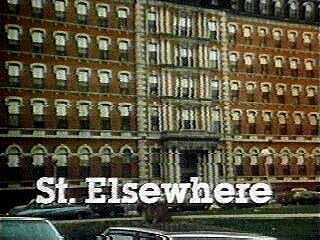
Retro Television Review: St. Elsewhere 4.6 “Lost and Found In Space”


Welcome to Retro Television Reviews, a feature where we review some of our favorite and least favorite shows of the past! On Fridays, I will be reviewing St. Elsewhere, a medical show which ran on NBC from 1982 to 1988.  The show can be found on Daily Motion.

This week, it’s not just the patients who need to be stitched up.

Episode 4.6 “Lost and Found In Space”

(Dir by Robert Becker, originally aired on November 13th, 1985)

Bobby Caldwell lives!

Things were looking pretty bad for Bobby last week.  As you may remember, he picked up a waitress, took her to his Cape Cod home, and then ended up getting slashed across the face when she pulled a razor blade out from under her tongue.  This week, Bobby is wandering around the hospital with a huge bandage on his face and telling everyone that he had an “accident.”  It’s only to Dr. Turner that he confesses that he was attacked by the waitress.  Bobby claims that he responded by punching her and that he then called the police.

Bobby spends this episode in a truly foul mood.  Not only does he have a bandage on his face but he’s also been told that the Hospital Review Board doesn’t feel that he’s performing enough surgeries for the residents to really get the training that they need.  (“We’re a teaching hospital,” Dr. Craig explains.)  Bobby pressures an old man into getting a face lift that he really doesn’t need.  Even Victor thinks that the surgery is unethical.  I mean, when you’ve lost Victor Ehrlich….

Meanwhile, Dr. Westphall is finally released from the hospital after fainting due to the Malaria that he brought back from working abroad.  Westphall is depressed about the whole thing.  Westphall is always depressed.  Even when his daughter comes home to help out, Westphall is depressed to see her.  Cheer up, Westphall!

After weeks of trying to lose weight, Elliot discovers that he’s actually gained three pounds.  What’s worse is that his girlfriend, Marcy (Jeannie Elias), lost weight at the same time that Elliot was gaining weight and, when she sees that he’s just as heavy as ever, she dumps him.

Amongst the patients, Pru Dowler (Amanda Wyss) and Buddy Askew (Mark Baker) are two developmentally challenged teenagers who end up “procreating” (as Luther puts it) in Pru’s hospital room.  Dr. Craig takes it upon himself to discuss what happened when Pru and it’s just as awkward as you might expect.

Col. Chuck Cochrane (David Ackroyd) is an astronaut who collapses while giving a speech.  In the hospital, he has nightmares about being trapped in space.  The whole storyline brought to mind The Ninth Configuration, a film that perhaps not coincidentally starred the future Donald Westphall himself, Ed Flanders.

The highlight of this episode was undoubtedly William Daniels’s performance as Dr. Craig.  With Dr. Westphall recovering his illness, the day-to-day tasks of running the hospital fell on Dr. Craig and he was not at all happy about it.  On this show, William Daniels is always at his best when Dr. Craig is in a bad mood.  Before going on rounds, Dr. Craig predicted that Dr. Morrison would show up late and have some overly complicated excuse.  Morrison did just that and it was hard not to smile at Craig’s exasperation.  At the same time, it is made clear that the main reason that Craig is upset is because his granddaughter has been taken away from him.  It was hard not to feel bad for him, even when he was biting everyone’s heads off.

This was not a happy episode.  No one in the hospital seems to be doing well.  Bobby is bitter.  Dr. Craig is angry.  Elliott is feeling defeated.  And Westphall …. well, he’s just Westphall.  Fortunately, the strong cast and the smart writing made up for the fact that St. Eligius isn’t a happy place right now.

Seriously, I could watch William Daniels yell at people all day.

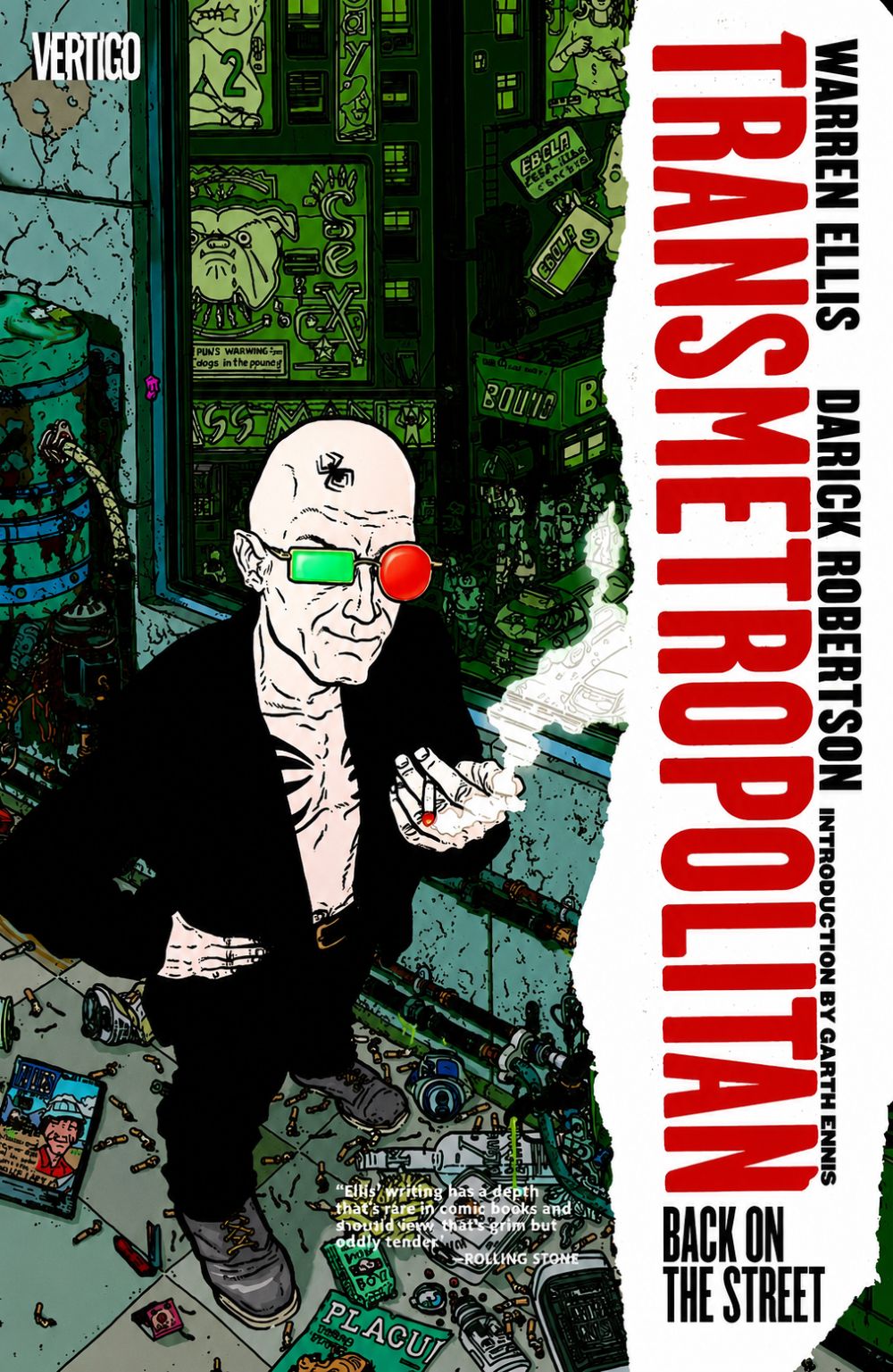
Review: Transmetropolitan Vol. 1 – Back on the Street


“Journalism is just a gun. It’s only got one bullet in it, but if you aim right, that’s all you need. Aim it right, and you can blow a kneecap off the world.” — Spider Jerusalem

There is a particular kind of jolt that comes from revisiting a story written decades earlier and realizing it was not so much predicting the future as identifying a sickness already taking hold. Written by Warren Ellis and illustrated by Darick Robertson, Transmetropolitan Vol. 1: Back on the Street is exactly that kind of book. It is loud, filthy, hilarious, and vicious in all the ways it needs to be, and it lands differently now than it likely did in the late nineties. What once read primarily as a wild, hyperbolic satire of politics, media, consumerism, and public numbness now can feel unnervingly close to reportage with the names changed. Its 23rd-century City remains an over-the-top cyberpunk nightmare, but the institutions, personalities, and manufactured distractions running it feel very familiar.

The volume begins with Spider Jerusalem living in isolation, hiding in the mountains after abandoning the City and the career that made him famous. He has a book contract to fulfill, a pile of debts to settle, and no actual desire to rejoin civilized life. Unfortunately for him, the people financing his escape have had enough. Spider is forced back into the City, a vast, overcrowded cyberpunk metropolis that seems to have taken every bad impulse of contemporary society and pushed it beyond all reasonable limits. His return is not a heroic homecoming. It is more like dropping an angry, drug-addled, heavily armed journalist into the middle of a garbage fire and asking him to write a column about the smoke.

Spider’s immediate appeal is that he has no interest in performing respectability. He is rude, vindictive, profane, selfish, and fully capable of treating even his friends terribly. He uses violence too casually, insults everyone around him, and carries a bowel disruptor gun that can incapacitate people in the most humiliating manner imaginable. In another book, these traits might make him an unbearable edgelord. Back on the Street, however, understands that Spider’s ugliness is part of a larger contradiction. He is not cruel because he does not care; he is cruel because he cares too much and has no healthy way of processing how badly the world fails ordinary people.

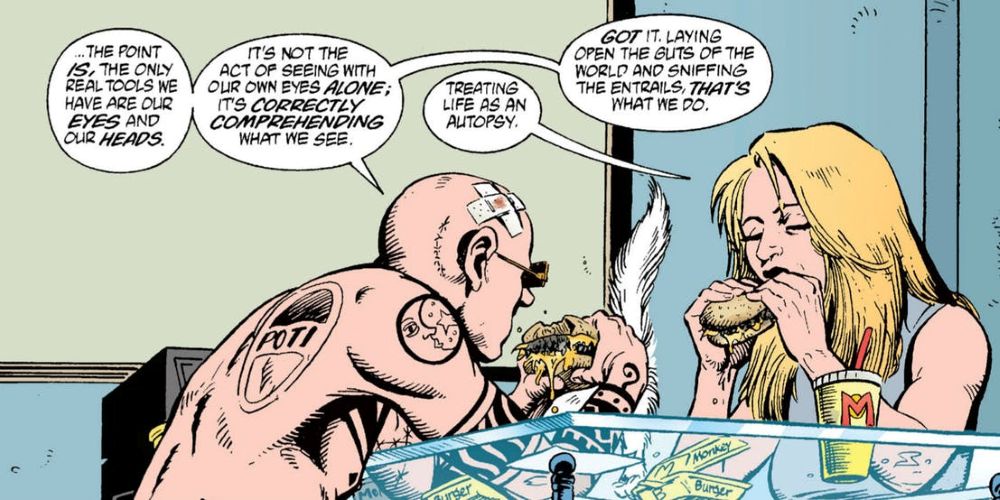
That is what makes him more than a Hunter S. Thompson imitation with futuristic sunglasses. Spider is a gonzo journalist, but his journalism is not merely an excuse for a manic lifestyle or a stage for his personality. At his best, he is driven by an almost old-fashioned moral belief that the truth matters, that citizens deserve to know what is being done in their name, and that powerful people should not be allowed to bury their crimes under public-relations language. The series positions journalism as something active rather than passive. Spider does not just report what happens; he investigates, provokes, exposes, and refuses to let the comfortable look away.

His column, “I Hate It Here,” captures the character’s relationship with the City. Spider hates it because he sees it clearly. He sees the absurdity of its consumer culture, the cruelty hiding behind political slogans, and the way people are taught to accept exploitation as normal. Yet he also understands the City in a way that few other characters do. It is full of strange, desperate, damaged people trying to survive in a system that is too big, too loud, and too indifferent to care whether they live with dignity. Spider’s contempt is not aimed equally at everyone. He has little patience for complacency, hypocrisy, and stupidity, but he shows genuine anger when vulnerable people are victimized by police, politicians, corporations, or public indifference. His idealism is twisted, abrasive, and buried beneath several layers of chemical abuse, but it is still idealism.

The City itself is the book’s other major character. Robertson’s art sells its overwhelming scale and ugliness. Every street looks packed with signs, body modifications, crowds, trash, strange fashion, predatory businesses, and people whose lives have been reshaped by technology in ways both liberating and grotesque. The future is not sleek in the familiar science-fiction sense. It is grubby, crowded, commercial, and deeply human. People can alter their bodies, change their identities, pursue bizarre new faiths, and live inside an endless stream of media stimulation, but none of those developments have solved poverty, loneliness, corruption, or abuse of power.

That is why the book has aged more effectively than many stories set in a supposedly distant future. Its technology is exaggerated, but its social anxieties feel much closer now. The City is saturated with information, yet its people are often less informed than ever. Everyone has access to spectacle, outrage, personality-driven media, and instant distractions, but the institutions shaping their lives remain opaque and unaccountable. The comic’s dystopia is not based on the idea that technology automatically destroys humanity. Instead, it suggests that technology amplifies the priorities already built into society. If a culture values profit, spectacle, division, and convenience over empathy and truth, more advanced technology simply gives those impulses more efficient tools.

The political material in this first volume is especially pointed. Ellis is interested in the gap between public image and actual power. Politicians do not need to be secretly subtle or brilliant to be dangerous; they only need to understand how to manipulate fear, identity, frustration, and media attention. The institutions around them—police, corporate media, wealthy interests, and political operatives—help sustain the illusion that ordinary people have meaningful control while making sure the system remains insulated from consequences. The book’s vision of power can be blunt, but bluntness is part of its style. Transmetropolitan does not whisper its anger. It shouts because it believes politeness is often one of the tools that lets abuse continue unchallenged.

At the same time, Back on the Street is not flawless. Its satire can be so broad that it occasionally feels like the story is pointing at a target with both hands and yelling until the reader gets it. Some of the shock humor and sexual material carry an intentionally trashy late-nineties edge that may feel juvenile or dated. The supporting cast is still taking shape, so many people primarily exist as foils for Spider’s verbal attacks or examples of the City’s bizarre social landscape. The book’s relentless attitude can also wear readers down if they need a more emotionally grounded entry point.

Still, the excess is usually purposeful. This is a world where the boundaries between entertainment, propaganda, commerce, and personal identity have all but collapsed, so subtle world-building would almost be dishonest. The visual and verbal overload puts the reader in Spider’s position: constantly assaulted by nonsense, constantly asked to separate meaningful horror from everyday noise. The absurdity makes the real injustice sharper. A city can be full of outrageous fashion, talking animals, hallucinogens, and body-modification trends, yet its most disturbing feature remains how easily human suffering is turned into content, data, or a political talking point.

Ultimately, Transmetropolitan Vol. 1: Back on the Street works because Spider Jerusalem is not presented as a clean solution to a corrupt society. He is a mess, an irritant, and sometimes a monster in miniature. But he is also someone who refuses to be numb. In a world built to keep people distracted, passive, and exhausted, that refusal has real value. The book’s cyberpunk future remains wildly over-the-top, but its central warning feels uncomfortably familiar: the most dangerous dystopias are not always the ones with impossible technology. Sometimes they are the ones where the public is flooded with noise, the powerful face no consequences, and telling the truth becomes an act of open rebellion.

Live Tweet Alert: Join #FridayNightFlix for Phantasm!


As some of our regular readers undoubtedly know, I am involved in a few weekly watch parties.  On Twitter, I host #FridayNightFlix every Friday and I co-host #ScarySocial on Saturday.  On Mastodon, I am one of the five hosts of #MondayActionMovie!  Every week, we get together.  We watch a movie.  We tweet our way through it.

Tonight, at 10 pm et, I will be hosting #FridayNightFlix!  The movie?  In memory of Reggie Bannister, we have 1979’s Phantasm!

If you want to join us this Friday, just hop onto twitter, find Phantasm on Prime, start the movie at 10 pm et, and use the #FridayNightFlix hashtag!  I’ll be there happily tweeting.  It’s a friendly group and welcoming of newcomers so don’t be shy.

See you there!


Scenes I Love: Steve Martin performs Maxwell’s Silver Hammer in Sgt. Pepper’s Lonely Hearts Club Band


Today, the Shattered Lens wishes actor and comedian Steve Martin a happy 81st birthday.  Originally from Texas, Martin has been a cultural mainstay for longer than I’ve been alive.  He’s a master of both comedy and drama, as anyone who has watched the two seasons of Only Murders In The Building can tell you.

And he can sing too!

Here he is, performing Maxwell’s Silver Hammer in 1978’s Sgt. Pepper’s Lonely Hearts Club Band.  Though this was not Martin’s film debut, it was his first “big” role.  Steve Martin was 33 years old here.  Remarkably, he only seems to have aged a few years in the decades since appearing in this film.

Happy birthday, Steve Martin!

4 Shots From 4 Films: Special Wim Wenders Edition


4 Or More Shots From 4 Or More Films is just what it says it is, 4 shots from 4 of our favorite films. As opposed to the reviews and recaps that we usually post, 4 Shots From 4 Films lets the visuals do the talking!

Today, the Shattered Lens wishes a happy 79th birthday to the great German director, Wim Wenders!  It’s time for….

4 Shots From 4 Wim Wenders Films

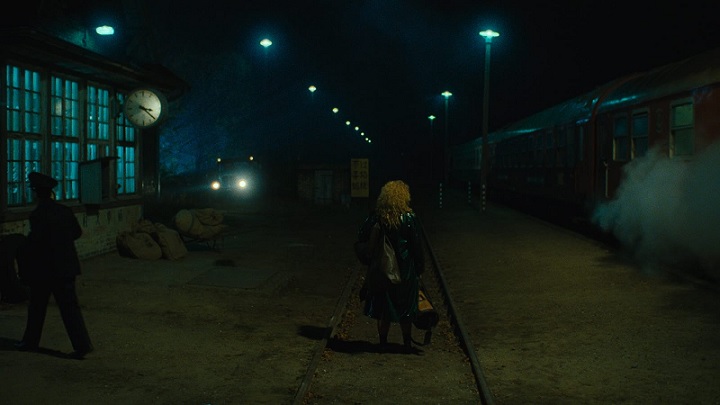
The American Friend (1976, dir by Wim Wenders, DP: Robby Muller)

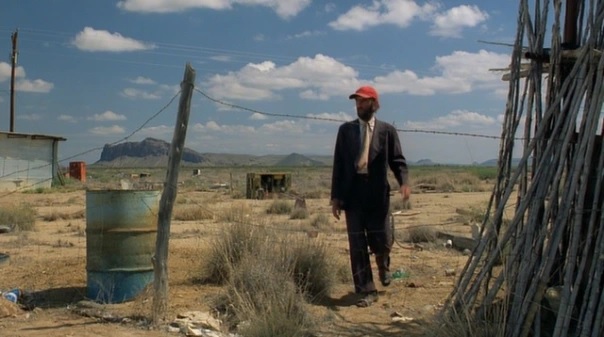
Paris, Texas (1984, dir by Wim Wenders, DP: Robby Muller)

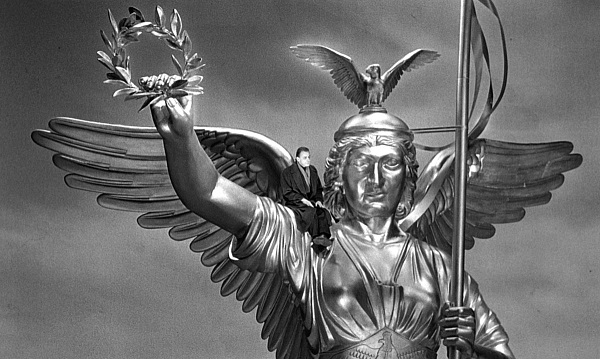
Wings of Desire (1987, dir by Wim Wenders, DP: Robby Muller)

Until the End of the World (1991, dir by Wim Wenders, DP: Robby Muller)

Song of the Day: Colors (by Ice-T)


Ice-T’s “Colors” feels like one of those records where West Coast hip-hop stops sounding like a regional offshoot and starts speaking with its own unmistakable voice. Released for Dennis Hopper’s 1988 film of the same name, it does not romanticize Los Angeles gang life so much as report from inside its atmosphere: territorial, tense, and tragically routine. Ice-T’s narrator is not offering a neat moral lesson or trying to turn the street into a fantasy; he is laying out a social reality in plain, hard language. That documentary quality is a major reason the song still lands so forcefully.

What makes “Colors” especially important is how natural Ice-T makes its perspective sound. The flow is controlled and conversational, almost like somebody walking you through the rules of a place where the wrong glance, neighborhood, or color can carry consequences. That approach helped define a West Coast identity built around local detail, storytelling, and lived environment. The song’s world is specifically Los Angeles—not a generic “inner city”—and its focus on the Bloods-and-Crips color divide gave rap listeners outside California a stark picture of how geography and identity could become inseparable.

That was a crucial foundation for what gangsta rap would become. Before the genre hardened into a marketable label—and, later, into endless caricature—“Colors” showed that street-centered rap could be vivid social observation. Ice-T was already a major West Coast presence, and the song helped establish the template that artists such as N.W.A. would push further: police pressure, neighborhood politics, danger, survival, and anger described with little interest in making outsiders comfortable. The song is confrontational, but its real power comes from its clarity; it makes a listener feel how a culture of affiliation can become a trap.

It also helped distinguish the West Coast from the East Coast tradition that had shaped hip-hop’s earliest public identity. New York rap was often treated as the genre’s center of gravity, with its own emphasis on DJ culture, battle skills, dense rhyme patterns, and sample-driven production. “Colors” did not reject lyricism—it is a sharply written record—but it put place and narration ahead of verbal acrobatics. The West Coast voice that grew around songs like this left more room for a direct, cinematic account of life in Los Angeles. That difference should not be flattened into a simplistic coast-versus-coast rivalry, but “Colors” made clear that California hip-hop had its own stories, rhythms, and stakes—and would not need New York’s approval to matter.

Colors

I am a nightmare walking, psychopath talking
King of my jungle, just a gangster stalking
Living life like a firecracker, quick is my fuse
Then dead as a death pack, the colors I choose

Red or blue ‘cuss or blood
It just don’t matter
Sucker die for your life when my shotgun scatters
We gangs of L.A. will never die, just multiply

Colors

You don’t know me, fool, you disown me, cool
I don’t need your assistance, social persistence
Any problem I got I just put my fist in
My life is violent, but violent is life

Peace is a dream, reality is a knife
My colors my honor my colors my all
With my colors upon me one soldier stands tall
Tell me what have you left me

What have I got
Last night in cold blood my young brother got shot
My homeboy got jacked, my mother’s on crack
My sister can’t work ’cause her arms show tax

Madness insanity, live in profanity
Then some punk claiming’ they understanding’ me
Give me a break, what world do you live in
Death is my sect, guess my religion

Colors

My pants are sagging’ braided hair
Suckers stare but I don’t care
My game ain’t knowledge, my game’s fear
I’ve no remorse so squares beware

But my true mission is just revenge
You ain’t in my sect, you ain’t my friend
Wear the wrong color, your life could end
Homicide’s my favorite venue

Colors

So I’ll just walk like a giant, police defiant
You’ll say to stop but I’ll say that I can’t
My gangs my family, it’s all that I have
I’m a star on the wall’s my autograph

You don’t like it, so you know where you can go
‘Cause the streets are my stage and terror’s my show
Psycho-analyze try and diagnose me, why?
It wasn’t your brother that brutally died

But it was mine, so let me define my territory don’t cross the line
Don’t try to act crazy ’cause the shit don’t faze me
If you ran like a punk, it wouldn’t amaze me
‘Cause my colors death, though we all want peace
But our war won’t end till all wars cease

Colors

Music Video of the Day: Beautiful Dangerous by Slash, featuring Fergie (2010, directed by Rich Lee)


Today’s music video of the day is for the third single to be release from Slash’s self-titled debut solo album.  Slash told The Sun that this song began as a piece of music that he wrote as “a score for a scene in a strip club” and he decided to have Fergie provide vocals after hearing her cover Heart’s Barracuda.

The video features Fergie as an obsessed fan of Slash’s who apparently ends up killing him.  Slash said that the idea for the video came from Fergie herself.  The video was directed by Rich Lee, who has also done several videos for The Black-Eyed Peas, Eminem, Lana del Rey, and others.

Enjoy!