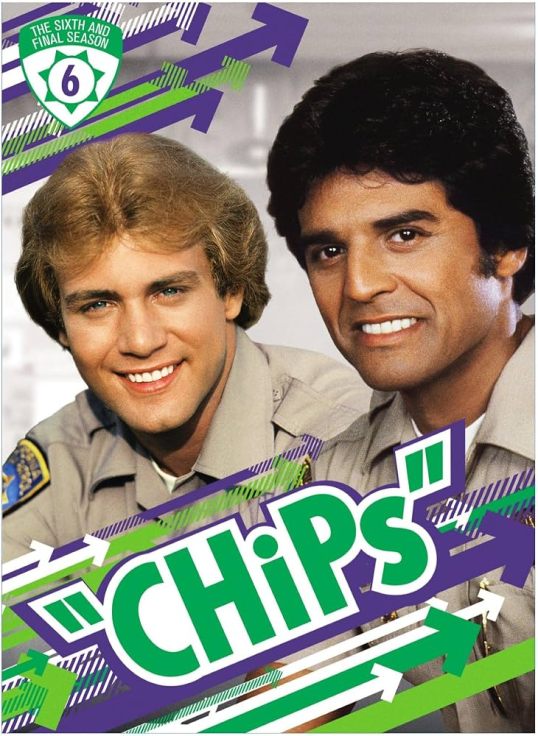
Welcome to Late Night Retro Television Reviews, a feature where we review some of our favorite and least favorite shows of the past! On Mondays, I will be reviewing CHiPs, which ran on NBC from 1977 to 1983. The entire show is currently streaming on Prime!
This week, we meet the future of the Highway Patrol.
Episode 6.5 “Speedway Fever”
(Dir by Chuck Bail, originally aired on November 7th, 1982)
This week, we meet Bobby’s younger brother, Bruce Nelson (Bruce Penhall). Bruce is both a world motorcycle speedway champion and a student at the Highway Patrol Academy. He hopes soon to be riding a motorcycle in the name of the law, just like Bobby and Ponch.
Unfortunately, Bruce has a hard time following orders. He likes to show off when he’s riding his motorcycle. He’s a good driver and a good shooter, but he’s struggling at the Academy. And when things start to get too tough for him, he decides to walk away from it. It’s an impulsive decision that he regrets. Can Ponch and Bobby talk the head of the Academy into giving Bruce a second chance? Of course they can! Ponch and Bobby can do anything.
Bruce Penhall was a real-life speedway champion. The footage of Bruce Nelson winning his race is actually taken from one of Penhall’s actual races. Judging from this episode, Penhall was a likable, if somewhat stiff, actor. In fact, watching this episode, I couldn’t help but notice that Bruce Penhall had better chemistry with Erik Estrada than Tom Reilly did. One gets the feeling that the purpose of this episode was to introduce Penhall as a potential replacement for Reilly. If nothing else, Penhall brought a good deal of earnest energy to his performance and provided quite a contrast to Tom Reilly’s rather spacey acting style.
This episode wasn’t entirely taken up with scenes of Penhall racing. There were two storylines. The more annoying one featured three 16-year-old girls (one of whom was played by Moon Unit Zappa) who would hitchhike and then use a water pistol to rob whoever picked them up. The girls introduced themselves as being from the Valley and spent the entire episode saying stuff like “For sure!” and “Gag me with a spoon!” (I’m not kidding; they said that more than once.) Frank Zappa’s “Valley Girl” played on the soundtrack whenever the girls showed up. It was kind of embarrassing all around. Between this episode, the Moloch episode, and the UFO episode, this season appears to have found CHiPs desperately struggling to stay culturally relevant.
As for the other storyline, it featured two motorcycle-riding thieves who were robbing couriers on the highway. One of the thieves was Bruce’s best friend, Ray (Robert Romanus). What a coincidence! Romanus, of course, played Mike Damone in Fast Times at Ridgemont High, which was probably still in theaters when this episode aired. He gives pretty much the same performance here that he gave in Amy Heckerling’s film. In the end, this episode left you wondering just how Mike Damone eventually ended up going so bad.
The episode ends with Bruce not only winning the world speedway championship but also returning to the Academy. It looks like the Highway Patrol is getting some new blood, and not a minute too soon!
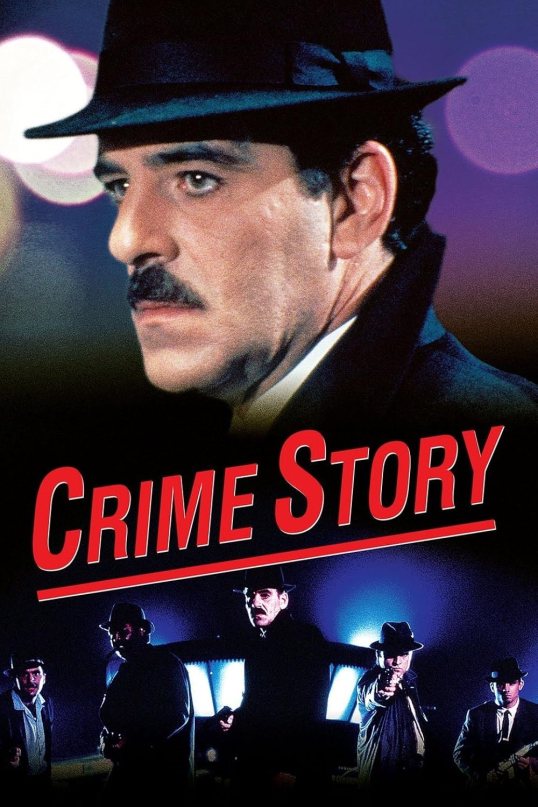
Welcome to Retro Television Reviews, a feature where we review some of our favorite and least favorite shows of the past! On Mondays, I will be reviewing Crime Story, which ran on NBC from 1986 to 1988. The entire show can be found on Tubi!
This week, the show changes locations. We’re going to Vegas and we’re getting new opening credits!
Episode 1.16 “The Kingdom of Money”
(Dir by James A. Contner, originally aired on January 30th, 1987)
Welcome to Las Vegas!
Ray Luca is very happy to be in Vegas. Along with Max Goldman, Pauli, and Steve Kordo (Jay O. Sanders), Ray has taken over a casino and is pushing his way into the local rackets. He gives a speech to the casino’s employees, telling them that from now on everything in the casino will be run honestly and that anyone who steals any money will be fired. He then has a meeting with Max in which they discuss all the ways to skim the profits.
Luca’s wife, Cori (Johann Carlo), isn’t happy about the move. She misses Chicago, so instead of hanging out around the house, Luca goes out and hires a prostitute named Jackie (Debra Feuer). Luca tells Jackie that she will be working exclusively for him from now on. Jackie points out that she already has a “manager.” Luca smirks.
The only problem for Luca is that Mike Torello is in Vegas, and now he’s working for the Justice Department. Luca and his team are headquartered in a small Vegas motel. When David Abrams sees that someone has brought a bowl of Justice Department matchbooks into the motel, he tells Torello’s men to throw them out. “We’re not a recruiting station,” Abrams says.
Torello decides that the best way to get Luca is to go after one of Luca’s Vegas associates, a loan shark named Al (Mike Starr). They visit a diner owner (Graham Beckel) who owes Al money. They convince him to call Al and say that he has Al’s money. When Al comes to collect, Torello will arrest him. Sound like a good plan, right?
Unfortunately, someone is dumb enough to leave behind the bowl of Justice Department matchbooks in the diner. Additionally, it doesn’t occur to Torello to have someone watching the diner 24/7. When Al shows up early and discovers the matchbooks, he guns down not only the owner of the diner but also his wife and 5-year-old son.
Torello’s angry. Well, Torello should be angry. He should also be feeling guilty, seeing as how he and his men basically got the diner owner killed through their own incompetence. Torello decides to go undercover as someone who needs a loan. He and his men even set up a fake strip club where Torello and Al can meet to discuss the terms of the loan. Torello’s attempt to arrest Al falls apart when one of Al’s men pulls a gun and starts firing. Danny takes a bullet in the arm before killing the gunman. As for Al, he runs through the streets of Vegas before Torello guns him down.
Abrams looks down at Al’s body and says that he doesn’t think Al is going to be testifying.
This was a good episode. If the previous Chicago-based episodes emphasized the professionalism of Torello and the impulsivity of Luca, the roles are reversed in Vegas. Luca is in his element, and Torello and his men are the ones who are now having to adjust to a new city. If the previous Chicago-based episodes tended to be cold and gray, this Vegas episode is visually defined by neon and excess. The sallow, grim-faced Torello looks out of place here. This is Luca’s world.
I’m looking forward to seeing how the rest of season one plays out.
“If the people we love are stolen from us, the way to have them live on is to never stop loving them. Buildings burn, people die, but real love is forever.” — Sarah Mohr
The Crow is one of those films whose reputation has become inseparable from the tragedy surrounding it, yet reducing it to that tragedy misses why it has endured so powerfully. Alex Proyas’s 1994 adaptation of James O’Barr’s graphic novel is a revenge story, a gothic romance, a comic-book nightmare, and an MTV-era industrial-rock mood piece fused into something singular. It is not flawless, and its storytelling is often more archetypal than psychologically deep, but that directness helps its emotional force. The movie does not ask viewers to untangle a complicated moral puzzle. It asks them to feel the enormity of a love violently interrupted, and then to watch that grief return from the grave with black feathers, white face paint, and a very personal sense of justice.
The premise is almost mythically simple. On the night before their wedding, musician Eric Draven and his fiancée Shelly Webster are murdered by a gang of thugs who break into their Detroit apartment. A year later, on Devil’s Night—the annual pre-Halloween ritual of fires and chaos that hangs over the film’s ruined cityscape—Eric rises from his grave, guided by a crow, to hunt down every person responsible. The classic revenge-movie structure is there: identify the killers, stalk them, punish them, move closer to the figure at the top. But The Crow distinguishes itself by making revenge feel less like triumphant macho fantasy and more like an extension of mourning. Eric does not become a cool killer because pain has made him stronger. He becomes an avenging specter because he cannot accept a world in which Shelly’s final moments are left unanswered.
Proyas directs the film like a fever dream built from wet asphalt, broken glass, empty tenements, and perpetual night. The Detroit of The Crow barely operates as a realistic city, but realism is not the point. It is an expressionist landscape, a metropolis that seems permanently trapped between a crime scene and a graveyard. The production design gives the movie its extraordinary visual identity: towering shadows, alleyways lit by flame, apartments that look like mausoleums, and a skyline that appears to have been abandoned by daylight itself. This is Gothic cinema filtered through comic-book panels, German Expressionism, punk fashion, and the darkly romantic visual language of early-1990s alternative music videos. It has been imitated constantly, sometimes lovingly and sometimes clumsily, but the original still feels unusually tactile. The grime, rain, fire, and shattered architecture have physical weight.
That sense of atmosphere is helped enormously by the soundtrack, which operates as more than a collection of era-specific needle drops. Songs by The Cure, Nine Inch Nails, Stone Temple Pilots, Pantera, and others create a sonic environment around Eric’s grief. The music gives the movie a pulse that is melancholy, furious, and seductive all at once. For many viewers, The Crow became a gateway text for a specific kind of 1990s gothic-alt identity: black clothing, industrial textures, romantic despair, and the conviction that heartbreak could be transformed into style without becoming trivial. Its aesthetic influence is obvious, but it worked because it was attached to an actual emotional core rather than simply a pile of cool images.
Brandon Lee is the center of that emotional core. His Eric Draven is handsome and charismatic, obviously, but the performance’s real strength lies in its shifts of tone. Lee can play Eric as tender and playful in the brief memories of his life with Shelly, then turn him into a creature of eerie stillness and explosive violence. He delivers some of the film’s most famous lines with a theatrical flair that could have become silly in another actor’s hands, but he never entirely loses the sense that Eric is broken underneath the black leather and corpse-like makeup. When he says, “It can’t rain all the time,” it does not land merely as a quotable gothic slogan. It is a declaration of faith from someone trying to recover one small piece of warmth from an overwhelmingly cruel world.
Lee’s death during production makes that performance almost unbearably charged. He was accidentally shot on set during the filming of a scene involving a prop firearm and died at age 28. The production had to regroup, rewrite and restructure parts of the film, and use a combination of body doubles, careful editing, visual effects, and previously filmed material to complete Eric’s story. That practical disruption is visible only in limited ways in the finished product; remarkably, The Crow generally feels cohesive rather than patched together. Still, the tragedy affected more than the logistics of production. It fundamentally changed the public’s relationship to the film. Eric’s resurrection, his grief over a stolen future, and the repeated imagery of a dead young man returning to finish unfinished business all acquired a terrible real-world resonance.
That connection could easily have overwhelmed the movie, turning it into a morbid curiosity. Instead, it made the film feel elegiac. Audiences did not merely see a fictional tragic hero; they saw Lee’s final completed role, an image of an actor whose life had ended before the public had a chance to see where his career might go. The contrast is particularly painful because Lee’s work here suggests enormous range and movie-star potential. He is not just doing martial-arts action or inheriting the legacy of his father, Bruce Lee. He is creating an icon of romantic anguish and dark humor. The public reception of The Crow therefore carried an unusual mixture of admiration, grief, and protectiveness. Its cult status was built partly on its style, soundtrack, and comic-book mythology, but also on the feeling that viewers were witnessing a final gift from an artist taken much too soon.
The supporting cast gives the film much of its flavor, especially because Proyas treats its villains as grotesque figures in a corrupted fairy tale. David Patrick Kelly’s T-Bird is nervy and cruel, Michael Massee’s Funboy has a sleazy unpredictability, and Angel David’s Skank brings a wild, cartoonish energy to the gang. Rochelle Davis, playing Sarah, provides something vital in the opposite direction. She is not merely a child sidekick; she represents the lingering human connection between Eric’s former life and his revenant existence. Her scenes with Eric remind us that he is not simply a supernatural executioner. He is still someone capable of care, humor, and memory.
But Michael Wincott’s Top Dollar is the film’s true villainous masterstroke. Wincott has one of cinema’s most instantly recognizable voices: smoky, velvety, sardonic, and faintly predatory. As Top Dollar, he makes every line sound like it has been exhaled through cigarette smoke in a cathedral. He is not a conventional crime boss in the realistic, procedural sense. He is a decadent king of the city’s underworld, a man who appears to have converted criminal power into a private religion of violence, ritual, and spectacle. His lair, his manner, and his relationship with his half-sister Myca all push him beyond ordinary gangster territory into something operatic and mythic.
What makes Wincott mesmerizing is that he does not overplay Top Dollar’s eccentricities. The character has plenty of theatrical material to work with—occult touches, ominous speeches, a penthouse filled with weaponry and strange décor—but Wincott approaches him with a serene confidence. He rarely seems rushed or rattled, even as Eric systematically destroys his organization. That calm makes him more intimidating. Top Dollar understands the city as a machine of corruption, and he sees himself as the person with his hands on the controls. Wincott’s performance gives the villain intelligence, sensuality, and a distinctly sinister elegance. He is evil, certainly, but he is never bland. In a movie full of striking images, his voice alone becomes part of the visual texture.
The action in The Crow is effective precisely because it avoids pretending that Eric’s vengeance is a balanced fight. For much of the movie, he is invulnerable, and the violence plays like supernatural punishment. The standout set pieces—Eric’s assault on the gang’s hideout, his confrontation with T-Bird, and the final tower sequence—have the heightened, almost ritualistic quality of comic-book action rather than the grounded impact of a crime thriller. That can make some of the antagonists feel less like people than targets, but again, the film is working in the language of myth. Eric is a ghost walking through the consequences of someone else’s cruelty.
If The Crow has a weakness, it is that the love story depends heavily on fragments. Shelly is more an emotional presence than a fully developed character, preserved in Eric’s memories as warmth, laughter, music, and suffering. Yet the film understands that grief often works that way. We do not always remember a person as a complete biography when they are gone; sometimes we cling to specific gestures, rooms, jokes, songs, and images. The flashes of Eric and Shelly together are deliberately idealized because they are being recalled by a man who has lost everything. The movie’s romanticism may be blunt, but it is sincere.
More than three decades later, The Crow still works because it is a film of conviction. It believes in the visual poetry of rain and ruins, in the melodrama of eternal love, in the power of a memorable face framed in black-and-white makeup, and in the possibility that a soundtrack can become part of a movie’s mythology. Brandon Lee’s death will always remain a heartbreaking part of its history, and it is impossible to watch the film without feeling that absence hovering around it. But The Crow is not remembered simply because of what happened behind the scenes. It is remembered because Proyas, Lee, Wincott, and the rest of the cast made a pulpy revenge tale feel like a dark romantic elegy—one that still takes flight every time the crow returns to the skyline.
Hi, everyone! Tonight, on twitter, I will be hosting one of my favorite films for #MondayMania! Join us for Watch Your Back!
You can find the movie on Prime and then you can join us on twitter at 9 pm central time! (That’s 10 pm for you folks on the East Coast.) See you then!
Today’s song of the day is an instrumental that was recorded and released in 1972. Frank Vincent is playing the drums. Joe Pesci is on guitar. Even if not for the celebrity connection, I would love this song. It’s really good!
4 Shots From 4 Films is just what it says it is, 4 shots from 4 of our favorite films. As opposed to the reviews and recaps that we usually post, 4 Shots From 4 Films lets the visuals do the talking!
Today, the Shattered Lens wishes a happy birthday to the legendary cinematographer, Dante Spinotti! It’s time for….
4 Shots From 4 Dante Spinotti Films
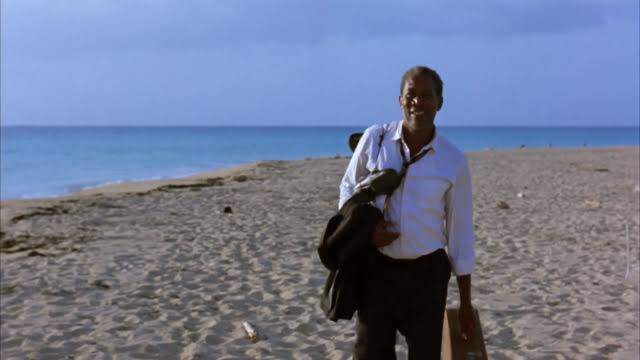
Manhunter (1986, dir by Michael Mann, DP: Dante Spinotti)
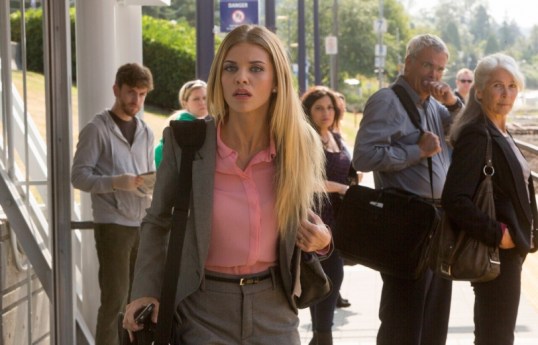
Heat (1995, dir by Michael Mann, DP: Dante Spinotti)
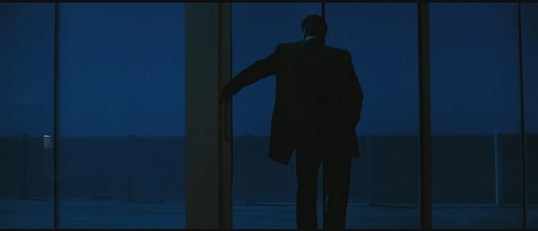
L.A. Confidential (1997, dir by Curtis Hanson, DP: Dante Spinotti)
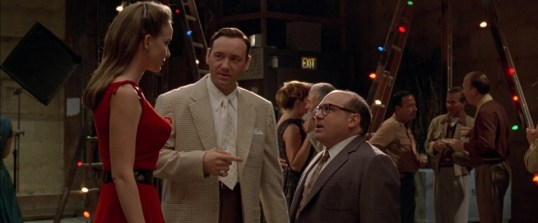
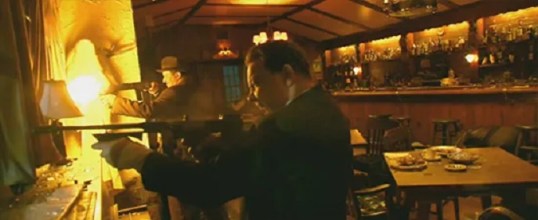
Public Enemies (2009, dir by Michael Mann, DP: Dante Spinotti)
As some of our regular readers undoubtedly know, I am involved in hosting a few weekly live tweets on twitter and occasionally Mastodon. I host #FridayNightFlix every Friday, I co-host #ScarySocial on Saturday, and I am one of the five hosts of Mastodon’s #MondayActionMovie! Every week, we get together. We watch a movie. We snark our way through it.
Tonight, for #MondayActionMovie, the film will be Mutant Hunt!
If you want to join this watch party, just hop onto Mastodon, pull up Mutant Hunt on YouTube, start the movie at 8 pm et, and use the #MondayActionMovie hashtag!



 Through the Shattered Lens