Late Night Retro Television Review: 1st & Ten 4.12 “Duty Calls”


Welcome to Late Night Retro Television Reviews, a feature where we review some of our favorite and least favorite shows of the past! On Wednesdays, I will be reviewing 1st and Ten, which aired in syndication from 1984 to 1991. The entire series is streaming on Tubi.
The season continues!  Can the Bulls hold on to their undefeated record?

Episode 4.12 “Duty Calls”

(Dir by Stan Lathan, originally aired on December 21st, 1988)

Considering all of the time that I’ve spent complaining about how there’s usually very little continuity from one 1st & Ten episode to another, I really do have to start this review by giving this show some credit. This episode actually follows up on something that happened a few episodes ago. Harley (Ken Morrison), the kid that Dr. Death befriended in “Injustice for All,” shows up at Bulls Stadium and tells Dr. Death that his mother has abandoned him yet again.

Dr. Death tracks Frankie (Beth Broderick) down at a biker bar and tells her that she needs to go home and take care of her son. It turns out that Frankie hasn’t even told her new boyfriend, Deacon (John Benjamin Martin), that she has a son. When Deacon finds out, he’s offended that Frankie wasn’t honest with him. He explains that bikers are all about family. If Frankie has a son, that means all of the other members of the motorcycle gang have a son as well.

(While it’s easy to scoff at this episode’s mawkish dialogue and its simplistic handling of what looks to be a case of massive parental neglect, I do have to say that my Dad had his share of biker friends and, underneath their admittedly rough exterior, they were some of the nicest people that I have ever met.)

While Dr. Death is fixing a family, Gail (Shanna Reed) and TD Parker (OJ Simpson) are trying to motivate the team to win their 11th game by offering them a $900,000 bonus if they secure a victory. This gets Gail in trouble with the rest of the league’s owners, all of whom are worried that Gail’s bonus is going to harm their bottom line. Gail’s boss, Mr. Medford (Monte Markham), thinks that it’s a great idea.

That said, the Bulls are going to have a tough game. Two Miami gamblers (one of whom is played by a youngish Chazz Palminteri) bribe the temperamental chef at Bubba and Jethro’s bar to give the Bulls food poisoning! On the morning of the game, all of the players are feeling sick and — ugh — flatulent. Will the Bulls still be able to win the game?

Yes, they do.

How do they win the game? I have no idea. Coach Denardo yells at them and then, one jump cut later, we see that the Bulls are ahead on the scoreboard. All of the players are still sick and constantly having to run off the field, but somehow they still crush their opponents. Maybe they were just playing a really bad team….

(For a show about a football team, it’s always interesting how little time 1st & Ten devotes to things like strategy or play calling. We’re told that Coach Denardo is one of the best, but it’s rare that we ever actually see him coaching.)

As nice as it was to see Dr. Death reuniting Harley with his mother, the rest of this episode was pretty much the epitome of everything that bothers me about this show. Who are the two gamblers who poisoned the entire team? The episode keeps things vague, and I imagine that we’ll never hear about either one of them again. The gamblers will vanish, just like the team’s female placekicker vanished after appearing in one episode. There really aren’t any stakes in 1st & Ten because most storylines get abandoned only a few minutes after they start.

Oh well. At least OJ Simpson always killed it in the role of TD Parker. This episode finds OJ — or actually, TD, but we all know TD might as well be named OJ — talking about the beauty of an undefeated season. Maybe that’s why the team won. They knew better than to get on OJ’s bad side.

Next week: The march to the championship game continues!
Brad reviews Samuel Fuller’s RUN OF THE ARROW (1957), starring Rod Steiger and Charles Bronson! 


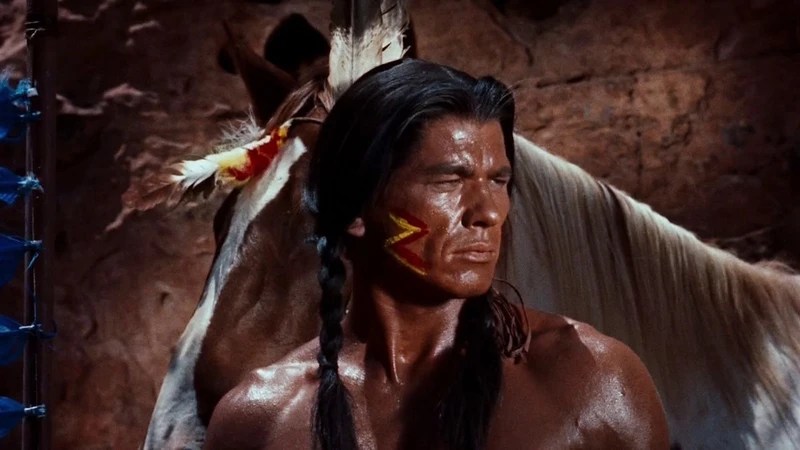
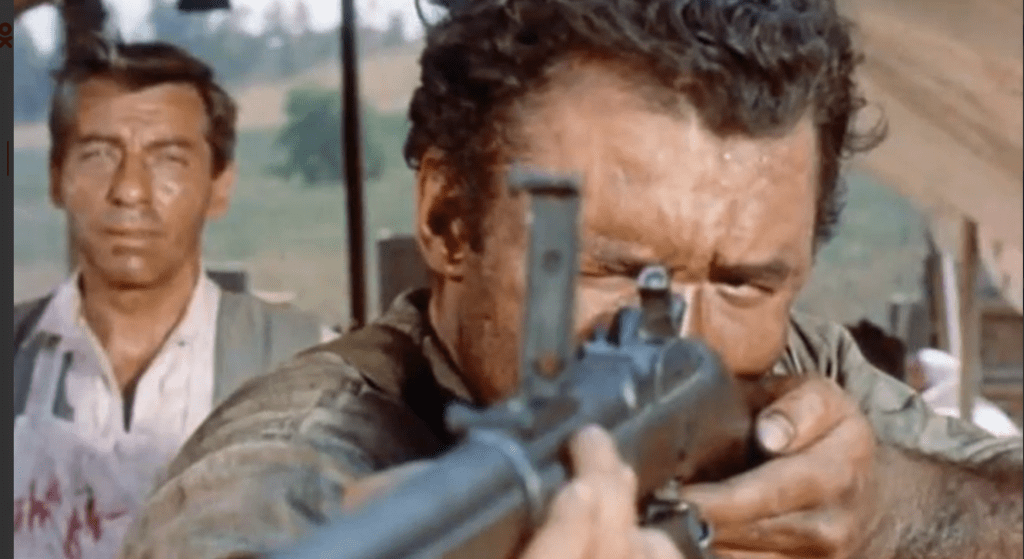
RUN OF THE ARROW opens with confederate sharpshooter O’Meara (Rod Steiger) shooting the final shot of the Civil War. With no war to fight and with a heart full of hate for the Yankees, O’Meara declares himself to be a man without a country and heads west. When he’s captured by a band of Sioux warriors led by Crazy Wolf (H.M. Wynant), he invokes the “run of the arrow”, a ritualistic game that could save his life. The problem… no one has ever survived the run of the arrow, but today’s his lucky day as he’s wounded but survives just long enough to be saved by the beautiful Yellow Moccasin (Sarita Montiel). She nurses him back to health and presents him to her tribal chief, Blue Buffalo (Charles Bronson), who eventually allows O’Meara and Yellow Moccasin to get married. Things seem to be going so well, too well. When Crazy Wolf starts another violent campaign against the American army, O’Meara must decide if he’s a Sioux warrior willing to kill American soldiers, or if there’s a part of him that can still love his country?

In RUN OF THE ARROW, director Samuel Fuller made a movie about the damage that occurs when human beings allow their hearts to be so filled with hate that they quit caring about other people. It’s also about what happens when those same people run into rational people, and we find out if they’re capable of considering the possibility that their own hate has blinded them from the truth. In other words, it’s a film that’s possibly more relevant today than it was when it was made in 1957. Bitterness and hate are represented by the characters of O’Meara (Steiger), Crazy Wolf (Wynant), and Lieutenant Driscoll (Ralph Meeker). O’Meara hates Yankees, Crazy Wolf hates the white man, and Driscoll hates the Indians. The rational people are the characters of Yellow Moccasin (Montiel), Blue Buffalo (Bronson), and Captain Clark (Brian Keith). Yellow Moccasin saves O’Meara when everyone else would have just let him die. Blue Buffalo engages in honest conversation with O’Meara and even welcomes him into their tribe. Captain Clark shows O’Meara an empathetic ear and kindness when others have told him to just get over himself. The actions and fates of the characters play out against this dynamic of hatred versus humanity, with the results underscoring just how tragic it is when people focus on the things that separate us rather than the things that unite us. It’s all so unnecessary, but it’s also a realistic vision of the world we live in. The film also struck me as particularly violent for a 50’s western, which also underscores that reality.

Some of the performances are very effective in the film. Rod Steiger’s Irish, confederate Sioux is an interesting character and the actor gives it his all as you’d expect. I’m a big fan of Steiger and his performance here only solidifies my respect for him. Brian Keith’s Captain Clark arrives fairly late in the proceedings and comes across as a tough, but honest man of integrity at a point when the movie really needs him. He has an excellent scene with Steiger where he debates the old confederate’s reasons for renouncing his citizenship with both sound logic, empathy, kindness and a hint of likable sarcasm all at the same time. It’s one of the best scenes in the film. And likewise, Charles Bronson, the most buff Hollywood Indian to ever strip down to a loincloth, comes across as a reasonable and kind tribal chief in his dealings. Bronson had played American Indians before, but he was usually more of the renegade, warpath variety, so it was nice seeing him as a good guy here. H.M. Wynant took the renegade Sioux warrior role here which you might have expected for Bronson at the time. He’s suitably fierce but one-dimensional. The same can be said for Ralph Meeker as Lieutenant Driscoll. He’s pretty much just a stereotypical jerk. He’s good at being a jerk though! And Sarita Montiel, voiced by Angie Dickinson, is quite the beauty as Yellow Moccasin. 

I’ve recently heard RUN OF THE ARROW compared to Kevin Costner’s DANCES WITH WOLVES, and there are definitely similarities. I won’t go into all of those here, but one of the things I appreciated the most about RUN OF THE ARROW is the fact that the movie makes its feelings known about politics. In a movie filled with characters who have had their lives upended by the various decisions of political leaders, Fuller has crafted a story that focuses most sharply on defining the quality of men based on what’s in their “hearts.” When it’s all said and done, oftentimes the only control we have is the way we respond to the events in our lives, and that’s not politics, it’s personal. To drive this home, an older scout named Walking Coyote tells O’Meara that he could have been a chief if he had wanted to be. When O’Meara pushes him on why he didn’t want the position, Walking Coyote responds with, “Because I hate politics!” On that point, I couldn’t agree more. 

Retro Television Review: The Love Boat 8.6 “Soap Gets in Your Eyes/A Match Made in Heaven/Tugs of the Heart”


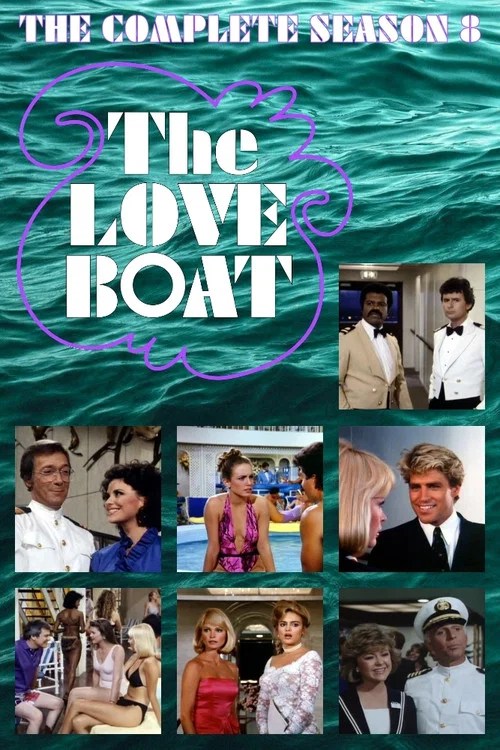
Welcome to Retro Television Reviews, a feature where we review some of our favorite and least favorite shows of the past!  On Wednesdays, I will be reviewing the original Love Boat, which aired on ABC from 1977 to 1986!  The series can be streamed on Paramount Plus!

Soon we’ll be making another round….

Episode 8.6 “Soap Gets in Your Eyes/A Match Made in Heaven/Tugs of the Heart”

(Dir by Bruce Bilson, originally aired on October 20th, 1984)

Years ago, Gopher asked Leslie Palmer (Dianne Kay) to marry him. Leslie turned him down, breaking his heart. At the time, she said that Gopher just wasn’t mature enough to marry.  He had no direction in his life.

This week, when Leslie boards the Pacific Princess, she sees that Gopher has grown up.… well, at least a little. As Gopher explains it, he has an important job, a nice salary, and a good pension. “People call me sir,” he says, and Fred Grandy delivers the line with just enough sheepishness that one gets the feeling he’s just as surprised as anyone by the fact that he’s finally gotten his life together. When Gopher again asks Leslie to marry him, she says yes.

Oh my God! First Julie got married and now Gopher! Is there going to be anyone left on the ship?!

Well, hold on. Leslie may accept Gopher’s proposal, but later she has a breakdown and apologizes. Leslie says that she loves Gopher but, “I’m not in love with you.” It turns out that Leslie is pregnant and she accepted Gopher’s proposal so her child would not be born out of wedlock. Gopher is surprisingly forgiving.

This was actually a sweet story, largely due to Fred Grandy’s sincere performance as Gopher. At the same time, it was hard not to miss Lauren Tewes while watching this story. The Love Boat always hinted that Julie was destined to end up with either Doc or Gopher. Pat Klous is doing a good job as Julie’s replacement, but she still doesn’t have the same chemistry with the cast that Tewes did. If Julie McCoy seemed like everyone’s sister, Judy seems like everyone’s respected coworker.

While Gopher was getting his heart broken, the recently deceased Jack Davidson (Bill Macy) boarded the ship with his guardian angel, Mr. Weatherby (Fritz Weaver). In order to get into heaven, Jack would have to commit one selfless act while on the boat. Jack met and fell in love with Blair Chapman (Juliet Mills). However, knowing that he was destined to disappear into the afterlife immediately after the cruise ended, Jack gently told Blair that he couldn’t get involved with her. That counted as his selfless act. As for Blair, it turned out that she was terminally ill and had only a month or so to live. Jack leaves the boat happy, knowing that Blair will soon die and be in Heaven with him. Only The Love Boat could present dying as a happy ending.

Finally, soap opera actor David Swick (Charles Frank) plays a villain on daytime television, but he’s a nice guy in real life. Melanie (Susan Blanchard) discovers this firsthand when she meets David on the boat and they fall in love. Unfortunately, Melanie’s mother (Jayne Meadows) cannot forgive David for all the evil things his character has done on television. This story was just silly, but at least Frank and Blanchard had a likable chemistry.

Though the season overall may have gotten off to a rough start, this week’s episode of The Love Boat was actually a pretty pleasant cruise. Fred Grandy got to do something other than just be goofy. Juliet Mills died .… okay, well that wasn’t pleasant, but at least she’ll have someone waiting for her in the afterlife. As for the soap opera storyline, it took me back to those summer days when I was out of school and I watched the daytime dramas with my mom and my aunt. Those were good memories.

I enjoyed this cruise! The Love Boat truly has something for everyone.

Review: Rollercoaster (dir. by James Goldstone)


“If they pay me and if they do what I say, I’ll never bother them again.” — Young Man

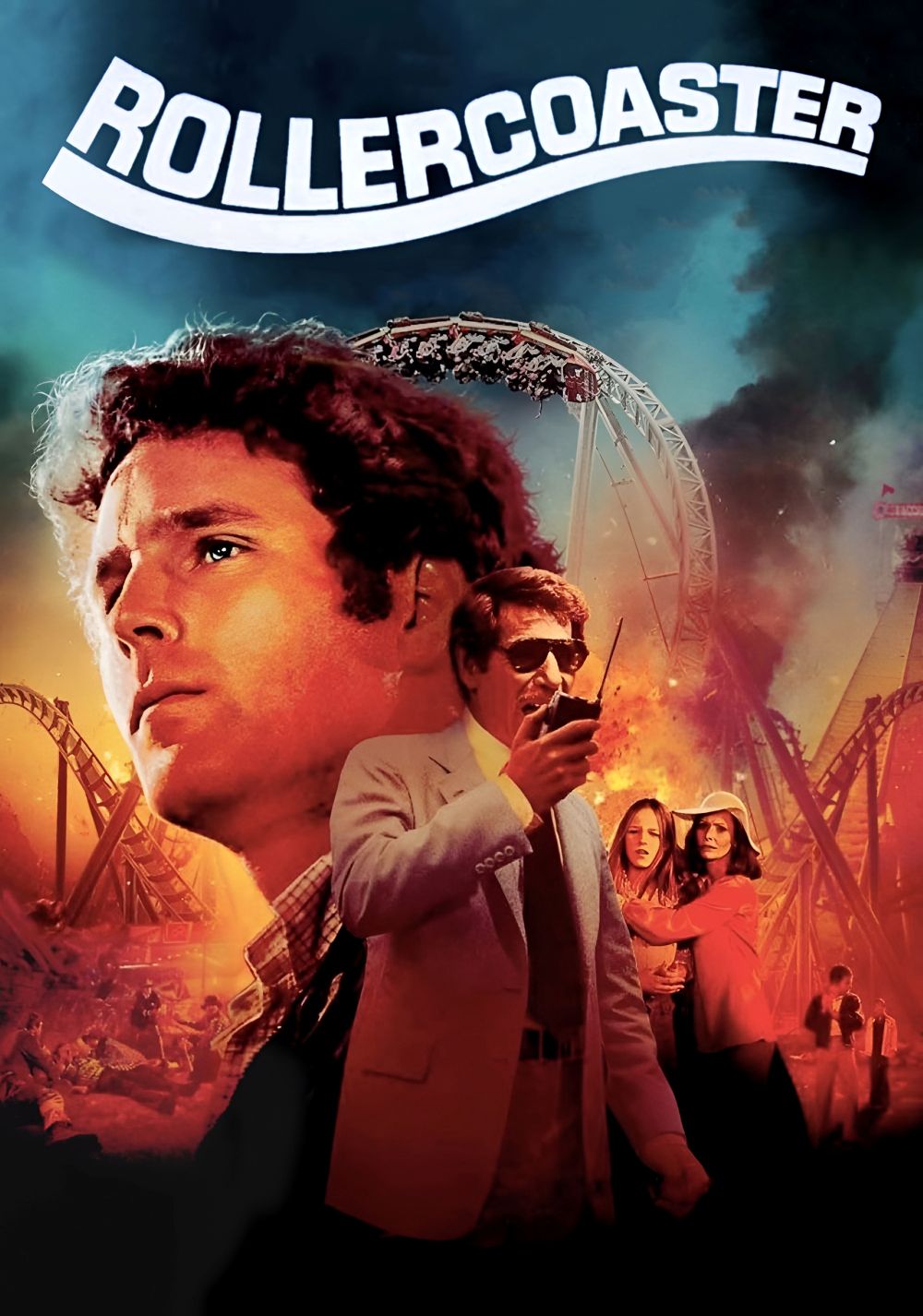
James Goldstone’s 1977 film Rollercoaster exists in a fascinating, albeit deeply flawed, space within the history of seventies disaster cinema. If you are a fan of retro 70s movies, specifically the whole Sensurround era where Hollywood was desperately trying to get people out of their living rooms and into theaters with seat-rumbling audio gimmicks, you have probably heard of this one. It has a genuinely neat, gritty vibe because it was actually shot on location at real amusement parks like Kings Island and Magic Mountain. You get this awesome, vintage, mid-century theme park atmosphere that you just cannot fake on a studio backlot. You can almost smell the cotton candy, the hot asphalt, and the stale beer. But once that initial wave of nostalgia wears off, you are left looking at what is actually on the screen, and honestly, Rollercoaster is not a great film. In fact, one could very easily say it is not even a good film. At its absolute best of times, it is a thoroughly average, middle-of-the-road thriller that feels more like a slightly elevated, padded-out television movie of the week than a major theatrical release.

The plot is about as standard as it gets for this era of disaster-adjacent cinema. A mysterious, young terrorist starts blowing up rollercoasters, not for any grand political manifesto, but simply to extort amusement park owners for millions of dollars. Enter our protagonist, Harry Calder, played by George Segal, who is a cynical safety inspector that just happens to survive the first derailment. Segal is basically just playing George Segal here—exasperated, a bit snarky, wearing a rumpled suit, and teaming up with an FBI agent played by Richard Widmark. The villain is played by a very young Timothy Bottoms, who is effectively creepy but given virtually zero backstory or motivation. He is just a blank-eyed psycho doing psycho things because the script needs an antagonist. The movie essentially just bounces from one park to another, with Segal walking around looking stressed while the FBI tries to figure out where the next bomb is hidden.

The pacing is arguably the film’s biggest sin. For a movie literally named Rollercoaster, it is shockingly lacking in momentum. Goldstone’s direction completely lacks the tight, pulse-pounding beats you would expect from a high-stakes thriller. There is so much filler here, so many scenes of Segal drinking coffee and staring at blueprints, and so much tedious FBI bureaucratic nonsense that it completely kills any tension. The romantic subplot feels entirely tacked on, and the climax fails to deliver the massive, explosive payoff you have been waiting for. If you judge Rollercoaster purely on its cinematic merits—the acting, the script, the direction—it is undeniably average, the kind of movie you leave on in the background while you fold laundry.

However, despite all of these glaring, undeniable flaws, Rollercoaster has a fascinating, almost prophetic legacy when you look back at the history of the thriller genre. It may not be remembered as a great movie, but it essentially built the exact template for an entire subgenre of cat-and-mouse thrillers that dominated the 90s. It practically invented the “specific-professional-against-a-psychopathic-mastermind” formula. Before Rollercoaster, thrillers were usually about spies, cops, or generic everymen. But this film introduced the idea of a highly specific, niche expert being forced into a one-on-one intellectual duel with a terrorist who targets them specifically because of their expertise. Think about how that exact template was endlessly copied and refined in the decades that followed. Look at In the Line of Fire, where Clint Eastwood plays a Secret Service agent hunted by a psycho played by John Malkovich. Or look at Blown Away, where Jeff Bridges is a bomb-defusing expert tormented by an Irish terrorist played by Tommy Lee Jones. Even The Bone Collector fits this mold perfectly, with Denzel Washington’s bedridden forensics expert being targeted by a serial killer who uses specific crime scenes just to test Washington’s intellect. All of these films drew direct DNA from Rollercoaster, using that exact same dynamic of a reluctant protagonist with a very particular set of skills being singled out by a psychopath who treats mass murder like a twisted, personalized game of chess. And if you want the absolute pinnacle of the “expert vs. bomb” trope, you have to look at Speed, which polished the cat-and-mouse dynamic perfected right here in Rollercoaster.

Because the original film was so hampered by 1970s filmmaking technology, it really makes you realize how easily this movie could be remade in this day and age. Back then, the actual destruction of the rides was limited by practical effects, clunky models, and standard camera angles that made the crashes feel somewhat static and safe. Today, technology in filmmaking has advanced to the point that the sheer scale, speed, and physical danger of the rides themselves really does become the focus of real danger. With modern CGI, drone cameras, and advanced practical rigging, you could put the audience right inside the front car of a 300-foot hyper-coaster as the tracks buckle and twist in slow motion. You could make the metal fatigue, the snapping cables, and the horrific physics of a derailment feel genuinely terrifying, turning the amusement park rides into massive, mechanical monsters rather than just static backdrop props for guys in suits to talk around.

Naturally, if Hollywood were to actually remake Rollercoaster today, you know exactly how it would look and who would star in it. It would undoubtedly star someone like Dwayne Johnson or Chris Pratt, a guy who can deliver a quip while looking concerned and holding a blueprint. They would inevitably give the safety inspector a tragic backstory, probably a dead wife or a kid they are estranged from, just to artificially raise the emotional stakes. And because it is a high-concept thriller that does not quite have the cultural weight of a massive comic book franchise, the remake would almost certainly be relegated to a streaming release. It would drop on a Friday on Netflix or Amazon Prime with a generic, algorithmically tested poster and a slick, forgettable title. It would be exactly the kind of mid-budget, mildly entertaining action flick you watch on a rainy Sunday afternoon before completely forgetting about it by Monday morning.

So, ultimately, how do you rate a movie like Rollercoaster? You just have to accept its extreme averageness and respect its ripple effect. It is clunky, the performances are uneven, and it is rarely as thrilling as its title promises. But it absolutely should not be written off entirely. It was the exact moment Hollywood realized that pitting highly specialized professionals against high-concept villains made for compelling, relatable drama. Without George Segal boredly walking around Magic Mountain, we probably do not get the overly dramatic, incredibly ridiculous, yet thoroughly entertaining 90s thriller boom, nor the slick, CGI-heavy streaming thrillers of today. Rollercoaster might just be a mediocre hill, but it is undeniably the hill that started the entire ride.

Scenes That I Love: Moses Parts The Red Sea In The Ten Commandments!


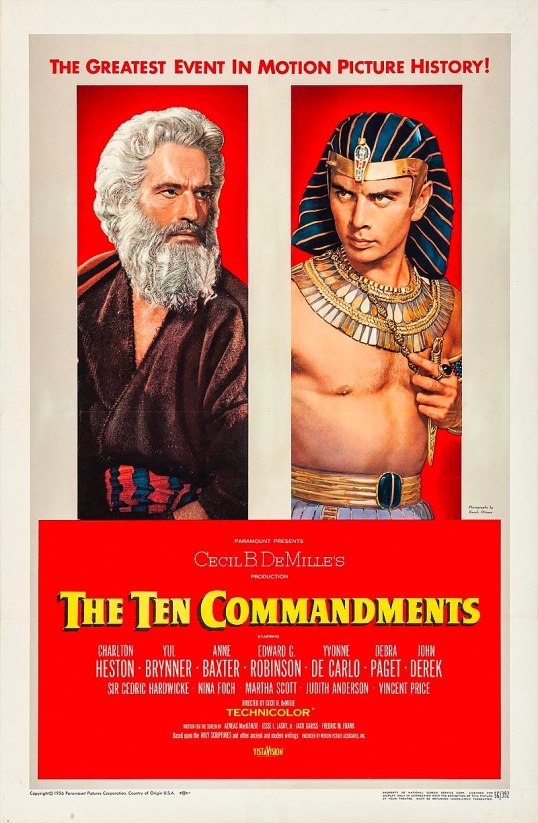
145 years ago, on this date, director Cecil B. DeMille was born in Ashfield, Massachusetts.  From the silent era until his death in 1959, DeMille was one of Hollywood’s superstar directors.  His films, which were often over the top and effective at the same time, helped to build the modern film industry.

Today’s scene that I love comes from DeMille’s final film.  From 1956’s The Ten Commandments, Moses parts the Red Sea.

(Please note, this video starts with a frozen image that lasts for about 12 seconds.)

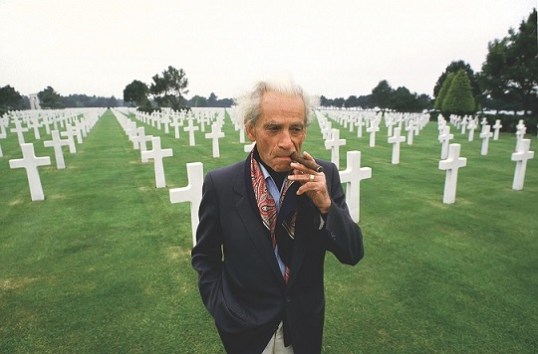
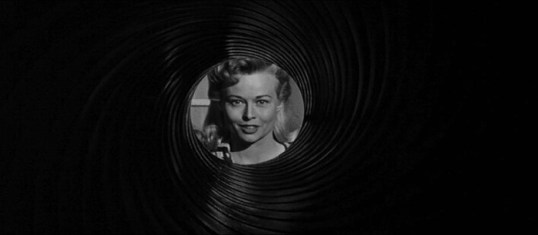
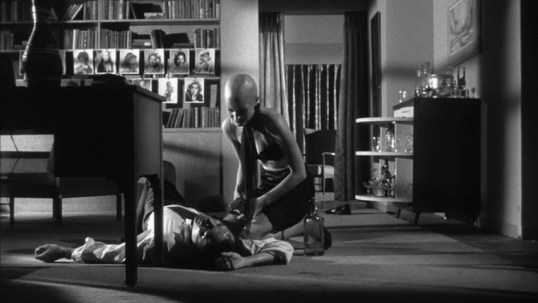
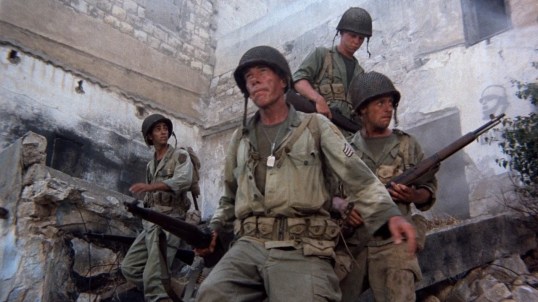
4 Shots From 4 Films: Special Sam Fuller Edition


4 Or More Shots From 4 Or More Films is just what it says it is, 4 shots from 4 of our favorite films. As opposed to the reviews and recaps that we usually post, 4 Shots From 4 Films lets the visuals do the talking!

On this date, 114 years ago, Samuel Fuller was born in Massachusetts.  Before he became a filmmaker, Fuller was a crime reporter and a pulp novelist.  His films were often melodramatic and unapologetically sordid.  They were also often dismissed when they were initially released but almost all of them were subsequently rediscovered by audiences who appreciated Fuller’s striking visuals and the often subversive subtext to be found underneath the surface of his genre films.

Today, we celebrate Fuller’s legacy with….

4 Shots From 4 Sam Fuller Films

Forty Guns (1957, dir by Samuel Fuller, DP: Joseph Biroc)

Shock Corridor (1963, dir by Samuel Fuller, DP: Stanley Cortez

The Naked Kiss (1964, dir by Samuel Fuller, DP: Stanley Cortez)

The Big Red One (1980, dir by Samuel Fuller, DP: Adam Greenberg)

Music Video of the Day: Couple Days Off by Huey Lewis and the News (1991, directed by Jim Yukich)


Everyone needs a couple of days off, even Huey Lewis and the News!

This song was the final single from Huey to chart in the Billboard Top 20.  For better or worse (I would say “better”), Huey Lewis and the News were the epitome of a mid 80s band.  They worked hard and they made videos that celebrated having a good time.  Huey Lewis and the News will always be the blue collar bar band for me.

This video was directed by Jim Yuckich, who has directed videos for everyone.

Enjoy!