Welcome to Late Night Retro Television Reviews, a feature where we review some of our favorite and least favorite shows of the past! On Saturdays, I will be reviewing Saved By The Bell, which ran on NBC from 1989 to 1993. The entire show is currently streaming on Tubi!
Kelly wants to go steady but Zack’s fallen in love with the new school nurse.
Episode 2.13 “From Nurse To Worse”
(Dir by Don Barnhart, originally aired on December 15th, 1990)
Zack has asked Kelly to go steady but, when Kelly finally tells him that the answer is yes, Zack smiles stupidly and says, “That’s great, what was the question?” before wandering off. Zack has met the new school nurse, Nurse Jennifer (Nancy Valen), and is so busy imagining a future with her that he’s totally forgotten about the fact that he’s supposedly been in love with Kelly for years.
When people talk about Zack Morris being “trash,” this is the type of episode that they’re thinking about. Zack treats Kelly horribly, all because he’s convinced that new school nurse is going to risk her job by dating a 10th grader. Of course, Nurse Jennifer doesn’t help by telling him that he’s cute. When Jennifer finds out about Zack and Kelly, she helps Kelly out by pretending to be crazy. It perhaps would have been simpler for Jennifer to just tell Zack that it would have been illegal for her to have dated him but then we wouldn’t have gotten the sight of Jennifer pretending to be terrible at her job.
As was typical of Saved By The Bell, Slater’s B-story was actually more interesting than all of Zack’s nonsense. It’s time for everyone’s flu shot and Slater is scared of needles. Mario Lopez always did a good job of portraying Slater’s insecurities and there’s something rather endearing about the look of terror on his face when he’s called to the nurse’s office for his shot.
For those of us who are into continuity, this episode was a weird one. Not only did the new nurse do a lot of stuff that didn’t make sense but the episode itself seems to ignore everything that has happened in Zack and Kelly’s relationship over the past few episodes. Suddenly, Kelly and Zack are back to dating whether or not to be an exclusive couple. I thought that had been settled a while ago. Judging by the episode’s production code, this episode was originally meant to be the second of the season and would have aired right after The Prom episodes. For whatever reason reason, NBC didn’t air it until late in the season, when it no longer made sense.
Technically, this is the end of season 2. Whether or not that means anything is debatable because apparently, way back in 1990, season 3 started the very next week. With Saved By The Bell, one gets the feeling that these things were decided at random. Well, no matter! Next week, we’ve got season 3 and The Fabolous Belding Boys!
Cheaters is on Tubi! I watched a few episodes on Saturday. This show is a guilty pleasure for me because 1) it was filmed in Dallas and 2) Joey Greco is just so judgmental!
After buying their father a birthday present, Arnold and Kimberly decided to hitchhike home. They were picked up by a man who locked Arnold in a room and then threatened to rape Kimberly. This was pretty disturbing for a sitcom! I watched this two-part episode on Thursday and I was relieved when the police finally showed up to rescue them.
I was pretty depressed going into this week’s primary elections but I have to admit that watching the results in Michigan cheered me up, Even though the latest DSA flavor-of-the month, Abdul El-Sayed, won his primary, it was only by one percentage point as opposed to the election being the blow-out that so many predicted. Not everyone is on board with extremism and I take some hope from that.
On Thursday, I watched as the election results rolled in from Tennessee. Other than that one congressman that lost his primary, the Tennessee results weren’t quite as exciting as the Michigan results. I did find myself amused as I remembered how, way back in 2018, some pundits were convinced that Taylor Swift coming out as a Democrat would somehow turn the state blue.
I watched one episode from the first season (Todd joined the band and things quickly fell apart, despite his skill with the bongos) and one episode from the second season. (Bret and Jermaine met Murray’s best friend, Jim.) Both episodes made me laugh. This is definitely a show that I miss, even if it does seem like Bret and Jermaine probably did everything they could with the concept during the first two seasons.
Mad TV’s on Tubi now! I watched two episodes on Thursday and, unfortunately, they were even worse than I remembered.
The Office (Peacock TV)
“THIS WAS THE BEST DUNDIES EVER! WHOOOOO!” As much as I complain about the show’s final two seasons, the first three seasons are about as good as anything that has ever aired on television. On Friday, I watched The Dundies.
I caught the last 30 minutes of 60 Minutes on Sunday night. It’s funny that, for all the acclaim that this show has received and all the current controversy surrounding it, the only time that I have ever watched it has been when I’ve been waiting for something else to start. It seems like I always end up turning on the show whenever Anderson Cooper is doing one of his “look at my exploring the wilderness!” type of stories.
Survivor 50 (CBS, Wednesday Night)
As I watched this week’s rerun of Survivor 50, it occurred to me that the all of the Survivor icons are starting to get really, really old. A better name for Survivor 50 would have been Survivor: Seniors’ Retreat.
36 Chambers by the Wu-Tang Clan isn’t just an album—it’s a cultural earthquake that reshaped hip-hop forever. Released in 1993, this debut project introduced a raw, unfiltered sound that felt like a direct transmission from the streets of Staten Island to the rest of the world. The album’s title, Enter the Wu-Tang (36 Chambers), hints at its cinematic scope, blending martial arts mythology with the gritty reality of New York City life. From the opening skit to the final fade-out, 36 Chambers is a masterclass in storytelling, lyrical dexterity, and sonic innovation, all wrapped in a haze of dusty samples and hard-hitting beats.
The production on 36 Chambers is a character unto itself. RZA’s beats are lo-fi in the best way possible—gritty, bass-heavy, and layered with samples that feel like they were dug up from a forgotten record crate. Tracks like Bring da Ruckus and Protect Ya Neck kick off with a ferocity that immediately establishes the Wu-Tang Clan as a force to be reckoned with. The beats aren’t polished; they’re rough around the edges, but that rawness is what gives the album its timeless quality. RZA’s use of soul samples, particularly from old kung fu movies and obscure funk records, creates a soundscape that feels both nostalgic and fresh. It’s as if the album is simultaneously paying homage to the past while forging a new path forward.
Lyrically, 36 Chambers is a tour de force. The Wu-Tang Clan’s collective talent is on full display, with each member bringing their own distinct flavor to the table. Method Man’s hypnotic flow on Method Man is a standout, showcasing his ability to weave intricate rhymes with a laid-back yet commanding delivery. Raekwon’s verse on Protect Ya Neck is another highlight, as he effortlessly rides the beat with a mix of bravado and precision. Ghostface Killah’s storytelling on Tearz is both poignant and vivid, painting a picture of struggle and resilience that resonates deeply. Even the lesser-known members of the clan at the time, like Inspectah Deck and U-God, deliver verses that hold their own against the more prominent voices. The chemistry among the group is undeniable, and their ability to trade bars seamlessly makes the album feel like a cohesive unit rather than a collection of solo performances.
What makes 36 Chambers so special is its unpredictability. The album doesn’t follow a traditional structure, with skits and interludes scattered throughout that add to its cinematic feel. Songs like C.R.E.A.M. and Can It Be All So Simpleprovide moments of introspection amidst the chaos, offering a glimpse into the struggles and aspirations of the group’s members. C.R.E.A.M., in particular, is a classic that transcends hip-hop, with its universal themes of money, family, and the pursuit of a better life. Raekwon’s delivery on the track is hauntingly beautiful, and the chorus—“Cash rules everything around me”—has become one of the most iconic lines in rap history.
The influence of 36 Chambers on hip-hop cannot be overstated. Before this album, the rap game was dominated by a more polished, radio-friendly sound. Wu-Tang Clan came in and flipped the script, proving that raw talent and authenticity could resonate just as strongly—if not more so—than a glossy, commercial approach. The album’s success paved the way for a new wave of artists who prioritized lyricism and originality over mainstream appeal. Groups like A Tribe Called Quest and De La Soul had already laid the groundwork for alternative hip-hop, but Wu-Tang Clan took it to another level, inspiring countless artists to embrace their uniqueness and reject industry norms.
Moreover, 36 Chambers helped popularize the concept of the rap collective. The Wu-Tang Clan wasn’t just a group; it was a movement, a family of artists who supported and elevated each other. This model influenced countless other collectives, from the Native Tongues to Odd Future, who saw the value in collaboration and shared creative vision. The album also played a significant role in bringing hip-hop to a global audience, as its universal themes and innovative sound transcended regional boundaries. Fans from all over the world connected with the Wu-Tang Clan’s music, and the group’s influence can be heard in the work of artists from every corner of the globe.
One of the most remarkable things about 36 Chambers is how well it has aged. While many albums from the early ‘90s feel dated in hindsight, this one still sounds fresh and vital. The production holds up, the lyrics remain sharp, and the energy is as infectious as it was over three decades ago. It’s a testament to the Wu-Tang Clan’s vision and execution that 36 Chambers continues to be celebrated as one of the greatest hip-hop albums of all time. The album’s legacy is evident in the countless homages, samples, and references it has inspired in the years since its release. From Kendrick Lamar to J. Cole, modern rap artists continue to draw inspiration from the Wu-Tang Clan’s groundbreaking work.
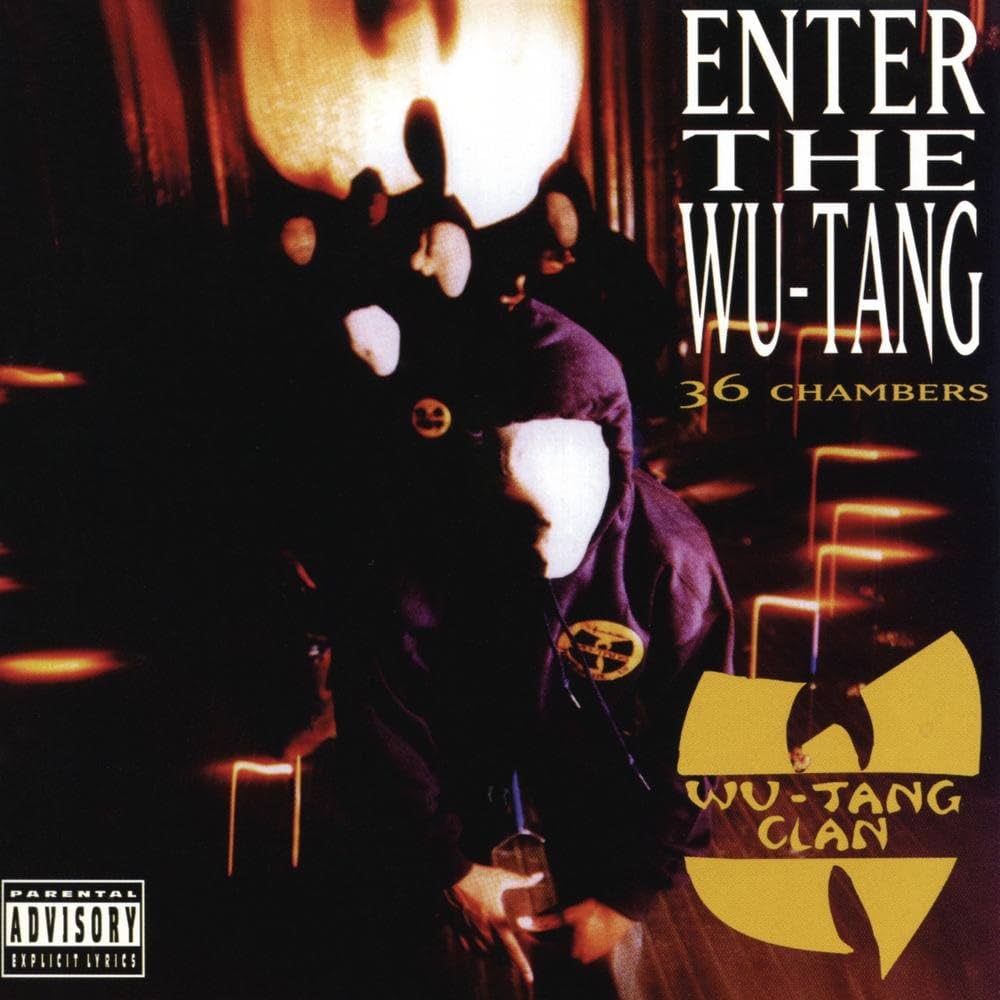
Beyond its musical contributions, 36 Chambers also had a profound cultural impact. The album’s cover art, featuring the Wu-Tang Clan logo and a collage of images that evoke both martial arts and street life, has become iconic. The group’s aesthetic—rooted in Shaolin philosophy, street wisdom, and a DIY ethos—resonated with a generation of fans who were looking for something real in a world that often felt artificial. Wu-Tang Clan’s authenticity was their superpower, and 36 Chambers was the ultimate expression of that authenticity.
The album’s impact extends beyond music and culture—it also changed the business of hip-hop. The Wu-Tang Clan’s decision to release 36 Chambers independently, without the backing of a major label, was a bold move that paid off handsomely. The album’s success proved that artists could maintain creative control while still achieving commercial success, a lesson that has been taken to heart by countless independent artists in the years since. The Wu-Tang Clan’s model of self-reliance and entrepreneurial spirit has become a blueprint for aspiring musicians looking to carve their own path in the industry.
Revisiting 36 Chambers today, it’s clear that the album’s magic lies in its imperfections. The beats aren’t pristine, the mixing isn’t flawless, and the delivery isn’t always polished—but that’s precisely what makes it so compelling. The album feels alive, like a snapshot of a moment in time when a group of talented, hungry artists came together to create something truly special. It’s an album that demands to be experienced in full, from start to finish, with all its quirks and idiosyncrasies intact.
In the end, 36 Chambers is more than just an album—it’s a movement. It’s a testament to the power of creativity, collaboration, and staying true to oneself. The Wu-Tang Clan didn’t just make music; they created a legacy that continues to inspire and influence new generations of artists and fans. Whether you’re a lifelong hip-hop head or a casual listener, 36 Chambers is an essential listen, a timeless piece of art that captures the essence of what makes rap so powerful. It’s rough, it’s raw, and it’s real—just like the Wu-Tang Clan themselves.
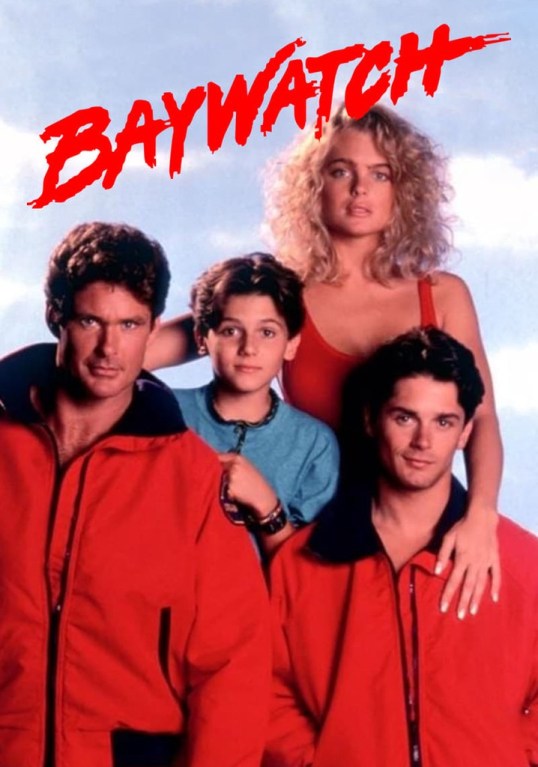
Welcome to Retro Television Reviews, a feature where we review some of our favorite and least favorite shows of the past! On Saturdays, I will be reviewing Baywatch, which ran on NBC and then in syndication from 1989 to 2001. The entire show can be viewed on Tubi.
This week, some people stand in the darkness, afraid to move into the light.
Episode 2.14 “War of Nerves”
(Dir by Douglas Schwartz, originally aired on February 3rd, 1992)
Drug lord Mason Sato (Cary-Hiroyuki Tagawa) has just gotten out of prison and he wants revenge of Mitch. For reasons that aren’t really explained beyond a shot of a newspaper headline that reads, “Hero Lifeguard Helps Police Take Down Drug Lord,” Mason blames Mitch for his arrest, Do lifeguards make arrests?
Mason stalks Mitch, Hobie, and Mitch’s girlfriend, Kaye (Pamela Bach). At first, Mitch doesn’t tell either Hobie or Kaye what’s going on. But when Mason asks Hobie to teach him how to use a boogie board, Mitch loses it and punches Mason out. Mason later kidnaps both Hobie and Kaye. This leads to a fight in an abandoned warehouse. Once the fight moves into the ocean, Mason nearly drowns but Mitch saves his life so he can go back to prison.
Meanwhile, Shauni asks Ben to teacher her how to surf. We never actually see Ben teaching her anything but we do get a lengthy montage as Ben remembers his days as a surfing lifeguard. Myself, I’m wondering how Ben, who we’ve been told can no longer swim because of a leg injury, suddenly stops limping in this episode.
Cary-Hiroyuki Tagawa was a magnetic villain but otherwise, this was Baywatch at its cheapest. The plot was by-the-book and it mostly seemed to exist so that Hasselhoff could play the action hero. This episode felt like a dry run for the first, non-supernatural season of Baywatch Nights. How many lifelong enemies has Mitch managed to make?
Today, the Shattered Lens wishes a happy birthday to the legendary Dustin Hoffman. This scene that I love comes from 1967’s The Graduate and it features Hoffman delivering one of the greatest lines of all time.
Today, the Shattered Lens wishes a happy birthday to the actor and musician Keith Carradine. Our song of the day is a song that Carradine wrote for and performed in the 1975 film, Nashville.
4 Or More Shots From 4 Or More Films is just what it says it is, 4 shots from 4 of our favorite films. As opposed to the reviews and recaps that we usually post, 4 Shots From 4 Films lets the visuals do the talking!
Today, we pay tribute to the year 1978! It’s time for….
4 Shots From 4 1978 Films
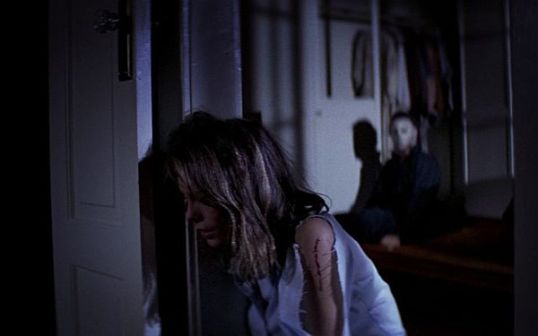
Halloween (1978, dir by John Carpenter. DP: Dean Cundey)
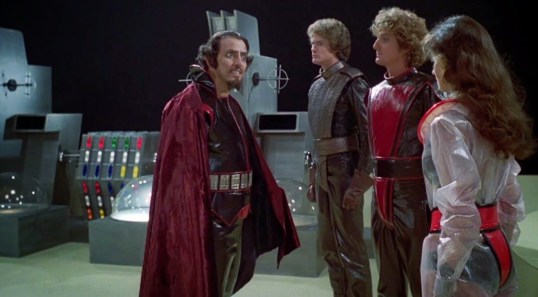
Starcrash (1978, dir by Luigi Cozzi, DP: Paul Beeson and Roberto D’Ettorre Piazzoli)
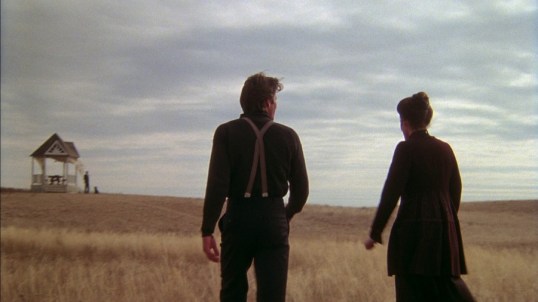
Days of Heaven (1978, dir by Terrence Malick, DP: Nestor Almendros)
Hooper (1978, dir by Hal Needham, DP: Bobby Byrne)
As some of our regular readers undoubtedly know, I am involved in a few weekly live tweets on Twitter and Mastodon. I host #FridayNightFlix every Friday, I co-host #ScarySocial on Saturday, and I am one of the five hosts of #MondayActionMovie! Every week, we get together. We watch a movie. We tweet our way through it.
Tonight, at 10 pm et, #ScarySocial presents Sleepaway Camp 2!
If you want to join us this Saturday, just hop onto twitter, start the movie at 10 pm et, and use the #ScarySocial hashtag! It’s a friendly group and welcoming of newcomers so don’t be shy.
Sleepaway Camp 2 is available on Prime! See you there!
In 1989, Richard Marx was so busy touring that director Jim Yukich was forced to go with a simple approach to the video for Right Here Waiting. The footage of Marx performing the song in an empty auditorium was filmed in Los Angeles during a soundcheck. Black-and-white tour footage was then added to turn that soundcheck into a music video. Though the video was simple by necessity, it also captured the loneliness of being on the road and separated from your significant other.
Right Here Waiting was the second single off of Marx’s second studio album, Repeat Offender. He wrote the song for his then-wife Cynthia Rhodes, who was shooting a film in South Africa. It went on to become one of Marx’s biggest hits and is still regularly covered by other artists.


 Through the Shattered Lens