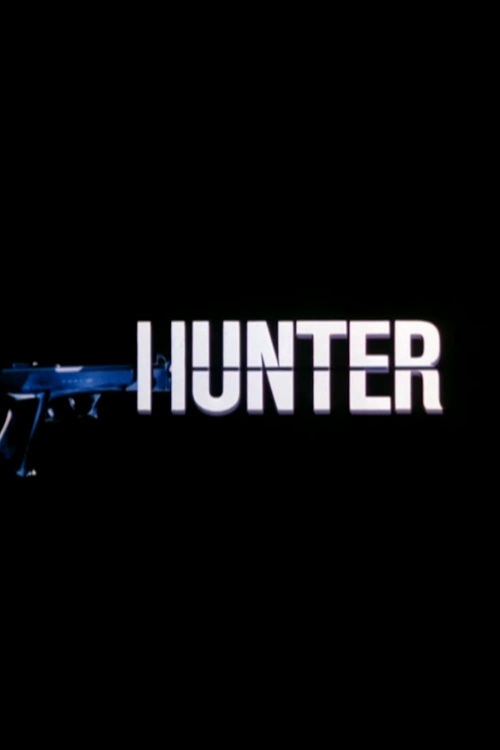
Welcome to Late Night Retro Television Reviews, a feature where we review some of our favorite and least favorite shows of the past! On Thursdays, I will be reviewing Hunter, which aired on NBC from 1984 to 1991. The entire show is currently streaming on Tubi and several other services!
This week, things are getting hot!
Episode 1.18: “Fire Man”
(Dir Tony Mordente, originally aired May 11th, 1985)
Somebody in Los Angeles has got a military-grade flamethrower and is using it to set fires all over the city.
When a homeless man perishes in a burning warehouse, Hunter and McCall get involved. Their first suspect is a nervous man named Jack Lachman (William Russ, giving a better performance than the material probably deserved), who always seems to show up in the crowds that gather to watch the flames. Jack swears he’s innocent and that the arsonist is instead a former Special Forces operative with whom he served in Vietnam. Jack also claims that the arsons are connected to a war crime that Jack and his fellow soldiers covered up.
Also getting involved is Matt Gold (Mark Schneider), a reporter determined to get the story and unconcerned about whether he messes up the investigation in the process. At first, McCall thinks Matt is harmless. Hunter does not. Not surprisingly, Hunter turns out to be right: the media gets in the way of solving and preventing crimes.
This episode was all about visual style. The plot wasn’t terribly complicated, but the shots of the arsonist setting his fires were disturbing, as were the images of the flames quickly consuming anything they touched. The scene in which the arsonist takes out a witness was disturbingly violent, even by Hunter’s standards. At the same time, the song that seemed to play whenever the arsonist appeared quickly got old.
As violent as the episode got, there was something reassuring about Hunter and McCall once again stopping the bad guy and saving the city—and doing it while trading quips. It’s a scary world out there, this episode seemed to be saying, but luckily we’ve got Hunter and McCall to take out the trash.
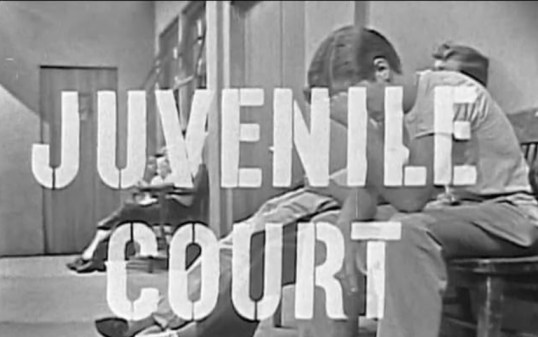
Welcome to Retro Television Reviews, a feature where we review some of our favorite and least favorite shows of the past! This Thursday, I will be reviewing Juvenile Court, which aired its only episode in syndication in 1958. The show can be found on YouTube!
Episode 1.1 “Pilot”
(Dir by Ralph Nelson, originally aired on September 1st, 1958)
Fifteen-year-old Raymond Pearson (Lee Kinsolving) has been charged with trying to steal a car and almost beating the car’s owner to death. Now he sits in a courtroom with his stepparents and sullenly listens as Commissioner Robert Dortman (Ken Lynch) questions his family and his squirmy accomplice, Charlie Wiggins (Tommy Cook). Dortman’s questions eventually reveal that Raymond’s crimes are linked to his conflicted feelings about his biological father, who wants nothing to do with him. Though Dortman has sympathy for Raymond, he still has to sentence him to juvenile hall. His stepfather promises to support Raymond as best he can.
The key to understanding Juvenile Court is a title card at the start that thanks the Los Angeles Juvenile Courts for their assistance. The pilot is a no-frills courtroom drama that takes place in one location and is essentially just a guy asking questions and then listening to the answers. One can understand why it didn’t become a series: while the actors are all good and believable, the episode’s style is extremely dry.
The interesting thing about this episode is the way it mixes the approaches of both the Left and the Right when it comes to examining Raymond’s crimes. The liberal will look at this show and say, “Raymond became a criminal because he never had a chance to be anything else, not with his father and his insecurities.” The conservative will look at it and say, “Raymond nearly beat a man to death. That’s all that matters.” The show says, “You’re both right!” We learn about Raymond’s sad background, but we also watch as Raymond is sentenced to confinement.
This show reminded me a bit of Decoy, the Beverly Garland cop show that I recently finished reviewing. They’re both from the late ’50s, and they both attempted to capture the feel of a documentary. Just as Decoy’s Casey Jones often had to arrest people who weren’t entirely evil, the commissioner has to send Raymond to juvie despite understanding what led Raymond to commit his criminal acts.
Seen today, Juvenile Court is the type of thing that appeals largely to history nerds like me. There’s not much drama, but it’s still interesting to see what the world was like nearly 70 years ago.
When I think of Tuesday Weld, I first think of her character in Sergio Leone’s ONCE UPON A TIME IN AMERICA (1984). It’s not an easy character to play and she nails it. James Woods references Tuesday in his 2024 album Hear the Thunder Crack on the song “Cafe Central,” specifically pointing out how difficult her character was to play.
Weld hasn’t appeared on screen since 2001, but she worked for 45 years prior to her retirement. To celebrate her birthday, here’s a scene from the Leone masterpiece.
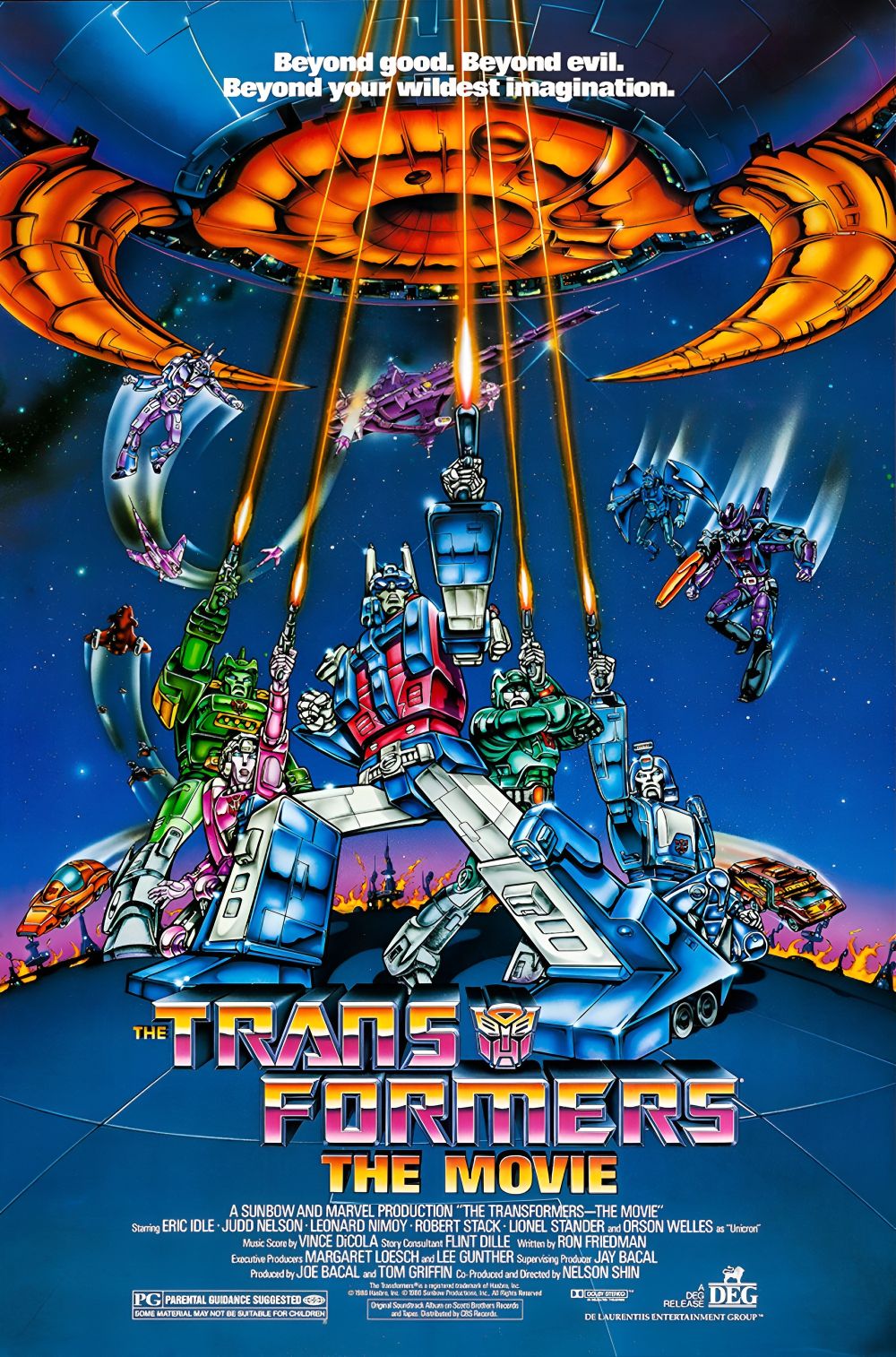
The Transformers: The Movie from 1986 was a must-see for me as a 13-year-old boy, but the anticipation of watching it and the actual experience were two entirely different things. The former was filled with excitement, the kind that comes from counting down the days until you finally get to see your favorite characters on the big screen. The latter, however, was something else entirely—a scarring moment that taught me, in the final year before entering high school, that not even afternoon cartoon characters were exempt from onscreen deaths. It was a harsh lesson in the unpredictability of storytelling, and it left an impression that has lasted a lifetime. And I wasn’t alone. The film shocked and scarred millions of children who flocked to theaters or gathered around their VHS players, expecting their beloved Transformers cartoon to simply be bigger and louder on the big screen. Instead, they were met with the brutal, unforgiving reality of watching their favorite characters die in battle, one after another.
The film was released during the height of Transformers mania in the mid-1980s, a time when the toy aisle was dominated by Hasbro’s robotic heroes and villains. But here’s the thing: The Transformers: The Movie wasn’t just about selling toys—it was about replacing them. Hasbro had a new line of Transformers ready to hit the shelves, and the movie served as a way to phase out the older generation of characters. The result? A shockingly brutal narrative that saw many fan-favorite characters meet their end in ways that were far removed from the relatively tame Transformers TV series. This wasn’t just a Saturday morning cartoon stretched to feature length; it was a full-blown sci-fi epic with stakes that felt real, and consequences that were permanent. For kids like me, who grew up watching the TV show, the film was a jarring wake-up call. The deaths of major characters like Ironhide, Prowl, and even Optimus Prime himself were not just unexpected—they were traumatic. It’s no exaggeration to say that The Transformers: The Movie left an entire generation of children with lasting emotional scars, all because it refused to sugarcoat the cost of war.
And yet, that’s exactly why it worked. The film’s willingness to go dark and take risks is what set it apart from so much of the animated fare of the era. The story picks up in the year 2005, with the Autobots and Decepticons still locked in their eternal struggle. The Decepticons, led by the ever-scheming Megatron, launch a full-scale assault on Autobot City on Earth, and the battle that follows is one of the most intense and visually stunning sequences in the film. The animation, while a product of its time, holds up surprisingly well, with vibrant colors and dynamic action that still feels exciting today. But what really sticks with you is the emotional weight of the story. The film doesn’t shy away from showing the cost of war, and the loss of life—even for animated robots—feels genuine. It’s a far cry from the often lighthearted and episodic nature of the TV series, and that contrast is part of what makes the movie so memorable.
At the heart of the film’s emotional impact is Peter Cullen’s iconic performance as Optimus Prime. Cullen’s voice work in the Transformers TV series had already made Optimus Prime a beloved figure, but in the movie, his role takes on an even greater significance. Though his screen time is brief, Cullen’s delivery of Optimus’s final words—“Until that day, ‘till all are one”—is nothing short of legendary. It’s a moment that has been etched into the minds of fans for decades, a testament to Cullen’s ability to convey both strength and vulnerability in a single line. Even now, nearly 40 years later, that scene remains one of the most powerful in the entire Transformers franchise. Cullen’s work helped elevate Optimus Prime from a toy commercial mascot to a genuine hero, and his influence can still be felt in every iteration of the character that has followed.
The film’s legacy is a fascinating study in how a movie can transcend its origins. On paper, The Transformers: The Movie was a 90-minute commercial designed to sell a new wave of toys. But in practice, it became something much more. The bold storytelling choices, the emotional depth, and the sheer audacity of killing off major characters in a children’s animated film ensured that it would be remembered long after the toys it was promoting had been forgotten. For the kids who saw it in theaters or on VHS, the film was often their first exposure to the idea that stories could have real consequences, and that heroes didn’t always make it out alive. It was a formative experience, one that left a lasting impression and helped shape the way a generation of fans engaged with media.
Of course, the film isn’t without its flaws. The pacing can feel uneven at times, and some of the new characters introduced in the movie—like the Dinobots and the Junkions—don’t get as much development as they deserve. The humor, while present, sometimes feels out of place amidst the darker tones of the story. But these quibbles do little to detract from the overall impact of the film. The Transformers: The Movie is a product of its time, but it’s also timeless in the way it handles its themes of sacrifice, leadership, and the cost of war. It’s a film that refuses to be pigeonholed as just a kids’ movie, and that’s part of its enduring appeal.
Today, The Transformers: The Movie holds a special place in the hearts of those who grew up with it. It’s a cult classic, a film that’s celebrated as much for its flaws as for its strengths. For many adults, revisiting the movie is like opening a time capsule, a chance to reconnect with the wide-eyed child they once were, the one who sat in front of the TV or the big screen, completely unprepared for the emotional rollercoaster they were about to experience. The film’s legacy is a testament to the power of storytelling, and to the idea that even something as seemingly commercial as a toy-based animated movie can leave a lasting impact. Whether you’re a lifelong Transformers fan or just someone who appreciates a good underdog story, The Transformers: The Movie is a film that’s well worth revisiting. Just be prepared for a few emotional gut punches along the way.
Hi, everyone! Tonight, on Mastodon, I will be hosting the #TubiThursday watch party! Join us for 1978’s Thank God It’s Friday!
You can find the movie on Tubi and you can join us on Mastodon at 9 pm central time! (That’s 10 pm for you folks on the East Coast.) We will be using #TubiThursday hashtag! See you then!
Today’s scene that I love comes from Lars Von Trier’s Melancholia. Von Trier is always going to be controversial filmmaker but no one has ever matched his brilliance when it came to capturing the end of existence.
In Melancholia, a depressed woman (played in a revelatory performance by Kristen Dunst) finds unexpected strength in the end of the world. As can be seen in the scene below, it’s a beautifully sad film, one that ends on a note of triumphant apocalypse:
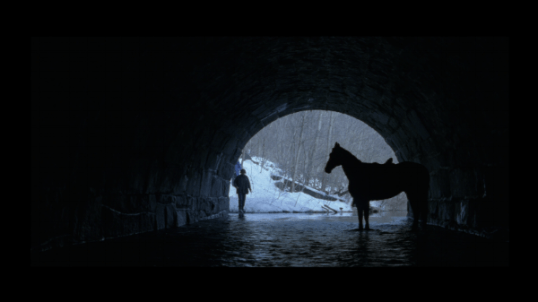
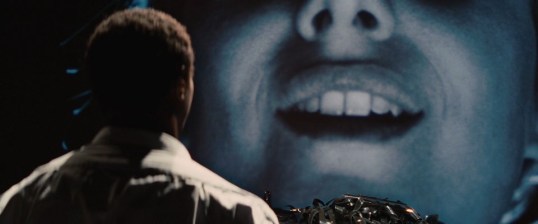
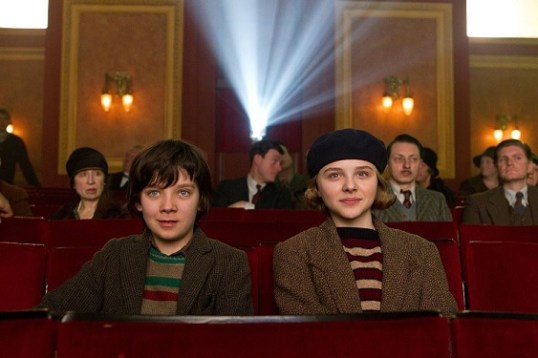
4 Shots From 4 Films is just what it says it is, 4 shots from 4 of our favorite films. As opposed to the reviews and recaps that we usually post, 4 Shots From 4 Films lets the visuals do the talking!
Today, TSL wishes a happy birthday to cinematographer Robert Richardson. It’s time for….
4 Shots From 4 Robert Richardson Films
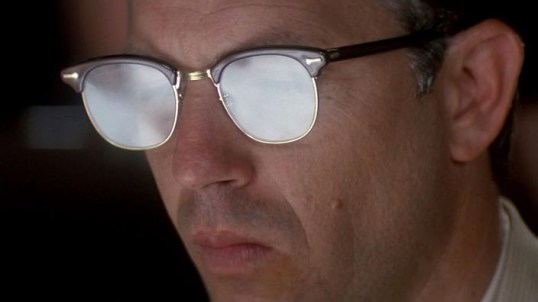
JFK (1991, dir by Oliver Stone, DP: Robert Richardson)
The Horse Whisperer (1998. dir by Robert Redford, DP: Robert Richardson)
Inglourious Basterds (2009, dir by Quentin Tarantino, DP: Robert Richardson)
Hugo (2011, dir by Martin Scorsese, DP: Robert Richardson)