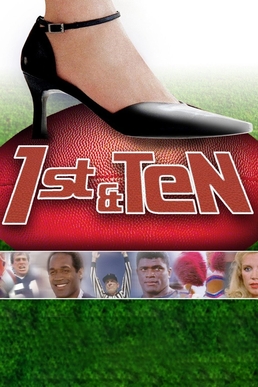
Welcome to Late Night Retro Television Reviews, a feature where we review some of our favorite and least favorite shows of the past! On Wednesdays, I will be reviewing 1st and Ten, which aired in syndication from 1984 to 1991. The entire series is streaming on Tubi.
This week, the fourth season comes to a close!
Episode 4.14 “The Irreducible Bottom Line”
(Dir by Stan Lathan, originally aired on January 4th, 1989)
The Bulls are going to the championship game, and Joe Namath is hosting a documentary about them. In mockumentary style, Namath and his cameras follow the players around as they prepare for the big game. Quarterback Doug Clayton is told to say, “I’m going to Play Land!” if he wins. Bubba insists on wearing his lucky shirt, no matter how sweat-stained it gets. A decal for a burger chain is placed on all the footballs. The game is as much about big money as it is about victory. In the end, the Bulls win easily, and Coach Denardo finally gets a post-game call from the President.
This is a weird episode. According to IMDb, it ran 26 minutes when it premiered on HBO — the standard running time for 1st & Ten. The version streaming on Prime and Tubi, however, is only 12 minutes long and is full of abrupt jump cuts. Those streaming copies are the syndication edits. Because the series originated on HBO, most episodes included a little nudity and a lot of profanity, all of which was cut for syndication. In this case, about 14 minutes appear to have been removed. One can only assume the Bulls really partied before and after the big game.
Unfortunately, that makes it pretty much impossible to review the episode properly. A few amusing moments still land, mostly the ones that treat sports as a business. It’s also obvious that large stretches of the story were cut. All I can say is that the Bulls finally won the championship, and the rather uneven fourth season of 1st & Ten is over. We’ll start season five next week.
“What is light without dark? What are you without me? I am a part of you all. You can never defeat me. We are brothers eternal!” — Darkness
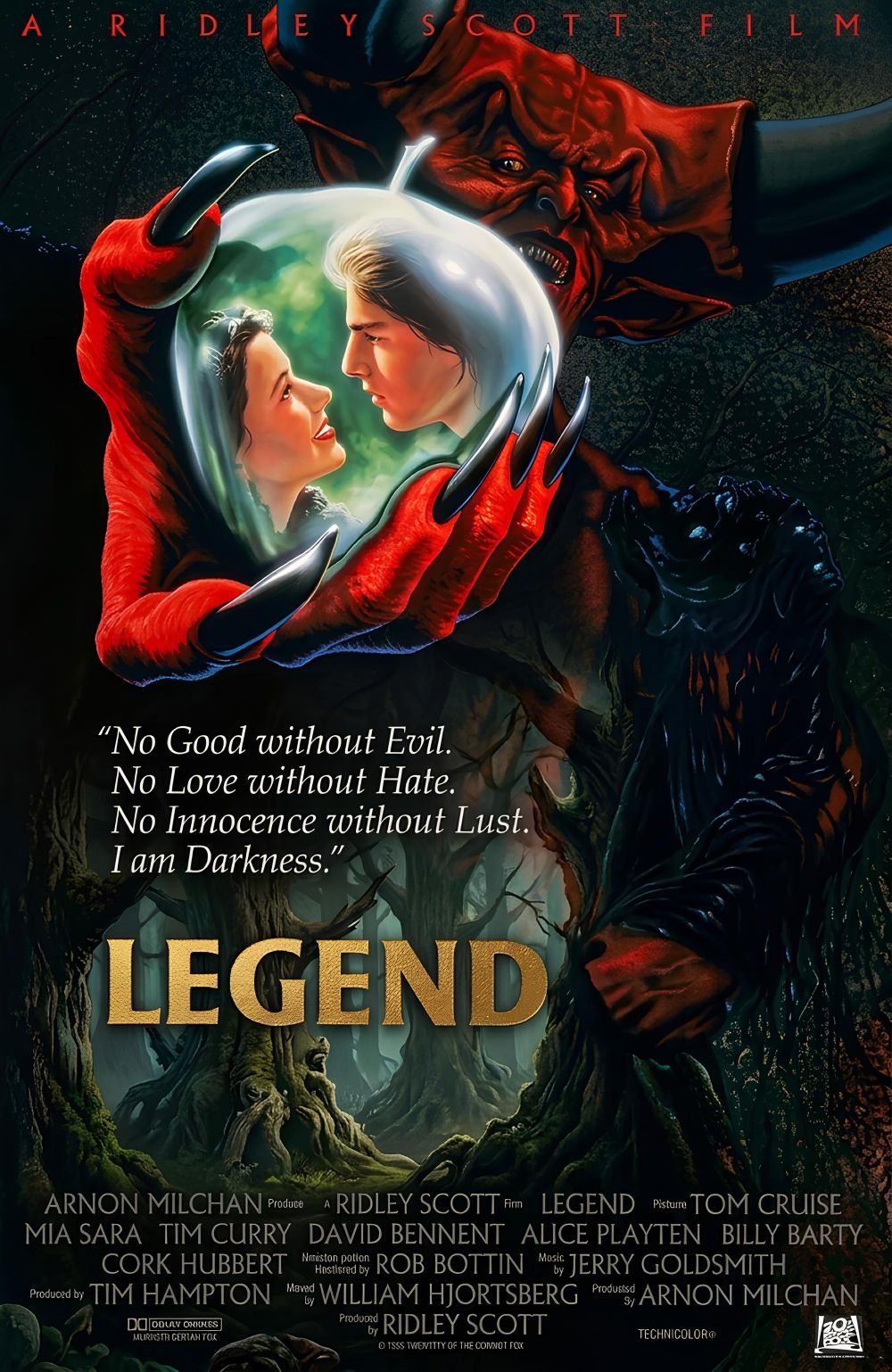
Legend is one of those films that feels like it should be a masterpiece even before it begins. It has Ridley Scott behind the camera, an extravagant fantasy premise, elaborate practical effects, striking production design, and a cast that includes a young Tom Cruise, Mia Sara, and Tim Curry. Released in 1985, the film arrived as a dark fantasy event that had been heavily anticipated, especially because Scott had already earned a reputation for visually stunning films. Alien and Blade Runner had established him as a director who could make entire worlds feel tactile, mysterious, and overwhelming. The idea of Scott applying that sensibility to unicorns, goblins, forest sprites, demonic lords, and fairy-tale mythology was exciting on paper. Unfortunately, while Legend is often gorgeous to look at, it becomes an uneven mess that is only saved from becoming a major disappointment by Tim Curry’s performance as Darkness.
The setup is familiar enough to sound almost deliberately archetypal. In a magical forest, Jack, played by Cruise, is a woodland boy who lives in harmony with nature and has fallen in love with the innocent Princess Lili, played by Sara. The world’s balance is tied to a pair of unicorns, embodiments of purity and light. Darkness, a devil-like ruler who wishes to plunge the world into permanent night, sends his goblin servants to kill the unicorns and take one of their horns. Lili’s fascination with the unicorns sets the tragedy in motion, and once one of the creatures is slain, winter and darkness descend upon the land. Jack must rescue Lili, restore the horn, defeat Darkness, and return light to the world.
There is nothing inherently wrong with a simple fairy-tale plot. In fact, Scott’s strongest instinct in Legend is treating fantasy with a sense of visual seriousness. The forest does not look like a clean studio set built for children; it looks damp, overgrown, foggy, and vaguely dangerous. The trees loom like ancient creatures, shafts of light break through the branches in painterly bursts, and even the beautiful areas of the film carry an eerie quality. Scott and cinematographer Alex Thomson create images that often resemble illustrated storybooks poisoned by a nightmare. The film’s environments are its greatest achievement. Whether it is the glowing forest, the icy wasteland after the unicorn’s death, or Darkness’ fire-lit underworld, Legend makes a serious effort to create a fully realized fantasy space rather than simply dressing actors in costumes and placing them in generic medieval scenery.
That visual commitment is why the film remains so fascinating despite its flaws. You can pause almost anywhere and find something worth admiring: a strange creature in the background, smoke drifting through a cavern, an enormous set textured with roots and stone, or a costume that looks handmade rather than mass-produced. Scott’s eye for atmosphere is undeniable. The film has an unusual physicality, too. Its magic is created through prosthetics, makeup, puppetry, matte work, and elaborate sets, so even when some effects have aged, they retain a handmade charm. Modern fantasy often has the advantage of digital flexibility, but Legend has the kind of tactile design that makes its world feel like it has dirt under its fingernails.
Still, visual beauty cannot completely compensate for a story that never finds a consistent rhythm. Legend often feels less like a fully developed narrative than a collection of spectacular images and half-formed fairy-tale ideas. Characters appear with little introduction, emotional shifts happen abruptly, and major story developments can feel rushed or strangely underexplained. The theatrical cut in particular carries the sense that important connective material has been removed. There are moments when the movie seems to expect emotional investment simply because the images are grand or the music swells, but the script has not done enough to earn that reaction.
Jack is also an unusually bland hero for a film that needs a strong center. Cruise was still early in his career, and there are flashes of the screen presence that would soon make him a major star. He is physically committed and looks believable racing through forests, climbing ruins, and confronting danger. But Jack is written as a generic pure-hearted fantasy protagonist, and Cruise never gets enough material to make him feel specific. He is brave because the story says he is brave, romantic because the story says he loves Lili, and destined to save the world because that is what these stories require. He does not have much inner conflict beyond the expected guilt and determination.
Lili is similarly underwritten, although Mia Sara does bring a dreamy, otherworldly quality to the role. The film wants her to embody innocence, temptation, and romantic idealism, but it does not give her much agency until she becomes corrupted by Darkness’ influence. Her transformation into a dark bride is visually memorable, especially in the elaborate black gown and makeup, but it also highlights the film’s habit of prioritizing imagery over character. The sequence is beautiful, eerie, and loaded with gothic fantasy appeal, yet Lili’s emotional journey into that role feels more decorative than dramatically convincing.
The supporting characters are more colorful but not always more useful. The dwarfs, elves, and forest companions give the story occasional energy, particularly the sarcastic fairy Oona and the armored dwarf Gump. Yet their presence can make the film feel tonally scattered. Sometimes Legend wants to be haunting and mythic; sometimes it wants broad comic relief; sometimes it drifts toward romantic melodrama. Those modes do not always blend. The result is a movie that can move from an ominous demonic ritual to a goofy side-character exchange without establishing a stable tone.
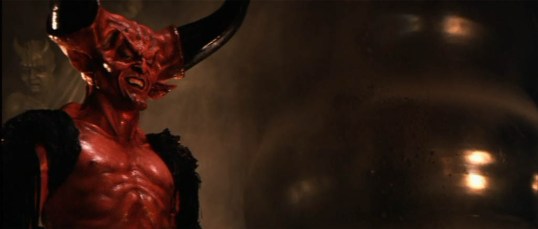
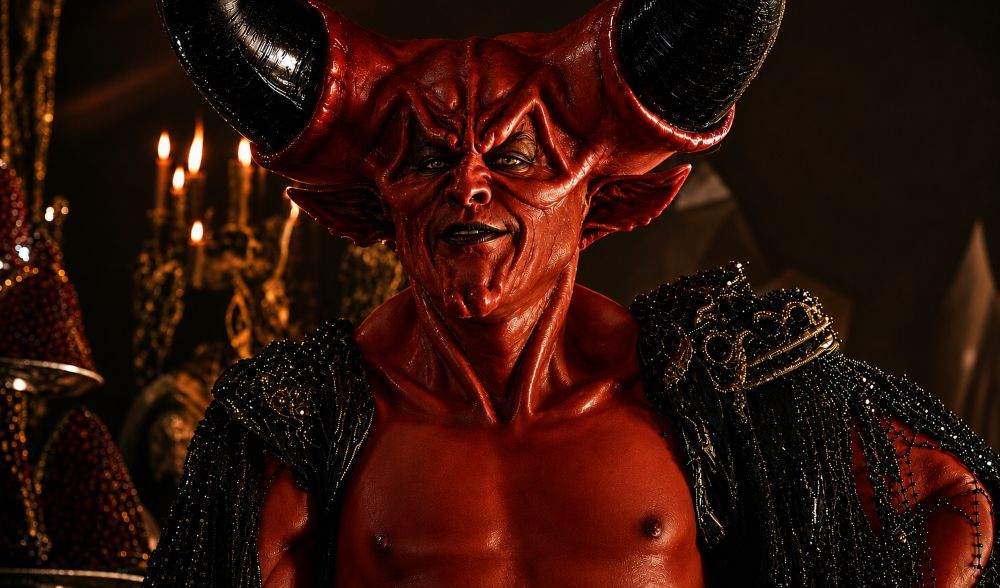
Then there is Tim Curry, who walks into the movie and immediately makes every other problem less important. His Darkness is one of the most iconic fantasy villains ever put on screen, and it is not difficult to understand why. The makeup design alone is astounding: massive horns, red skin, cloven hooves, muscular proportions, and a towering silhouette that makes him look like a medieval illustration of Satan brought to life. But the design would be nothing without Curry’s performance. He does not merely hide beneath the prosthetics; he gives Darkness a voice, posture, and seductive intelligence.
Curry plays Darkness as both monstrous and theatrical. His deep, measured delivery turns lines about night, desire, and evil into something genuinely alluring. He understands that the character should not simply roar or sneer. Darkness is persuasive. He offers Lili beauty, power, and escape from innocence, which makes him more interesting than a villain who only threatens destruction. His scenes with Sara have a strange, almost operatic energy, mixing horror, seduction, and camp in a way that fits the film’s most ambitious visual impulses. Curry makes Darkness feel ancient, vain, cruel, romantic, and weirdly funny all at once. He gives Legend its pulse.
The famous confrontation between Jack and Darkness should be the film’s crowning achievement, and visually it almost is. Darkness’ lair, lit by flames and surrounded by infernal architecture, gives Scott room to indulge his talent for monumental images. Curry’s villain towers over Cruise, making the hero look small and vulnerable. Yet even here, the fight is more memorable for its atmosphere than its dramatic construction. It is a good example of the whole film: rich in aesthetic invention, less persuasive as storytelling.
The music also reflects the movie’s fractured identity. Different versions of Legend are associated with different scores, most notably the Jerry Goldsmith score and the Tangerine Dream soundtrack used in the American theatrical release. The Goldsmith material feels more classically mythic and orchestral, while Tangerine Dream’s electronic music gives the film a distinctly 1980s dream-pop atmosphere. Both have their supporters, and both alter the experience considerably. That split feels appropriate for a movie that has always existed in multiple forms and competing moods. Legend is never quite one thing.
In the end, Legend is a flawed cult fantasy rather than a lost masterpiece. Its reputation rests largely on its imagery, its practical craftsmanship, and Curry’s towering performance, not on the strength of its plot or its emotional depth. Ridley Scott clearly wanted to make a dark fairy tale that felt ancient and sensual, but the finished film too often gets trapped between mythic grandeur, children’s fantasy, gothic romance, and broad adventure comedy. It is an uneven mess, but it is a beautiful one. And every time Tim Curry’s Darkness enters the frame, Legend briefly becomes the extraordinary film it was always trying to be.
When the infamous epic Caligulawas first released back in 1979, a disco version of Caligula’s love theme — We Are One — was also released as a promotional gimmick.
This song is so over-the-top, so blatantly exploitive, so insidiously catchy, and so totally inappropriate for so many reasons that become clear after you watch the film it was written for that it simply cannot be ignored. To me, this song represents everything that makes the Grindhouse great.
(As well, I hope whoever was playing bass got paid extra…)
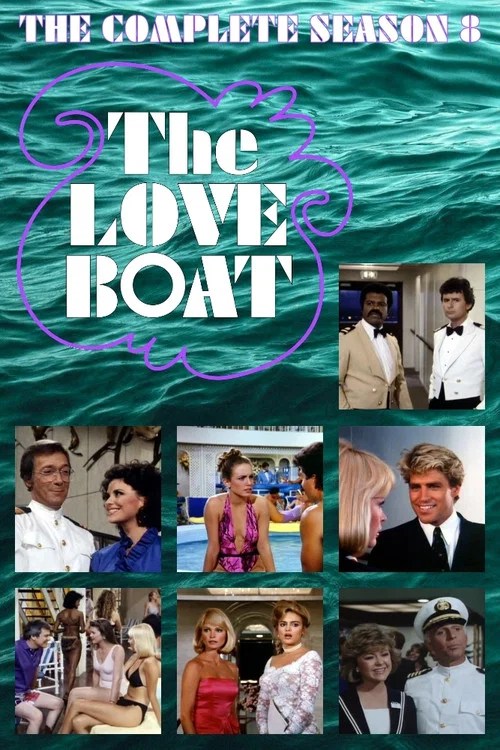
Welcome to Retro Television Reviews, a feature where we review some of our favorite and least favorite shows of the past! On Wednesdays, I will be reviewing the original Love Boat, which aired on ABC from 1977 to 1986! The series can be streamed on Paramount Plus!
This week, a familiar passenger returns.
Episode 8.8 “Aerobic April/The Wager/Story of the Century”
(Dir by Ted Lange, originally aired on November 3rd, 1984)
April Lopez (Charo) is back!
After appearing at least once during each of the The Love Boat‘s first six seasons, Charo was absent during the seventh season. She finally returns in this week’s episode, which sees April being hired as the ship’s aerobics instructor.
And that’s fine, I guess. Charo brings a lot of energy to the role, as she did in her previous appearances on The Love Boat. That said, it feels a bit like everyone is just going through the motions this time. Previous April stories featured her looking for love, trying to make it as a performer, or helping to raise a family. This episode basically just features her chasing around the members of the crew and demanding that they exercise. She does leave the ship with a passenger (played by Gordon Jump) but it’s hard not to feel that the relationship won’t last. We’ve seen April fall in love many times but she’s always single whenever she returns to the ship.
While April is forcing the crew to exercise, wastrel Brandon Summerville (Ben Murphy) bets his wealthy brother, Clayborn (Charles Siebert), a million dollars that Clayborn will fall in love during the cruise. And Clayborn does fall in love! But it turns out that Brandon actually hired Anne Loring (Mary Kate McGeehan) to seduce his brother so that Brandon could win the bet. Anne really does fall in love with Clayborn and she confesses everything to him. Clayborn doesn’t care. He thinks that Anne showed good business sense and now he’s more in love with her than ever.
Finally, journalist Harold Fleming (Ralph Bellamy) is convinced that passenger Sarah Webster (Dorothy McGuire) is actually the long-missing Amelia Earhart. Sarah insists that she’s not. Eventually, Harold and Sarah fall in love and agree to disagree.
This was a bit of a silly episode. None of the stories carried much weight but Ralph Bellamy and Dorothy McGuire were both charming, two old pros giving it their best. Otherwise, this was a pleasant but fairly forgettable cruise. Not even Charo could liven things up.
4 Or More Shots From 4 Or More Films is just what it says it is, 4 shots from 4 of our favorite films. As opposed to the reviews and recaps that we usually post, 4 Shots From 4 Films lets the visuals do the talking!
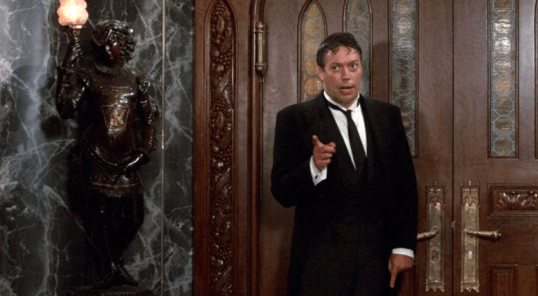
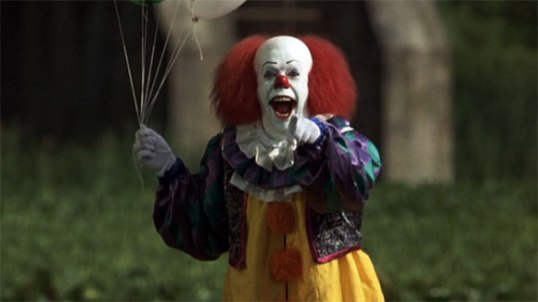
Rest in Peace, Mr. Tim Curry.
4 Shots From 4 Tim Curry Films
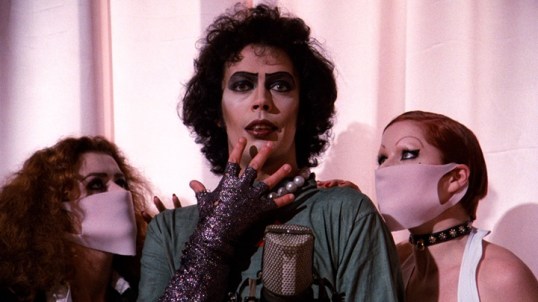
The Rocky Horror Picture Show (1975, dir by Jim Sharman)
“Dreams are my specialty. Through dreams I influence mankind. My dream is of eternity… with you.” — Darkness
In the hall of fame cinematic evil, few figures loom as large—both literally and figuratively—as Darkness, the demonic antagonist of Ridley Scott’s 1985 fantasy film Legend. While the film itself is a flawed, sumptuous fever dream of unicorns, goblins, and saccharine innocence, its enduring legacy rests squarely on the cloven shoulders of its primary antagonist. Darkness is not merely a monster or a plot obstacle; he is the philosophical and aesthetic center of the film, a being of pure, conscious malevolence who articulates the seductive logic of eternal night. Yet, for all his cosmic horror, he remains a surprisingly relatable figure, a tyrant who exudes weary boredom and theatrical pique. This complexity is entirely the work of Tim Curry, whose performance elevates what could have been a one-note bogeyman into one of the most flamboyant, charismatic, and unforgettable devils ever committed to celluloid.
Tim Curry’s physical transformation into the Lord of Darkness is, in itself, a masterclass in prosthetic commitment, but it is his performance beneath the latex that breathes terrifying life into the horns. Under layers of crimson makeup, sculpted muscle, and ram-like horns, Curry’s most potent weapon is his voice—a resonating, purring baritone that slithers between a seductive whisper and a thunderous roar. He delivers dialogue like a Shakespearean actor chewing rich, decadent scenery, imbuing lines about “the glory of the night” with a sensual, almost poetic conviction. Yet, Curry never lets the grandeur become ponderous. He injects a wicked, knowing levity into the role, a mischievous twinkle in his prosthetic-lidded eyes that suggests the Devil is not just evil, but is having a genuinely good time being so. This is the Tim Curry “sass” in full effect: a raised eyebrow, a sarcastic drawl, and a contemptuous flick of his clawed hand that makes his Darkness feel less like an ancient, faceless god and more like a decadent, immortal rock star who has grown bored with eternity.
What makes Curry’s portrayal so revolutionary is his ability to make Darkness a mesmerizing and charismatic figure who outshines the film’s ostensible hero, Jack, played by a young, earnest Tom Cruise. Cruise’s Jack is the quintessential pure-hearted faerie-tale protagonist—brave, wholesome, and tragically one-dimensional. He fights for love and light with a fervent sincerity that, while admirable, lacks texture or conflict. In contrast, Curry’s Darkness is a creature of profound, articulate desire; he wants to extinguish the sun not out of mindless spite, but to create a world where his aesthetic of shadow and chaos can flourish. He offers Lily (Mia Sara) a crown of stars and an eternity of passion, a temptation far more intellectually and emotionally engaging than Jack’s simple, chaste devotion. When Curry shares the screen with Cruise, the film’s energy shifts palpably; the audience’s attention is irrevocably drawn to the demon’s throne room, leaving the hero’s quest feeling like a tedious errand.
Crucially, Curry’s Darkness transcends mere villainy by possessing a startlingly human vulnerability, a pathos that makes him more than a symbol of absolute evil. He is a creature of immense power, yet he is bound by cosmic rules and frustrated by the very light he seeks to destroy. There is a weary, jaded quality to his performance, a sense that he has been playing this game of cosmic chess for eons and is irritated by its predictability. When he is ultimately defeated, it is not with a grand, defiant curse, but with a quiet, almost melancholic acknowledgment of fate. This fleeting moment of resignation, delivered with Curry’s signature subtlety, adds a layer of tragic grandeur to the character. He is not just a devil; he is a failed artist of darkness, a monarch who has lost his kingdom, and Curry ensures we feel the weight of that loss, even as we cheer for his vanquishment.
In the end, Ridley Scott’s Legend is a flawed tapestry of light and shadow, but Tim Curry’s Darkness is the golden thread that holds it all together. He gave the Devil a flair that was both terrifying and deliciously camp, a combination that has cemented his performance in the horror-fantasy hall of fame. While Tom Cruise’s Jack may be the film’s designated hero, he serves primarily as a straight man to Curry’s operatic villainy. Decades later, audiences may forget the plot’s intricate details or the film’s lush visuals, but they will never forget the sight of Curry rising from his throne, horns silhouetted against the fire, and purring his seductive threats. He proved that the most compelling evil is not a mindless beast, but a charismatic, sassy, and deeply intelligent force of nature—one who makes the eternal struggle between good and evil feel less like a battle and more like a spectacular, unforgettable show.
Tim Curry is an actor I’ve always loved. So many love him for THE ROCKY HORROR PICTURE SHOW and CLUE, and while those are probably his most memorable performances, neither of those are the first movies I think of when I think of Curry. I think of HOME ALONE 2: LOST IN NEW YORK, because I saw it in the theater, and I think of PASS THE AMMO because it was filmed here in my home state of Arkansas when I was a teenager. In my personal celebration of his wonderful career and life, I share this scene from PASS THE AMMO (1988), which also stars Bill Paxton, Linda Kozlowski, and Annie Potts!
“When someone you love dies, you will know emptiness… You will never forget, and you will never, ever forgive.” — Eric Draven
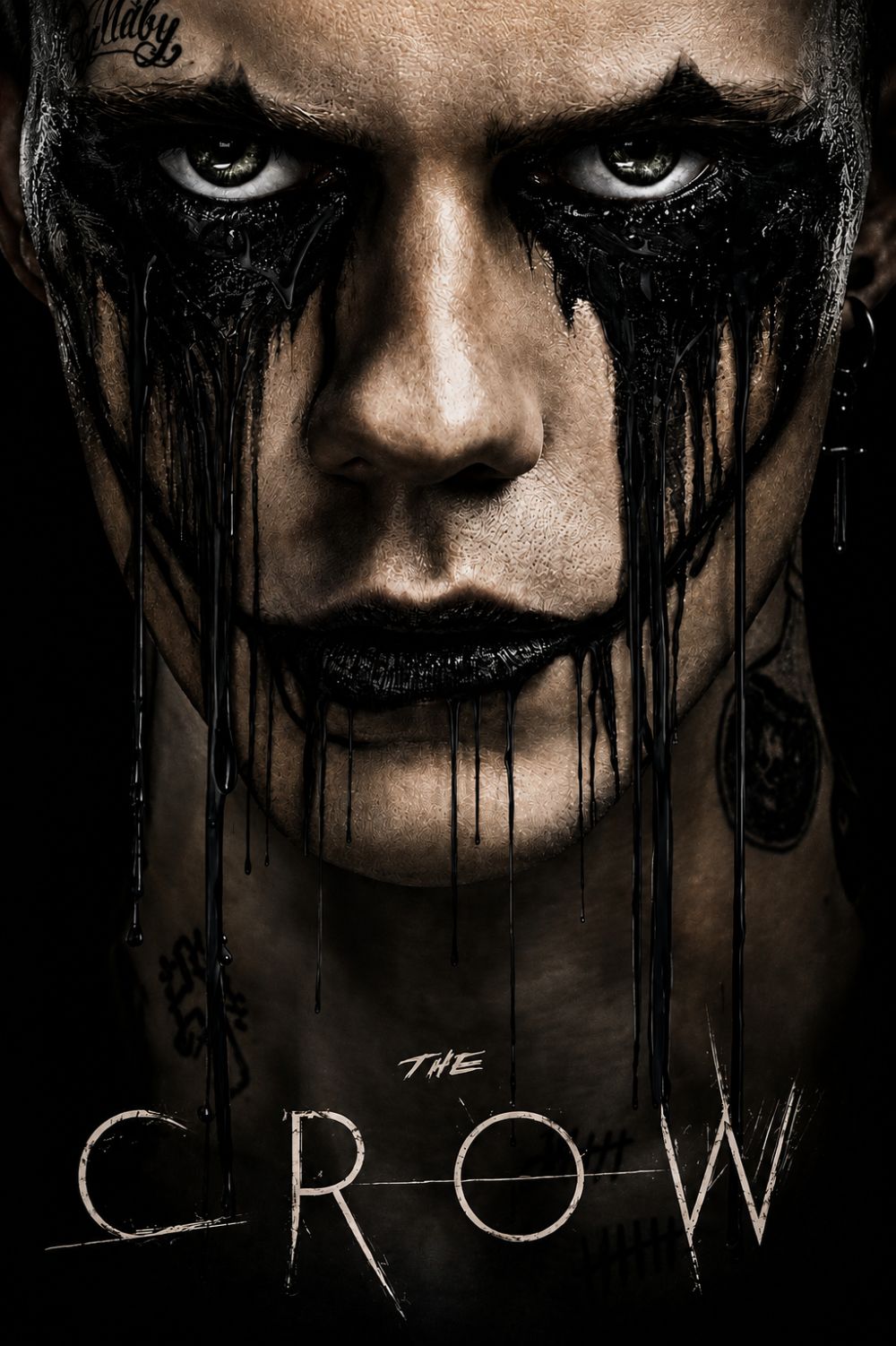
The Crow is a remake built around a reasonable idea—returning to James O’Barr’s graphic novel rather than photocopying Alex Proyas’s 1994 cult film—but Rupert Sanders’s 2024 version never discovers why this material matters beyond its tattoos, bruises, and black eyeliner. It arrived dead on arrival with critics and audiences alike, not simply because it was measured against a beloved predecessor, but because it offered so little of its own identity. The film is dour without being haunting, romantic without generating much chemistry, and violent without making its revenge feel especially cathartic.
Sanders’s film stars Bill Skarsgård as Eric and musician FKA twigs as Shelly, lovers brutally murdered after stumbling too close to the secrets of criminal impresario Vincent Roeg, played with sleek, vaguely supernatural menace by Danny Huston. Eric awakens in a liminal afterlife, is granted a path back to the living world, and returns armed with supernatural endurance and a need to avenge Shelly. The fundamentals are familiar: love is destroyed by violence, death cannot sever that love, and vengeance becomes a darkly mythic expression of grief. Yet The Crow continually confuses the bare outline of that story with the emotional force that made it endure.
The production’s troubled history almost feels encoded in the finished movie. A new Crow film spent more than a decade trapped in development hell, cycling through different studios, directors, screenplays, and potential stars. Relativity Pictures held the project for years; Sony eventually became involved; various versions had names such as Bradley Cooper, Luke Evans, Jack Huston, and Jason Momoa attached at different stages, alongside filmmakers including Stephen Norrington, F. Javier Gutiérrez, and Corin Hardy. The project repeatedly stalled under changing rights arrangements, creative disagreements, and the general instability that often turns a familiar title into an endlessly recycled pitch deck. A fresh production effort was announced in 2020, but the Sanders version did not actually begin shooting until 2022 in Prague.wikipedia+2
That prolonged development makes the final product feel less like a passionately argued reinterpretation than a compromise that survived by default. Every era of the project seems to have left a trace. There is a prestige-minded desire to make Eric and Shelly psychologically damaged and contemporary. There is a franchise-minded urge to expand the supernatural mythology. There is also a music-video impulse toward body art, club scenes, fashionable misery, and sharply composed violence. None of these ingredients are automatically bad. But Sanders never finds a way to make them cohere into a world as tactile, strange, or emotionally immediate as the one Alex Proyas created in 1994.
The suspicion around the remake was understandable from the beginning. Most people involved in the original film have either expressed mixed feelings or outright disapproval about revisiting the property. The 1994 The Crow is not merely another cult favorite awaiting intellectual-property renewal. It is permanently linked to Brandon Lee, who was killed in an on-set shooting accident during production. The completed film became a memorial as much as a comic-book adaptation, and its emotional impact cannot be separated from the knowledge of what happened to its star.
The strongest objections have come from James O’Barr and Alex Proyas. O’Barr, writer and artist of the original graphic novel, has questioned the need for a remake for years, once calling the idea of remaking a then-15-year-old film “kind of ridiculous.” Proyas, meanwhile, has been even more direct. He argued that The Crow was not simply a movie because Brandon Lee died making it, and that the 1994 film should remain part of Lee’s legacy. When the new film’s reception turned hostile, Proyas called it a “cynical cash-grab” and mocked the lack of financial reward supposedly waiting at the end of it. The tone of those comments may strike some people as harsh, but the remake never makes a convincing counterargument.
To be fair, Sanders does not ask Skarsgård to imitate Lee. That is one of the film’s better instincts. Skarsgård’s Eric is physically slight, heavily tattooed, insecure, and visibly wrecked by the life he has lived before death. He is not a supernatural rock-and-roll avenger in the same way Lee was. Instead, he resembles a wounded, emotionally arrested young man forced into a mythic role he does not fully understand. It is a potentially interesting angle, especially for a story about grief turning someone into a monster.
But the screenplay, credited to Zach Baylin and William Josef Schneider, does not give that approach enough shape. Eric is vulnerable, then dreamy, then brutally efficient, then mournful again, depending on what the scene needs. The film treats emotional instability as character depth, but those are not the same thing. A character can be fractured, contradictory, and self-destructive while still possessing a recognizable inner life. Skarsgård does what he can with the material, bringing real physical discomfort and sadness to Eric, yet the movie seems more interested in how his pain photographs than what it reveals.
The same issue affects Shelly. FKA twigs has an immediately magnetic screen presence, and the film wisely spends much more time on Eric and Shelly before their deaths than the 1994 film did. In theory, that should be a major advantage. If the viewer sees the relationship develop, then Eric’s return from death should carry more emotional force. Instead, the early sections feel like a montage stretched into an act: rehab, drugs, late-night intimacy, mutual confessions, music, dancing, sex, and shared trauma. The movie repeatedly tells us that these two are soulmates, but it rarely gives them the specific dialogue, humor, disagreements, or small gestures that make a romance believable.
Their relationship becomes a collection of poses. The camera understands that they are beautiful, sad, damaged people; the script never quite proves they are deeply connected individuals. That is fatal in The Crow, because Eric’s entire mission depends on the audience accepting that Shelly is not merely the woman he loved but the person who made life worth returning to. The movie substitutes trauma bonding for intimacy, assuming that shared wounds automatically equal love.
Huston’s Vincent Roeg is similarly underwritten. Roeg is introduced as an elegant criminal figure with occult powers, someone who preys on young women and sustains himself through a diabolical bargain. It is a significant departure from the relatively grounded gangland evil of the 1994 film, and it could have opened the door to something genuinely grotesque. Instead, the mythology grows more complicated while the villain becomes less interesting. Roeg speaks in the familiar language of immortal bad guys who are convinced that cruelty makes them profound. He lacks the memorable theatricality of the original film’s antagonists and the unnerving specificity that a character like this needs.
The remake’s expanded mythology is perhaps its biggest miscalculation. O’Barr’s original premise has always been powerful because it is so direct: a murdered man is allowed to return, guided by a crow, because love has been violently cut short. It is gothic, but it is simple. Sanders’s version adds a network of afterlife rules, soul exchanges, purgatorial spaces, and supernatural transactions. The more the film explains, the less mythical it feels. Grief does not become larger through lore. In this case, it becomes bogged down in mechanics.
Visually, Sanders has moments of genuine flair. The film’s strongest sequence comes late, when Eric tears through an opera house during a lavish performance. White costumes are stained red, the setting’s exaggerated grandeur clashes with Eric’s raw violence, and the action is staged with a sense of grotesque spectacle. It is the one scene where Sanders’s instincts as a visual stylist really connect with the source material’s heightened pulp melodrama. The sequence is bloody, theatrical, and almost absurd enough to become exhilarating.
Yet it arrives too late and feels disconnected from much of what precedes it. For large stretches, The Crow is subdued to the point of visual anonymity. Its darkness looks digitally smoothed rather than dreamlike. Its city does not have a personality. Its criminal underworld feels interchangeable with any number of slick streaming thrillers. The 1994 film’s Detroit-like nightmare city was impossible to separate from its mood: rain-slicked streets, scorched interiors, industrial rot, grotesque criminals, and an unforgettable goth-grunge soundtrack all fused into one singular aesthetic. Sanders’s movie has better technology but far less texture.
The soundtrack, in particular, exposes the remake’s uncertainty. The 1994 Crow became inseparable from its music, which drew together alternative rock, industrial, metal, and goth influences into an extension of Eric’s world. The 2024 version clearly wants to speak to a newer generation through contemporary pop, electronic, and melancholy club sensibilities. There is nothing wrong with modernizing the musical language, but the choices do not build a coherent subculture around the film. They play as individual selections rather than part of a living, breathing atmosphere.
This is why the remake’s negative response was so predictable. It was not doomed merely because it remade a movie people love, nor because any new Eric Draven would inevitably be compared to Brandon Lee. A remake could have justified itself by drawing more deeply from O’Barr’s graphic novel, creating a truly different visual language, or foregrounding the grief at the center of the story with more honesty. Sanders instead gives us a film that is constantly signaling pain while remaining emotionally remote.
There are fragments of a better Crow scattered throughout: Skarsgård’s willingness to play Eric as fragile and unglamorous, twigs’s spectral intensity, and the opera-house massacre’s gleefully excessive bloodshed. But those fragments never combine into a whole. The Crow has the eyeliner, the tattoos, the wounds, and the bird, but it never finds the heart beneath them. The original film endured because it turned loss into a piece of feverish gothic pulp. This remake turns loss into an aesthetic, and that is not nearly enough.
Yesterday, the great actor Tim Curry passed away at the age of 80.
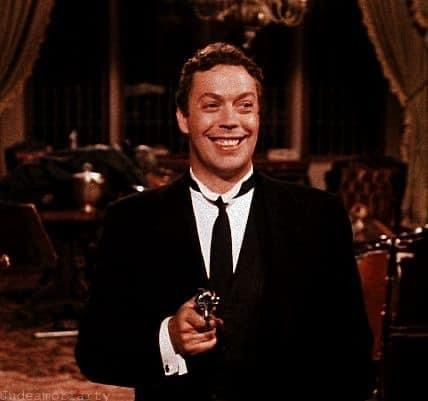
Though Tim Curry will probably always be best-known for his role in The Rocky Horror Picture Show, my favorite Tim Curry film is 1985’s Clue. Here he is, in all three of the film’s endings.