Review: 100 Bullets Vol. 3 – Hang Up on the Hang Low


“I never told you to kill him. I just gave you the opportunity.” — Agent Graves

With Hang Up on the Hang Low, Brian Azzarello and Eduardo Risso continue to prove that 100 Bullets is far more than a series about revenge fantasies and mysterious briefcases. The first two collections introduced the basic concept of Agent Graves approaching damaged people with a gun, one hundred untraceable bullets, and proof of who ruined their lives. That premise was already strong, but this third volume starts showing just how much uglier and more complicated the world around Graves really is. This is where the series begins to feel less like a set of loosely connected crime stories and more like a large, carefully constructed noir epic. The revenge angle is still present, but it is no longer the whole point. The people who receive Graves’s offer are getting pulled into a much bigger machine, whether they realize it or not.

The main character this time is Loop Hughes, a young man who has spent much of his life acting tougher, smarter, and more connected than he actually is. He is a small-time street hustler, someone who talks a good game but clearly has no real direction in life. That makes him an interesting choice for Agent Graves. Loop is not someone who has already been crushed by a terrible tragedy in the same direct way as Dizzy Cordova or Lee Dolan. His grievance is more personal and more complicated: his father, a man known as the Rain, abandoned him and his mother when he was still a child. Loop has built up years of anger around that absence, even if he has never really known what to do with it.

When Graves gives Loop one of his trademark attaché cases, it seems at first like another straightforward setup. Loop has the gun, the bullets, the evidence, and the freedom to act without legal consequences. The temptation is there, and Azzarello makes it easy to understand why Loop would want to pull the trigger. The Rain did not just leave; he left a hole in Loop’s life that the younger man has filled with insecurity, bravado, and bad decisions. But the story becomes much more interesting when Loop finally finds his father and discovers that the Rain is not some helpless old man waiting to be punished. He is deeply involved with dangerous people and has his own place in the criminal underworld.

That is where Hang Up on the Hang Low really finds its momentum. Rather than immediately becoming a story about a son taking revenge on his father, it turns into a story about Loop being drawn into the world that helped create his father in the first place. The Rain is connected to organized crime, old grudges, and the kind of people who can make a murder look like business as usual. Loop thinks he is finally getting some answers, but every answer only opens another door to something worse. He is in well over his head almost from the beginning, and the book does a great job of making the reader feel that constant pressure.

Loop is one of the more sympathetic characters in the series so far because, underneath all of his posturing, he does seem to have a conscience. He is not innocent, exactly, and he certainly makes some dumb choices, but he is not naturally cruel. He wants respect, money, and an explanation for why his father left, but he also cares about people in a way that many of the hardened gangsters around him do not. Azzarello does not turn him into a saint, though. Loop is still immature and easily manipulated, which is exactly why his journey through this volume becomes so tragic. He keeps thinking he has found a way to gain control over his life, only to learn that somebody else has already decided the terms.

Agent Graves remains the most fascinating figure in the book. In the early volumes, he could be seen as a mysterious avenger or a kind of grim wish-fulfillment figure, handing victims the tools to get justice on their own terms. This collection makes him feel more unsettling than heroic. Graves is not necessarily lying to Loop, but he is absolutely steering him toward a result that serves some larger purpose. He is a man who sees people as pieces on a board, and even when he gives them a choice, it is hard to believe that he does not already have an idea of how they will respond. The briefcase may offer freedom from prosecution, but it never offers freedom from consequences.

The book also continues expanding the larger mythology involving the Trust and the Minutemen. Azzarello is still not explaining everything, and that can be frustrating if someone wants clean answers right away. At the same time, the lack of full explanation is part of what gives 100 Bullets its pull. The reader gets the sense that every crime boss, stray conversation, and seemingly random killing could matter later. People who initially seem like minor players keep revealing hidden ties to the larger conspiracy. Even the deaths and betrayals carry an extra weight because they do not feel random. This series is building toward something, and by the end of this volume it is clear that Graves has been setting events in motion for a long time.

Eduardo Risso’s artwork continues to be one of the best things about the series. His characters look stylized without ever feeling too cartoonish, and he gives every person a distinct physical presence. You can tell who is dangerous just by the way they stand in a room. You can tell who is nervous by the way they avoid eye contact. Risso’s visual storytelling is especially effective in the bar scenes, street confrontations, and quiet moments when characters are trying to decide whether to trust someone. He knows how to make a room feel crowded, seedy, and tense without overloading the page with unnecessary detail.

Risso also has a great eye for the ugly atmosphere of this world. The bars look worn down, the apartments feel cramped, and the city streets always seem like they are one bad decision away from turning violent. The noir influence is obvious, but it does not feel like a cheap imitation of old detective stories. It feels more like a modern crime story filtered through noir imagery: low lighting, cigarette smoke, suspicious looks, crooked power structures, and people who keep trying to escape the past only to be dragged deeper into it. The coloring helps the art stand out as well, giving the grimy environments and tense confrontations a little extra visual bite without making the book look overly polished.

The ending is what really makes the volume stick. Azzarello does not rely on a giant surprise twist so much as a sense of inevitability. You can see the bad outcome coming, but that does not make it any easier to watch. Loop spends most of the story trying to become somebody who matters, somebody with control and power, and the cruel part is that the criminal world is more than happy to let him feel that way for a little while. By the time reality catches up with him, he has learned that the people offering him opportunity were never offering him a real way out.

100 Bullets Vol. 3: Hang Up on the Hang Low is the strongest collection in the series so far. It has a more focused central story than Split Second Chance, while still pushing the wider conspiracy forward in a meaningful way. Loop is a memorable lead because he is flawed, angry, and trying desperately to look fearless when he is really just lost. Azzarello keeps the dialogue sharp and streetwise, Risso keeps every page visually charged, and the larger story continues to get more dangerous the more we learn about it. This is the point where 100 Bullets stops merely promising that it has a major story to tell and starts delivering on that promise.

100 Bullets Volume Reviews
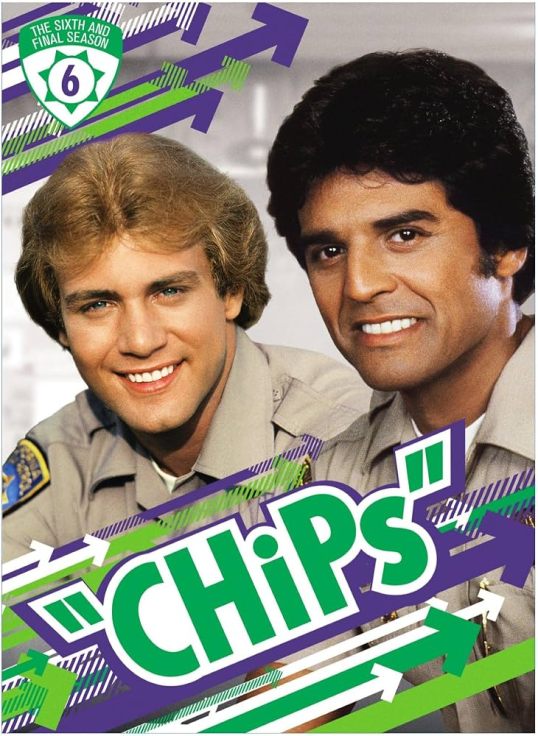
Late Night Retro Television Review: CHiPs 6.3 “Spaceman”


Welcome to Late Night Retro Television Reviews, a feature where we review some of our favorite and least favorite shows of the past!  On Mondays, I will be reviewing CHiPs, which ran on NBC from 1977 to 1983.  The entire show is currently streaming on Prime!

This week, CHiPs jumps the proverbial shark.

Episode 6.3 “The Spaceman Made Me Do It”

(Dir by Winrich Kolbe, originally aired on October 24th, 1983)

There’s three storylines in this week’s episode.  Let’s start with the two that make sense.

In the episodes comedic storyline, the members of the Highway Patrol all receive a chain letter.  Some continue the chain and have good luck.  Others — like Ponch — do not continue the chain and wait for their bad luck.  Grossie mails his letter and then gets an $800 refund from the IRS.  However, at the end of the episode, it’s revealed that the Highway Patrol’s secretary failed to mail the chain letters and the IRS informs Grossie that his refund was a mistake.  Everyone laughs at Grossie.  Poor guy.

The B-plot features Grossie and new officer Kathy (Tina Gayle) tracking down some thieves who are robbing Japanese tourists.  This was a traditional CHiPs story and it was actually kind of nice of the show to acknowledge that Ponch isn’t the only person fighting crime in California.

But then there’s the main plot.  Ponch and Bobby have been assigned to night patrol.  They catch a preadolescent girl named Jodi (Kyle Richards) breaking into a jewelry store.  She says that an E.T. (and yes, she says “E.T.’) ordered her to break into the store because it need the diamonds to fix its spaceship.  Ponch and Bobby take Jodi to the station and Ponch volunteers to serve as Jodi’s legal guardian until her parents can be found.  Dr. Joyce Brothers appears as herself, talking to Jodi and announcing the Jodi is not crazy.

Having watched five seasons of CHiPs, I found myself waiting for the inevitable moment in which it would be revealed that Jodi was being manipulated by a master criminal.  When Jodi ran away to meet up with the UFO, I expected that Ponch and Bobby would track her down and arrest the actual villain.

Instead, when Ponch and Bobby tracked down Jodi, I got a scene of a light shining down from the sky, Jodi being pulled towards the unseen UFO, and Ponch grabbing her and yelling that the aliens can’t have her.  Ponch’s words apparently have the right effect because the lights disappear as the never-seen UFO returns to its own planet.

“What was that?” Bobby asks.

“Whatever you want it to be,” Ponch replies.

No, guys.  I’m sorry.  This is CHiPs.  It’s a show about cops on motorcycles.  It’s not a show about UFOs.  You can’t just introduce an alien on this show and then have everyone shrug it off once they hear that Grossie won’t be getting his tax refund.  This just isn’t the show to try that sort of thing.  (Yes, Force Seven did get pretty weird but that was a backdoor pilot for a different series and Ponch and Jon didn’t actually get involved in any of the mad scientist/karate action.)

I’m going to guess this episode was an attempt to shake things up.  Maybe there was a feeling that, since new star Tom Reilly lacked all credibility as a cop, the show should abandon the straight-forward approach that it used during the Larry Wilcox years.  I’m sure the show had its reasons but this episode just doesn’t feel right.

Of course, some thing never change.  The aliens may have been a surprise but it’s not a surprise that Ponch was the one who (somehow) made them go away.  Aliens or not, this is still….

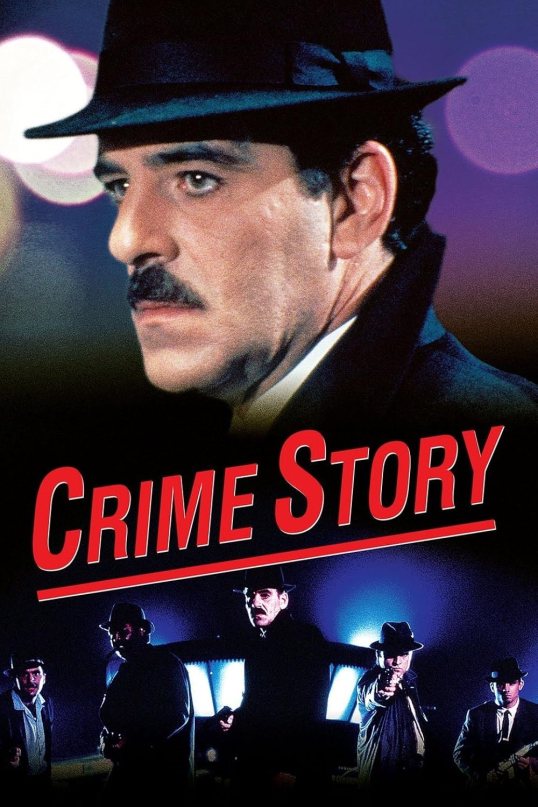
Retro Television Review: Crime Story 1.14 “Fatal Crossroads”


Welcome to Retro Television Reviews, a feature where we review some of our favorite and least favorite shows of the past!  On Mondays, I will be reviewing Crime Story, which ran on NBC from 1986 to 1988.  The entire show can be found on Tubi!

This week, guess who screws up?

Episode 1.14 “Fatal Crossroads”

(Dir by Gary Sinise, originally aired on January 9th, 1987)

As much as I want to like David Abrams — and I did like him for the first few episodes — he’s just dumb.  Offended by the fact that Luca is using his legal advice to try to beat his indictment, David starts this episode out by approaching Luca in public and announcing that he’s not only quit the public defenders office but that he’s also decided to join the D.A.’s office, specifically so he can take guys like Luca down.  Then, later on in the episode, David approaches Luca again and, this time, he brings along his father (Nathan Davis).  David’s father, a former low-level gangster, brags about how smart David is and how he’s going to take Luca down.

So, of course, Luca has someone put a bomb underneath David’s car.

And, of course, it’s David’s father who decides to borrow the car to go to the store and who ends up getting blown up.

And yes, it’s a terrible thing that David’s father got blown up.  BUT WHAT DID DAVID THINK WAS GOING TO HAPPEN!?  He knows who Luca is!  He knows that Luca will kill people without a second thought.  So why the Hell is David walking up to Luca and basically daring him to try to kill him?  I mean, David’s father was in the rackets!  David should have known better and, for that matter, David’s father should have known better.

I’m sorry but David Abrams is a moron.

For some reason, Luca also tries to take a hit out on Torello, despite the fact that Luca’s entire legal strategy depends on Torello denying Homan’s claims that Torello is crooked.  Fortunately, Torello is somehow brilliant enough to realize that Luca is going to take a hit out on him and the members of the Crime Squad are smart enough to take a look at a building and somehow figure out exactly which room a sniper would be hiding in.  If only David Abrams was as smart!

This episode featured a few too many coincidences and a bit too much of David Abrams suddenly acting like an idiot.  It was directed by Gary Sinise, who is one of my favorite people.  Sinise does a good job of capturing the drizzly gangster movie atmosphere but the script could have used a bit more work.

Billy Jack lays out Charles Bronson!


My title may be a little misleading, but I always find it fascinating when certain iconic individuals work together on screen. Tom Laughlin and Charles Bronson crossed paths early in both of their careers, with Laughlin accomplishing something that very few actors would be able to claim later on… he knocked out Bronson!

It all goes back to the pilot episode of Charles Bronson’s T.V. series MAN WITH A CAMERA, titled “Second Avenue Assassin,” which premiered on October 10th, 1958. In that first episode, Mike Kovac (Charles Bronson) wants to get a picture of his old neighborhood pal, Joey Savoyan (Tom Laughlin). Joey has risen in the boxing ranks, and is getting a title shot at the champ, Sal Benning. But it seems that success has changed Joey from the guy Mike knew, and there have been many reports that he’s turned into a jerk who’d rather punch a reporter or photographer than look at them. When Mike goes to Joey’s training camp and proceeds to tell him that his attitude is an embarrassment to the people pulling for him back home, Joey gets pissed and the two men end up in the ring. Apparently, Mike could whip him back in the day, but times have changed and after absorbing a few of Mike’s jabs, Joey lays his ass out cold with one punch. The photograph that makes the papers that night is Mike lying flat on his back with the headline “Joey Savoyan puts ace photographer in darkroom!” There’s more to the story, and Bronson and Laughlin end up working together, but not many characters have knocked Bronson out and got to live to tell about it!

In celebration of Laughlin’s 95th birthday in badass heaven, I decided to share that video with you today. Enjoy!

Scenes That I Love: Billy Jack


Today would have been the 95th birthday of Tom Laughlin, the independent film pioneer who gave the world Billy Jack.

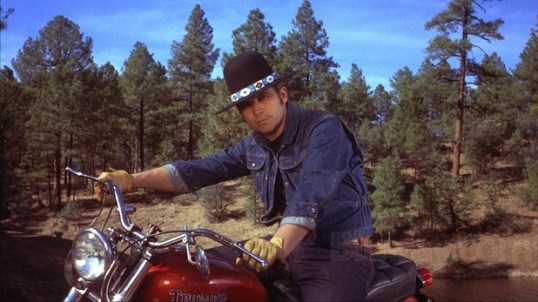
In honor of the day of his birth, here’s a scene that I love from 1971’s Billy Jack.  The townspeople think that they can get away with humiliating the students from the Freedom School.  Well, Billy Jack’s got something to say about that.

Who is Billy Jack?  He’s just a person who protects children and other living things.

4 Shots From 4 Films: Special Tom Laughlin Edition


4 Or More Shots From 4 Or More Films is just what it says it is, 4 shots from 4 of our favorite films. As opposed to the reviews and recaps that we usually post, 4 Shots From 4 Films lets the visuals do the talking!

Today, we pay tribute to the man who gave us Billy Jack.  It’s time for….

4 Shots From 4 Tom Laughlin Films

Born Losers (1967, dir by Tom Laughlin)

Billy Jack (1971, dir by Tom Laughlin)

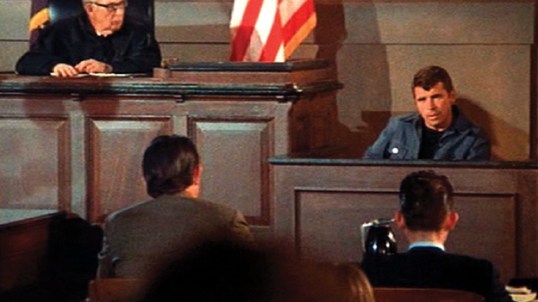
The Trial of Bully Jack (1974, dir by Tom Laughlin)

Billy Jack Goes To Washington (1977, dir by Tom Laughlin)

Monday Live Tweet Alert: Join Us for Animal Protector!


As some of our regular readers undoubtedly know, I am involved in hosting a few weekly live tweets on twitter and occasionally Mastodon.  I host #FridayNightFlix every Friday, I co-host #ScarySocial on Saturday, and I am one of the five hosts of Mastodon’s #MondayActionMovie!  Every week, we get together.  We watch a movie.  We snark our way through it.

Tonight, for #MondayActionMovie, the film will be 1989’s Animal Protector!

If you want to join this watch party, just hop onto Mastodon, pull up Animal Protector on YouTube, start the movie at 8 pm et, and use the #MondayActionMovie hashtag!

Enjoy!