Villain of the Day: Matthew Hopkins (Witchfinder General)


“Men sometimes have strange motives for the things they do.” — Matthew Hopkins

In the pantheon of folk horror, few antagonists are as unsettling as Matthew Hopkins, brought to life with chilling restraint by Vincent Price in Michael Reeves’s 1968 masterpiece, Witchfinder General. While Hopkins was a very real historical figure who terrorized 17th-century England, Price’s portrayal reimagines him not as a raving religious zealot, but as a shockingly mundane monster. He navigates the war-torn countryside with a terrifying blend of sleaze and sophistication. It is precisely this departure from the supernatural madman archetype—replacing it with a grounded, opportunistic con artist—that makes Price’s Hopkins such a uniquely repellent figure. He is a villain who doesn’t haunt your dreams with dark magic, but rather with the cold, calculated reality of systemic corruption.

The “urbane” quality of Price’s Hopkins is his most disarming weapon. Dressed immaculately and speaking with a measured, aristocratic cadence, he brings a veneer of courtly civility to the muddy, blood-soaked villages he targets. He does not shout or rave about the devil; instead, he politely asks for lodging, drinks wine, and discusses his gruesome work with the detached professionalism of a bureaucrat. This refinement creates a jarring cognitive dissonance for the audience. Hopkins isn’t some wild-eyed backwoods fanatic; he is an educated, well-groomed gentleman, which makes his descent into barbarism feel all the more invasive. His urbane nature acts as a mask, legitimizing his presence in the homes of both the gentry and the peasantry, allowing him to get close to his victims before the trap springs shut.

Yet, beneath this polished exterior lies a profound and inescapable sleaziness. Price imbues Hopkins with a predatory, voyeuristic gaze that transforms his legal authority into a tool for personal gratification. This is most evident in his interactions with Sara Lowes, where his polite requests quickly curdle into thinly veiled threats of sexual coercion. He uses his position to isolate vulnerable women, leveraging their fear of torture and death to extract sexual favors under the guise of “interrogation.” Furthermore, his method of operation—finding a woman accused of witchcraft, accepting bribes from her terrified relatives to spare her, and then executing her anyway to collect the standard fee from the local magistrate—is the epitome of sleazy grifting. He is a lecher and an extortionist hiding behind the cloak of the law.

What truly cements Hopkins’ status as a villain, however, is his complete lack of genuine belief in the very witchcraft he prosecutes. Unlike so many cinematic inquisitors driven mad by religious fervor or a sincere desire to purge evil, Hopkins is a pure opportunist. He views the mass hysteria of the era merely as an untapped market. Witchfinding is not a holy crusade for him; it is a lucrative business model. He carries a manual that dictates exactly how much he can charge per town, treating human life as a commodity to be tallied in a ledger. By stripping away any ideological justification for his actions, Reeves and Price reveal a far more terrifying truth: the greatest evils are often committed not by true believers, but by cynical men who exploit the beliefs of others for power and profit.

In a profoundly unsettling way, Hopkins’ brand of opportunistic parasitism has not been consigned to the history books; if anything, characters exactly like him are even more prevalent in today’s society. We are surrounded by modern-day “witchfinders”—sleazy yet urbane grifters, pundits, and political operatives who latch onto powerful men and disruptive ideologies like parasites. They feed on societal fears, anxieties, and moral panics, weaponizing the culture wars not because they genuinely care about the causes they champion, but to further their own agendas, sell books, and secure lucrative media contracts. Just as Hopkins peddled false accusations of Satanism to line his pockets amid the chaos of the English Civil War, today’s opportunists monetize outrage and exploit divisions for clout and capital. Vincent Price’s brilliant, restrained performance endures because it holds up a dark, timeless mirror to human nature, reminding us that the most dangerous monsters are rarely the true believers, but rather the charming, well-dressed opportunists profiting off the fears of everyone else.

Villain of the Day

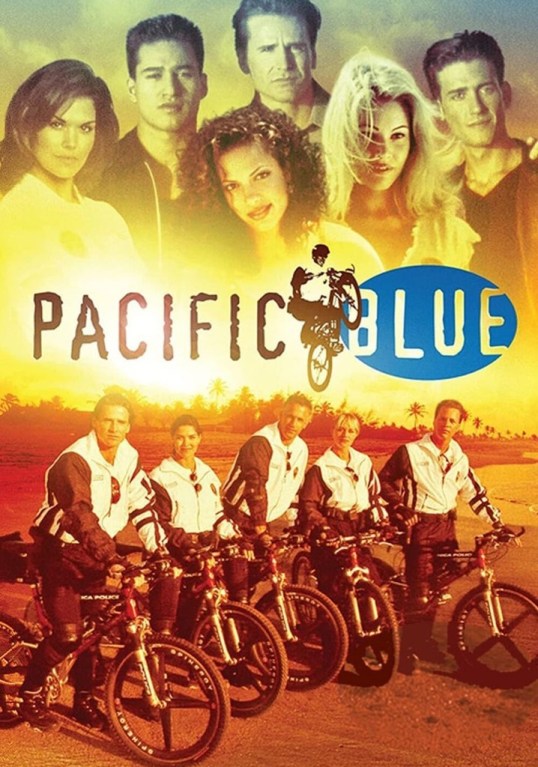
Late Night Retro Television Review: Pacific Blue 4.13 “Saving Serenity”


Welcome to Late Night Retro Television Reviews, a feature where we review some of our favorite and least favorite shows of the past! On Tuesdays, I will be reviewing Pacific Blue, a cop show that aired from 1996 to 2000 on the USA Network!  It’s currently streaming everywhere, though I’m watching it on Tubi.

This week, Del Toro returns!

Episode 4.13 “Saving Serenity”

(Dir by Michael Levine, originally aired on January 10th, 1999)

When last we saw former series regular Victor Del Toro (played by Marcos A. Ferraez), he was quitting the force after nearly being indicted for killing the man who killed his fiancée.  In this episode, Victor finally returns to Santa Monica.

Victor has spent the last five months wandering.  He now has bleached blonde hair and a serious drinking problem.  When a robber attempts to hold up the bar where Victor is getting drunk, Victor struggles with him.  The thief ends up getting shot.  Victor grabs the thief’s gun and runs from the bar.

Victor is on the verge of shooting himself on the pier when he sees a woman named Carmen Rios (Angela Alvarado).  Carmen reveals that she’s searching for her daughter, Serenity.  Serenity was taken away by her biological father.  Carmen wants to find her daughter and escape to Mexico with her.  Victor agrees to help.

Victor shows up at the Pacific Blue headquarters and announces that he wants to rejoin the force.  But, in reality, he just wants to steal the files concerning Serenity’s whereabouts.  Later, Victor fakes a bomb threat at the main police station so that he can steal another casefile.  TC, Chris, and Cory all reuses to believe that Victor could be involved in anything illegal.  Bobby Cruz is convinced that Victor is the one who shot the robber at the bar.

And really, Bobby has reason to be concerned about Victor’s desire to return to Pacific Blue.  Victor is a young, handsome Latino who overcame a rough childhood to become a respected bike cop and he’s extremely protective of his younger sister.  Bobby, who was introduced after Victor left the show, is also a young, handsome Latino who overcame a rough childhood to become a respected bike cop and he’s also extremely protective of his younger sister.  Because the show’s writers were too lazy to actually come up with a new character, Bobby basically is Victor.  If Victor returns, the show won’t need Bobby around anymore.

Fortunately, for Bobby, Victor is dead by the end of this episode.  He reunites Carmen and Serenity and then drags Serenity’s father out to the pier.  Holding a gun to the father’s head, Victor forces the man to repeat the serenity prayer.  Cory, TC, and Chris all have their guns drawn.  “No!” they all shout in slow motion before opening fire.  Victor plunges off the pier and hits the sand below.

OH MY GOD, THEY KILLED VICTOR!

Well, it depends on how you look at it.  It turns out that none of them could actually bring themselves to shoot Victor.  They just shot up in the air.  And then Victor …. well, who knows?  The show implies that Victor jumped but, from what I saw, it looks like he was startled and fell backwards.  In other words, his friends may not have shot Victor but he might still be alive if they hadn’t fired.

Victor does indeed die at the end of this episode.  Wow, Pacific Blue got dark!  And I do have to admit that this is actually the best episode of Pacific Blue that I’ve watched so far.  Admittedly, it’s a low bar to clear but the whole episode was just so melodramatic and over-the-top that it actually managed to hold my attention in a way that this show usually doesn’t.  Those three slow motion shots of people shouting, “Noooooo!” in a row really were worth the price of admission.

So, Victor’s dead.  But at least Bobby’s place on the team is secure.

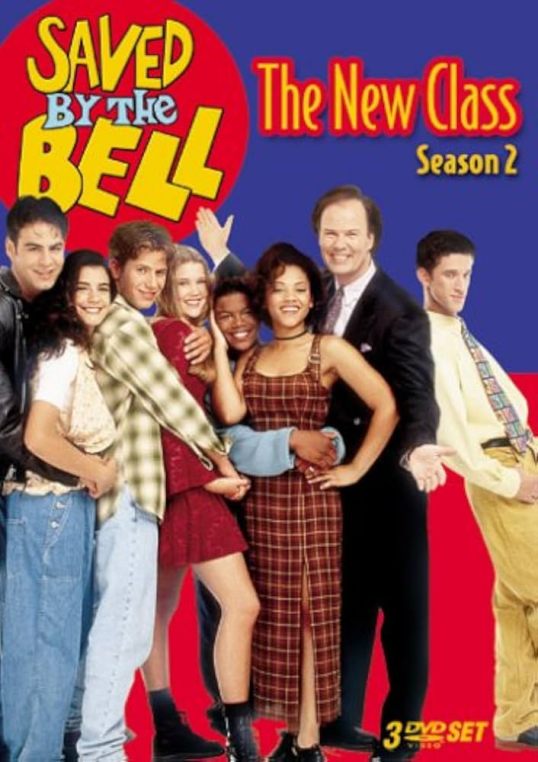
Retro Television Review: Saved By The Bell: The New Class 2.12 “Christmas In July”


Welcome to Retro Television Reviews, a feature where we review some of our favorite and least favorite shows of the past!  On Tuesdays, I will be reviewing Saved By The Bell: The New Class, which ran on NBC from 1993 to 2o00.  The show is currently on Prime.

This week, we’re back at that damn country club.

Episode 2.12 “Christmas In July”

(Dir by Don Barnhart, originally aired on October 15th, 1994)

The Palisades County Club is holding its annual Christmas in July celebration.  Along with the employees taking part in Secret Santa, a new Snow Queen will be named.  Again, this episode takes place in July.  There’s no snow on the ground.  The sun is bright.  It’s summer in California.  I can’t help but think that Santa costume that Belding is wearing is going to be getting awfully hot and smelly.  Even stranger, this episode aired in October.

Seriously, Saved By The Bell, why couldn’t you just be normal?

Screech is in a panic about Secret Santa.  After he learns that his girlfriend, Alison, has been given a new car by her father, club owner Big Ed (Frank Bonner), Screech wonders how his gift can possibly compete.  Hey, Screech?  Big Ed is her father.  You’re not supposed to compete with his gifts.  Anyway, Screech sells his never-bef0re-seen Scooter so that he can get Alison something expensive.  Meanwhile, Alison buys Screech a rinky-dink horn for his scooter.  Wow, Alison’s gift really sucked!  Alison’s driving a brand new car and she still couldn’t find Screech a gift that cost more than a dollar?  I guess their relationship must be all about the sex because it’s definitely not about love.

Meanwhile, Megan, Rachel, and Lindsay are competing to be Miss Snow Queen.  The winner gets a scholarship!  Megan is outraged when she discovers that there’s a swimsuit portion of the competition.  She demands that Rachel and Lindsay join her and quit in protest.  Rachel and Lindsay both say that they’re not quitting because they actually need the scholarship.  Megan, who has previously been established as coming from a wealthy family, decides to stay in the pageant so she can give a speech about sexism and keep the two poor girls from going to college.  Megan wins the pageant but she also apologizes for calling Rachel and Lindsay “bimbos” for not dropping out.  It’s good to see that performative activism did not go out of style after Jessie graduated.

This was a dumb episode.  The second season of Saved By The Bell: The New Class is a hundred times better than the first but the country club episodes still suck.

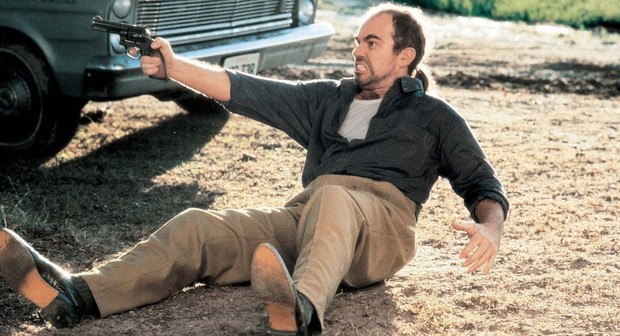
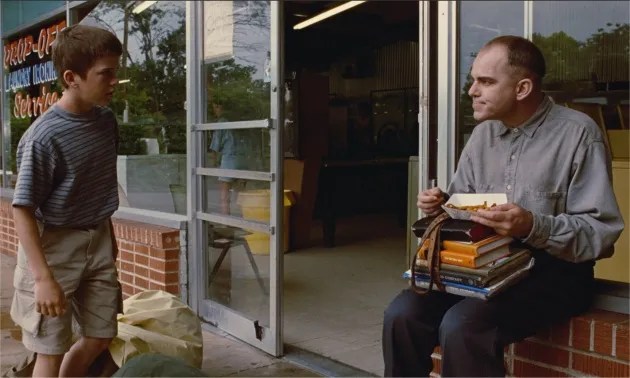
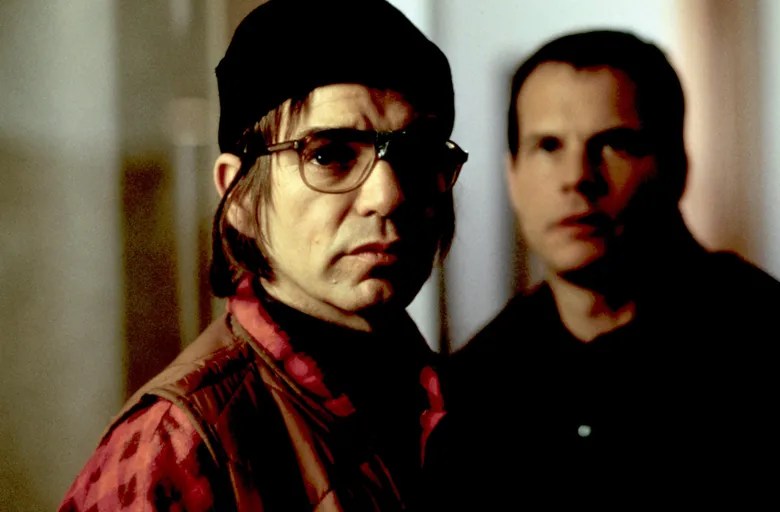
Brad’s “6 Shots from 6 Films” – featuring Billy Bob Thornton!


One of the greatest actors to come from the state of Arkansas was born in Hot Springs on August 4th, 1955. Sometimes called the “Hillbilly Olivier,” Billy Bob Thornton seems to be aging like fine wine!

Happy Birthday, Billy Bob. You’re the best!

One False Move (1991)
Sling Blade (1996)
A Simple Plan (1998)
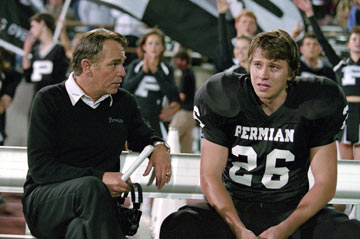
Friday Night Lights (2004)
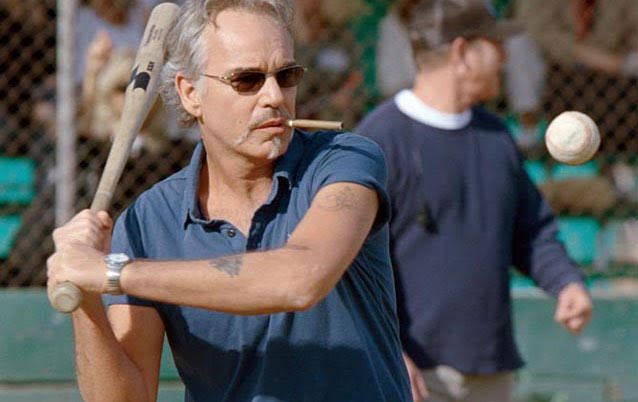
Bad News Bears (2005)
Landman (2024)

Song of the Day: Rip Her To Shreds by Blondie


She thinks she’s Brenda Starr/her nose job is real atomic….

I love this song.  It makes me regret that I was born to late to experience New York in the 70s.  “She’s do dull …. rip her to shreds,” is a favorite expression of mine, one that gets me strange looks from people who are not familiar with this song.

Oh well.  I can live with the looks!

Music Video of the Day: All I Want Is Everything by Def Leppard (1996, directed by Matt Mahurin)


This is actually one of Def Leppard’s better songs but it had the misfortune to be released in 1996, after the band’s 80s heyday. Visually, the music video has more in common with the melancholy video style of 90s grunge than with the energetic and upbeat videos that we typically associate with Def Leppard.

This video was directed by photographer Matt Mahurin. Mahurin started directing videos in 1986 and has worked with everyone from U2, Queensrÿche, Metallica, and Dreams So Real to Tracy Chapman, Tom Waits, R.E.M., and Alice In Chains.

Enjoy!