Welcome to Late Night Retro Television Reviews, a feature where we review some of our favorite and least favorite shows of the past! On Thursdays, I will be reviewing Hunter, which aired on NBC from 1984 to 1991. The entire show is currently streaming on Tubi and several other services!
This week, someone is killing criminals in Los Angeles and, for once, it’s not Rick Hunter!
Episode 1,15 “The Beach Boy”
(Dir by Richard Colla, originally aired on April 6th, 1985)
A Hawaiian drug lord is angered when five Los Angeles drug dealers decide to stop dealing his product. So, he sends his main assassin — Wes “Beach Boy” Kapano (Brett Clark) — to L.A. to kill all five of them. Hunter and McCall find themselves in the strange position of providing productive custody to the dealers while trying to stop Kapano.
This was a typical “chase-em-and-shoot-em” episode of Hunter. Dee Dee even managed to get shot for the second time this season. (And, once again, it didn’t seem to actually hurt her. “I’m fine!”) For the first season, at least, Hunter kept things simple. In between the flirtatious Hunter/McCall banter, there would be at least one car chase and three shootings.
What sets this episode apart is that Hunter and McCall are protecting drug dealers. While McCall makes it clear that she doesn’t actually care what happens to the dealers, Hunter’s feelings are a bit more ambivalent. He’s been chasing the dealers for so long that he’s developed a grudging affection for them. When one of them is killed while helping the police, Hunter’s actually upset about it.
The other thing that sets this episode apart was Brett Clark’s intimidating turn as the assassin. The Beach Boy, as he’s called, doesn’t waste too much time with conversations. He doesn’t brag about how clever he is or go to a lot of trouble trying to fool anyone. Instead, he just shows up and starts firing. He wears a bulletproof vest, as well. McCall shoots him twice and he barely flinches. He’s a scary dude!
That said, Hunter still manages to kill him. How many people have been killed by Rick Hunter so far? I’ve lost track. Most officers are suspended after a shooting so that the shooting board can rule whether or not it was justified. Hunter is always back on the streets within an hour of killing someone. Considering how quick he is with a gun, I probably wouldn’t want to tell him he was suspended either.
Much like Hunter and McCall, this episode was brutal and efficient.
Welcome to Retro Television Reviews, a feature where we review some of our favorite and least favorite shows of the past! This Thursdays, I will be reviewing America 2100, which aired its only episode on ABC in 1979. The show can be found on YouTube!
Episode 1.1 “Pilot”
(Directed by Joel Zwick, originally aired on July 24th, 1979)
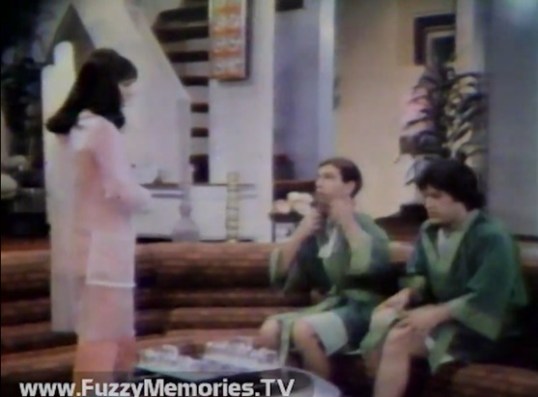
In 1979, it appears that the comedy team of Chester Barnes (Jon Cutler) and Phil Kreese (Mark King) are on the verge of breaking up. Tired of not finding success and struggling to pay the bills, Chester is thinking of moving home and working for his uncle’s refrigeration company. Phil begs Chester to reconsider. Chester finally agrees to sleep on it. To help him sleep, Phil suggests warm milk and sleeping pills. Chester and Phil go to bed in their small apartment….
….and wake up in 2100!
As the cheery Dr. Karen Harland (Karen Valentine) explains, Chester and Phil died in 1979 but, through the use of science, they’ve been brought back to life! What is 2100 like?
It’s a lot like the 70s, just a little bit tackier.
The Future!
At first, Chester and Phil claim that there were the leaders of America in 1979. When Karen says that the mysterious Max takes a dim view of lying, Chester and Phil admit that they were two unemployed losers. When they ask who Max is, Karen explains that Max is in charge and that everyone has to do what Max is.
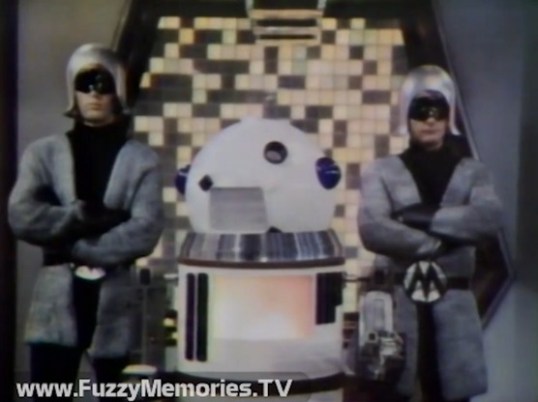
Max is a robot, though it’s not a good idea to call him that. He prefers to be called a — wait for it — “computer.” Max speaks with the voice of Sid Caesar. Every child is brought before Max and told what they’re going to do with the rest of your life. “You’ll be a microbiologist,” Max says to one child. “You’ll be a female impersonator,” he says to another. Eventually, Chester and Phil are brought before Max.
“You two will be museum exhibits,” Max says.
Chester and Phil are not happy about that. They want to be in show business! Back at their apartment, they explain to Karen that she’s living a life where there is no freedom and, without free will, life is meaningless. Karen admits that she secretly wants to be a tap dancer. She then shows off a few of her tap dancing moves and the audiences goes wild and the end credits roll.
Wow, I wonder what type of wacky adventures Chest and Phil had in the future!?
Well, they didn’t have any adventures. This pilot aired once and it didn’t lead to a series. Watching the pilot, I could see why the show didn’t work. The two leads were miscast and they both played their roles very broadly. When you’ve already got Sid Caesar providing the voice of a rolling computer, you really don’t need anyone else in the cast to go overboard. It also didn’t help that Chester and Phil seemed to be pretty much interchangeable as characters. The only thing that really distinguished one from the other was that Chester was the one with dark hair.
That said, I am a big believer in personal freedom and I appreciated that this show attempted to make the case for allowing people to be creative and to even screw up occasionally. An America where everyone compliantly takes orders from a computer may have seemed unbelievable in 1979 but it’s a bit more plausible in 2026. Max is basically a less cranky version of Bernie Sanders so it was fun to see someone tell him off, even if it was just Chester and Phil.
“All I have in this world is my balls and my word.” — Tony Montana
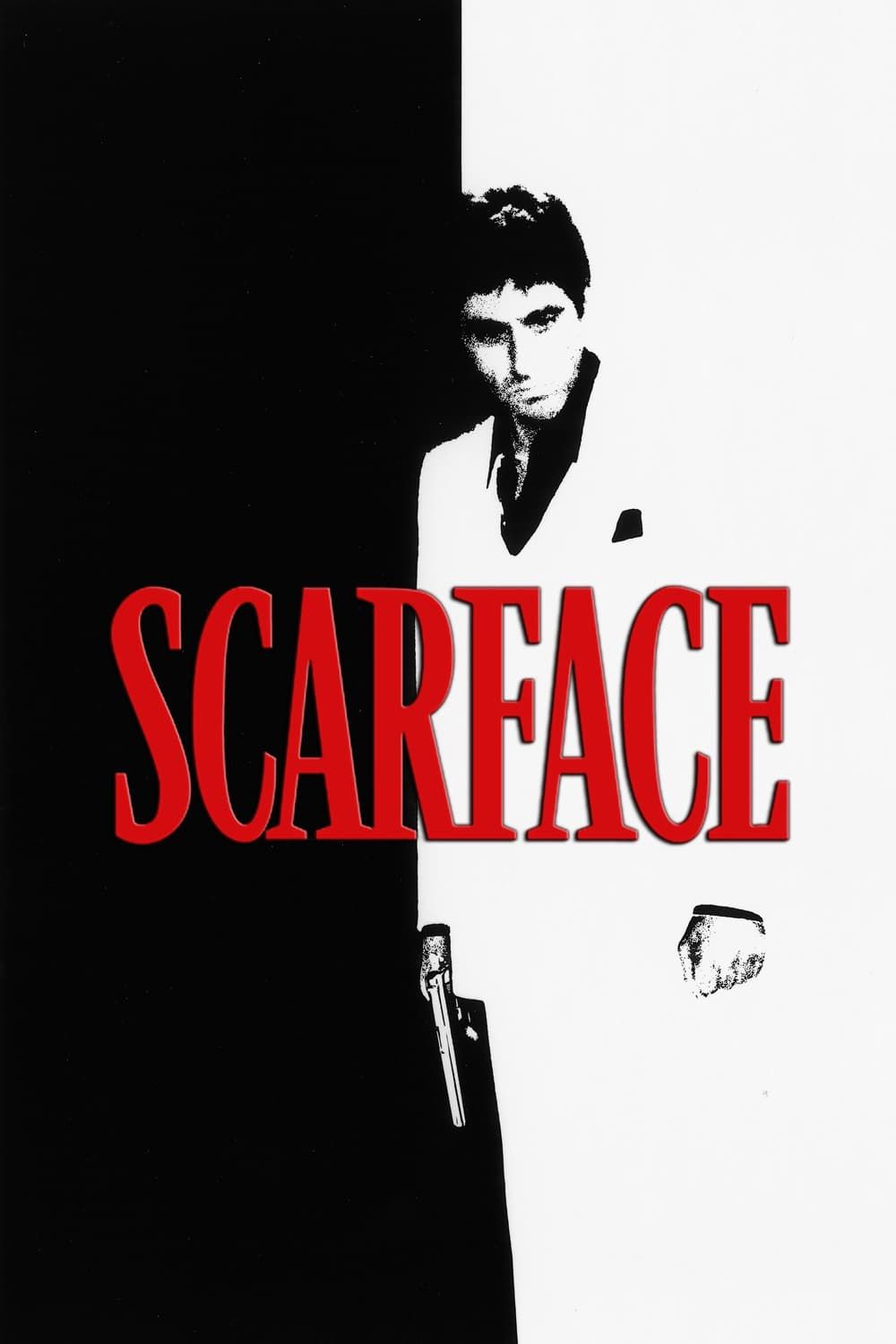
Brian De Palma’s Scarface is one of those movies that seems almost impossible to discuss at a normal volume. Everything about it is loud, excessive, sweaty, violent, vulgar, and deliberately too much. The movie does not simply tell the story of Tony Montana, a Cuban immigrant who rises through Miami’s cocaine trade before destroying himself. It turns that rise and fall into a neon-lit, operatic explosion of greed, paranoia, sex, money, and violence. At first, Scarface can feel like an overlong, incredibly entertaining gangster fantasy. But underneath all the cocaine mountains and machine guns, it is also a deeply cynical story about the American dream and what happens when ambition is allowed to become a substitute for an actual soul.
Tony arrives in Miami during the Mariel boatlift, immediately presenting himself as someone who refuses to be intimidated. He is not interested in being grateful, polite, or patient. Tony wants power, and he wants it quickly. That impatience is both his greatest strength and the obvious source of his downfall. He is willing to do things that other people are too afraid to do, which helps him climb the criminal ladder. At the same time, he cannot understand the idea of limits. Every success only makes him want something bigger: more money, more cocaine, more influence, a bigger house, a more beautiful wife, and absolute control over everyone around him.
The screenplay by Oliver Stone gives Tony a kind of blunt, almost cartoonishly direct philosophy. He believes that the world belongs to people who take it. In Tony’s mind, morality is mostly an excuse invented by people who lack the courage to seize what they want. That attitude makes him magnetic, but the film never truly presents his worldview as admirable. Tony may have the confidence of a king, but he behaves more like a man who is constantly terrified that someone will discover he is not really in control. His bravado is a shield against humiliation, poverty, and powerlessness. The more successful he becomes, the more obvious it is that he is still fighting the same emotional battle he was fighting when he first arrived.
Al Pacino’s performance is the central reason Scarface remains so watchable. He plays Tony as a human grenade, a character who seems to be vibrating with anger even when he is sitting still. The accent, the posture, the rapid shifts in mood, and the exaggerated physical gestures could easily have turned Tony into a parody. In fact, there are moments when Pacino absolutely does push the character into parody. Yet that is also part of the performance’s strange power. Tony is a man who has constructed himself as a larger-than-life personality, so Pacino makes him seem like someone performing Tony Montana even while he is alone.
Pacino understands that Tony’s violence is not simply about cruelty. It is about insecurity, pride, and the panic of losing status. Tony cannot tolerate being laughed at, challenged, ignored, or treated as inferior. A casual insult can become a life-or-death confrontation because he experiences disrespect as an existential threat. Pacino makes those reactions frightening, but he also gives them a pathetic quality. Tony is powerful enough to terrify an entire room, yet emotionally he often behaves like a wounded child demanding recognition.
That contradiction is what keeps the performance from becoming empty scenery chewing. Tony is ridiculous, but he is also tragic. He is disgusting, but he has flashes of genuine feeling, especially in his relationship with his sister Gina. Unfortunately, even his love for her becomes possessive and destructive. Tony wants to protect Gina, but he also wants to own her choices, her sexuality, and her future. He cannot separate love from control. The same problem affects his relationship with Elvira, played by Michelle Pfeiffer, and eventually his entire empire. Tony does not know how to care for people without turning them into extensions of himself.
De Palma’s direction matches Tony’s personality. The film is staged like a gangster epic filtered through a fever dream. Miami becomes a place of bright colors, glass surfaces, giant mansions, tropical heat, and constant artificial light. The city feels less like a real environment than a hallucination of wealth. Tony’s home is especially important because it looks like a monument to success but gradually becomes a prison. The famous final shootout transforms that mansion into a battlefield, with Tony defending his kingdom even after it has already collapsed around him.
The violence in Scarface is often shocking, but it is also theatrical. De Palma uses suspense, wide compositions, sudden bursts of brutality, and moments of grotesque visual humor to make the violence feel both horrifying and unreal. The movie’s excess can be exhausting, particularly in the middle section, where Tony’s rise begins to blur into an endless parade of deals, parties, arguments, and drug use. The length is part of the point: we are meant to feel Tony’s world becoming bloated and unstable. Still, some of the film’s scenes repeat ideas that it has already established. Tony is ambitious, Tony is paranoid, Tony is violent, and eventually Tony is high. The movie sometimes keeps shouting after the audience has already heard it.
That criticism matters because Scarface is not a flawless film. Its dialogue can be clumsy, its supporting characters are sometimes more functional than fully developed, and its treatment of women is frequently limited by Tony’s perspective. The film wants to condemn male domination and criminal capitalism, but it is also fascinated by the same things it condemns. It shows us the luxury, the clothes, the cars, the glamorous parties, and the apparent freedom of Tony’s lifestyle. Even while warning that this life ends in misery, it makes the fantasy visually seductive.
That tension helps explain the movie’s complicated legacy. When Scarface was first released in 1983, many critics found it excessive, ugly, and morally confused. Over time, however, its reach expanded dramatically through home video and popular culture. The movie became especially important to hip-hop, where artists recognized Tony’s language of survival, hustle, ambition, and self-invention. Al Pacino has credited hip-hop with helping the film find its audience, saying that rappers understood and embraced it. That relationship became one of the most important parts of Scarface’s afterlife.
Hip-hop did not simply treat Tony as a cool gangster. It also turned him into a symbol. The character could represent ruthless ambition, immigrant struggle, street credibility, material success, or the danger of becoming trapped by one’s own myth. Lines from the movie entered rap lyrics, album skits, music videos, and stage names. The film’s imagery became a shorthand for a certain kind of rise-from-nothing fantasy, even when the original movie was trying to show how poisonous that fantasy could be. In this sense, Scarface became bigger than its initial critical reputation. It stopped being only a crime film and became a cultural text that people could quote, remix, parody, and reinterpret.
Its influence on video games is just as obvious, especially in Grand Theft Auto: Vice City. That game’s 1980s Miami setting, neon colors, criminal empire structure, radio culture, and flamboyant protagonist clearly operate in the same general territory as Scarface. The film has also been connected directly to other games, including Scarface: The World Is Yours, which imagines an alternate continuation after the movie’s ending. The game allows players to rebuild Tony’s empire, purchase businesses, intimidate rivals, and expand across Miami. It turns the movie’s rise-and-fall structure into an interactive fantasy in which the player gets to ignore the ending and keep climbing.
That difference between film and game is revealing. Scarface ultimately insists that Tony’s dream cannot survive because Tony himself is incapable of moderation, trust, or self-knowledge. Video games can take the same world and make the player feel rewarded for doing exactly what Tony does: acquiring territory, collecting money, buying weapons, and becoming more powerful. In that format, the critique of excess can easily become a celebration of excess. Yet that is also why the film remains so influential to games. It provides an instantly understandable fantasy of criminal ascent, complete with a distinctive visual style and a protagonist whose personality is impossible to ignore.
In the end, Scarface is both a warning and a temptation. It tells us that Tony Montana is doomed, but it makes his climb so entertaining that we understand why generations of viewers, rappers, and game designers kept returning to him. Al Pacino’s performance is the movie’s beating heart: outrageous, funny, frightening, and occasionally heartbreaking. De Palma’s film may be messy and overstuffed, but its messiness is part of its identity. Scarface does not want to be tasteful or balanced. It wants to overwhelm you, seduce you, and then leave you staring at the wreckage of a man who mistook having everything for being somebody.
Hi, everyone! Tonight, on Mastodon, I will be hosting the #TubiThursday watch party! Join us for a true classic, Dirty Dancing!
You can find the movie on Tubi and you can join us on Mastodon at 9 pm central time! (That’s 10 pm for you folks on the East Coast.) We will be using #TubiThursday hashtag! See you then!
Today’s song of the day comes from David Bowie and it’s about Bowie’s fascination with Andy Warhol. Warhol himself apparently didn’t care for this song but Bowie meant it as a tribute.
This song came out in 1971. 25 years later, Bowie would play Andy Warhol in Basquiat.
The great Robert Mitchum was born, on this date, 108 years ago. Today’s scene that I love comes from one of my favorite Mitchum films, the classic 1947 noir Out of the Past.
In this scene, we are reminded that no one was cooler than Robert Mitchum. And no one threw a better punch.
4 Or More Shots From 4 Or More Films is just what it says it is, 4 shots from 4 of our favorite films. As opposed to the reviews and recaps that we usually post, 4 Shots From 4 Films lets the visuals do the talking!
On this date, 98 years ago, Andy Warhol was born. Today, we mark this occasion with….
4 Shots From 4 Andy Warhol Films
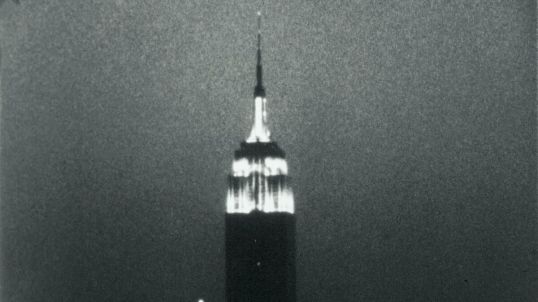
Empire (1965, dir by Andy Warhol)
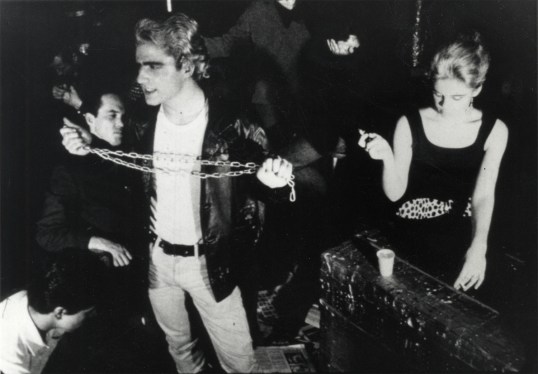
Vinyl (1965, dir by Andy Warhol)
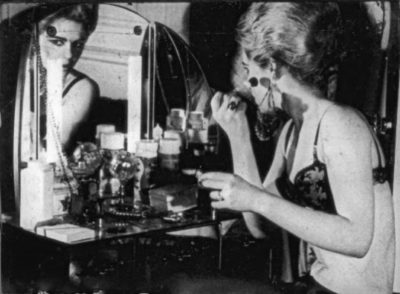
Poor Little Rich Girl (1965, dir by Andy Warhol)
Chelsea Girls (1966, dir by Andy Warhol and Paul Morrissey)
Midnight Mover is the Accept song that wasn’t Balls to the Wall. I actually prefer Midnight Mover to Balls to the Wall as both a song and video but Midnight Mover was never featured on Beavis and Butt-Head and is lesser known as a result.
The song is about a drug dealer, one who moves his product at midnight. The video is mostly interesting as an early example of the “bullet time” technology that would later be made famous by The Matrix. Accept did it first!
The director also did videos for Pet Shop Boys, Replacements, Mick Jagger, Rush, and the Fat Boys, amongst others.