Lisa Marie’s Week In Television: 6/7/26 — 6/13/26


Election Coverage

I was hoping that the Democrats of Maine would show a little decency and reject Graham Platner but it didn’t happen.  Two years from now, everyone will claim they were against Platner from the start.

George Gently (YouTube)

George Gently and Inspector Bachus investigated a murder in 1968.  The killer turned out to be a smug child.  It was a pretty depressing episode.

Kyōryū Sentai Zyuranger (Shout TV)

Jeff and I watched three more episodes of this Japanese series on Saturday morning.  The space witch is still trying to conquer the planet.  Fortunately, there’s always a giant robot around to stop her.

The Larry Sanders Show (HBOMax)

Jeff and I watched a handful of episodes of this old 90s show over the week.  Garry Shandling played a neurotic talk show host.  Rip Torn was his producer.  Jeffrey Tambor was the sidekick and Bob Odenkirk was the agent.  The show made me laugh a lot more than I expected I would.  Rip Torn could make any line funny.  One scene, with Jeffrey Tambor singing Spinning Wheel, will stay in my memory forever.

Mike Judge’s Beavis and Butthead (Paramount Plus)

I finally watched season 3 this week.  I’m amazed that Beavis and Butthead are still alive.  Tom Anderson’s War Stories are so wholesome.

Night Flight (NightFlight+)

On Friday, we watched an episode about how bands were using animation in their music videos.  The episode was from the early 80s so the animation really wasn’t that impressive.

The Simpsons (Disney+)

After watching Glengarry Glen Ross on Friday, I watched an episode featuring Old Gil  (who was clearly based on Jack Lemmon) overstaying his welcome at the Simpsons home.  “Eggs a la Harold Stassen …. because they’re always running!”

Twisted Yoga (Apple TV+)

This was yet another docuseries about a cult.  This ran into the same problem that a lot of cult documentaries run into.  It’s hard to have much sympathy for anyone stupid enough to get brainwashed in the first place.

Unlocked: A Jail Experiment (Netflix)

On Sunday and Monday, I watched the second season of this reality show about what happens when prisoners are allowed more freedom than usual.  Prisoners just aren’t that interesting.  There’s only so many times you can listen to someone say, “Treat me like a man,” before you get bored with it.
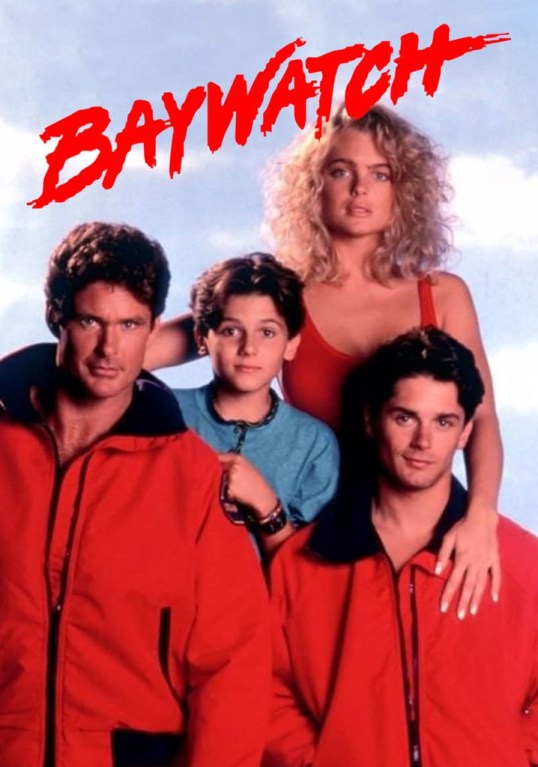
Retro Television Review: Baywatch 2.7 “Sandcastles”


Welcome to Retro Television Reviews, a feature where we review some of our favorite and least favorite shows of the past!  On Saturdays, I will be reviewing Baywatch, which ran on NBC and then in syndication from 1989 to 2001.  The entire show can be viewed on Tubi.

This week, it’s Eddie vs Hector the Collector!

Episode 2.7 “Sandcastles”

(Dir by Monte Markham, originally aired on October 28th, 1991)

Eddie is freaking out because there’s too many homeless people on the beach. As he explains it to Shauni, he’s always feared that he could end up homeless. When Shauni suggests that maybe the homeless could live on a deserted army base, Eddie says that people like that are never willing to accept help. Eddie is really not a fan of the homeless!

Of course, in Eddie’s defense, he does get stabbed in the shoulder by a homeless man at the start of this episode. Hector the Collector (Ron Howard George) not only breaks into Eddie’s lifeguard tower but he also tries to steal a framed photograph of Shauni. When Eddie tries to stop him, Hector plunges a shard of glass into Eddie’s shoulder!

Hobie, meanwhile, is having a far better experience with the homeless. He meets Charlie (played by a young Nikki Cox), who is living in an abandoned power plant with her mother (Wendy Robie, who played the one-eyed Nadine on Twin Peaks). When Charlie’s mother disappears, Hobie helps Charlie look for her. When Hector the Collector steals Charlie’s journal, the entire Baywatch crew is there to help her get it back. Fortunately, Mitch is also there to save Charlie when she gets shoved into the ocean by Hector.

WOW! What is Hector’s problem!?

“Mine! Mine!” Hector hisses whenever anyone tries to take back any of the stuff that he’s stolen.

Calm down, Hector!

Meanwhile, Harvey needs a new place to live. Harvey? Oh yeah, he’s the new goofy lifeguard. He can’t sleep in his tower. He can’t live with Mitch. However, Harvey finds a big house with a pool and immediately imagines hundreds of swimsuit-clad women beckoning him to swim with him. This episode has two musical montages, one involving the homeless and one involving Harvey and a bunch of imaginary women. I’m getting the feeling that Baywatch really wasn’t that concerned with the problem of homelessness in Los Angeles.

Baywatch was (and, since it’s been revived for the upcoming television season, is) a very odd show. This episode deals with a very real social problem and David Hasselhoff is so earnest in the scenes that he shares with Nikki Cox that you can’t help but feel that maybe the Hoff’s heart was in the right place. But the show itself always seems more concerned with getting to the next beach shot. Watching this episode, you can hear the producers whispering, “Don’t worry, we’re not going to spend too much time with these homeless people….”

Anyway, the important thing is that everything works out for the best. Harvey moves in with some flight attendants. Charlie is reunited with her mother. And Hector the Collector gets the help he needs. Don’t you worry, Baywatch will be always there.

Song of the Day: Title Music From A Clockwork Orange by Wendy Carlos


Seeing as how today is Malcolm McDowell’s birthday, it only seems right that today’s song of the day should be one that was used in his best-known film.

The Title Music For A Clockwork Orange was, of course, adapted from Music For The Funeral of Queen Mary, composed by Henry Purcell.


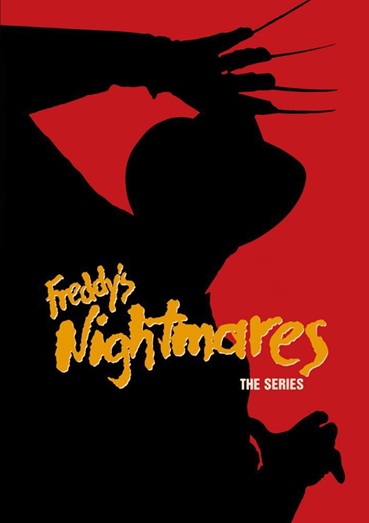
Late Night Retro Television Review: Freddy’s Nightmares 2.16 “Interior Loft”


Welcome to Late Night Retro Television Reviews, a feature where we review some of our favorite and least favorite shows of the past! On Fridays, I will be reviewing Freddy’s Nightmares, a horror anthology show which ran in syndication from 1988 to 1990. The entire series can be found on Tubi!

This week, a husband and a wife live in a loft and obsess on sex and death.

Episode 2.16 “Interior Loft”

(Dir by Ken Wiederhorn, originally aired on January 28th, 1990)

Kim Lewis (Elizabeth Keifer) has quit her job so that she can work on her novel.  Her husband, David (Kip Gilman), is a lazy grad student who doesn’t bring in much money to the household.  David suggests that Kim could record a message for a sex line.  Kim agrees but, when a serial killer becomes obsessed with the message, she finds herself being stalked.  Fortunately, the killer dies before he can harm Kim.  But Kim is so traumatized and mentally shaken by her stalker’s bloody death that David comes to worry that she might be plotting to become a killer herself.  And, of course, she is.

There was nothing supernatural about this episode, other than Freddy popping up for the host segments.  Apparently, even in his Hellish afterlife, Freddy tries to keep up with all the latest novels.  This episode was instead an attempt at neo-noir and director Ken Weiderhorn manages to create an appropriately ominous atmosphere.  Elizabeth Keifer gives a strong performance as Kim so it’s unfortunate that the rest of the cast isn’t as memorable.  This was not a bad episode but it was hard not to feel that it could have been even better.

In the end, I appreciated the fact that this episode actually did have something on its mind.  David fears that Kim is a potential killer because of the book that she writes.  That’s something to which any creative person in the horror field can relate.  Audiences often seem to assume that a morbid imagination is linked to a morbid personality whereas the opposite is often the case.  I’ve been lucky enough to meet a few horror people.  They’re nice!

Brad reviews the Native American thriller MEKKO (2015)!


I recently had the opportunity to participate in an interview with the Native American author Sherman Alexie. We were discussing some of our favorite films, and he threw out MEKKO (2015) as a movie he really liked. I was surprised because it’s a movie I had never heard of, and I consider myself in the know when it comes to all things movie related. I checked and it’s streaming on Tubi, so I decided I would check it out for myself.

The story follows Mekko (Rod Rondeaux), a Native American who heads to Tulsa after serving nineteen years in prison for killing his cousin in an alcohol-fueled fight. When what’s left of his family turns their backs on him, Mekko finds himself living on the city’s streets with many other Indians. While he finds a few friends, he also comes across the predatory and murderous Bill (Zahn McClarnon). When Bill turns his focus Mekko’s way, he decides to take things into his own hands.

I’ll just say right off the bat that I think that the best thing about the film is the incredible performance by Rod Rondeaux in the title role. He doesn’t have a lot of credits to his name, but he’s absolutely perfect here. It doesn’t even feel like he’s acting. His face seems to carry a lifetime of regret, but also a hope that his hard-earned wisdom will eventually mean something positive for him and the people he cares about. Rondeaux plays Mekko with a dignity that feels completely out of place with the world he now finds himself in. It’s a masterful performance that would net him the Best Actor award at the American Indian Movie Award ceremony for 2015. 

MEKKO was written and directed by Sterlin Harjo, who also created the series RESERVATION DOGS for FX that ran from 2021-2023. A citizen of the Seminole Nation of Oklahoma, Harjo presents us with a grungy, realistic film that’s also full of old tribal stories and myths. One of the main reasons that Mekko decides that he must take care of the murderer Bill himself is due to his grandma’s stories about evil spirits and witches that sometime insert themselves into people’s lives. Harjo’s film treats these beliefs at face value, and based on what we’ve seen, it’s hard to argue with him. 

I’ve been to Tulsa on a few occasions to watch the PGA Championship at the Southern Hills Golf Course. I’ve never seen the Tulsa that’s presented here. This Tulsa is dirty and extremely dangerous. Harjo used real locations and a lot of regular people from the local Native community, and that certainly adds to the authenticity of the story. As Mekko visits the homeless camps and soup kitchens, it just feels real. When Mekko takes on Bill (a truly frightening performance by Zahn McClarnon), it’s both a physical and spiritual reckoning that seems completely necessary. 

MEKKO is definitely a slow burner of a film that’s rough around the edges, but it’s also an undeniably powerful film. It feels honest in a way that most movies don’t. It’s about a wounded, decent person who’s trying to live a better life, and I haven’t stopped thinking about it for days.

Retro Television Review: St. Elsewhere 3.23 “Bang The Eardrum Slowly”


Welcome to Retro Television Reviews, a feature where we review some of our favorite and least favorite shows of the past! On Fridays, I will be reviewing St. Elsewhere, a medical show which ran on NBC from 1982 to 1988.  The show can be found on Daily Motion.

This week, everyone’s thinking about death.

Episode 3.23 “Bang the Eardrum Slowly”

(Dir by David Anspaugh, originally aired on March 20th, 1985)

Every by the standards of St. Elsewhere, this was a depressing episode.

Auschlander buys his morning newspaper and discovers that his old friend Dr. Wyler was murdered by revolutionaries in Africa. The terminally ill Auschlander finds himself thinking about his own death and how he’ll be remembered. Will he also only rate a small mention in the local newspaper? Will anyone care or will they just shrug off his death and go on with their lives? The only thing that kept this storyline from being unbearably depressing was the knowledge that, in real life, Norman Lloyd would live to be 106.

Elliot has been entrusted with Mrs. Hufnagle’s ashes. He spends most of the episode carrying them around in a cigarette box and thinking about how someone’s entire life can be reduced to just a small amount of ashes. After an unpleasant meeting with Hufnagle’s estranged son (Boyd Bodwell), Elliot and Fiscus spread Hufnagle’s ashes at sea. Alone amongst the doctors at St. Eligius, Elliot feels bad that Hufnagle checked into the hospital and died due to her doctors and nurses getting tired of dealing with her. Elliot has a point. Hufnagle’s son really should be suing the Hell out of that place.

Westphall …. oh Hell, you already know that Westphall spent this episode depressed. Westphall is depressed in every episode. He’s perhaps the most glum character that I’ve ever come across. Even when something good happens, Westphall finds an excuse to get upset about it. This week, he’s depressed that he’s moving out of his house. He’s also depressed that his son Tommy would rather watch cartoons than talk to him. Seriously, Westphall can be difficult to deal with. I’ve been in a bit of melancholy mood myself and watching Westphall does not help.

Dr, Craig is not so much depressed as he’s annoyed by the news that his son, Stephen, is engaged. Craig has never forgiven Stephen for getting hooked on drugs and dropping out of medical school. Ellen says that, as Stephen’s parents, they have to be supportive and happy for him. Good luck convincing your husband of that, Ellen.

Finally, Luther is deafened by a boiler room explosion. His hearing eventually returns but Luther finds himself haunted by how close he came to dying. I would be haunted by the idea of getting seriously injured at a hospital that appears to be as much of a death trap as St. Eligius.

What a dark episode! This was a difficult one for me to get through, though that’s not necessarily a criticism. It’s just an acknowledgement of the fact that St. Elsewhere didn’t hesitate or offer false hope when it came to issues of mortality. Next week, season 3 comes to a close. Let’s hope for the best!

Song of the Day: Superman March by John Williams


Since today is Superman Day, it only makes sense that today’s song of the day should John Williams’s rousing Superman March from 1978’s Superman.  In this video from 2023, John Williams conducts the Saito Kinen Orchestra.

Late Night Retro Television Review: Hunter 1.8 “Dead or Alive”


Welcome to Late Night Retro Television Reviews, a feature where we review some of our favorite and least favorite shows of the past!  On Thursdays, I will be reviewing Hunter, which aired on NBC from 1984 to 1991.  The entire show is currently streaming on Tubi and several other services!

This week, there’s somebody else shooting criminals in L.A.

Episode 1.8 “Dead or Alive”

(Dir by Guy Magar, originally aired on November 30th, 1984)

Jimmy Joe Walker (Wings Hauser) is a cowboy bounty hunter who wears black and carries a wide array of weapons. He hunts for criminals who are wanted “dead or alive.” He specializes in brining them in dead because …. well, he just like shooting people. Hunter and McCall try to capture the escaped bank robber Panhandle Pete (Jimmie F. Skaggs) before Jimmy Joe puts a bullet in him.

This was a pretty average episode of Hunter, one that was mostly distinguished by the cheerfully unhinged presence of Wings Hauser. With his Southern accent and his country clothes, Hauser largely gives the same performance here that he gave in Vice Squad. The only difference is that he’s playing a bounty hunter and not a pimp here. He still finds time to beat up McCall. I can’t help but notice that McCall is constantly getting either shot or punched on this show. I think the idea is to show that McCall is just as tough as Hunter and I do like the fact that, no matter how serve the injuries, McCall never stops fighting back. That said, it would be nice to see someone else get a black eye for once.

(This is also yet another episode that finds McCall working undercover as a prostitute. She spends the first half of the episode wearing a blue top with feathers attached to the sleeves. I kept expecting someone to mention the feathers but not even Wings Hauser said a word about them. You would expect Wings to be all over that.)

The plot of this one felt a bit silly. A bank robber named Panhandle Pete? Really? I get the feeling that this episode was done in order to protect the show from charges that it glorified the idea of gunning down criminals. We’re supposed to look at Hunter and Jimmy Joe and say, “Hunter shoots a lot of people but at least he doesn’t laugh about it.” This was Hunter’s version of Magnum Force.

Again, this was an average episode but it’s worth watching just for Wings Hauser.

Retro Television Review: Decoy 1.34 “Shadow of Van Gogh”


Welcome to Retro Television Reviews, a feature where we review some of our favorite and least favorite shows of the past!  On Thursdays, I will be reviewing Decoy, which aired in Syndication in 1957 and 1958.  The show can be viewed on Tubi!

This week, Casey investigates a case of art forgery!

Episode 1.34 “Shadow of Van Gogh”

(Dir by Michael Gordon, originally aired on June 2nd, 1958)

Casey investigates art forgery!

Someone has produced and sold a forged recreation of Vincent Van Gogh’s Starry Night.  Casey’s investigation leads her to Jack Wilson (Ray Reinhardt), a struggling artist who is obsessed with Van Gogh.  Apparently, Jack once even pretended to cut off his ear.  Casey discovers that Wilson did paint the forgery but that he was manipulated by a crooked art dealer named Cors1 (Edgar Stehli).  When Casey confronts Corsi, he threatens to shoot her.  Casey responds by threatening to take a dagger to the real Starry Night.  And then Wilson shows up and grabs Corsi’s gun.  With Corsi off to jail, Casey looks at the camera and encourages everyone to go to their local museum and see a real Van Gogh.

Oh, how I wanted to love this episode!  I really did.  I majored in Art History.  I love Van Gogh.  This episode should have been right up my alley.  And there were some parts of the episode that I really did appreciate.  During her investigation, Casey goes to Greenwich Village and we get some on-location footage of a 1950s art fair.  We get to see some real-life beatniks!  I enjoyed that.

Unfortunately, the rest of the episode doesn’t really live up to its promise.  It’s not a particularly well-acted episode.  Edgar Stehli plays Corsi as being obviously sinister from the start and Ray Reinhardt seems to be mildly channeling every single crazed artist cliche that has ever existed.  If you’re going to make one of your characters a struggling artist obsessed with Van Gogh, you can either portray him as a realistic, undiscovered painter or you can go totally over-the-top and have him actually cut off his ear.  This episode tries to go for the middle ground and, as such, it’s never as interesting as it should have been.