Welcome to Retro Television Reviews, a feature where we review some of our favorite and least favorite shows of the past! On Sundays, I will be reviewing Homicide: Life On The Street, which aired from 1993 to 1999, on NBC! It can be viewed on Peacock.
This week, both Munch and Pembleton go on an inner journey.
Episode 5.17 “Kaddish”
(Dir by Jean de Segonzac, originally aired on February 21st, 1997)
When Munch and Kellerman investigate a crime scene in which a woman has been found murdered, Munch is stunned when the woman is revealed to be Helen Rosenthal, his high school crush. In between flashbacks to Munch’s awkward teen years, Munch and Kellerman investigate the crime. At first, it seems like the murderer might be one of two former classmates, one of whom was Helen’s ex-husband. Ultimately, the truth turns to be much simpler. As if so often the case, Helen was the victim of stranger. She was in the wrong place at the wrong time.
During the investigation, Munch bonds with Helen’s daughter, Sarah (Jean Louisa Kelly). Per Jewish law, Helen is buried within 24 hours and Munch and Kellerman later attend her shiva, where Munch begs out of being a part of the minyan. Because Kellerman has apparently never met a Jewish person in his life, Munch has to explain to him the concept of sitting shiva and reciting the Kaddish. On the one hand, I wish this episode didn’t resort to making Kellerman into a total doofus. (At one point, he even asks what a “shiksa” is,) but, on the other hand, I did appreciate that it dealt with a side of Munch that we really haven’t seen before. As a viewer, I’m so used to seeing Munch as just being the squad’s resident cynic that it was interesting to see him dealing with issues of faith.
Speaking of faith, Pembleton is continually to struggle with his. He even goes to Mass in this episode and remember a debate he once had with a nun about whether or not any signs of God can be found while working as a homicide detective. Pembleton does find a sign towards the end of the episode. Called in when a woman dies in home hospice care, Bayliss and Pembleton discover that no murder occurred. Instead, the woman has passed with a look of peace on her face and a crucifix on her nightstand. Having lost his family and nearly his life, Pembleton finally seems to have found his faith. And I’m glad about that because Pembleton the Heretic was getting to be a bit of a slog.
This was a good episode, one that used death as a way to shine a light on life. Richard Belzer gave one of his better performances in the role of John Munch and, as always, Andre Braugher was outstanding as Pembleton. I’m also happy to say that Pembleton and Bayliss are once again partners. That’s the way it should be.
Welcome to Late Night Retro Television Reviews, a feature where we review some of our favorite and least favorite shows of the past! On Saturdays, I will be reviewing Saved By The Bell, which ran on NBC from 1989 to 1993. The entire show is currently streaming on Tubi!
This week, Kelly’s make a life-changing decision …. or does she?
Episode 2.10 “Model Students”
(Dir by Don Barnhart, originally aired on November 10th, 1990)
Zack and the Gang take over the school store from the group of “Bayside Nerds” who were running it. Zack decides that a swimsuit calendar — made up of pictures taken by a wetsuit wearing Screech — is the way to build up business. Actually, considering that no one actually gave consent to being photographed, it seems like an even better way to get sued and maybe jailed for stalking.
Anyway, fashion photographer Adam Trask (Greg Keen) somehow sees the calendar and, before anyone can say, “Hey, why were you looking at a calendar full of underage girls?,” he’s offered Kelly a modeling contract. She just has to go to Paris for a few months.
It’s a great opportunity but Zack is scared that he’ll loser her so he conspires to trick her into staying. It doesn’t work but Kelly promises that she’ll be back before he knows it.
And, indeed, she was back in the very next episode.
This episode is a reminder that nothing that happens on Saved By The Bell matters. Kelly goes to Paris to be a model. That sounds like a big deal. It will never be mentioned again. Kelly’s family will continue to struggle financially, despite the fact that the main reason Kelly took the modeling gig was to help her family. As for the student store, don’t ever expect to see that place again. The Gang took it over but I’m going to assume they abandoned it in much the same way they abandoned their radio station.
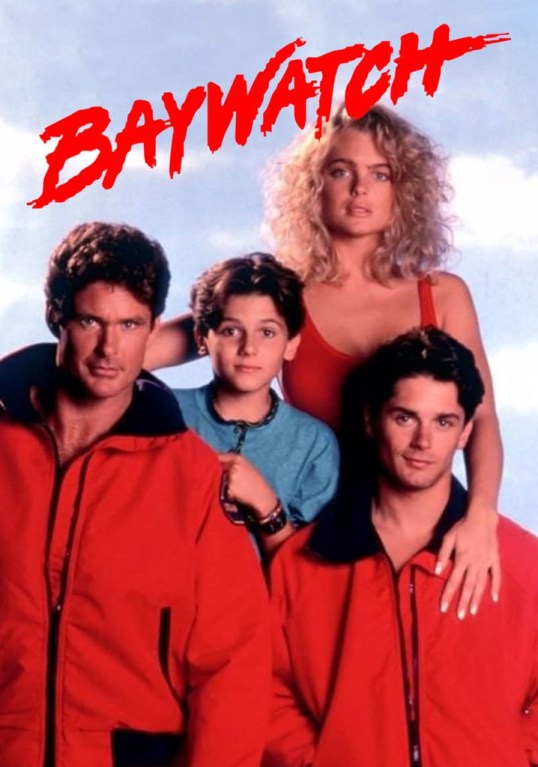
Welcome to Retro Television Reviews, a feature where we review some of our favorite and least favorite shows of the past! On Saturdays, I will be reviewing Baywatch, which ran on NBC and then in syndication from 1989 to 2001. The entire show can be viewed on Tubi.
This week, Mitch is in trouble.
Episode 2.11 “If Looks Could Kill”
(Dir by Douglas Schwartz, originally aired on November 25th, 1991)
Mitch rescues Allison (Shannon Tweed) after her car crashes into the ocean. Mitch quickly falls in love and Allison seems to fall for Mitch. What Mitch doesn’t know is that Allison is actually a murderer and that she’s just using him to try to find the money that was in her car when it crashed. For once, Eddie is the one who suspects the truth and who has to keep Mitch from being killed by someone who he trusts.
Baywatch occasionally did crime-related episodes and they always felt out of place. This episode opens with Allison drowning her latest lover and it’s actually a rather disturbing sequence. It’s effective but it doesn’t feel right for a show in which the main appeal is the fact that everything is lightweight and easy-going.
I imagine David Hasselhoff enjoyed episodes like this, if just because nearly every episode during the first season of Baywatch Nights was exactly like this one.
There’s a movie podcast I love to listen to called the “Podcast on Fire.” Kenny B and his various co-hosts focus on Asia, especially the films of Hong Kong and South Korea. They have a large back catalogue, and I’ve been catching up on their episodes related to South Korean horror. In the middle of a show on the WHISPERING CORRIDORS series, co-host Paul Quinn mentioned THE CALL, a film that was released on Netflix during the pandemic. I’m usually not a consumer of freaky horror, but his enthusiasm for the film proved infectious, so I decided I’d check it out when I got home from work.
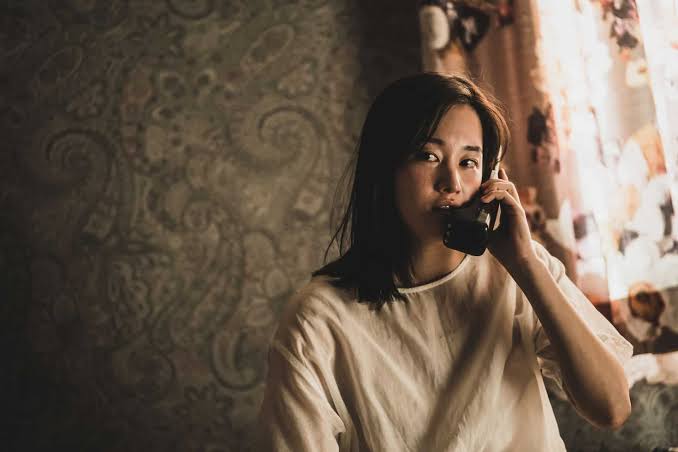
THE CALL centers on two 28 year old women. There’s Seo-yeon (Park Shin-hye), who’s visiting her childhood home in the country when she receives a series of phone calls from 28 year old Young-sook (Jeon Jong-seo). They soon realize that Young-sook is calling Seo-yeon from the same house… just from 20 years in the past. Both with severe mommy issues, the two ladies initially seem to form a friendship. They even use their knowledge of events in the past to help each other in ways that change the future. But as you might guess, these changes come with severe consequences, and the story eventually turns into one of bloody survival!
I wasn’t expecting it, but I kept thinking of one of my favorite movies, FREQUENCY (2000), while watching THE CALL. In FREQUENCY, an adult son is able to talk to his deceased dad from 30 years in the past on their family’s old ham radio. We may not really understand the science behind it all, but we just accept it. Their discussions start out as heartwarming, and their actions that change the future seem good at first, but then eventually bad things happen. That’s pretty much what takes place in THE CALL, with the exception that these ladies are not family and the radio has been replaced by one of those late 20th century cordless phones. The heartwarming early moments eventually devolve into a lot of crying, screaming, and gaping neck wounds.
While the concept has been done before, the filmmakers do a good job of building genuine suspense. It’s one of those movies where the stakes keep getting raised, and when you think they’re as high as they can go, they’re ramped up another notch. There are a few effective jump scares here, but the primary tension is in the growing sense of dread concerning how the actions in the past will affect the present. Let’s just say that some of the characters in the present aren’t allowed to enjoy their newfound health and well-being for very long.
I wasn’t familiar with either of the lead actresses going in, but they’re both excellent. In the present time, Park Shin-hye invests enough vulnerability in her character of Seo-yeon that you can’t help but pull for her, especially as her world is continuously turned upside down. And I can’t say enough about Jeon Jong-seo, who gets the showier role in the past timeline. Her character starts out as sympathetic, but she doesn’t stay that way. It’s an unnerving character and performance.
At the end of the day, I had a good time with THE CALL. It’s been awhile since I watched a film from South Korea, so it was fun for me to jump back in. If you enjoy a good horror-suspense-thriller, this one’s an easy recommendation!
This is a song that I first heard when I first watched Palo Alto.
Ever since then, it’s a song that has randomly popped into my head at certain times, usually whenever I’m possessed by the melancholy spirit that always seems to follow me around this time of year. It’s a song that always makes me feel better, despite what happened in Palo Alto.
Welcome to Late Night Retro Television Reviews, a feature where we review some of our favorite and least favorite shows of the past! On Thursdays, I will be reviewing Hunter, which aired on NBC from 1984 to 1991. The entire show is currently streaming on Tubi and several other services!
This week, someone wants to help out Hunter!
Episode 1.12 “The Avenging Angel”
(Dir by James Whitmore, Jr., originally aired on January 18th, 1985)
After Hunter receives an anonymous phone tip, he arrests Dr. Pierpoint (Angus Duncan) for attempting to hire a criminal known as “The Rat” to kill his wife. When Hunter makes the arrest, he actually has to Mirandize him twice because the doctor was unconscious the first time that Hunter read him his rights. Oh, Hunter!
Unfortunately, things fall apart at trial. The Rat (Robert Pastorelli, whose career later fell apart after the mysterious death of his girlfriend) changes his testimony at the last minute and says that Pierpoint never hired him to kill his wife. The case is dismissed. Hunter is upset. Even more upset is Arnold Morton (Robert Gray), a surveillance expert who idolizes Hunter and who makes it his mission to take down not just Pierpoint and the Rat but also defense attorney Nell Armstong (Nancy Stafford).
This was an interesting episode. The story didn’t quite work but the idea behind it was intriguing. Morton, who has bugged Hunter and has been following him for weeks, considers himself to be Hunter’s avenging angel. When Hunter makes it clear that he’s not cool with the whole vigilante thing, Morton turns on him like a lover scorned. This is like Hunter’s version of Magnum Force.
As for McCall, she spends most of this episode just trying to go on a date with her latest boyfriend, Ted (Rod Haase). Unfortunately, Hunter keeps interrupting. Ted is a nice guy about it but it’s pretty obvious that McCall and Hunter are meant to be together.
The highlight of this episode? Hunter destroying his phone while searching for a bug. In the role of Captain Dolan, John Amos got to do his whole, “Hunter, what the Hell are you doing!?” thing. That’s always entertaining.
As I said, the episode didn’t quite work. I never really bought that Arnold could do everything that he managed to do in this episode. I mean, for someone who lived in an abandoned arcade and drove a broken-down van, Arnold seemed to have unlimited resources. I will give a shout out to the show’s art department for including a poster of Lucio Fulci’s Zombi 2 in Arnold’s office.
It’s always funny to me how, in every episode, Hunter has got someone trying to kill him and no one but McCall seems to care.
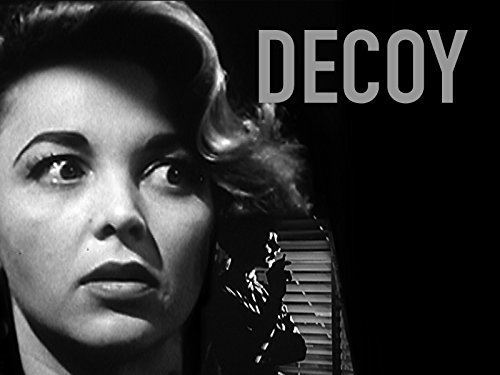
Welcome to Retro Television Reviews, a feature where we review some of our favorite and least favorite shows of the past! On Thursdays, I will be reviewing Decoy, which aired in Syndication in 1957 and 1958. The show can be viewed on Tubi!
This week, it’s the next-to-last episode Decoy!
Episode 1.38 “First Arrest”
(Dir by Arthur H. Singer, originally aired on June 30th, 1958)
Casey meets with a new, rookie policewoman (Ellen Madison) at Coney Island. The rookie just made her first arrest and is now in tears because she’s worried that she’s ruined someone’s life. Casey tells the story of her first assignment and what it was like to make her first arrest.
Flashback time!
The NYPD believes that a fencing operation is being run out of a Coney Island carnival sideshow. Young and eager, Casey gets a job as an exotic dancer at the carnival. (Calm down, boys. She wears one of the least-revealing costumes of all time.) Shy and insecure Willie Graff (Joshua Shelley) develops a crush on Casey. Casey, suspecting that Willie is the fence, plays along but she starts to feel guilty as she realizes that Willie isn’t some sort of dangerous criminal. He’s just a down-on-his-luck guy who is cutting a few corners. He even introduces Casey to his mother (Ruth McDevitt).
When Willie gives Casey a diamond necklace, she assumes that it must be stolen but it turns out that it’s his mother’s necklace and that Mrs. Graff wants Casey to have it. Casey is actually relieved because it seems like Willie isn’t the fence that she’s looking for. However, then Willie gives her a mink coat and admits that he bought it from someone who had stolen it. Though saddened, Casey forces herself to arrest Willie.
In the present, Casey assures the rookie that she will soon get used to arresting people and she won’t care about them anymore. Yikes!
As you may have guessed, I didn’t really care much for this episode. That idea of Casey being someone who doesn’t care about the people who she arrests pretty much goes totally against everything we’ve seen over the past 37 episodes. The thing that always set Casey apart was that she does care. She has to do her job but she also understands that sometimes, people just make mistakes. Unless it’s case in which she was threatened, Casey usually doesn’t take any joy in slapping the handcuffs on someone.
As much as I hate to say it, Beverly Garland is not particularly convincing in the flashback scenes. Young Casey is written as being continually breathless and unsure of herself. There’s nothing about Beverly Garland’s screen presence that suggests insecurity.
This was a disappointing episode. Next week, we’ll be finishing up Decoy and I hope it goes out on a better note than this.