Late Night Retro Television Reviews: CHiPs 5.27 “Force Seven”


Welcome to Late Night Retro Television Reviews, a feature where we review some of our favorite and least favorite shows of the past!  On Mondays, I will be reviewing CHiPs, which ran on NBC from 1977 to 1983.  The entire show is currently streaming on Prime!
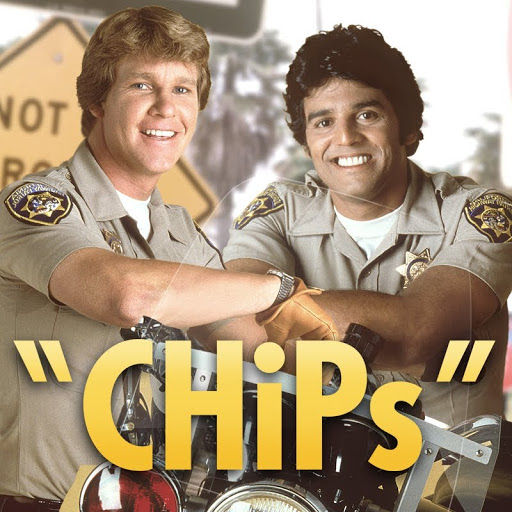
This week, the fifth season comes to an end.

Episode 5.27 “Force Seven”

(Dir by Leslie H. Martinson, originally aired on May 23rd, 1982)

When evil rich guy Nakura (John Rhys-Davies) steals a short-range missile from a military convoy,  he informs the Mayor of Los Angeles that he will fire that missile at the city unless he’s paid a healthy ransom.  The Mayor wants to send in the SWAT Team but one-eyed Lt. John Legarre (an eyepatch wearing Fred Dryer — yes, the star of Hunter) objects.  Guns won’t do the job, Legarre explains.  Why not send in Force Seven?

Led by Legarre, Force Seven is a secret division of the LAPD.  Including Legarre, there’s only four of them.  (So, why aren’t they Force Four?)  Sly (Tony Longo — hey, Mad Dog from 1st & Ten) is tough and strong and also a ventriloquist.  Cindy (Dona Kei Benz) is small but fast and doesn’t have a sense of humor.  Rick Nichols (Tom Reilly) is a rebel cop who does things …. HIS WAY!  What do they all have in common?  They all know karate!

This doesn’t sound like an episode of CHiPs, does it?

Well, technically, it’s not.  It’s a backdoor pilot.  Ponch and Baker appear at the start of the episode, arresting an engineer who is carrying the schematics for the stolen missile.  And they also appear at the very end of the episode, in which Getraer asks them if they remember that engineer they pulled over.  However, neither Ponch nor Baker interact with anyone from Force Seven.  I get the feeling that the Force Seven pilot was shot and then someone decided, “Why don’t we add Erik Estrada and Larry Wilcox and disguise this as an episode of CHiPs?”

Imagine if you were a CHiPs fan in 1982.  It’s the night of the season finale.  You turn on the TV because you want to watch motorcycle chases and car crashes.  Instead, you find yourself watching Fred Dryer wearing an eye patch and Tony Longo using a puppet to discuss elements of Eastern philosophy.  That’s one reason why backdoor pilots have never made sense to me.  They always seem like they would have just ticked off anyone who was watching.

Force Seven did not become a show.  From watching this episode, I think it probably would have been enjoyably dumb if it had led to a series.  As I already mentioned, Fred Dryer wears an eye patch.  Tony Longo is made up to look like Sylvester Stallone.  (His character is even named Sly!)  There’s something kind of amusing about two guys who are so big that they could obviously just take anyone out with one punch instead choosing to drag out every fight with karate.

(Amusingly enough, in Force Seven, the mayor of Los Angeles was played by former real-life mayor Sam Yorty, who ran for President in 1972.  The police commissioner was played by Ed Davis, the real life former chief of the LAPD who was serving in the California State Senate at the time and who later ran for the U.S. Senate in 1986.)

It is a little sad that this was Larry Wilcox’s final episode of CHiPs.  Fed up with Estrada getting all of the good storylines, Wilcox did not return for Season 6.  (His replacement would be played by Force Seven‘s Tom Reilly, though as a different character.)  For the first two seasons, Wilcox was the main character while Erik Estrada was the comedic sidekick.  However, by the time season 5 rolled around, it was clear that the producers were far more interested in Estrada than Wilcox.  As an actor, Wilcox wasn’t a showy as Estrada but he was more believable a cop.  In his final episode, Wilcox gets not a grand goodbye but instead appears only in two brief scenes.

Next week, we’ll start the sixth and final season!

6 Trailers From Planet Horror


For this week’s edition of Lisa Marie’s Favorite Grindhouse and Exploitation Film Trailers, we have 6 trailers from Planet Horror!

Planet of the Vampires (1965)

(From director Mario Bava)

Queen of Blood (1966)

Starship Invasions (1977)

Inseminoid (1981)

Galaxy of Terror (1981)

Breeders (1997)

What do you think, Halloween Visitors?

main-laser-beam-cloaking-device-could-save-planet-earth-from-being-annihilated-by-genocidal-aliens

Film Review: Casino (dir by Martin Scorsese)


(Minor spoilers below)

Casino, Martin Scorsese’s epic, Las Vegas-set film from 1995, is one of my favorite films of all time.  It seems to show up on cable every other week and, whenever I see that it’s playing, I always make it a point to catch at least a few minutes.

Casino opens with veteran Las Vegas bookie Ace Rothstein (played by Robert De Niro) getting into a car.  He starts the engine and the car explodes.  The rest of the movie is an extended flashback as both Ace and his friend and eventual rival Nicky (Joe Pesci) explain how Ace went from being the most powerful man in Vegas to getting blown up in his car.

We are shown how Ace was originally sent to Vegas by a group of mobsters who are headquartered in the far less flamboyant town of Kansas City.  Ace keeps an eye on the city for the bosses and, as long as the money keep coming in, they leave Ace alone to do whatever he wants.  When Ace isn’t bribing government officials (including one particularly sleazy state senator who was reportedly based on future U.S. Sen. Harry Reid) and breaking the fingers of the unlucky gamblers who have been caught trying to cheat the casino, he’s busy falling in love with the beautiful prostitute Ginger (Sharon Stone, who was nominated for Best Actress for her work in this film).  Though Ginger warns Ace that she doesn’t love him and is still hung up on her manipulative pimp Lester Diamond (James Woods, who is hilariously sleazy), Ginger and Ace still get married.

Everything’s perfect except for the fact that Ace’s old friend Nicky (Joe Pesci) has also moved to Vegas.  As opposed to the calm and low-key Ace, Nicky has a violent temper and soon, he starts drawing unwanted attention to both himself and Ace.  When Ace attempts to control Nicky, Nicky responds by turning on his friend and soon, the two of them are fighting an undeclared war for control of the city.  Meanwhile, the bosses in Kansas City are starting to notice that less and less money is making its way back to them from Las Vegas…

There are so many things that I love about Casino that I don’t even know where to begin.

First off, I love the film’s glamour.  I love the way that the film celebrates the glitz of Las Vegas, presenting it as an oasis of exuberant life sitting in the middle of a barren desert that, we’re told, is full of dead people.  I love seeing the tacky yet stylish casinos.  I love seeing the inside of Ace’s mansion.  And Ginger’s clothes are just to die for!

I love that Scorsese’s signature visual style perfectly keeps up with and comments on the natural flamboyance of Las Vegas.  Consider how the film starts, with the shadowy form of Ace Rothstein being tossed through the air and then descending back down to Earth.  Consider the image of Ace standing in the middle of the desert and being submerged within a thick cloud of dust as Nicky’s car speeds away from him.  Consider how Scorsese’s camera glides through the casino, letting us see both the people who cheat and the people who are watching them cheat.  Consider Nicky standing outside of his jewelry stare and freezing the movement of the camera with his reptilian glare.  Consider the scene of cocaine being snorted up a straw, seemingly filmed from inside the straw.  Casino is a film full of the type of images that all directors promise but few ever actually deliver.

I love that Casino is built around a brilliant lead performance from Robert De Niro.  De Niro gives a performance that mixes both tragedy and comedy.  My favorite De Niro moment comes about halfway through the film, when Ace finds himself hosting a wonderfully tacky cable access show called Aces High. Ace interviews “celebrities” like Frankie Avalon, introduces the Ace Rothstein Dancers, and even finds the time to do some juggling.  De Niro makes Ace into an endearing and awkward character in these scenes, a permanent outsider who has finally managed to become something of a star.

It’s easy to compare Casino to Scorsese’s other classic mix of gangster film and social satire, 1990’s Goodfellas.  Both films feature De Niro, Pesci, and Frank Vincent.  (In a nice piece of irony, Casino features Vincent getting a little revenge after being attacked twice by Joe Pesci in two different Scorsese films.)  Both films are based on nonfiction books by Nicholas Pileggi.  Both films feature nonstop music playing on the soundtrack.  Both films feature multiple narrators who explain to us how the day-to-day operations of the  Mafia are conducted.  When Scorsese shows us Ace and Ginger’s wedding day, it feels almost like a scene-for-scene recreation of Henry Hill’s wedding in Goodfellas.

At the same time, there are a few key differences between Goodfellas and Casino.  Whereas Goodfellas was all about being a low-level cog in the Mafia, Casino is about management.  Casino is about the guys who the Goodfellas made  rich.  Goodfellas was about the drudgery of everyday life whereas Casino is about the glitz and the glamour promised by the fantasy world of Las Vegas.  Whereas Goodfellas was almost obsessively anti-romantic, Casino is a gangster film with heart.  No matter what else you might say about him as a character, Ace’s love for both Ginger and Las Vegas is real.  On a similar note, when Nicky turns against Ace, it’s because his feelings have been hurt.  In the end, Ace and Nicky come across like children who have, temporarily, been given the keys to the world’s biggest playground.

Casino is a glossy, flamboyant film that literally opens with a bang and ends on a note of melancholy and loss.  Not only is Ace reduced to being an anonymous old man working out of a nondescript office but our last two views of Vegas are of the old casinos being dynamited and an army of overweight tourists emerging from the airport like the unstoppable zombies from Dawn of the Dead.  This, then, is Scorsese’s view of the apocalypse. The world isn’t destroyed by a cataclysm but instead by an invasion of terminal middle American blandness.