Retro Television Review: Decoy 1.39 “The Lost Ones”


Welcome to Retro Television Reviews, a feature where we review some of our favorite and least favorite shows of the past!  On Thursdays, I will be reviewing Decoy, which aired in Syndication in 1957 and 1958.  The show can be viewed on Tubi!
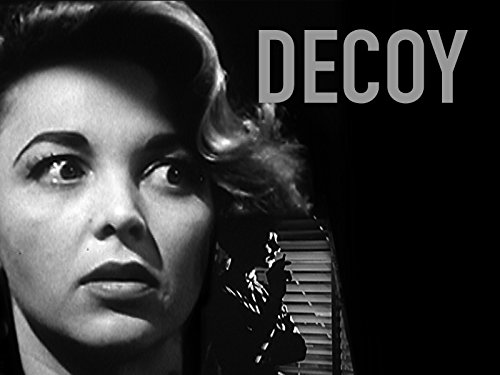
This week, Decoy comes to an end.

Episode 1.39 “The Lost Ones”

(Dir by Arthur H. Singer, originally aired on July 7th, 1958)

The final episode of Decoy finds Casey dropping in on Elsa Kramer (Phyllis Newman), a recently-released juvenile offender who Casey previously arrested.  Casey just wants to check on her and to welcome her back to society.  But, when Casey steps — unannounced, which may be okay in New York but seems rather rude to my Texas sensibilities — into the family’s small kitchen, she discovers Elsa’s abusive father is dead and Elsa is holding the gun.  Elsa makes a run for it.  Elsa’s mother (Adelaide Klein) and brother (Morton Lighter) say that Elsa shot her father in self-defense.

Casey doesn’t think Elsa pulled the trigger and is determined to find Elsa and learn the truth before Elsa is arrested again.  Not surprisingly, Casey’s right.  It was her brother who killed their father.  Elsa took the blame because her brother was going to medical school whereas Elsa really didn’t have much of a future to lose.

In some ways, this episode is an appropriate send-off for Casey and Decoy.  It has some location footage of New York, which was always the show’s main appeal outside of Beverly Garland’s lead performance.  It features Casey trying to prove that a seemingly guilty person is actually innocent.  That’s certainly preferable to what we saw last week.

At the same time, this episode had some of the same flaws that were present in quite a few of Decoy’s final episodes.  The dialogue was a bit overbaked.  Even worse, the acting from the supporting cast was not particularly impressive.  Morton Lighter was so twitchy as Elsa’s brother that there wasn’t much doubt as to who the guilty party was.  This episode also featured Casey meeting with the least intimidating street gang in New York history.  The whole thing lacked the authenticity that distinguished Decoy at its best.  I’m not really sure if the show’s producers knew that this would be the final episode of the series.  If they did, they allowed to show to end on a bit of anticlimactic note.

So, that’s it for Decoy.  For the most part, it was a good show.  The last few episodes were perhaps a bit too melodramatic for their own good.  One got the feeling that the show’s writers were under orders to “liven” things up.  But the early episodes made great use of the New York setting and, throughout the series, Beverly Garland gave a great performance as the tough but compassionate Casey Jones.

What will I be watching next?  I’ll let you know next week!

30 Days Of Noir #18: C-Man (dir by Joseph Lerner)


At the center of the 1949 film, C-Man, is a man named Cliff Holden (Dean Jagger).  When we first see Cliff, he’s cheerfully walking down the street in New York City, looking pretty happy underneath his new fedora.

And really, why shouldn’t Cliff be happy?  He’s a U.S. Customs agent!  He investigates crimes and tracks down smugglers and, perhaps most importantly, his best friend is a customs agent as well!  Who wouldn’t want to work with their best friend, right?  Anyway, Cliff eventually reaches his office and he discovers that nobody else appears to share his good mood.  For that matter, Cliff’s step losing its cheerful spring when he finds out that his best friend has been …. MURDERED!

His friend was investigating the theft of a very valuable necklace.  The Treasury Department has reason to believe that an international criminal named Matt Royal (Rene Paul) will be smuggling that necklace into the United States.  Looking to not only avenge his friend but also protect the reputation of the United States, Cliff takes over the case.  Using the name William Hannah, he flies out to Europe so that he can then board the same plane that Royal will be taking to the States.

While Cliff/William is waiting at the airport, he meets a Swiss woman, named Kathe van Bourne (Lottie Elwin), who is flying to New York so that she can be reunited with her fiancée, Joe.  However, after they board the plane, Kathe is suddenly taken ill.  Luckily, there’s a doctor on the plane, a courtly gentleman named Doc Spencer (John Carradine).  Spencer takes Kathe to the back of the plane to examine her and, while no one’s looking, he hides the necklace underneath a bandage that he wraps around her head.

Back in New York, Royal is pulled off the plane and thoroughly searched.  When it’s discovered that he doesn’t have the necklace, Cliff realizes what has happened.  However, Kathe has already been taken off in an ambulance and, when Cliff goes to Joe’s apartment, he discovers that Joe has been murdered….

C-Man is a film that kind of sneaks up and takes you by surprise.  That it was an extremely low-budget production is obvious from the minute the movie starts.  The black-and-white images are grainy.  The sets are small and sparsely furnished.  The whole film has a rather cheap and ragged feel, as if it might burst into flame and dissolve at any moment.  And yet, that low-budget feel works perfectly for the story that C-Man is telling.  Despite the oddly cheery narration that’s provided by Dean Jagger, this is a sordid tale about people on the fringes of society.  Watching C-Man feels like taking a trip to all of the places that most tourists would never want to visit during their trip to New York City.  For instance, when Cliff searches for the alcoholic Doc Spenser, his search leads him from one liquor store to another and it’s obvious that some of the desperate souls that Cliff passes on the streets weren’t actors.

Gail Kubick’s pounding and relentless score adds to the film’s overall dreamlike feel and Joseph Lerner’s direction is just quirky enough to keep things interesting.  (When one character is bludgeoned to death, the film suddenly starts to spin as if the viewer has become trapped in the killer’s madness.)  Dean Jagger seems a bit miscast as a the tough customs agent but the actors playing the criminals are all properly menacing.  Harry Landers, as the most violent of the jewel thieves, makes a particularly threatening impression.

All in all, C-Man is a surprisingly effective poverty row noir.