Core is one of those debut albums that has spent decades being celebrated, dismissed, rediscovered, and reassessed. Released in 1992, Stone Temple Pilots’ first full-length album arrived at the exact moment alternative rock stopped being a subcultural phenomenon and became the dominant sound on rock radio, MTV, and mainstream youth culture. Nirvana had already detonated the commercial landscape with Nevermind, while Soundgarden were about to reach even greater heights with Superunknown. Along with those records, Core became part of the broad grunge trifecta that dominated the airwaves in the early 1990s: Nirvana’s Nevermind, Soundgarden’s Superunknown, and Stone Temple Pilots’ Core. The comparison was never perfectly tidy—Stone Temple Pilots came from Southern California, not Seattle—but these albums were all central to the era’s hard-rock mainstream.
That success also made Stone Temple Pilots an easy target. A number of critics at the time treated the band as grunge followers rather than innovators, accusing them of chasing the sound popularized by Pearl Jam, Alice in Chains, Nirvana, and Soundgarden. On a superficial level, it is easy to see why. Core has the huge distorted riffs, brooding low end, emotionally damaged lyrics, and intense vocals that became closely associated with early-1990s alternative rock. But that criticism overlooks what the record actually does. Stone Temple Pilots were never just a watered-down version of one Seattle band. They drew from classic blues-based hard rock, psychedelic rock, punk, glam, funk, and metal, then pushed those influences through the darker, heavier sensibility of the grunge era.
The opening track, Dead & Bloated, immediately establishes that mixture. Dean DeLeo’s guitar entrance has a bluesy, muscular character, but its heaviness gives the song a sinister edge. Scott Weiland comes in sounding low, theatrical, and almost predatory, stretching out phrases as if he is trying to make every line uncomfortable. It is a grimy introduction, but the song also has a groove that prevents it from becoming merely blunt-force aggression. Robert DeLeo’s bass is especially important here. Rather than simply following the guitar, it moves around the riff and gives the track an elastic, almost funky pulse. Eric Kretz’s drumming locks the entire thing together with a direct, powerful attack.
That chemistry is one of the best things about Core. Scott Weiland was a magnetic frontman, but Stone Temple Pilots were not a band built around one personality. The DeLeo brothers and Kretz give the album its body. Robert DeLeo’s bass lines are melodic, active, and frequently more adventurous than the average early-1990s hard-rock bass part. Dean DeLeo’s guitar playing is equally crucial. He had a knack for writing riffs that were heavy without being generic and melodic without becoming soft. His parts tend to have little twists in their chord voicings, transitions, and lead flourishes, making even the album’s most familiar songs sound more carefully constructed than they first appear.
Wicked Garden is an early showcase for those strengths. Its riff is dark, heavy, and dirty, but the arrangement has a memorable swing rather than the mechanical stomp of conventional metal. Weiland’s vocal melody is catchy even when the lyrics feel vague and unsettling, and that contrast is a big part of the song’s appeal. Stone Temple Pilots could make music that sounded menacing while still understanding the value of a hook. Wicked Garden has enough weight to satisfy listeners looking for something aggressive, but it also has the kind of melodic shape that made the band a natural fit for radio.
Then comes Plush, the song that turned Stone Temple Pilots into a major rock band. Its opening guitar figure remains one of the defining sounds of the decade, and the song’s slow-burning verse-to-chorus escalation is nearly flawless. Plush was played so constantly in the 1990s that it can be easy to forget just how strong it is as a piece of songwriting. The track is built with real patience: the verses maintain a tense, shadowy mood, then the chorus opens up without feeling like a cheap attempt at a sing-along payoff. Weiland’s vocal is wounded, seductive, ragged, and emotionally distant all at once. It feels personal without being overly specific, which helped give the song its strange staying power.
Plush captures much of what made Core commercially successful. It has the heaviness of grunge, the accessibility of classic hard rock, and a melodic sophistication that suggested Stone Temple Pilots were capable of more than simply riding a trend. Still, Core is more interesting when it moves away from the songs that became permanent radio staples. Creep, for example, offers a softer and more vulnerable side of the band. Its acoustic-led arrangement, restrained rhythm, and melancholy vocal give the song room to breathe. It is less immediate than Plush, but it reveals that Stone Temple Pilots could create atmosphere without relying on volume or distortion.
Sex Type Thing is the album’s most confrontational track and remains one of its most complicated. Musically, it is built around a massive, stomping riff and an aggressive rhythm section that makes it feel almost physically hostile. Weiland’s voice is harsh, snarling, and deliberately ugly. The song was often misunderstood as a celebration of sexual aggression, but its perspective is more accurately read as an embodiment of predatory entitlement. The narrator is not meant to come across as admirable; he is meant to sound grotesque. That distinction did not always register in the way the song was marketed or consumed, especially when it became a rock-radio staple, but the ugliness in the performance is central to its effect.
While many listeners understandably gravitated toward the popular tracks—Plush, Creep, and Sex Type Thing—the best song on Core, to my ears, is Where the River Goes. Those singles each represent an essential piece of the album’s appeal: Plush is the enormous melodic breakthrough, Creep is its most reflective and vulnerable moment, and Sex Type Thing is its rawest burst of aggression. But Where the River Goes feels like the point where Stone Temple Pilots’ full musical identity comes into focus. It is less obviously designed for radio, more ambitious in shape, and more revealing of the different traditions the band could pull together.
What makes Where the River Goes so effective is how naturally it meshes the bluesy hard-rock language of the 1970s with a slowed-down, heavier form of late-1970s and early-1980s punk influence, then adds the metallic force of the mid-to-late 1980s. Its punk element is not expressed through the kind of frantic speed or high-energy attack usually associated with punk. Instead, the song takes punk’s tension, stripped-down bluntness, and confrontational edge, then slows it into a thick, stalking groove. The result has classic-rock swagger, but it never settles into a simple blues-rock pattern. It moves with a deliberate, coiled sense of pressure, as though it is always preparing to lunge rather than simply racing ahead.
That slowed-down punk influence gives the track much of its personality. Dean DeLeo’s guitar work has the weight and tonal density associated with heavier 1980s metal, but the arrangement retains punk’s refusal to become too polished or self-indulgent. The song is forceful without drifting into flashy excess. Robert DeLeo and Eric Kretz keep the groove grounded, creating a push-and-pull between the track’s lumbering heaviness and its underlying nervous energy. Weiland’s vocal performance fits that mood perfectly. Rather than singing it as a conventional hard-rock anthem, he moves through the song with restraint, weariness, and mounting desperation, making the shifts in the music feel emotionally connected rather than merely technical.
This is also where Core most clearly distinguishes itself from Nevermind and Superunknown. All three records were enormously important in defining what rock music sounded like in the early 1990s, but their strengths came from different places. Nevermind is driven by punk directness, explosive loud-quiet dynamics, and Kurt Cobain’s raw emotional immediacy. Superunknown is defined by Soundgarden’s colossal riffs, psychedelic unease, unconventional rhythms, and Chris Cornell’s larger-than-life vocal performances. Core shares some of the heaviness, alienation, and darkness of those albums, but Where the River Goes highlights Stone Temple Pilots’ ability to draw from several generations of rock music without sounding locked into any one of them.
The song does not make Core better than Nevermind or Superunknown, nor does it need to. What it does is show why Stone Temple Pilots deserved to be considered more than an imitation of the bands surrounding them. Where the River Goes feels like a mission statement hidden near the end of the record. It contains 1970s hard-rock blues, a slower, more menacing version of punk’s attitude and stripped-down attack, and 1980s metal weight, all filtered through the DeLeo brothers’ melodic instincts and Weiland’s unpredictable vocal presence. It is a song that makes the band’s supposed “grunge” identity feel much too narrow.
The rest of the album reinforces that point. Piece of Pie is noisy, sarcastic, and built around a riff that sounds like a reaction to the music-business machinery Stone Temple Pilots were suddenly becoming part of. Naked Sunday has a lurching rhythm and an odd, slightly off-balance quality that makes it more interesting than a standard deep cut. Sin brings back the darker, abrasive energy of the first half, while Crackerman combines a punchy hard-rock structure with a sense of creeping unease. Even when the band lean into familiar grunge-era textures, they rarely sound entirely comfortable staying in one lane.
Core is big and polished, but it does not feel sterile. The guitars are thick, the bass has real presence, the drums hit hard, and Weiland’s vocals sit clearly at the center without overwhelming the rest of the band. It is an album designed to sound powerful on loud speakers, whether it is blasting from an old car stereo, playing at a packed party, or coming through a pair of headphones decades later. The production gives the songs enough punch for radio, but it also lets the small details in the arrangements survive.
In retrospect, Core may not have been as disruptive as Nevermind or as expansive and bizarre as Superunknown, but it absolutely belongs in the conversation around the albums that defined early-1990s rock. Nirvana brought punk volatility and exposed emotional rawness into the mainstream. Soundgarden brought heaviness, psychedelic ambition, and complexity. Stone Temple Pilots brought a bruised but stylish blend of hard-rock muscle, melodic craft, and damaged glamour. Their sound fit the grunge moment, but it also carried the DNA of older rock traditions and hinted at the stylistic range they would explore on later albums.
That is why Core has outlived the old accusations that it was merely derivative. There are certainly echoes of its era throughout the record, and nobody should pretend otherwise. But the album’s best material endures because of the band’s chemistry: Dean DeLeo’s sharp, inventive riffs, Robert DeLeo’s constantly moving bass, Eric Kretz’s sturdy but responsive drumming, and Scott Weiland’s ability to make every song feel like a damaged little drama. Core is rough around the edges, occasionally blunt, and unmistakably rooted in 1992. It is also loud, catchy, moody, and packed with the musical personality that made Stone Temple Pilots more than a footnote to the grunge boom.
“Journalism is just a gun. It’s only got one bullet in it, but if you aim right, that’s all you need. Aim it right, and you can blow a kneecap off the world.” — Spider Jerusalem
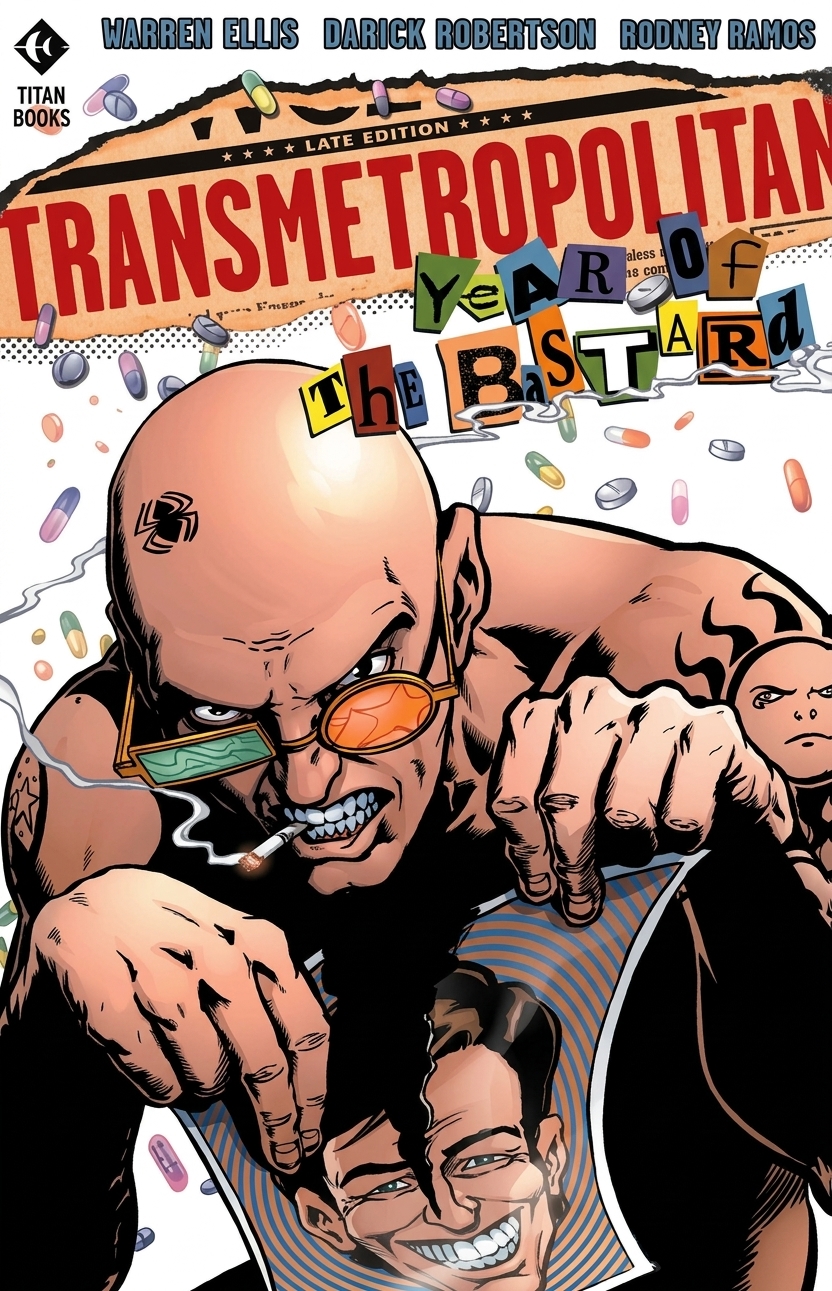
Transmetropolitan Vol. 3: Year of the Bastard is where Warren Ellis and Darick Robertson’s series fully locks into its political purpose. The earlier volumes establish the wild, filthy, hilarious, and relentlessly overstimulating future world of the City, while also introducing Spider Jerusalem as one of comics’ most aggressive and unconventional protagonists. This third collection gives that chaos a more direct target. Spider’s reporting increasingly centers on President Gary Callahan, known as “the Beast,” and the book becomes a sharper examination of political corruption, media manipulation, public apathy, and the ugly necessity of speaking truth to power.
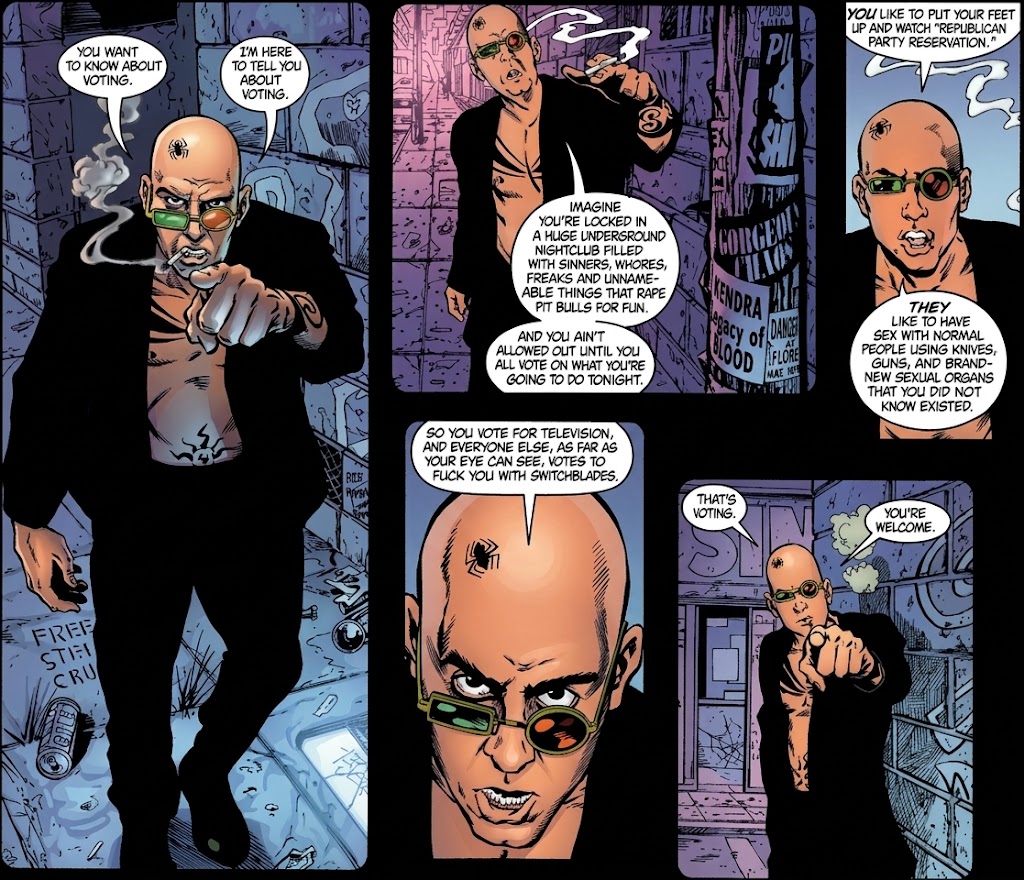
Spider remains the main reason Transmetropolitan works as well as it does. He is not a conventionally likable hero, and the series has no interest in sanding down his worst edges. Spider is arrogant, filthy, confrontational, casually cruel, and frequently unbearable to everyone around him. He insults his assistants, attacks people with little warning, abuses his position as an employer, and seems to approach most conversations as though they are a competition he needs to win. His anger is not performative, though. Spider is furious because he sees how the City works, how easily people are exploited, and how often institutions that are meant to serve the public instead exist to preserve wealth, influence, and power.
That is what separates Spider from a standard rebellious antihero. He does not simply dislike authority because it tells him what to do. He hates authority when it becomes insulated from consequence. His journalism is not neutral in the shallow sense of pretending that every side of an issue deserves equal moral consideration. Spider believes that facts matter, that evidence matters, and that powerful people deserve aggressive scrutiny. He wants documents, interviews, proof, and a story solid enough to survive legal threats and political spin. But he also wants that story to make its target feel exposed. For Spider, journalism is both a public service and an act of combat.
Year of the Bastard makes that approach feel especially urgent through the arrival of Gary Callahan. The Beast is an amalgamation of all the worst traits associated with the fictional politician: narcissistic, shameless, opportunistic, cruel, dishonest, charismatic when it suits him, and utterly willing to use ordinary people as tools in his pursuit of power. He is the kind of leader who can speak in a language of public service while treating the public as disposable, who can turn fear into political currency, and who can rely on supporters to dismiss his most obvious sins as either necessary strength or a conspiracy against him.
Callahan is exaggerated in the way that much of Transmetropolitan is exaggerated, but that does not make him feel safely distant from reality. The series filters him through dystopian satire, giving him the monstrous nickname, the heightened rhetoric, and the almost grotesque confidence of a villain who believes consequences are for other people. Yet the deeper qualities behind him are painfully familiar. He thrives on division, contempt for truth, resentment, spectacle, and the belief that accountability is something to be attacked rather than accepted. In recent memory, that has only made the Beast feel more unsettling. Political figures with traits that once seemed too bluntly villainous for anything but fiction have repeatedly demonstrated how easily cruelty can be reframed as authenticity, dishonesty as strategy, and public anger as a route to power. The book’s details are futuristic and extreme, but its political instincts feel less like prediction than recognition.
Spider recognizes Callahan for what he is long before the system is ready to confront him. That is where the volume’s central conflict becomes stronger than a simple “reporter versus corrupt president” story. Spider is not just investigating a bad man; he is fighting the machinery that allows bad men to flourish. The City’s citizens are overwhelmed by media noise, consumer distractions, social trends, technological novelty, and the endless stream of minor scandals competing for their attention. In such an environment, truth can be buried not only by censorship but by excess. A revelation does not have to be disproven if it can simply be drowned beneath louder, stupider, more entertaining material.
The City continues to be one of the series’ best creations because it is more than a colorful science-fiction backdrop. It is a civilization that has commodified every aspect of life. Identity can be altered, sold, copied, upgraded, discarded, and turned into another lifestyle product. Entertainment is invasive and often grotesque. Technology has expanded human possibility without necessarily expanding human empathy. Politics has become entertainment as well, reduced to personality contests, public outrage, tribal loyalties, and marketable images. The City is often funny in a deliberately ridiculous way, but the humor always has a sour edge. Its people are not simply stupid targets for Spider’s contempt. They are citizens living under a system designed to exhaust their attention and turn their frustration into something profitable.
That context complicates Spider’s relationship to the public. He clearly cares about people, especially the people who are harmed by the City’s power structures, but he also finds people maddening. Spider’s rage at ignorance, conformity, and complacency can make him seem almost as contemptuous of the public as the politicians he despises. The difference is that Spider’s contempt is not rooted in a desire to dominate them. He wants them to wake up, pay attention, and demand better, even when he expresses that desire through insults, threats, and spectacularly unhealthy behavior. His empathy is real, but it is buried beneath layers of cynicism and hostility.
That is why Channon Yarrow and Yelena Rossini remain so important to the book. They keep Spider from becoming a purely self-contained force of rage. Channon often brings a more immediate human response to the stories they cover. She can be tough and sarcastic, but she has not completely absorbed Spider’s defensive habit of treating emotional vulnerability as weakness. Her presence highlights the people behind the headlines, which is essential in a series where the main character can sometimes become so consumed by the larger fight that he risks forgetting the individual lives at stake.
Yelena offers a different kind of balance. As Spider’s editor, she understands the importance of his work, but she also has to deal with the consequences of his methods. She recognizes his talent and his instincts, while refusing to indulge every destructive impulse as if it were a sign of genius. Their relationship is built on tension, professional respect, and mutual exasperation. Yelena knows that Spider can find the story nobody else wants to touch, but she also knows that his self-destructive behavior can jeopardize the very work he believes in. She is one of the few people capable of treating him as both an indispensable journalist and a deeply difficult human being.
The visual side of Year of the Bastard remains a major strength. Darick Robertson makes the City feel constantly alive, crowded, unpleasant, and funny in equal measure. Every street scene suggests a thousand strange subcultures, consumer products, body modifications, and private disasters unfolding at once. Robertson’s detail is not merely there to make the book look weird. It reinforces the idea that this is a society drowning in visual information. The City is so busy that horror can pass as background decoration, and the reader has to look closely to notice what its inhabitants have learned to ignore.
Robertson’s Spider is equally effective. The sunglasses, tattoos, bald head, cigarettes, and permanent scowl make him immediately recognizable, but the art also captures how tired he is. Spider does not look like a sleek futuristic revolutionary. He looks worn down, unhealthy, and held together by stimulants, spite, and a professional obligation he cannot escape. That physical exhaustion matters because it keeps him from becoming an invulnerable fantasy figure. For all his bravado, Spider is a man who is being consumed by the same world he is trying to expose.
The volume still carries the abrasive humor and deliberately offensive energy that define Transmetropolitan, and that will remain a dividing line for readers. Ellis often pushes jokes, imagery, and dialogue to extremes. Sometimes that excess adds to the punk-rock force of the series, making the City feel like a place where every cultural impulse has been turned up beyond the point of sanity. At other times, the shock-heavy approach can feel like it is fighting for attention with the book’s more serious political and emotional material. Even so, Year of the Bastard benefits from its willingness to be ugly. A story about corruption, exploitation, and media spectacle would lose something if it presented its world too cleanly.
Ultimately, Transmetropolitan Vol. 3: Year of the Bastard is a strong escalation of the series because it gives Spider Jerusalem a political enemy worthy of his fury. The Beast represents the worst kind of public figure: someone who turns cruelty into strength, dishonesty into strategy, and division into a campaign platform. Spider, for all his cruelty and instability, becomes compelling because he refuses to accept that kind of power as normal. He may be an awful boss, a reckless friend, and a man whose personal life is largely a disaster, but he understands that journalism has to do more than politely record the world’s failures. Sometimes it has to expose the bastards responsible for them.
“I’m excusing a lot because I recognize the trauma and the loss you have suffered. But my patience isn’t limitless… unlike my authority.” — Inquisitor Gregor Eisenhorn
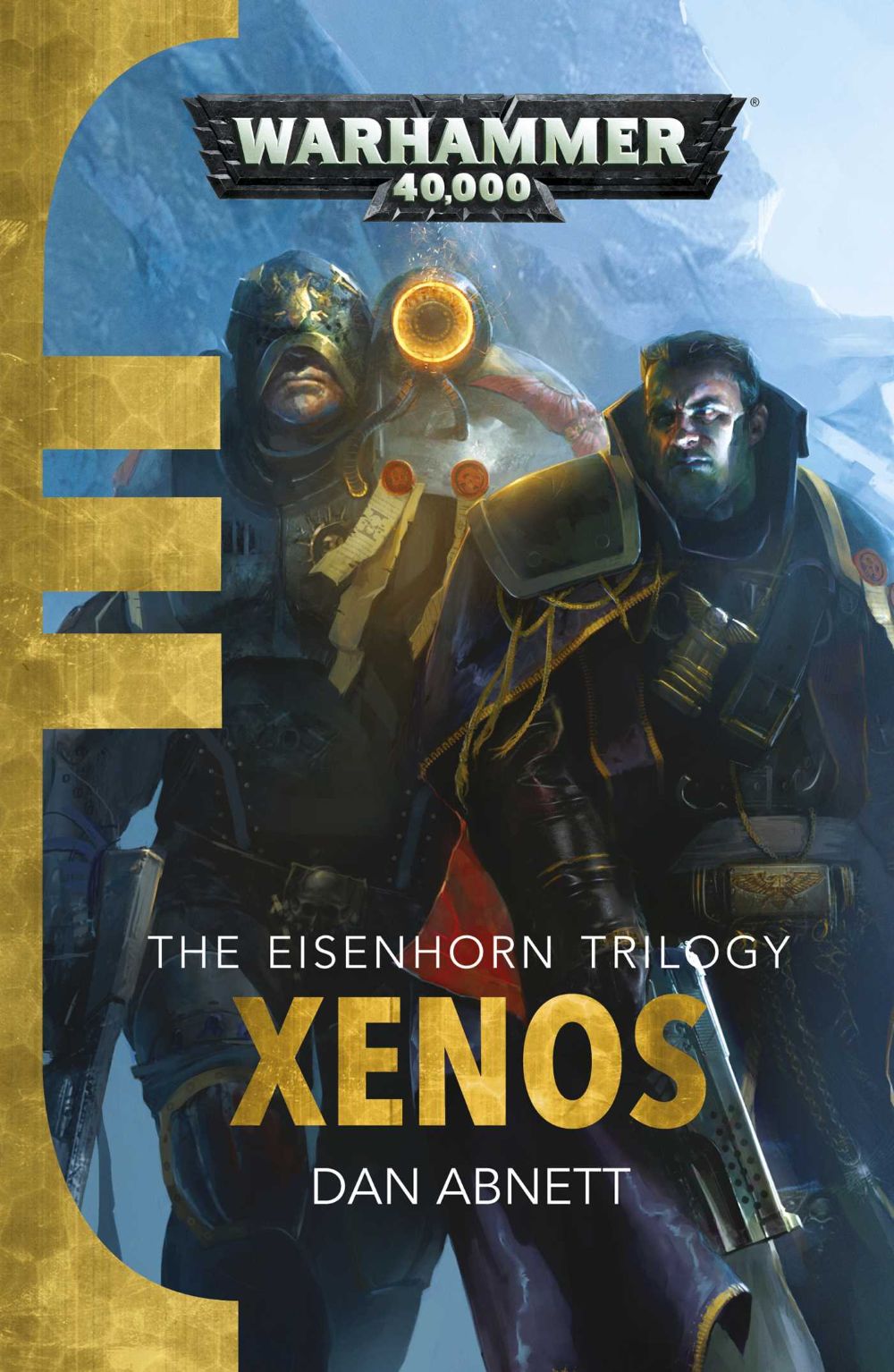
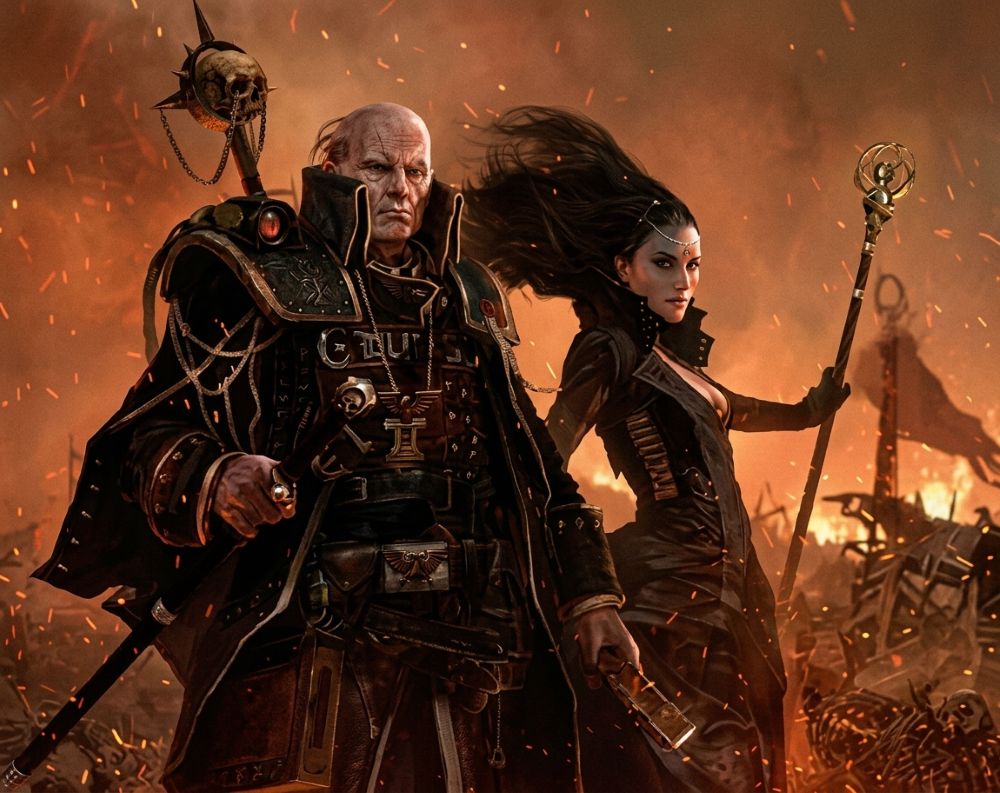
Xenos by Dan Abnett is one of the best places to begin a journey into the immense, intimidating fictional universe of Warhammer 40,000. The setting has decades of lore, countless factions, and a reputation for throwing newcomers into a blizzard of Gothic names, alien species, religious doctrine, and galaxy-wide war. Abnett gets around that problem by starting on a smaller, more personal scale. Rather than opening with armies of Space Marines firing bolters into a battlefield, Xenos follows an investigation. It is a mystery novel first, but one wrapped in political intrigue, supernatural horror, science-fiction adventure, and the oppressive atmosphere that makes Warhammer 40,000 unique.
The novel follows Gregor Eisenhorn, an Imperial Inquisitor investigating the suspicious death of another Inquisitor and the possible return of an infamous forbidden text. What initially appears to be a contained case grows steadily more complicated, carrying Eisenhorn from the polished halls of the powerful to the dangerous, hidden corners of the Imperium. Along the way, he encounters criminal networks, secretive cults, alien interests, old enemies, and clues suggesting that the threat he is following is far larger than it first appears. That is about as much as the plot should be revealed going in. One of Xenos’ greatest pleasures is seeing an investigation expand in unexpected directions as Eisenhorn realizes that every answer seems to reveal another, more disturbing question.
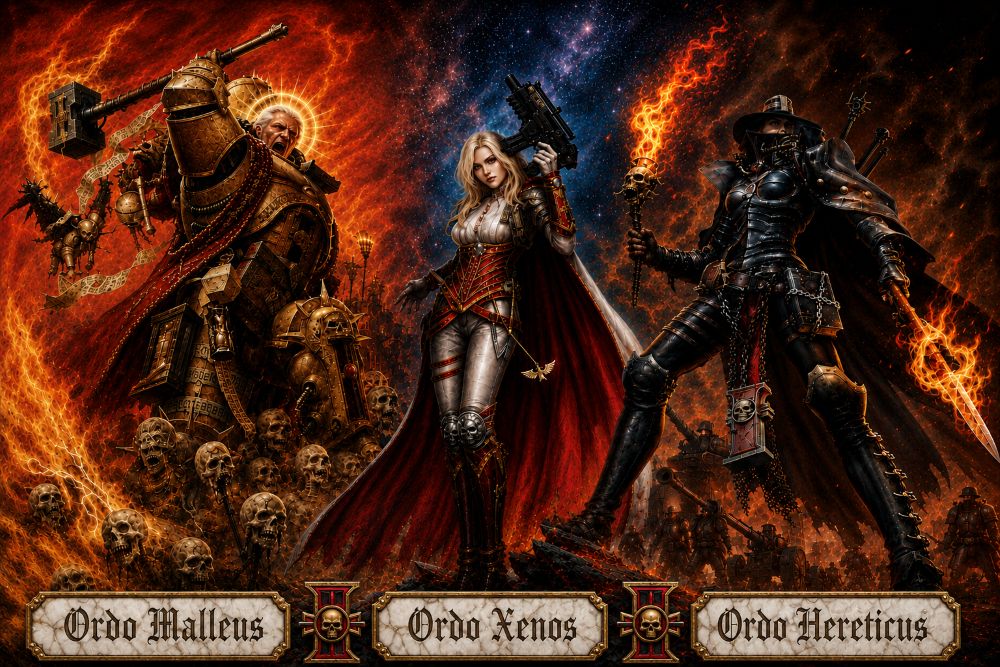
For newcomers, Eisenhorn is a perfect guide through the setting because his job gives him access to virtually every level of Imperial society. The Inquisition is the Imperium’s feared internal-security and investigative force, responsible for hunting down threats such as heresy, Chaos corruption, rogue psykers, dangerous mutants, and alien infiltration. Its three major branches are the Ordo Xenos, which deals with alien threats; the Ordo Malleus, which combats daemonic and major Chaos threats; and the Ordo Hereticus, which investigates internal heresy and corruption within humanity. Eisenhorn belongs to the Ordo Xenos, although Xenos quickly makes it clear that the lines between those responsibilities can become blurry when an investigation leads into forbidden knowledge and the influence of Chaos.
Inquisitors operate with enormous authority inside the sprawling hierarchy of the Imperium’s bureaucracy. They can demand cooperation from military officers, nobles, bureaucrats, religious leaders, and law-enforcement agencies alike, often placing them effectively above the normal chain of command. That vast authority makes them necessary in an empire as corrupt, unwieldy, and permanently threatened as the Imperium, but it also makes them frightening. Eisenhorn can investigate almost anyone, order arrests and executions, seize resources, and disregard ordinary procedure if he believes the situation demands it. The novel’s central moral tension comes from that power: what happens when someone entrusted with protecting humanity has the freedom to do almost anything in its name?
That question gives Xenos considerably more weight than a straightforward sci-fi detective story. Eisenhorn is not a traditional hero, though he is clearly written as the protagonist and often comes across as intelligent, disciplined, and committed to his work. He believes in the Imperium, believes in his duty, and believes that evil has to be confronted before it spreads. At the same time, he works inside a system where fear and brutality are normal tools of governance. An Inquisitor cannot afford to be naïve, especially when dealing with Chaos, cults, and conspiracies built around forbidden knowledge. But Abnett constantly pushes Eisenhorn toward uncomfortable choices, forcing him to decide how much compromise is acceptable when the enemy is capable of manipulating minds, corrupting souls, and destroying worlds.
That is one of the major reasons the book works so well. Warhammer 40,000 can sometimes feel like a setting built from giant concepts: eternal war, fanatical religion, ancient aliens, grim military hardware, and cosmic evil. Xenos does not ignore any of those things, but it makes them matter on a human level. The Imperium is not merely described as a brutal galaxy-spanning empire; Abnett shows how it functions through its people and institutions. There are noble houses, archives, cults, scholars, law officers, ship crews, bureaucrats, mercenaries, and citizens who have learned to survive under a regime where suspicion can be fatal. The book makes the Imperium feel less like a background painting and more like a living, oppressive civilization.
Abnett’s greatest strength is his ability to reveal the setting without drowning the reader in exposition. There are plenty of unfamiliar terms in Xenos, especially for readers coming in cold, but the novel rarely stops to hand over a rulebook-style explanation. You learn about the Warp because it is dangerous and uncanny whenever it enters the story. You understand Chaos because its influence produces paranoia, violence, and spiritual corruption. The Eldar are introduced not as a long historical lecture but as secretive, ancient, unsettlingly intelligent outsiders with motives that human characters cannot fully grasp. That approach preserves the sense that this universe is far bigger than Eisenhorn’s current case, while still making the plot easy to follow.
The pacing is helped by the fact that Abnett never lets the story remain in one mode for too long. Xenos begins with the mood of an investigative thriller, but it gradually expands into something stranger and more dangerous. The novel moves through crime scenes, aristocratic gatherings, interrogation rooms, alien ruins, dangerous underworld spaces, and moments of full-scale action. That variety keeps the book from becoming too bleak or static. The setting is absolutely grim, and the violence can be nasty, but there is also a strong sense of momentum and adventure. Abnett knows that the horror of the 41st Millennium is more effective when the reader is also excited to see what strange corner of it comes next.
His prose is another major advantage. Abnett writes in a style that is clean and readable without losing the ornate, Gothic flavor of the setting. He can handle action well, especially when Eisenhorn and his team are forced into sudden violence, but he is arguably even better with atmosphere. Some of the novel’s most memorable scenes involve conversations where nobody says exactly what they mean, tense interrogations, the discovery of forbidden evidence, or the lingering sense that an apparently routine lead has opened a door that should have remained closed. He gives Xenos the feel of a noir investigation filtered through a nightmare version of space opera.
Eisenhorn’s supporting cast helps keep the novel grounded. Aemos, his loyal savant, brings experience and knowledge to the team, while the warrior Midas Betancore adds a practical edge to their fieldwork. Alizabeth Bequin, whose unusual nature is tied to some of the setting’s stranger ideas, becomes one of the more intriguing figures around Eisenhorn. Each character has a defined role, but they are not simply pieces of equipment for the Inquisitor to deploy. Their reactions to danger, secrecy, and Eisenhorn himself make it clear that he may possess enormous legal authority, but he still depends on people he cannot completely control.
The relationship between Eisenhorn and Bequin is especially effective because Abnett does not force it into an overly simple romance. In a lighter setting, their dynamic might become predictable, but Warhammer 40,000 is not a world where emotional connection comes without consequences. Their growing trust is complicated by secrets, duty, personal history, and the fact that Eisenhorn’s work places everyone around him in danger. The novel is stronger for that restraint. It understands that Eisenhorn’s position makes ordinary human relationships difficult, and that the pressure of the Inquisition can turn even loyalty into something painful.
If there is a weakness in Xenos, it is that the middle section can occasionally feel rushed. Abnett covers a lot of territory, introduces several important concepts, and puts Eisenhorn in contact with a broad cast of characters. Some supporting figures and locations are memorable but could have used a little more time to develop. The book also has the feeling of a first installment in a larger story, particularly as Eisenhorn’s moral compromises begin to take shape. Still, that is not a serious flaw. The novel provides a satisfying central investigation while clearly establishing bigger questions that continue through Malleus and Hereticus.
What ultimately makes Xenos such a successful novel is that it understands the appeal of Warhammer 40,000 without relying entirely on surface-level spectacle. The setting has no shortage of memorable imagery: skull-covered cathedrals, psychic powers, ancient alien technology, daemon-haunted worlds, and armies fighting endless wars across the stars. But Abnett gives all of that a purpose by focusing on a man trying to hold onto his principles in a universe that rewards ruthlessness. Eisenhorn is not merely fighting cultists, aliens, and supernatural conspiracies. He is fighting the possibility that protecting humanity may require him to become something he once would have condemned.
For longtime fans, Xenos offers a welcome change from stories focused solely on battlefield carnage. It shows the day-to-day machinery of the Imperium, the political paranoia beneath its religious language, and the hidden wars being fought far away from the front lines. For newcomers, it is an especially good entry point because it does not require prior knowledge of the tabletop game, its codices, or its enormous chronology. It introduces the setting’s major ideas through a compelling story rather than a lecture.
Xenos is suspenseful, violent, atmospheric, and smarter than many people may expect from a novel tied to a miniature wargame. Dan Abnett turns the colossal scale of Warhammer 40,000 into a strength, giving readers glimpses of a universe full of horrors while keeping the narrative centered on one investigation and one increasingly compromised man. It is a highly entertaining science-fiction thriller in its own right, but it is also one of the clearest demonstrations of why Warhammer 40,000 has endured for so long. If someone wants to take their first step into this massive fictional universe, Xenos is a smart place to start.
“Be in my joint in two hours—we’re forming a fuckin’ government.” — Al Swearengen
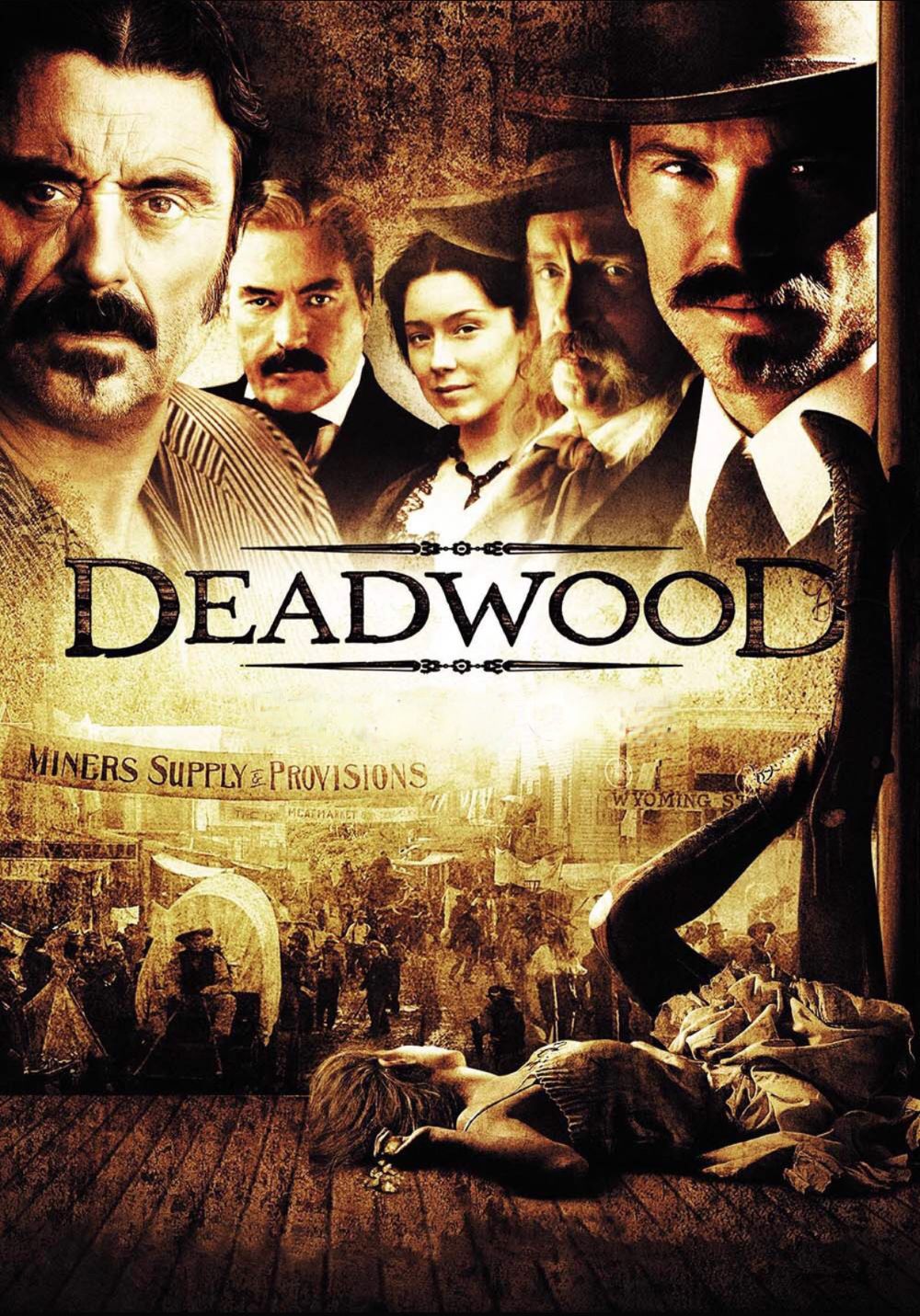
David Milch’s Deadwood is one of those rare television series that feels less like a conventional prestige drama and more like being dropped into a living, breathing, filthy historical world. Set in the rough gold-rush settlement of Deadwood, South Dakota, during the 1870s, the HBO series takes the familiar pieces of the Western—lawmen, gunfighters, prospectors, saloons, prostitutes, corrupt businessmen, and murder—and turns them into something far richer than a genre exercise. It is a Western, but it is also a story about the difficult, often ugly process of creating a society in the middle of chaos. Civilization in Deadwood is not built by noble speeches or clean acts of heroism. It is assembled through greed, fear, business deals, compromise, bloodshed, exploitation, loyalty, and the occasional act of real compassion.
The show’s biggest strength is its ability to make Deadwood itself feel like one of television’s great settings. At the beginning, the camp exists outside the reach of formal American law, which means everyone who arrives sees an opportunity. Some people come looking for gold. Others come looking to escape old lives, make money, gain power, or take advantage of people too desperate to protect themselves. Every character has a different idea of what Deadwood should become, and the series finds drama in the collision between those competing visions. A claim dispute, a murder, a business arrangement, an illness, a newspaper article, or even a random rumor can become part of the larger struggle over who gets to shape the town’s future.
At the center of that struggle is Seth Bullock, played by Timothy Olyphant with an intensity that makes him seem like he is always one bad conversation away from throwing somebody through a window. Bullock arrives in Deadwood with his friend and business partner Sol Star, hoping to start a hardware business and leave behind his past as a lawman. He wants a calmer, more stable existence, but the town almost immediately drags him back toward violence and public responsibility. Bullock has a powerful sense of justice, but he is not a smooth, patient hero. He is rigid, angry, stubborn, and frequently driven by instinct before reflection. Olyphant gives him a clenched physicality—the hard stare, the tense posture, the barely restrained frustration—that makes it clear Bullock is always fighting to keep the more destructive side of himself under control.
That is what makes Bullock such a compelling protagonist. Deadwood never treats him as a simple white-hat sheriff who comes to tame the frontier. He is more decent than many of the people around him, but he is not uncomplicatedly good. His moral certainty can become self-righteousness, and his willingness to defend the vulnerable can slide into an urge to control a situation through force. At times, Bullock’s anger is justified; at other times, it is frightening. Olyphant’s performance works because he does not try to make Bullock effortlessly likable. Instead, he makes him believable as a man who wants order, justice, and dignity in a place that seems designed to expose every violent impulse he is trying to bury.
If Bullock represents Deadwood’s rough version of moral order, Ian McShane’s Al Swearengen represents its ruthless understanding of power. As the owner of the Gem Saloon, Swearengen initially appears to be the obvious villain: a man who profits from vice, manipulation, intimidation, and murder. McShane gives him such enormous control over the role that every scene becomes more charged when Swearengen walks into it. His speech has a strange, unforgettable rhythm, moving between elaborate insults, sly observations, sudden bursts of rage, and dry comedy. He is part Shakespearean king, part criminal entrepreneur, and part exhausted manager trying to hold together a business and a town full of people who are constantly making life harder for him.
What makes Swearengen one of television’s greatest characters is that the series refuses to flatten him into a conventional bad guy. He is undeniably brutal, often monstrous, and capable of treating human beings as disposable pieces in a larger game. The show never asks the audience to forget that. But as Deadwood faces pressure from outside business interests, political maneuvering, and wealthy figures who see the camp as a resource to be absorbed, Swearengen’s investment in the town becomes clearer. He does not become a hero, but he develops into something more complicated: a man whose selfish ambition is inseparable from a practical, almost territorial loyalty to Deadwood. He understands that the camp can only survive if its people occasionally work together, even if he usually has to manipulate them into doing so.
The relationship between Bullock and Swearengen gives the series much of its electricity. They are rivals, reluctant allies, ideological opposites, and men who recognize certain necessary qualities in each other. Bullock sees Swearengen as a moral disease at the center of the camp. Swearengen sees Bullock as an unpredictable nuisance, but also as someone with the strength and authority to be useful. Their confrontations work because neither man can completely dominate the other. Olyphant and McShane create a tension that goes beyond physical threat. Their conflict reflects the show’s larger question: can Deadwood become a place governed by something closer to law and principle, or will it always belong to the people with the most money, violence, and influence?
Still, Deadwood would not be nearly as great if it were only the Bullock and Swearengen show. Its ensemble is one of HBO’s best, filled with actors who make the camp feel populated by people with histories, grudges, private fears, ambitions, and complicated ties to one another. John Hawkes is excellent as Sol Star, Bullock’s business partner and closest friend. Sol is quieter and more patient than Bullock, but Hawkes never lets that quietness fade into the background. He gives Sol an intelligence and decency that make him a crucial moral and emotional counterweight to Bullock’s volatility. His friendship with Bullock is one of the show’s most believable relationships because Sol understands the good in Bullock without ignoring the damage Bullock’s anger can cause.
Molly Parker is equally strong as Alma Garret, a wealthy widow who gradually becomes much more than an outsider caught in Deadwood’s orbit. Alma could have been written as a standard symbol of refinement in a crude frontier town, but Parker gives her tremendous resolve, intelligence, and emotional restraint. Her story is about survival in a different but no less dangerous form. She is forced to navigate grief, addiction, business interests, motherhood, and the expectations placed on a woman in a violently male world. Her relationship with Bullock is complicated in the best way because it is built from longing, frustration, guilt, repression, and circumstance rather than easy romance.
Anna Gunn brings similar depth to Martha Bullock, who becomes increasingly essential as the series develops. Martha could have been pushed aside as merely the protagonist’s wife, but Gunn makes her one of the clearest-eyed people in the camp. She understands the weight of family, grief, responsibility, and compromise, and she gives the character an emotional firmness that Bullock himself often lacks. Martha does not need grand speeches to establish her strength. Her endurance and intelligence gradually make her one of the show’s most quietly powerful figures.
Robin Weigert’s Calamity Jane is another unforgettable character, and one of the series’ most heartbreaking. Jane is loud, drunk, funny, self-destructive, and seemingly incapable of admitting how deeply she cares about people without covering it in profanity or sarcasm. Weigert finds the sadness beneath every messy outburst. Her love for Wild Bill Hickok, her loyalty to those who treat her with kindness, and her profound discomfort with herself make Jane much more than a colorful Western side character. She can be hilarious one minute and devastating the next, which is exactly the emotional balance Deadwood handles so well.
The supporting cast is so strong that the show continually finds new ways to make minor characters feel essential. Gerald McRaney brings a cold, weathered authority to George Hearst, the wealthy mining magnate whose arrival makes Deadwood’s conflicts larger and more dangerous. Hearst is not simply another local schemer. He represents the corporate and political forces that can crush a place like Deadwood from the outside, turning its chaos into something colder and more organized. McRaney plays him with a calm menace that is often more unsettling than open rage. He does not need to shout to make it clear how much power he has.
Brian Cox is terrific as Jack Langrishe, the theatrical and charismatic impresario whose arrival adds another kind of intelligence to the camp. Langrishe can be charming, funny, and seemingly generous, but Cox always lets the audience see the calculation behind the performance. He understands how to survive around men like Swearengen and Bullock because he knows that people are always playing roles, especially when power is on the line. Garrett Dillahunt also does remarkable work in two very different roles. He first appears as Jack McCall, the disturbed and dangerous killer whose actions leave a permanent mark on the camp. Later, he returns as Francis Wolcott, a polished, educated, deeply unsettling man whose manners barely conceal something vicious underneath. Dillahunt’s ability to make those roles feel so distinct is one of the more impressive acting achievements in the series.
Keith Carradine gives Wild Bill Hickok a tired, melancholy gravitas that makes the legendary lawman feel human rather than mythical. He is aware of his reputation, perhaps exhausted by it, and Carradine captures the loneliness beneath the public image. Jeffrey Jones is wonderfully eccentric as A. W. Merrick, Deadwood’s nervous but idealistic newspaper editor. Merrick’s love of language and belief in the importance of a free press make him both funny and unexpectedly vital. In a town shaped by violence and backroom deals, the act of recording events and trying to tell the truth becomes its own form of resistance.
Kim Dickens is excellent as Joanie Stubbs, a woman carrying deep emotional scars while trying to carve out independence in a world that treats vulnerability as an invitation to exploit someone. Her performance brings tenderness and pain to a character who could have easily been reduced to a plot device. Brad Dourif is another major presence as Doc Cochran, the camp’s exhausted, haunted physician. Dourif makes him funny, strange, compassionate, and spiritually worn down by everything he has seen. Jim Beaver is equally memorable as Whitney Ellsworth, the gruff prospector who gradually reveals himself to be one of the show’s warmest and most honorable people. Powers Boothe’s Cy Tolliver, meanwhile, offers a sharp contrast to Swearengen. He is just as ambitious and cruel, but he lacks Swearengen’s strange capacity for loyalty and for understanding that a town, however dirty and violent, is still an ecosystem that must be maintained.
Milch’s writing is famous for its dense, ornate, profanity-heavy dialogue, and it can take a little time to adjust to the show’s rhythm. These characters do not speak in the clean, direct language of a standard television Western. They circle around their meanings, launch into bizarrely poetic insults, turn routine negotiations into verbal duels, and sometimes say more through implication than through plain statements. But once the language clicks, it becomes one of Deadwood’s greatest pleasures. The dialogue gives the show its own identity. It makes the town sound as alive and unpredictable as it looks.
That stylized language also supports what Deadwood is really about. The series is not interested in selling a clean myth of American rugged individualism. It shows the frontier as a collision between people who need one another and often cannot stand one another. Deadwood grows through compromise, manipulation, sacrifice, corruption, and a slow recognition that nobody can survive entirely alone. Even the most vicious people become tied to a larger network of obligations. The show understands that communities are not built by saints. They are built by flawed, wounded, selfish people who occasionally discover that cooperating is better than destroying each other.
The original series ended after three seasons, which leaves it with an undeniably unfinished quality, but that does not lessen its accomplishments. If anything, the lack of a neat conclusion suits the show’s view of history. Deadwood is always changing, always threatened, and never fully settled. The later film provides a welcome return to the characters and offers some emotional closure, but the series remains the core achievement.
Deadwood is demanding television, but it is never hollow television. Its violence has consequences, its humor is vicious and surprisingly warm, and its characters become richer the more time the audience spends with them. Timothy Olyphant gives Seth Bullock the rage of a man trying to force order onto a world that resists it. Ian McShane turns Al Swearengen into a full, contradictory human being rather than a one-note villain. Around them, Milch assembled an extraordinary ensemble that makes every saloon, storefront, street, and muddy patch of ground feel inhabited. People may start the show for the gunfights, the outlaw mythology, and the famously inventive profanity, but the reason Deadwood endures is its people. It understands that civilization is not born cleanly. It is dragged into existence, often unwillingly, by damaged people trying to make a home in a place that barely resembles one.
Jesper Kyd’s Immortal Imperium is one of those tracks that immediately tells you exactly where you are: deep in the grim, overbuilt nightmare of Warhammer 40,000. It has that massive, oppressive scale the setting needs, but it never settles for sounding like generic sci-fi battle music. The heavy electronic pulse, ominous choir work, and mechanical textures make it feel like a hymn being blasted through the speakers of a hive city while factories churn, alarms scream, and thousands of people march toward jobs or wars they probably will not survive.
What makes the piece work so well is how naturally it channels 40K’s particular brand of gothic industrial opera. The choirs bring in the religious side of the Imperium, with all its worship, ceremony, and Emperor-centered fanaticism, while the synths and pounding rhythms supply the cold machinery beneath it all. It sounds sacred, but in an intimidating and almost inhuman way. You can picture enormous cathedral walls covered in smoke, servitors working beneath statues of saints, and the constant hum of ancient systems that nobody fully understands anymore.
Kyd also captures the fact that the Imperium is supposed to be impressive and horrifying at the same time. Immortal Imperium has real grandeur to it; the music makes the setting feel enormous, ancient, and powerful. But there is no clean sense of triumph in it. The momentum feels more like an endless machine pushing forward, powered by fear, faith, violence, and habit. That is very much the Darktide version of 40K: humanity is still standing, technically, but it is surviving inside a decaying system that treats every person as another disposable part.
As a soundtrack piece, Immortal Imperium does a great job of making Tertium feel bigger than the missions themselves. Even when the player is just fighting through corridors, sewage systems, transit stations, or ruined manufactorums, this kind of music reminds you that those spaces are part of a colossal and uncaring empire. It is dramatic, grimy, religious, mechanical, and weirdly beautiful—the exact mix that makes Warhammer 40,000 such a distinctive universe.
“From duty and death there can be no respite.” — Imperial Devotional
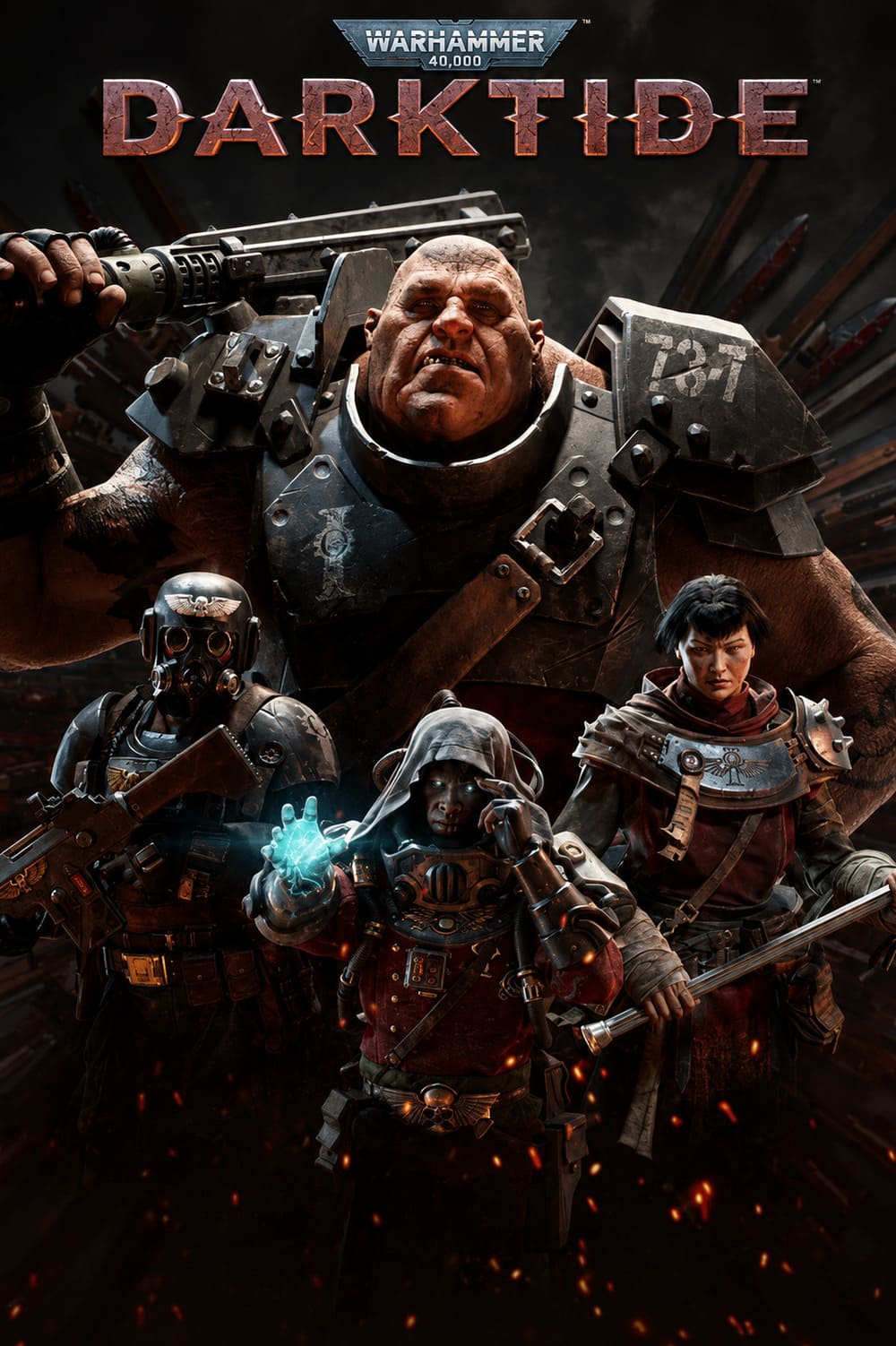
Warhammer 40,000: Darktide understands the core appeal of Warhammer 40K better than most games carrying the license: this is a setting where humanity is vast, miserable, paranoid, religiously fanatical, and constantly one bad day away from being devoured by something unspeakable. Rather than putting the player in the polished power armor of a Space Marine or making them a heroic commander steering armies across a galactic map, Darktide makes you one of the forgotten people at the bottom of the Imperial food chain. You are a convict, a disposable recruit, and—depending on your class—a soldier, preacher, psyker, or big angry guy with a shield. Your job is not to save the galaxy. Your job is to get sent into a plague-infested hive city, kill everything in the way, retrieve whatever your superiors need, and hopefully make it back onto the extraction shuttle alive.
That smaller scale is one of the game’s greatest strengths. Darktide does not try to explain every faction, era, Primarch, chapter, or cosmic crisis in the massive 40K setting. Instead, it traps players in Tertium, a decaying hive city that has been overwhelmed by a Chaos corruption outbreak. The city is a vertical nightmare of industrial machinery, polluted lower levels, cathedrals large enough to swallow city blocks, cramped hab corridors, manufactorums, rail lines, sewage tunnels, and military facilities. It feels like a place where billions of people might actually live, work, worship, suffer, and die without ever seeing the sky. More importantly, it feels unmistakably like 40K.
At its core, Darktide is a four-player cooperative horde shooter in the same broad family as Left 4 Dead and Fatshark’s own Vermintide games. Missions send a squad through hostile territory toward some objective: restore power, investigate a disturbance, assassinate a major enemy, retrieve data, sabotage an operation, or escape a sector before the situation becomes even worse. The basic rhythm will be familiar to anyone who has played a co-op action game. You move through an environment, fight waves of enemies, search for supplies, survive scripted events, and reach extraction. But Darktide succeeds because its moment-to-moment combat has a tremendous amount of weight and tension.
The shooting is excellent. Lasguns feel precise and satisfying, autoguns kick hard, shotguns deliver the expected up-close brutality, and explosive weapons can turn a packed corridor of cultists into a bloody mess in seconds. Every weapon has a distinct personality. A fast-firing infantry autogun feels wildly different from a heavy bolter-like weapon built to chew through armored targets, while a revolver can be a lifesaver when a special enemy needs to die immediately. The game encourages players to learn which tools work best against particular threats, because blindly spraying into a horde is rarely enough once the difficulty rises.
What really separates Darktide from many shooters, though, is its melee combat. This is not a game where you merely pull out a knife when ammunition runs low. Swords, axes, clubs, chain weapons, thunder hammers, and force weapons are central to survival. The melee system asks players to manage crowd control, dodge timing, blocking, pushing enemies back, and targeting priority. A horde of shambling Poxwalkers may look easy to handle, but being surrounded can become fatal almost instantly. Meanwhile, heavily armored Scab enemies require more deliberate attacks, and elite enemies such as Crushers can force a team to react quickly or get flattened.
There is a pleasing physicality to landing a heavy axe strike on a cultist or cleaving through a group with a chainsword. Weapons connect with a crunchy, ugly impact that suits the material perfectly. Darktide often feels like a desperate street fight happening inside a nightmare factory. You are not an invincible superhuman; you are a person trying not to get dragged down by dozens of infected bodies. Even when players become more powerful through better gear and refined builds, the game retains that sense of chaos. One missed dodge, one ignored Trapper, or one badly timed push into a dark hallway can wreck an otherwise successful run.
The four main archetypes offer enough variety to keep the game interesting. The Veteran is the most straightforward ranged specialist, built around firearms, target elimination, and battlefield awareness. The Zealot leans into aggressive melee combat, religious fury, and reckless survivability. The Psyker uses Warp-based abilities to control crowds, destroy priority targets, and bring some of the setting’s psychic horror into the action. The Ogryn is the team’s giant bruiser, capable of absorbing punishment, disrupting enemy formations, and smashing through crowds with the subtlety of a cargo hauler. Each class can be shaped in different directions through talent trees, allowing players to experiment with support roles, damage-focused builds, mobility options, and specialized weapon combinations.
The build system is one of Darktide’s more rewarding long-term features, even if it can become overwhelming for newcomers. A Veteran might become a precision shooter who deletes enemy specialists from across the room, or a more flexible squad leader who supports teammates with ammunition and defensive buffs. A Psyker can focus on popping elite enemies with psychic attacks, spread crowd-controlling flames through hordes, or wield lightning that locks down a dangerous room. The most successful teams usually have some degree of balance: players need horde-clearing power, anti-armor tools, reliable ranged damage, and someone ready to rescue allies when the formation collapses.
That need for cooperation is where the game is at its best. Darktide is much more enjoyable with a team that stays together, calls out threats, shares ammunition, and understands that rescuing a trapped teammate can matter more than chasing a few extra kills. The game’s enemy director is especially good at creating panic. A group can be calmly clearing a hallway when the audio suddenly signals a nearby Mutant, a Hound begins its distinctive howl, a Sniper takes position somewhere in the darkness, and a horde pours through every doorway at once. In those moments, Darktide becomes frantic without turning completely unreadable. Players have to make choices quickly: deal with the special enemy, hold the choke point, revive the downed teammate, or move before the entire squad gets buried.
The visuals do an enormous amount of work in selling the setting. Tertium is one of the best-looking locations in any Warhammer game, not because it is pretty in a conventional sense, but because it is so oppressive and detailed. The city is built from brutalist metal, rust, smoke, cables, oil, religious iconography, and vast Gothic architecture. One mission may take place in an industrial complex full of furnaces and machinery, while another sends players through an abandoned archive, a ruined marketplace, a cathedral-like transit station, or a lower hive district washed in toxic green light. There is always a feeling that the playable mission area is only a tiny piece of an impossible structure extending far beyond the map boundaries.
Darktide’s lighting is particularly effective. Darkness matters mechanically as well as visually, since enemies can emerge from blackened corridors with almost no warning. Flashlights create a narrow sense of security while making everything outside their beam feel more threatening. When the game shifts into a high-intensity combat sequence—sirens blaring, red emergency lights flashing, bodies charging down a corridor, gunfire lighting up the smoke—it can look spectacular. It captures the grimy grandeur that people expect from 40K without making the world too clean or overly polished.
Its sound design may be even better than the graphics. Weapons sound brutal, enemy barks are useful and memorable, and the audio cues for special threats become essential survival tools. The soundtrack gives the action a huge industrial-gothic pulse, mixing choir-like grandeur, metallic percussion, and aggressive electronic energy. It makes even routine fights feel like they are happening at the end of civilization, which, in the context of 40K, is basically an average Tuesday.
The game’s themes are equally faithful to the source material. Darktide is about oppression, faith, bureaucracy, militarism, decay, and survival inside a civilization that treats human life as expendable. The Imperium is not portrayed as a warm or aspirational institution. Your characters are prisoners recruited because the Inquisition needs bodies. The people giving orders are suspicious, ruthless, and generally willing to sacrifice anyone below them if it serves the mission. Yet the game also understands why ordinary citizens might cling to Imperial faith: in a universe full of daemons, alien horrors, and corruption that can literally infect the soul, belief can become a survival mechanism as much as a tool of control.
The lore handling is smart because it stays grounded. There are references to the Imperium, the Inquisition, Chaos, the Moebian Sixth, the Astra Militarum, the Adeptus Mechanicus, psykers, and the Warp, but Darktide does not stop the game every few minutes for a lore lecture. Veterans will recognize the details immediately, while newcomers can understand the basic situation through atmosphere and dialogue. The banter between characters is especially valuable here. It reveals differences in class, background, belief, and social status while making the squad feel more like actual inhabitants of the setting than generic multiplayer avatars.
Darktide has had its share of rough edges, particularly in how its progression, crafting, mission structure, and live-service ambitions have landed at different points in its life. The game can feel repetitive if players are not drawn in by the combat loop, and random teammates can make higher-difficulty missions either thrilling or deeply frustrating. Still, those issues do not erase what Fatshark has built. When Darktide clicks, it is one of the most convincing Warhammer 40K experiences available in games.
Warhammer 40,000: Darktide is not the place to go for a sweeping campaign about galaxy-changing heroes. It is better than that in a different way: it puts you in the boots of a disposable Imperial nobody and makes survival feel like an achievement. Its combat is vicious, its environments are wonderfully bleak, and its understanding of 40K’s grimdark atmosphere is exceptional. For fans of co-op shooters, melee-heavy action, or the Warhammer universe itself, Darktide delivers the rare experience of making the 41st Millennium feel enormous precisely because it lets you see how horrifying life is at ground level.
“On your feet, soldier. You’ve just been drafted. This is a war.” — Agent Graves
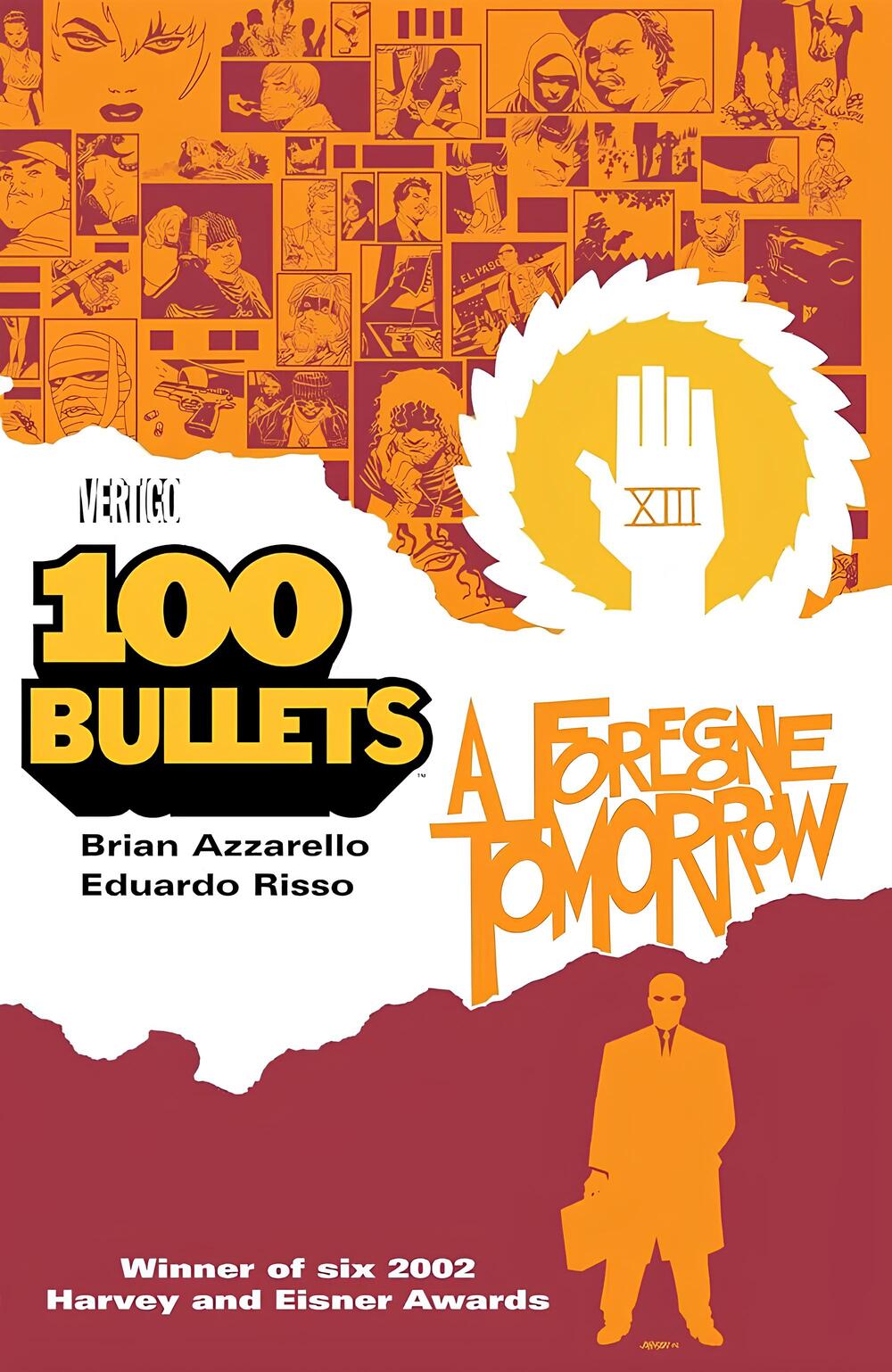
With A Foregone Tomorrow, Brian Azzarello and Eduardo Risso make it clear that 100 Bullets is done merely teasing the larger story behind Agent Graves, the Trust, and the Minutemen. The earlier volumes built their appeal around a very simple but powerful idea: Graves finds someone whose life has been ruined, hands them a briefcase containing a gun, proof, and one hundred untraceable bullets, then leaves them to decide what revenge is worth. That premise is still present here, but it no longer feels like the whole series. This fourth collection, which gathers issues #20-30, is where the long-running conspiracy really begins stepping out from the shadows. The Trust finally feels like a real organization rather than a few names being dropped in dark rooms, the Minutemen begin to take clearer shape, and Agent Graves starts to look less like a cryptic avenger and more like a man moving pieces around a board that only he fully understands.
The collection opens with “The Mimic,” and it is a good representation of what this volume does best. Azzarello ties together two conversations that seem unrelated at first: one involving Mr. Shepherd and Benito Medici, and another taking place at street level among people trying to survive in a world where even the smallest patch of territory has consequences. The contrast is important. On one side are the rich, insulated people who control entire criminal and financial networks without ever getting their own hands dirty. On the other are the desperate hustlers, dealers, addicts, and low-level criminals who are usually the first ones to bleed when those powerful people make a move. 100 Bullets has always had a strong sense of class anger under all the pulp dialogue and gunplay, but this volume puts that feeling more directly into the story.
Benito Medici is one of the most interesting additions here because he does not initially come across as the kind of polished, ruthless heir one would expect from the Trust. He seems immature, reckless, and more interested in enjoying the benefits of his family name than understanding what it costs other people. But Azzarello does not make him a joke. Benito is a spoiled rich kid, sure, but he is also a young man slowly realizing that he has been born into something dangerous and ancient. The Medici name gives him protection, money, and influence, but it also makes him a target. That uneasy realization gives his scenes some real tension. He is not just learning how much power his father Augustus has; he is learning that power in this world is never free.
The Trust itself is probably the biggest reason A Foregone Tomorrow feels like such a major turning point. Earlier books gave readers names like Augustus Medici and Megan Dietrich, along with hints about a hidden system that existed beyond regular crime families and street gangs. Here, the curtain gets pulled back much further. The Trust is revealed as a collection of powerful old families whose influence stretches across the country, while the Minutemen were created as their enforcers and internal police. The scope is suddenly much bigger than one person deciding whether to pull the trigger on somebody who wronged them. Agent Graves is not simply handing out opportunities for revenge. He is using those opportunities to destabilize a system that has spent generations protecting itself.
That expansion does make the book denser than the first three collections. Readers who liked the clean, self-contained revenge stories from First Shot, Last Call may need a little patience here. Azzarello is deliberately withholding information, and a lot of dialogue involves people speaking around the truth rather than plainly stating it. Characters mention events, names, and old betrayals that do not fully make sense until later. But that is also part of the fun. 100 Bullets is becoming a crime epic where every casual insult, odd coincidence, and brief appearance may eventually matter. The book trusts readers to keep up, and even when the plot gets murky, it rarely stops being compelling.
The Jack Daw material is probably the weakest portion of the collection, though it still has its uses. Jack is a huge, self-destructive junkie who already has one of Graves’s cases when the reader meets him. That is an interesting reversal of the usual formula because we do not see the initial pitch or the moment of temptation. We are instead dropped into the aftermath of a man who has already been given a chance to change his life and has clearly made a mess of it. Jack is not especially sympathetic, and the story never quite reaches the emotional impact of Dizzy Cordova’s or Loop Hughes’s earlier arcs. Still, he feels like another example of the kind of damaged person Graves is collecting. He is not a hero waiting to be awakened. He is a wrecking ball waiting for someone to point him in a direction.
The more memorable material comes from the way Azzarello keeps connecting old threads to new ones. Mr. Branch, who has spent much of the series trying to understand the conspiracy around Graves, becomes increasingly important as someone who sees patterns other characters are too close to notice. The story also takes a detour into the past with a strange, darkly funny episode involving baseball, Hollywood, and the Kennedy assassination. It is the kind of side story that might feel random in another series, but it works here because it reinforces the sense that Agent Graves has been active for a very long time. His briefcases are not a recent hobby. They are part of a much older game.
There is also an unexpectedly funny stretch involving a trip to Mexico, though the humor never makes the story feel safe. Azzarello has a talent for writing characters who can trade ridiculous insults and crude jokes one minute, then become frighteningly violent the next. That tonal balance is one of the things that keeps 100 Bullets from becoming unbearably grim. These people are living ugly lives in ugly places, but they still have personality. They still argue, posture, flirt, lie, and make each other laugh. The humor is usually mean, but it feels authentic to the world rather than forced comic relief.
Eduardo Risso remains the series’ secret weapon, even though by this point it is hard to call him a secret. His art gives every character an immediately recognizable silhouette and attitude. There are a lot of people in this volume, including gangsters, Trust members, old associates, street criminals, and potential Minutemen, yet Risso makes it easy to tell them apart. Benito looks like a privileged kid trying to wear confidence like a costume. Shepherd always carries himself with quiet control. Graves is still composed and unreadable, like somebody who has already calculated every possible outcome before entering the room.
Risso’s layouts are especially strong in the opening material, where different conversations and locations are visually paired to show how the powerful and powerless reflect each other. He can make a simple exchange in a park, a bar, or a hotel suite feel loaded with menace. His use of shadows, extreme angles, and stylized expressions gives the book its distinctive noir personality, but he never lets the style overwhelm the storytelling. You always know where to look and what emotional beat matters most. The guest pinup pages included around the original twenty-fifth issue are a neat bonus, though they do not have the same storytelling impact as Risso’s regular pages.
A Foregone Tomorrow is not as emotionally focused as Hang Up on the Hang Low, and it can feel more like a bridge volume than a completely self-contained story. But it is a very important bridge. This is where the series proves that its revenge setup was never just a clever anthology gimmick. The briefcases, bullets, and personal vendettas are all part of a larger conflict between men and women who believe they own the world and the people willing to burn that world down. By the end, Agent Graves is still mysterious, the Trust is still dangerous, and the Minutemen are only beginning to emerge from the past. But the road ahead is much clearer, and much more threatening.
100 Bullets Vol. 4: A Foregone Tomorrow is a strong, complicated, and occasionally messy installment that rewards readers who have been paying attention. Azzarello continues building the series into a sprawling noir conspiracy filled with damaged people, crooked power structures, and revenge that never comes without a price. Risso keeps the whole thing looking stylish, dangerous, and alive. It may not be the easiest volume to jump into, but for anyone following the series from the beginning, this is the point where the larger machine finally starts roaring to life.
“In the grim darkness of the far future, there is only war.”
Warhammer 40,000—usually shortened to Warhammer 40K, 40K, or simply Warhammer—is a science-fiction miniature wargame and one of modern pop culture’s largest shared fictional universes. Built around the famously bleak promise that “In the grim darkness of the far future, there is only war,” it imagines humanity in the 41st millennium: still alive, but reduced to a decaying, fanatical, militarized empire fighting an endless conflict against aliens, demonic powers, and its own self-destructive instincts.
What began in 1987 as a strange, punk-inflected tabletop release has become a global entertainment property spanning miniatures, novels, comics, animation, video games, audiobooks, collectible figures, apparel, and planned screen projects. Its strength is that it works on several levels at once: it is a tactical game, an art-and-modeling hobby, an enormous science-fiction mythology, a cosmic-horror setting, a military epic, and a satire of authoritarianism pushed so far that it becomes monstrous.
From Rogue Trader to a Global Hobby
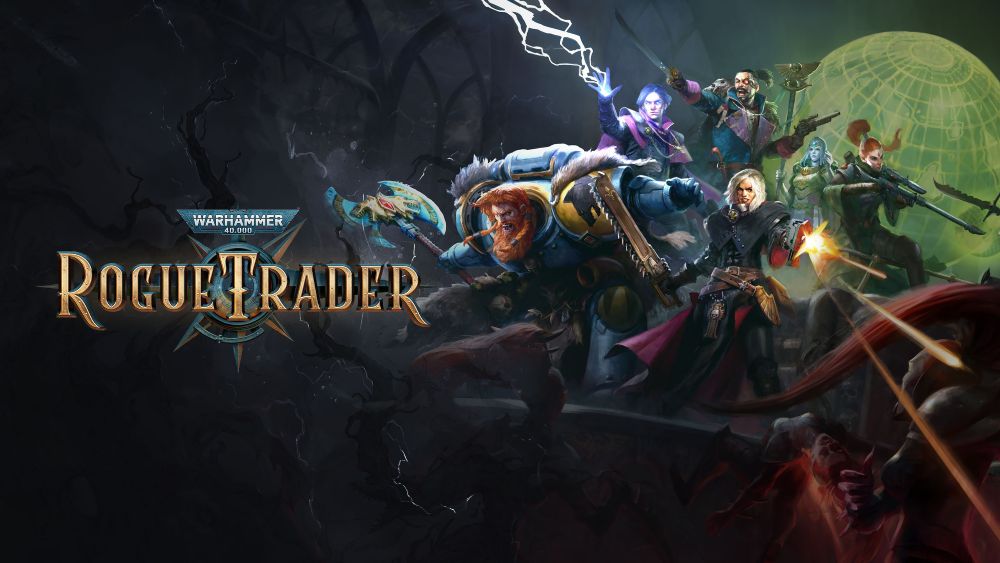
Warhammer 40K emerged from Games Workshop’s earlier success with Warhammer Fantasy Battle. Founded in the United Kingdom during the 1970s, Games Workshop began as a hobby company concerned with mail-order games, tabletop role-playing games, and miniatures. After the release of Warhammer Fantasy Battle in 1983, the company developed a science-fiction counterpart: Warhammer 40,000: Rogue Trader, released in 1987. Games Workshop identifies that launch as a major turning point and says the game rapidly became the world’s most popular wargame.
The original Rogue Trader was far stranger and less regimented than modern 40K. It was part skirmish game, part tabletop role-playing game, and part open-ended science-fiction sandbox. Players might command a small expedition of explorers, mercenaries, aliens, mutants, pirates, or Imperial agents rather than the large armies associated with the game today. The rules encouraged improvisation, scenario-building, character creation, and the invention of bizarre corners of a hostile galaxy.
Its titular Rogue Traders were Imperial explorers and licensed opportunists: merchants, colonizers, diplomats, archaeologists, and private adventurers granted authority to travel beyond the Imperium’s established borders. That concept captures early 40K’s loose, exploratory spirit. The setting was a collage of pulp adventure, cosmic horror, war fiction, medieval religious imagery, dystopian bureaucracy, science-fiction clichés, and black comedy.
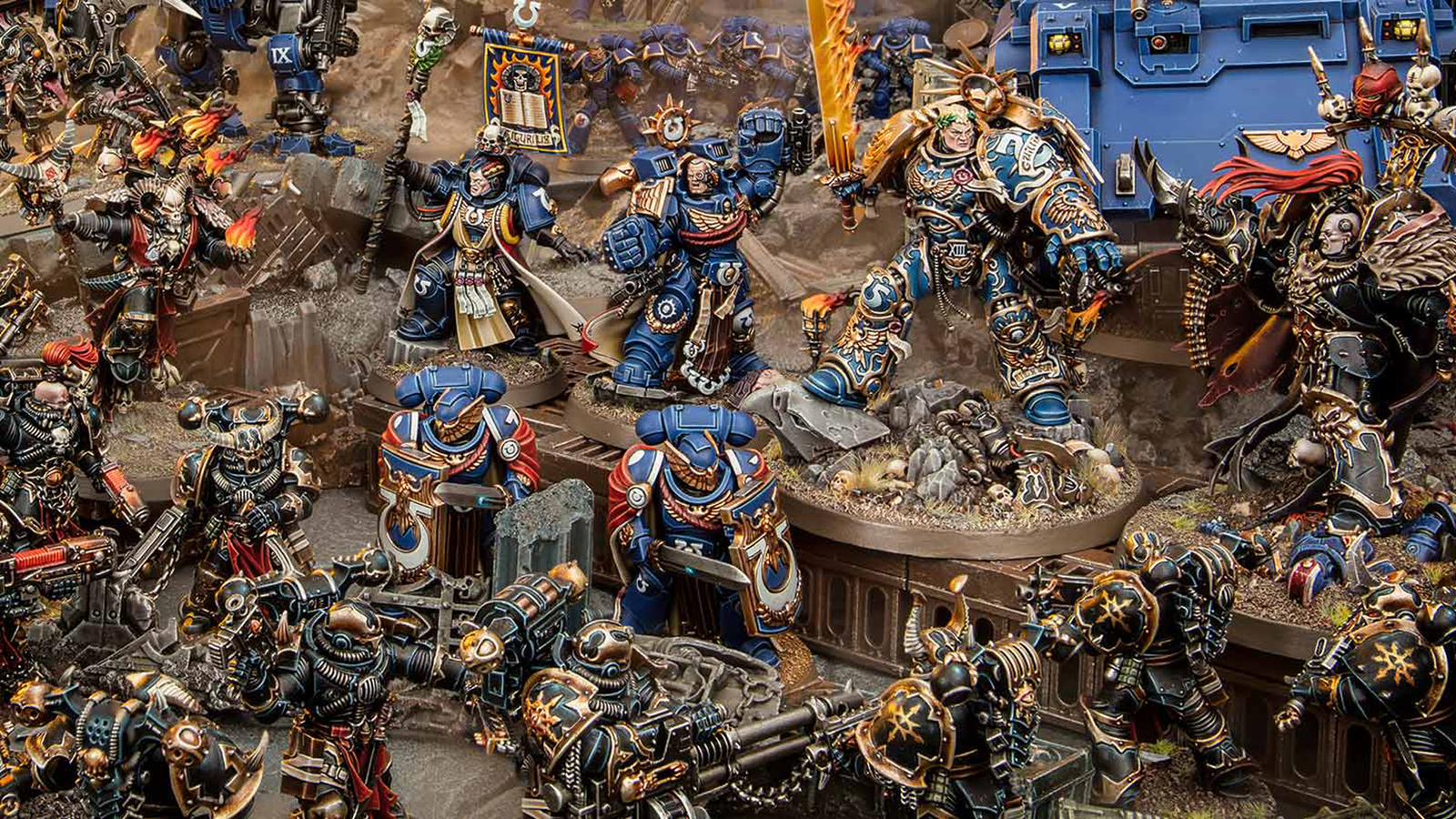
As later editions arrived, Warhammer 40K increasingly became an army-scale miniature wargame. Players began building forces around recognizable factions, leaders, squads, vehicles, and monsters. They buy unpainted plastic or resin kits, assemble them from separate parts, customize their weaponry and colors, paint them, and deploy them on terrain-filled tables.
A game may involve infantry formations, tanks, artillery, giant psychic creatures, alien swarms, aircraft, war machines, and genetically engineered super-soldiers. Dice resolve shooting, melee attacks, armor saves, morale, special abilities, and unpredictable battlefield events. Rulebooks and faction codexes provide the mechanical framework, but the miniatures remain the true center of the hobby. They are game pieces, collectible objects, art projects, and physical embodiments of the fiction.
A Universe Built From Influences
Part of Warhammer 40K’s longevity comes from its deliberately hybrid nature. It was never built from one source, genre, or artistic philosophy. It is a science-fantasy setting assembled from decades of literature, comics, horror, military fiction, mythology, history, tabletop gaming, heavy-metal album art, and British satire. Its most distinctive achievement is not inventing every ingredient from scratch; it is fusing familiar influences into a universe with an immediately recognizable voice and aesthetic.
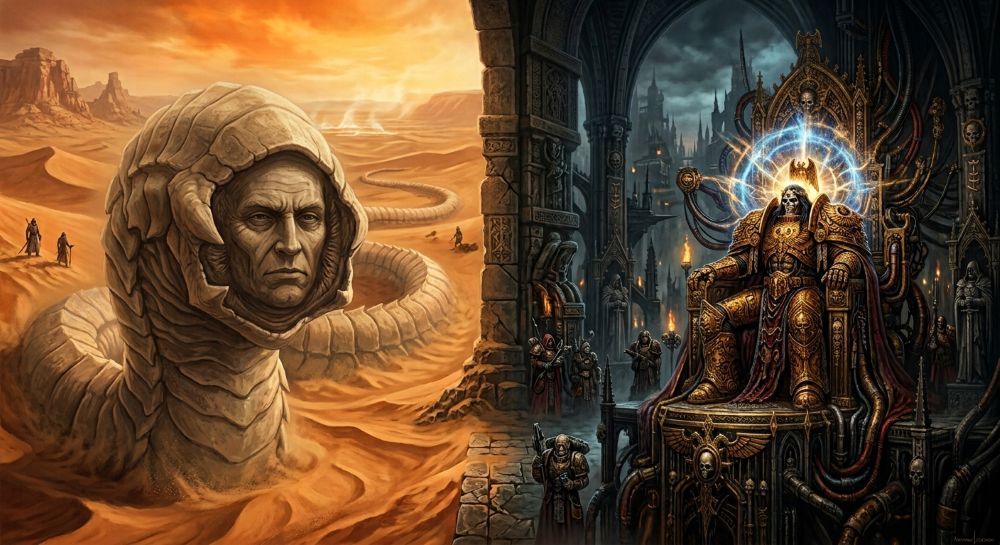
Frank Herbert’s Dune is among the clearest and most consequential influences. Dune supplied a model for science fiction that felt ancient, religious, feudal, ecological, political, and mythic all at once. The 40K Emperor shares obvious conceptual territory with Leto Atreides II, the transformed ruler at the center of Herbert’s God Emperor of Dune. Rick Priestley has explicitly compared the Emperor to Leto, noting the shared notion of a ruler defined by long-term sacrifice and an individual transformed into a reluctant or burdensome deity.
The influence appears throughout 40K’s structure. The title “God-Emperor,” the use of “lasgun,” the importance of interstellar navigation, the dangers of psychic power, and the notion of a galaxy shaped by feudal houses, religious institutions, and decaying imperial authority all evoke the imaginative territory Herbert helped popularize. The Imperium is not a direct copy of Herbert’s Imperium, but it channels the same sense of vast history and civilizational exhaustion: humanity has conquered the stars, yet has become trapped by the systems it created.
Dune also helps explain why 40K feels less like sleek technological futurism and more like a medieval empire projected into space. The Imperium has spaceships, energy weapons, genetic engineering, and interstellar travel, but it is socially structured around dynasties, priesthoods, hereditary institutions, sacred relics, and ritualized warfare. A starship captain can wield authority like a feudal noble; a machine-priest can treat a computer system as a holy object; an entire planet can be governed according to rules that resemble an exaggerated mixture of medieval monarchy, colonial empire, and religious absolutism.
Robert A. Heinlein’s Starship Troopers also looms behind the setting, especially in its militarized future, armored infantry, planetary invasions, and questions about citizenship, duty, service, and the relationship between soldiers and the state. The Space Marine may not be a direct lift from Heinlein’s mobile infantry, but 40K shares the image of heavily armored future soldiers descending into hostile worlds as humanity’s elite warriors. The major difference is tonal. Heinlein’s novel is explicitly invested in debating civic responsibility and military service; 40K turns militarized citizenship and state power into a far more excessive, terrifying, and baroque nightmare.
The roots of Chaos reach deeply into the work of Michael Moorcock, especially the Elric stories, the broader Eternal Champion cycle, and Moorcock’s recurring tension between cosmic order and cosmic chaos. Priestley has said that Realm of Chaos, a foundational early Warhammer supplement, drew inspiration from Moorcock’s fiction. Moorcock’s influence can be felt in Warhammer’s willingness to treat Chaos as more than generic evil. It is a metaphysical force of mutation, temptation, instability, transformation, corruption, and destructive freedom.
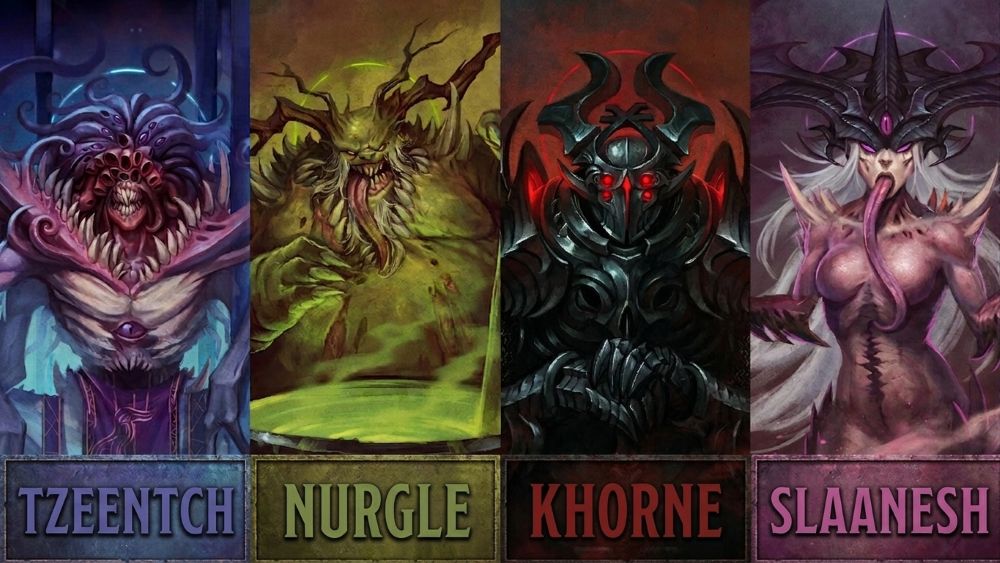
The Chaos Gods of 40K are not simply demons waiting outside reality. They are entities shaped by mortal emotion and civilization’s psychic debris. Rage creates Khorne, ambition feeds Tzeentch, despair strengthens Nurgle, and obsession empowers Slaanesh. That fusion of cosmic mythology and inner human failing is distinctly Moorcockian in spirit, even as 40K develops it into a universe of its own.
Walter M. Miller Jr.’s A Canticle for Leibowitz is another key lens through which to understand the Imperium. Miller’s post-apocalyptic novel imagines a future in which religious custodians preserve fragments of lost knowledge after civilization collapses, often without fully understanding what they have saved. The Adeptus Mechanicus—the techno-priests of Mars—operates on a grandiose science-fiction version of that principle. It preserves ancient technologies, treats machines as sacred, seeks lost artifacts, and often turns scientific understanding into religious ritual.
The Imperium’s relationship with technology is therefore central to its tragedy. Humanity possesses equipment advanced beyond anything available in the present day, yet much of that knowledge has been forgotten, distorted, or rendered taboo. A machine can be repaired through liturgical procedure. A blueprint can be treated like scripture. Innovation can be regarded with suspicion because it threatens inherited dogma. A Canticle for Leibowitz offers one important ancestor for that image of civilization after knowledge has become relic, ritual, and superstition.
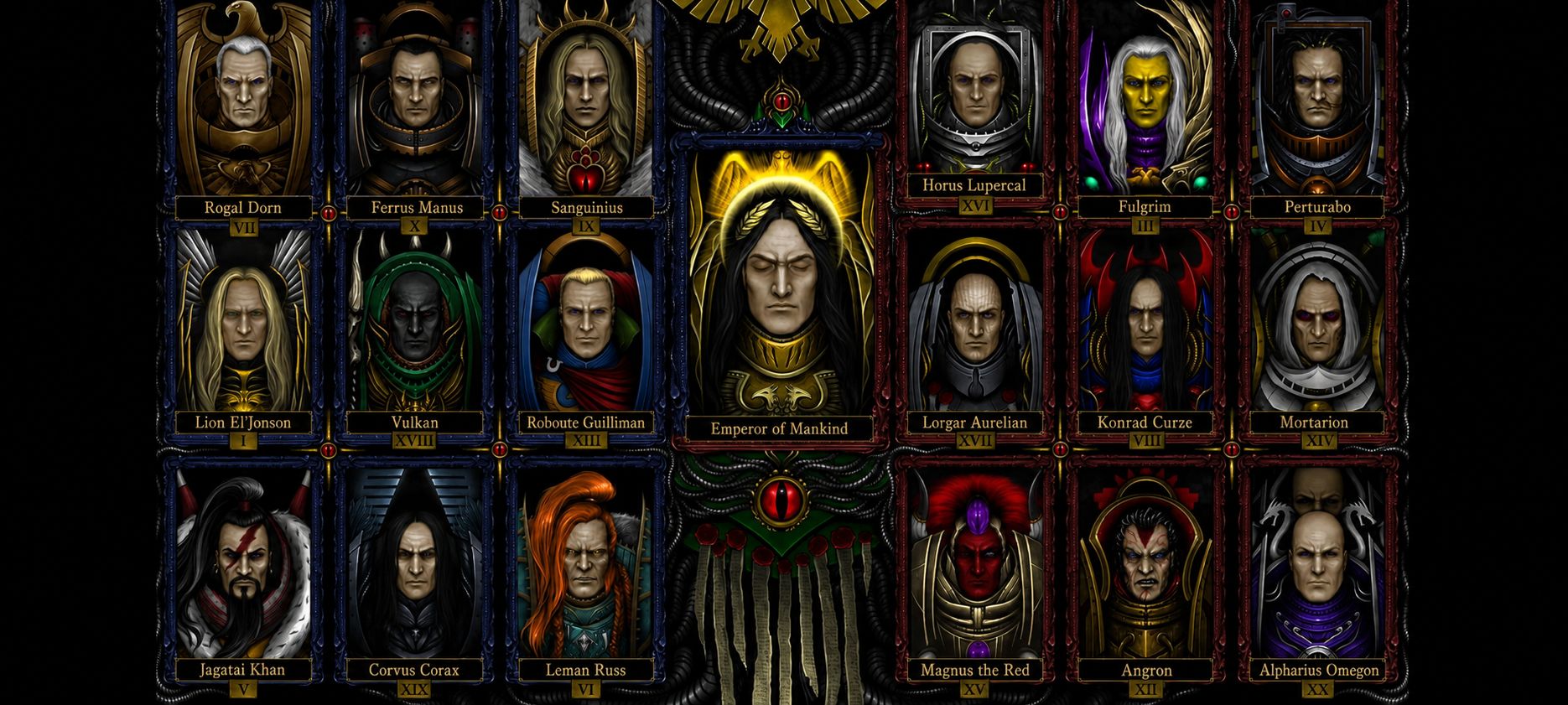
John Milton’s Paradise Lost also echoes through 40K, most strongly in the story of the Emperor, his Primarch sons, and the Horus Heresy. The broad outline has unmistakable Biblical and Miltonic flavor: a father figure of immense authority creates near-divine sons; his favored son falls into rebellion; a vast heavenly order is split by betrayal; the resulting war reshapes creation; and the remnants of the fallen become demons or devils waging eternal war against their former kin.
Horus Lupercal is not simply Satan, and the Emperor is emphatically not a straightforward God figure. 40K is too morally compromised for that kind of clean analogy. The Emperor can be visionary, tyrant, savior, manipulator, father, failed reformer, and imprisoned god all at once. Yet the emotional architecture is Biblical: the fall of beloved sons, the tragedy of betrayal, the creation of a false church around a broken father, and the transformation of rebellion into eternal damnation.
British comics are just as important as canonical science-fiction novels. The influence of 2000 AD—especially its anarchic, darkly comic, satirical approach to dystopia—helps explain 40K’s original voice. Judge Dredd offered a future city-state defined by absurdly authoritarian law enforcement, brutal social control, violence, and exaggerated fascistic spectacle. The comic’s writers and artists mixed dystopian science fiction with satire and a distinctive, sometimes savage sense of humor.
That sensibility can be found in 40K’s hive cities, the planet-sized urban slums and industrial nightmares where billions live under crushing conditions. It can be found in the Adeptus Arbites, the Imperium’s heavily armed enforcers; in the Inquisition’s secret-police authority; and in the setting’s fascination with rules so vast and convoluted that they become a form of madness. If Dune helped give 40K its mythic science-fantasy scale, 2000 AD helped give it its dystopian absurdity and its willingness to make political cruelty both horrifying and grotesquely ridiculous.
The Grim Darkness of Humanity
The universe of Warhammer 40K is set roughly 38,000 years in the future, during the 41st millennium. Humanity once spread across the stars during a technological golden age, but that civilization collapsed under the weight of war, artificial intelligence, psychic catastrophe, isolation, and rebellion. By the present-day setting, human worlds have been reassembled into the Imperium of Man, an unimaginably vast empire that is too decentralized, bureaucratic, and dangerous to be fully governed.
The Imperium is humanity’s main shield against extinction, but it is also one of genre fiction’s most oppressive regimes. It is a theocracy governed through censorship, terror, war, forced labor, religious obedience, and endless sacrifice. Its authorities routinely destroy entire populations to stop the spread of Chaos, mutation, rebellion, or alien influence. Its citizens are taught to fear difference and accept death in the Emperor’s service as the highest possible duty.
At the center is the Emperor of Mankind. Long ago, the Emperor was an active psychic ruler who attempted to unite humanity under a secular, rational Imperium. Following the catastrophic civil war known as the Horus Heresy, he was mortally wounded and placed upon the Golden Throne, a colossal life-support device on Terra—the future Earth. Ten thousand years later, he is physically inert, sustained by immense sacrifice, but is worshipped as a literal god by trillions of Imperial citizens.
The irony is crucial: the Emperor’s earlier project was hostile to religion, yet the civilization founded in his name has turned him into the center of a fanatical state faith. His dead or dying body has become a symbol that justifies absolute obedience, endless crusades, censorship, and the persecution of anyone defined as impure or disloyal.
The galaxy is connected by the Warp, a parallel psychic dimension used for interstellar travel and communication. But the Warp is unstable, dangerous, and shaped by mortal thought and emotion. It is home to Chaos, a supernatural force embodied by four great gods:
Khorne, the god of rage, war, slaughter, blood, and martial violence.
Tzeentch, the god of change, sorcery, mutation, ambition, manipulation, and conspiracy.
Nurgle, the god of plague, decay, despair, entropy, and grim endurance.
Slaanesh, the god of obsession, pleasure, excess, perfection, sensation, and self-destruction.
Chaos is both an external threat and an internal consequence. It feeds on the fear, pain, rage, greed, and desperation of sentient life. The more brutal and hopeless the galaxy becomes, the stronger Chaos becomes. This makes the universe a self-perpetuating tragedy: the Imperium commits atrocities to preserve itself, but its cruelty produces exactly the despair and violence upon which its greatest enemy thrives.
Fascism, Satire, and the Imperium
Any serious account of Warhammer 40K has to address the politics embedded in the Imperium of Man. Its authoritarian, fascistic, xenophobic, ultra-nationalist, and theocratic character is foundational to the setting. It is not a decorative aesthetic applied to otherwise uncomplicated heroes. The Imperium is a nightmare-state built from state violence, militant conformity, religious terror, permanent war, enforced ignorance, and the idea that collective survival excuses every atrocity.
The Imperium’s language is full of concepts familiar to real-world authoritarian movements: purity, loyalty, unity, sacrifice, tradition, enemies within, enemies without, obedience to sacred authority, and extermination of the “other.” Aliens are not merely rivals but existential contaminants. Mutants are treated as proof of corruption. Heresy is not a disagreement but a disease. Citizens are expendable resources in a war machine. The state is sacred; doubt is treason.
But that is not an invitation to admire the Imperium. Its grotesque political logic is part of the property’s original satirical foundation. The early Rogue Trader era was shaped by the same punk, anti-establishment, dystopian, and satirical energy that ran through much British genre culture during the 1980s. Its creators were working against the backdrop of Thatcher-era Britain, a period of profound political conflict over nationalism, policing, class, militarism, organized labor, public institutions, and the treatment of dissent.
The broader Warhammer line occasionally made that influence explicit. The 1986 campaign The Enemy Within, written for Warhammer Fantasy Roleplay, included Empress Magritta/Magraritha as a pointed satire of Margaret Thatcher, while its title echoed Thatcher’s notorious rhetoric about “the enemy within.” It would be simplistic to reduce the whole of 40K to a single anti-Thatcher allegory, especially after decades of expansion under many writers. Yet the setting’s foundational instinct was to take authoritarian rhetoric and imperial fantasy to ridiculous, horrifying extremes.
The Imperium is the ultimate in-joke about the bankruptcy of those ideas. It asks what would happen if every authoritarian fantasy—racialized or species-based purity, sacred hierarchy, militarized masculinity, obedience, nationalism, fear of outsiders, religious certainty, and expansion through force—were granted total control over a galaxy for ten thousand years. The answer is not a stable civilization. It is stagnation, paranoia, ignorance, endless violence, and a government that can preserve life only by making life unbearable.
This is why far-right and fascistic bad-faith actors who try to claim the Imperium as an ideal are missing the point, whether unintentionally or deliberately. They see its armored soldiers, skull-covered banners, huge weapons, slogans about purity, and worship of the God-Emperor as an image of restored order. Yet 40K frames the actual consequences of this “order” as horrific: worlds burned clean, populations sacrificed, dissidents tortured, knowledge lost, and humanity spiritually hollowed out.
Games Workshop has directly addressed real-world prejudice and fascist appropriation in its community. It stated that it would “never accept nor condone any form of prejudice, hatred, or abuse,” described the Imperium as driven by hatred and extreme xenophobia, and declared: “The Imperium is driven by hate. Warhammer is not.” The company also stated that people displaying real-world hate symbols or behaving in discriminatory ways are not welcome in official stores, events, or the Warhammer community.
The satire can become complicated because Warhammer 40K is made to be visually spectacular. It sells massive armored warriors, cathedral-sized starships, gigantic tanks, heroic last stands, and grandiose military imagery. A Guardsman defending civilians or a Space Marine holding a city against monsters can still be brave. Individual courage is real within the fiction. But the heroic action of a character should not be confused with moral endorsement of the system that character serves.
A good way to understand the setting is to distinguish people from institutions. A soldier can be selfless; the empire can remain monstrous. A Space Marine can save a planet from Tyranids; the Imperium can still be a fascistic theocracy. The tragedy is that many of the setting’s protagonists have been born into conditions where brutality is taught as necessity and alternatives appear impossible.
Factions, Heroes, and Horrors
The most famous force in Warhammer 40K is the Adeptus Astartes, better known as the Space Marines. They are genetically engineered, heavily indoctrinated super-soldiers created from the genetic legacy of ancient demigod generals. Organized into independent Chapters rather than massive unified legions, Space Marines are the Imperium’s elite shock troops—the “Angels of Death.”
The Ultramarines are disciplined and highly organized warriors with Roman-style military and civic imagery. The Blood Angels are noble heroes afflicted by a hereditary thirst for bloodshed. The Dark Angels are secretive knightly warriors haunted by ancient betrayal. The Space Wolves use Viking and Norse mythic imagery, while the Black Templars are crusading religious zealots who embrace the Imperium’s faith with particular intensity.
The Imperium is much more than Space Marines. The Astra Militarum, also called the Imperial Guard, consists of ordinary human soldiers confronting impossible threats with rifles, tanks, artillery, discipline, and numbers. The Adeptus Mechanicus are the cybernetic techno-priests of Mars who preserve and worship ancient machines. The Adepta Sororitas, or Sisters of Battle, are armed warrior-nuns who serve the Imperial faith. The Inquisition hunts heresy, alien infiltration, rogue psykers, and Chaos cults with nearly unlimited authority. The Adeptus Custodes are the Emperor’s golden-armored bodyguards, while the secretive Grey Knights specialize in combating daemons.
The main human enemy is Chaos, and its most iconic servants are the Chaos Space Marines—the descendants of legions that rebelled against the Emperor during the Horus Heresy. The disease-ravaged Death Guard serve Nurgle. The occult Thousand Sons serve Tzeentch. The berserk World Eaters serve Khorne. These factions illustrate one of the franchise’s recurring themes: virtues such as courage, ambition, loyalty, knowledge, and strength can be warped into fanaticism, cruelty, obsession, and self-destruction.
The xenos factions are equally essential. The Orks are massive green war-addicts who find genuine joy in combat, making them one of the setting’s strangest blends of comedy and menace. The Aeldari, formerly called Eldar, are an ancient psychic species divided among multiple societies, including the nomadic Craftworld Aeldari and the sadistic Drukhari raiders. The Necrons are ancient machine dynasties awakening from tomb worlds to reclaim a galaxy they believe belongs to them. The T’au Empire is technologically advanced and organized around the “Greater Good,” but its rhetoric of unity also hides coercion, surveillance, and imperial expansion.
The Tyranids provide the setting’s purest form of cosmic horror. They are an extragalactic hive species controlled by the immense Hive Mind. They do not want land, gold, ideological victory, revenge, or diplomacy. They consume worlds for biomass. A Tyranid invasion strips a planet of plants, animals, people, oceans, and every possible usable resource. Their advance is often prepared by Genestealer Cults, which infiltrate human societies, breed hybrid populations, incite rebellion, and prepare entire worlds to be devoured.
The Horus Heresy and Mainstream Rise
The foundational historical event in Warhammer 40K is the Horus Heresy, a galaxy-wide civil war that occurred ten thousand years before the main setting. In humanity’s earlier period of expansion, the Emperor launched the Great Crusade, a campaign to reunite scattered human worlds beneath a secular Imperium. To command his armies, he created twenty Primarchs, superhuman sons and generals whose genetic material was used to create the original Space Marine Legions.
The Emperor’s favored son was Horus Lupercal, whom he named Warmaster. Horus was manipulated and corrupted by Chaos, then led roughly half of the Space Marine Legions in rebellion against the Emperor. The father-and-son imagery echoes Paradise Lost and Biblical tales of rebellion, but 40K gives it a brutally ambiguous twist: the Emperor is not a blameless divine father, and his rebellious sons are not united by a coherent moral cause. The war is a catastrophe born from pride, secrecy, ambition, manipulation, and the failure of a ruler who tried to shape humanity’s future through absolute control.
The Heresy ended during the Siege of Terra. The Emperor confronted Horus aboard the traitor’s flagship and destroyed him, but received mortal wounds in the process. The Emperor’s survival on the Golden Throne saved humanity from immediate collapse, yet it also ensured that the Imperium would spend the next ten thousand years worshipping a broken relic instead of realizing the future he claimed to seek.
The Horus Heresy became one of the franchise’s largest literary projects through the expansive The Horus Heresy novel series, and its ancient battles now form the basis of the dedicated tabletop game Warhammer: The Horus Heresy. Its impact explains nearly every major feature of modern 40K: the division of Space Marines into Chapters, the hatred between loyalists and traitors, the divinity of the Emperor, and the Imperium’s permanent paranoia about betrayal.
For decades, Warhammer 40K was huge within hobby culture but comparatively specialized in wider popular culture. Its mainstream growth accelerated through video games, online miniature-painting communities, audiobooks, social media, and increasingly polished adaptations. Relic Entertainment’s Warhammer 40,000: Dawn of War helped establish the setting as a major PC strategy property after its 2004 release. Later games such as Warhammer 40,000: Space Marine, Warhammer 40,000: Darktide, Warhammer 40,000: Rogue Trader, and Warhammer 40,000: Space Marine 2 made the franchise accessible to people who may never have collected miniatures.
Black Library, Games Workshop’s fiction label, also made the setting more accessible by turning its lore into character-driven stories. Eisenhorn works as a detective thriller and political mystery centered on the Inquisition. Gaunt’s Ghosts follows ordinary soldiers through the machinery of Imperial war. Ciaphas Cain brings a more comic, self-aware perspective to the setting. The Horus Heresy transforms the franchise’s oldest backstory into a vast tragic saga.
The move toward television and animation marks the clearest mainstream expansion yet. Secret Level featured a Warhammer 40,000 animated episode in 2024, while Amazon MGM Studios, Blur Studios, and Games Workshop are developing a larger animated project connected to the Deathwatch. Henry Cavill is attached as an executive producer and is also associated with Amazon’s developing live-action Warhammer 40,000 project.
Ultimately, Warhammer 40K has endured because it is not merely a franchise about powerful soldiers and giant battles. It is a gigantic, flexible setting that can support military tragedy, gothic horror, cosmic horror, detective stories, religious dystopia, dark comedy, political intrigue, space opera, and apocalyptic adventure. Its most enduring insight is that a civilization cannot build genuine security through hatred, obedience, and endless war. In Warhammer 40K, those ideas do not create order. They create the grim darkness from which no one can escape.
The Transformers: The Movie from 1986 was a must-see for me as a 13-year-old boy, but the anticipation of watching it and the actual experience were two entirely different things. The former was filled with excitement, the kind that comes from counting down the days until you finally get to see your favorite characters on the big screen. The latter, however, was something else entirely—a scarring moment that taught me, in the final year before entering high school, that not even afternoon cartoon characters were exempt from onscreen deaths. It was a harsh lesson in the unpredictability of storytelling, and it left an impression that has lasted a lifetime. And I wasn’t alone. The film shocked and scarred millions of children who flocked to theaters or gathered around their VHS players, expecting their beloved Transformers cartoon to simply be bigger and louder on the big screen. Instead, they were met with the brutal, unforgiving reality of watching their favorite characters die in battle, one after another.
The film was released during the height of Transformers mania in the mid-1980s, a time when the toy aisle was dominated by Hasbro’s robotic heroes and villains. But here’s the thing: The Transformers: The Movie wasn’t just about selling toys—it was about replacing them. Hasbro had a new line of Transformers ready to hit the shelves, and the movie served as a way to phase out the older generation of characters. The result? A shockingly brutal narrative that saw many fan-favorite characters meet their end in ways that were far removed from the relatively tame Transformers TV series. This wasn’t just a Saturday morning cartoon stretched to feature length; it was a full-blown sci-fi epic with stakes that felt real, and consequences that were permanent. For kids like me, who grew up watching the TV show, the film was a jarring wake-up call. The deaths of major characters like Ironhide, Prowl, and even Optimus Prime himself were not just unexpected—they were traumatic. It’s no exaggeration to say that The Transformers: The Movie left an entire generation of children with lasting emotional scars, all because it refused to sugarcoat the cost of war.
And yet, that’s exactly why it worked. The film’s willingness to go dark and take risks is what set it apart from so much of the animated fare of the era. The story picks up in the year 2005, with the Autobots and Decepticons still locked in their eternal struggle. The Decepticons, led by the ever-scheming Megatron, launch a full-scale assault on Autobot City on Earth, and the battle that follows is one of the most intense and visually stunning sequences in the film. The animation, while a product of its time, holds up surprisingly well, with vibrant colors and dynamic action that still feels exciting today. But what really sticks with you is the emotional weight of the story. The film doesn’t shy away from showing the cost of war, and the loss of life—even for animated robots—feels genuine. It’s a far cry from the often lighthearted and episodic nature of the TV series, and that contrast is part of what makes the movie so memorable.
At the heart of the film’s emotional impact is Peter Cullen’s iconic performance as Optimus Prime. Cullen’s voice work in the Transformers TV series had already made Optimus Prime a beloved figure, but in the movie, his role takes on an even greater significance. Though his screen time is brief, Cullen’s delivery of Optimus’s final words—“Until that day, ‘till all are one”—is nothing short of legendary. It’s a moment that has been etched into the minds of fans for decades, a testament to Cullen’s ability to convey both strength and vulnerability in a single line. Even now, nearly 40 years later, that scene remains one of the most powerful in the entire Transformers franchise. Cullen’s work helped elevate Optimus Prime from a toy commercial mascot to a genuine hero, and his influence can still be felt in every iteration of the character that has followed.
The film’s legacy is a fascinating study in how a movie can transcend its origins. On paper, The Transformers: The Movie was a 90-minute commercial designed to sell a new wave of toys. But in practice, it became something much more. The bold storytelling choices, the emotional depth, and the sheer audacity of killing off major characters in a children’s animated film ensured that it would be remembered long after the toys it was promoting had been forgotten. For the kids who saw it in theaters or on VHS, the film was often their first exposure to the idea that stories could have real consequences, and that heroes didn’t always make it out alive. It was a formative experience, one that left a lasting impression and helped shape the way a generation of fans engaged with media.
Of course, the film isn’t without its flaws. The pacing can feel uneven at times, and some of the new characters introduced in the movie—like the Dinobots and the Junkions—don’t get as much development as they deserve. The humor, while present, sometimes feels out of place amidst the darker tones of the story. But these quibbles do little to detract from the overall impact of the film. The Transformers: The Movie is a product of its time, but it’s also timeless in the way it handles its themes of sacrifice, leadership, and the cost of war. It’s a film that refuses to be pigeonholed as just a kids’ movie, and that’s part of its enduring appeal.
Today, The Transformers: The Movie holds a special place in the hearts of those who grew up with it. It’s a cult classic, a film that’s celebrated as much for its flaws as for its strengths. For many adults, revisiting the movie is like opening a time capsule, a chance to reconnect with the wide-eyed child they once were, the one who sat in front of the TV or the big screen, completely unprepared for the emotional rollercoaster they were about to experience. The film’s legacy is a testament to the power of storytelling, and to the idea that even something as seemingly commercial as a toy-based animated movie can leave a lasting impact. Whether you’re a lifelong Transformers fan or just someone who appreciates a good underdog story, The Transformers: The Movie is a film that’s well worth revisiting. Just be prepared for a few emotional gut punches along the way.
“What is light without dark? What are you without me? I am a part of you all. You can never defeat me. We are brothers eternal!” — Darkness
Legend is one of those films that feels like it should be a masterpiece even before it begins. It has Ridley Scott behind the camera, an extravagant fantasy premise, elaborate practical effects, striking production design, and a cast that includes a young Tom Cruise, Mia Sara, and Tim Curry. Released in 1985, the film arrived as a dark fantasy event that had been heavily anticipated, especially because Scott had already earned a reputation for visually stunning films. Alien and Blade Runner had established him as a director who could make entire worlds feel tactile, mysterious, and overwhelming. The idea of Scott applying that sensibility to unicorns, goblins, forest sprites, demonic lords, and fairy-tale mythology was exciting on paper. Unfortunately, while Legend is often gorgeous to look at, it becomes an uneven mess that is only saved from becoming a major disappointment by Tim Curry’s performance as Darkness.
The setup is familiar enough to sound almost deliberately archetypal. In a magical forest, Jack, played by Cruise, is a woodland boy who lives in harmony with nature and has fallen in love with the innocent Princess Lili, played by Sara. The world’s balance is tied to a pair of unicorns, embodiments of purity and light. Darkness, a devil-like ruler who wishes to plunge the world into permanent night, sends his goblin servants to kill the unicorns and take one of their horns. Lili’s fascination with the unicorns sets the tragedy in motion, and once one of the creatures is slain, winter and darkness descend upon the land. Jack must rescue Lili, restore the horn, defeat Darkness, and return light to the world.
There is nothing inherently wrong with a simple fairy-tale plot. In fact, Scott’s strongest instinct in Legend is treating fantasy with a sense of visual seriousness. The forest does not look like a clean studio set built for children; it looks damp, overgrown, foggy, and vaguely dangerous. The trees loom like ancient creatures, shafts of light break through the branches in painterly bursts, and even the beautiful areas of the film carry an eerie quality. Scott and cinematographer Alex Thomson create images that often resemble illustrated storybooks poisoned by a nightmare. The film’s environments are its greatest achievement. Whether it is the glowing forest, the icy wasteland after the unicorn’s death, or Darkness’ fire-lit underworld, Legend makes a serious effort to create a fully realized fantasy space rather than simply dressing actors in costumes and placing them in generic medieval scenery.
That visual commitment is why the film remains so fascinating despite its flaws. You can pause almost anywhere and find something worth admiring: a strange creature in the background, smoke drifting through a cavern, an enormous set textured with roots and stone, or a costume that looks handmade rather than mass-produced. Scott’s eye for atmosphere is undeniable. The film has an unusual physicality, too. Its magic is created through prosthetics, makeup, puppetry, matte work, and elaborate sets, so even when some effects have aged, they retain a handmade charm. Modern fantasy often has the advantage of digital flexibility, but Legend has the kind of tactile design that makes its world feel like it has dirt under its fingernails.
Still, visual beauty cannot completely compensate for a story that never finds a consistent rhythm. Legend often feels less like a fully developed narrative than a collection of spectacular images and half-formed fairy-tale ideas. Characters appear with little introduction, emotional shifts happen abruptly, and major story developments can feel rushed or strangely underexplained. The theatrical cut in particular carries the sense that important connective material has been removed. There are moments when the movie seems to expect emotional investment simply because the images are grand or the music swells, but the script has not done enough to earn that reaction.
Jack is also an unusually bland hero for a film that needs a strong center. Cruise was still early in his career, and there are flashes of the screen presence that would soon make him a major star. He is physically committed and looks believable racing through forests, climbing ruins, and confronting danger. But Jack is written as a generic pure-hearted fantasy protagonist, and Cruise never gets enough material to make him feel specific. He is brave because the story says he is brave, romantic because the story says he loves Lili, and destined to save the world because that is what these stories require. He does not have much inner conflict beyond the expected guilt and determination.
Lili is similarly underwritten, although Mia Sara does bring a dreamy, otherworldly quality to the role. The film wants her to embody innocence, temptation, and romantic idealism, but it does not give her much agency until she becomes corrupted by Darkness’ influence. Her transformation into a dark bride is visually memorable, especially in the elaborate black gown and makeup, but it also highlights the film’s habit of prioritizing imagery over character. The sequence is beautiful, eerie, and loaded with gothic fantasy appeal, yet Lili’s emotional journey into that role feels more decorative than dramatically convincing.
The supporting characters are more colorful but not always more useful. The dwarfs, elves, and forest companions give the story occasional energy, particularly the sarcastic fairy Oona and the armored dwarf Gump. Yet their presence can make the film feel tonally scattered. Sometimes Legend wants to be haunting and mythic; sometimes it wants broad comic relief; sometimes it drifts toward romantic melodrama. Those modes do not always blend. The result is a movie that can move from an ominous demonic ritual to a goofy side-character exchange without establishing a stable tone.
Then there is Tim Curry, who walks into the movie and immediately makes every other problem less important. His Darkness is one of the most iconic fantasy villains ever put on screen, and it is not difficult to understand why. The makeup design alone is astounding: massive horns, red skin, cloven hooves, muscular proportions, and a towering silhouette that makes him look like a medieval illustration of Satan brought to life. But the design would be nothing without Curry’s performance. He does not merely hide beneath the prosthetics; he gives Darkness a voice, posture, and seductive intelligence.
Curry plays Darkness as both monstrous and theatrical. His deep, measured delivery turns lines about night, desire, and evil into something genuinely alluring. He understands that the character should not simply roar or sneer. Darkness is persuasive. He offers Lili beauty, power, and escape from innocence, which makes him more interesting than a villain who only threatens destruction. His scenes with Sara have a strange, almost operatic energy, mixing horror, seduction, and camp in a way that fits the film’s most ambitious visual impulses. Curry makes Darkness feel ancient, vain, cruel, romantic, and weirdly funny all at once. He gives Legend its pulse.
The famous confrontation between Jack and Darkness should be the film’s crowning achievement, and visually it almost is. Darkness’ lair, lit by flames and surrounded by infernal architecture, gives Scott room to indulge his talent for monumental images. Curry’s villain towers over Cruise, making the hero look small and vulnerable. Yet even here, the fight is more memorable for its atmosphere than its dramatic construction. It is a good example of the whole film: rich in aesthetic invention, less persuasive as storytelling.
The music also reflects the movie’s fractured identity. Different versions of Legend are associated with different scores, most notably the Jerry Goldsmith score and the Tangerine Dream soundtrack used in the American theatrical release. The Goldsmith material feels more classically mythic and orchestral, while Tangerine Dream’s electronic music gives the film a distinctly 1980s dream-pop atmosphere. Both have their supporters, and both alter the experience considerably. That split feels appropriate for a movie that has always existed in multiple forms and competing moods. Legend is never quite one thing.
In the end, Legend is a flawed cult fantasy rather than a lost masterpiece. Its reputation rests largely on its imagery, its practical craftsmanship, and Curry’s towering performance, not on the strength of its plot or its emotional depth. Ridley Scott clearly wanted to make a dark fairy tale that felt ancient and sensual, but the finished film too often gets trapped between mythic grandeur, children’s fantasy, gothic romance, and broad adventure comedy. It is an uneven mess, but it is a beautiful one. And every time Tim Curry’s Darkness enters the frame, Legend briefly becomes the extraordinary film it was always trying to be.