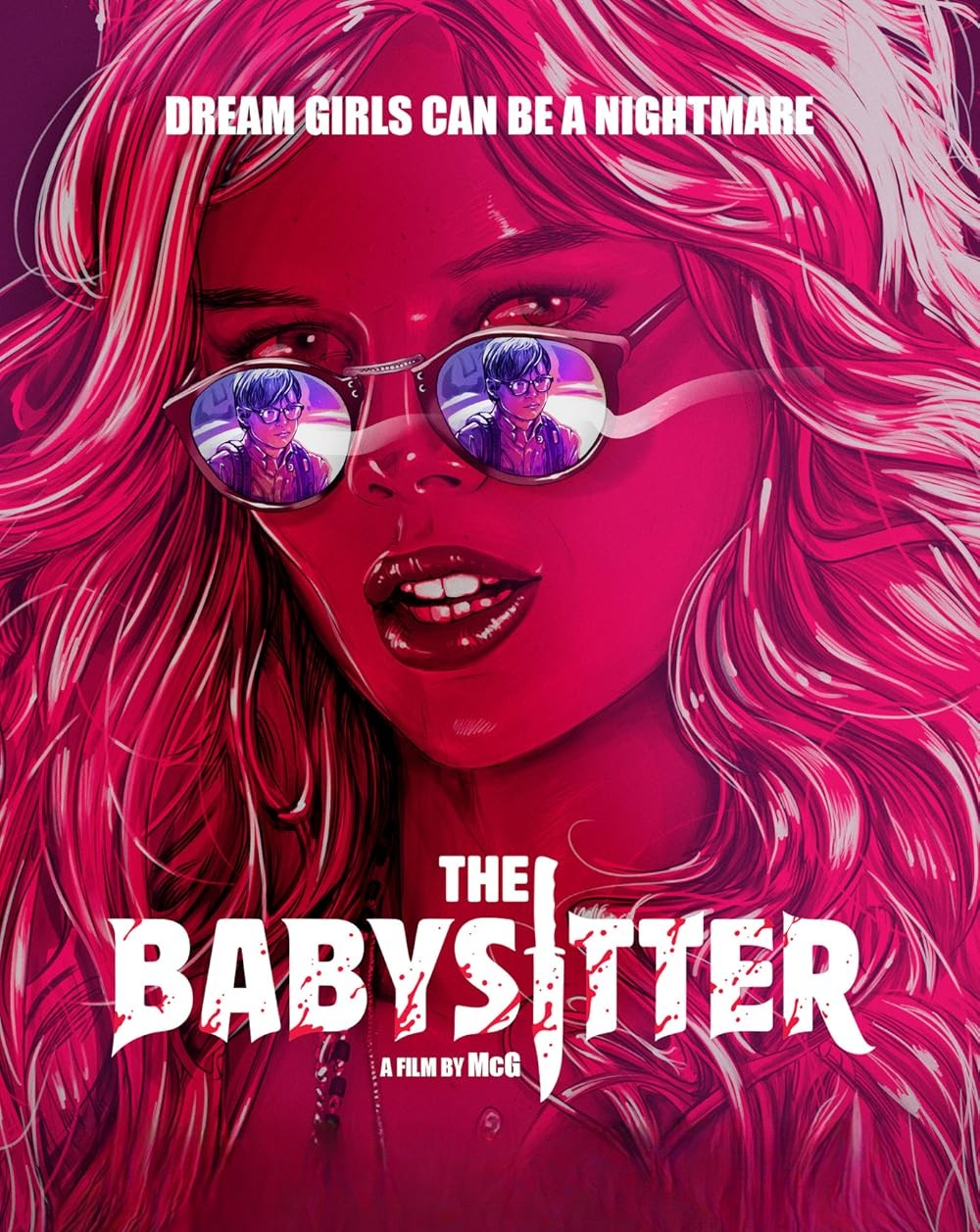
Horror Film Review: The Babysitter (dir. by McG)


“Well, I like weird, all of the time.” — Bee

The Babysitter is, above all else, Samara Weaving’s coming-out party—a wildly entertaining showcase that proves she can carry a horror movie with charm, menace, and complete comedic fearlessness. McG’s 2017 Netflix film, written by Brian Duffield, is built around a simple, absurd premise: a lonely kid discovers his beautiful babysitter is part of a Satanic cult. The movie lives and dies on Weaving’s performance as Bee, and she delivers enough star power, humor, and danger to turn a thin genre premise into a fast, colorful, gleefully violent horror comedy.

The story follows Cole, played by Judah Lewis, a nervous twelve-year-old who is still young enough to need a babysitter but old enough to hate that fact. His parents leave for the weekend, leaving him in the care of Bee. Cole has a massive crush on her, which makes the movie’s central betrayal sting even more. After staying up past bedtime to spy on the adults, he sees Bee and her friends murder someone as part of an occult ritual. Suddenly, the cozy suburban house becomes a battlefield, and Cole has to survive a night of Satanic murder, increasingly absurd violence, and the horrifying realization that the person he trusted most is trying to kill him.

Without Weaving, this premise could easily collapse into forgettable direct-to-streaming filler. Bee could have been nothing more than a one-dimensional “hot evil babysitter,” but Weaving gives her real charisma. She is funny, flirtatious, warm, and completely unhinged, often within the same scene. The film understands that Bee works best when she is both genuinely likable and genuinely dangerous. Cole trusts her because she treats him kindly, and that makes the reveal hurt. Weaving also gets most of the movie’s best lines and biggest moments, and she plays them with the kind of gleeful theatricality the material demands. This is the performance that announced her as a major modern horror presence, and it is easy to see why filmmakers and audiences took notice.

What makes The Babysitter work beyond Weaving is its total commitment to the bit. The film is essentially Home Alone filtered through a Satanic slasher and a teenage sex comedy. Cole fights back with household objects, improvisation, and pure panic, while Bee and her friends keep getting killed in ways that are gruesome, creative, and often funny. The movie never takes its mythology seriously enough for the ritual stuff to become dull. The cult’s plan is mostly an excuse for carnage, but the carnage is lively enough that the thin plot barely matters. This is a movie where a kitchen can become a weapon, a pool can become a crime scene, and a teenage cultist can be defeated by the kind of slapstick logic usually reserved for cartoons.

The supporting cult members are broad, ridiculous characters, but they fit the movie’s tone. Robbie Amell plays Max, a jock who clearly believes he is the coolest person in any room. Bella Thorne’s Allison is glamorous, vain, and increasingly undone as the night falls apart. Hana Mae Lee’s Sonya is the quiet, strange one, while Andrew Bachelor’s John is the guy who thinks he is more essential to the group than anyone else believes. None of them are deeply developed, but they do not need to be. They are archetypes, and the actors lean into that. Their banter is often juvenile, sometimes forced, but it matches the movie’s hyperactive, self-aware energy.

McG’s direction is both part of the film’s appeal and one of its biggest problems. He directs it like an extended music video: saturated colors, quick cuts, pop songs, pop-culture references, and a camera that rarely wants to sit still. When the style clicks, The Babysitter feels punchy and alive, with the energy of a comic book come to life. But McG leans so heavily into the comedy side that the movie often loses its horror footing. The jokes, quips, and broad performances are constantly pushed to the front, and when the film tries to shift into an actual horror beat, the moment frequently lands flat. The cult members are too goofy, the kills too cartoonish, and the tone too jokey for the movie to build much dread. Some jokes land with a thud, some references feel dated already, and the constant visual busy-ness can overwhelm the simpler pleasures of the premise. The film succeeds despite McG’s excesses, not entirely because of them.

The horror is more splattery than scary. Anyone expecting real dread, slow-building tension, or a genuinely unsettling villain will likely be disappointed. The movie’s comedy comes from the collision of childhood anxieties with extreme genre nonsense. Cole is afraid of bullies, girls, being alone, and growing up; the film literalizes those fears by putting him in a house full of murderous adults who want to sacrifice him. Beneath the blood and jokes, there is a surprisingly sincere coming-of-age story. But because the comedy is so relentless, the horror rarely gets room to breathe, and the movie’s scarier moments feel more like brief interruptions than genuine escalations.

Cole’s arc gives the chaos a little heart. At the beginning, he is passive, scared, and constantly humiliated. By the end, he has been forced to confront every fear he has, usually while covered in gore and running for his life. Judah Lewis is not giving a nuanced performance, but he is likable and believable as a terrified kid pushed past his limits. His friendship with Melanie, played by Emily Alyn Lind, adds another layer of warmth. Melanie encourages him to stand up for himself, and their awkward middle-school dynamic gives the movie a sweet emotional center beneath all the occult murder.

The film’s biggest weakness is its willingness to sacrifice logic for a joke. Characters make choices that only make sense because the plot needs them to. The cult’s plan is not especially well thought out. Adults and neighbors are conveniently unaware of gunfire, explosions, and general mayhem. The movie also sometimes views its female characters through Cole’s adolescent gaze, especially early on, which can make Bee and Allison feel more like fantasy objects than full people. The film gives them more agency as it goes, but the perspective remains very much that of a horny, terrified twelve-year-old boy. Whether that works for you depends on how much patience you have for that kind of teenage-male fantasy.

Still, The Babysitter has personality to spare. It is bright, brash, mean in a playful way, and unapologetically silly. It does not have the atmosphere of a prestige horror film or the emotional weight of the genre’s best work. It is not trying to be The Babadook or Hereditary. Instead, it is trying to be a bloody, funny, high-energy midnight movie, and it mostly succeeds. It is the kind of film best watched late at night, with low expectations and a high tolerance for cartoonish violence.

By the time the credits roll, The Babysitter has done exactly what it set out to do: deliver a loud, bloody, ridiculous good time while making Samara Weaving impossible to ignore. McG’s direction can be excessive, the comedy often crowds out the horror, and the scares are mild, but the film has enough energy, humor, and personality to make up for its flaws. Weaving turns Bee into one of the most entertaining horror villains of the Netflix era and uses the role as a true coming-out party for her career. Cole’s survival story gives the mayhem a surprisingly sweet coming-of-age core, but Weaving is the true engine of the film. It may not be a horror classic, but it is a very enjoyable piece of genre junk food: loud, colorful, violent, ridiculous, and much more fun than it has any right to be.
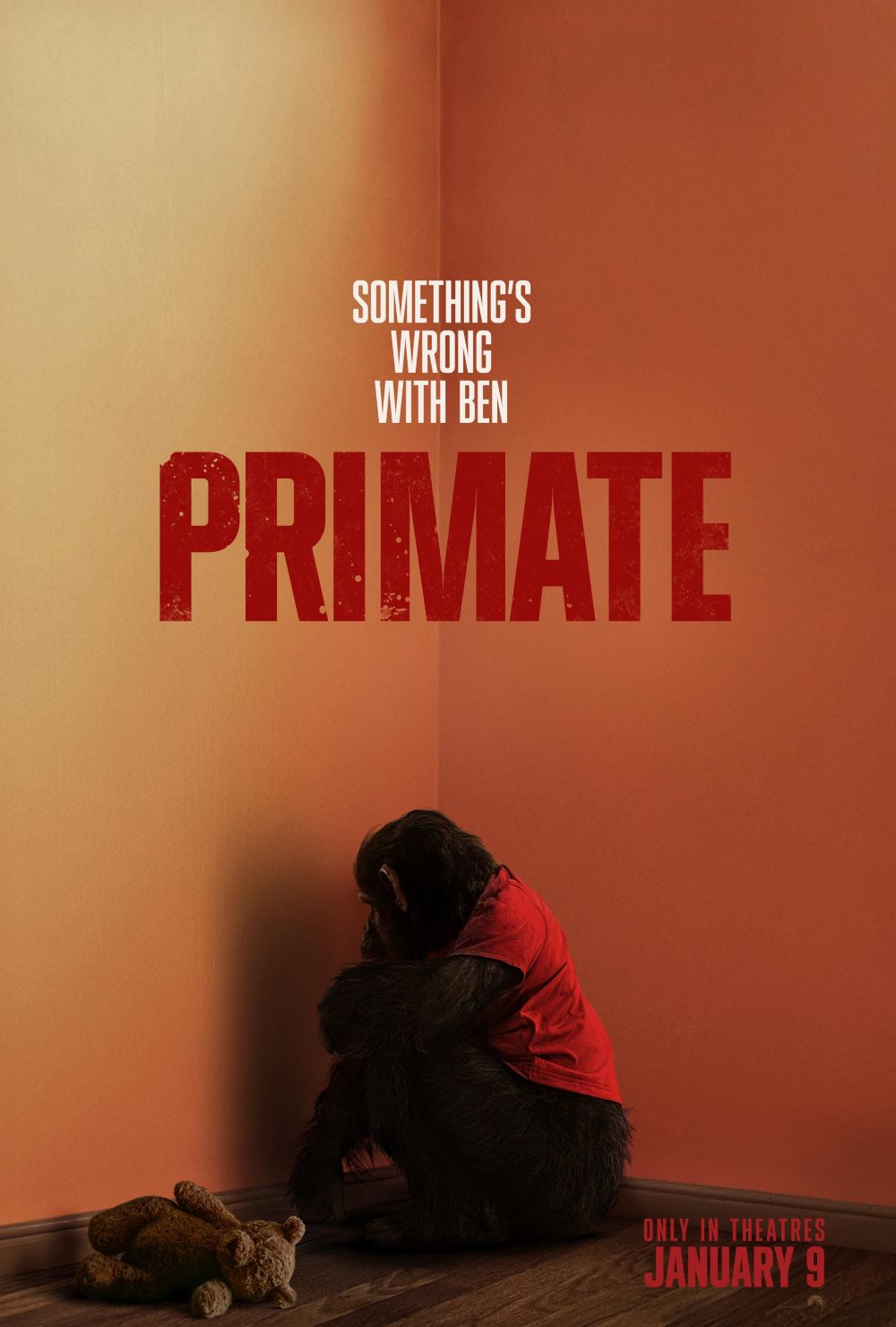
Review: Primate (dir. by Johannes Roberts)


“There’s something wrong with Ben.” — Lucy Pinborough

Primate is the kind of nasty little horror movie that knows exactly what it is: a killer-chimp siege flick with a mean streak, a surprising amount of craft, and just enough emotional texture to keep it from feeling like pure junk food. It is also, very unapologetically, a January-release bloodbath built around one simple promise: you came to watch a chimp rip people apart, and the film is absolutely going to deliver on that.

Set on a remote, luxury house carved into a Hawaiian cliffside, Primate follows Lucy, a college student returning home to her deaf father Adam, younger sister Erin, and Ben—their adopted chimpanzee, who has been taught to communicate using a custom soundboard. The setup leans a bit into family melodrama and awkward-friends-on-vacation vibes: Lucy brings her buddies Kate and Nick, Kate drags along wildcard Hannah, and a pair of party bros, Drew and Brad, orbit the group on the way to a weekend of drinking by the infinity pool. Things tilt into horror when Ben is bitten by a rabid mongoose, starts behaving erratically, and eventually tears the face off the local vet before busting out of his enclosure and turning the house into a kill zone. From there, the movie pretty much drops the pretense of being about anything except survival, creative carnage, and the miserable logistics of trying to outrun a furious primate on a cliff.

Director Johannes Roberts, who previously did 47 Meters Down and The Strangers: Prey at Night, brings that same B-movie efficiency here—minimal fat, fast escalation, and a willingness to lean into the ridiculous without winking too hard. Once Ben escapes, the film basically becomes a series of tightly staged, high-tension set pieces: kids trapped in a pool while a chimp stalks the edge, frantic dashes through glass corridors, and messy, up-close attacks where you really feel the weight and speed of the animal. The pool sequence in particular is a great example of Roberts finding one strong visual idea—humans stranded in water because the predator can’t swim—and milking it for all the dread he can. It’s simple, almost old-fashioned monster-movie blocking, but it works because the geography is clear and the danger feels immediate rather than abstract.

Visually, the film is punching above what you might expect from “rabid chimp horror.” The cliffside house setting gives Roberts and his team a lot to play with: long glass walls, sharp drops, tight stairwells, and that infinity pool hanging over nothing. The camera favors clean, legible compositions instead of frantic shaky-cam, which means when the violence happens, you actually see it—and the movie is proud of that. There’s a grimy 80s-video-store energy to the way kills are framed and lingered on just long enough to be uncomfortable, but not so long that they turn into camp. Adrian Johnston’s synth-heavy score leans into that retro horror vibe too; it buzzes and screeches like someone let a demon loose on a cheap keyboard, and it matches the film’s mix of nasty and playful pretty well.

The real secret weapon here is Ben himself. Rather than going full CGI or trying to work with a real chimp, the production uses a combination of suit performance, animatronics, and careful staging, with Miguel Torres Umba giving the creature its physical personality. The result is surprisingly convincing; there are stretches where it feels like you’re watching a real animal charge people on stairs or slam into doors, which makes the violence land harder. You can tell the effects team put in serious work on the costume and facial mechanics—Ben’s expressions shift from confused, childlike attachment to full-on feral rage, and that emotional readability helps sell him as a character instead of just a prop. Importantly, the film avoids the “PS3 cutscene” problem of bad CG animals, which would have killed the tension immediately.

Performance-wise, this is very much “do your job and don’t get in the way” acting, and that’s mostly a compliment. Johnny Sequoyah makes Lucy feel grounded enough that you buy her as both final girl and guilty older sister who’s been away too long. Troy Kotsur, as Adam, is probably the standout human presence; his scenes use sign language not as a gimmick, but as part of how the family actually lives, and his mixture of vulnerability and stubbornness gives the movie a little heart. The rest of the cast—Jessica Alexander, Victoria Wyant, Gia Hunter, Benjamin Cheng, and the cannon-fodder guys—do what’s asked: they feel like actual young adults rather than complete idiots, which helps when the film needs you to invest in whether they make it out. Nobody is delivering awards-caliber work, but nobody is embarrassing themselves either, and in a film where a chimp tears someone’s jaw off, that’s honestly the sweet spot.

Tonally, Primate walks a line between brutal and darkly funny, and your mileage will depend on how much you enjoy mean-spirited genre films. This is not a movie that’s precious about its characters; the script makes it clear that almost anyone can get obliterated at any moment, and the kill scenes are loud, wet, and often abrupt. There’s a streak of black comedy in how casually some of the deaths happen—a rock to the head here, a shovel to the face there—but Roberts never tips fully into self-parody. At the same time, the film does gesture at something sadder in the idea of a beloved family member suddenly turning dangerous because of a disease, and in the way Lucy has to reconcile her childhood bond with Ben with the reality of what he’s become. The movie doesn’t dig into that theme deeply, but it’s present enough to keep things from feeling completely hollow.

Where Primate stumbles is mostly in its limitations, and whether those feel like flaws or just genre boundaries will depend on what you’re looking for. The script is extremely straightforward: characters have clear, basic motivations, relationships are sketched in a few lines, and then everyone gets funneled into the survival engine. If you want layered character work, subtext about animal ethics, or a big commentary on captivity and communication, this is not that movie, even though the setup with a sign-literate chimp and a linguist mother hints at richer territory. The film also indulges in the usual horror conveniences—texts ignored, warnings missed, people splitting up when they probably shouldn’t—though to its credit, the characters generally behave less stupidly once they understand the situation. And as gnarly as the gore is, the movie’s reliance on shock and escalation can make the back half feel a bit repetitive: Ben appears, someone gets mauled, survivors scramble, repeat.

From an honesty standpoint, Primate is absolutely worth watching if you have a soft spot for creature-features, killer-animal movies, or throwback 80s-style horror that doesn’t pretend to be more than a vicious good time. It’s tightly paced, well shot, and anchored by a genuinely impressive creature performance that justifies the whole exercise. If you’re squeamish about animal violence, or you want your horror to come with metaphor, political commentary, or emotional catharsis, you’ll probably bounce off this pretty quickly. But if you can meet it on its own trashy, committed wavelength, there’s something satisfying about watching a studio-backed film go this hard, this graphically, on such a simple premise. It feels like the kind of bloody, fast-moving B-movie you’d have rented on VHS for a sleepover, only now it’s playing in theaters with a slicker finish and a killer chimp named Ben waiting to wreck your night.