Horror Film Review: The Babysitter (dir. by McG)


“Well, I like weird, all of the time.” — Bee

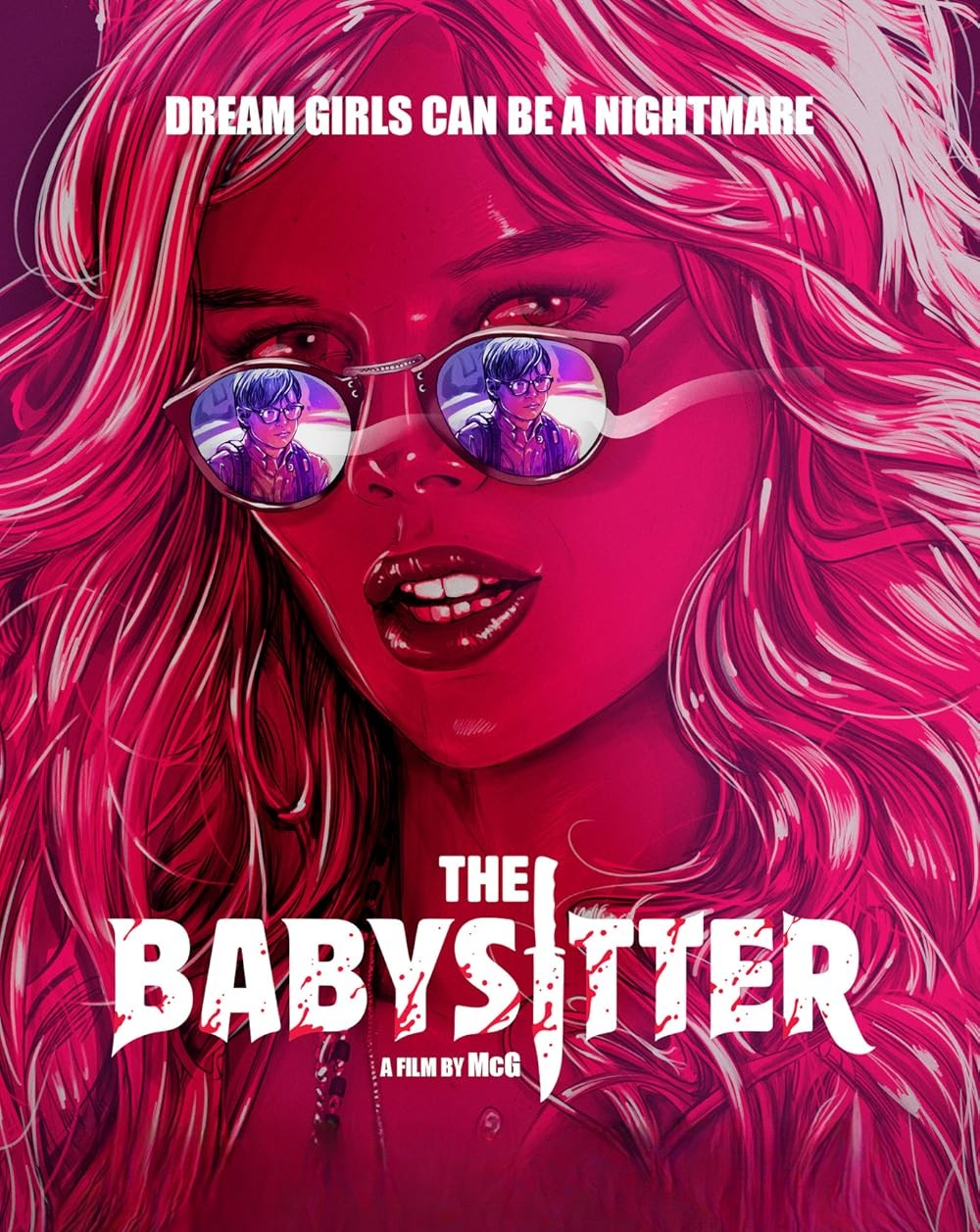
The Babysitter is, above all else, Samara Weaving’s coming-out party—a wildly entertaining showcase that proves she can carry a horror movie with charm, menace, and complete comedic fearlessness. McG’s 2017 Netflix film, written by Brian Duffield, is built around a simple, absurd premise: a lonely kid discovers his beautiful babysitter is part of a Satanic cult. The movie lives and dies on Weaving’s performance as Bee, and she delivers enough star power, humor, and danger to turn a thin genre premise into a fast, colorful, gleefully violent horror comedy.

The story follows Cole, played by Judah Lewis, a nervous twelve-year-old who is still young enough to need a babysitter but old enough to hate that fact. His parents leave for the weekend, leaving him in the care of Bee. Cole has a massive crush on her, which makes the movie’s central betrayal sting even more. After staying up past bedtime to spy on the adults, he sees Bee and her friends murder someone as part of an occult ritual. Suddenly, the cozy suburban house becomes a battlefield, and Cole has to survive a night of Satanic murder, increasingly absurd violence, and the horrifying realization that the person he trusted most is trying to kill him.

Without Weaving, this premise could easily collapse into forgettable direct-to-streaming filler. Bee could have been nothing more than a one-dimensional “hot evil babysitter,” but Weaving gives her real charisma. She is funny, flirtatious, warm, and completely unhinged, often within the same scene. The film understands that Bee works best when she is both genuinely likable and genuinely dangerous. Cole trusts her because she treats him kindly, and that makes the reveal hurt. Weaving also gets most of the movie’s best lines and biggest moments, and she plays them with the kind of gleeful theatricality the material demands. This is the performance that announced her as a major modern horror presence, and it is easy to see why filmmakers and audiences took notice.

What makes The Babysitter work beyond Weaving is its total commitment to the bit. The film is essentially Home Alone filtered through a Satanic slasher and a teenage sex comedy. Cole fights back with household objects, improvisation, and pure panic, while Bee and her friends keep getting killed in ways that are gruesome, creative, and often funny. The movie never takes its mythology seriously enough for the ritual stuff to become dull. The cult’s plan is mostly an excuse for carnage, but the carnage is lively enough that the thin plot barely matters. This is a movie where a kitchen can become a weapon, a pool can become a crime scene, and a teenage cultist can be defeated by the kind of slapstick logic usually reserved for cartoons.

The supporting cult members are broad, ridiculous characters, but they fit the movie’s tone. Robbie Amell plays Max, a jock who clearly believes he is the coolest person in any room. Bella Thorne’s Allison is glamorous, vain, and increasingly undone as the night falls apart. Hana Mae Lee’s Sonya is the quiet, strange one, while Andrew Bachelor’s John is the guy who thinks he is more essential to the group than anyone else believes. None of them are deeply developed, but they do not need to be. They are archetypes, and the actors lean into that. Their banter is often juvenile, sometimes forced, but it matches the movie’s hyperactive, self-aware energy.

McG’s direction is both part of the film’s appeal and one of its biggest problems. He directs it like an extended music video: saturated colors, quick cuts, pop songs, pop-culture references, and a camera that rarely wants to sit still. When the style clicks, The Babysitter feels punchy and alive, with the energy of a comic book come to life. But McG leans so heavily into the comedy side that the movie often loses its horror footing. The jokes, quips, and broad performances are constantly pushed to the front, and when the film tries to shift into an actual horror beat, the moment frequently lands flat. The cult members are too goofy, the kills too cartoonish, and the tone too jokey for the movie to build much dread. Some jokes land with a thud, some references feel dated already, and the constant visual busy-ness can overwhelm the simpler pleasures of the premise. The film succeeds despite McG’s excesses, not entirely because of them.

The horror is more splattery than scary. Anyone expecting real dread, slow-building tension, or a genuinely unsettling villain will likely be disappointed. The movie’s comedy comes from the collision of childhood anxieties with extreme genre nonsense. Cole is afraid of bullies, girls, being alone, and growing up; the film literalizes those fears by putting him in a house full of murderous adults who want to sacrifice him. Beneath the blood and jokes, there is a surprisingly sincere coming-of-age story. But because the comedy is so relentless, the horror rarely gets room to breathe, and the movie’s scarier moments feel more like brief interruptions than genuine escalations.

Cole’s arc gives the chaos a little heart. At the beginning, he is passive, scared, and constantly humiliated. By the end, he has been forced to confront every fear he has, usually while covered in gore and running for his life. Judah Lewis is not giving a nuanced performance, but he is likable and believable as a terrified kid pushed past his limits. His friendship with Melanie, played by Emily Alyn Lind, adds another layer of warmth. Melanie encourages him to stand up for himself, and their awkward middle-school dynamic gives the movie a sweet emotional center beneath all the occult murder.

The film’s biggest weakness is its willingness to sacrifice logic for a joke. Characters make choices that only make sense because the plot needs them to. The cult’s plan is not especially well thought out. Adults and neighbors are conveniently unaware of gunfire, explosions, and general mayhem. The movie also sometimes views its female characters through Cole’s adolescent gaze, especially early on, which can make Bee and Allison feel more like fantasy objects than full people. The film gives them more agency as it goes, but the perspective remains very much that of a horny, terrified twelve-year-old boy. Whether that works for you depends on how much patience you have for that kind of teenage-male fantasy.

Still, The Babysitter has personality to spare. It is bright, brash, mean in a playful way, and unapologetically silly. It does not have the atmosphere of a prestige horror film or the emotional weight of the genre’s best work. It is not trying to be The Babadook or Hereditary. Instead, it is trying to be a bloody, funny, high-energy midnight movie, and it mostly succeeds. It is the kind of film best watched late at night, with low expectations and a high tolerance for cartoonish violence.

By the time the credits roll, The Babysitter has done exactly what it set out to do: deliver a loud, bloody, ridiculous good time while making Samara Weaving impossible to ignore. McG’s direction can be excessive, the comedy often crowds out the horror, and the scares are mild, but the film has enough energy, humor, and personality to make up for its flaws. Weaving turns Bee into one of the most entertaining horror villains of the Netflix era and uses the role as a true coming-out party for her career. Cole’s survival story gives the mayhem a surprisingly sweet coming-of-age core, but Weaving is the true engine of the film. It may not be a horror classic, but it is a very enjoyable piece of genre junk food: loud, colorful, violent, ridiculous, and much more fun than it has any right to be.
Film Review: Doctor Sleep (Dir. by Mike Flanagan)


If I asked you about Stephen King’s The Shining, would the book or the film come to mind?

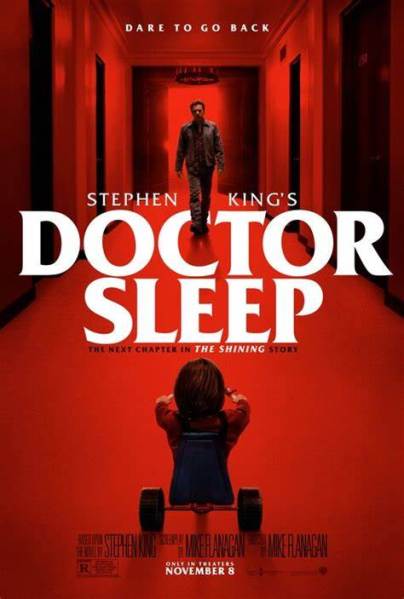
DoctorSleepPosterWhen it comes to adapting Stephen King’s stories to film, it’s not an easy feat. King himself had a problem turning his own short story “Trucks” into something good when he directed Maximum Overdrive. For every great film like Stanley Kubrick’s The Shining, or It-Chapter One, we occasionally get a misstep like The Dark Tower or It-Chapter Two.  As King can sometimes get wordy in his books, I’ve felt the best adaptations were the ones where the director’s own vision came into play. Kubrick made a number or changes to King’s story, including the Grady twins and the hedge maze, which were never in the novel. The film is so widely recognized that most people recall events in the movie, rather than the book. That’s the effect Kubrick had. 
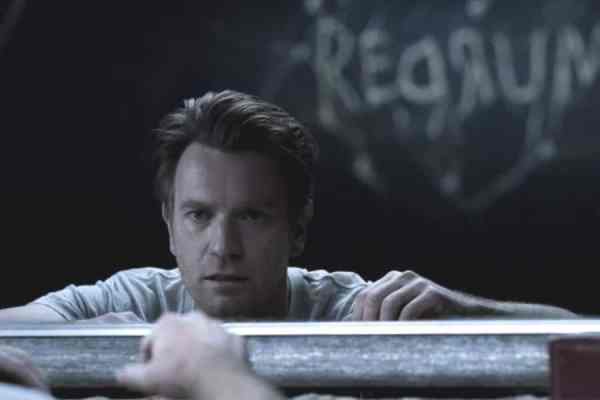
With Doctor Sleep, Mike Flanagan once again proves he’s a fantastic fit for King. The film moves at a great pace, with great performances by Rebecca Ferguson and newcomer Kyliegh Curran. In an age where audiences are typically quiet, the applause that occurred in scenes during last night’s preview screening were great to hear. The film manages to pay homage to Kubrick’s The Shining and King’s Novel of Doctor Sleep while still completely showcasing Flanagan’s vision. Of course, we already knew this from Flanagan taking on King’s own Gerald’s Game and Netflix’s The Haunting of Hill House.  One might even argue that for this film, we may in time recall Flanagan’s tale more clearly than King’s.

Doctor Sleep takes place after the events of The Shining, with Dan Torrance (Ewan McGregor) suffering from the same demons that plagued his father, Jack. Although the keeps to himself, he drinks too much, gets into brawls, and is unable to hold down decent work. Dan is also haunted by the Overlook Hotel, and the power that drew the souls to him known as The Shining. The Shining (or just the Shine) is a coveted power in King’s lore. When a group of nomads that feed on the Shine (in a way that’s reminiscent of Mick Garris’ Sleepwalkers) discover a girl with the same ability, Dan is brought out of hiding. 

Fans of the original Kubrick film will see there’s a lot of love here. You’ll be able to count some of the references to The Shining, from objects in a room to different locales. For casting, Flanagan uses a mixture of old favorites and new faces. You’ll recognize some of them right from the start, such as Bruce Greenwood and Violet McGraw. Others, like Jacob Tremblay (The Predator) are welcome additions. Rather than relying on footage from the original Shining, Flanagan recreates certain elements with new cast members, which I felt worked extremely well here. I’m not sure how others will take it.

Ewan McGregor is good in the role of Dan Torrance, which feels more like his Mark Renton character from Trainspotting than anything else to me.  This isn’t a bad thing, but it works. The film truly belongs to both Rebecca Ferguson (Mission Impossible: Fallout) and Kyliegh Curran. Ferguson’s Rose the Hat is a wicked villain, and she carries the role with a sinister, yet stylish flair. Ferguson has some of the best scenes in the film, particularly when paired with Zahn McClarnon (Midnight, Texas and Westworld), who plays Crow Daddy. Kyliegh Curran chews up the scenes she’s in, easily handling screen time with McGregor and Ferguson like a pro. Rounding out the cast are Cliff Curtis (Sunshine), Carl Lumbly (Mantis) and Emily Alyn Lind (The Babysitter). 

Doctor-Sleep-1

Dan Torrance (Ewan McGregor) can’t run from his past in Mike Flanagan’s Doctor Sleep.

As for the fear factor, there is some terror in the hunt for Abra and the way that the group interact. Doctor Sleep doesn’t have much in the way of jump scares, but makes up for it with some tense moments. I didn’t feel as scared as I did with It-Chapter One, but I cared enough about the characters to worry about how the story was going to turn out. That might be a turn off for those expecting to watch the movie from between their fingers or run out of the theatre screaming. If you enjoyed Flanagan’s other works, such as Hush or Oculus, you’ll be fine.

Speaking of Hush, Doctor Sleep lacks a Kate Siegel cameo. Flanagan is Siegel’s partner in crime (and husband). Together, they’ve been in almost every film they’d done. I’ve gotten used to going “Oh, there’s Kate!”, while watching his films. It’s not an issue at all, but it would’ve been cool to see her.

The camera work for Doctor Sleep is very even, though there are a few special effects scenes that really stand out and picked up some applause (or gasps) once they were over. The one main drawback I had with the film was that it was a little difficult to keep up with all of the locations and time periods early on. Even though everything’s clearly labeled, it took me a moment to recognize just where and when things were occurring. Not a terrible thing, though.

Overall, Doctor Sleep is an easy film to recommend. It has some great performances, and manages to be a great follow up to The Shining, while showing a lot of love for the source material.

Doctor Sleep hits cinemas on Friday, November 8th, and I’ll make a return visit.


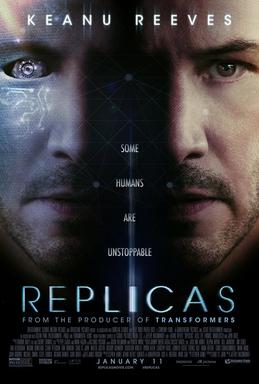
Film Review: Replicas (dir by Jeffrey Nachmanoff)


Don’t even ask me to explain what’s going on in Replicas, a sci-fi film that was released way back in January to terrible reviews and non-existent box office.

Admittedly, this film has a plot and you can kind of follow it if you force yourself to.  And really, it’s not that unusual of a plot.  It’s another one of those things where a scientist is shocked to discover that his top secret research is actually being funded by the military and everyone in the audience is supposed to be like, “OH MY GOD!  NO!  NOT THE MILITARY!”  As you can probably guess from the title, the film is also about clones.  Have you ever noticed that bad sci-fi films always seem to involve cloning?

It’s not so much that the plot can’t be followed as that the film’s storyline just feels oddly underdeveloped.  Watching Replicas, you get the feeling that the filmmakers got bored with the plot and just decided to go ahead and make the movie, without thinking everything through.  As a result, the film touches on all of the ethical and philosophical issues that come along with cloning people but that’s all it does.  Instead of actually exploring any of those issues or trying to come up with an original spin on the story, Replicas just mechanically moves from one scene to another.

Keanu Reeves plays William Foster, a scientist who, along with his longtime friend and partner, Ed Whittle (Thomas Middleditch of Silicon Valley fame), has figured out a way to transfer a dead person’s mind into a robot’s body, hence bringing the person kind of back to life.  A big evil corporation has set up a lab in Puerto Rico for Foster and Whittle to do their research.  The problem is that every time that they put a dead soldier’s mind into an android body, the dead soldier gets pissed off and destroys the body.  Evil Mr. Jones (John Ortiz) demands that they figure out a way to keep the dead soldier from getting mad.  Somehow, it doesn’t occur to Foster or Whittle that Jones wants them to put the soldier’s mind in the android’s body so that the android can then be used as a weapon of war.

(Also, if you want to use androids as soldiers, why not just do some sort of remote control thing like they do with drones?  Seriously, I don’t think Jones has thought his evil scheme through.  The less complicated the better.)

Anyway, Foster and his wife, Mona (Alice Eve), and his three children decides to spend the weekend camping and things don’t go well.  In fact, they go so badly that Foster ends up crashing the SUV and his entire family ends up dead.  Not to worry though!  Foster’s a scientist and he knows how to create clones.  So, he’ll just clone his family.  Of course, to do that, he’ll have to pretend that they’re all still alive and, because he only has room for three clones, he’ll have to pretend like his fourth child never existed.

Does Foster succeed?  Well, the movie is called Replicas.  What’s weird is that it’s obvious that Foster’s going to succeed but the movie still spends an entire hour with Foster and Whittle trying to figure out how to bring the clones to life.  I understand the movie wanted to at least pretend like there was a chance that Foster might not be able to do it but, again, the movie is called Replicas.

Anyway, Foster does eventually resurrect his family but then he discovers that Jones is actually a bad guy and soon, Foster and the Replicas are fleeing for their lives.  It really doesn’t add up too much because the film doesn’t bother to really explore any of the issues that it brings up.  Potentially big moments — like Foster deleting his youngest daughter’s existence — happen but are never really explored.  You keep waiting for some sort of twist — like the clones turning on their creator or Foster discovering that he’s a clone himself — and it never happens.  Instead, the film turns into a rather standard if not very exciting sci-fi action film.

To give credit where credit is due, Keanu Reeves does appear to be taking the film seriously and he has a few scenes that suggest that the film would have been improved if it had played up the idea of Foster being a mad scientist.  The rest of the cast seems to be either bored or miscast but Reeves does try to bring some heart to the film.  Otherwise, Replicas is pretty forgettable.

The Babysitter, Review by Case Wright


bbs4.jpg

The Babysitter, directed by McG- Lethal Weapon, Supernatural, Aim High, and Citizen Cane.  Ok fine, the last one was a bit of a fib, but he’s had an amazing career known for shows that are action heavy, pop, and have a lot of humor.  I did watch this one on the elliptical as a to refresh my memory, but I first watched it on a date night for a Netflix and Chill session.  The Babysitter was so fun; it doesn’t take itself seriously, until it has to.  Like Supernatural, the movie balances the horror with the character arcs to pull you into the story.  By the end, you genuinely care about how these characters end up.

Horror is often treated as the stepchild of film because people are attracted by the low budget/high profit payoff potential and think anyone can do it: so wrong.  In fact, there are times you have an immensely talented director, but he or she is not meant for this genre – see- https://unobtainium13.com/2018/10/01/all-the-boys-love-mandy-lane-aka-all-the-bland-love-blandy-lane-review-by-case-wright/

Also, writing horror can create masterpieces like 28 Days Later- https://unobtainium13.com/2016/10/24/28-days-later/ .  Horror screenwriters can also create misery-inducing steaming piles of terribleness for me or for whomever will have the excruciating experience of having to review it- see- https://unobtainium13.com/2016/11/20/channel-zero-welcome-home-season-1-ep-6-alt-title-so-very-boring/ In The Babysitter, Brian Duffield (Quarantine and soon to be released Vivian Hasn’t Been Herself Lately) delivers a fun popping script with fast moving acts, clear arcs, humor, gore, and clever buildups and payoffs.  I am looking forward to seeing the rest of his art and you should too!  The Babysitter is not in the Oscar worthy category of The Shining, but it is still brilliant because it succeeds in doing what is most important – it entertains.  You care about the protagonist and where he’s going and amazingly sometimes root a little for the villain because she is acted by the uber-talented Samara Weaving.

The film is basically Satanic Home Alone; in fact, they reference Home Alone in the film.  Cole, the protagonist, is a bullied awkward 12 year old with a heart of gold and no self-confidence.  Yes, I know that reads like a fairly common protagonist, but his nerdiness is so authentic and the dialogue is so real that you buy it.  Trust me, I’ve never led you wrong before.  Cole has a quasi-friend in the Girl Next Door- Melanie, but Cole’s true friend (seemingly) is Bee (Samara Weaving) his babysitter.  She genuinely likes movies and nerdy things just like Cole and we learn she was also an awkward teen herself prior to meeting Cole.

Bee seems to be perfect, but she is a satanic worshipper who wants to sacrifice one nerd, harvest some of Cole’s blood, and read from I guess the Necronomicon to be granted a wish of her choosing from Satan.  Then again, we all have our faults.  We get to see and not be told how close Bee and Cole have become over the years.  They love film and goofy dancing.  Cole stays up past his bedtime to spy on his beloved Bee to see what she is up to after he purportedly asleep.  Sadly, he watches Bee commit an over the top murder of a seduced nerd.  The deaths in this film are Final Destination awesomepants!  Watch The Babysitter just for the deaths alone! Bee has cohorts: Robbie Amell who is very good in this.  He plays the murderous jock expertly and if you’re so inclined he’s shirtless A LOT with aaaaaaaaaaaaaaaabs.  There’s also a lot of great humor with the somewhat bumbling satanic worshippers that are also out to get Cole and his sweet sweet AB Negative.

They need to harvest Cole’s blood to finish the evil wishing spell because he’s an obvious virgin, but he fights back.  It’s not corny like Home Alone; he mostly gets lucky or barely survives by finding weapons along the way- No booby traps.  The lack of traps and gags during the fight scenes keeps the story in the horror realm with the comedy sprinkled like a Mrs. Dash that doesn’t make you want to vomit.

There is a eventually a final battle between Bee and Cole.  She offers to make him part of the wish and live with him forever.  Now, I’m not saying he should’ve immediately taken her up on this offer. Maybe some negotiating would’ve been worthwhile, but really Cole…not even taking one beat to consider this pretty awesome offer.  I think that would’ve been fun as an alternate ending, but without fighting the final battle, Cole would not have realized his story arc as a true hero.  I have to admit if I were the 12 year old nerdy boy and Bee had made the same offer to me, I would have just been trying to figure out how many sock pairs I needed for our evil journey!

I want to make a special note here for the amazing performance of Samara Weaving.  She played the heck out of this role.  She could believably turn from evil to seductress to friend to good on a dime.  With the right opportunities, Samara Weaving will be the next Nicole Kidman!  Really!

Happy Horrorthon! Please check out my other stuff and tell your friends to read it as well!