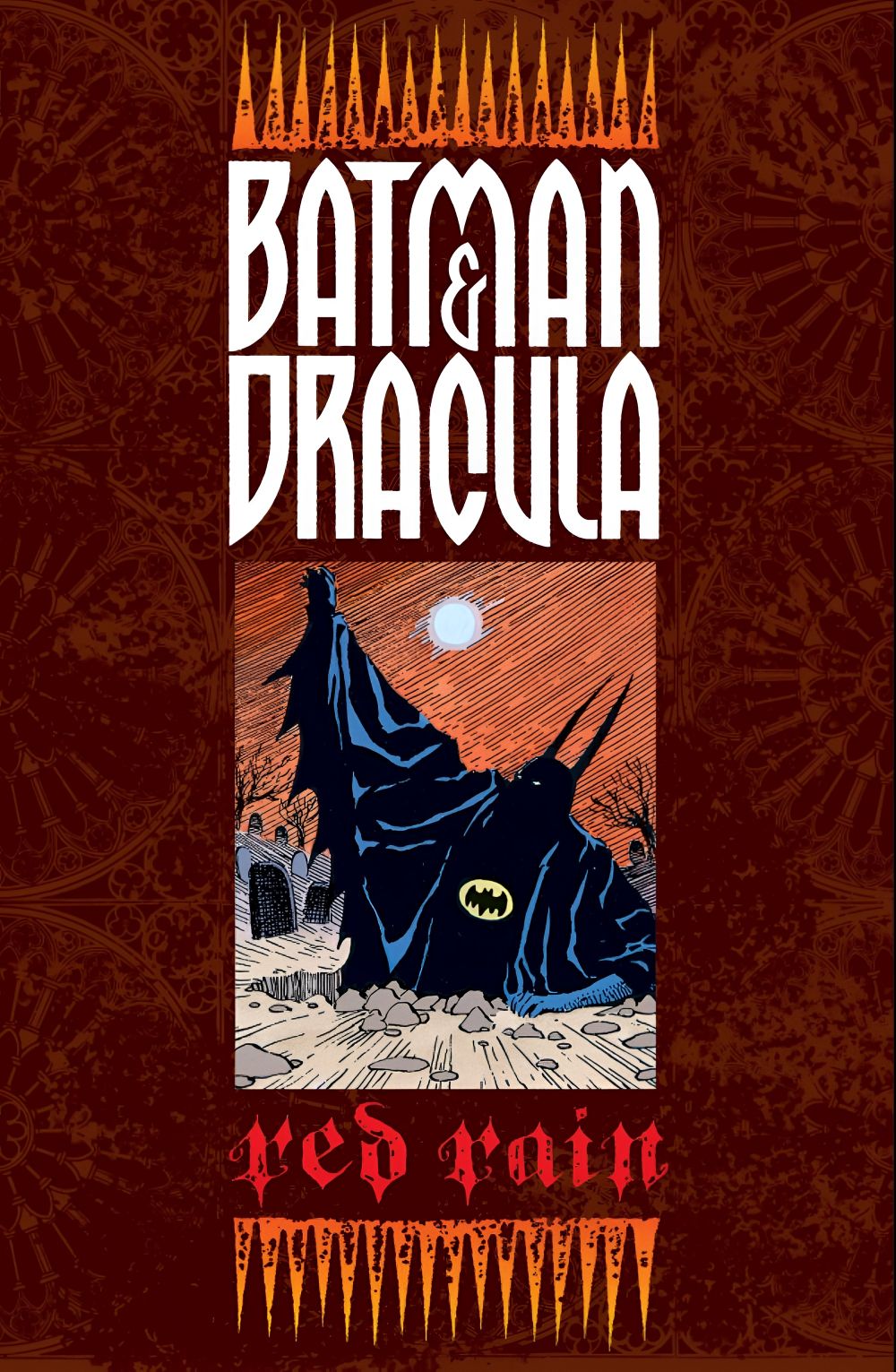
“The red rains do not cease until well past midnight…” — Intro
There is something almost inevitable about Batman & Dracula: Red Rain, as if the Dark Knight had spent decades waiting for a story that would finally let him face the ultimate creature of the night. Written by Doug Moench and drawn by Kelley Jones, this 1991 DC Elseworlds graphic novel takes Batman out of mainstream continuity and places him in a Gotham City invaded by Dracula and his vampire followers. It is a simple premise, but it is also a perfect one. Batman has always borrowed from horror—the bats, the shadows, the fear, the whole “I am the night” attitude—so pitting him against literature’s most iconic vampire feels less like a random crossover and more like the character finally meeting the genre that helped shape him.
The story begins with Gotham under a different kind of threat. Dracula arrives in the city and begins preying on its homeless population, people whose disappearances attract little attention from police, politicians, or the wealthy citizens who prefer not to look too closely at the city’s suffering. Batman notices the pattern and starts investigating, initially believing he may be dealing with a serial killer or some new criminal operation. What he discovers is far worse: an ancient vampire lord has chosen Gotham as his hunting ground. Moench uses that early investigation well, giving the book a detective-story structure before it becomes something much larger and more supernatural. Batman is at his best when he is the person paying attention when nobody else will, and that quality gives the horror a stronger emotional foundation.
The choice to make the homeless Dracula’s first victims is one of the book’s smartest decisions. It gives Red Rain a social dimension without turning it into a lecture. Gotham has always been portrayed as a city that exploits and abandons vulnerable people, and here that neglect becomes literally deadly. Dracula does not need to conquer Gotham through armies or public spectacle at first; he can feed quietly because society has already decided these lives do not matter. Batman, for all his wealth and privilege, refuses to accept that indifference. That conflict gives the story more weight than a standard hero-versus-monster plot. Dracula is not merely powerful; he is a predator thriving in the cracks of a broken city.
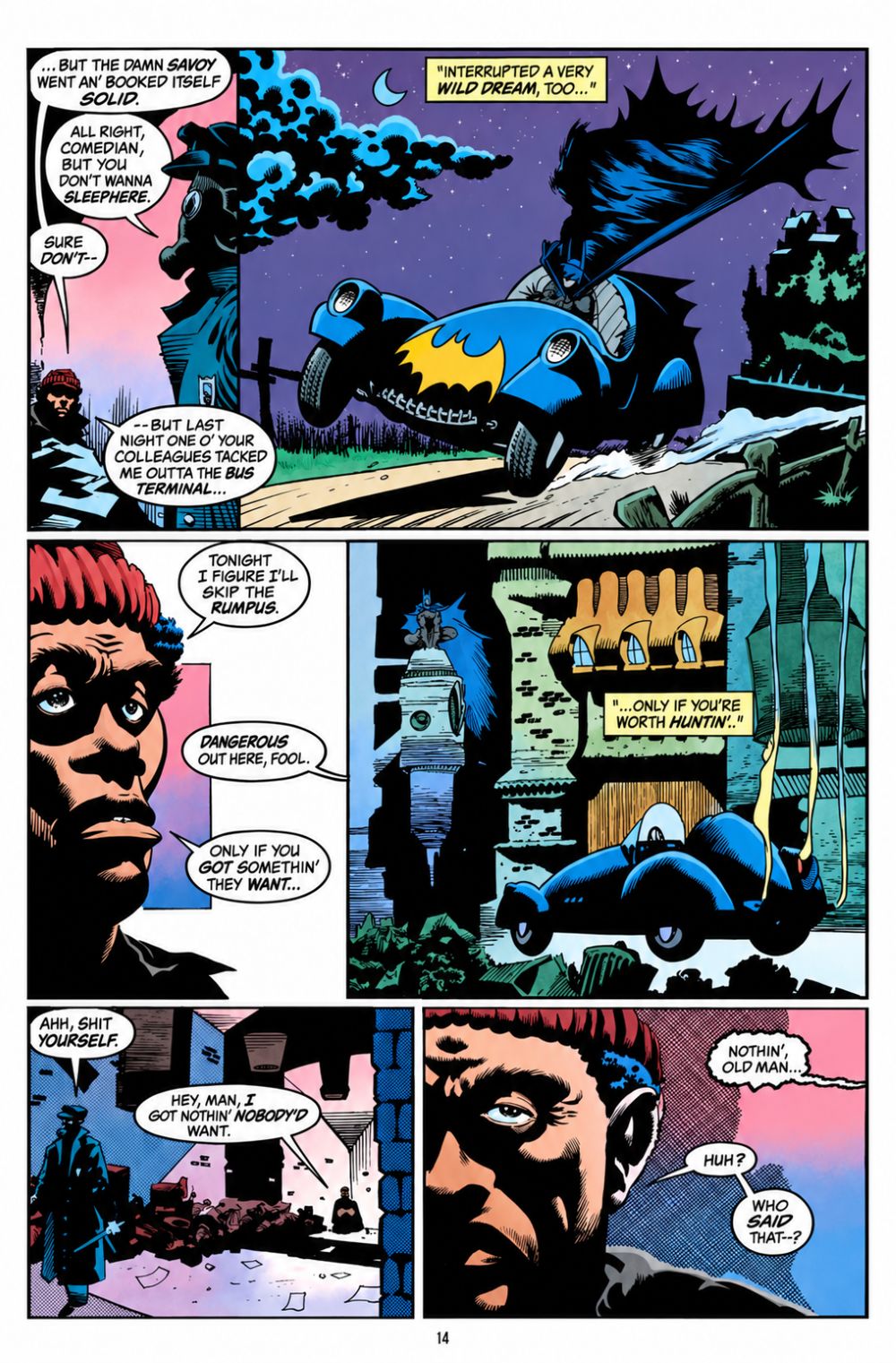
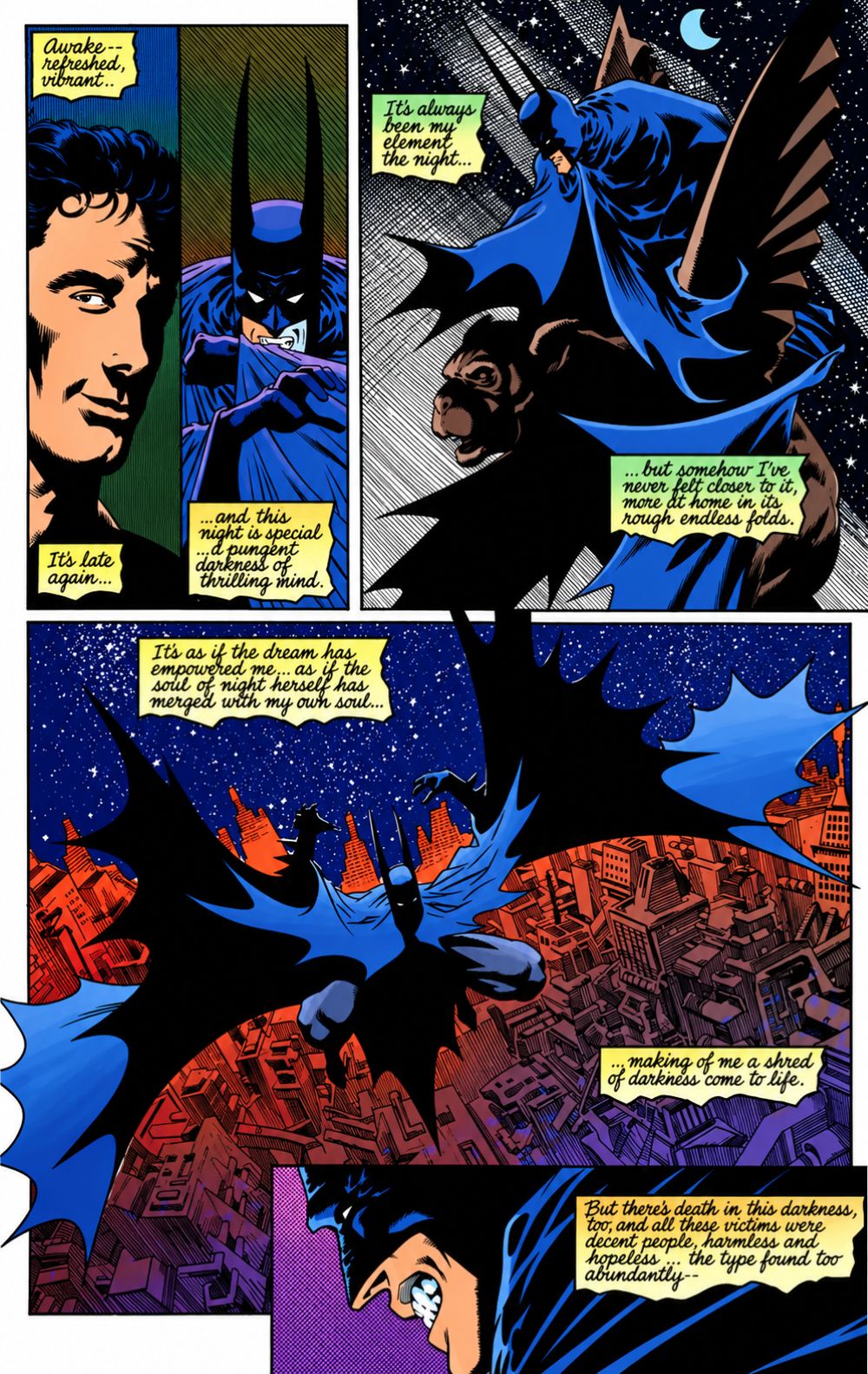
Kelley Jones’ artwork is the biggest reason Red Rain remains so memorable. His Gotham is a nightmare landscape of leaning rooftops, twisted spires, graveyards, fog, rain, and cavernous shadows. His Batman is especially striking: long-limbed, heavily caped, and more batlike than usual, almost like a creature that crawled out of the city’s own nightmares. This is not the clean, athletic Batman of many mainstream comics. Jones’ version feels ancient, dangerous, and perfectly suited to a story about vampires. Dracula receives equally strong visual treatment. He is elegant and commanding, but Jones never lets him become too glamorous. He remains a monster first, with a presence that makes every appearance feel threatening.
The colors and lettering add a lot to the atmosphere as well. Les Dorscheid’s palette relies on deep reds, blacks, purples, sickly greens, and shadowy blues, making the book feel like a classic Gothic horror comic. Todd Klein’s lettering gives the narration a textured, literary quality that suits the Bram Stoker-inspired material. Moench’s prose is deliberately ornate, full of ominous descriptions and heightened Gothic language. Some readers might find it overly purple, and there are moments where the narration becomes a little too dramatic for its own good. But the excess fits. This is a story about Batman versus Dracula, and it should feel theatrical, bloody, and grandiose. Moench is not trying to write a grounded crime thriller; he is writing a horror opera.
At its heart, the book is about Batman confronting a threat that attacks not only Gotham but his own identity. Batman’s character has always depended on discipline. He refuses to kill, refuses to surrender to fear, and refuses to become the thing criminals see when they look into the darkness. Dracula represents the opposite of that discipline: predatory power, immortality, and the willingness to treat human beings as prey. The central tension is not just whether Batman can stop him, but what it costs to fight an enemy whose very nature is built around corruption and control. Moench keeps that tension simmering beneath the Gothic atmosphere, giving the conflict more meaning than a simple battle between hero and villain.
That thematic focus is what keeps Red Rain from feeling like just another “what if?” comic. Red Rain is part of DC’s Elseworlds line, which is essentially DC’s version of Marvel’s What If…? concept: familiar characters are placed in alternate universes or alternate histories, allowing writers to explore scenarios that would be difficult or impossible in regular continuity. In this case, the premise asks what would happen if Batman’s Gothic Gotham were confronted by Dracula and an actual vampire invasion. The Elseworlds format gives Moench and Jones freedom to make the stakes feel real. Batman can be vulnerable, Gotham can be endangered, and the story does not have to preserve the usual superhero status quo. It also helps that this is the first chapter of a trilogy that continues in Batman: Bloodstorm and Batman: Crimson Mist, so the book clearly has consequences beyond its own pages.
Still, the graphic novel is not without weaknesses. Once the vampire threat becomes clear, the plot follows a fairly direct path: Dracula wants Gotham, Batman wants to stop him, and the conflict builds toward a violent confrontation. Some supporting characters are thinly developed, existing mainly to serve the plot or provide exposition. Commissioner Gordon is present, but he does not get especially deep characterization, and several familiar Gotham figures are either absent or reduced to brief appearances. The pacing can also feel uneven. The opening investigation is wonderfully eerie, but the later action sequences occasionally move so quickly that the story’s mood has to carry more of the emotional weight than it should. Readers looking for a detailed psychological portrait of Bruce Wayne may find the book more interested in atmosphere and spectacle than character depth.
Even so, those flaws are easy to forgive because the book knows exactly what it wants to be. Red Rain is not trying to be subtle. It wants rain-drenched streets, graveyards, ancient evil, blood, thunder, and a hero pushed beyond his usual limits. It wants Batman to be frightening as well as heroic. It wants Dracula to feel like a threat worthy of Gotham’s protector. And it succeeds. The collaboration between Moench’s Gothic writing and Jones’ expressionistic art creates a unified vision of Batman as a horror figure, one that still feels distinctive decades after publication.
There is also a pleasing symmetry between the two lead characters. Batman uses fear as a weapon, but he remains human and protects the innocent. Dracula feeds on fear, blood, and human weakness, turning people into instruments of his will. Batman is a self-made creature of the night; Dracula is the original one. Their conflict becomes a battle over what the darkness means. For Batman, it is a place from which he can protect people. For Dracula, it is a hunting ground. That contrast gives their confrontation a moral clarity without making it simplistic.
Few Batman stories lean as completely into the character’s horror roots as Batman & Dracula: Red Rain. It may not be the most nuanced Batman story ever told, and its prose can occasionally lean too hard into Gothic melodrama, but its mood is exceptional and its central idea is executed with real confidence. If you like Batman best when he is treated as a creature of horror rather than simply a detective or martial artist, this is essential reading. It captures the character at his most Gothic: surrounded by death, threatened by darkness, and still refusing to let Gotham be consumed.

