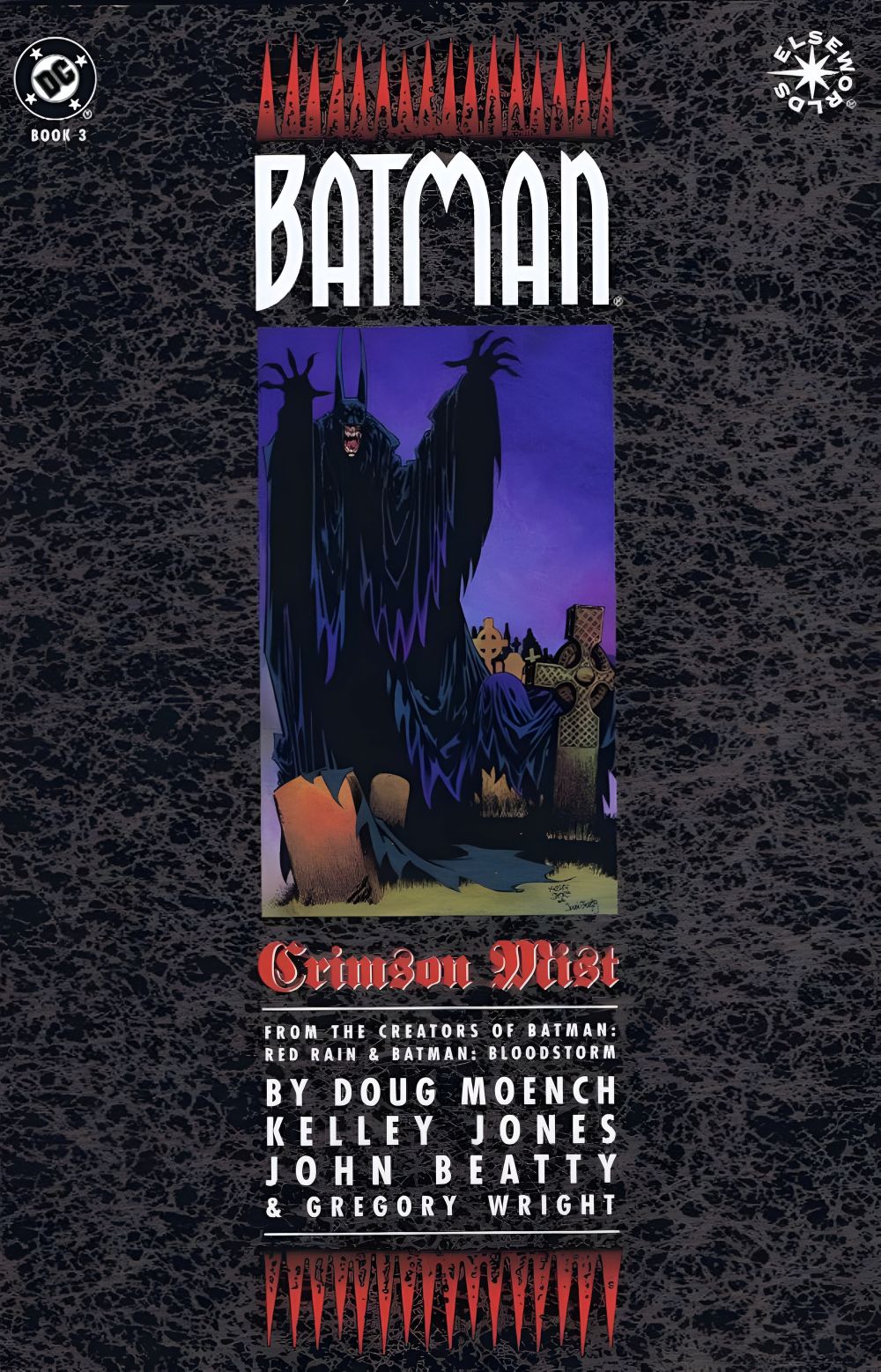
“The answer to life’s every riddle: death and hungry darkness.” — Batman
Doug Moench and Kelley Jones’s Batman: Crimson Mist is what happens when a superhero story stops pretending it can still be saved. The third and final entry in their Batman/Dracula Elseworlds trilogy, it takes the vampire-Batman concept introduced in Batman & Dracula: Red Rain and developed in Batman: Bloodstorm, then drags it into a bleak, blood-drenched finale where Gotham is overrun, Batman is undead, and the usual rules of heroism have completely collapsed. This is not a book interested in clever detective work, heroic triumph, or a reassuring ending. It is a gothic horror comic about a man who became a monster trying to decide whether he can still protect the city that made him. The result is excessive, melodramatic, and sometimes messy—but also memorably nightmarish.
The premise is deliberately bleak. Batman has already died, but death does not exactly stick in this universe. He returns as an undead creature still wrestling with Dracula’s curse, while Gotham has descended into a vampire-infested ruin. The book turns Batman’s usual moral code into the central conflict: he is supposed to protect the city, yet the thing inside him wants to feed. That is a strong hook because Batman stories work best when his discipline and restraint matter. Here, restraint is not just a personality trait; it is literally the difference between hero and monster. The story presents Batman as someone who has to give up everything, including life itself, to face the final reckoning, and that gives it an apocalyptic, no-way-back tone.
Moench’s writing is very much in “gothic comic book” mode. There are lots of declarations, ominous speeches, dramatic captions, and characters who seem incapable of saying anything quietly. At times, the dialogue gets so overwrought that it borders on parody. Batman broods, villains cackle, and the story constantly announces its own darkness. But honestly, that is part of the appeal. This is not trying to be a grounded crime story or a restrained psychological thriller. It is a big, pulpy vampire opera, and Moench leans into that identity completely. The book works best when you accept that everyone is performing at maximum theatrical intensity.
What gives the story real weight is the way it treats Batman’s vampirism as a tragedy rather than just a cool visual upgrade. He has power, but it comes with hunger. He can fight monsters, but he is increasingly one of them. The tragedy is that Batman’s greatest strength—his refusal to kill—has been compromised before the story even begins. He is already damned, or at least believes he is, so the question becomes whether he can still choose to protect people when every instinct tells him to consume them. That gives Crimson Mist a more emotional core than you might expect from a book with this much fang-baring carnage.
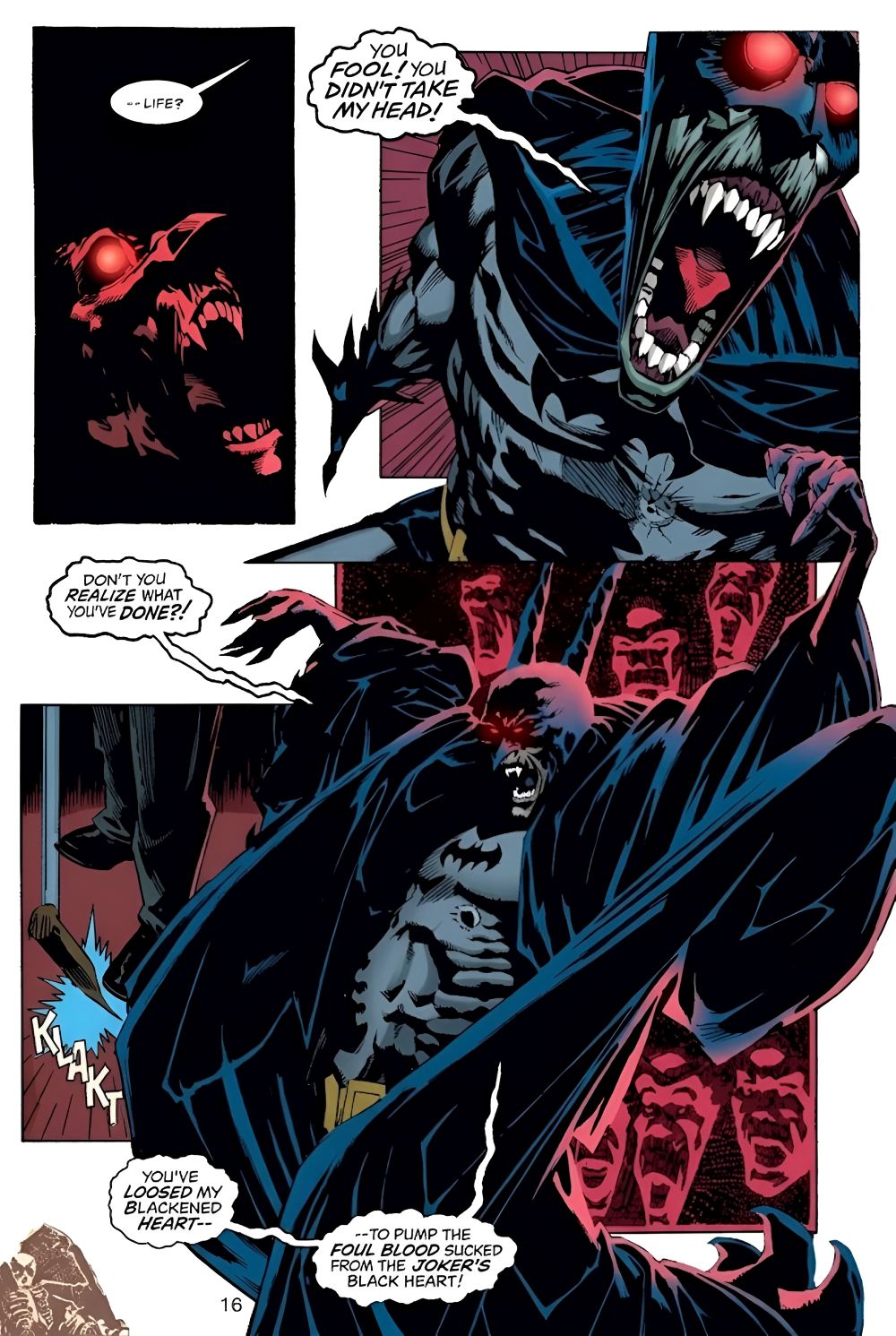
Kelley Jones’s art is the main reason this book feels so distinctive. Jones has always drawn Batman like a creature from a nightmare: huge cape, gaunt limbs, exaggerated shadows, a face that can shift from heroic determination to monstrous hunger. In Crimson Mist, that style is perfectly matched to the material. Gotham looks rotten and haunted. The vampires look genuinely repulsive. Batman himself often looks less like a man in a costume and more like a wraith who happens to wear one. The book is credited to Moench with art by Kelley Jones, John Beatty, and Malcolm Jones III, and the inking especially helps give the pages that scratchy, decayed texture.
The color work is a little more divisive. Some readers find the later trilogy books less polished than Red Rain, and Crimson Mist can look muddy or harsh depending on the printing. But that griminess fits the story. This is not a clean, glossy Gotham. It is a city already half-consumed by corruption, blood, and supernatural rot. The art may not be conventionally beautiful, but it is atmospheric in a way that suits the material. Jones makes every panel feel like it is breathing fog, dripping blood, or hiding something with too many teeth.
One of the most notorious aspects of Crimson Mist is its treatment of Batman’s villains. The Penguin, Two-Face, Killer Croc, Poison Ivy, Scarecrow, the Riddler, Black Mask, and the Joker all appear in the story’s larger cast, and the book has no interest in preserving the usual rules of superhero combat. Batman is not merely defeating criminals; he is hunting them. The violence is extreme, sometimes shocking, and often deliberately grotesque. For some readers, that will feel like a betrayal of the character. For others, it is the whole point: this is an Elseworlds where the usual safety rails have been removed, and Batman’s no-kill rule has collapsed under the weight of the vampire curse.
That said, the book’s biggest weakness is also its willingness to go too far. Crimson Mist sometimes mistakes escalation for depth. Once Batman starts tearing through familiar villains, the story can feel like a checklist of shocking moments rather than a carefully built narrative. The Joker’s involvement, in particular, has the potential to be fascinating, but the book often seems more interested in the spectacle of Batman versus his enemies than in exploring what those confrontations mean. There is a difference between “Batman has become a monster” and “the comic keeps showing Batman doing monstrous things,” and Crimson Mist occasionally lands on the wrong side of that line.
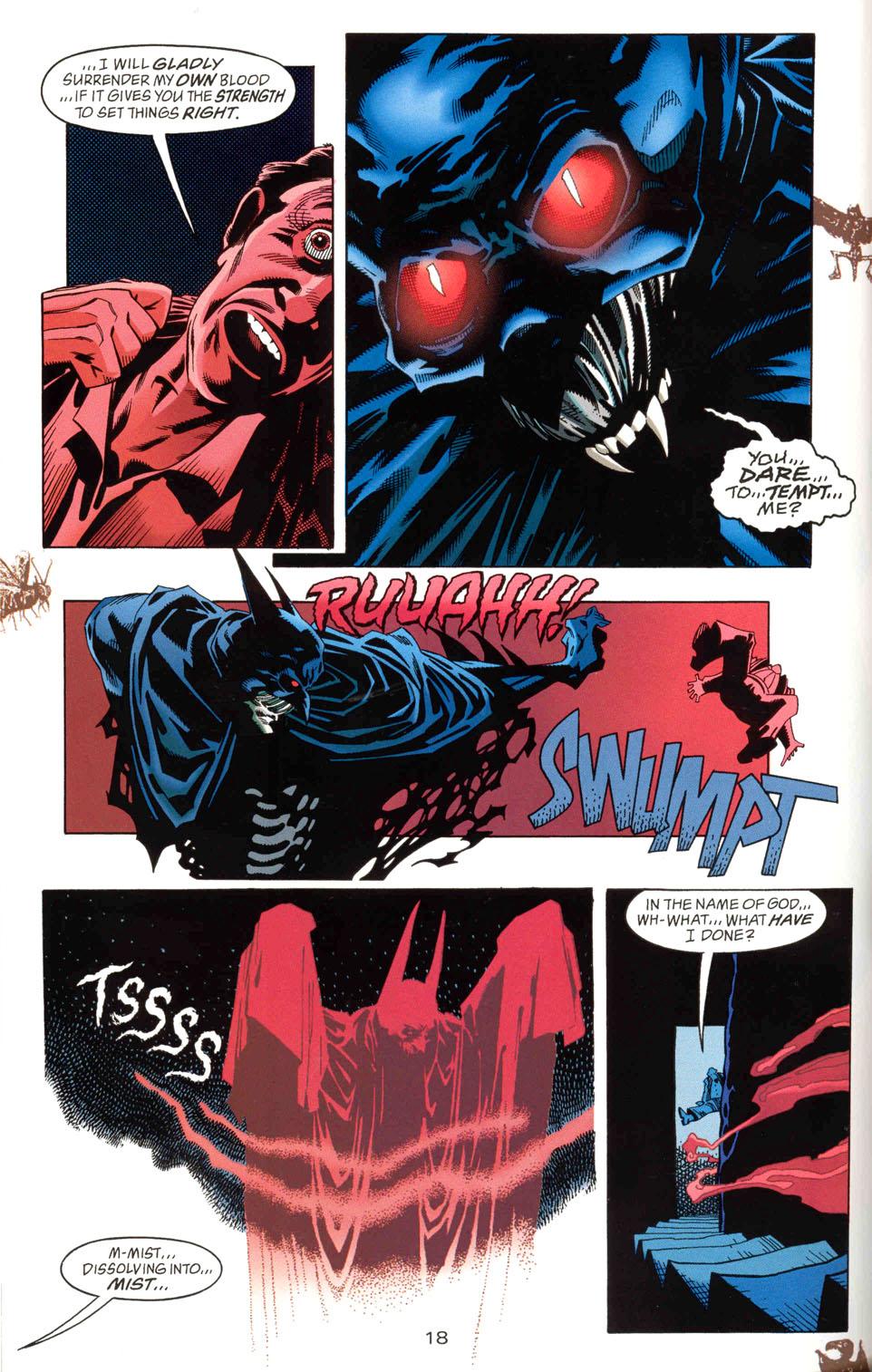
Still, the final chapter has a bleakness that gives it purpose. Unlike a standard superhero story, there is no obvious route to a happy ending. Batman cannot simply punch the curse away. Gotham cannot simply be saved by better policing or a clever gadget. The trilogy has spent two books making the world worse, and Crimson Mist has to confront the consequences. That gives the story a fatalistic energy. It feels like a horror movie’s final act, where the heroes are exhausted, the monsters are everywhere, and survival itself may be too much to ask.
As a standalone graphic novel, Crimson Mist is probably not the ideal entry point. It assumes familiarity with Red Rain and Bloodstorm, and without those books, the emotional stakes will feel thinner. Batman’s relationship with Selina Kyle, the fallout from his battle with Dracula, and the overall state of Gotham all carry over from the earlier chapters. The book is collected alongside both predecessors in Elseworlds: Batman Vol. 2, which is really the best way to experience it. Read on its own, it can feel like an exaggerated finale; read after the first two books, it feels like the inevitable, ugly conclusion to a tragedy that started when Bruce Wayne accepted vampire blood to save Gotham.
The trilogy’s appeal is that it understands something important about Batman: he is already a horror character. He dresses like a bat, operates at night, uses fear as a weapon, and lives in a city that practically begs to be overrun by monsters. Moench and Jones simply make the metaphor literal. Batman becomes the thing he has always dressed as. That idea alone gives the trilogy its power, and Crimson Mist takes it to its logical extreme.
Is it the best of the three? Probably not. Red Rain has the cleaner concept and the stronger sense of discovery, while Bloodstorm expands the mythology and gives the tragedy more room to develop. Crimson Mist is messier, louder, and more extreme. But it is also the most purely Kelley Jones book of the bunch. If you like his art, this is essential. If you do not, this may be the book that finally breaks you. Every page seems designed to remind you that Jones does not draw Batman as a handsome adventurer; he draws him as a haunted, elongated nightmare given a cape and a mission.
For all its excess, Batman: Crimson Mist is a memorably deranged piece of late-’90s DC horror comics. It is melodramatic, violent, ugly in places, and completely uninterested in being subtle. But it is also visually striking, thematically appropriate, and a genuinely fitting end to the Batman/Dracula saga. It asks what happens when Batman’s war on crime becomes literal predation, then answers with blood, shadows, and a Gotham that may be beyond saving. If you want a Batman story that feels like a Hammer horror film crossed with a nightmare, this is absolutely worth reading. Just do not come in expecting the World’s Greatest Detective to solve the case with a batarang and a stern lecture. By the time Crimson Mist is over, Batman is less a detective than a curse with a conscience—and that is exactly the kind of deranged Elseworlds premise DC should occasionally let creators run wild with.

