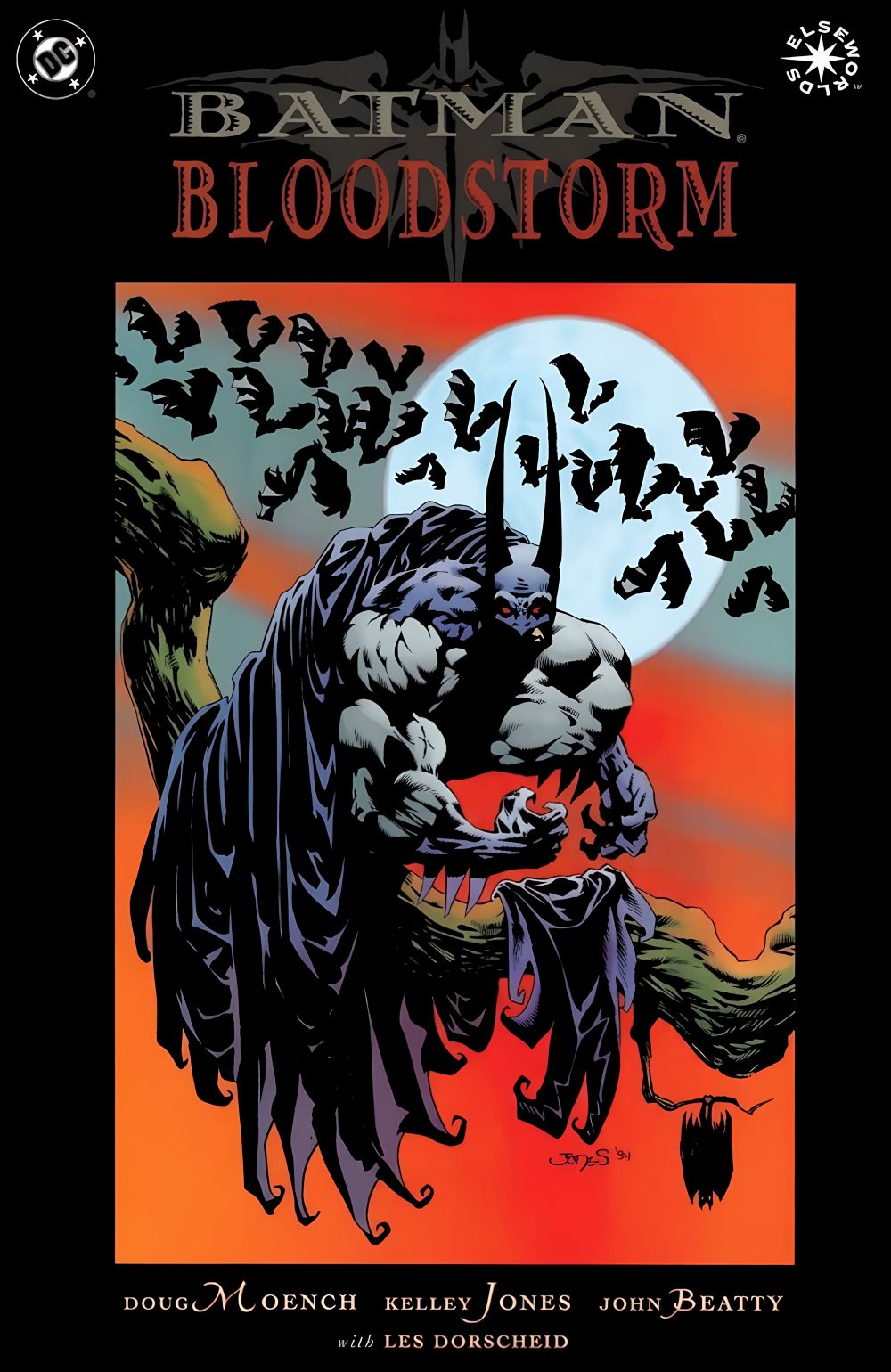
“Gotham does not need another monster!”– Batman
Batman: Bloodstorm is the middle chapter of Doug Moench and Kelley Jones’ wonderfully deranged Batman & Dracula trilogy, and it might be the best of the three because it finally gives the premise somewhere to go beyond “Batman versus Dracula.” The first book, Batman & Dracula: Red Rain, established the hook: Gotham is invaded by vampires, Batman defeats Count Dracula, and the cost is that Bruce Wayne himself becomes a vampire. Bloodstorm picks up immediately after that ending and asks the question that makes the whole Elseworlds experiment click: what happens when Batman is now the thing he swore to destroy?
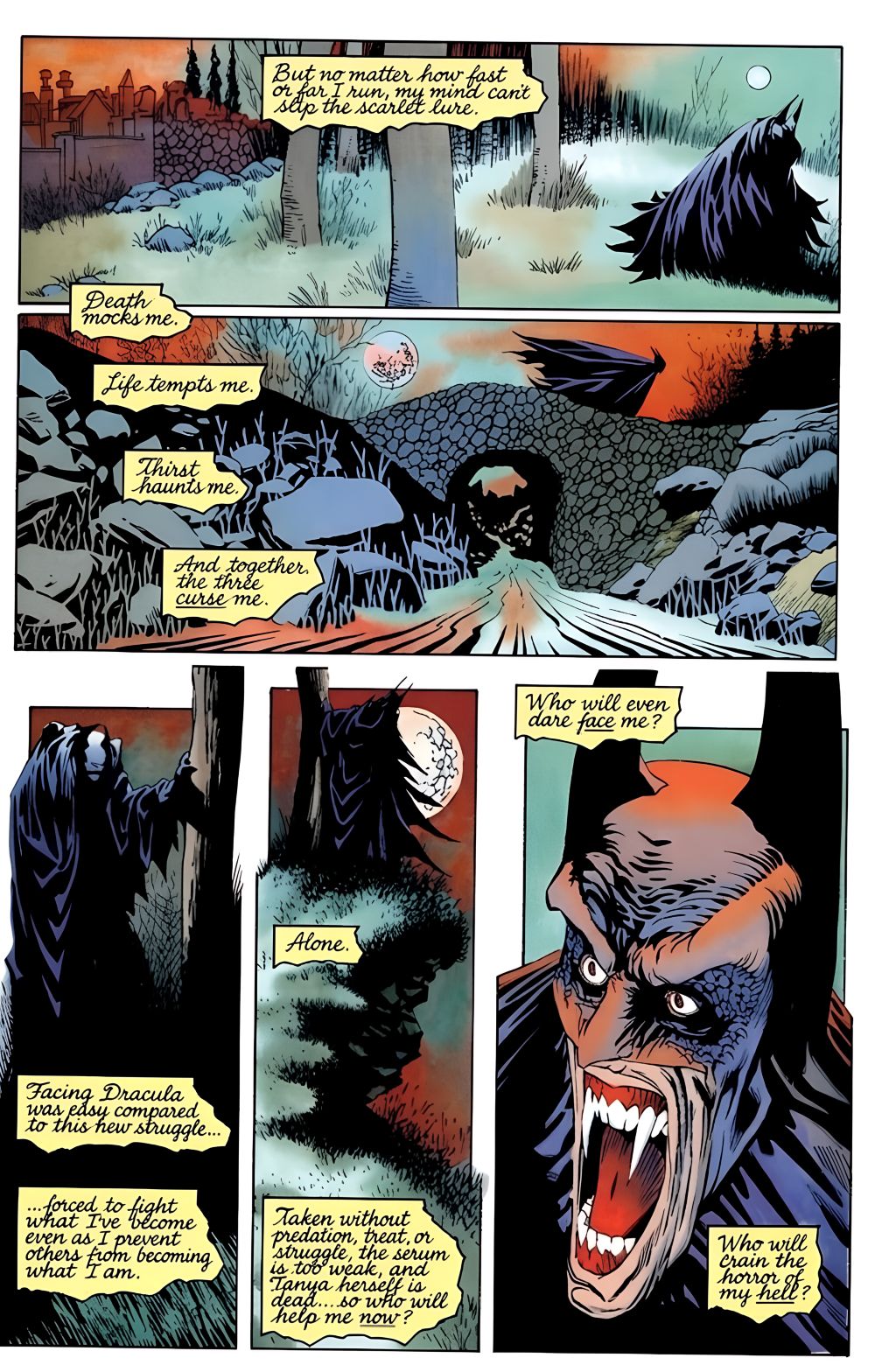
The answer is grim, pulpy, and a lot of fun. Batman has retained his mission, but he is no longer simply a man using fear and discipline to fight crime. He is a creature of the night with a hunger he cannot fully control, fighting remnants of Dracula’s undead army while trying to keep from becoming Gotham’s next monster. That is a great setup, and Moench understands why it works. Batman’s usual moral code—especially his refusal to kill—is not just challenged here; it is structurally compromised. He has to destroy vampires permanently, he needs blood to survive, and every act of violence brings him closer to the edge.
What makes Bloodstorm more interesting than a standard vampire-Batman novelty is that Moench treats vampirism as both a horror curse and a metaphor for Batman’s already obsessive, self-punishing nature. Bruce has always lived in darkness, dressed like a nightmare, and used terror as a weapon. Here, the metaphor becomes literal. He is isolated, increasingly unstable, and forced to confront the possibility that his crusade is not noble self-sacrifice but addiction dressed up as virtue. The book’s central tension is not whether Batman can defeat the vampires; it is whether he can preserve any part of his soul while doing it.
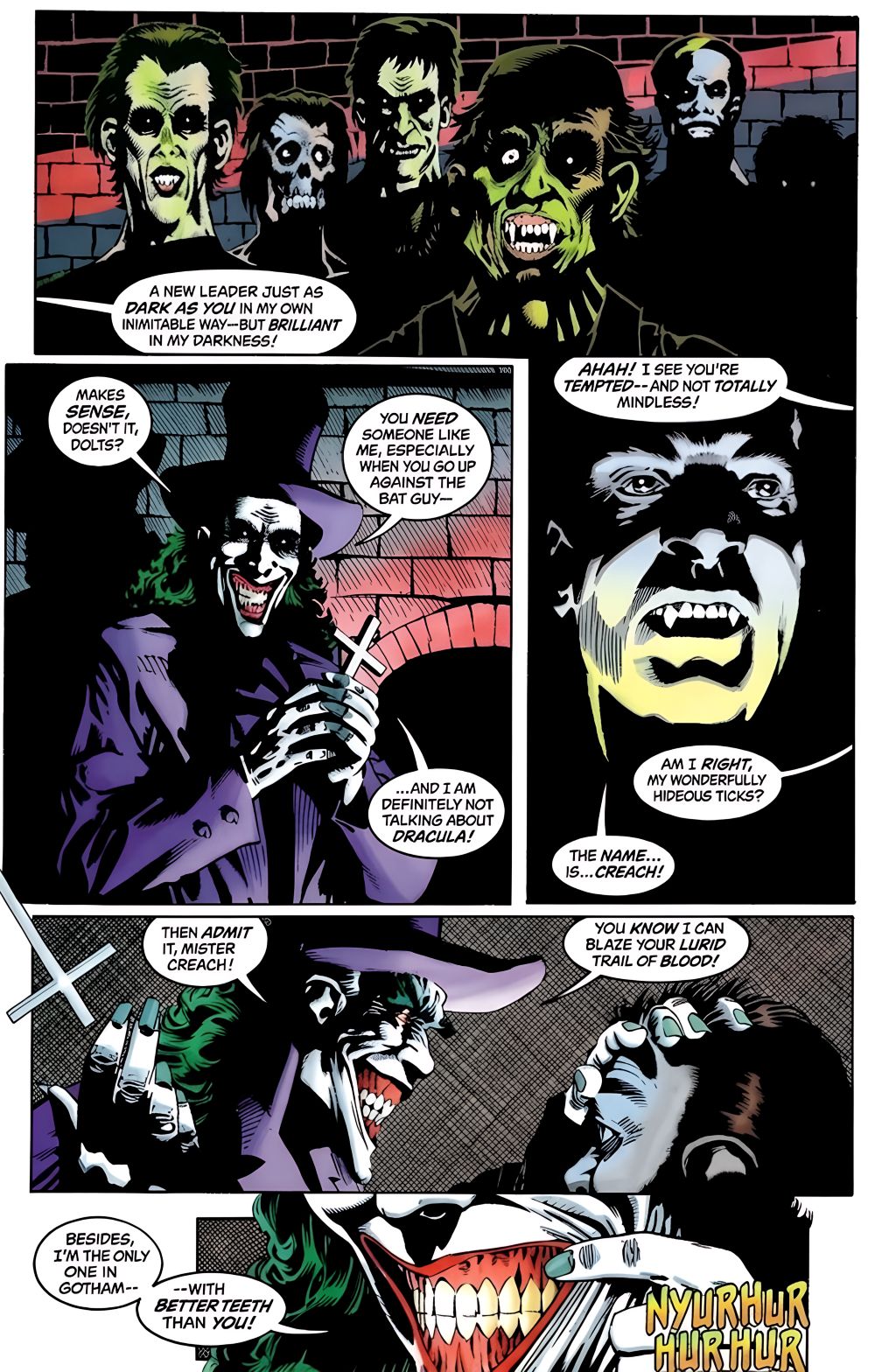
Moench leans into that internal torment without turning the book into a dry psychological study. This is still a big, gothic comic-book melodrama, full of blood, thunder, graveyards, ruined Gotham streets, and villains chewing the scenery with admirable commitment. The Joker’s arrival is the obvious but effective escalation. If Dracula was the ancient evil who turned Gotham into a hunting ground, the Joker is the chaotic local disease that infects the remains. He takes over Dracula’s undead followers and turns the vampire threat into something even more unpredictable and cruel. It is one of those “of course” ideas that feels inevitable once you hear it: the Joker with an army of vampires is almost too perfect for a dark Elseworlds story.
Catwoman also plays a major role, and she is one of the book’s more emotionally effective elements. Her relationship with Batman gives the story a human anchor amid all the fangs and shadows. Batman is barely holding himself together, and Selina Kyle becomes someone who can still see the man underneath the monster. That does not make the book soft, but it gives the tragedy a direction. The supporting cast also includes Alfred and Jim Gordon, which helps keep the story connected to the familiar Batman mythology even as the world becomes increasingly unhinged.
Kelley Jones’ artwork is the reason this book has such a strong identity. His Batman is not the sleek, athletic tactician of modern comics; he is a towering, crooked, almost demonic silhouette, with a cape that seems to have a life of its own and a cowl that makes him look like something crawled out of a nightmare. In a vampire story, that exaggeration is exactly right. Jones’ Gotham is a place of jagged architecture, oppressive shadows, distorted faces, and bodies arranged for maximum gothic impact. The book is drawn by Jones with inks from John Beatty and Malcolm Jones III, and the result is one of the most visually distinctive versions of Batman DC has ever published.
Jones’ style is not for everyone. His figures can be elongated, his anatomy deliberately strange, and his compositions sometimes favor atmosphere over clarity. But in Bloodstorm, those qualities become assets. Batman looks like a vampire even before the story reminds you that he is one. The Joker looks genuinely repellent rather than merely clownish. The vampires have a theatrical, old-school horror-movie menace, and the color work gives the whole thing a blood-soaked, moonlit finish. Jones had grown as an artist since Red Rain, with stronger page images and more distinctive action staging, and Bloodstorm feels more confident than its predecessor, more willing to commit to the grotesque beauty of its premise.
The art also helps cover some of the book’s rougher edges. Moench’s writing can get a little overwrought, with characters delivering dialogue that sounds like it was marinating in candle wax and thunderstorms. But that is part of the charm. This is not a grounded crime story; it is a gothic pulp nightmare, and the dialogue mostly matches the artwork’s operatic intensity. When Batman broods, he really broods. When the Joker menaces, he really menaces. The book knows what tone it wants, and it commits.
The main weakness is that Bloodstorm occasionally mistakes escalation for depth. The story has strong ideas about Batman’s hunger, guilt, and moral collapse, but it sometimes circles the same emotional territory: Batman fears becoming a monster, Batman resists the hunger, Batman worries that he is losing himself. That tension is effective, but after a while you want the story to find new angles rather than restate the central dilemma. The Joker is a blast, but some of his scenes lean on shock value and broad villainy rather than the sharper psychological warfare he can bring out in Batman.
There is also the issue of pacing. At 96 pages, the book moves quickly, but its plot can feel like a bridge between the clean Dracula showdown of Red Rain and the even darker final chapter, Batman: Crimson Mist. It introduces a compelling status quo—vampire Batman, Joker-led undead forces, a Gotham sliding further into ruin—then has to resolve enough of it to set up the next installment. That gives the story momentum, but it also means a few developments feel rushed or designed more for shock than long-term payoff.
Still, those flaws do not sink it. Bloodstorm is more focused than Red Rain because its conflict is personal rather than merely external. Dracula was the big villain, but Batman’s own transformation is the real antagonist here. The book understands that the scariest version of this premise is not “Batman fights vampires.” It is “Batman is a vampire, and he still thinks he can save Gotham.”
Batman: Bloodstorm is a proudly excessive piece of ’90s DC horror comics: moody, violent, melodramatic, and visually unforgettable. Doug Moench gives the story a genuinely compelling moral crisis, while Kelley Jones turns every page into a gothic fever dream. It is not flawless—the dialogue can be purple, the pacing can be uneven, and the book occasionally leans too hard on grimness—but its best moments have real power. If you enjoy Batman stories that push the character into moral darkness without losing sight of why he fights in the first place, this is an easy recommendation.
As the second part of the Batman & Dracula trilogy, it also works better if you have read Red Rain first, since it begins directly from that book’s aftermath. But on its own terms, Bloodstorm is a strong example of what Elseworlds did best: taking a familiar hero, changing one essential rule, and discovering that the character becomes both more frightening and more tragic. Batman has always been a creature of the night. This book simply asks what happens when the night finally claims him.

