Review: Transmetropolitan Vol. 2 – Lust for Life


“You people don’t know what the truth is! It’s there, just under their bullshit, but you never look! That’s what I hate most about this fucking city—lies are news and the truth is obsolete!” — Spider Jerusalem

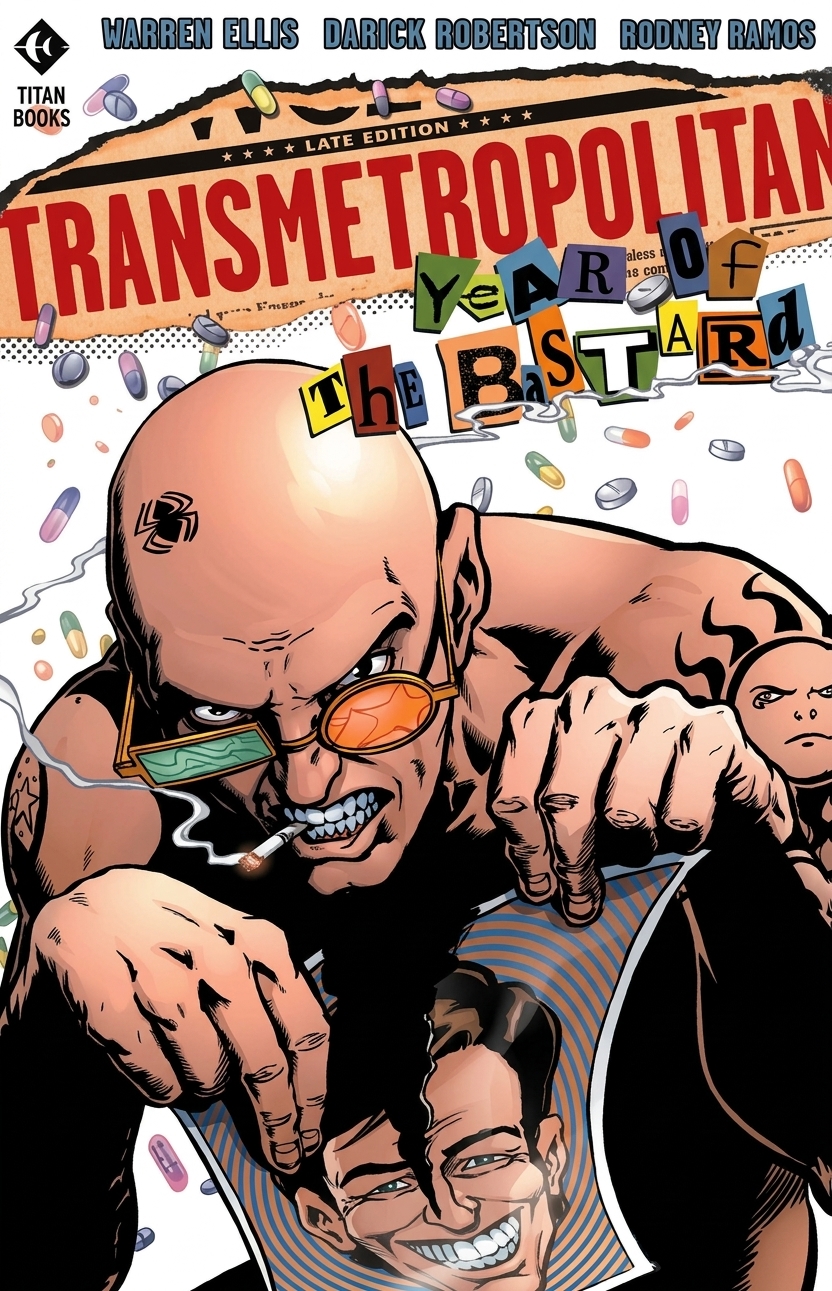
When you crack open the second volume of Warren Ellis and Darick Robertson’s Transmetropolitan, collected as Lust for Life, you’re not just getting another fix of cyberpunk chaos. You’re getting a book that solidifies exactly why this series is so brutally timeless. The first volume, Back on the Street, introduced us to the magnificent, drug-fueled trainwreck that is Spider Jerusalem and the grotesque, sprawling City he calls home. The second volume, however, is where the series finds its real footing. It’s not just about the loud, visceral shock value—though there’s plenty of that—but about deepening the world and its characters in a way that hits uncomfortably close to home.

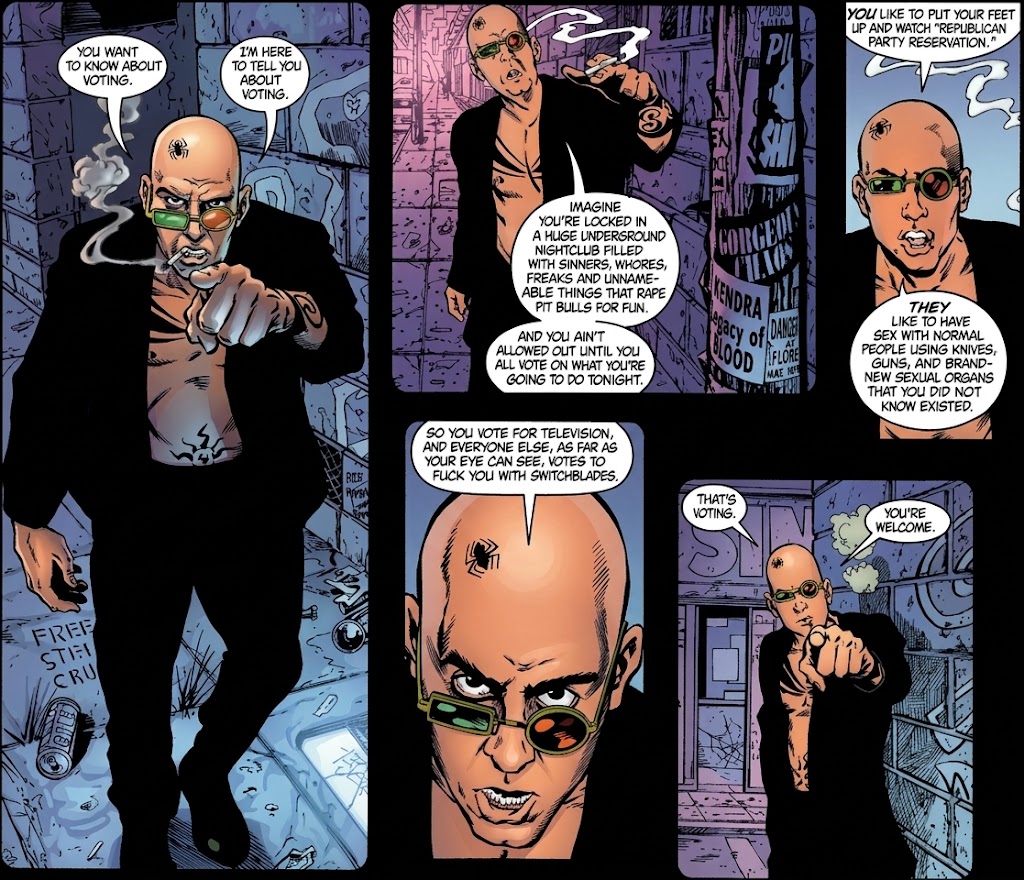
Spider Jerusalem is, and always will be, the heart of this series. He’s a chain-smoking, drug-abusing, perpetually enraged journalist in the mold of Hunter S. Thompson, armed with a bowel disruptor and a vicious tongue. He’s a complete and utter bastard to almost everyone he meets, prone to violent outbursts and scatological tirades. And yet, he’s our hero because he’s one of the few people in this future who actually gives a damn. His entire reason for being is his unwavering, almost religious, dedication to “The Truth.” He despises the apathy of the masses as much as the corruption of the powerful, and he’s willing to burn his life down to expose both. This volume showcases that beautifully, adding a layer of vulnerability that prevents him from becoming a one-note caricature. He’s a misanthrope who somehow still cares, and that tension is what makes him so compelling.

Lust for Life collects issues thirteen through twenty-four, and it’s structured more as a series of vignettes than a single, driving narrative. This is actually its greatest strength, as it allows Ellis and Robertson to expand the world and build the supporting cast in ways a more focused plot wouldn’t allow. A major chunk of the book is dedicated to the insane adventure of the frozen head of Spider’s ex-wife being stolen. It’s a gloriously bizarre plot, full of the kind of absurd, high-stakes chaos that Transmetropolitan does so well.

But the real emotional heft of Lust for Life comes from the quieter, more tragic stories woven between the gunfights and drug-induced rants. One of the most powerful sequences focuses on Channon, Spider’s long-suffering assistant. She’s a pillar of strength, constantly cleaning up Spider’s messes, but this volume shows her vulnerability. Her boyfriend decides to undergo a process to become a “gaseous vapor,” leaving his body behind for a formless existence. It’s a concept that sounds completely outlandish, but the execution is devastating. Ellis writes it not as a sci-fi gimmick but as a heartbreaking exploration of letting go, of watching someone you love choose a path you can’t follow. Channon’s pain and helplessness are palpable, grounding the over-the-top world in real human emotion.

Then there’s the story of Mary, a woman from our recent past who was cryogenically frozen and wakes up in the City. She’s presented as a historical relic, a simple photographer from the twentieth century who is completely out of her depth in this frantic, hyper-consumerist future. This is where the book delivers its most potent gut-punch. Mary is us. She’s the reader, trying to make sense of this alien world, and she fails. The City is a claustrophobic nightmare even for the people who were born into it, but for Mary, it’s a terrifying prison of isolation and confusion. Her story is a bleak reminder that this “progress” we’re supposedly heading toward often comes at the cost of our humanity. It’s a deeply existential and sad tale that serves as a harsh critique of the very future we might be trying to build.

Now, while Transmetropolitan is set in a hyper-exaggerated, grotesque future, the reason it remains so relevant is that the satire has proven to be uncomfortably prophetic. The City is a sprawling, neon-drenched hellscape where the line between news and entertainment has completely dissolved, where handheld devices connect everyone to a digital stream of information, and where journalism has devolved into a race for ratings and eyeballs. It’s a world where media personalities are more influential than politicians, and political leaders are cynical, manipulative populists who are experts at gaming the system. Sound familiar?

The landscape of modern journalism feels like a grim step toward this world. The “Death of Truth” that Spider rails against is a concept that has become a cornerstone of our current political and media discourse. The Beast and The Smiler, the corrupt politicians in the series, aren’t just cartoon villains; they’re mirrors reflecting a world of political spin, gerrymandering, and where the “villains” are often the ones controlling the narrative. Spider’s constant, violent struggle to get the real story feels less like a sci-fi fantasy and more like a desperate wish-fulfillment for anyone frustrated with the spin and half-truths of modern politics.

When Spider writes his column, “I Hate It Here,” he’s speaking for a populace that feels powerless and manipulated, a populace nicknamed “The New Scum” by the establishment. This social commentary hits hard because you can see its echoes everywhere today. The series suggests that technology has advanced, but human nature—our greed, our apathy, our susceptibility to manipulation—has not. It’s a bitter pill to swallow, but it’s what gives the book its power.

Transmetropolitan Vol. 2: Lust for Life might be a little light on overarching plot for some readers’ tastes. It’s not a major political arc; it’s more of a character study of the city and its inhabitants. But that’s precisely why it’s so effective. It proves that the series isn’t just a one-trick pony of cyberpunk fury. It has a heart, a soul, and a searing intelligence that cuts to the bone of our own societal failings. It’s a book that will make you laugh at its absurdity one minute and then leave you staring at the wall in quiet contemplation the next. It reinforces that even a nihilistic, drug-addled, foul-mouthed bastard like Spider Jerusalem is exactly the kind of hero we need to remind us of what we’re losing.

Transmetropolitan Volume Reviews

Review: Transmetropolitan Vol. 1 – Back on the Street


“Journalism is just a gun. It’s only got one bullet in it, but if you aim right, that’s all you need. Aim it right, and you can blow a kneecap off the world.” — Spider Jerusalem

There is a particular kind of jolt that comes from revisiting a story written decades earlier and realizing it was not so much predicting the future as identifying a sickness already taking hold. Written by Warren Ellis and illustrated by Darick Robertson, Transmetropolitan Vol. 1: Back on the Street is exactly that kind of book. It is loud, filthy, hilarious, and vicious in all the ways it needs to be, and it lands differently now than it likely did in the late nineties. What once read primarily as a wild, hyperbolic satire of politics, media, consumerism, and public numbness now can feel unnervingly close to reportage with the names changed. Its 23rd-century City remains an over-the-top cyberpunk nightmare, but the institutions, personalities, and manufactured distractions running it feel very familiar.

The volume begins with Spider Jerusalem living in isolation, hiding in the mountains after abandoning the City and the career that made him famous. He has a book contract to fulfill, a pile of debts to settle, and no actual desire to rejoin civilized life. Unfortunately for him, the people financing his escape have had enough. Spider is forced back into the City, a vast, overcrowded cyberpunk metropolis that seems to have taken every bad impulse of contemporary society and pushed it beyond all reasonable limits. His return is not a heroic homecoming. It is more like dropping an angry, drug-addled, heavily armed journalist into the middle of a garbage fire and asking him to write a column about the smoke.

Spider’s immediate appeal is that he has no interest in performing respectability. He is rude, vindictive, profane, selfish, and fully capable of treating even his friends terribly. He uses violence too casually, insults everyone around him, and carries a bowel disruptor gun that can incapacitate people in the most humiliating manner imaginable. In another book, these traits might make him an unbearable edgelord. Back on the Street, however, understands that Spider’s ugliness is part of a larger contradiction. He is not cruel because he does not care; he is cruel because he cares too much and has no healthy way of processing how badly the world fails ordinary people.

That is what makes him more than a Hunter S. Thompson imitation with futuristic sunglasses. Spider is a gonzo journalist, but his journalism is not merely an excuse for a manic lifestyle or a stage for his personality. At his best, he is driven by an almost old-fashioned moral belief that the truth matters, that citizens deserve to know what is being done in their name, and that powerful people should not be allowed to bury their crimes under public-relations language. The series positions journalism as something active rather than passive. Spider does not just report what happens; he investigates, provokes, exposes, and refuses to let the comfortable look away.

His column, “I Hate It Here,” captures the character’s relationship with the City. Spider hates it because he sees it clearly. He sees the absurdity of its consumer culture, the cruelty hiding behind political slogans, and the way people are taught to accept exploitation as normal. Yet he also understands the City in a way that few other characters do. It is full of strange, desperate, damaged people trying to survive in a system that is too big, too loud, and too indifferent to care whether they live with dignity. Spider’s contempt is not aimed equally at everyone. He has little patience for complacency, hypocrisy, and stupidity, but he shows genuine anger when vulnerable people are victimized by police, politicians, corporations, or public indifference. His idealism is twisted, abrasive, and buried beneath several layers of chemical abuse, but it is still idealism.

The City itself is the book’s other major character. Robertson’s art sells its overwhelming scale and ugliness. Every street looks packed with signs, body modifications, crowds, trash, strange fashion, predatory businesses, and people whose lives have been reshaped by technology in ways both liberating and grotesque. The future is not sleek in the familiar science-fiction sense. It is grubby, crowded, commercial, and deeply human. People can alter their bodies, change their identities, pursue bizarre new faiths, and live inside an endless stream of media stimulation, but none of those developments have solved poverty, loneliness, corruption, or abuse of power.

That is why the book has aged more effectively than many stories set in a supposedly distant future. Its technology is exaggerated, but its social anxieties feel much closer now. The City is saturated with information, yet its people are often less informed than ever. Everyone has access to spectacle, outrage, personality-driven media, and instant distractions, but the institutions shaping their lives remain opaque and unaccountable. The comic’s dystopia is not based on the idea that technology automatically destroys humanity. Instead, it suggests that technology amplifies the priorities already built into society. If a culture values profit, spectacle, division, and convenience over empathy and truth, more advanced technology simply gives those impulses more efficient tools.

The political material in this first volume is especially pointed. Ellis is interested in the gap between public image and actual power. Politicians do not need to be secretly subtle or brilliant to be dangerous; they only need to understand how to manipulate fear, identity, frustration, and media attention. The institutions around them—police, corporate media, wealthy interests, and political operatives—help sustain the illusion that ordinary people have meaningful control while making sure the system remains insulated from consequences. The book’s vision of power can be blunt, but bluntness is part of its style. Transmetropolitan does not whisper its anger. It shouts because it believes politeness is often one of the tools that lets abuse continue unchallenged.

At the same time, Back on the Street is not flawless. Its satire can be so broad that it occasionally feels like the story is pointing at a target with both hands and yelling until the reader gets it. Some of the shock humor and sexual material carry an intentionally trashy late-nineties edge that may feel juvenile or dated. The supporting cast is still taking shape, so many people primarily exist as foils for Spider’s verbal attacks or examples of the City’s bizarre social landscape. The book’s relentless attitude can also wear readers down if they need a more emotionally grounded entry point.

Still, the excess is usually purposeful. This is a world where the boundaries between entertainment, propaganda, commerce, and personal identity have all but collapsed, so subtle world-building would almost be dishonest. The visual and verbal overload puts the reader in Spider’s position: constantly assaulted by nonsense, constantly asked to separate meaningful horror from everyday noise. The absurdity makes the real injustice sharper. A city can be full of outrageous fashion, talking animals, hallucinogens, and body-modification trends, yet its most disturbing feature remains how easily human suffering is turned into content, data, or a political talking point.

Ultimately, Transmetropolitan Vol. 1: Back on the Street works because Spider Jerusalem is not presented as a clean solution to a corrupt society. He is a mess, an irritant, and sometimes a monster in miniature. But he is also someone who refuses to be numb. In a world built to keep people distracted, passive, and exhausted, that refusal has real value. The book’s cyberpunk future remains wildly over-the-top, but its central warning feels uncomfortably familiar: the most dangerous dystopias are not always the ones with impossible technology. Sometimes they are the ones where the public is flooded with noise, the powerful face no consequences, and telling the truth becomes an act of open rebellion.

Artist Profile: Alex Ross


Alex Ross fundamentally transformed the visual language of American comic books by introducing a level of photorealistic fine art painting previously unseen in the medium. Eschewing traditional pen-and-ink line work, Ross utilized gouache, watercolor, and ink to render iconic superheroes with a tangible weight and texture that made them feel startlingly real. His approach treated comic book characters not as colorful abstractions, but as living, breathing figures existing in a recognizable world. By grounding these fantastical beings in reality through meticulous brushwork, realistic lighting, and lifelike facial expressions, Ross elevated the comic book cover and interior page to the status of gallery-worthy illustration, forever changing the expectations of comic book artistry.

Ross’s impact is indelibly tied to his defining projects for the industry’s “Big Two” publishers. At Marvel Comics, his groundbreaking 1994 miniseries Marvels recontextualized the Golden and Silver Ages of the publisher’s universe through the weary eyes of an ordinary photojournalist, capturing the awe and terror of living alongside gods. He later expanded this sprawling mythos with the Earth X trilogy. However, it was at DC Comics where Ross arguably cemented his legacy. His 1996 magnum opus Kingdom Come offered a grand, prophetic, and deeply moral vision of the DC Universe’s future, utilizing his painted style to bridge the gap between the publisher’s Golden Age innocence and modern cynicism. Through works like Justice and Peace on Earth, Ross continually reimagined DC’s most famous characters, stripping away decades of dark reinterpretations to restore their fundamental nobility and mythic grandeur.

The legacy of Alex Ross extends far beyond the individual pages of his graphic novels; he essentially spawned an entire subgenre of painted comic book art that dominated the industry in the late twentieth century. While many imitators emerged attempting to replicate his style, few could match his nuanced understanding of color theory, historical costume design, and emotional resonance. Furthermore, his aesthetic influence has bled heavily into broader pop culture, with his conceptual character designs serving as direct visual inspiration for numerous animated television shows and live-action films. By proving that superhero mythology could be approached with the same gravitas and classical technique as Norman Rockwell’s illustrations or Renaissance portraiture, Ross forced the comic book industry to permanently expand its artistic boundaries.

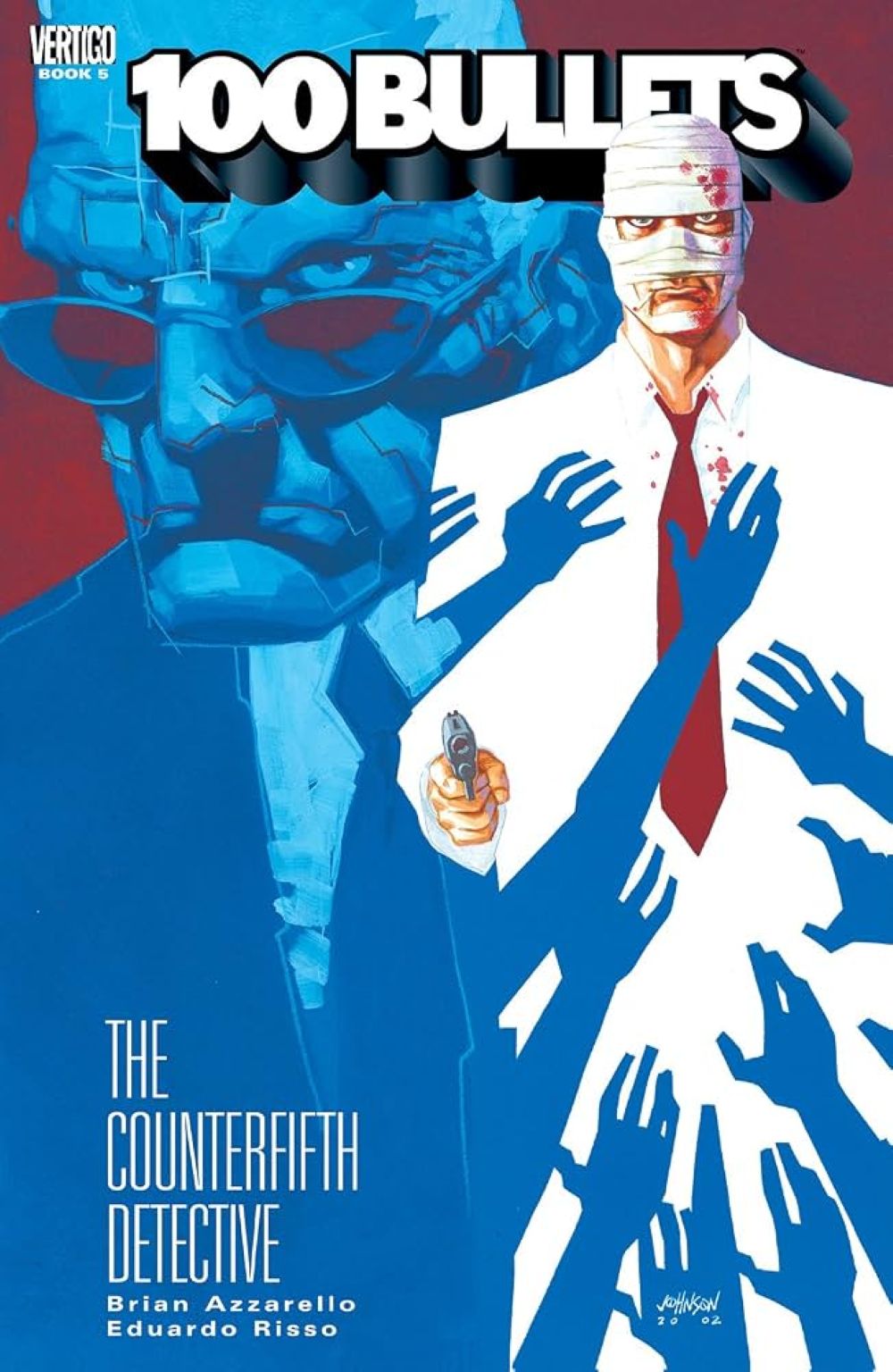
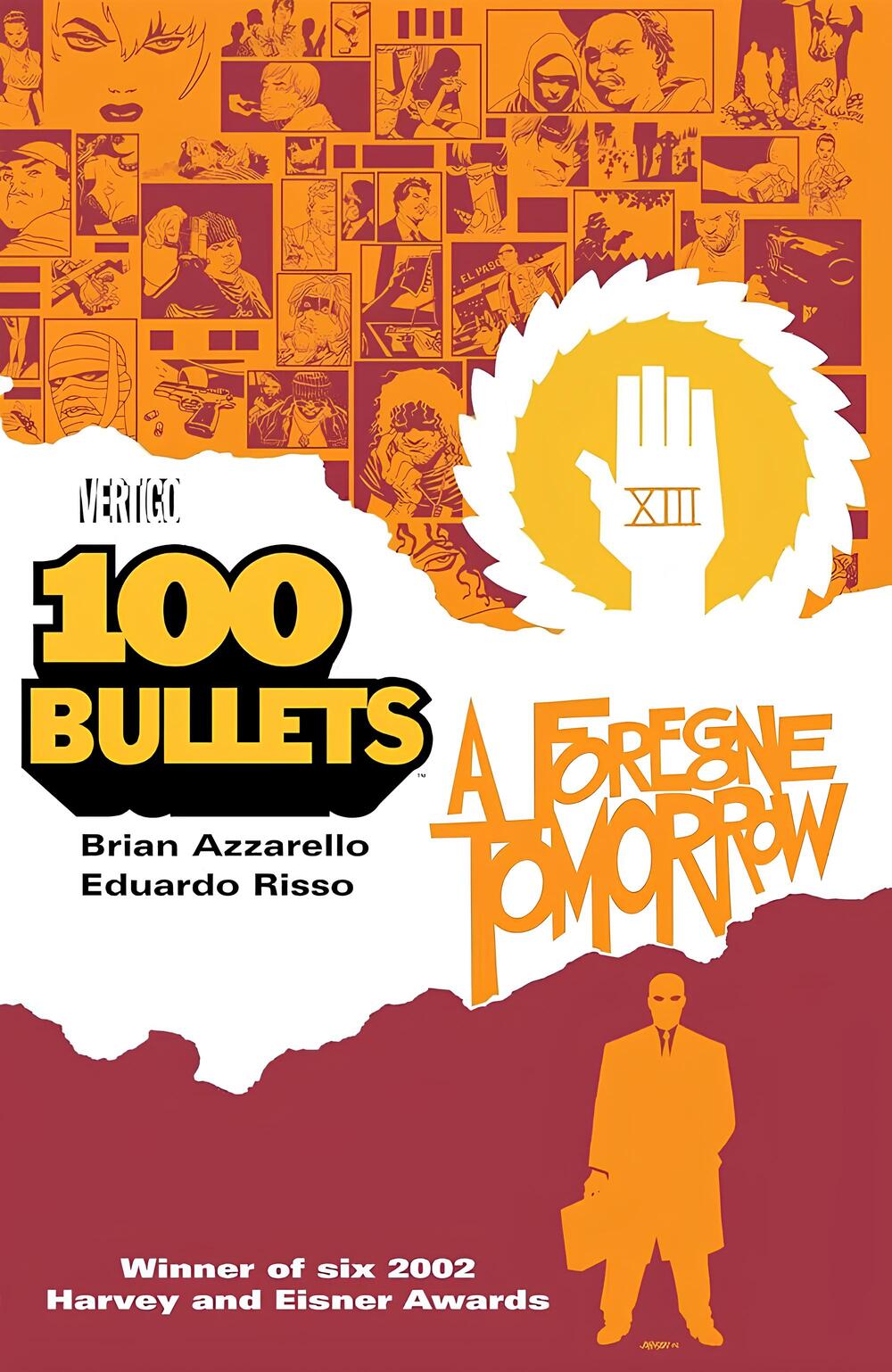
Review: 100 Bullets Vol. 3 – Hang Up on the Hang Low


“I never told you to kill him. I just gave you the opportunity.” — Agent Graves

With Hang Up on the Hang Low, Brian Azzarello and Eduardo Risso continue to prove that 100 Bullets is far more than a series about revenge fantasies and mysterious briefcases. The first two collections introduced the basic concept of Agent Graves approaching damaged people with a gun, one hundred untraceable bullets, and proof of who ruined their lives. That premise was already strong, but this third volume starts showing just how much uglier and more complicated the world around Graves really is. This is where the series begins to feel less like a set of loosely connected crime stories and more like a large, carefully constructed noir epic. The revenge angle is still present, but it is no longer the whole point. The people who receive Graves’s offer are getting pulled into a much bigger machine, whether they realize it or not.

The main character this time is Loop Hughes, a young man who has spent much of his life acting tougher, smarter, and more connected than he actually is. He is a small-time street hustler, someone who talks a good game but clearly has no real direction in life. That makes him an interesting choice for Agent Graves. Loop is not someone who has already been crushed by a terrible tragedy in the same direct way as Dizzy Cordova or Lee Dolan. His grievance is more personal and more complicated: his father, a man known as the Rain, abandoned him and his mother when he was still a child. Loop has built up years of anger around that absence, even if he has never really known what to do with it.

When Graves gives Loop one of his trademark attaché cases, it seems at first like another straightforward setup. Loop has the gun, the bullets, the evidence, and the freedom to act without legal consequences. The temptation is there, and Azzarello makes it easy to understand why Loop would want to pull the trigger. The Rain did not just leave; he left a hole in Loop’s life that the younger man has filled with insecurity, bravado, and bad decisions. But the story becomes much more interesting when Loop finally finds his father and discovers that the Rain is not some helpless old man waiting to be punished. He is deeply involved with dangerous people and has his own place in the criminal underworld.

That is where Hang Up on the Hang Low really finds its momentum. Rather than immediately becoming a story about a son taking revenge on his father, it turns into a story about Loop being drawn into the world that helped create his father in the first place. The Rain is connected to organized crime, old grudges, and the kind of people who can make a murder look like business as usual. Loop thinks he is finally getting some answers, but every answer only opens another door to something worse. He is in well over his head almost from the beginning, and the book does a great job of making the reader feel that constant pressure.

Loop is one of the more sympathetic characters in the series so far because, underneath all of his posturing, he does seem to have a conscience. He is not innocent, exactly, and he certainly makes some dumb choices, but he is not naturally cruel. He wants respect, money, and an explanation for why his father left, but he also cares about people in a way that many of the hardened gangsters around him do not. Azzarello does not turn him into a saint, though. Loop is still immature and easily manipulated, which is exactly why his journey through this volume becomes so tragic. He keeps thinking he has found a way to gain control over his life, only to learn that somebody else has already decided the terms.

Agent Graves remains the most fascinating figure in the book. In the early volumes, he could be seen as a mysterious avenger or a kind of grim wish-fulfillment figure, handing victims the tools to get justice on their own terms. This collection makes him feel more unsettling than heroic. Graves is not necessarily lying to Loop, but he is absolutely steering him toward a result that serves some larger purpose. He is a man who sees people as pieces on a board, and even when he gives them a choice, it is hard to believe that he does not already have an idea of how they will respond. The briefcase may offer freedom from prosecution, but it never offers freedom from consequences.

The book also continues expanding the larger mythology involving the Trust and the Minutemen. Azzarello is still not explaining everything, and that can be frustrating if someone wants clean answers right away. At the same time, the lack of full explanation is part of what gives 100 Bullets its pull. The reader gets the sense that every crime boss, stray conversation, and seemingly random killing could matter later. People who initially seem like minor players keep revealing hidden ties to the larger conspiracy. Even the deaths and betrayals carry an extra weight because they do not feel random. This series is building toward something, and by the end of this volume it is clear that Graves has been setting events in motion for a long time.

Eduardo Risso’s artwork continues to be one of the best things about the series. His characters look stylized without ever feeling too cartoonish, and he gives every person a distinct physical presence. You can tell who is dangerous just by the way they stand in a room. You can tell who is nervous by the way they avoid eye contact. Risso’s visual storytelling is especially effective in the bar scenes, street confrontations, and quiet moments when characters are trying to decide whether to trust someone. He knows how to make a room feel crowded, seedy, and tense without overloading the page with unnecessary detail.

Risso also has a great eye for the ugly atmosphere of this world. The bars look worn down, the apartments feel cramped, and the city streets always seem like they are one bad decision away from turning violent. The noir influence is obvious, but it does not feel like a cheap imitation of old detective stories. It feels more like a modern crime story filtered through noir imagery: low lighting, cigarette smoke, suspicious looks, crooked power structures, and people who keep trying to escape the past only to be dragged deeper into it. The coloring helps the art stand out as well, giving the grimy environments and tense confrontations a little extra visual bite without making the book look overly polished.

The ending is what really makes the volume stick. Azzarello does not rely on a giant surprise twist so much as a sense of inevitability. You can see the bad outcome coming, but that does not make it any easier to watch. Loop spends most of the story trying to become somebody who matters, somebody with control and power, and the cruel part is that the criminal world is more than happy to let him feel that way for a little while. By the time reality catches up with him, he has learned that the people offering him opportunity were never offering him a real way out.

100 Bullets Vol. 3: Hang Up on the Hang Low is the strongest collection in the series so far. It has a more focused central story than Split Second Chance, while still pushing the wider conspiracy forward in a meaningful way. Loop is a memorable lead because he is flawed, angry, and trying desperately to look fearless when he is really just lost. Azzarello keeps the dialogue sharp and streetwise, Risso keeps every page visually charged, and the larger story continues to get more dangerous the more we learn about it. This is the point where 100 Bullets stops merely promising that it has a major story to tell and starts delivering on that promise.

100 Bullets Volume Reviews

Review: 100 Bullets Vol. 2 – Split Second Chance


“Asking questions is free… but the answers—they can cost you your life.” — Agent Graves

In the first volume of 100 Bullets, Brian Azzarello and Eduardo Risso laid down a stunning thesis for their magnum opus: a world where the wronged are offered the ultimate temptation of consequence-free vengeance. That volume, First Shot, Last Call, functioned as a potent thematic introduction, establishing the series’ central moral quandary through self-contained stories. With Split Second Chance, the creative team makes a crucial pivot. This collection, gathering issues #6-14, successfully preserves the gritty, anthology-style explorations of revenge while beginning to weave a much larger, more intricate conspiracy that feels poised to consume everything in its path. If the first book was a promise, this second volume is the first, gripping step toward its fulfillment, even if it occasionally stumbles under the weight of its own ambition.

The volume opens with “Short Con, Long Odds,” a two-part story that initially feels like familiar territory. We are introduced to Chucky, a small-time gambler fresh out of prison, who is approached by Agent Graves. As before, Graves offers incontrovertible proof of a betrayal and the tools for retribution—this time against Chucky’s childhood friend, Pony, who has seemingly built a successful gambling empire on his partner’s misery. What makes this story stand out is its focus on the petty, desperate world of gambling. Risso’s art is especially potent here, capturing the sad, seedy underbelly of street-corner hustles and back-alley games. The story’s conclusion, which unfolds off-panel, is a masterclass in implication, leaving the reader to piece together the grim aftermath. It is a solid entry that reinforces the series’ core premise, but its real purpose becomes clear retroactively as the larger plot comes into focus.

This is the volume where the series’ title begins to earn its meaning. Agent Graves is no longer just a cipher; he is revealed to be a man with a history, and Split Second Chance doles out those histories with deliberate, tantalizing precision. The most significant revelation comes in “Day, Hour, Minute… Man,” where we learn about The Trust and the enigmatic Minutemen. This arc peels back the curtain, suggesting that Graves and his associate, Mr. Shepherd, were once part of this shadowy organization before faking their deaths to escape its clutches. The introduction of Lono, the chilling hitman from the first volume’s “The Samurai,” becomes far more significant. His meeting with Graves is charged with a dangerous, unspoken history, confirming that Graves’s “gifts” are a part of a larger, more personal agenda. The plot is thickening nicely, and the promise of a sprawling, interconnected narrative starts to feel exhilaratingly real.

However, it is in the standalone stories that Azzarello’s writing truly shines, showcasing his ability to extract raw, human emotion from his noir framework. The standout is undoubtedly “Heartbreak, Sunnyside Up,” a single-issue story that follows a hard-working diner waitress named Rose. Rose’s life is a grinding cycle of poverty and worry for her runaway daughter. When Agent Graves appears, he doesn’t just offer her a gun and a target; he delivers a slow, agonizing explanation of how her daughter became a heroin-addicted prostitute after being molested by her own father. It is a moment of pure, unflinching tragedy. The brilliance of the story lies not in the revenge itself, but in the horror of the revelation. Azzarello forces the reader and the character to sit with the unbearable truth, making the subsequent act of violence feel less like empowerment and more like a desperate, last resort. It serves as a powerful reminder that “sometimes evil is closer to home than we think.”

“The Right Ear, Left in the Cold” offers a fascinating twist on the formula by introducing Cole Burns, a deadly assassin living undercover as a neighborhood ice cream man. This story introduces the concept of the “sleeper agent,” a tool that Graves and Shepherd can “reactivate” for their own ends. Cole is a more capable and cold-blooded protagonist than the average victim, which makes his story less about moral choice and more about professional obligation. Yet, it deepens the mythology, showing that Graves has an entire network of operatives at his disposal, further blurring the line between righteous avenger and puppet master. His ultimate task of retrieving the briefcase from Dizzy Cordova in the final arc, “Parlez Kung Vous,” masterfully ties this new plot thread back to the series’ very first protagonist.

Throughout it all, Eduardo Risso’s artwork remains the series’ undeniable and consistent anchor. His style, which perfectly captured the cold, deliberate mood in the first volume, continues to excel in Split Second Chance. Risso’s panels have a cinematic rhythm; his compositions are economical yet expressive, using deep shadows and stark contrasts to build a world that feels dangerous and morally unstable. He excels at conveying unspoken tension and character attitude through posture and expression, a vital skill for a noir story where much is left unsaid. While some readers may find the depiction of female characters hyper-sexualized, Risso and colorist Grant Goleash unquestionably create a visual language that is sleek, uneasy, and unmistakably noir. The story’s pace may occasionally lag, but the art is always arresting.

100 Bullets: Split Second Chance is a more challenging and rewarding book than its predecessor. It sacrifices some of the first volume’s focus and self-contained impact to lay the foundation for something much grander. This is the volume where the series starts to earn its reputation for dense, interwoven plotting. It is a work of deliberate, intricate world-building that asks the reader to be patient and pay close attention. It is not without its flaws—some stories feel more like necessary setups than complete narratives, and the unrelentingly grim tone can be exhausting. Yet, the moments of genuine human tragedy, like Rose’s story, and the thrilling expansion of the central mystery make Split Second Chance an essential step in the journey. It confidently expands the world of 100 Bullets, deepening its mythology and proving that this is a saga built for the long haul.

100 Bullets Volume Reviews

Guilty Pleasure No. 107: Ironwood (by Bill Willingham)


Bill Willingham’s Ironwood is the sort of graphic novel that lives in the uneasy space between bawdy escapism and unexpectedly thoughtful worldbuilding, making it a quintessential guilty pleasure that some readers insist on treating as near–high art. It is at once shamelessly pornographic and surprisingly committed to telling a coherent sword‑and‑sorcery story, which means your mileage will depend heavily on whether you can accept explicit sex as an integral—often dominant—part of the narrative rather than a tacked‑on indulgence.

Published by Eros Comix in the early 1990s, Ironwood ran for eleven issues and was later collected into two trade paperbacks that have acquired a minor cult status among fans of erotic fantasy comics. The premise follows Dave Dragovon, a juvenile dragon who appears entirely human because he has not yet matured into his full draconic form, as he is hired by the beautiful and cursed Pandora Breedlswight to seek out the wizard Gnaric and break the spell on her. It is a familiar quest hook—hero, sorcerer, cursed damsel—but Willingham uses it as a loose scaffold on which to hang an almost nonstop parade of sexual encounters, bawdy gags, and bursts of fantastical incident.

As a narrative, Ironwood is better than its reputation as “porn with plot” might suggest, though that label is not entirely unfair. The story is consciously serialized in the classic fantasy‑adventure mode: Dave and Pandora move from one locale to another, encountering wizards, monsters, political schemes, and rival factions, all while the central quest to undo Pandora’s curse gives a sense of forward momentum. Various readers have pointed out that there is genuine political intrigue and thought given to motivations, and you can see Willingham testing out the sort of layered plotting and character dynamics he would later refine in Fables, even if here they are wrapped around mandatory explicit scenes. There are moments when the story is engaging enough that the sex almost feels like an interruption, a dynamic Willingham himself has reportedly acknowledged when noting that fitting in each issue’s required sex scene could break the flow.

Tonally, the book leans heavily into adult humor, but it is not mean‑spirited. The jokes range from clever wordplay and situational comedy to unabashedly adolescent gags, the sort that make you groan even as you recognize they fit this world of oversexed dragons, lecherous wizards, and magically enhanced perversions. In this regard, Ironwood is very much a product of its era: a 1990s underground/alt sensibility that treats fantasy tropes and sexual taboos with the same irreverent shrug. When the humor lands, it gives the book a disarming charm, but when it doesn’t, the dialogue can feel like an overlong dirty joke that mistakes sheer explicitness for wit. Still, there is a lightness here—especially in Dave’s reactions and the deadpan absurdity of certain magical mishaps—that keeps the series from tipping into grim or exploitative darkness, despite its plentiful kinks.

Visually, Willingham’s art is the most persuasive argument for why some readers champion Ironwood as something more than disposable smut. His linework is clean and expressive, with a confident sense of anatomy, staging, and page composition that gives both the action and the erotic scenes a fluid, readable rhythm. The fantasy settings are detailed without being cluttered; taverns, towers, and mystical landscapes all feel like lived‑in spaces rather than generic backdrops for sex scenes. The character designs, especially Pandora and the various magical oddballs, show a cartoonist relishing the chance to exaggerate physicality and personality in equal measure, which goes a long way toward making these figures feel like characters rather than mere bodies.

That said, the erotic content is not merely frequent—it is foundational, and that is where Ironwood becomes a textbook guilty pleasure. This is an unabashedly hardcore series: explicit sex acts, imaginative uses of magic for sexual purposes, and sequences that leave nothing to implication. Devices like a hydra‑head spell repurposed so a character can pleasure multiple partners at once are emblematic of the book’s gleeful “power perversion potential,” embracing the logic of a sex‑obsessed Dungeons & Dragons campaign. For readers comfortable with that premise, there is an undeniable energy in the way Willingham integrates erotic spectacle into battles, spells, and negotiations; for others, the same material will read as juvenile, repetitive, or simply exhausting.

Reception among those who have sought out the collected volumes tends to be surprisingly positive, with many praising Ironwood as one of the rare “sex comics” where the story can stand on its own, even if stripped of the explicit content. Fans often note the balance between story, humor, and eroticism, arguing that the plot is engaging enough that the sex becomes a bonus rather than the sole reason to read. This is where the “high art” argument creeps in: within certain circles of fantasy and underground comics readers, Ironwood is celebrated as an early sign of Willingham’s strengths as a writer and artist, and as an example of how erotic comics can pursue worldbuilding and character arcs rather than simple vignettes. Yet that enthusiasm coexists with acknowledgment that, without the sex, this would largely be a light, sometimes flimsy adventure—a fun romp, but not a lost masterpiece of the medium.

In a broader context, Ironwood sits at an interesting crossroads in Willingham’s career and in the evolution of adult comics. Knowing his later mainstream success, you can see how this early project let him experiment with long‑form storytelling, recurring cast chemistry, and a blend of mythic and mundane concerns, all while operating in a corner of the market that gave him almost total creative freedom. That creative freedom is both the book’s greatest strength and its biggest barrier to entry: it delivers exactly the kind of unfiltered fantasy‑erotica hybrid it promises, but that same purity of purpose locks it firmly into the realm of niche appetite.

Ultimately, Ironwood is best approached with clear expectations and a sense of humor. As a graphic novel, it is technically accomplished, often funny, and occasionally more narratively ambitious than its reputation suggests, which explains why some fans will defend it as a minor classic of erotic fantasy comics. At the same time, its relentless explicitness, adolescent impulses, and lightweight core plot mark it firmly as a guilty pleasure—one that knows exactly what it is and never pretends otherwise, even as a devoted subset of readers insists on elevating it to the status of “high art.”

Previous Guilty Pleasures

  1. Half-Baked
  2. Save The Last Dance
  3. Every Rose Has Its Thorns
  4. The Jeremy Kyle Show
  5. Invasion USA
  6. The Golden Child
  7. Final Destination 2
  8. Paparazzi
  9. The Principal
  10. The Substitute
  11. Terror In The Family
  12. Pandorum
  13. Lambada
  14. Fear
  15. Cocktail
  16. Keep Off The Grass
  17. Girls, Girls, Girls
  18. Class
  19. Tart
  20. King Kong vs. Godzilla
  21. Hawk the Slayer
  22. Battle Beyond the Stars
  23. Meridian
  24. Walk of Shame
  25. From Justin To Kelly
  26. Project Greenlight
  27. Sex Decoy: Love Stings
  28. Swimfan
  29. On the Line
  30. Wolfen
  31. Hail Caesar!
  32. It’s So Cold In The D
  33. In the Mix
  34. Healed By Grace
  35. Valley of the Dolls
  36. The Legend of Billie Jean
  37. Death Wish
  38. Shipping Wars
  39. Ghost Whisperer
  40. Parking Wars
  41. The Dead Are After Me
  42. Harper’s Island
  43. The Resurrection of Gavin Stone
  44. Paranormal State
  45. Utopia
  46. Bar Rescue
  47. The Powers of Matthew Star
  48. Spiker
  49. Heavenly Bodies
  50. Maid in Manhattan
  51. Rage and Honor
  52. Saved By The Bell 3. 21 “No Hope With Dope”
  53. Happy Gilmore
  54. Solarbabies
  55. The Dawn of Correction
  56. Once You Understand
  57. The Voyeurs 
  58. Robot Jox
  59. Teen Wolf
  60. The Running Man
  61. Double Dragon
  62. Backtrack
  63. Julie and Jack
  64. Karate Warrior
  65. Invaders From Mars
  66. Cloverfield
  67. Aerobicide 
  68. Blood Harvest
  69. Shocking Dark
  70. Face The Truth
  71. Submerged
  72. The Canyons
  73. Days of Thunder
  74. Van Helsing
  75. The Night Comes for Us
  76. Code of Silence
  77. Captain Ron
  78. Armageddon
  79. Kate’s Secret
  80. Point Break
  81. The Replacements
  82. The Shadow
  83. Meteor
  84. Last Action Hero
  85. Attack of the Killer Tomatoes
  86. The Horror at 37,000 Feet
  87. The ‘Burbs
  88. Lifeforce
  89. Highschool of the Dead
  90. Ice Station Zebra
  91. No One Lives
  92. Brewster’s Millions
  93. Porky’s
  94. Revenge of the Nerds
  95. The Delta Force
  96. The Hidden
  97. Roller Boogie
  98. Raw Deal
  99. Death Merchant Series
  100. Ski Patrol
  101. The Executioner Series
  102. The Destroyer Series
  103. Private Teacher
  104. The Parker Series
  105. Ramba
  106. The Troubles of Janice

Review: 300 (dir. by Zack Snyder)


I will get it out of the way and say that this was not and was not meant to be a historically accurate depiction of Ancient Greece. It was never meant to be even when it was still just an Eisner-Award winning graphic novel from the mind of iconic graphic novelist and artist Frank Miller. With that out of the way I was able to watch and enjoy Zack Snyder’s film adaptation on its own terms without the criticism of historical accuracies looming dangerously over my head. 300 deserves the label of being an event film. From start to finish, Snyder’s film practically screams blockbuster and popcorn and I wouldn’t have it any other way.

Frank Miller’s 300 was at its time an interesting depiction of one of history’s greatest military last stands. Miller already known for hyperstylizing the look and feel of the noir genre with his Sin City graphic novels, takes the same approach with his depiction of King Leonidas and his 300 Spartans taking a final last stand against Persian God-King Xerxes at a narrow mountain pass called Thermopylae (literally meaning Hot Gates in Greek). Zack Snyder took this graphic novel and painstakingly stayed true to the visuals Miller and his colorist wife, Lynn Varley put on paper. Looking back at my memory of some of the panels and images from the graphic novel. Snyder and his crew of art directors, cinematographers and CGI-artists were successful in translating almost every page of the graphic novel onto the screen.

Like Robert Rodriguez’s adaptation of Miller’s Sin City, Zack Snyder’s 300 pretty much brings the graphic novel to moving life. This means he stuck to the source material quite literally which limits his own take on the graphic novel. Like Rodriguez, Snyder doesn’t really put his own signature stamp as a director to the film. It’s not too much of criticis since he does a great job of translating Miller’s work onto film, but one wonders what sort of personal touches he could’ve added to the finished look that wasn’t lifted from Miller’s style and whether it would’ve changed the overlook look and feel of the film.

The story is quite simple and just takes the basic summary of the historical event itself. Spartan King Leonidas (played with visceral gusto and machismo by Scottish thespian Gerard Butler) makes a decision to go to war and confront the encroaching and fast approaching massive Persian Army led by Xerxes (Rodrigo Santoro) intent on conquering the Hellenic city-states of the Greek Peninsula. Persian ambassadors ride forth to demand oaths of fealty from those city-states ahead of the army’s path. Sparta is one such city-state, but different from the rest of its Hellenic brethrens. Sparta has gone down in history as a word synonymous with unbending dedication to a strict, ascetic warrior code. Warfare and battle were what Spartans were born and trained to do from an early age. Weakness and physical imperfections weeded out from the time of birth (the film explains just what happens to male newborns with physical imperfections and deformities). The answer Leonidas gives the Persian delegation could be seen as somewhat extreme, but not contrary to his nation’s warrior-culture of never surrendering and seeing death in battle the greatest glory for a Spartan to achieve. From this sequence right up to the end of the film we get to see just how much of a warrior culture the Spartans were in extreme detail.

It’s during the prolonged battle scenes between Leonidas’ Spartans and Xerxes army which will have everyone chomping at the bit. If you have to see this film for any particular reason outside of watching superbly-trained underdogs slaughtering and endless supply of enemy troops then you will most likely be disappointed by the slower scenes away from Thermopylae. Indeed, this film an its original source material would’ve worked even better without the extra filler Snyder and his writers added to give the film more depth. I’m all for more emotional depth and characterization in my films but when a movie is all about a bloody and heroic last stand of a few against the many, scenes which slow the story down does more to break the rhythm and tone of a film than add to it. Othe than a deeper understanding of the kind of partnership Leonidas had with Gorgo, his Spartan Queen, most of the subplots added by Snyder and his writers could easily have been left out and still ge a kick ass action epic.

It’s the action scenes which reall stand out visually. Some people might see the style tricks of speed ramping certain action sequences then slowing it down considerably to show the minute detail of the battle scene as being to gimmicky, but I would disagree and say it actually gives the movie a mythical quality in its storytelling. One thing I have to say about Zack Snyder as a director (his remake of George A. Romero’s Dawn of the Dead better than what detractors have made it out to be) is that he knows how to film action and with special mention to bloody and gory action. He makes these scenes of dismemberments, decapitations, and disembowlments look like a piece of performance art.

These scenes of carnage would be considered extremely gratuitious if it didn’t look so made up good. Even the way the blood flows, spurts and splashes look like something Jackson Pollock would take interest in. The speed up and slow down of the sequences also gives the fight scenes a certain rhythm that once an audience picks up on will follow it through to the end. This is why the scenes back in Sparta with a duplicitous politician and his powerplay to assume control and power seem such a downer instead of enhancing the sacrifice of Leonidas and his men. Those scenes just feel tacked on and completely superfluous. Luckily, there’s not enough of them to slow down the frantic pace developed by the battle itself.

The performances by all actors involved really doesn’t require too much criticism or reflection over. Gerard Butler does a great and convincing job as the Spartan King and his conviction in confronting Xerxes and his army with so few seem very believable. It’s not a star-making performance but it does show that Butler can add a bit of gravitas to a character and role so basic in characterization. Lena Hedley is radiant as his partner and Queen. Despite the weird sounding name of Gorgo, Hedley plays the strong-minded and equally influential wife to Butler’s Leonidas. It’s only her scenes back in Sparta as she tries to rally her people to support their king which keeps these slower sequences from fully pulling down the film. The performances were good enough to keep the acting in the film from becoming too campy or too serious. It’s an action film and with enough action going on in the movie I could forgive the writers (both Miller and the screenwriters) from scrimping on character build up.

All in all, Zack Snyder’s film adaptation of Frank Miller’s 300 succeeds in bringing the book to moving life. Throughout the run of the film it was hard not to get lost in the beautiful visuals. Whether it was the muted color pallette which puts most of the scenes in an almost sepia-tone look to over-emphasizing certain colors to set a certain mood. From oversaturation of reds in one sequence to one where everything seem to be tinted with the many shades of blues at night. This is what 300 will be best remembered for. It’s technical use of CGI to paint the environment in unrealistic but beautiful ways which gives the scenes a lyrical and mythical look to them once the actors were superimposed over them. The film really was a painting come to life and it shows once again how computer and digital filmmaking technology have now afforded directors in making what used to be impossible technically to something that could be done with the limit being the artist’s imagination.

This film will not win many acting, directing and even screenwriting awards (which it didn’t once award season rolled around), but it doesn’t have to for people to enjoy it. It will entertain and pull its audience into a living and modern retelling of a legend. Whether all that happened on the screen was exactly as it happened in 480 B.C. doesn’t matter. What it does show is that through retelling down the years even all the embellishments added to the story of Leonidas and his men doesn’t diminish the fact that what they did and accomplished was how legendary heroes were made and remembered.

Review: Marvel Zombies (by Robert Kirkman and Sean Phillips)


When Marvel Zombies was first announced I had been away from reading the superhero titles from DC and Marvel. I’d gone fully into non-superhero titles. One such title is Robert Kirkman’s The Walking Dead. Kirkman finally created a story which really tapped into what Romero was talking about in his Living Dead films. Kirkman’s zombie series continued where the film end credits began. To suddenly find out that Kirkman was to pen a “What If…?” style miniseries for Marvel telling the tale of what would happen if the Marvel Universe (well on of its alternates at least) and all its heroes and supervillains had suddenly all turned into flesh-eating zombies was great news indeed.

Marvel Zombies continues where the Ultimates Fantastic Four “Crossover” story-arc left off (story-arc where we’re introduced to the Marvel Zombies alternate universe). The Ultimates Fantastic Four has made it back safely to their Ultimates reality through the assistance of an unzombified Magneto. In the very first pages of Marvel Zombies we find Magneto on the run from those superheroes and villains turned zombies gunning for him. With these super-powered zombies having devoured the planet’s population within days they’re now set to hunting down, and at times, fighting with each other for the last few remaining people left on Earth for them to feed their hunger.

This being titled Marvel Zombies and not Magneto should give a hint as to the fate of the Master of Magnetism. No, this book deals with how the Marvel Zombies solve through their problem of not having anymore people to eat. It’s a good thing that in this reality Galactus and his herald, the Silver Surfer, have decided it was time to add Earth to the Devourer of Worlds’ menu. Unbeknownst to the Silver Surfer and Galactus, a planet they once thought to be teeming with life and energy to be consumned has become a death world where only the zombified Marvel heroes and villains remain.

The scenes once the Surfer and Galactus arrive were both action-packed and also full of some very dark humor. It was very difficult trying to root for anyone since in the end everyone left in the story were the “bad guys” but where the Surfer and Galactus were the serious villains in the story the Marvel Zombies themselves were funny enough in their need to take down Galactus and his Herald to feast on. The aftermath of the battle between the remaining Marvel zombies and Galactus makes for a great twist and also makes sense in a darkly humorous and wicked way.

Kirkman doesn’t dwell too much on the nature of the zombie plague’s effect on people’s humanity and feelings. He goes all-out to tell a fun, rip-roaring story. It shows in that there’s a little less depth in the book’s story than in Kirkman’s Walking Dead series, but what the story lacks in dramatic depth was made up for in some very funny and witty dialogue between the zombies themselves. The artwork by Sean Phillips (been a fan of his style since his work on Ed Brubaker’s Sleeper) complimented well with Kirkman’s zombie writing. I also like the fact that this graphic novel collected all the Marvel Zombies issue covers (both first and later reprintings) by renowned artist Arthur Suydam. His zombified alternate covers of classic Marvel issue covers was something of a great treat for comic book fans everywhere.

So, while Marvel Zombies doesn’t rise to the dramatic depths of The Walking Dead what it does do is tell a fun story of zombies versus Cosmic beings with plenty of flesheating and bloody good action. I’m glad that as great as Marvel Zombies was I’m even gladder that Marvel decided to re-visit this oft-kilter universe with some follow-up miniseries like Marvel Zombies vs The Army of Darkness and Marvel Zombies Volumes 2 thru 5.

Review: The Walking Dead Volume 13 (by Robert Kirkman)


It’s been almost a month since the final episode of the first season for the tv series adaptation of this comic book aired on AMC. The Frank Darabont and Gale Anne Hurd produced series became a major hit not just for the channel but also for everyone involved. While the adaptation deviated from the comic’s path at times in the end it helped established the post-apocalyptic world creator Robert Kirkman had been working five years to create. This is a world that is still on-going and, just weeks earlier, released the thirteenth volume of collected issues 73 thru to 78.

The 13th volume is aptly titled, Too Far Gone, as it continues where the previous trade paperback left off and that’s Rick and his group of survivors trying to settle in the safe, walled community in Alexandria, VA. This wasn’t the respite Rick and his group were hoping for, but it is as close to one as they’ll get as their original destination of Washington, DC resembles much of everything else they’ve seen and that’s unsafe devastation.

As Rick gradually gets used to going back as a lawman for the community everyone else do their part in doing the new jobs handpicked for them by the community’s leader Douglas. Through the first half of the volume we see through the point of view of certain character that this safe haven they’ve joined has it’s fair share of secrets and that not everything was as stable as they’ve been led to believe. While some of the revelations the reader will read as the volume unfolds doesn’t bring back images of Woodbury and The Governor, they do show that the underbelly of the Alexandria community is just as rotten but in other ways.

The title of the volume is in regards to Rick as a character and to a small degree the rest of his group. Here they are in a safe place with other survivors who just want to try and get back to living life the way it used to be. The paranoia and mistrust Rick has built within himself after the long journey from his hospital bed to this place has begun to chip away at not just his sanity but his humanity as well. He hasn’t turned the corner to become another Governor, but his actions in regards to trying to safeguard their new found safety does show that Rick and some in his group do not trust all the smiles and well-wishes thrown their way.

Rick knows that as safe as they all might seem now it doesn’t take much for all of it to come crashing down. It’s this looming threat that forces Rick to behave in ways which does have people question if he’s lost it and has he become a danger not just to their new benefactors but to his own people as well. The answer to this question wasn’t clear and remains, like all of Kirkman’s answer to certain moral question throughout the series, ambiguous and left up to the reader to decide if what Rick has done for the safety of his son and the others keep him in the role of hero or villain.

The volume ends in relatively safe conditions, but clues of an ominous consequence at the solution to some of the community’s outside problems may just bring a much bigger one in the next volume.

For those who are fans of the comic book the last two volumes has been slower affairs with quick bursts of action and horror. Like volume 6 and 7 previously, this relative calm before the storm may just bring about another major change to the roster of characters we’ve been following since the battle at the prison. Will we see another major kill-off of characters? Only Kirkman can answer that and it will be another 4-5 months before the next volume hits the streets. It will be a long wait indeed.


Review: The Walking Dead Volume 12 (by Robert Kirkman)


[Some Spoilers Within]

Tonight marks the premiere of Robert Kirkman’s widely-acclaimed and fan favorite zombie comic book series aptly titled The Walking Dead. The series has preeminent filmmaker Frank Darabont (Shawshank Redemption, The Mist) and genre-veteran producer Gale Anne Hurd producing the adaptation for AMC. So, it’s with the 12th volume in the collected series that I welcome the tv series.

“Life Among Them” sees Rick and his group of survivors (now less three of its original members and picking up a new one along the way in the previous volume) finally finding a semblance of a safe haven after the travails they endured at the hands of “The Hunters”. It has been a long and deadly journey for Rick and his people. The fact that the promise of a working government they had been moving towards was actually a lie from one of the new members wasn’t too much of a surprise to loyal readers of the comic. This is a group which has had its hopes dashed bloodily over and over that any good news they see as too good to be true.

This goes for the sudden arrival of a scout party from a walled-off community which promises the group safe haven with no questions asked. Rick, who has gone through such promises from a previous safe community, sees this offer with some suspicion and this brings forth another aspect of Rick’s personality which has changed from issue 1 to this volume. He has become paranoid and mistrustful of those not in his group and offers of safety and a respite from the grueling travels of the road he sees with suspicions eyes. But they accept this invitation and find out that this safe haven couldn’t be any different from Woodbury.

What they see inside the fortified walls could pass off as a slice of their former lives. A suburban-like community where people safely walk the streets at night and their kids play ball in the yards and streets without hints of danger. Leading this community is a former Congressman who had taken the stole of leadership and keep the haven running smoothly. All he asks of Rick and his people is that they contribute in some way to help continue the community’s expansion in some way. Rick returns to what he did before the fall of civilization and patrols the streets as the town’s constable. Michonne thinks it is now safe for her to put away her sword. Even Andrea has caught the eyes of more than one of the town’s many single men. Even Abraham has pitched in to become part of the work detail whose job is to go out and find building supplies to help strengthen and expand the walls.

All seems to be working as it should with everyone safe. The first sign that not all is what it seems is the mention of a name. A person who helped organized the building of the walls, but who seems to have become “HE WHO MUST NOT BE NAMED” to everyone Rick and his group meets inside the haven. The town’s leader also seems to hold secrets of his own. Rick senses the dark undercurrents permeating the town’s vibe and in a sequence right at the end of the volume we see just how damaged Rick has become since we first meet him in issue 1.

While the volume doesn’t go heavy on the zombie action it does a great job in setting up what could be another major story-arc coming in the subsequent volumes. Will Rick and his people learn the secrets the town has been keeping from them? Will Rick become what he despises the most in trying to keep his son and his group safe from the dangers of the outside and what he perceives as dangers inside as well? This volume is almost the calm before another shitstorm about to hit the group and this time will the butcher’s bill be as large as the one which was tallied in the end of the 8th volume.