Batman: Crimson Mist (by Doug Moench & Kelley Jones) Horror Review


“The answer to life’s every riddle: death and hungry darkness.” — Batman

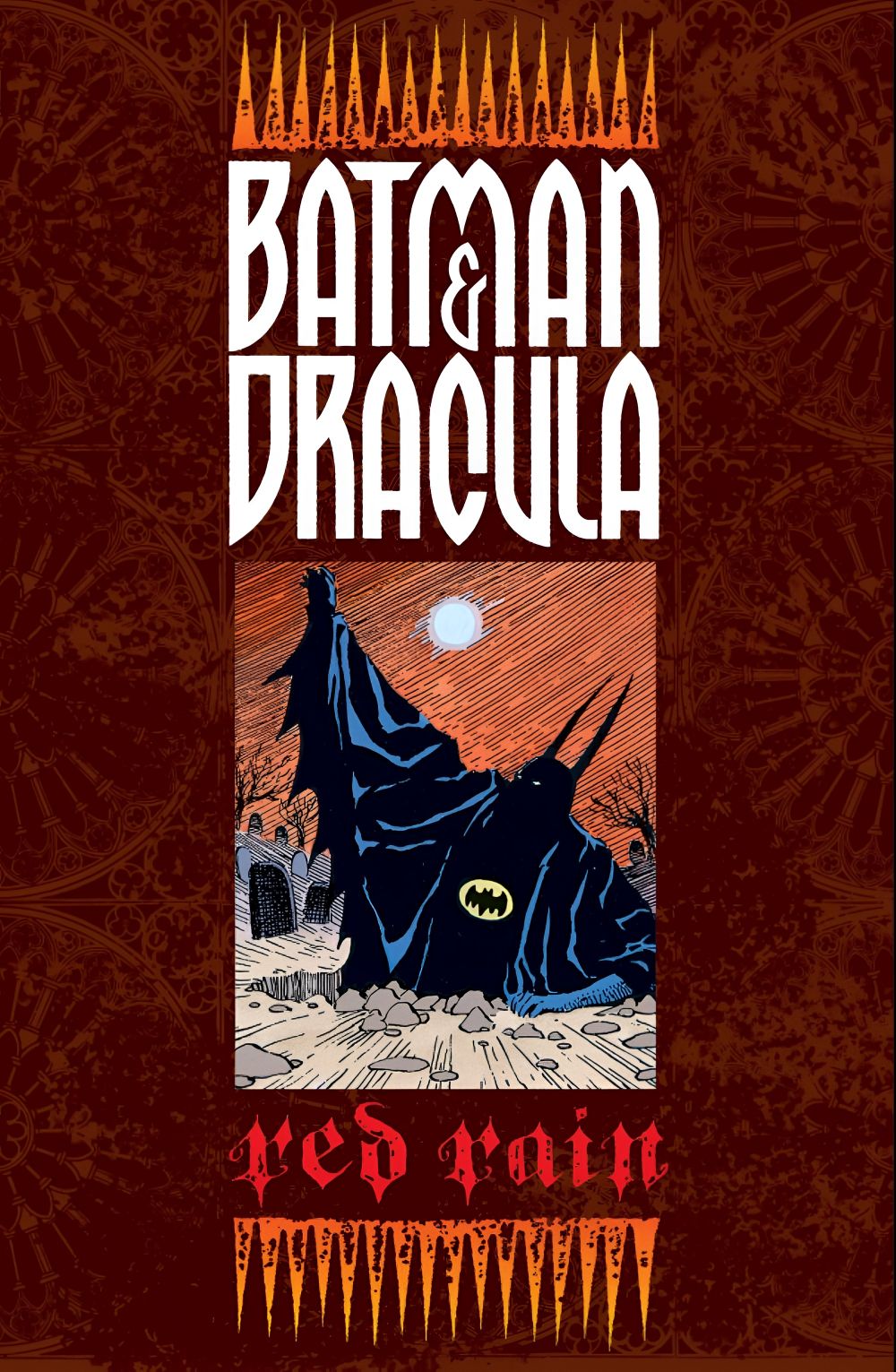
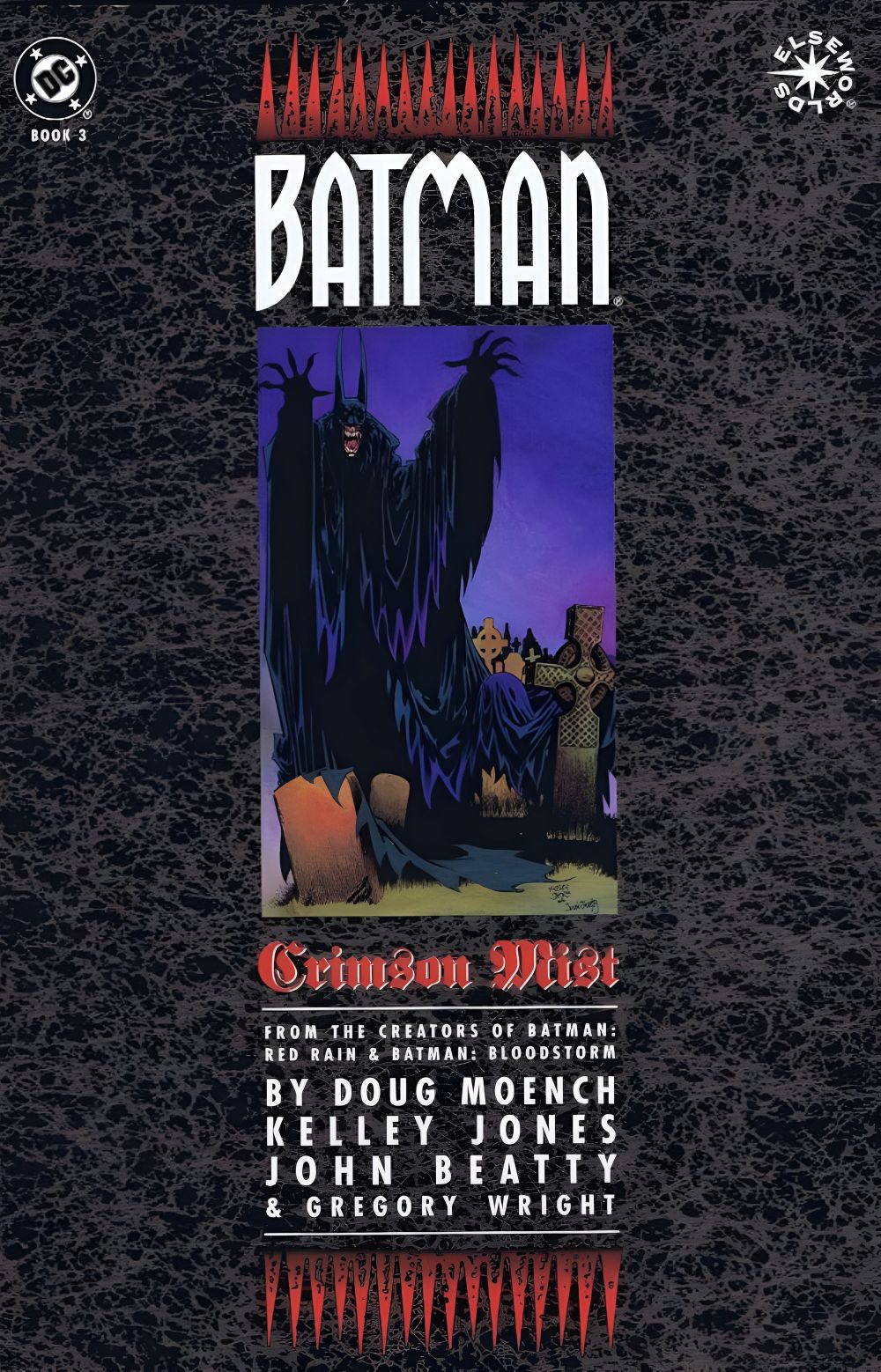
Doug Moench and Kelley Jones’s Batman: Crimson Mist is what happens when a superhero story stops pretending it can still be saved. The third and final entry in their Batman/Dracula Elseworlds trilogy, it takes the vampire-Batman concept introduced in Batman & Dracula: Red Rain and developed in Batman: Bloodstorm, then drags it into a bleak, blood-drenched finale where Gotham is overrun, Batman is undead, and the usual rules of heroism have completely collapsed. This is not a book interested in clever detective work, heroic triumph, or a reassuring ending. It is a gothic horror comic about a man who became a monster trying to decide whether he can still protect the city that made him. The result is excessive, melodramatic, and sometimes messy—but also memorably nightmarish.

The premise is deliberately bleak. Batman has already died, but death does not exactly stick in this universe. He returns as an undead creature still wrestling with Dracula’s curse, while Gotham has descended into a vampire-infested ruin. The book turns Batman’s usual moral code into the central conflict: he is supposed to protect the city, yet the thing inside him wants to feed. That is a strong hook because Batman stories work best when his discipline and restraint matter. Here, restraint is not just a personality trait; it is literally the difference between hero and monster. The story presents Batman as someone who has to give up everything, including life itself, to face the final reckoning, and that gives it an apocalyptic, no-way-back tone.

Moench’s writing is very much in “gothic comic book” mode. There are lots of declarations, ominous speeches, dramatic captions, and characters who seem incapable of saying anything quietly. At times, the dialogue gets so overwrought that it borders on parody. Batman broods, villains cackle, and the story constantly announces its own darkness. But honestly, that is part of the appeal. This is not trying to be a grounded crime story or a restrained psychological thriller. It is a big, pulpy vampire opera, and Moench leans into that identity completely. The book works best when you accept that everyone is performing at maximum theatrical intensity.

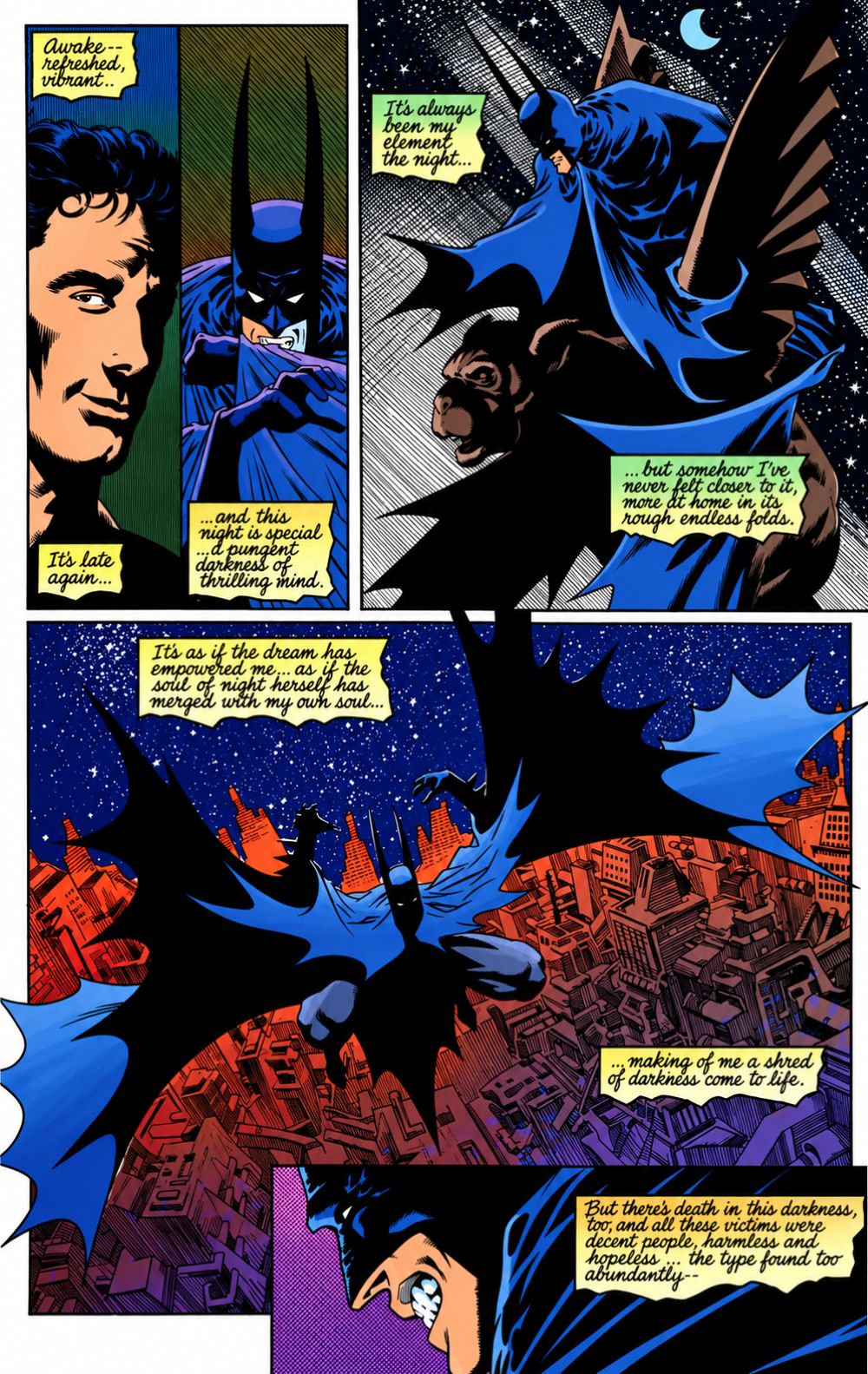
What gives the story real weight is the way it treats Batman’s vampirism as a tragedy rather than just a cool visual upgrade. He has power, but it comes with hunger. He can fight monsters, but he is increasingly one of them. The tragedy is that Batman’s greatest strength—his refusal to kill—has been compromised before the story even begins. He is already damned, or at least believes he is, so the question becomes whether he can still choose to protect people when every instinct tells him to consume them. That gives Crimson Mist a more emotional core than you might expect from a book with this much fang-baring carnage.
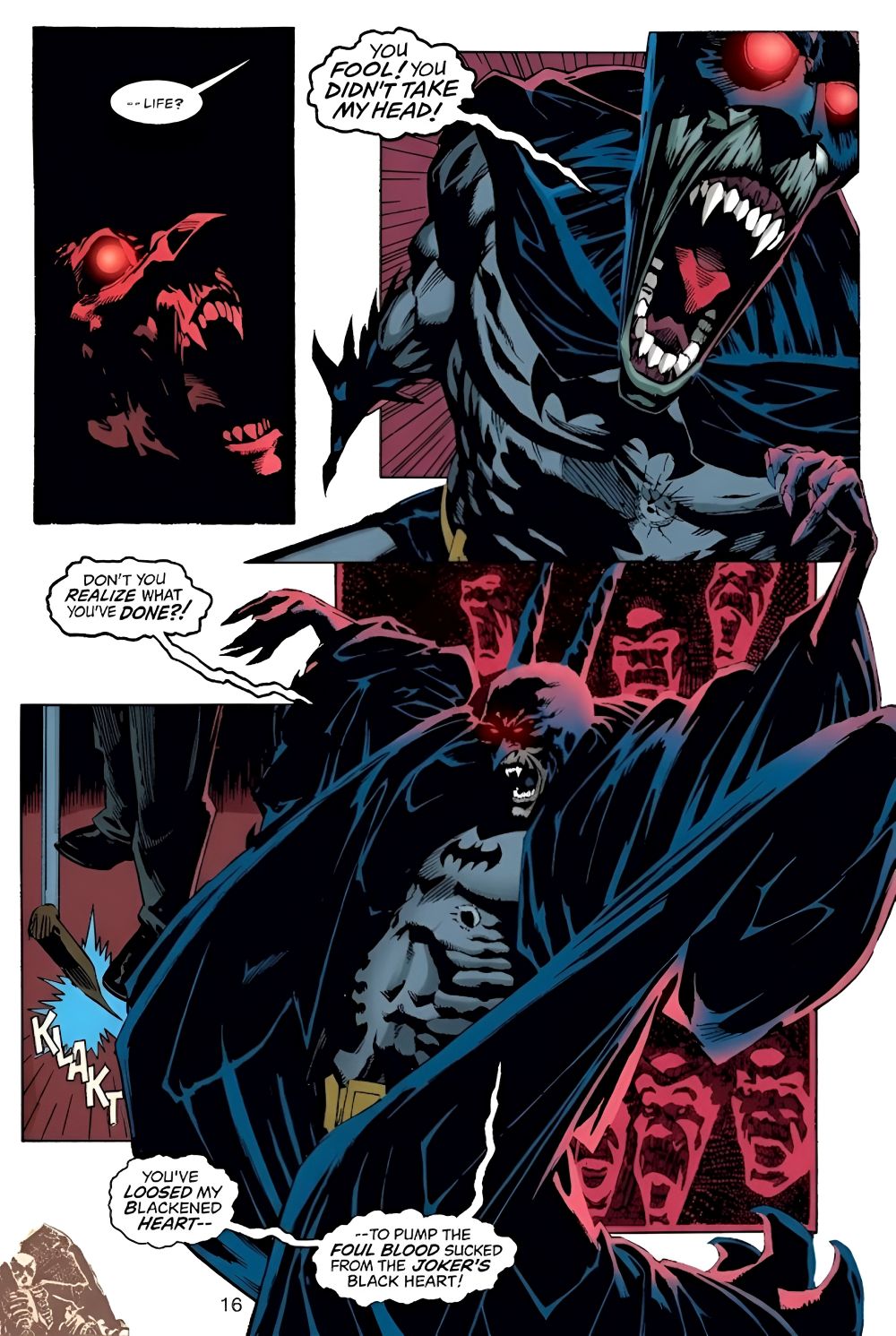
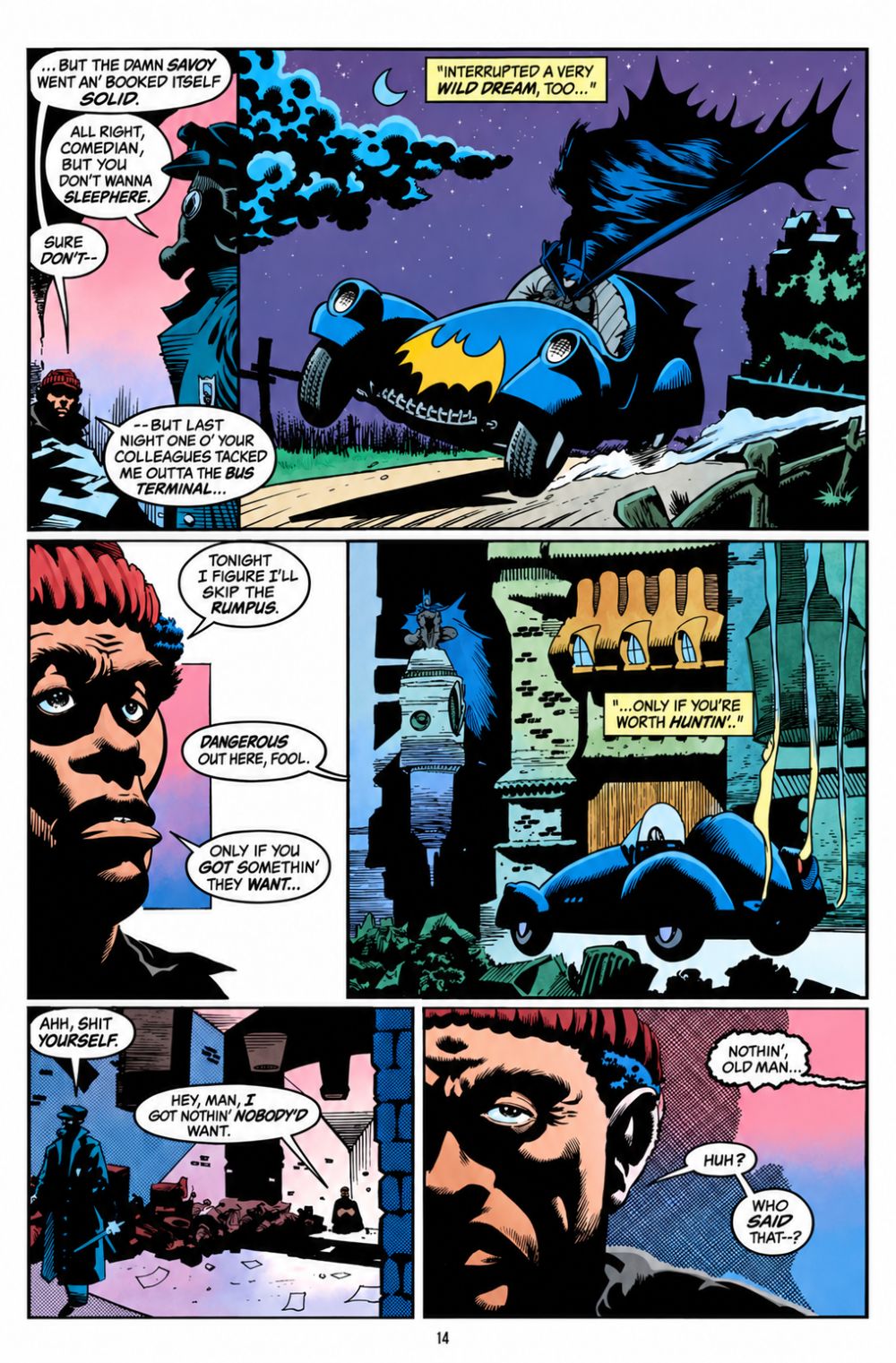
Kelley Jones’s art is the main reason this book feels so distinctive. Jones has always drawn Batman like a creature from a nightmare: huge cape, gaunt limbs, exaggerated shadows, a face that can shift from heroic determination to monstrous hunger. In Crimson Mist, that style is perfectly matched to the material. Gotham looks rotten and haunted. The vampires look genuinely repulsive. Batman himself often looks less like a man in a costume and more like a wraith who happens to wear one. The book is credited to Moench with art by Kelley Jones, John Beatty, and Malcolm Jones III, and the inking especially helps give the pages that scratchy, decayed texture.

The color work is a little more divisive. Some readers find the later trilogy books less polished than Red Rain, and Crimson Mist can look muddy or harsh depending on the printing. But that griminess fits the story. This is not a clean, glossy Gotham. It is a city already half-consumed by corruption, blood, and supernatural rot. The art may not be conventionally beautiful, but it is atmospheric in a way that suits the material. Jones makes every panel feel like it is breathing fog, dripping blood, or hiding something with too many teeth.

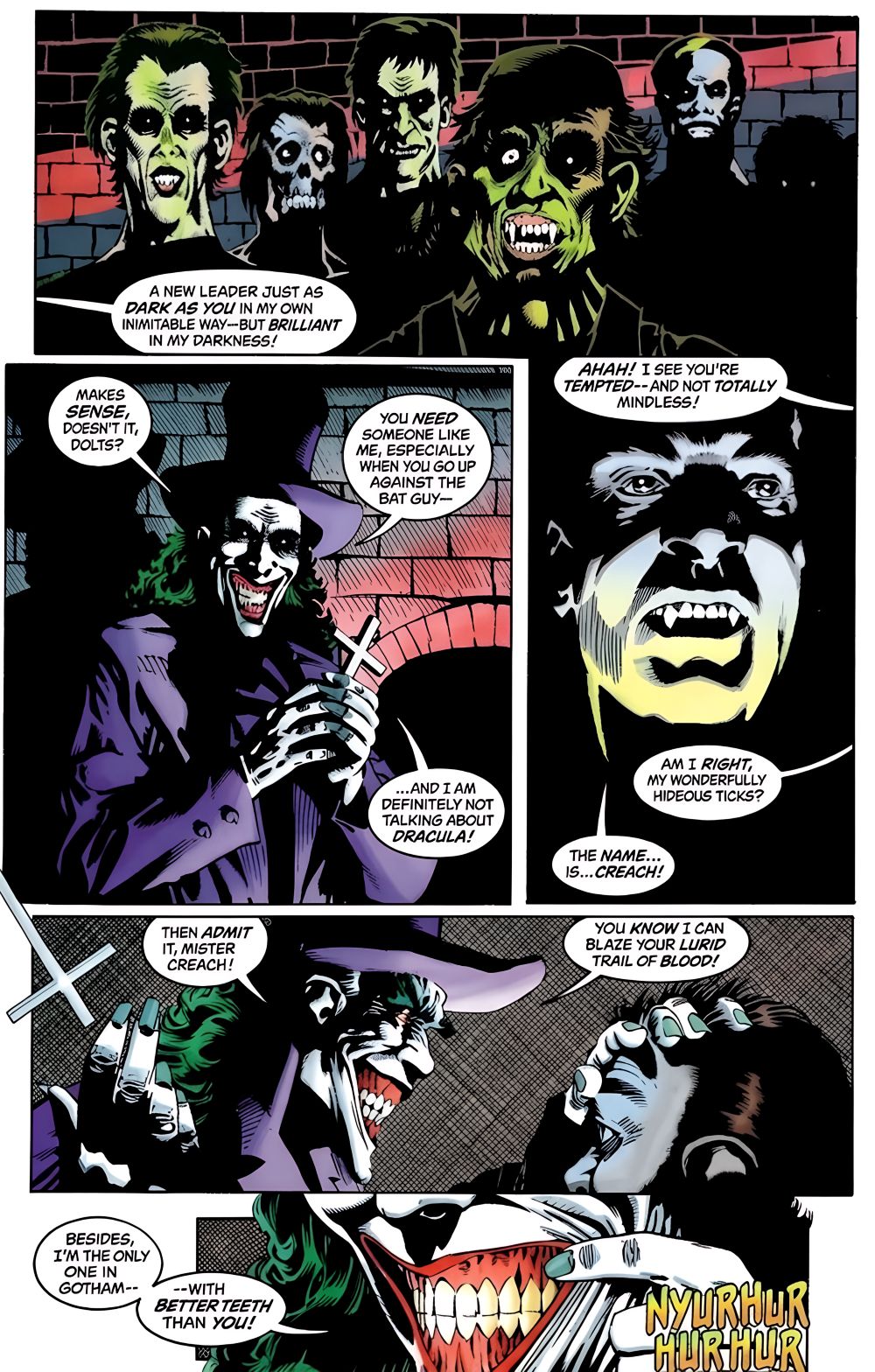
One of the most notorious aspects of Crimson Mist is its treatment of Batman’s villains. The Penguin, Two-Face, Killer Croc, Poison Ivy, Scarecrow, the Riddler, Black Mask, and the Joker all appear in the story’s larger cast, and the book has no interest in preserving the usual rules of superhero combat. Batman is not merely defeating criminals; he is hunting them. The violence is extreme, sometimes shocking, and often deliberately grotesque. For some readers, that will feel like a betrayal of the character. For others, it is the whole point: this is an Elseworlds where the usual safety rails have been removed, and Batman’s no-kill rule has collapsed under the weight of the vampire curse.

That said, the book’s biggest weakness is also its willingness to go too far. Crimson Mist sometimes mistakes escalation for depth. Once Batman starts tearing through familiar villains, the story can feel like a checklist of shocking moments rather than a carefully built narrative. The Joker’s involvement, in particular, has the potential to be fascinating, but the book often seems more interested in the spectacle of Batman versus his enemies than in exploring what those confrontations mean. There is a difference between “Batman has become a monster” and “the comic keeps showing Batman doing monstrous things,” and Crimson Mist occasionally lands on the wrong side of that line.
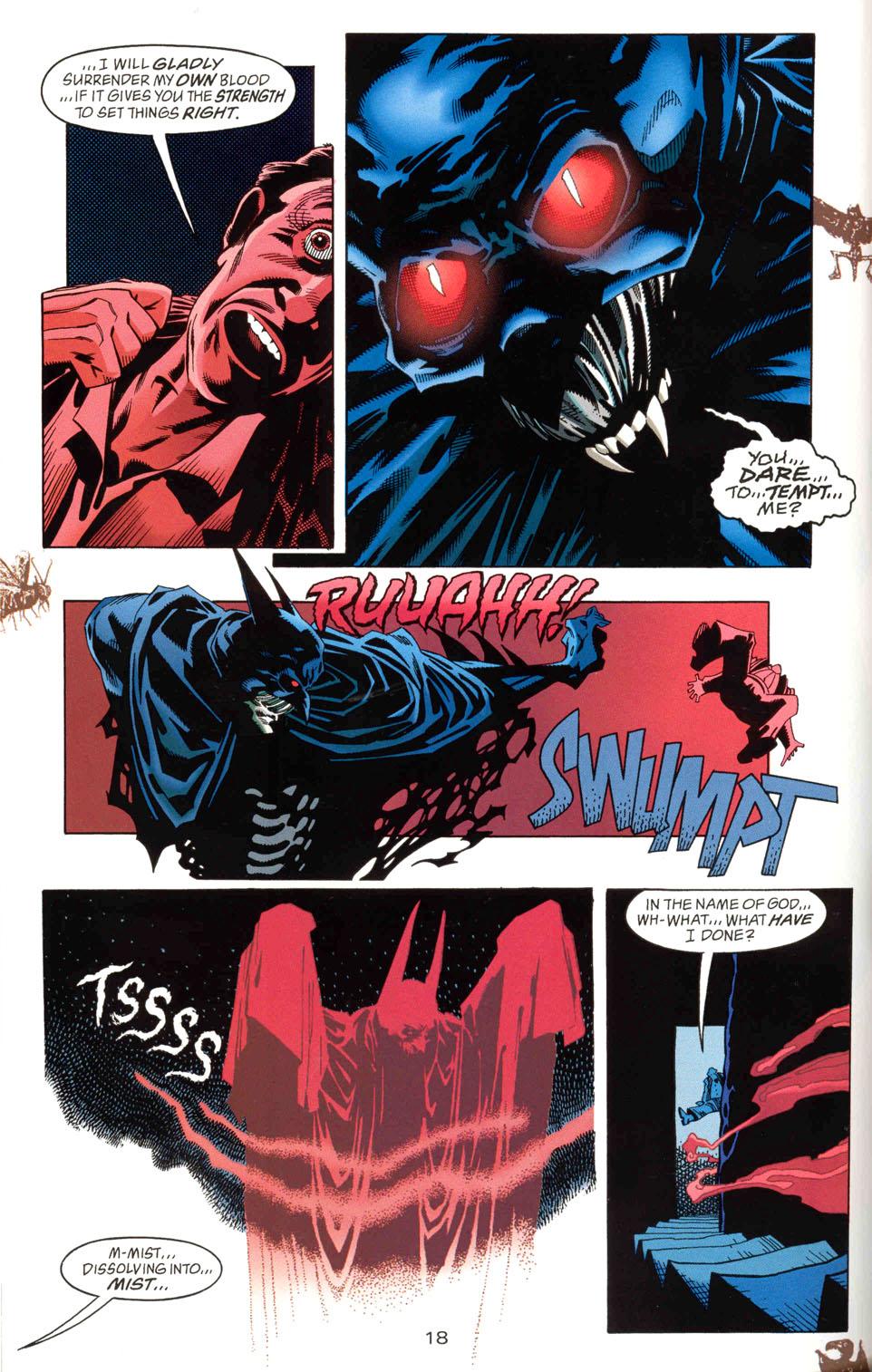
Still, the final chapter has a bleakness that gives it purpose. Unlike a standard superhero story, there is no obvious route to a happy ending. Batman cannot simply punch the curse away. Gotham cannot simply be saved by better policing or a clever gadget. The trilogy has spent two books making the world worse, and Crimson Mist has to confront the consequences. That gives the story a fatalistic energy. It feels like a horror movie’s final act, where the heroes are exhausted, the monsters are everywhere, and survival itself may be too much to ask.

As a standalone graphic novel, Crimson Mist is probably not the ideal entry point. It assumes familiarity with Red Rain and Bloodstorm, and without those books, the emotional stakes will feel thinner. Batman’s relationship with Selina Kyle, the fallout from his battle with Dracula, and the overall state of Gotham all carry over from the earlier chapters. The book is collected alongside both predecessors in Elseworlds: Batman Vol. 2, which is really the best way to experience it. Read on its own, it can feel like an exaggerated finale; read after the first two books, it feels like the inevitable, ugly conclusion to a tragedy that started when Bruce Wayne accepted vampire blood to save Gotham.

The trilogy’s appeal is that it understands something important about Batman: he is already a horror character. He dresses like a bat, operates at night, uses fear as a weapon, and lives in a city that practically begs to be overrun by monsters. Moench and Jones simply make the metaphor literal. Batman becomes the thing he has always dressed as. That idea alone gives the trilogy its power, and Crimson Mist takes it to its logical extreme.

Is it the best of the three? Probably not. Red Rain has the cleaner concept and the stronger sense of discovery, while Bloodstorm expands the mythology and gives the tragedy more room to develop. Crimson Mist is messier, louder, and more extreme. But it is also the most purely Kelley Jones book of the bunch. If you like his art, this is essential. If you do not, this may be the book that finally breaks you. Every page seems designed to remind you that Jones does not draw Batman as a handsome adventurer; he draws him as a haunted, elongated nightmare given a cape and a mission.

For all its excess, Batman: Crimson Mist is a memorably deranged piece of late-’90s DC horror comics. It is melodramatic, violent, ugly in places, and completely uninterested in being subtle. But it is also visually striking, thematically appropriate, and a genuinely fitting end to the Batman/Dracula saga. It asks what happens when Batman’s war on crime becomes literal predation, then answers with blood, shadows, and a Gotham that may be beyond saving. If you want a Batman story that feels like a Hammer horror film crossed with a nightmare, this is absolutely worth reading. Just do not come in expecting the World’s Greatest Detective to solve the case with a batarang and a stern lecture. By the time Crimson Mist is over, Batman is less a detective than a curse with a conscience—and that is exactly the kind of deranged Elseworlds premise DC should occasionally let creators run wild with.
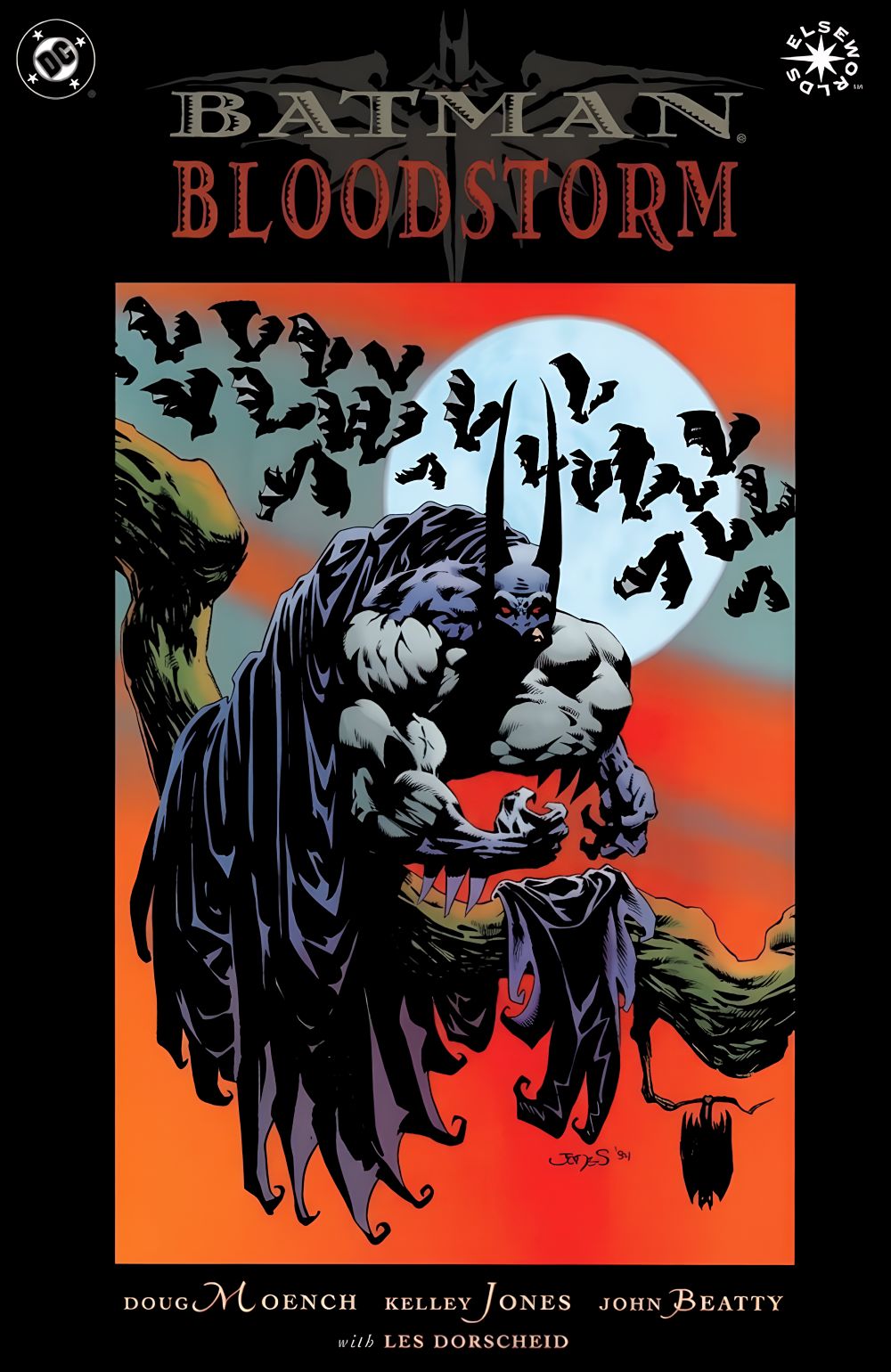
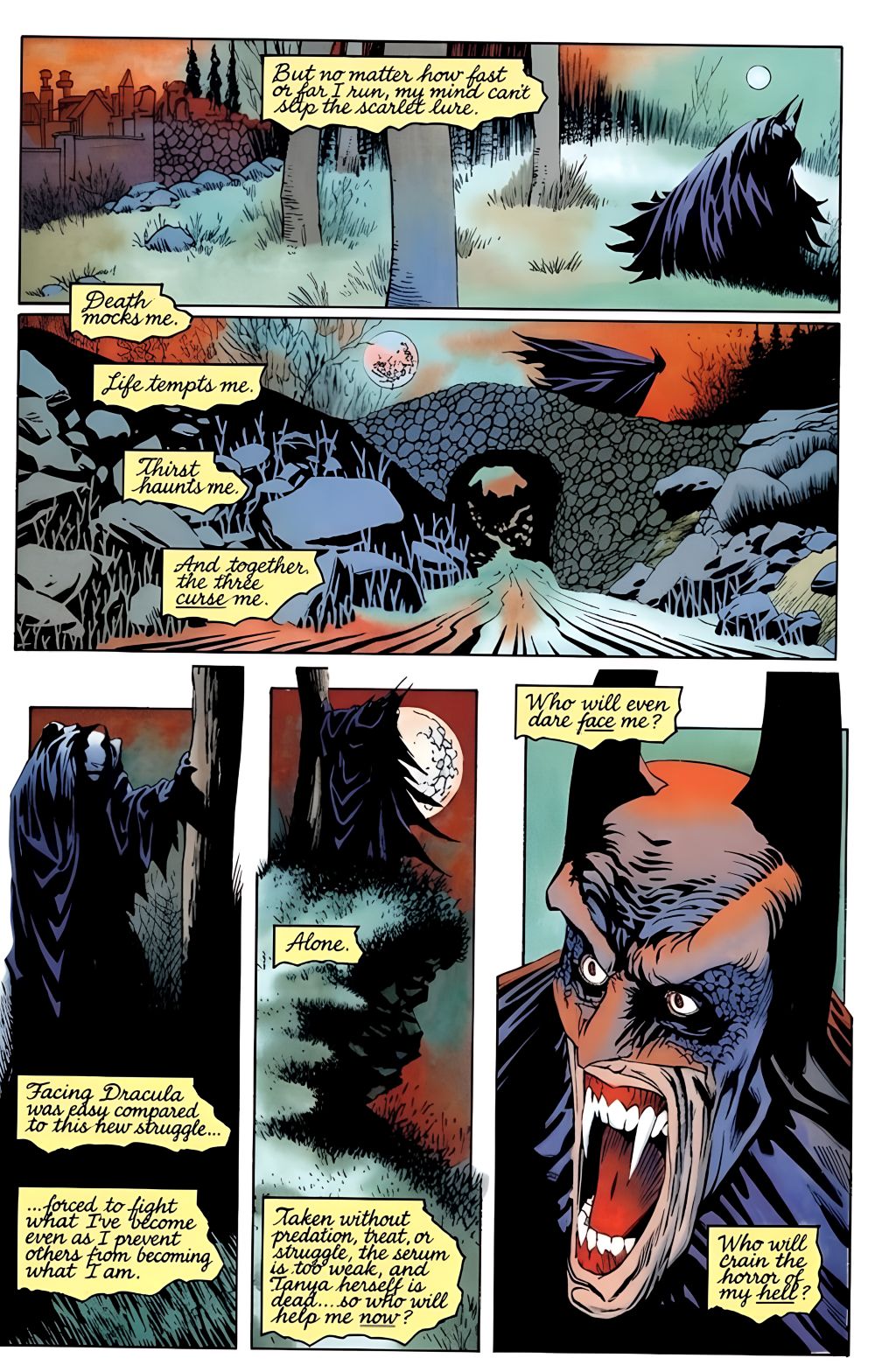
Batman: Bloodstorm (by Doug Moench & Kelley Jones) Horror Review


“Gotham does not need another monster!”– Batman

Batman: Bloodstorm is the middle chapter of Doug Moench and Kelley Jones’ wonderfully deranged Batman & Dracula trilogy, and it might be the best of the three because it finally gives the premise somewhere to go beyond “Batman versus Dracula.” The first book, Batman & Dracula: Red Rain, established the hook: Gotham is invaded by vampires, Batman defeats Count Dracula, and the cost is that Bruce Wayne himself becomes a vampire. Bloodstorm picks up immediately after that ending and asks the question that makes the whole Elseworlds experiment click: what happens when Batman is now the thing he swore to destroy?

The answer is grim, pulpy, and a lot of fun. Batman has retained his mission, but he is no longer simply a man using fear and discipline to fight crime. He is a creature of the night with a hunger he cannot fully control, fighting remnants of Dracula’s undead army while trying to keep from becoming Gotham’s next monster. That is a great setup, and Moench understands why it works. Batman’s usual moral code—especially his refusal to kill—is not just challenged here; it is structurally compromised. He has to destroy vampires permanently, he needs blood to survive, and every act of violence brings him closer to the edge.

What makes Bloodstorm more interesting than a standard vampire-Batman novelty is that Moench treats vampirism as both a horror curse and a metaphor for Batman’s already obsessive, self-punishing nature. Bruce has always lived in darkness, dressed like a nightmare, and used terror as a weapon. Here, the metaphor becomes literal. He is isolated, increasingly unstable, and forced to confront the possibility that his crusade is not noble self-sacrifice but addiction dressed up as virtue. The book’s central tension is not whether Batman can defeat the vampires; it is whether he can preserve any part of his soul while doing it.

Moench leans into that internal torment without turning the book into a dry psychological study. This is still a big, gothic comic-book melodrama, full of blood, thunder, graveyards, ruined Gotham streets, and villains chewing the scenery with admirable commitment. The Joker’s arrival is the obvious but effective escalation. If Dracula was the ancient evil who turned Gotham into a hunting ground, the Joker is the chaotic local disease that infects the remains. He takes over Dracula’s undead followers and turns the vampire threat into something even more unpredictable and cruel. It is one of those “of course” ideas that feels inevitable once you hear it: the Joker with an army of vampires is almost too perfect for a dark Elseworlds story.

Catwoman also plays a major role, and she is one of the book’s more emotionally effective elements. Her relationship with Batman gives the story a human anchor amid all the fangs and shadows. Batman is barely holding himself together, and Selina Kyle becomes someone who can still see the man underneath the monster. That does not make the book soft, but it gives the tragedy a direction. The supporting cast also includes Alfred and Jim Gordon, which helps keep the story connected to the familiar Batman mythology even as the world becomes increasingly unhinged.

Kelley Jones’ artwork is the reason this book has such a strong identity. His Batman is not the sleek, athletic tactician of modern comics; he is a towering, crooked, almost demonic silhouette, with a cape that seems to have a life of its own and a cowl that makes him look like something crawled out of a nightmare. In a vampire story, that exaggeration is exactly right. Jones’ Gotham is a place of jagged architecture, oppressive shadows, distorted faces, and bodies arranged for maximum gothic impact. The book is drawn by Jones with inks from John Beatty and Malcolm Jones III, and the result is one of the most visually distinctive versions of Batman DC has ever published.

Jones’ style is not for everyone. His figures can be elongated, his anatomy deliberately strange, and his compositions sometimes favor atmosphere over clarity. But in Bloodstorm, those qualities become assets. Batman looks like a vampire even before the story reminds you that he is one. The Joker looks genuinely repellent rather than merely clownish. The vampires have a theatrical, old-school horror-movie menace, and the color work gives the whole thing a blood-soaked, moonlit finish. Jones had grown as an artist since Red Rain, with stronger page images and more distinctive action staging, and Bloodstorm feels more confident than its predecessor, more willing to commit to the grotesque beauty of its premise.

The art also helps cover some of the book’s rougher edges. Moench’s writing can get a little overwrought, with characters delivering dialogue that sounds like it was marinating in candle wax and thunderstorms. But that is part of the charm. This is not a grounded crime story; it is a gothic pulp nightmare, and the dialogue mostly matches the artwork’s operatic intensity. When Batman broods, he really broods. When the Joker menaces, he really menaces. The book knows what tone it wants, and it commits.

The main weakness is that Bloodstorm occasionally mistakes escalation for depth. The story has strong ideas about Batman’s hunger, guilt, and moral collapse, but it sometimes circles the same emotional territory: Batman fears becoming a monster, Batman resists the hunger, Batman worries that he is losing himself. That tension is effective, but after a while you want the story to find new angles rather than restate the central dilemma. The Joker is a blast, but some of his scenes lean on shock value and broad villainy rather than the sharper psychological warfare he can bring out in Batman.

There is also the issue of pacing. At 96 pages, the book moves quickly, but its plot can feel like a bridge between the clean Dracula showdown of Red Rain and the even darker final chapter, Batman: Crimson Mist. It introduces a compelling status quo—vampire Batman, Joker-led undead forces, a Gotham sliding further into ruin—then has to resolve enough of it to set up the next installment. That gives the story momentum, but it also means a few developments feel rushed or designed more for shock than long-term payoff.

Still, those flaws do not sink it. Bloodstorm is more focused than Red Rain because its conflict is personal rather than merely external. Dracula was the big villain, but Batman’s own transformation is the real antagonist here. The book understands that the scariest version of this premise is not “Batman fights vampires.” It is “Batman is a vampire, and he still thinks he can save Gotham.”

Batman: Bloodstorm is a proudly excessive piece of ’90s DC horror comics: moody, violent, melodramatic, and visually unforgettable. Doug Moench gives the story a genuinely compelling moral crisis, while Kelley Jones turns every page into a gothic fever dream. It is not flawless—the dialogue can be purple, the pacing can be uneven, and the book occasionally leans too hard on grimness—but its best moments have real power. If you enjoy Batman stories that push the character into moral darkness without losing sight of why he fights in the first place, this is an easy recommendation.

As the second part of the Batman & Dracula trilogy, it also works better if you have read Red Rain first, since it begins directly from that book’s aftermath. But on its own terms, Bloodstorm is a strong example of what Elseworlds did best: taking a familiar hero, changing one essential rule, and discovering that the character becomes both more frightening and more tragic. Batman has always been a creature of the night. This book simply asks what happens when the night finally claims him.

Batman and Dracula: Red Rain (by Doug Moench & Kelley Jones) Horror Review


“The red rains do not cease until well past midnight…” — Intro

There is something almost inevitable about Batman & Dracula: Red Rain, as if the Dark Knight had spent decades waiting for a story that would finally let him face the ultimate creature of the night. Written by Doug Moench and drawn by Kelley Jones, this 1991 DC Elseworlds graphic novel takes Batman out of mainstream continuity and places him in a Gotham City invaded by Dracula and his vampire followers. It is a simple premise, but it is also a perfect one. Batman has always borrowed from horror—the bats, the shadows, the fear, the whole “I am the night” attitude—so pitting him against literature’s most iconic vampire feels less like a random crossover and more like the character finally meeting the genre that helped shape him.

The story begins with Gotham under a different kind of threat. Dracula arrives in the city and begins preying on its homeless population, people whose disappearances attract little attention from police, politicians, or the wealthy citizens who prefer not to look too closely at the city’s suffering. Batman notices the pattern and starts investigating, initially believing he may be dealing with a serial killer or some new criminal operation. What he discovers is far worse: an ancient vampire lord has chosen Gotham as his hunting ground. Moench uses that early investigation well, giving the book a detective-story structure before it becomes something much larger and more supernatural. Batman is at his best when he is the person paying attention when nobody else will, and that quality gives the horror a stronger emotional foundation.

The choice to make the homeless Dracula’s first victims is one of the book’s smartest decisions. It gives Red Rain a social dimension without turning it into a lecture. Gotham has always been portrayed as a city that exploits and abandons vulnerable people, and here that neglect becomes literally deadly. Dracula does not need to conquer Gotham through armies or public spectacle at first; he can feed quietly because society has already decided these lives do not matter. Batman, for all his wealth and privilege, refuses to accept that indifference. That conflict gives the story more weight than a standard hero-versus-monster plot. Dracula is not merely powerful; he is a predator thriving in the cracks of a broken city.

Kelley Jones’ artwork is the biggest reason Red Rain remains so memorable. His Gotham is a nightmare landscape of leaning rooftops, twisted spires, graveyards, fog, rain, and cavernous shadows. His Batman is especially striking: long-limbed, heavily caped, and more batlike than usual, almost like a creature that crawled out of the city’s own nightmares. This is not the clean, athletic Batman of many mainstream comics. Jones’ version feels ancient, dangerous, and perfectly suited to a story about vampires. Dracula receives equally strong visual treatment. He is elegant and commanding, but Jones never lets him become too glamorous. He remains a monster first, with a presence that makes every appearance feel threatening.

The colors and lettering add a lot to the atmosphere as well. Les Dorscheid’s palette relies on deep reds, blacks, purples, sickly greens, and shadowy blues, making the book feel like a classic Gothic horror comic. Todd Klein’s lettering gives the narration a textured, literary quality that suits the Bram Stoker-inspired material. Moench’s prose is deliberately ornate, full of ominous descriptions and heightened Gothic language. Some readers might find it overly purple, and there are moments where the narration becomes a little too dramatic for its own good. But the excess fits. This is a story about Batman versus Dracula, and it should feel theatrical, bloody, and grandiose. Moench is not trying to write a grounded crime thriller; he is writing a horror opera.

At its heart, the book is about Batman confronting a threat that attacks not only Gotham but his own identity. Batman’s character has always depended on discipline. He refuses to kill, refuses to surrender to fear, and refuses to become the thing criminals see when they look into the darkness. Dracula represents the opposite of that discipline: predatory power, immortality, and the willingness to treat human beings as prey. The central tension is not just whether Batman can stop him, but what it costs to fight an enemy whose very nature is built around corruption and control. Moench keeps that tension simmering beneath the Gothic atmosphere, giving the conflict more meaning than a simple battle between hero and villain.

That thematic focus is what keeps Red Rain from feeling like just another “what if?” comic. Red Rain is part of DC’s Elseworlds line, which is essentially DC’s version of Marvel’s What If…? concept: familiar characters are placed in alternate universes or alternate histories, allowing writers to explore scenarios that would be difficult or impossible in regular continuity. In this case, the premise asks what would happen if Batman’s Gothic Gotham were confronted by Dracula and an actual vampire invasion. The Elseworlds format gives Moench and Jones freedom to make the stakes feel real. Batman can be vulnerable, Gotham can be endangered, and the story does not have to preserve the usual superhero status quo. It also helps that this is the first chapter of a trilogy that continues in Batman: Bloodstorm and Batman: Crimson Mist, so the book clearly has consequences beyond its own pages.

Still, the graphic novel is not without weaknesses. Once the vampire threat becomes clear, the plot follows a fairly direct path: Dracula wants Gotham, Batman wants to stop him, and the conflict builds toward a violent confrontation. Some supporting characters are thinly developed, existing mainly to serve the plot or provide exposition. Commissioner Gordon is present, but he does not get especially deep characterization, and several familiar Gotham figures are either absent or reduced to brief appearances. The pacing can also feel uneven. The opening investigation is wonderfully eerie, but the later action sequences occasionally move so quickly that the story’s mood has to carry more of the emotional weight than it should. Readers looking for a detailed psychological portrait of Bruce Wayne may find the book more interested in atmosphere and spectacle than character depth.

Even so, those flaws are easy to forgive because the book knows exactly what it wants to be. Red Rain is not trying to be subtle. It wants rain-drenched streets, graveyards, ancient evil, blood, thunder, and a hero pushed beyond his usual limits. It wants Batman to be frightening as well as heroic. It wants Dracula to feel like a threat worthy of Gotham’s protector. And it succeeds. The collaboration between Moench’s Gothic writing and Jones’ expressionistic art creates a unified vision of Batman as a horror figure, one that still feels distinctive decades after publication.

There is also a pleasing symmetry between the two lead characters. Batman uses fear as a weapon, but he remains human and protects the innocent. Dracula feeds on fear, blood, and human weakness, turning people into instruments of his will. Batman is a self-made creature of the night; Dracula is the original one. Their conflict becomes a battle over what the darkness means. For Batman, it is a place from which he can protect people. For Dracula, it is a hunting ground. That contrast gives their confrontation a moral clarity without making it simplistic.

Few Batman stories lean as completely into the character’s horror roots as Batman & Dracula: Red Rain. It may not be the most nuanced Batman story ever told, and its prose can occasionally lean too hard into Gothic melodrama, but its mood is exceptional and its central idea is executed with real confidence. If you like Batman best when he is treated as a creature of horror rather than simply a detective or martial artist, this is essential reading. It captures the character at his most Gothic: surrounded by death, threatened by darkness, and still refusing to let Gotham be consumed.

Horror Film Review: The Batman vs. Dracula (dir. by Michael Gougen)


“We cast kindred shadows.” — Dracula

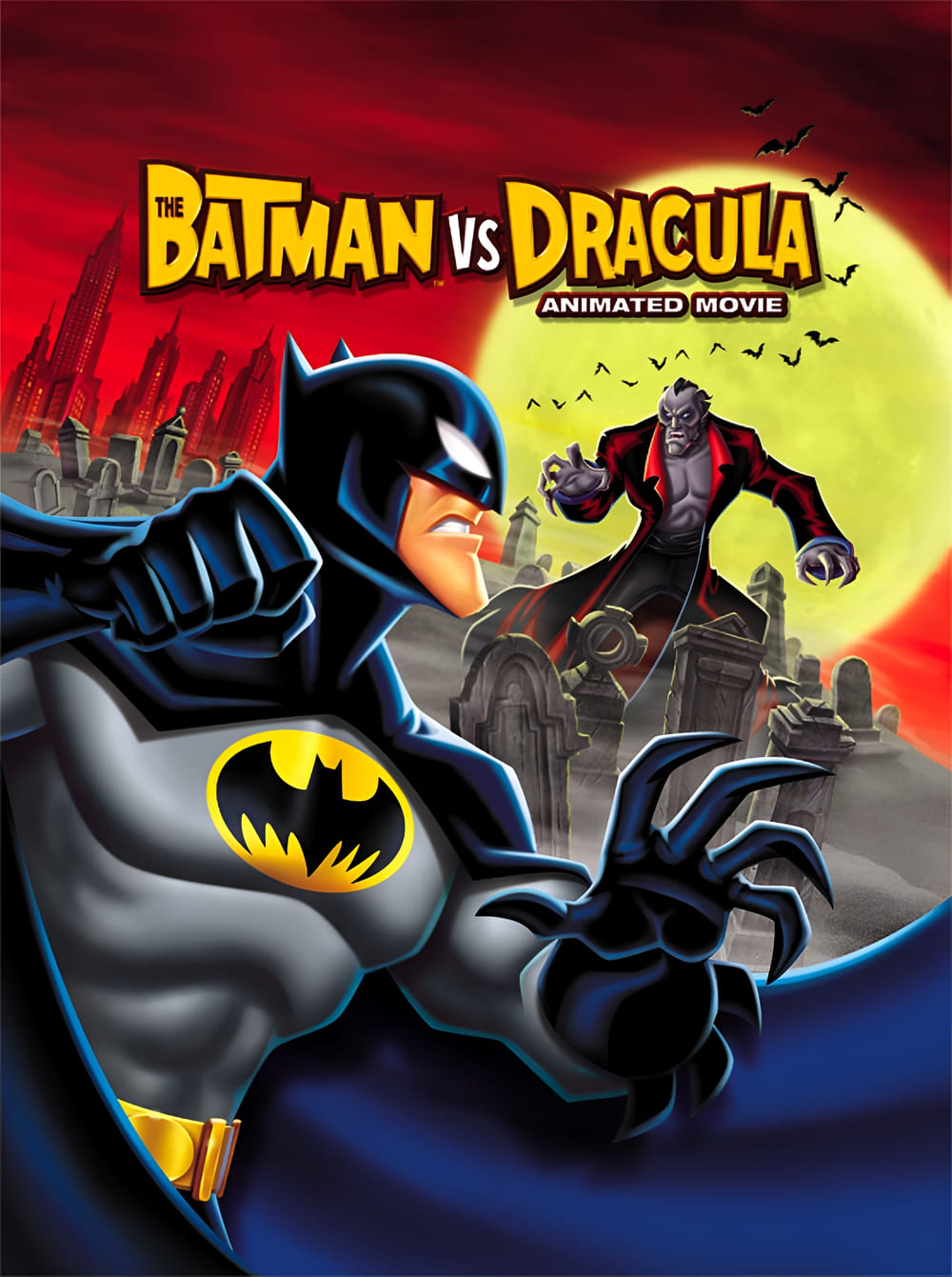
Few Batman stories sound as wonderfully absurd as The Batman vs. Dracula, a 2005 direct-to-video animated film that pits the Dark Knight against literature’s most famous vampire in a Gotham overrun by the undead. Spun off from The Batman television series, the movie could have been a disposable Halloween cash-in, but it turns out to be a stylish, energetic, and genuinely atmospheric monster movie. It draws inspiration from DC’s Elseworlds graphic novel Batman & Dracula: Red Rain, and while it is not as dark or graphic as that comic, it understands why Batman and Dracula make such a natural pairing.

The film immediately separates itself from the more famous Batman: The Animated Series. This is not Kevin Conroy’s Batman, Mark Hamill’s Joker, or the sleek, noir-influenced world associated with Bruce Timm and Paul Dini. Instead, it uses the visual language of The Batman, the 2004 series that presented a younger, more athletic, and more stylized version of the Dark Knight. Rino Romano voices Bruce Wayne and Batman, while the character designs are longer, sharper, and more angular than the classic animated-series versions. The animation has a strong early-2000s action-cartoon identity, with exaggerated movement, dramatic camera angles, bold colors, and a constant emphasis on kinetic action.

That art style can be divisive, especially for viewers who prefer the timeless look of the Timm-era shows. Yet The Batman vs. Dracula may be one of the best possible uses of it. The story is not trying to be grounded or realistic; it is a comic-book monster movie. Gotham becomes a place of foggy graveyards, moonlit rooftops, blood-red lighting, underground tunnels, and shadowy streets. The film embraces vampire-movie imagery with enthusiasm, and its action scenes have enough movement and visual flair to make Dracula feel like a legitimate threat rather than just another costumed villain.

The plot begins with Joker and Penguin escaping Arkham Asylum. Joker immediately returns to causing chaos, while Penguin heads to a cemetery in search of buried treasure. In classic comic-book fashion, Penguin accidentally awakens Dracula, who has been imprisoned for centuries. Once free, the Count begins feeding on Gotham’s citizens and transforming them into vampires. He also hopes to resurrect his lost bride, giving the story a more personal and gothic motivation than a simple plan for conquest. Batman must investigate the disappearances, protect Vicki Vale, and find a way to stop an enemy whose powers push him far beyond the limits of ordinary crime-fighting.

The influence of Batman & Dracula: Red Rain is one of the film’s most interesting aspects. That 1991 Elseworlds graphic novel, written by Doug Moench and illustrated by Kelley Jones, imagined an alternate Gotham threatened by Dracula and his vampire followers. The animated movie does not directly adapt the comic, but it borrows its central idea: Batman confronting a supernatural outbreak that cannot be solved with fists, gadgets, and a few well-timed detective deductions. The film softens the comic’s darker horror elements for a younger audience, but the connection gives the premise more comic-book credibility than a random crossover might otherwise have.

Dracula is the movie’s greatest asset. Peter Stormare gives him a cold, aristocratic voice that makes him feel ancient, arrogant, and genuinely menacing. He does not behave like a generic monster; he acts like a ruler who sees humanity as prey. The film wisely gives him several moments where he overpowers Batman, which keeps the conflict from feeling too easy. Batman cannot simply throw batarangs and win. Dracula’s speed, strength, hypnotic abilities, and growing vampire army force Bruce Wayne to research, adapt, and prepare.

That detective element gives the film more structure than expected. Batman spends much of the runtime investigating strange attacks and disappearances, gradually uncovering the source of the vampire outbreak. Because he spends so much of the story on the defensive, the eventual solution feels earned. The movie lets Batman be vulnerable and clever rather than turning him into an invincible action hero. It is a simple approach, but it works well for a film that runs only about 83 minutes.

The supporting cast adds plenty of personality. Penguin accidentally releasing Dracula is a fun setup, and Tom Kenny gives the character a greedy, nervous energy that fits this version of Oswald Cobblepot. Joker receives the more memorable arc, however. Voiced by Kevin Michael Richardson, he eventually becomes a vampire, and the result is appropriately creepy. Vampire Joker is one of the movie’s best visual ideas, transforming a familiar Batman villain into something closer to pure horror. The design and voice work make him unsettling without pushing the film too far beyond its family-friendly boundaries.

Vicki Vale, voiced by Tara Strong, has a larger role than many viewers might expect. She serves partly as a love interest and partly as someone Batman must protect, but she is not entirely passive. The romance between Bruce and Vicki is fairly conventional, but it gives the story a small emotional anchor amid all the vampire chaos. Alastair Duncan’s Alfred provides the usual steady support, helping Bruce stay focused while Gotham descends into supernatural panic. The film keeps its cast and plot focused, which helps it avoid the padding that sometimes affects direct-to-video superhero movies.

The biggest weakness remains the visual style. The Batman was always a more divisive interpretation of the character, and its angular designs will not appeal to everyone. Compared with Batman: The Animated Series, this film can look less refined and less iconic. Some faces appear stiff, the proportions can seem strange, and the overall aesthetic is very much a product of its era. Still, the movie benefits from fully committing to its own look rather than trying to imitate the classic animated series. It feels like a one-off horror experiment, not a lesser attempt to recreate a beloved version of Batman.

At around 83 minutes, The Batman vs. Dracula moves quickly and never overstays its welcome. It has action, humor, mystery, horror imagery, and enough atmosphere to feel like a genuine seasonal movie rather than a random superhero crossover. It may not reach the artistic heights of the best DC animated films, but it does something those films rarely attempted: it places Batman in a full-blooded monster movie and lets him face one of horror’s most enduring icons.

For Batman fans, vampire-movie fans, or anyone seeking an easy Halloween watch, The Batman vs. Dracula is an easy recommendation. It is not essential Batman viewing, but it is far more stylish and entertaining than its title suggests. By borrowing the spirit of Batman & Dracula: Red Rain and pairing it with the distinctive look of The Batman, the film becomes a pulpy, gothic, early-2000s adventure that embraces its absurd premise and makes it work.

Pulp Fiction #3: Batman At 80


gary loggins's avatarcracked rear viewer

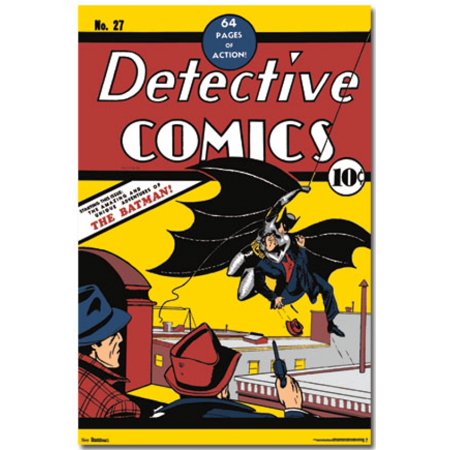
Whether you call him the Caped Crusader or the Dark Knight, it’s hard to believe Batman has been in the public eye for eighty years! Making his debut in Detective Comics #27 (cover dated May 1939) in a story titled “The Case of the Chemical Syndicate” by co-creators Bill Finger and Bob Kane, Batman has gone from mere comic book crimefighter to king of all media! Not bad for a poor little rich kid from Gotham City!

BATMAN BEGINS 

Artist Bob Kane (1915-1998) had been toiling in the nascent comic book field for three years when DC’s superhero character Superman took off like a rocket. Comic houses were scrambling to compete in this new genre of costumed cavorters, and Kane came up with some sketches of a masked vigilante, basing his design on Lee Falk’s Phantom, Douglas Fairbanks’ ZORRO, and the 1930 horror/mystery THE BAT WHISPERS. Kane asked writer Bill Finger…

View original post 2,158 more words

Which Way Forward For The “Batman” Movie Franchise? Take Eight : Finally, The Story Begins!


So here we are, after seven posts setting up background, detail, etc., and we’re finally ready to begin exploring the (admittedly skeletal) plot structure I have in place for our new Detroit-filmed, more-emphasis-on-the-detective-and-heroic-aspects-of-the-character Bat-trilogy, which we’re (tentatively, at any rate) simply titling, in succession, Batman I, Batman II, and Batman III.

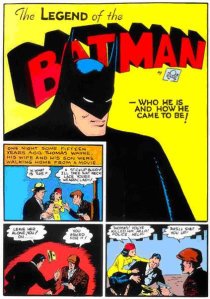
But first a word about that classic “Legend Of The Batman” panel “by” Bob Kane reproduced above. Like all the classic early Bat-stories, it was drawn by Kane, but the story and all the concepts behind it are the work of comics writer Bill Finger, who Kane conspired with DC management with to completely screw out of his co-creator’s claim to the Batman character. If you want to know how complete and thorough-going was finger’s contribution to the Caped Crusader, consider not only that by most reputable accounts he created Gotham City, The Joker, and Robin, but that when Kane first approached Finger with his idea for a new comics character, he called him — I shit you not — “Birdman,” and wanted him to dress as, no surprise, a bird of some sort. That whole bat idea? It was all Finger’s. And for all his troubles he died dead broke, buried in an unmarked grave, while Kane went on to make millions, and DC billions, off his ideas. So it’s to the immortal, yet criminally unsung, memory of Bill Finger that I dedicate my own admittedly completely unsolicited and sure-to-be-unread-by-anyone-who-could-ever-do-anything-about-them ideas here. Unlike Warners, DC, and Bob Kane himself, at least I have the decency to admit from the outset that none of the work I’m doing here would be possible without the truly mighty imaginings of the late, great Bill Finger. He is the giant the rest of us stand on the shoulders of.

All that aside, fear not, as we’ve already established we’re still talking about a “soft” reboot here that doesn’t concentrate itself terribly heavily on Batman’s origins, although the story does take place early in his career. I just thought for a visual accompaniment to the text here we may as well begin at the character’s beginnings — but fear not, the overall “plan,” such as it is, to “play down” the origin aspects of the story remains in place. And so, without any further ado, here’s how I think I’d begin the initial pre-credits sequence of our hypothetical Batman I —

We’re on the set of a daytime news/chat-type show called “Gotham City Today” or somesuch, with two presenters, one male and one female. The female presenter launches into the top news stories from overnight, the first being that the so-called “Bat vigilante” has stuck again, this time delivering the sixth of seven of Gotham’s most notorious reputed “crime lords” into police custody, along with incriminating computer files that should , in theory, give new district attorney Harvey dent more than enough ammunition to prosecute the guy. Speculation is rampant as to the identity of the “Bat-vigilante,” with most wondering whether or not he’s either a surce within the police department itself or a member of some computer-hacking collective a la “Anonymous,” so complete and thorough are the dossiers he’s been handing over along with the crooks themselves.

The anchorwoman’s male counterpart then cuts in with something along the lines of “but one menace he’s been unable to deliver over to the law is the notorious cat-burglar who’s been prowling Gotham’s rooftops at night, cleaning out the safes of one penthouse apartment after another. She apparently struck again last evening, looting the residence of our own station owner of well over one million dollars in cash, jewelry, and other valuables, leaving only her trademark claw-scratch on one of the paintings in his home.”

Back to the female anchor who assures audiences that both the bat-vigilante and the cat-burglar are priorities two and three of new police commissioner Jim Gordon and the aforementioned DA Harvey Dent, right behind the city’s sole remaining crime kingpin, one Vincent Lucchesi (apologies to any and all Italian readers for making the head mobster in town of Italain origin, I’m just not creative enough to come up with anything better, I honestly mean no offense), before segueing into something along the lines of ” — and on a lighter note, all of Gotham is abuzz with the imminent return home on Friday of our city’s most fortunate son, and certain to be most eligible bachelor, Bruce Wane, after twelve years spent abroad. Where all has he been and what’s he been doing? Why is he coming home now? And what are his plans for the future? We’re pleased to say that all that and more will be discussed when yours truly sits down with Mr. Wayne for an exclusive interview here on Gotham City Today next Monday morning.”

And with that little “teaser” in place, we roll our opening credits —

Hopefully that should whet your appetites to keep reading every bit as much as it will whet the audience’s to find out exactly what’s going on here, so I’ll leave it at that for now, but rest assured, I’ll be back tomorrow with more, and all should hopefully become apparent!

Trailer: The Dark Knight Rises (Official Teaser)


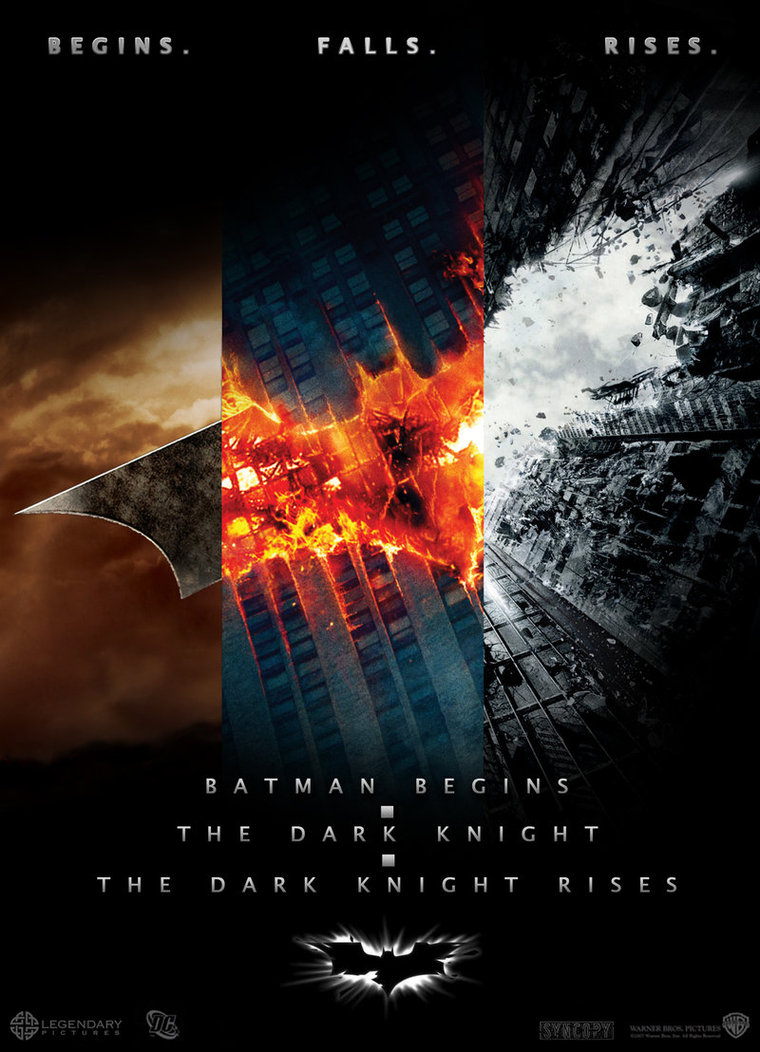
The first official teaser trailer for the third and final installment of Christopher Nolan’s Dark Knight Saga has finally arrived in it’s official form. The teaser had leaked in bootleg form last week. People who went to watch Harry Potter and The Deathly Hallows, Part 2 were able to see the teaser in all it’s glory on the big-screen and from my own experience it was one of the major highlight’s even before the main attraction began.

The teaser trailer plays exactly as it sounds. It teases just enough to begin the buzz and hype which should run a full year before the film’s release. We see glimpses of Tom Hardy in the role of Bane. Most of the teaser has Police Commissioner Jim Gordon in a hospital bed looking like he may have just gone a round or two with Bane. It also brings back the lesson first given to Bruce Wayne by Ra’s al Ghul from the first film about how a man could become a legend. There’s even some Inception-like imagery of crumbling high-rises that could only mean Gotham City itself now under siege.

It’s going to be a long wait til The Dark Knight Rises premieres in the theaters on July 20, 2012.