The TSL Horror Grindhouse: Sisters (dir by Brian De Palma)


1972’s Sisters begins by introducing us to a likable ad executive named Philip Woode (Lisle Wilson). Woode is the victim of a prank show and, for his trouble, he wins dinner for two at a nice Manhattan restaurant. Daniele Breton (Margot Kidder), the model/actress who set him up for the show, agrees to be his date. They have a lovely night that ends at Daniele’s apartment. In the morning, Daniele explains that it’s not only her birthday but also the birthday of her twin, Dominique. Philip, being a nice guy, goes not only to refill Daniele’s prescription but also to pick up a birthday cake. He then comes back to the apartment and, in true Psycho fashion, is promptly stabbed to death by one of the sisters.

Across the street, journalist Grace Collier (Jennifer Salt) looks out her window just in time to see Philip getting stabbed and then using his own blood to write “help” on the apartment window. Director Brian De Palma makes good use of his trademark split-screen technique. On one side of the screen, we watch Philip dying. On the other side, we explore Grace’s apartment and see that, in the past, she’s written an editorial headlined “Why We Call Them Pigs.” We know that Grace is the only person who has witnessed Philip’s murder, and we also know why the police are not going to be inclined to believe her.

And indeed, by the time the police arrive, Daniele and her creepy ex-husband, Emil (William Finley), have already hidden Philip’s body in a couch. With the police proving to be of no help, Grace hires a private detective named Joseph Larch (Charles Durning) to break into Daniele’s apartment and search for clues. Durning doesn’t have a huge role in Sisters, but he definitely makes an impression as he proceeds to follow that couch across the country. De Palma’s dark sense of humor is evident as the couch eventually ends up in the wilds of Canada, where Durning uses his binoculars to keep an eye on it.

Sisters was an early De Palma film, one that gives him a chance to show off both his ability to generate suspense and the style that would become his trademark. It’s an effective film, one that has a plot that is full of twists but which can still easily be followed by the audience. Indeed, I doubt anyone will be shocked to discover the truth about Daniele and Dominique, but Margot Kidder gives such a good performance and De Palma directs with such confidence that the story still holds your attention. As for Jennifer Salt, she’s playing the type of radical journalist who probably would have identified with the politics of Greetings and Hi, Mom! while ultimately rejecting both films for their casual misogyny. It undoubtedly says something about De Palma’s worldview that, while he obviously sympathized with Grace’s politics, he still ultimately portrayed her as being an ineffectual investigator.

In the end, Grace is as much of a sister to Daniele as Dominique is. They’ve found themselves being manipulated by the same society, and they’ve both been forced to the fringes—Daniele by her past and Grace by her politics. In typical De Palma fashion, this film ends with the audience knowing more than the majority of the characters. We know what happened but, for everyone else, the truth is still hidden in a couch that’s sitting in the middle of nowhere.
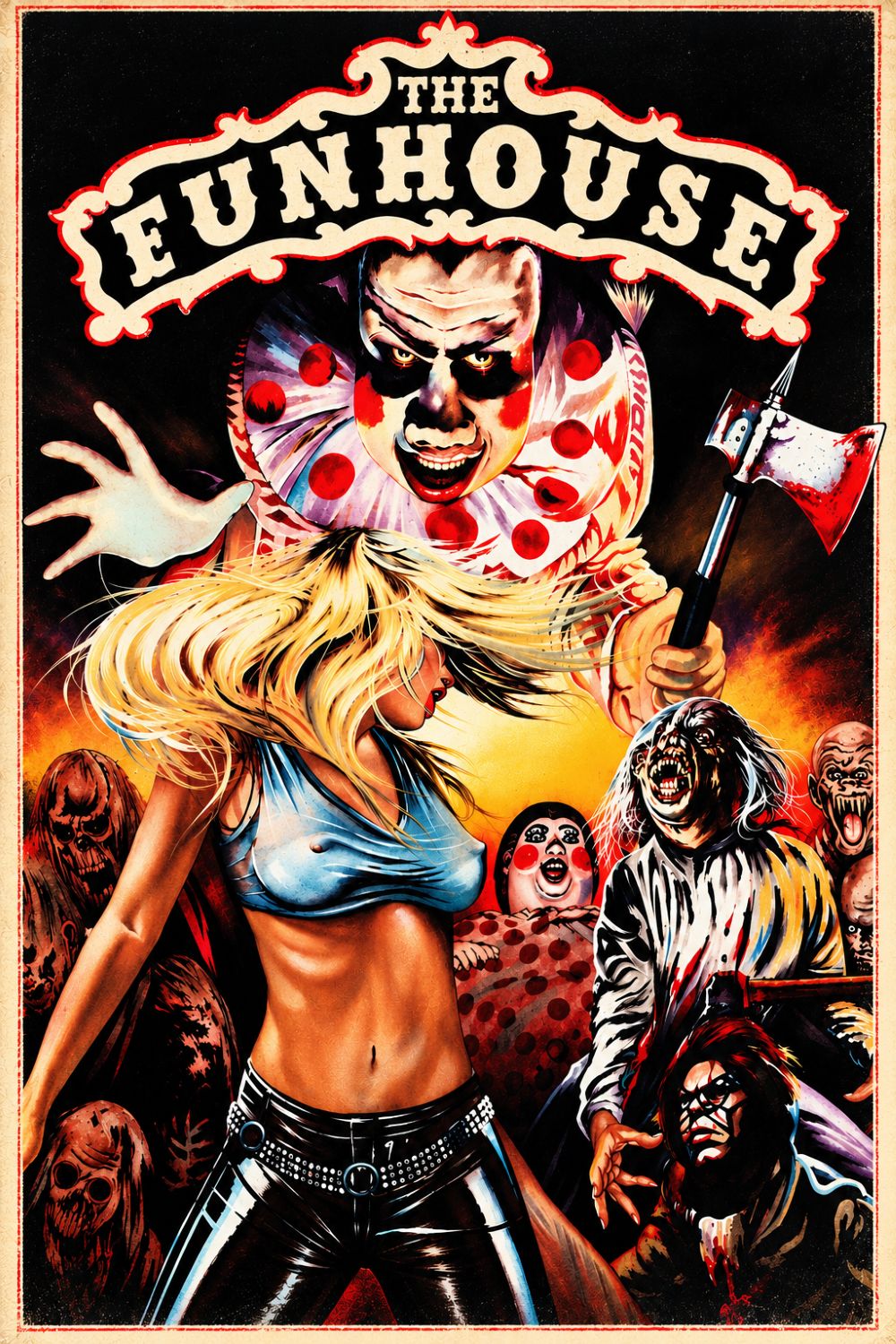
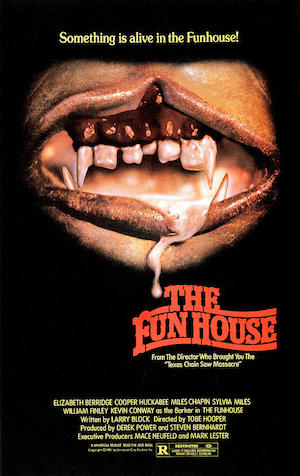
Horror Film Review: The Funhouse (dir. by Tobe Hooper)


“Who will dare to face the challenge of the Funhouse? Who is mad enough to enter that world of darkness?” — Funhouse Barker

There’s something wonderfully sleazy about a horror movie that makes you feel like you need a shower before anyone has even been murdered. Tobe Hooper’s The Funhouse (1981) gets that feeling just right, turning a traveling carnival into a place where the entertainment seems questionable and whatever happens behind the scenes looks considerably worse. It’s not Hooper’s most relentless film, and its straightforward story sometimes struggles to justify the leisurely buildup. Still, there’s enough grime, menace, and visual imagination here to make a familiar teenagers-in-trouble premise feel like more than another ride around the slasher circuit.

The teenagers are Amy Harper, played by Elizabeth Berridge, her date Buzz, and their friends Liz and Richie. Their evening starts with the usual carnival activities: wandering around, checking out attractions, and looking for ways to entertain themselves. Eventually, they decide to hide inside the funhouse overnight. It’s the kind of bad idea that becomes irresistible when nobody wants to be the boring one who objects. After witnessing a murder involving a worker wearing a Frankenstein mask, they find themselves trapped inside with people who have a very good reason to make sure they never leave.

Before any of that, Hooper introduces a playful awareness of horror movies through Amy’s younger brother. He’s a horror fan whose enthusiasm spills into an elaborate prank, approaching Amy in the shower while wearing a mask. The sequence borrows from Halloween and Psycho, turning familiar suspense techniques into a kid’s obnoxious attempt to stage his own scary movie. It’s a neat little meta touch because horror already exists as entertainment within these characters’ lives. They recognize its costumes and enjoy its tricks. The trouble begins when that familiarity encourages them to treat danger as something they can safely play around with.

The carnival extends that idea on a larger scale. Its business depends on selling fear without consequences, and the teenagers arrive expecting every unsettling sight to be part of the experience. Hooper makes that expectation increasingly difficult to maintain. There’s a sourness underneath the attractions, a sense that the smiles and sales pitches barely cover the irritation of the people working there. The movie’s sleaze isn’t just a matter of dirty surroundings. It comes from the uneasy relationship between the customers looking for cheap thrills and the workers who seem to regard them with boredom, contempt, or something less easily identified.

Hooper spends a substantial amount of time letting us absorb that atmosphere. Depending on your patience, this either gives the movie its personality or makes the first half feel like an extended wait for something to happen. There are stretches where the teenagers’ wandering could have been tightened without losing much. On the other hand, rushing directly to the murders would sacrifice the sense that this place has an existence beyond the plot. By the time the group becomes trapped, the carnival feels less like a collection of convenient horror props than a shabby little world with its own unpleasant routines.

Once inside the funhouse, the visual design takes over. Mechanical figures, grotesque faces, and cluttered passageways make it difficult to separate an actual threat from another piece of scenery. Hooper gets suspense out of that uncertainty, giving your eyes plenty to investigate without always rewarding the effort with an immediate scare. The machinery keeps moving regardless of what happens around it, which becomes increasingly unnerving. Something designed to provide a few minutes of harmless excitement turns into an obstacle course whose mechanisms have no interest in whether anyone gets hurt. The attraction doesn’t become evil; its normal operation simply becomes dangerous.

The characters are less distinctive than their surroundings. Berridge gives Amy a believable vulnerability, and her discomfort never feels like an excuse for smugly announcing that everyone else should have known better. She’s simply a young woman whose evening gets horribly out of hand. Buzz, Liz, and Richie have enough personality to establish the group, but not enough to make their individual fates especially affecting. That’s the main limitation of the screenplay: the situation generates more investment than the people caught in it. You’re anxious about what might happen without necessarily feeling that you know these kids very well.

Kevin Conway adds a stronger dose of personality as three different carnival barkers, especially in his role as the masked killer’s father. His combination of aggression and warped protectiveness gives the horror an ugly domestic undercurrent. The creature is frightening, but his vulnerability makes the relationship more disturbing than a simple partnership between villains. The Frankenstein mask also pays off the movie’s interest in familiar horror imagery: a recognizable monster face initially offers something almost reassuring, until its removal destroys that comfort. The makeup is memorable, although the film’s use of physical difference as a source of monstrous terror remains an uncomfortable shortcut.

When the chase finally takes over, The Funhouse delivers tense, claustrophobic suspense without becoming an endless procession of elaborate kills. Its cramped spaces and unreliable hiding places make escape feel frustratingly difficult. The thin characterization and occasional sluggishness keep it from matching Hooper’s strongest work, but the setting remains potent enough to carry the film. From the brother playing horror director to the carnival packaging fear for paying customers, the movie keeps showing people enjoying pretend terror before confronting something they can’t control. It’s an effective, grimy little nightmare that makes the midway’s cheap pleasures look a lot less inviting.

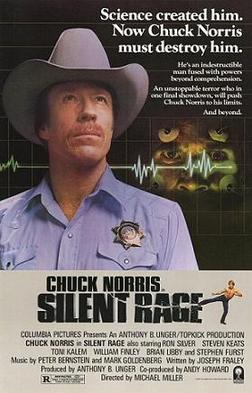
SILENT RAGE – Revisiting the Chuck Norris film from my youth.


SILENT RAGE is one of those movies that I watched quite a bit as a kid, and I thought it was pretty scary. Fox-16 out of Little Rock played it quite often. We didn’t have cable in Toad Suck so I’d watch whatever movies that were playing, especially if they had action. I’d say my initial interest and appreciation for Chuck Norris began with this film, and I still watch Chuck quite a bit to this day. With that said, I’m not sure I’ve watched SILENT RAGE again since I was a teenager. If I’m going to watch Chuck, I’ll generally watch CODE OF SILENCE, LONE WOLF MCQUADE, MISSING IN ACTION, INVASION USA, THE DELTA FORCE, or even FIREWALKER or HERO AND THE TERROR. But this week, I was browsing through Tubi and saw my childhood friend SILENT RAGE and decided to give it another spin.

SILENT RAGE opens in a wild household. John Kirby (Brian Libby) is awakened from his sleep by a kid wearing a Stormtrooper mask and shooting him with a laser gun. The kid tells Kirby he’s got a phone call. Kirby is clearly not doing well. He’s making strange sounds and his body movements are as funky as hell. Add to this situation, wild kids running around the house and a woman, who I’m guessing is their mom, screaming at them. To say this woman’s voice is annoying as she screams at the kids would possibly be my understatement of 2024. When Kirby answers the phone he tells the unseen doctor on the other end of the line, “I’m losin’ it, Doc! I’m not gonna make it” and he hangs up. I have to admit I’m understanding of Kirby at this point. I’ve only witnessed the activities of that house for a couple of minutes and I’m losin’ it! So in what seems like a reasonable move at the time, Kirby goes outside to the woodpile, grabs an axe, and then walks back into the house and confronts the loud lady. She immediately begins screaming in fear and runs upstairs and locks herself into the bedroom. Her fear scream is probably twice as annoying as her “screaming at kids” voice. Prior to Kirby chopping down the door with his axe, she’s able to scream out the window to a passing mailman for help. Soon after this message to the mailman, Kirby puts the lady, and the audience, out of our collective misery. 

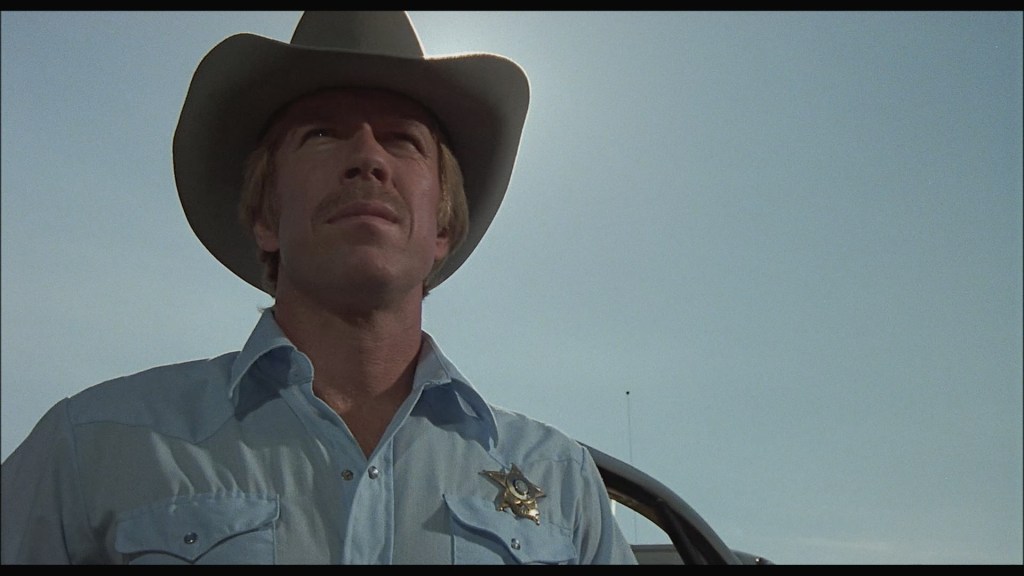
In what is possibly the fastest response time in law enforcement history, a blazer immediately pulls up front and sheriff Dan Stevens (Chuck Norris) emerges from the passenger side. From this point forward, I will disregard his character name and refer to him as Chuck Norris. Every other person will be referred to as their characters’ names. I thought Norris was cool in SILENT RAGE when I was a kid, and I must admit I still think he’s pretty awesome as he calmly walks into the house where John Kirby has just committed multiple murders. After a few minutes, Kirby attacks Norris. The two men scuffle, but Kirby is able to break free and jump out the upstairs window onto the ground and run into the woods. Norris follows and is immediately almost shot by his deputy, Charlie (Stephen Furst). Quick tangent – it may seem strange at first to think of Stephen Furst (Kent Dorfman from ANIMAL HOUSE) as Norris’ deputy, and after watching the film again, I’ll go ahead and agree that it is a strange choice. He basically plays a goofy guy who has no business in law enforcement and that is made abundantly clear throughout the film. Back to the woods we go where Norris, after barely escaping being shot in the head by Charlie, engages in an additional fight with Kirby. He’s able to subdue the murderer and handcuff him. Now in the back of the cop car, Kirby breaks out of his handcuffs, kicks open the door and begins attacking various men with guns. It’s at this point that he’s shot about 14 times. He should be dead at this point, but I do understand for the sake of running time, that there will be additional plot developments. 

These additional plot developments arrive in the form of doctors operating on John Kirby to try to save his life. Fortunately, nature takes its course and Kirby dies, or so we think. It seems that Dr. Phillip Spires (Steven Keats) has a god complex and administers an experimental serum that brings Kirby back to life. Not only that, at the dosage he’s being given, it turns him into an indestructible killing machine. Dr. Tom Halman (Ron Silver) is the voice of reason who tries to convince Dr. Spires to let him die, but to no avail. Dr. Spires is doing this for science and mankind and secretly keeps Kirby alive with Doctor Paul Vaughn (William Finley). The two men think they can control him, but of course they’re wrong. Alive, and now superhuman, Kirby escapes to wreak havoc. And only one man can stop the indestructible, superhuman killing machine, and that man’s name is Chuck Norris.

Just a few additional thoughts before I close. First, Toni Kalem plays Chuck’s love interest, Alison, in the film. His relationship with her does slightly take away from his cool factor as they make love at one point to the cheesiest, corniest 80’s song called “A Time for Love.” She also has an extremely annoying scream voice herself when Kirby comes after her at the end. Second, the cool factor is almost completely restored when Chuck takes on a bar full of drunken, violent bikers and single-handedly destroys them. I think it’s nice of the 22 bikers to come at Chuck one at a time. It would have been a lot harder for him to take on 22 people diving on him at the same time. Third, I stated earlier that the power-crazed Dr. Phillip Spires was played by actor Steven Keats. For those who follow the film career of Charles Bronson like I do, you will immediately recognize Keats as the same actor who played Paul Kersey’s son-in-law in DEATH WISH. In SILENT RAGE he’s a narcissistic jerk, in DEATH WISH he’s a whiny wuss. That’s a solid 1-2 fist-punch of un-likability, Steven!!

I did enjoy the nostalgia factor of re-watching SILENT RAGE after many years. And Chuck Norris getting out of that blazer to go after John Kirby at the beginning of the film was still cool. There were a few things already mentioned above that bothered me more now than they did when I was a kid, but at the end of the day, Chuck Norris is still Chuck Norris. And I will always enjoy Chuck Norris! 

Horror Film Review: Silent Rage (dir by Michael Miller)


The 1982 film, Silent Rage, takes place in a small town in Texas.

John Kirby (Brian Libby) is the town troublemaker, an obviously mentally disturbed man with a violent and unpredictable temper.  As the film starts, Kirby is murdering the members of the latest family to offer him a home.  John is strong, fierce, and determined to create chaos.  However, he’s about to face someone who is just as strong and determined.  Sheriff Dan Stevens is a tough, tight-lipped western lawman who happens to be an expert in kung fu.  Dan is such a badass that he’s played by Chuck Norris!

Dan is able to eventually slap the cuffs on Kirby but Kirby is so strong that he manages to break free from them and grab a shotgun.  The other policemen are forced to gun him down.  Barely clinging to life, Kirby is rushed to a secret institute where three scientists — Tom Halman (Ron Silver), Philip Spires (Steven Keats), and Paul Vaughn (William Finley) — are working on a process that they think will help cells to repair themselves.  Philip and Paul think that Kirby will be the perfect test subject.  Tom, whose sister (Toni Kalem) is dating Dan — mentions that it might not be a good idea because Kirby was a psychotic murderer and stuff.  Philip decides to experiment on Kirby, regardless.

While the scientists are breaking the laws of God, Dan and his comic relief deputy (played, in a charming performance, by Stephen Furst) are dealing with local problems, like the bikers who hang out at a nearby roadhouse.  (Apparently, it’s not a Chuck Norris film without a fight in a roadhouse.)  However, Dan soon has more than just bikers to deal with.  The experiments have succeeded.  John Kirby has come back to life.  He can’t speak and it’s debatable whether he even knows who he is.  But he is now virtually immortal and super-strong and soon, he’s killing scientists and going on a rural rampage.  Can even Chuck Norris stop him!?

That question is not just hyperbole.  One reason why Silent Rage works as well as it does is because Chuck Norris has been established as America’s premiere fighting badass.  There is an entire internet culture that has been built around the idea of Chuck Norris being the man who cannot be defeated.  The world, we’re told, lives in fear and awe of a Chuck Norris roundhouse kick.  And yet, when Sheriff Dan faces the resurrected Kirby, he finds himself fighting an opponent who is not intimidated or easily knocked down.  The film establishes early on that Kirby will kill anyone, even the most likable characters in the film.  Watching Dan fight Kirby, the stakes feel real and you don’t know who is going to win.  Both Chuck Norris and Brian Libby deserve a lot of credit for their fight scene at the end of the movie.

Silent Rage is often described as being a slasher film because Brian does spend a lot of time stalking people and killing them in different ways.  Personally, I would not call it a slasher film.  Because it hinged on scientists who overlooked the obvious dangers to achieve their goals, I would refer to this as being a sci-fi horror film, with John Kirby becoming the human equivalent of the Xenomorph from Alien.  There’s nothing scarier than a monster who can challenge Chuck Norris.

Horror Film Review: The Funhouse (dir by Tobe Hooper)


1980’s The Funhouse opens with an almost shot-for-shot recreation of the famous shower scene from Psycho, with Amy (Elizabeth Berridge) getting attacked in the shower by a masked, knife-wielding maniac.

The only difference is that there’s no shrieking violins, there’s no blood, and the knife is quickly revealed to be a fake.  It turns out that the “killer” is actually Amy’s younger brother, Joey (Shawn Carson).  Joey loves horror movies.  In fact, he’s pretty much the perfect stand-in for The Funhouse‘s intended audience.  Joey was just playing a rather mean-spirited prank but now, as a result, Amy snaps that she’s not going to take him to the carnival.

Of course, Amy isn’t supposed to be going to the carnival either.  Her parents have strictly forbidden it.  Everyone knows that traveling carnivals are dangerous and, at the last town the carnival visited, two teenagers disappeared!  There’s no proof that the carnival has anything to do with those disappearances, of course.  But still…

Amy does exactly what I would have done in her situation.  She tells her parents that she’s going over to a friend’s house and then she goes to the carnival anyway!  Accompanying her is her boyfriend Buzz (Cooper Huckabee), who is so cool that he has a name like Buzz.  Also along for the ride: Amy’s best friend, Liz (Largo Woodruff), and her boyfriend, Richie (Miles Chapin).  Richie’s kind of a loser but that’s to be expected.  Every group needs at least one idiot who can do something stupid that gets everyone else killed.  We all know how that works.

The carnival turns out to be just as sleazy as Amy’s parents thought it would be.  There’s a fake psychic (Sylvia Miles).  There’s a magician who dresses like Dracula.  There’s a barker (Kevin Conway), whose deep voice is constantly heard in the background.  And, of course, there’s a funhouse!  Still, everyone’s having a good time.  Either that or they’re all just stoned.

For his part, Joey sneaks out of the house and goes to the carnival himself.  He doesn’t have quite as much fun as Amy.  In fact, his experience is pretty scary.  Weird carnival people keep yelling at him.  He keeps getting lost.  Still, things could be worse.  By the time his parents arrive to pick Joey up, Amy and her friends are all trapped in the funhouse.  They’re being pursued by the barker and his deformed son (Wayne Doba).  Needless to say, it’s all pretty much Richie’s fault.

Richie.  What a dumbass.

With its teenage victims and its lengthy chase scenes, The Funhouse is often dismissed as just being another early 80s slasher film.  However, The Funhouse is actually a fairly clever, entertaining, and occasionally even witty horror film.  Much like director Tobe Hooper’s best-known film, The Texas Chainsaw Massacre, The Funhouse gets its scares by convincing audiences that they’re actually seeing more than they are.  Hooper emphasizes atmosphere and performances over gore.  While The Funhouse has its share of jump scares, it mostly succeeds by convincing us that anyone could die at any moment.  It’s an intense film, with excellent performances from both Elizabeth Berridge and Kevin Conway.

After kickstaring the slasher genre with The Texas Chainsaw Massacre, Hooper used The Funhouse to poke a little fun at it.  From the opening shower scene to the electrifying finale, Hooper plays with the genre-savvy expectations of the audiences.  Our four victims even do the smart thing for once — they try to all stay together.  Needless to say, that doesn’t work out too well.

The Funhouse is an entertaining thrill ride and, seen today, it’s more evidence that Tobe Hooper deserved better than he got from the film industry.