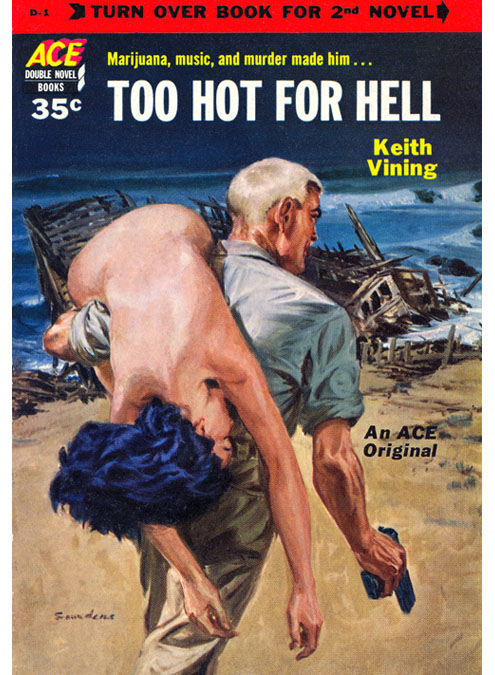
by Norman Saunders
It is pretty hot.
by Norman Saunders
It is pretty hot.
Today’s music video of the day is an early one from Van Halen. Coming from 1981, this video was a product of the time when videos were usually performance clips that focused on showing off the skills of the musicians.
As with all of the early Van Halen videos, this one balances the technical skills and talent of Eddie Van Halen with David Lee Roth’s sense of showmanship. David Lee Roth and Van Halen had their conflicts but they were always at their best when they were performing together.
Enjoy!
Welcome to Late Night Retro Television Reviews, a feature where we review some of our favorite and least favorite shows of the past! On Saturdays, I will be reviewing Saved By The Bell, which ran on NBC from 1989 to 1993. The entire show is currently streaming on Tubi!
This week, the gang joins the Glee Club!
Episode 3.3 “The Glee Club”
(Dir by Don Barnhart, originally aired on December 23rd, 1990)
When Zack learns that the winners of a nationwide glee competition will get a trip to Hawaii, he demands that all of his friends join the Bayside Glee Club. The only problem is that Jessie is the only one who can sing, and she refuses to take off her face mask because she thinks she’ll catch COVID Lisa’s cold.
Luckily, Screech’s girlfriend Violet (Tori Spelling) can sing, but she can only do it if Screech is present and supporting her. After Screech acts like an idiot meeting her parents (he mentions that Violet’s mother looks like Arnold Schwarzenegger), Violet is told she’s no longer allowed to spend time around him. Violet will have to quit the Glee Club. Good thing Jessie can sing! Oh no! Jessie took off her face mask and caught Lisa’s cold.
This episode firmly established that Zack is not only a liar but a terrible liar, one who succeeds only because of the exaggerated stupidity of everyone around him. When Mr. Belding demands that Mr. Tuttle whip the Glee Club into shape, Zack’s solution is to tape another glee club’s performance and have Bayside lip-sync to it. Somehow, neither Belding nor Tuttle notices. Later, when the Glee Club performs at the competition, Zack plays the tape again. This time it gets screwed up. At first everyone is singing too fast, then too slow. “That was our impression of a glee club tuning up!” Zack says, and everyone buys it. You can call Zack’s behavior borderline sociopathic and you’ll have a point. But seriously: how dumb is every adult in Zack’s life?
Violet does eventually sing. Screech steps up to support her when she falters. Bayside wins the competition, even though they really should have been disqualified for all of that “tuning up” nonsense. Violet’s parents are so impressed by Screech’s support that they decide he can date their daughter. If I remember correctly, Violet disappeared after one more episode.
This episode does have one truly funny moment. When Jessie says she caught Lisa’s cold, everyone glares at Lisa. “Sorry,” Lisa says, in a tone that suggests she’s not that sorry. Lark Voorhies delivers the line perfectly. Otherwise the episode suffers because it revolves around two of the worst actors to ever grace the halls of Bayside. Any episode that features Screech’s love life is destined for cringe.

I spent this week binging Crime Story, St. Elsewhere, and Baywatch. My goal here is to write up three months worth of Retro Television Reviews over the next week so that I can devote all of September and October to horrorthon.
I also watched Big Brother 28. Thursday was the 1,000th episode of Big Brother. Since I’ve see every episode, I did the math and discovered that I have spent the equivalent of 43 days just watching Big Brother. That left me feeling very depressed.
On Friday, my friend Pat McCurry put together a tribute for Tim Curry and Dolly Parton. First, we watched a thoroughly forgettable 2000 sitcom called Bette. As you can guess from the title, it starred Bette Midler as herself. The episode that we watched featured Bette appearing on Dolly Parton’s Halloween special. Dolly was charming. The rest of the sitcom was pretty forgettable. We followed this with an episode of a 90s crime show called Wiseguy. Tim Curry played a crooked music producer. The show was serialized so I really couldn’t follow the plot but Curry gave a typically magnetic preformance.
Along with my binging, I also watched and reviewed CHiPs, Pacific Blue, 1st & Ten, Hunter, Sledge Hammer, and Saved By The Bell.
And I also watched a Republican Presidential Primary Debate from 1996! It was on YouTube. I liked that Lamar Alexander. Did he win?
“On your feet, soldier. You’ve just been drafted. This is a war.” — Agent Graves
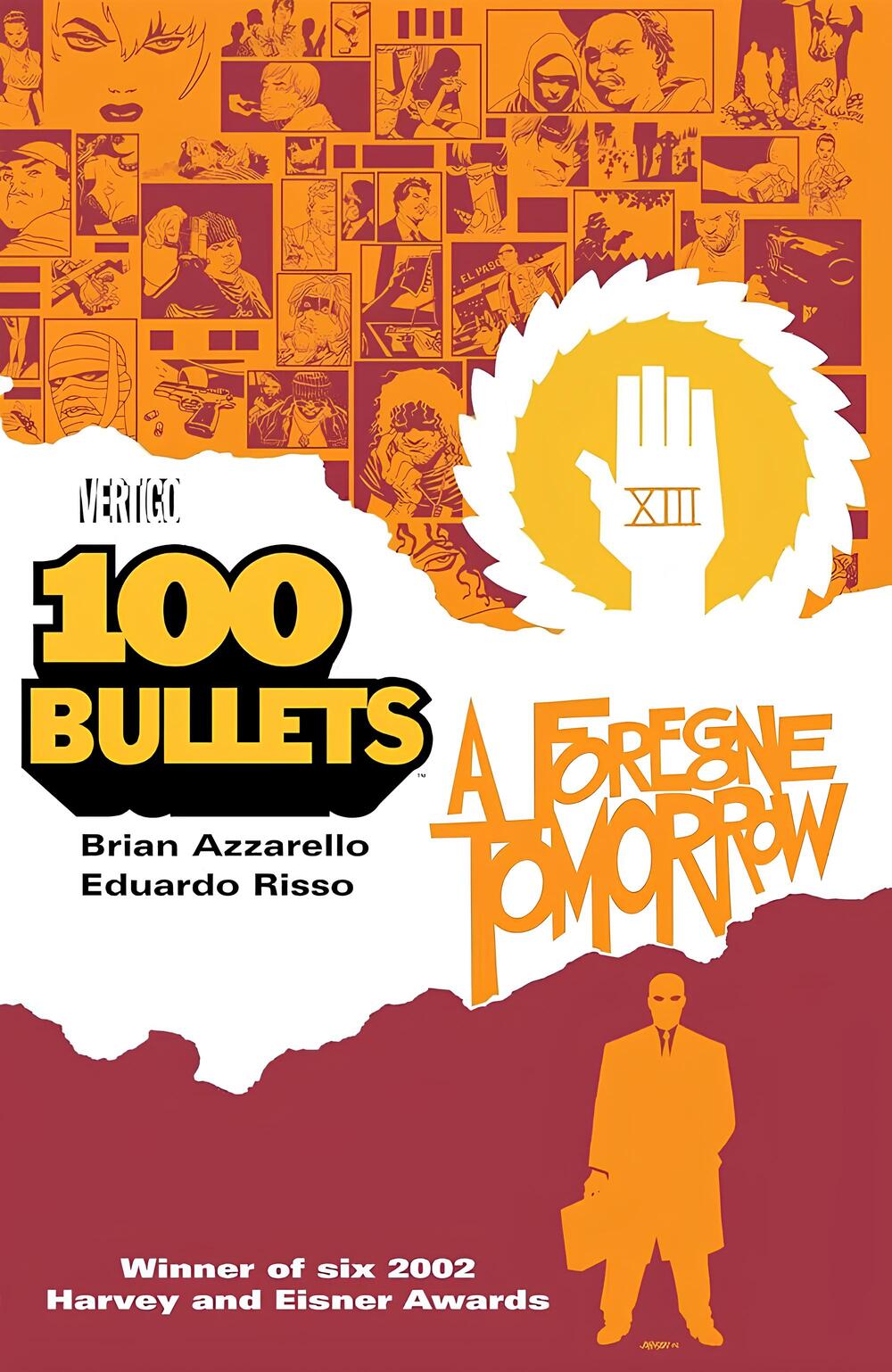
With A Foregone Tomorrow, Brian Azzarello and Eduardo Risso make it clear that 100 Bullets is done merely teasing the larger story behind Agent Graves, the Trust, and the Minutemen. The earlier volumes built their appeal around a very simple but powerful idea: Graves finds someone whose life has been ruined, hands them a briefcase containing a gun, proof, and one hundred untraceable bullets, then leaves them to decide what revenge is worth. That premise is still present here, but it no longer feels like the whole series. This fourth collection, which gathers issues #20-30, is where the long-running conspiracy really begins stepping out from the shadows. The Trust finally feels like a real organization rather than a few names being dropped in dark rooms, the Minutemen begin to take clearer shape, and Agent Graves starts to look less like a cryptic avenger and more like a man moving pieces around a board that only he fully understands.
The collection opens with “The Mimic,” and it is a good representation of what this volume does best. Azzarello ties together two conversations that seem unrelated at first: one involving Mr. Shepherd and Benito Medici, and another taking place at street level among people trying to survive in a world where even the smallest patch of territory has consequences. The contrast is important. On one side are the rich, insulated people who control entire criminal and financial networks without ever getting their own hands dirty. On the other are the desperate hustlers, dealers, addicts, and low-level criminals who are usually the first ones to bleed when those powerful people make a move. 100 Bullets has always had a strong sense of class anger under all the pulp dialogue and gunplay, but this volume puts that feeling more directly into the story.
Benito Medici is one of the most interesting additions here because he does not initially come across as the kind of polished, ruthless heir one would expect from the Trust. He seems immature, reckless, and more interested in enjoying the benefits of his family name than understanding what it costs other people. But Azzarello does not make him a joke. Benito is a spoiled rich kid, sure, but he is also a young man slowly realizing that he has been born into something dangerous and ancient. The Medici name gives him protection, money, and influence, but it also makes him a target. That uneasy realization gives his scenes some real tension. He is not just learning how much power his father Augustus has; he is learning that power in this world is never free.
The Trust itself is probably the biggest reason A Foregone Tomorrow feels like such a major turning point. Earlier books gave readers names like Augustus Medici and Megan Dietrich, along with hints about a hidden system that existed beyond regular crime families and street gangs. Here, the curtain gets pulled back much further. The Trust is revealed as a collection of powerful old families whose influence stretches across the country, while the Minutemen were created as their enforcers and internal police. The scope is suddenly much bigger than one person deciding whether to pull the trigger on somebody who wronged them. Agent Graves is not simply handing out opportunities for revenge. He is using those opportunities to destabilize a system that has spent generations protecting itself.
That expansion does make the book denser than the first three collections. Readers who liked the clean, self-contained revenge stories from First Shot, Last Call may need a little patience here. Azzarello is deliberately withholding information, and a lot of dialogue involves people speaking around the truth rather than plainly stating it. Characters mention events, names, and old betrayals that do not fully make sense until later. But that is also part of the fun. 100 Bullets is becoming a crime epic where every casual insult, odd coincidence, and brief appearance may eventually matter. The book trusts readers to keep up, and even when the plot gets murky, it rarely stops being compelling.
The Jack Daw material is probably the weakest portion of the collection, though it still has its uses. Jack is a huge, self-destructive junkie who already has one of Graves’s cases when the reader meets him. That is an interesting reversal of the usual formula because we do not see the initial pitch or the moment of temptation. We are instead dropped into the aftermath of a man who has already been given a chance to change his life and has clearly made a mess of it. Jack is not especially sympathetic, and the story never quite reaches the emotional impact of Dizzy Cordova’s or Loop Hughes’s earlier arcs. Still, he feels like another example of the kind of damaged person Graves is collecting. He is not a hero waiting to be awakened. He is a wrecking ball waiting for someone to point him in a direction.
The more memorable material comes from the way Azzarello keeps connecting old threads to new ones. Mr. Branch, who has spent much of the series trying to understand the conspiracy around Graves, becomes increasingly important as someone who sees patterns other characters are too close to notice. The story also takes a detour into the past with a strange, darkly funny episode involving baseball, Hollywood, and the Kennedy assassination. It is the kind of side story that might feel random in another series, but it works here because it reinforces the sense that Agent Graves has been active for a very long time. His briefcases are not a recent hobby. They are part of a much older game.
There is also an unexpectedly funny stretch involving a trip to Mexico, though the humor never makes the story feel safe. Azzarello has a talent for writing characters who can trade ridiculous insults and crude jokes one minute, then become frighteningly violent the next. That tonal balance is one of the things that keeps 100 Bullets from becoming unbearably grim. These people are living ugly lives in ugly places, but they still have personality. They still argue, posture, flirt, lie, and make each other laugh. The humor is usually mean, but it feels authentic to the world rather than forced comic relief.
Eduardo Risso remains the series’ secret weapon, even though by this point it is hard to call him a secret. His art gives every character an immediately recognizable silhouette and attitude. There are a lot of people in this volume, including gangsters, Trust members, old associates, street criminals, and potential Minutemen, yet Risso makes it easy to tell them apart. Benito looks like a privileged kid trying to wear confidence like a costume. Shepherd always carries himself with quiet control. Graves is still composed and unreadable, like somebody who has already calculated every possible outcome before entering the room.
Risso’s layouts are especially strong in the opening material, where different conversations and locations are visually paired to show how the powerful and powerless reflect each other. He can make a simple exchange in a park, a bar, or a hotel suite feel loaded with menace. His use of shadows, extreme angles, and stylized expressions gives the book its distinctive noir personality, but he never lets the style overwhelm the storytelling. You always know where to look and what emotional beat matters most. The guest pinup pages included around the original twenty-fifth issue are a neat bonus, though they do not have the same storytelling impact as Risso’s regular pages.
A Foregone Tomorrow is not as emotionally focused as Hang Up on the Hang Low, and it can feel more like a bridge volume than a completely self-contained story. But it is a very important bridge. This is where the series proves that its revenge setup was never just a clever anthology gimmick. The briefcases, bullets, and personal vendettas are all part of a larger conflict between men and women who believe they own the world and the people willing to burn that world down. By the end, Agent Graves is still mysterious, the Trust is still dangerous, and the Minutemen are only beginning to emerge from the past. But the road ahead is much clearer, and much more threatening.
100 Bullets Vol. 4: A Foregone Tomorrow is a strong, complicated, and occasionally messy installment that rewards readers who have been paying attention. Azzarello continues building the series into a sprawling noir conspiracy filled with damaged people, crooked power structures, and revenge that never comes without a price. Risso keeps the whole thing looking stylish, dangerous, and alive. It may not be the easiest volume to jump into, but for anyone following the series from the beginning, this is the point where the larger machine finally starts roaring to life.
100 Bullets Volume Reviews
Welcome to Retro Television Reviews, a feature where we review some of our favorite and least favorite shows of the past! On Saturdays, I will be reviewing Baywatch, which ran on NBC and then in syndication from 1989 to 2001. The entire show can be viewed on Tubi.
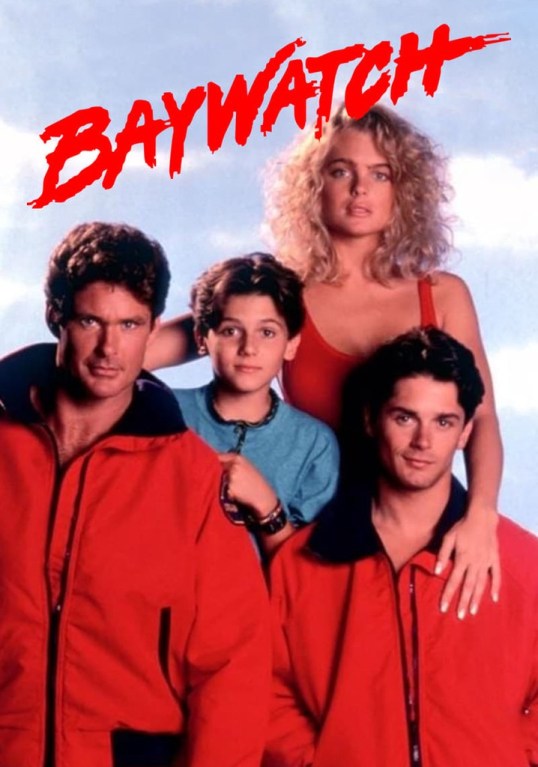
This week, Mitch gets the bends (snicker)!
Episode 2.17 “The Chamber”
(Dir by Gregory J. Bonann, originally aired on March 2nd, 1992)
Mitch has a lot to think about. Summer is nearly over, and Gayle wants Hobie to return to Ohio for school. Craig, now living in Connecticut, sends Mitch a letter offering to help him get a job as a salesman. It would mean more money, but also a lot of traveling — and no more lifeguarding.
Mitch takes to the ocean in a kayak to clear his head. When he comes across a panicked boy on a boat, he learns that the boy’s father was scuba diving and is trapped 90 feet underwater. Mitch free-dives to free the father. Both men reach the surface, but they’ve both got …. THE BENDS!
The bends may have a silly name, but it’s a real condition, and it can be fatal. Because the father is in worse shape, he goes into the decompression chamber first. Mitch isn’t doing well either, so Baywatch rushes him back to the mainland and puts him in their own chamber. Then everyone waits for Mitch to recover.
And Mitch has flashbacks. Flashback after flashback. That’s right: this is a clip show. This is Baywatch at its cheapest. This is Baywatch showing clips that featured a totally different actor playing Hobie. Eventually, once the show runs out of clips, Mitch has a brief out-of-body experience — and then he wakes up.
This is Baywatch at its silliest, but it’s also David Hasselhoff at his most earnest. Say what you will about the show, Hasselhoff always seemed to take it very seriously. Or at least he did until Baywatch Hawaii. Luckily, that’s several seasons away.
Clip shows always feel like a wasted episode, but they’re also incredibly easy to review. This episode has that going for it.
As some of our regular readers undoubtedly know, I am involved in a few weekly live tweets on twitter. I host #FridayNightFlix every Friday, I co-host #ScarySocial on Saturday, and I am one of the five hosts of #MondayActionMovie! Every week, we get together. We watch a movie. We tweet our way through it.
Tonight, for #ScarySocial, I will be hosting Dario Argento’s The Cat O’Nine Tails!
If you want to join us on Saturday night, just hop onto twitter, start the film at 9 pm et, and use the #ScarySocial hashtag! The film is available on Prime! I’ll be there co-hosting and I imagine some other members of the TSL Crew will be there as well. It’s a friendly group and welcoming of newcomers so don’t be shy!
Today’s song of the day is the orchestral theme from the 1953 sci-fi classic, War of the Worlds.

Today, the Shattered Lens observes what would have been the birthday of the great William Friedkin. As a director, William Friedkin revolutionized both the horror genre and the crime genre. The car chase from 1971’s The French Connection has been much imitated but rarely equaled.
A few years ago, I attended a showing of The French Connection at the Alamo Drafthouse. As exciting as this chase is, it’s even more amazing when viewed on a big screen.
4 Shots From 4 Films is just what it says it is, 4 shots from 4 of our favorite films. As opposed to the reviews and recaps that we usually post, 4 Shots From 4 Films lets the visuals do the talking!
Today, we honor director William Friedkin on what would have been his birthday.
4 Shots From 4 William Friedkin Films
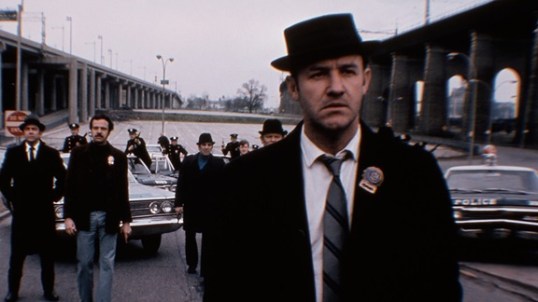
The French Connection (1971, dir by William Friedkin, DP: Owen Roizman)
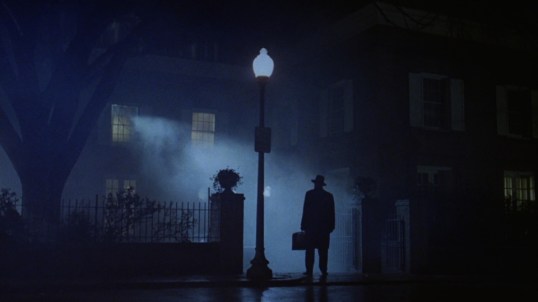
The Exorcist (1973, dir by William Friedkin, DP: Owen Roizman)
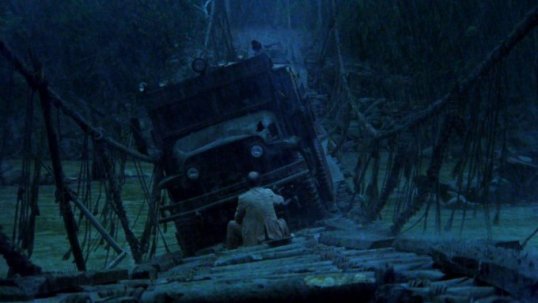
Sorcerer (1977, dir by William Friedkin, DP: Dick Bush and John M. Stephens)
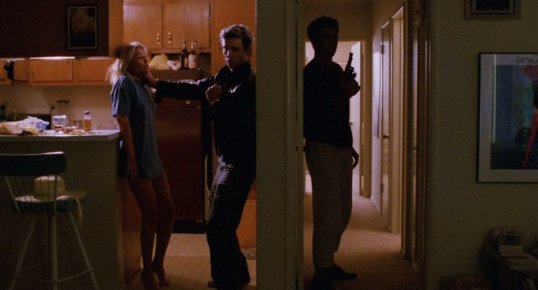
To Live And Die In L.A. (1985, dir by William Friedkin, DP: M. Scott Smith)

