“You don’t need a face to know who you are.” — Agent Graves
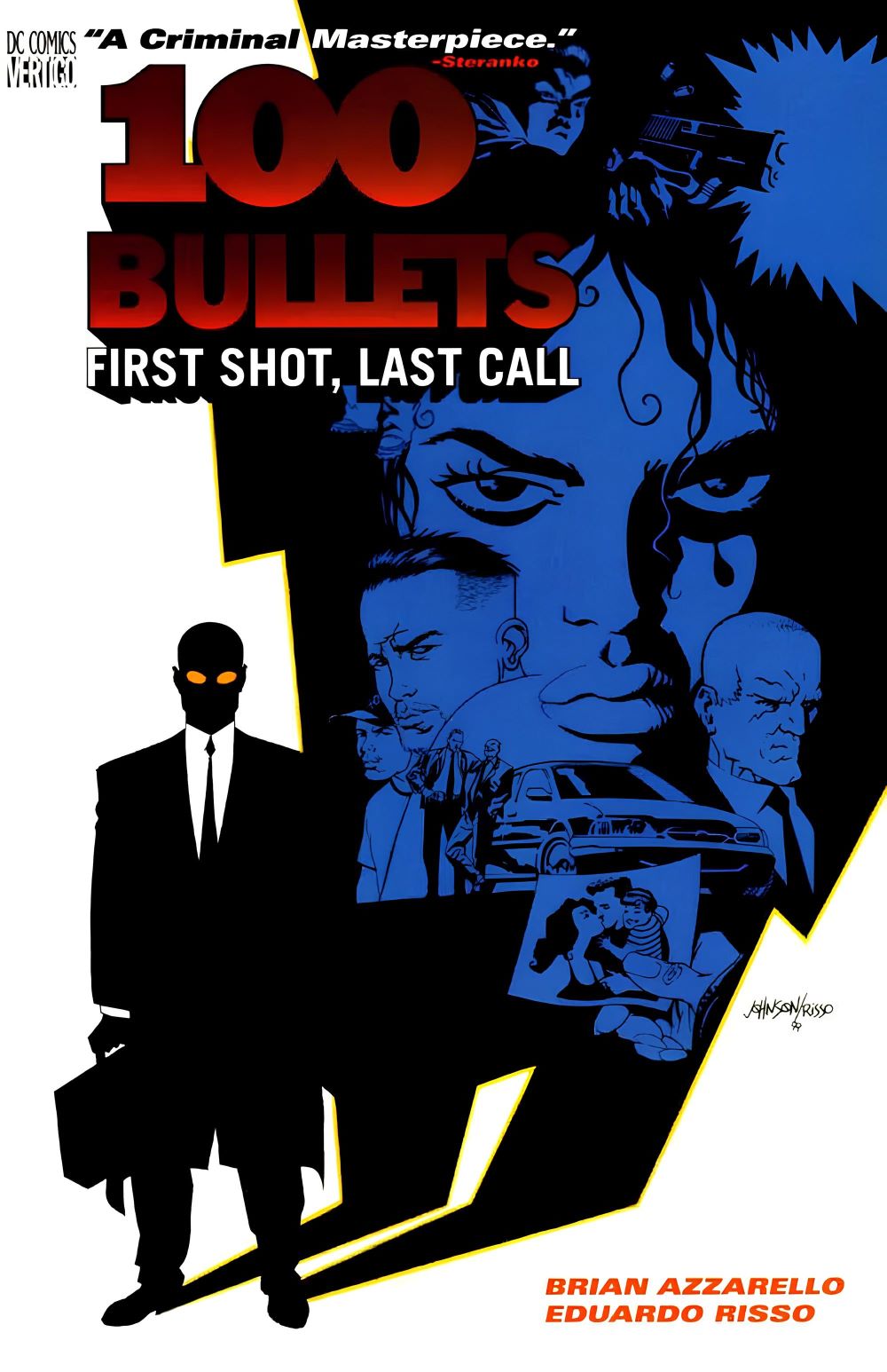
With The Counterfifth Detective, Brian Azzarello and Eduardo Risso pull 100 Bullets back toward the kind of hard-boiled detective story its title and visual style have been flirting with since the beginning. The series has spent four volumes building from Agent Graves’s deceptively simple revenge offer into a much wider conspiracy involving the Trust, the Minutemen, and a long list of people carrying old grudges, hidden loyalties, and enough baggage to sink a city block. This fifth collection does not exactly slow that larger story down, but it does give it a tighter, more focused mystery to work through.
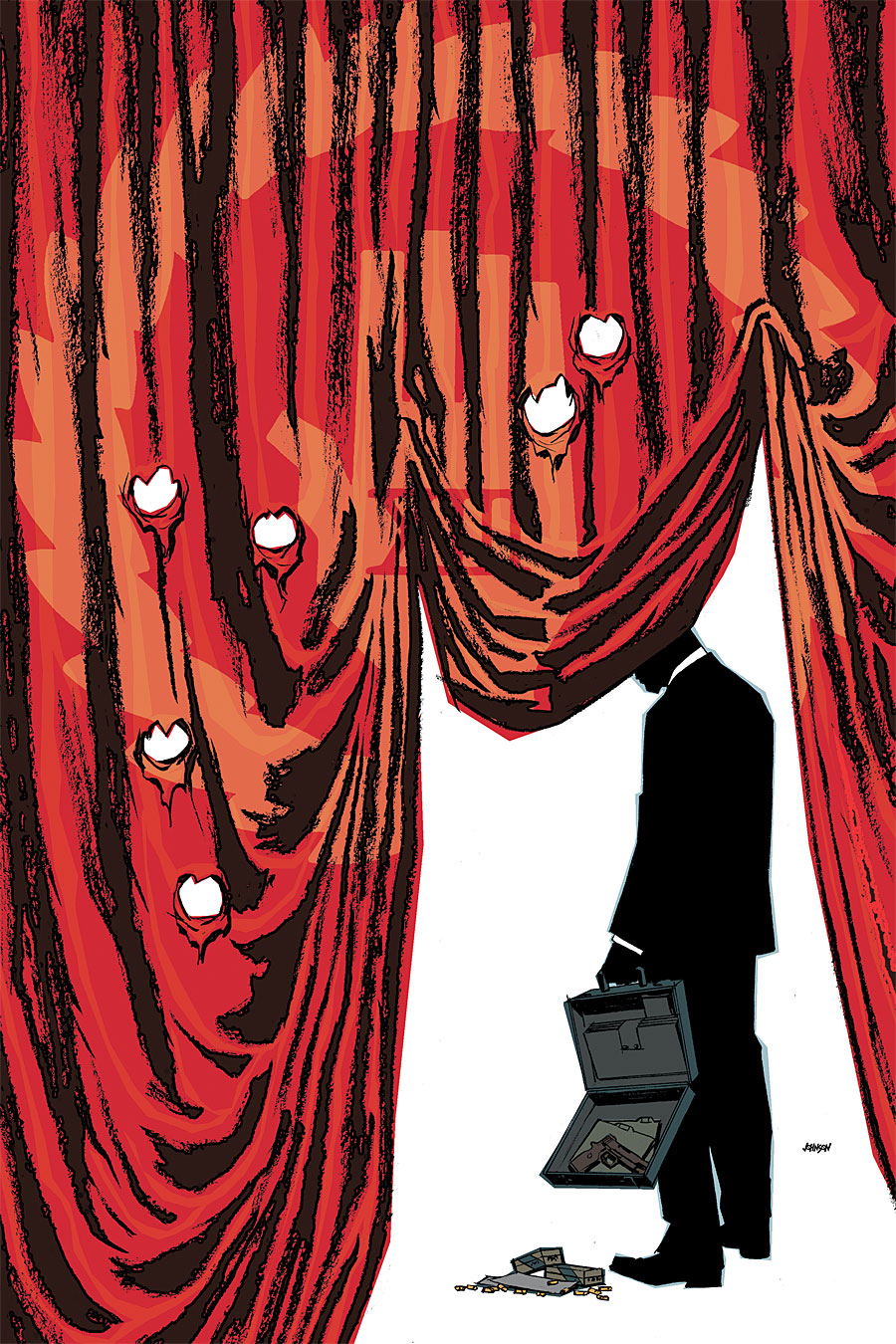
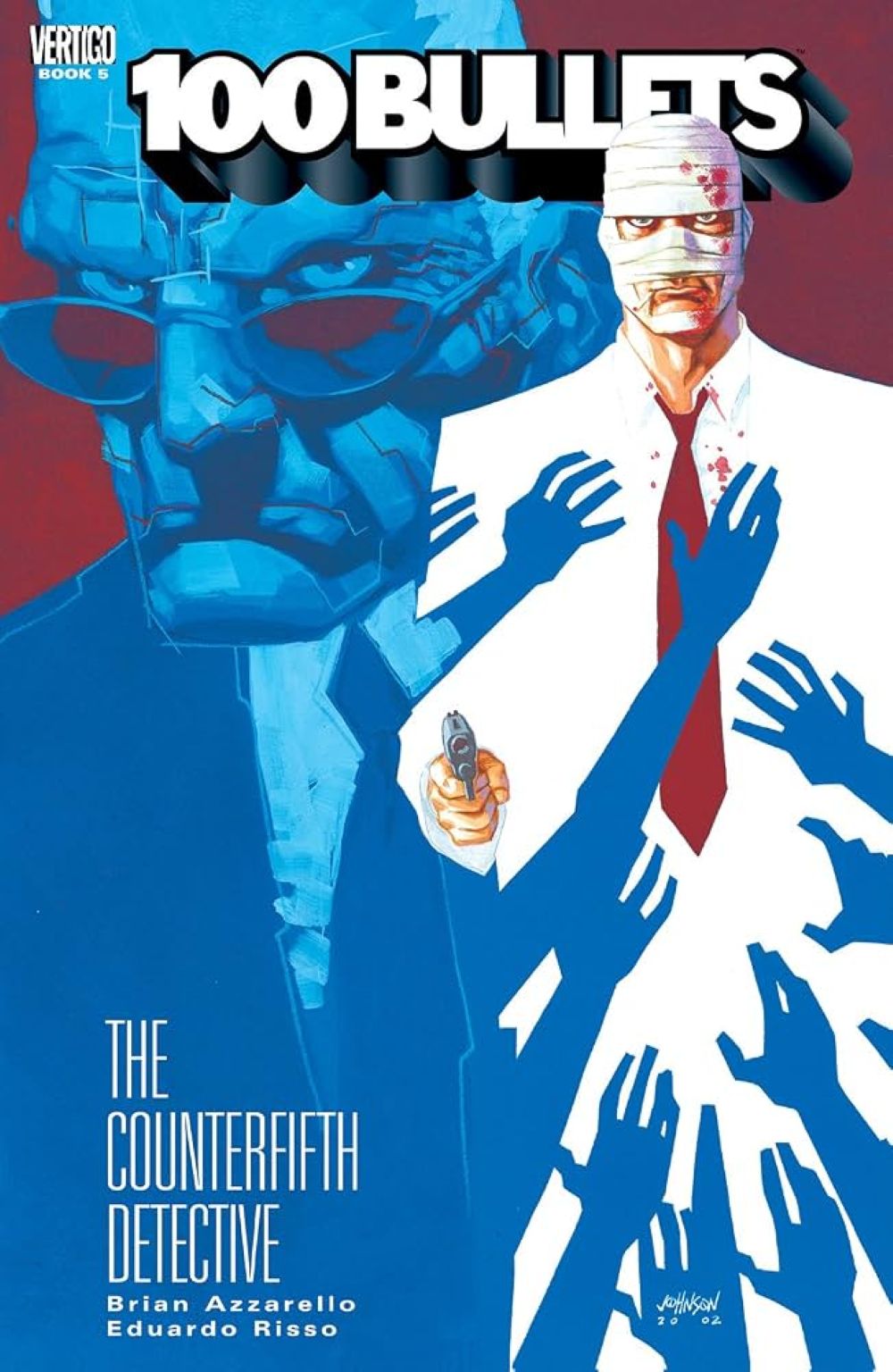
The central character is Milo Garret, a Los Angeles private investigator who wakes up in a hospital after what appears to have been a very bad car accident. His face is wrapped in bandages, his memories are incomplete, and his life has somehow become even more miserable than the average 100 Bullets protagonist’s. Naturally, Agent Graves shows up at exactly the moment when Milo is vulnerable, angry, and looking for somebody to blame. Graves gives him the familiar attaché case containing a gun, proof, and one hundred untraceable bullets, then suggests that Milo’s accident may not have been accidental at all.
That setup brings the series back to its original premise, but there is an important difference this time. Milo is not merely an ordinary person presented with a chance to kill the person who ruined his life. He is a detective, or at least he very badly wants to be the kind of detective he has seen in old movies and read about in pulp novels. He drinks too much, gets knocked around constantly, talks like somebody trying to turn every conversation into a Bogart monologue, and keeps walking into dangerous situations because it is what he thinks a real private eye is supposed to do. It would be easy for that to become irritating, but Azzarello makes Milo’s self-conscious noir act part of what makes him interesting.
Milo is clearly performing an identity, even before the story begins questioning whether he really understands his own past. He treats the hard-drinking, wisecracking private detective routine like armor. With his face literally hidden beneath layers of bandages, he has even more reason to cling to the image of who he believes he is. That gives The Counterfifth Detective a stranger and more personal angle than the earlier revenge stories. Milo is not just trying to find out who hurt him. He is trying to find out what he has forgotten, why so many people seem to know more about him than he does, and whether the version of himself he believes in has ever been real.
The title itself is one of those Azzarello word games that sounds like nonsense until the book starts circling around identity, forgery, and false versions of the truth. Milo gets drawn into the search for a stolen painting, but the painting is not simply a MacGuffin to move the plot along. It becomes tied to memory, deception, and the larger secrets that have been buried around the Trust and the Minutemen. Like much of 100 Bullets, the plot does not always hand the reader clean explanations right away. People speak in half-truths, conversations seem to skip over the most important details, and every time Milo gets what looks like an answer, it creates two more questions.
That can make the volume feel deliberately tangled. Azzarello is not writing a traditional detective mystery where every clue fits neatly into place by the final chapter. This is a conspiracy story told from the point of view of a man who has been dropped into the middle of it with a damaged memory and a gun in his hand. Milo is confused because he should be confused. The reader is meant to feel that same instability as the people around him lie, betray each other, disappear, get beaten up, or turn up dead before they can explain what they know.
At the same time, this is one of the more accessible volumes since the early days of the series because Milo gives the story a strong point of view. A Foregone Tomorrow was important for expanding the scope of the Trust and making the Minutemen feel like a real part of the series rather than vague backstory, but it was also intentionally scattered. The Counterfifth Detective still feeds the larger mythology, yet it is built around one man trying to survive one increasingly ugly case. The result feels more focused, even when the actual plot becomes more complicated.
Agent Graves is especially effective here because his role has changed so much from the early volumes. He still presents himself as a man offering someone the tools to take revenge, but it is impossible to see him as a neutral facilitator anymore. Graves knows far more about Milo than Milo does. He is not just giving the detective a choice; he is guiding him toward a confrontation that has clear value in Graves’s wider war against the Trust. The attaché case remains a powerful symbol because it looks like freedom. It promises immunity, a weapon, and a chance to settle the score. But in this series, the case is never really freedom. It is an invitation into Graves’s game.
The presence of Lono also helps give the story some extra menace. Lono is one of the series’ most unnerving characters because he is not merely violent; he seems to enjoy making everybody else feel smaller, dirtier, and more helpless. Whenever he appears, the atmosphere immediately gets worse. He brings a kind of ugly unpredictability that contrasts nicely with Graves’s calm manipulation. Graves always seems like he has calculated the next ten moves. Lono feels like he might wreck the board just to hear the pieces crack.
Risso’s artwork continues to carry an enormous amount of the book’s personality. The bandaged Milo is a great visual creation because he looks both mysterious and ridiculous, like a cheap horror-movie monster trying to pass himself off as a tough guy. Risso finds the humor in that image without undercutting the danger around it. He is also excellent at making Los Angeles feel appropriately worn down and hostile. The city is not glamorous here. It is a place of cheap offices, dim bars, empty roads, battered cars, suspicious hotel rooms, and people who look like they have been awake for three days making terrible decisions.
His use of shadow remains one of the series’ biggest strengths. A room can be almost empty and still feel tense because of the angle of a lamp, the silhouette of somebody standing in a doorway, or the way a character’s face is half-covered by darkness. That visual approach suits a story about missing memories and hidden identities perfectly. Risso rarely needs to make a big flashy gesture to sell danger. Sometimes all it takes is someone sitting too calmly in the wrong place.
Azzarello’s dialogue is still sharp, vulgar, and often very funny in a nasty way. Not every line lands, and the characters can sometimes sound like they are competing to be the most quotable person in the room, but that heightened style has become part of the book’s identity. These are people who use tough talk as a weapon. They insult, threaten, flirt, and lie in the same breath because direct honesty would make them too vulnerable.
100 Bullets Vol. 5: The Counterfifth Detective is a strong installment because it combines the series’ expanding conspiracy with a satisfying noir setup. Milo Garret is not as immediately sympathetic as Dizzy Cordova or as tragically lost as Loop Hughes, but he is a memorable lead precisely because he is such an imperfect version of a classic private eye. He wants answers, revenge, and a sense of control, but the deeper he goes, the clearer it becomes that he may be chasing a life that was invented for him by somebody else.
This is not the cleanest or easiest 100 Bullets volume, and readers looking for every mystery to be fully explained may come away frustrated. But it is stylish, mean, funny, and packed with the kind of uneasy connections that make the larger series addictive. Azzarello keeps tightening the web around Agent Graves, the Trust, and the surviving Minutemen, while Risso makes every page look like it was pulled from the darkest corner of a crime film. By the end, Milo may have found some answers, but like everybody who accepts Graves’s offer, he has paid far more for them than he ever expected.
100 Bullets Volume Reviews