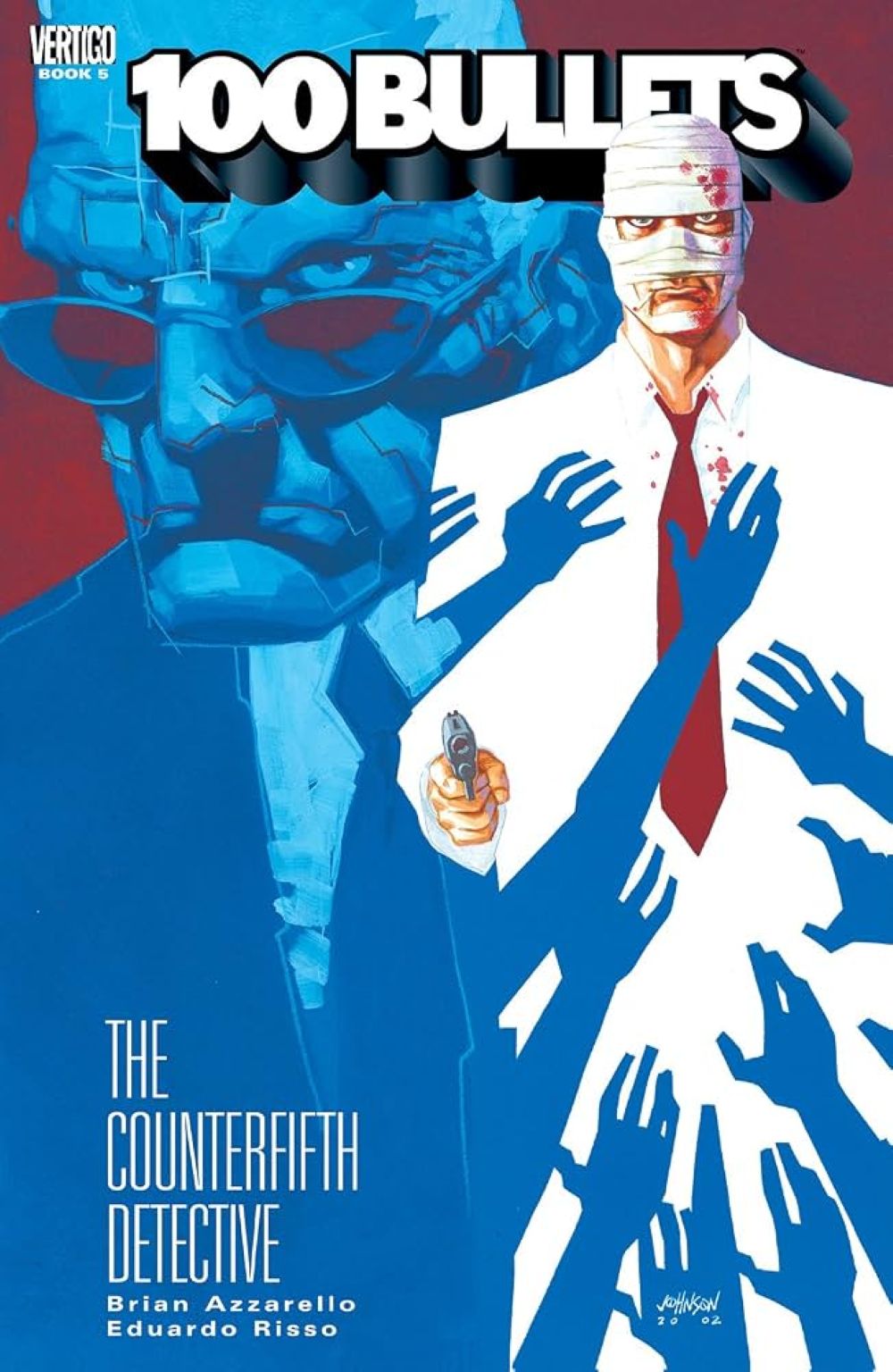
Review: 100 Bullets Vol. 4 – A Foregone Tomorrow


“On your feet, soldier. You’ve just been drafted. This is a war.” — Agent Graves

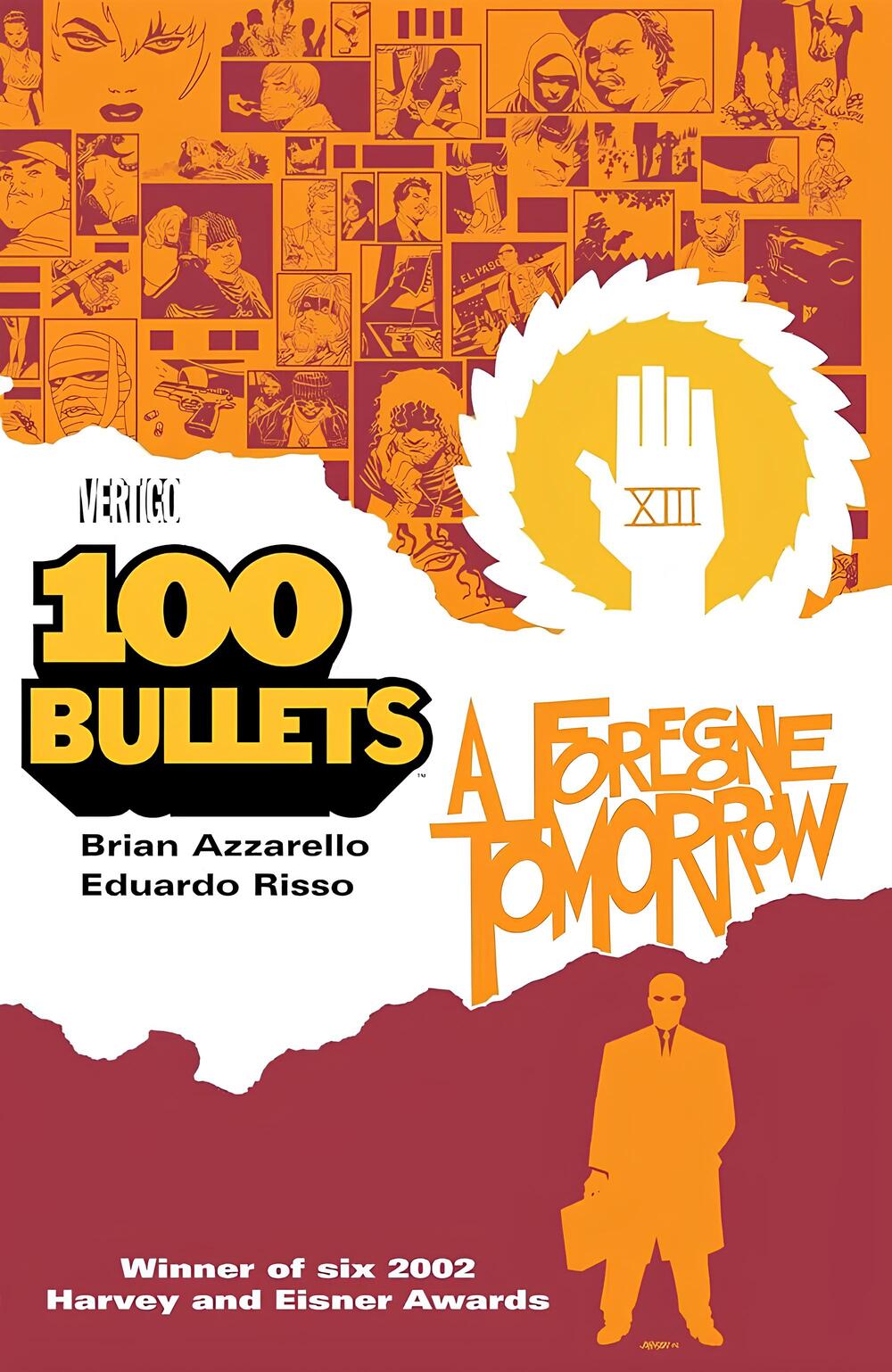
With A Foregone Tomorrow, Brian Azzarello and Eduardo Risso make it clear that 100 Bullets is done merely teasing the larger story behind Agent Graves, the Trust, and the Minutemen. The earlier volumes built their appeal around a very simple but powerful idea: Graves finds someone whose life has been ruined, hands them a briefcase containing a gun, proof, and one hundred untraceable bullets, then leaves them to decide what revenge is worth. That premise is still present here, but it no longer feels like the whole series. This fourth collection, which gathers issues #20-30, is where the long-running conspiracy really begins stepping out from the shadows. The Trust finally feels like a real organization rather than a few names being dropped in dark rooms, the Minutemen begin to take clearer shape, and Agent Graves starts to look less like a cryptic avenger and more like a man moving pieces around a board that only he fully understands.

The collection opens with “The Mimic,” and it is a good representation of what this volume does best. Azzarello ties together two conversations that seem unrelated at first: one involving Mr. Shepherd and Benito Medici, and another taking place at street level among people trying to survive in a world where even the smallest patch of territory has consequences. The contrast is important. On one side are the rich, insulated people who control entire criminal and financial networks without ever getting their own hands dirty. On the other are the desperate hustlers, dealers, addicts, and low-level criminals who are usually the first ones to bleed when those powerful people make a move. 100 Bullets has always had a strong sense of class anger under all the pulp dialogue and gunplay, but this volume puts that feeling more directly into the story.

Benito Medici is one of the most interesting additions here because he does not initially come across as the kind of polished, ruthless heir one would expect from the Trust. He seems immature, reckless, and more interested in enjoying the benefits of his family name than understanding what it costs other people. But Azzarello does not make him a joke. Benito is a spoiled rich kid, sure, but he is also a young man slowly realizing that he has been born into something dangerous and ancient. The Medici name gives him protection, money, and influence, but it also makes him a target. That uneasy realization gives his scenes some real tension. He is not just learning how much power his father Augustus has; he is learning that power in this world is never free.

The Trust itself is probably the biggest reason A Foregone Tomorrow feels like such a major turning point. Earlier books gave readers names like Augustus Medici and Megan Dietrich, along with hints about a hidden system that existed beyond regular crime families and street gangs. Here, the curtain gets pulled back much further. The Trust is revealed as a collection of powerful old families whose influence stretches across the country, while the Minutemen were created as their enforcers and internal police. The scope is suddenly much bigger than one person deciding whether to pull the trigger on somebody who wronged them. Agent Graves is not simply handing out opportunities for revenge. He is using those opportunities to destabilize a system that has spent generations protecting itself.

That expansion does make the book denser than the first three collections. Readers who liked the clean, self-contained revenge stories from First Shot, Last Call may need a little patience here. Azzarello is deliberately withholding information, and a lot of dialogue involves people speaking around the truth rather than plainly stating it. Characters mention events, names, and old betrayals that do not fully make sense until later. But that is also part of the fun. 100 Bullets is becoming a crime epic where every casual insult, odd coincidence, and brief appearance may eventually matter. The book trusts readers to keep up, and even when the plot gets murky, it rarely stops being compelling.

The Jack Daw material is probably the weakest portion of the collection, though it still has its uses. Jack is a huge, self-destructive junkie who already has one of Graves’s cases when the reader meets him. That is an interesting reversal of the usual formula because we do not see the initial pitch or the moment of temptation. We are instead dropped into the aftermath of a man who has already been given a chance to change his life and has clearly made a mess of it. Jack is not especially sympathetic, and the story never quite reaches the emotional impact of Dizzy Cordova’s or Loop Hughes’s earlier arcs. Still, he feels like another example of the kind of damaged person Graves is collecting. He is not a hero waiting to be awakened. He is a wrecking ball waiting for someone to point him in a direction.

The more memorable material comes from the way Azzarello keeps connecting old threads to new ones. Mr. Branch, who has spent much of the series trying to understand the conspiracy around Graves, becomes increasingly important as someone who sees patterns other characters are too close to notice. The story also takes a detour into the past with a strange, darkly funny episode involving baseball, Hollywood, and the Kennedy assassination. It is the kind of side story that might feel random in another series, but it works here because it reinforces the sense that Agent Graves has been active for a very long time. His briefcases are not a recent hobby. They are part of a much older game.

There is also an unexpectedly funny stretch involving a trip to Mexico, though the humor never makes the story feel safe. Azzarello has a talent for writing characters who can trade ridiculous insults and crude jokes one minute, then become frighteningly violent the next. That tonal balance is one of the things that keeps 100 Bullets from becoming unbearably grim. These people are living ugly lives in ugly places, but they still have personality. They still argue, posture, flirt, lie, and make each other laugh. The humor is usually mean, but it feels authentic to the world rather than forced comic relief.

Eduardo Risso remains the series’ secret weapon, even though by this point it is hard to call him a secret. His art gives every character an immediately recognizable silhouette and attitude. There are a lot of people in this volume, including gangsters, Trust members, old associates, street criminals, and potential Minutemen, yet Risso makes it easy to tell them apart. Benito looks like a privileged kid trying to wear confidence like a costume. Shepherd always carries himself with quiet control. Graves is still composed and unreadable, like somebody who has already calculated every possible outcome before entering the room.

Risso’s layouts are especially strong in the opening material, where different conversations and locations are visually paired to show how the powerful and powerless reflect each other. He can make a simple exchange in a park, a bar, or a hotel suite feel loaded with menace. His use of shadows, extreme angles, and stylized expressions gives the book its distinctive noir personality, but he never lets the style overwhelm the storytelling. You always know where to look and what emotional beat matters most. The guest pinup pages included around the original twenty-fifth issue are a neat bonus, though they do not have the same storytelling impact as Risso’s regular pages.

A Foregone Tomorrow is not as emotionally focused as Hang Up on the Hang Low, and it can feel more like a bridge volume than a completely self-contained story. But it is a very important bridge. This is where the series proves that its revenge setup was never just a clever anthology gimmick. The briefcases, bullets, and personal vendettas are all part of a larger conflict between men and women who believe they own the world and the people willing to burn that world down. By the end, Agent Graves is still mysterious, the Trust is still dangerous, and the Minutemen are only beginning to emerge from the past. But the road ahead is much clearer, and much more threatening.

100 Bullets Vol. 4: A Foregone Tomorrow is a strong, complicated, and occasionally messy installment that rewards readers who have been paying attention. Azzarello continues building the series into a sprawling noir conspiracy filled with damaged people, crooked power structures, and revenge that never comes without a price. Risso keeps the whole thing looking stylish, dangerous, and alive. It may not be the easiest volume to jump into, but for anyone following the series from the beginning, this is the point where the larger machine finally starts roaring to life.

100 Bullets Volume Reviews

Review: 100 Bullets Vol. 3 – Hang Up on the Hang Low


“I never told you to kill him. I just gave you the opportunity.” — Agent Graves

With Hang Up on the Hang Low, Brian Azzarello and Eduardo Risso continue to prove that 100 Bullets is far more than a series about revenge fantasies and mysterious briefcases. The first two collections introduced the basic concept of Agent Graves approaching damaged people with a gun, one hundred untraceable bullets, and proof of who ruined their lives. That premise was already strong, but this third volume starts showing just how much uglier and more complicated the world around Graves really is. This is where the series begins to feel less like a set of loosely connected crime stories and more like a large, carefully constructed noir epic. The revenge angle is still present, but it is no longer the whole point. The people who receive Graves’s offer are getting pulled into a much bigger machine, whether they realize it or not.

The main character this time is Loop Hughes, a young man who has spent much of his life acting tougher, smarter, and more connected than he actually is. He is a small-time street hustler, someone who talks a good game but clearly has no real direction in life. That makes him an interesting choice for Agent Graves. Loop is not someone who has already been crushed by a terrible tragedy in the same direct way as Dizzy Cordova or Lee Dolan. His grievance is more personal and more complicated: his father, a man known as the Rain, abandoned him and his mother when he was still a child. Loop has built up years of anger around that absence, even if he has never really known what to do with it.

When Graves gives Loop one of his trademark attaché cases, it seems at first like another straightforward setup. Loop has the gun, the bullets, the evidence, and the freedom to act without legal consequences. The temptation is there, and Azzarello makes it easy to understand why Loop would want to pull the trigger. The Rain did not just leave; he left a hole in Loop’s life that the younger man has filled with insecurity, bravado, and bad decisions. But the story becomes much more interesting when Loop finally finds his father and discovers that the Rain is not some helpless old man waiting to be punished. He is deeply involved with dangerous people and has his own place in the criminal underworld.

That is where Hang Up on the Hang Low really finds its momentum. Rather than immediately becoming a story about a son taking revenge on his father, it turns into a story about Loop being drawn into the world that helped create his father in the first place. The Rain is connected to organized crime, old grudges, and the kind of people who can make a murder look like business as usual. Loop thinks he is finally getting some answers, but every answer only opens another door to something worse. He is in well over his head almost from the beginning, and the book does a great job of making the reader feel that constant pressure.

Loop is one of the more sympathetic characters in the series so far because, underneath all of his posturing, he does seem to have a conscience. He is not innocent, exactly, and he certainly makes some dumb choices, but he is not naturally cruel. He wants respect, money, and an explanation for why his father left, but he also cares about people in a way that many of the hardened gangsters around him do not. Azzarello does not turn him into a saint, though. Loop is still immature and easily manipulated, which is exactly why his journey through this volume becomes so tragic. He keeps thinking he has found a way to gain control over his life, only to learn that somebody else has already decided the terms.

Agent Graves remains the most fascinating figure in the book. In the early volumes, he could be seen as a mysterious avenger or a kind of grim wish-fulfillment figure, handing victims the tools to get justice on their own terms. This collection makes him feel more unsettling than heroic. Graves is not necessarily lying to Loop, but he is absolutely steering him toward a result that serves some larger purpose. He is a man who sees people as pieces on a board, and even when he gives them a choice, it is hard to believe that he does not already have an idea of how they will respond. The briefcase may offer freedom from prosecution, but it never offers freedom from consequences.

The book also continues expanding the larger mythology involving the Trust and the Minutemen. Azzarello is still not explaining everything, and that can be frustrating if someone wants clean answers right away. At the same time, the lack of full explanation is part of what gives 100 Bullets its pull. The reader gets the sense that every crime boss, stray conversation, and seemingly random killing could matter later. People who initially seem like minor players keep revealing hidden ties to the larger conspiracy. Even the deaths and betrayals carry an extra weight because they do not feel random. This series is building toward something, and by the end of this volume it is clear that Graves has been setting events in motion for a long time.

Eduardo Risso’s artwork continues to be one of the best things about the series. His characters look stylized without ever feeling too cartoonish, and he gives every person a distinct physical presence. You can tell who is dangerous just by the way they stand in a room. You can tell who is nervous by the way they avoid eye contact. Risso’s visual storytelling is especially effective in the bar scenes, street confrontations, and quiet moments when characters are trying to decide whether to trust someone. He knows how to make a room feel crowded, seedy, and tense without overloading the page with unnecessary detail.

Risso also has a great eye for the ugly atmosphere of this world. The bars look worn down, the apartments feel cramped, and the city streets always seem like they are one bad decision away from turning violent. The noir influence is obvious, but it does not feel like a cheap imitation of old detective stories. It feels more like a modern crime story filtered through noir imagery: low lighting, cigarette smoke, suspicious looks, crooked power structures, and people who keep trying to escape the past only to be dragged deeper into it. The coloring helps the art stand out as well, giving the grimy environments and tense confrontations a little extra visual bite without making the book look overly polished.

The ending is what really makes the volume stick. Azzarello does not rely on a giant surprise twist so much as a sense of inevitability. You can see the bad outcome coming, but that does not make it any easier to watch. Loop spends most of the story trying to become somebody who matters, somebody with control and power, and the cruel part is that the criminal world is more than happy to let him feel that way for a little while. By the time reality catches up with him, he has learned that the people offering him opportunity were never offering him a real way out.

100 Bullets Vol. 3: Hang Up on the Hang Low is the strongest collection in the series so far. It has a more focused central story than Split Second Chance, while still pushing the wider conspiracy forward in a meaningful way. Loop is a memorable lead because he is flawed, angry, and trying desperately to look fearless when he is really just lost. Azzarello keeps the dialogue sharp and streetwise, Risso keeps every page visually charged, and the larger story continues to get more dangerous the more we learn about it. This is the point where 100 Bullets stops merely promising that it has a major story to tell and starts delivering on that promise.

100 Bullets Volume Reviews

Review: 100 Bullets Vol. 2 – Split Second Chance


“Asking questions is free… but the answers—they can cost you your life.” — Agent Graves

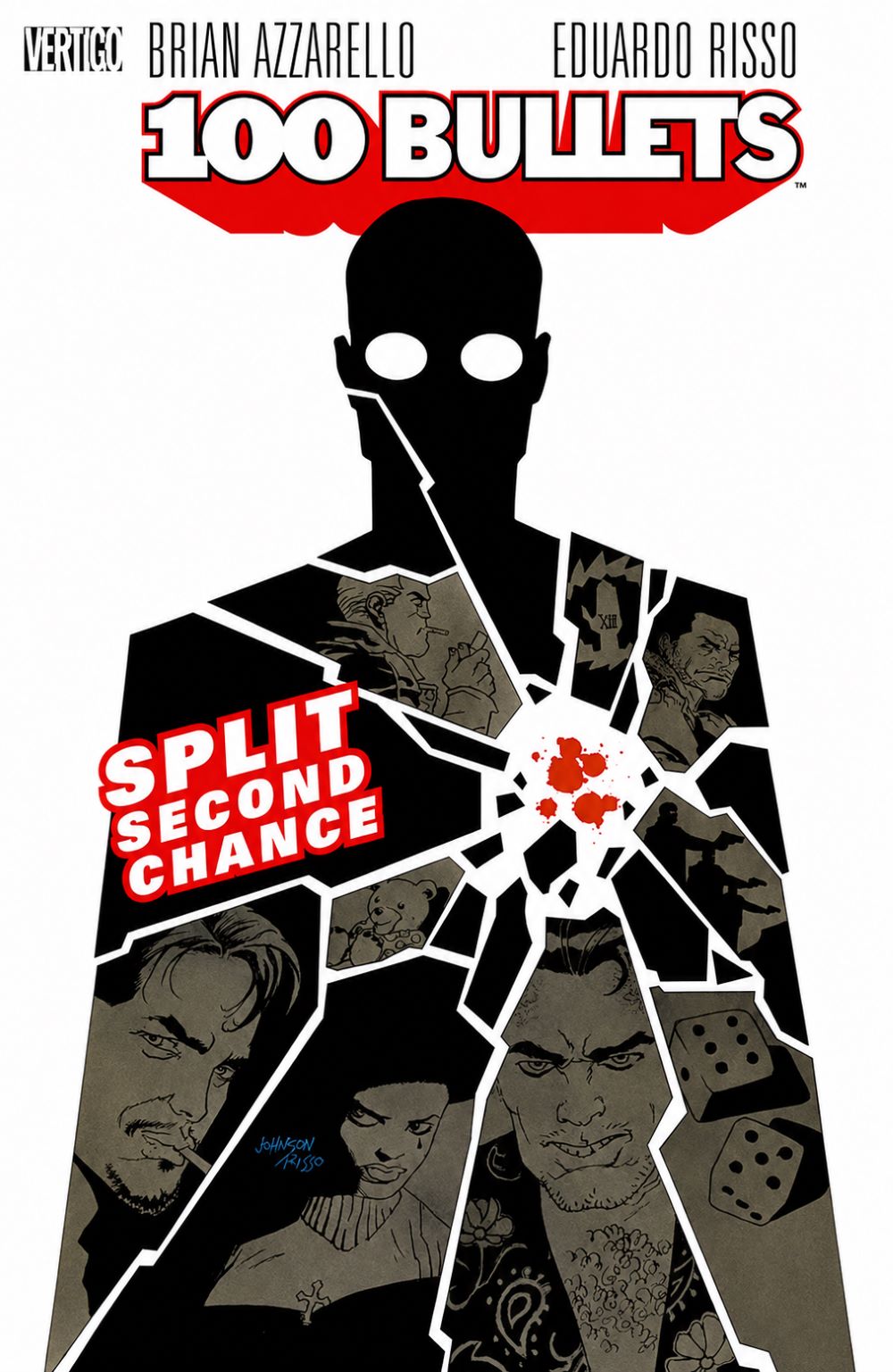
In the first volume of 100 Bullets, Brian Azzarello and Eduardo Risso laid down a stunning thesis for their magnum opus: a world where the wronged are offered the ultimate temptation of consequence-free vengeance. That volume, First Shot, Last Call, functioned as a potent thematic introduction, establishing the series’ central moral quandary through self-contained stories. With Split Second Chance, the creative team makes a crucial pivot. This collection, gathering issues #6-14, successfully preserves the gritty, anthology-style explorations of revenge while beginning to weave a much larger, more intricate conspiracy that feels poised to consume everything in its path. If the first book was a promise, this second volume is the first, gripping step toward its fulfillment, even if it occasionally stumbles under the weight of its own ambition.

The volume opens with “Short Con, Long Odds,” a two-part story that initially feels like familiar territory. We are introduced to Chucky, a small-time gambler fresh out of prison, who is approached by Agent Graves. As before, Graves offers incontrovertible proof of a betrayal and the tools for retribution—this time against Chucky’s childhood friend, Pony, who has seemingly built a successful gambling empire on his partner’s misery. What makes this story stand out is its focus on the petty, desperate world of gambling. Risso’s art is especially potent here, capturing the sad, seedy underbelly of street-corner hustles and back-alley games. The story’s conclusion, which unfolds off-panel, is a masterclass in implication, leaving the reader to piece together the grim aftermath. It is a solid entry that reinforces the series’ core premise, but its real purpose becomes clear retroactively as the larger plot comes into focus.

This is the volume where the series’ title begins to earn its meaning. Agent Graves is no longer just a cipher; he is revealed to be a man with a history, and Split Second Chance doles out those histories with deliberate, tantalizing precision. The most significant revelation comes in “Day, Hour, Minute… Man,” where we learn about The Trust and the enigmatic Minutemen. This arc peels back the curtain, suggesting that Graves and his associate, Mr. Shepherd, were once part of this shadowy organization before faking their deaths to escape its clutches. The introduction of Lono, the chilling hitman from the first volume’s “The Samurai,” becomes far more significant. His meeting with Graves is charged with a dangerous, unspoken history, confirming that Graves’s “gifts” are a part of a larger, more personal agenda. The plot is thickening nicely, and the promise of a sprawling, interconnected narrative starts to feel exhilaratingly real.

However, it is in the standalone stories that Azzarello’s writing truly shines, showcasing his ability to extract raw, human emotion from his noir framework. The standout is undoubtedly “Heartbreak, Sunnyside Up,” a single-issue story that follows a hard-working diner waitress named Rose. Rose’s life is a grinding cycle of poverty and worry for her runaway daughter. When Agent Graves appears, he doesn’t just offer her a gun and a target; he delivers a slow, agonizing explanation of how her daughter became a heroin-addicted prostitute after being molested by her own father. It is a moment of pure, unflinching tragedy. The brilliance of the story lies not in the revenge itself, but in the horror of the revelation. Azzarello forces the reader and the character to sit with the unbearable truth, making the subsequent act of violence feel less like empowerment and more like a desperate, last resort. It serves as a powerful reminder that “sometimes evil is closer to home than we think.”

“The Right Ear, Left in the Cold” offers a fascinating twist on the formula by introducing Cole Burns, a deadly assassin living undercover as a neighborhood ice cream man. This story introduces the concept of the “sleeper agent,” a tool that Graves and Shepherd can “reactivate” for their own ends. Cole is a more capable and cold-blooded protagonist than the average victim, which makes his story less about moral choice and more about professional obligation. Yet, it deepens the mythology, showing that Graves has an entire network of operatives at his disposal, further blurring the line between righteous avenger and puppet master. His ultimate task of retrieving the briefcase from Dizzy Cordova in the final arc, “Parlez Kung Vous,” masterfully ties this new plot thread back to the series’ very first protagonist.

Throughout it all, Eduardo Risso’s artwork remains the series’ undeniable and consistent anchor. His style, which perfectly captured the cold, deliberate mood in the first volume, continues to excel in Split Second Chance. Risso’s panels have a cinematic rhythm; his compositions are economical yet expressive, using deep shadows and stark contrasts to build a world that feels dangerous and morally unstable. He excels at conveying unspoken tension and character attitude through posture and expression, a vital skill for a noir story where much is left unsaid. While some readers may find the depiction of female characters hyper-sexualized, Risso and colorist Grant Goleash unquestionably create a visual language that is sleek, uneasy, and unmistakably noir. The story’s pace may occasionally lag, but the art is always arresting.

100 Bullets: Split Second Chance is a more challenging and rewarding book than its predecessor. It sacrifices some of the first volume’s focus and self-contained impact to lay the foundation for something much grander. This is the volume where the series starts to earn its reputation for dense, interwoven plotting. It is a work of deliberate, intricate world-building that asks the reader to be patient and pay close attention. It is not without its flaws—some stories feel more like necessary setups than complete narratives, and the unrelentingly grim tone can be exhausting. Yet, the moments of genuine human tragedy, like Rose’s story, and the thrilling expansion of the central mystery make Split Second Chance an essential step in the journey. It confidently expands the world of 100 Bullets, deepening its mythology and proving that this is a saga built for the long haul.

100 Bullets Volume Reviews

Review: The Walking Dead Volume 13 (by Robert Kirkman)


It’s been almost a month since the final episode of the first season for the tv series adaptation of this comic book aired on AMC. The Frank Darabont and Gale Anne Hurd produced series became a major hit not just for the channel but also for everyone involved. While the adaptation deviated from the comic’s path at times in the end it helped established the post-apocalyptic world creator Robert Kirkman had been working five years to create. This is a world that is still on-going and, just weeks earlier, released the thirteenth volume of collected issues 73 thru to 78.

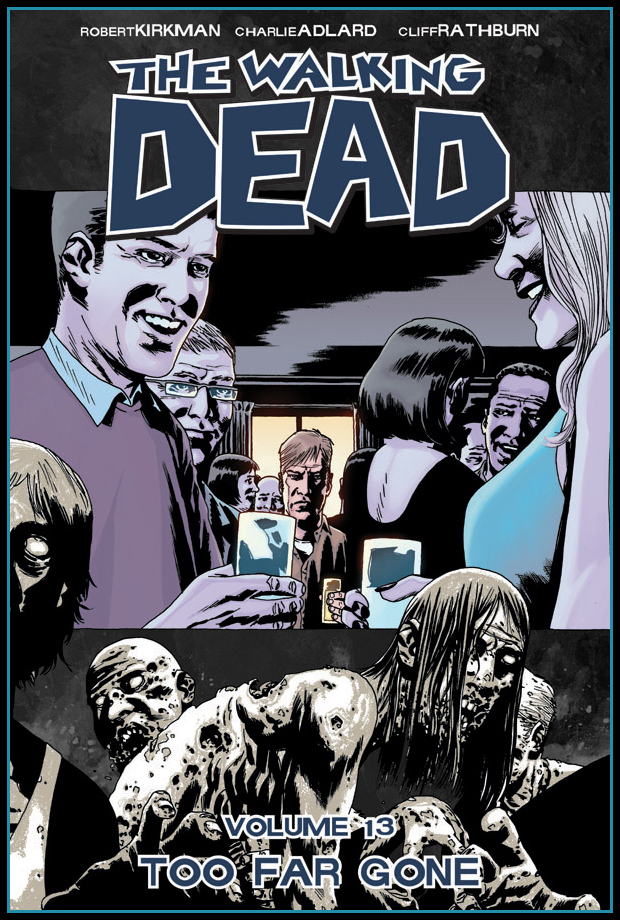
The 13th volume is aptly titled, Too Far Gone, as it continues where the previous trade paperback left off and that’s Rick and his group of survivors trying to settle in the safe, walled community in Alexandria, VA. This wasn’t the respite Rick and his group were hoping for, but it is as close to one as they’ll get as their original destination of Washington, DC resembles much of everything else they’ve seen and that’s unsafe devastation.

As Rick gradually gets used to going back as a lawman for the community everyone else do their part in doing the new jobs handpicked for them by the community’s leader Douglas. Through the first half of the volume we see through the point of view of certain character that this safe haven they’ve joined has it’s fair share of secrets and that not everything was as stable as they’ve been led to believe. While some of the revelations the reader will read as the volume unfolds doesn’t bring back images of Woodbury and The Governor, they do show that the underbelly of the Alexandria community is just as rotten but in other ways.

The title of the volume is in regards to Rick as a character and to a small degree the rest of his group. Here they are in a safe place with other survivors who just want to try and get back to living life the way it used to be. The paranoia and mistrust Rick has built within himself after the long journey from his hospital bed to this place has begun to chip away at not just his sanity but his humanity as well. He hasn’t turned the corner to become another Governor, but his actions in regards to trying to safeguard their new found safety does show that Rick and some in his group do not trust all the smiles and well-wishes thrown their way.

Rick knows that as safe as they all might seem now it doesn’t take much for all of it to come crashing down. It’s this looming threat that forces Rick to behave in ways which does have people question if he’s lost it and has he become a danger not just to their new benefactors but to his own people as well. The answer to this question wasn’t clear and remains, like all of Kirkman’s answer to certain moral question throughout the series, ambiguous and left up to the reader to decide if what Rick has done for the safety of his son and the others keep him in the role of hero or villain.

The volume ends in relatively safe conditions, but clues of an ominous consequence at the solution to some of the community’s outside problems may just bring a much bigger one in the next volume.

For those who are fans of the comic book the last two volumes has been slower affairs with quick bursts of action and horror. Like volume 6 and 7 previously, this relative calm before the storm may just bring about another major change to the roster of characters we’ve been following since the battle at the prison. Will we see another major kill-off of characters? Only Kirkman can answer that and it will be another 4-5 months before the next volume hits the streets. It will be a long wait indeed.


Review: The Walking Dead Volume 12 (by Robert Kirkman)


[Some Spoilers Within]

Tonight marks the premiere of Robert Kirkman’s widely-acclaimed and fan favorite zombie comic book series aptly titled The Walking Dead. The series has preeminent filmmaker Frank Darabont (Shawshank Redemption, The Mist) and genre-veteran producer Gale Anne Hurd producing the adaptation for AMC. So, it’s with the 12th volume in the collected series that I welcome the tv series.

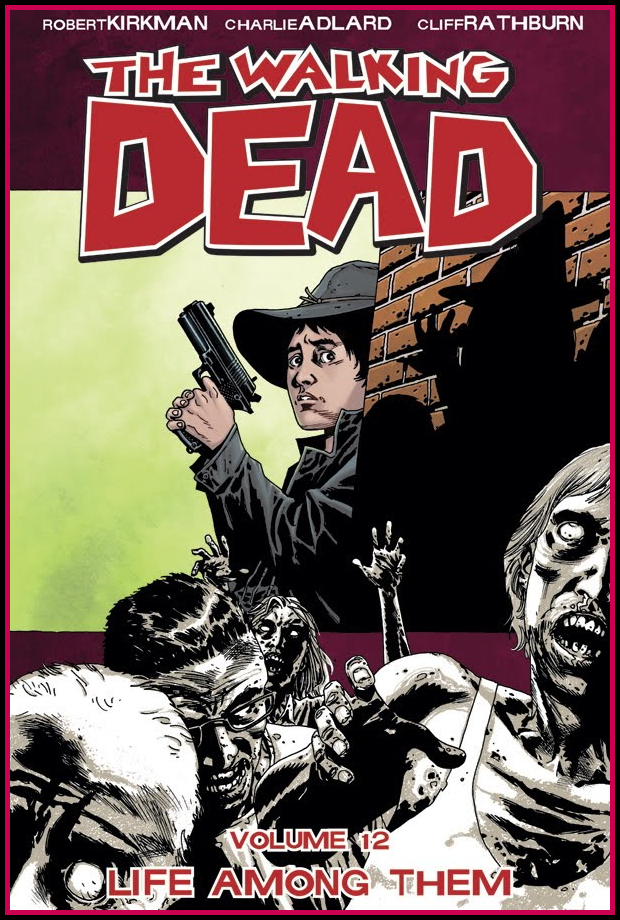
“Life Among Them” sees Rick and his group of survivors (now less three of its original members and picking up a new one along the way in the previous volume) finally finding a semblance of a safe haven after the travails they endured at the hands of “The Hunters”. It has been a long and deadly journey for Rick and his people. The fact that the promise of a working government they had been moving towards was actually a lie from one of the new members wasn’t too much of a surprise to loyal readers of the comic. This is a group which has had its hopes dashed bloodily over and over that any good news they see as too good to be true.

This goes for the sudden arrival of a scout party from a walled-off community which promises the group safe haven with no questions asked. Rick, who has gone through such promises from a previous safe community, sees this offer with some suspicion and this brings forth another aspect of Rick’s personality which has changed from issue 1 to this volume. He has become paranoid and mistrustful of those not in his group and offers of safety and a respite from the grueling travels of the road he sees with suspicions eyes. But they accept this invitation and find out that this safe haven couldn’t be any different from Woodbury.

What they see inside the fortified walls could pass off as a slice of their former lives. A suburban-like community where people safely walk the streets at night and their kids play ball in the yards and streets without hints of danger. Leading this community is a former Congressman who had taken the stole of leadership and keep the haven running smoothly. All he asks of Rick and his people is that they contribute in some way to help continue the community’s expansion in some way. Rick returns to what he did before the fall of civilization and patrols the streets as the town’s constable. Michonne thinks it is now safe for her to put away her sword. Even Andrea has caught the eyes of more than one of the town’s many single men. Even Abraham has pitched in to become part of the work detail whose job is to go out and find building supplies to help strengthen and expand the walls.

All seems to be working as it should with everyone safe. The first sign that not all is what it seems is the mention of a name. A person who helped organized the building of the walls, but who seems to have become “HE WHO MUST NOT BE NAMED” to everyone Rick and his group meets inside the haven. The town’s leader also seems to hold secrets of his own. Rick senses the dark undercurrents permeating the town’s vibe and in a sequence right at the end of the volume we see just how damaged Rick has become since we first meet him in issue 1.

While the volume doesn’t go heavy on the zombie action it does a great job in setting up what could be another major story-arc coming in the subsequent volumes. Will Rick and his people learn the secrets the town has been keeping from them? Will Rick become what he despises the most in trying to keep his son and his group safe from the dangers of the outside and what he perceives as dangers inside as well? This volume is almost the calm before another shitstorm about to hit the group and this time will the butcher’s bill be as large as the one which was tallied in the end of the 8th volume.

Review: The Walking Dead Volume 11 (by Robert Kirkman)


[Some Spoilers Within]

There’s always been one constant in Robert Kirkman’s award-winning and fan favorite comic book series for Image Comics. The Walking Dead is not all about the zombies which dominate the background and always present an ever-looming danger to the survivors. No, the series has always been about the characters of the survivors and how they’ve had to cope with the apocalyptic setting that’s turned their world upside down. While the ever-present danger of the zombies have inflicted on Rick Grimes and his band of survivors their fair share of casualties it always falls to other human survivors to take the greatest toll on everyone.

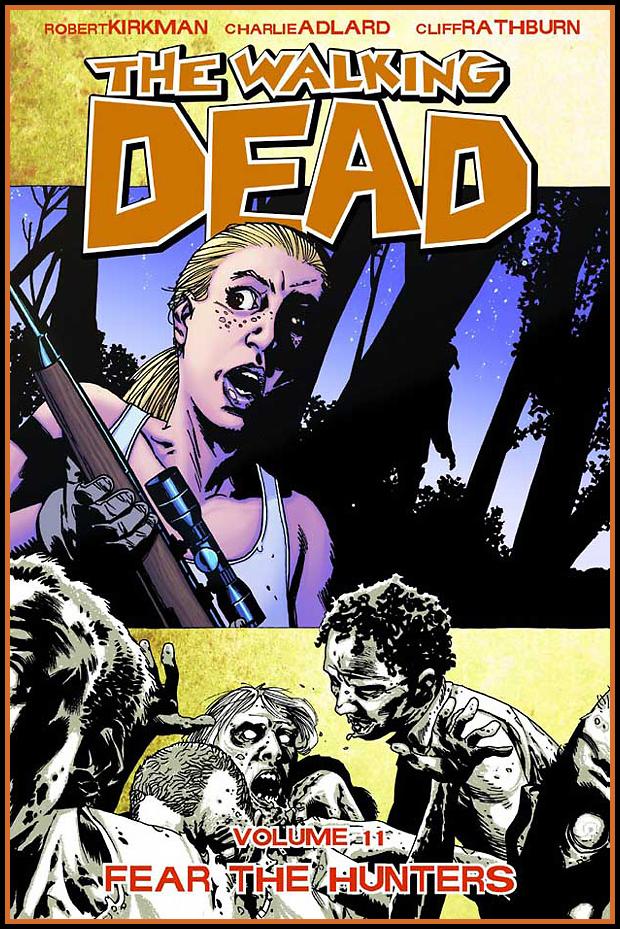
Volume 11 of The Walking Dead has been titled “Fear the Hunters” and that is quite an apt title to the story-arc which dominates this volume. Collecting issues 61 thru 66, this volume brings the danger of other humans to the forefront. We’ve spent the last two volumes dealing with the ramifications and after-effects of the Governor’s attack on the prison and the subsequent fleeing of Rick and those who remain in his group. We’ve seen how the loss in life has finally taken enough of a toll on Rick that it’s started to manifest itself and he’s not sure how to deal with it. His son Carl has also shown that he’s had to grow up fast in this new world. While it’s definitely shown him to be a hardened survivor it has also shown how humanity and innocence has  no place in this new world. Either one grew up fast to deal with the problem or become victim to it. Carl has chosen to be the former even if it means he’s trodding down a dark path his own father has tried to shield him from.

“Fear the Hunters” will end up taking several more original members from Rick’s group. All three deaths had a sense of inevitability to them but now they died still doesn’t diminish the shock of Kirkman once again proving that no one’s truly safe. The fact that Carl becoming used to all the violence around him was directly responsible for one of the deaths remains one of the most shocking sequences in a series full of them. It definitely brings up a possibility that father and son may one day come at crossroads when something will put them at odds with each other.

The one other thing about this volume which brings the darker side of humanity to the forefront is the aforementioned “Hunters” themselves. A band of human survivors whose will to survive has taken them past the precipice of whatever human decency they had left and brought them to a place which has made them worse than the zombies around them. They harass, terrorize and inflict damage on Rick and his people to the point that Rick’s own retribution once the two groups have finally come face-to-face for the final time will probably shock some readers. Readers who may still believe that decency and humanity still has a place in a world which has none.

As I read this story-arc I came to the conclusion that if I was in Rick’s shoes I don’t know if I would’ve done what he did. To say that his actions (though only hinted at in the illustrations) went beyond the pale would be an understatement. But I did understand why he did what he did and also why those who went with him either assisted or didn’t stop it. I feel like this story-arc has finally shown how those who have disapproved of Rick’s methods to keep the group alive have finally come to their very own conclusion that he has taken it upon himself to do some evil to protect the group and that it has taken a toll on him. The rest are now willing to take their share of this if just to help relieve Rick of some of the guilt he carries with him for his past actions.

This volume has been one of the strongest one in the series and shows why Frank Darabont and Gale Anne Hurd fell in love with the series to adapt it for tv. The Walking Dead is all about the characters and has tapped into a rich source of material about how people in general deal with adversity and how some rise above it while most fail in their attempts to remain human. Rick and those with him remain on the precipice but so far has kept enough of their decency not to go over it the way the “Hunters” obviously had done so. But they remain balanced on a razor’s edge and sooner or later Rick or someone he’s close to will go over and that would make a tragic situation that readers will have to deal with whether they want it to happen or not.

Review: The Walking Dead Volume 10 (by Robert Kirkman)


[Some Spoilers Within]

The Walking Dead is only a couple weeks away from premiering as an AMC tv series. It is an event that legions of the comic book series’ fans have been awaiting for years and counting. The fact that I am now reviewing the tenth volume in the series’ collected trades is testament to the title’s continuing and growing popularity with readers. The fifty-four issues which precedes the six collected in this volume has seen main protagonist Rick Grimes and the group of survivors he’s leading through the zombie apocalypse go through triumphs, heartache and the inevitable purging from their perceived safety behind prison walls. This tenth collection will continue to show how Rick and those in his group who have survived have changed and sometimes not for the better.

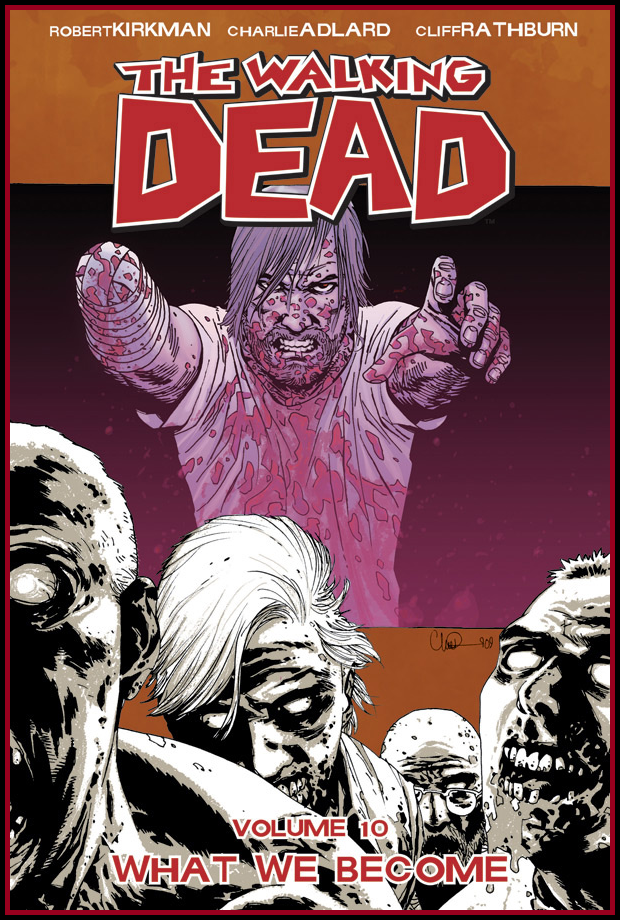
“What We Become” is an apt title for this tenth volume. Rick has always been the de facto leader of his group even when he’s tried to give the responsibility to someone else to handle. In this volume we see how the events which led to the group escaping the destruction of their prison haven has affected not just Rick mentally but also his son Carl and some of the surviving members of the group. Dale, who has been a staunch ally of Rick’s in their journey through the zombie wasteland, has become a bitter shell of his former self as he sees each and every opportunity for him, Andrea and the twin boys to find a stable, safe haven come to naught and he sees Rick as the one to blame.

It doesn’t help Rick and his original group that the new additions which joined them in the last volume (Sgt. Abe Ford, Rosita Espinoza and Eugene Porter) have added to some of the internal tension in the group. Rick and Abe do not get on the right foot as they travel together towards a new destination. A destination provided by Eugene who says he’s been in contact with surviving elements of the U.S. government in Washington, D.C. It’s a destination that not everyone believes in, but it’s a goal nonetheless.

It’s during a side mission conducted by Rick, Carl and Abe that we see the depths Rick will go to protect his son when they’re ambushed by bandits during a routine stop to rest. We don’t see exactly what Rick does to one of the bandits who tried to go all Catholic priest-like on Carl, but we see from the reaction shots from Carl and the sounds made that it wasn’t pretty and civilized. It’s the aftermath of this event that Rick and Abe begin to bond somewhat and finally understand why they’ve done some of the awful things they have had to do since the fall of civilization.

For a volume that was all about exploring the damage the zombie apocalypse has done to those left behind it was actually pretty action-packed, but it wasn’t done so for the sake of putting action and gore on the pages. These sequences helped move the story along. It did help keep the volume from being just all about exposition (I know something detractors will continue to point out about Kirkman’s writing).

“What We Become” also bring back a past characters readers haven’t seen since the first couple issues of the series and seeing what the passing year or so since Rick last left him was very heartwrenching. This were characters fans have been requesting Kirkman to bring back. They wanted to see how they’ve been doing in their own attempt to survive. What Kirkman has delivered probably wasn’t what many were expecting and it definitely took some steel pairs to do what he did.

The volume ends with the group up one more survivor with their journey to D.C. still many days or weeks left in it. For those who have been following the series since the beginning and still do then the next volume will bring in a new story-arc which Kirkman just calls “The Hunters”.

Until then grab your rifle and machete, bar the doors and windows, hoard the food and water and definitely destroy the stairs behind you.

Review: The Walking Dead Volume 9 (by Robert Kirkman)


[Some Spoilers Within]

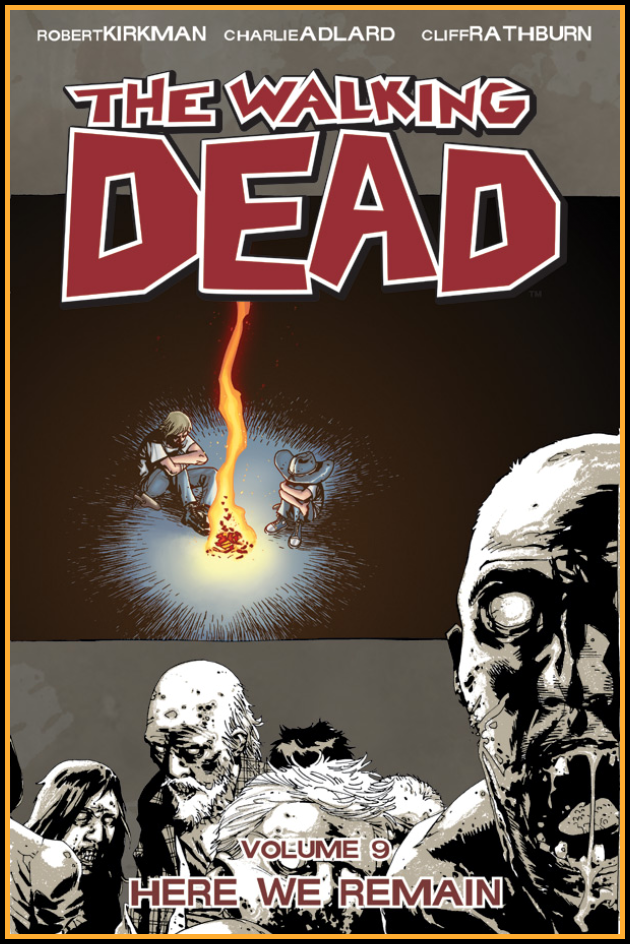
Volume 9 of Robert Kirkman’s critically-acclaimed and award-winning comic book series continues right after the bloodbath of Volume 8’s “Made to Suffer”. The last volume ended what had been a major story-arc which had lasted for almost over two years. It changed the series in ways that would be felt for years to come (Kirkman has stated that he plans to continue writing The Walking Dead for as long as there’s more stories to tell and he sees countless more to come). This follow-up volume, aptly titled “Here We Remain”, look at the aftermath of the events in the battle for the prison.

The group led by series’ protagonist Rick Grimes have gotten smaller as Kirkman made good at his statements in the past that deaths would come to the group unexpectedly and take those fans have grown to like. While Rick Grimes still remains (so far, the story remains in his point-of-view and his telling there’s a sense that even he doesn’t seem exempt from being killed off in the future) and others of the group gradually come back with him throughout the volume the sense of sadness for those who didn’t make it after the Woodsbury attack on the prison hang over the whole story-arc.

We see how the zombie apocalypse and all the events Rick has had to go through to this point has finally affected his mental state to some degree. While he hasn’t gone completely over the deep end, the scenes with Rick and an unplugged phone found in an abandoned home hits home very hard. Here’s a man who tried to do what he thought was best not just for his family and the rest of the group he led, but also tried to keep a semblance of humanity while doing so. Doubts and regrets about his decision begin to creep in and the unplugged phone becomes a focus for Rick to air out his internal struggles with the voice in the other end. This new side to Rick definitely feel like a logical progression for the one character in the whole series who has suffered the most while at the same time trying to keep an outward face of calmness and leadership.

This volume also gives Rick’s son Carl some time on his own (on his own to a certain degree) time to show how much he also has changed his he was introduced in the first volume. While he still acts like the kid that he is there’s definite signs that he has changed to the situation the world is in now. At time in this volume Carl sounds way older than his age and that has bothered some fans and critics of the series. While in any other type of situation that would be a criticism that would be a deal-breaker for me in this case I say it actually shows just how traumatizing the world has become to even the younger set. One either gives up and live in a fantasy world inside their mind or grow up fast in order to survive. It looks like Carl has chosen the latter.

Some critics of the book has pointed out that Kirkman’s handle on dialogue is actually not that great. I wouldn’t disagree as he’s prone to too much exposition, but the fact that he still pulls in the reader with what he’s writing tells me that he’s found a way to tap into what interests the reader while keeping his vision for the book alive. With the book already in its 12 volume (should get to that 12th one right before the premiere of the first season tv series) I can’t see Kirkman changing his writing style anytime soon or if he ever will. This is the path he has chosen on how to write

Review: The Walking Dead Volume 8 (by Robert Kirkman)


[Some Spoilers Within]

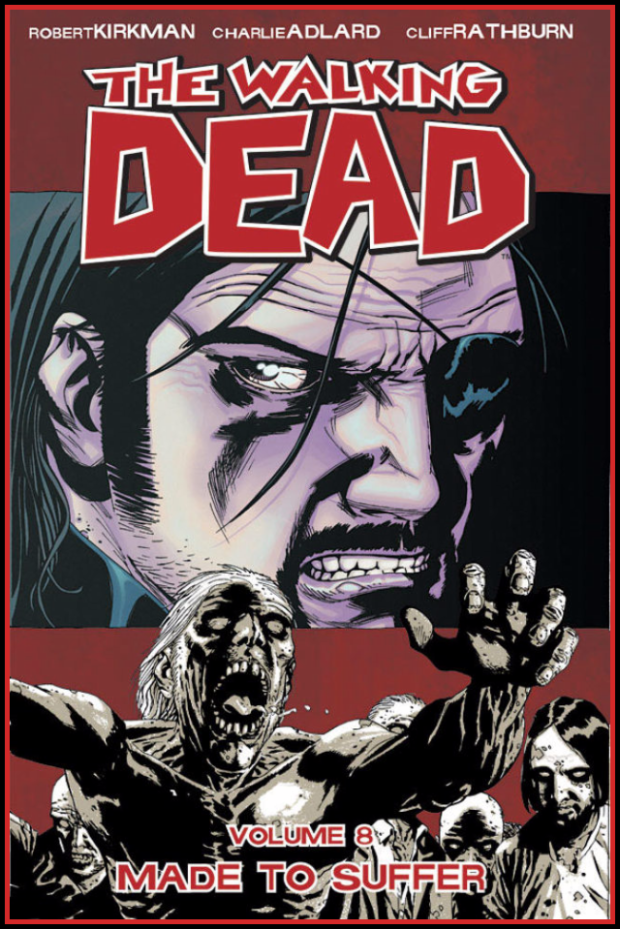
Robert Kirkman ended The Walking Dead‘s seventh volume in what I could only say as one major cliffhanger. The seventh volume of this series definitely lived up to it’s title of “The Calm Before” as the series took a breather from all the stress which built and built in the past two collections. Now that calm has now been shattered with this eight volume aptly titled, “Made to Suffer”.

A title which puts Rick and his band of survivors through its paces. The Woodbury group definitely do their best to make Rick and his people suffer for what they see as transgressions against their walled town. While most of the invading group do so in the belief that they’re protecting Woodbury from a band of bloodthirsty killers there’s a few who follow the lead of Woodbury’s tyrannical and sociopathic Governor. A man who has spun out lies about Rick and his group to his people to get them in the proper mindset to take down the prison.

The volume does a brief flashback of how the Governor and his trust inner cirle were able to find the prison. It also explains how he was able to survive the ministrations of Michonne during the prison group’s escape from Woodbury. Michonne really put the screws on the Governor for the rape and torture he had inflicted on her. To say that Michonne went medieval on the Governor would be a major understatement.

This volume would end like most of the best zombie films and stories before it. Two groups determined to fight to the death to keep what theirs or take what they want. Casualties abound on both sides as Kirkman almost wipes the slate clean as he prepares to move the series into a new uncertain narrative path. Characters fans have come to love meet their end while others who have worn out their welcome in some way survive to live another day. The last few panels of “Made to Suffer” were shocking and heartbreaking.

I’ve read from fan feedback of how they hated Kirkman for he did, but at the same time became even bigger fans of the series for its unpredictability. Kirkman would pull no punches in how he makes the characters suffer throughout the six-issues of this volume. He definitely backs up his works when he said that this story-arc would leave no one safe from his killing pen. This volume would break some readers in that they may not want to continue reading the series after the punch to gut of the last issue in this volume. Others will be just as determined to stick it out to see how the remnants of the original group continue on with what and who they’ve lost.

One thing that I am sure of is that this eight collected volume of the series will not be the usual and same old, same old. After reading this book one may just end up hating and admiring Kirkman in equal amounts for what he has done.

Review: The Walking Dead Volume 7 (by Robert Kirkman)


[Some Spoilers Within]

The last volume of The Walking Dead continued the “Woodbury” story arc which began in volume 5. This latest volume sees Rick and his group back in their prison home with the axe of Woodbury and the Governor hanging over their heads throughout the six issues which encompassed volume 7. A volume with the title of “The Calm Before” definitely doesn’t know the meaning of the term.

While the travails of Rick, Glenn and Michonne during their stay at Woodbury would be horrific in every sense of the word the calm which comes after their return to the prison is nothing but. The group gains a new member in the form of Alice who happened to be Woodbury’s former nurse/doctor-in-training. Her inclusion into the group becomes a boon for everyone in the prison especially for Lori and Dale. While her addition to the group has been mostly beneficial the group does suffer a loss of one of their first members due to a decision made by the latest member. I won’t disclose exactly who and what happened to this original member of the group, but her loss would be felt by everyone.

This volume brings back some of the soap opera elements which dominated the fourth volume, but not to the level that would annoy readers who had gotten tired of all the internal conflicts and bickerings. There’s still tension between certain individuals, but they’ve kept things civil and have even begun attempts to fix the bridges burned by those very conflicts.

This calm before the storm also sees the group prepare for the inevitable attack by the Woodbury group. Though knowing that they’re outgunned and outmanned they still draw first blood during one of the forays to find more supplies. This gives the group some hope for the coming storm to the point that the prison and the group return to a semblance of normalcy. A normalcy that doesn’t last long as the very last panel ends the volume on a major cliffhanger worthy of some of the best tv drama series.