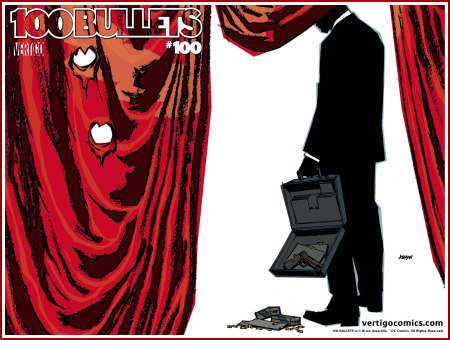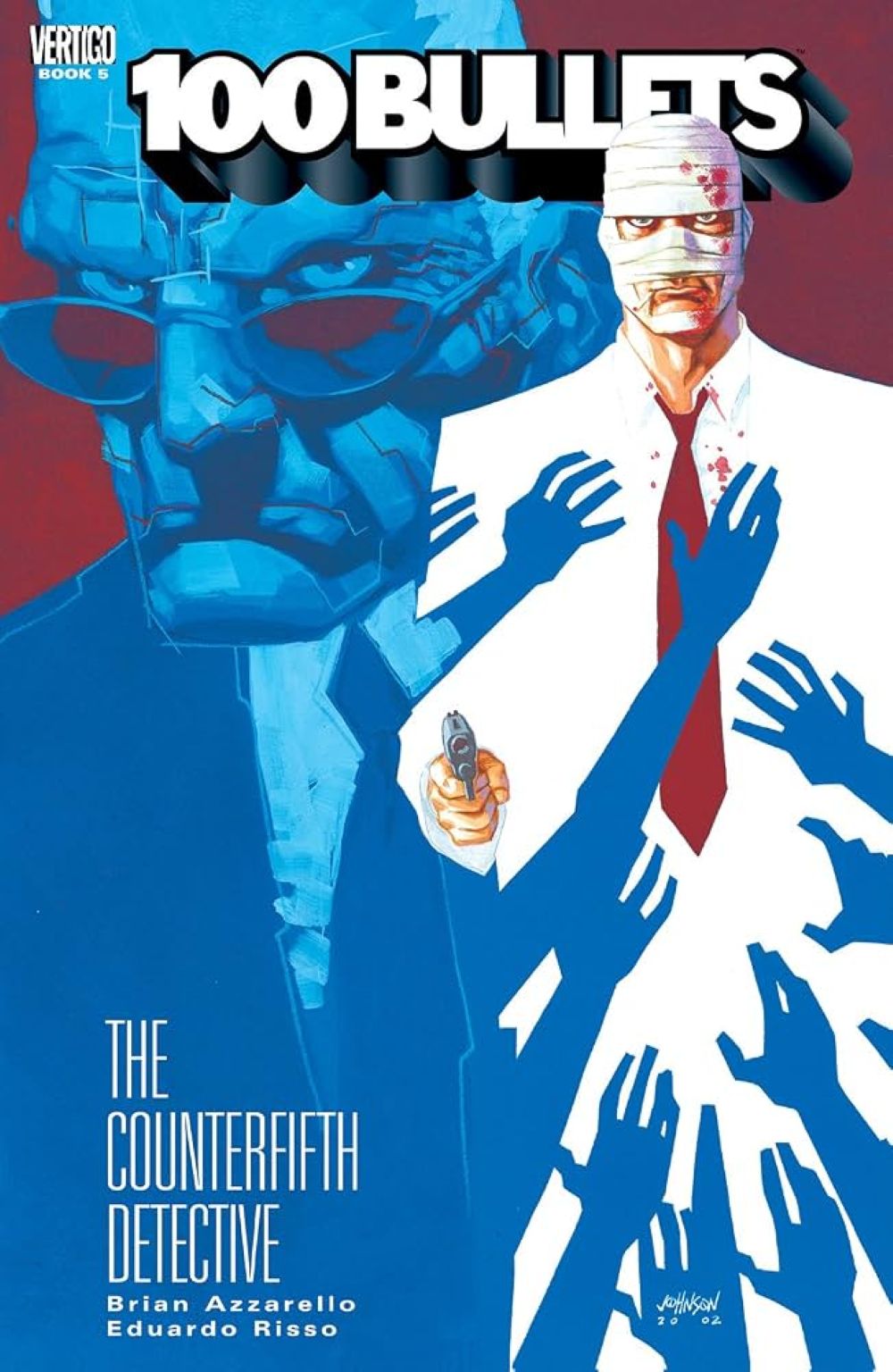
Review: 100 Bullets Vol. 2 – Split Second Chance


“Asking questions is free… but the answers—they can cost you your life.” — Agent Graves

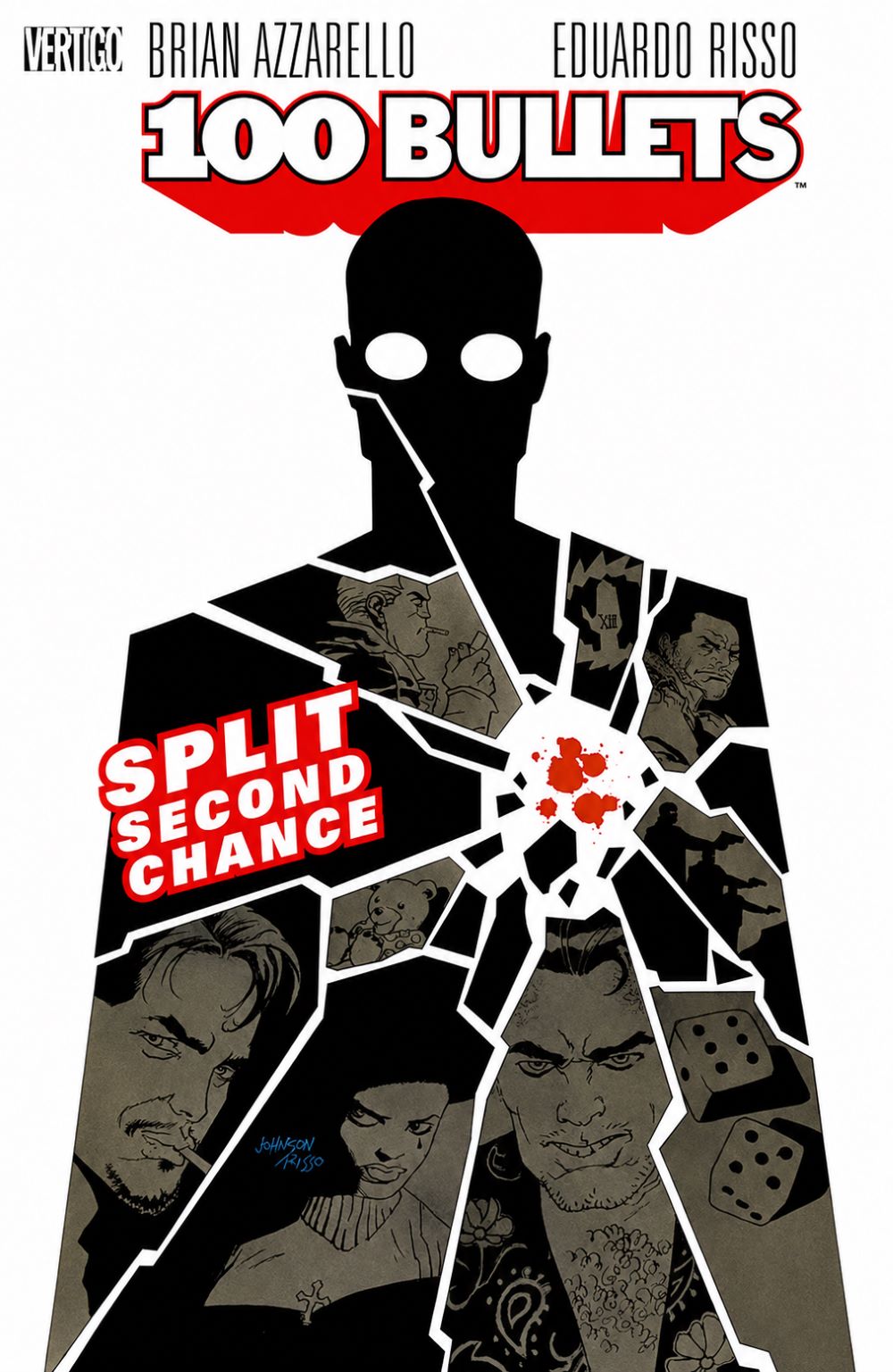
In the first volume of 100 Bullets, Brian Azzarello and Eduardo Risso laid down a stunning thesis for their magnum opus: a world where the wronged are offered the ultimate temptation of consequence-free vengeance. That volume, First Shot, Last Call, functioned as a potent thematic introduction, establishing the series’ central moral quandary through self-contained stories. With Split Second Chance, the creative team makes a crucial pivot. This collection, gathering issues #6-14, successfully preserves the gritty, anthology-style explorations of revenge while beginning to weave a much larger, more intricate conspiracy that feels poised to consume everything in its path. If the first book was a promise, this second volume is the first, gripping step toward its fulfillment, even if it occasionally stumbles under the weight of its own ambition.

The volume opens with “Short Con, Long Odds,” a two-part story that initially feels like familiar territory. We are introduced to Chucky, a small-time gambler fresh out of prison, who is approached by Agent Graves. As before, Graves offers incontrovertible proof of a betrayal and the tools for retribution—this time against Chucky’s childhood friend, Pony, who has seemingly built a successful gambling empire on his partner’s misery. What makes this story stand out is its focus on the petty, desperate world of gambling. Risso’s art is especially potent here, capturing the sad, seedy underbelly of street-corner hustles and back-alley games. The story’s conclusion, which unfolds off-panel, is a masterclass in implication, leaving the reader to piece together the grim aftermath. It is a solid entry that reinforces the series’ core premise, but its real purpose becomes clear retroactively as the larger plot comes into focus.

This is the volume where the series’ title begins to earn its meaning. Agent Graves is no longer just a cipher; he is revealed to be a man with a history, and Split Second Chance doles out those histories with deliberate, tantalizing precision. The most significant revelation comes in “Day, Hour, Minute… Man,” where we learn about The Trust and the enigmatic Minutemen. This arc peels back the curtain, suggesting that Graves and his associate, Mr. Shepherd, were once part of this shadowy organization before faking their deaths to escape its clutches. The introduction of Lono, the chilling hitman from the first volume’s “The Samurai,” becomes far more significant. His meeting with Graves is charged with a dangerous, unspoken history, confirming that Graves’s “gifts” are a part of a larger, more personal agenda. The plot is thickening nicely, and the promise of a sprawling, interconnected narrative starts to feel exhilaratingly real.

However, it is in the standalone stories that Azzarello’s writing truly shines, showcasing his ability to extract raw, human emotion from his noir framework. The standout is undoubtedly “Heartbreak, Sunnyside Up,” a single-issue story that follows a hard-working diner waitress named Rose. Rose’s life is a grinding cycle of poverty and worry for her runaway daughter. When Agent Graves appears, he doesn’t just offer her a gun and a target; he delivers a slow, agonizing explanation of how her daughter became a heroin-addicted prostitute after being molested by her own father. It is a moment of pure, unflinching tragedy. The brilliance of the story lies not in the revenge itself, but in the horror of the revelation. Azzarello forces the reader and the character to sit with the unbearable truth, making the subsequent act of violence feel less like empowerment and more like a desperate, last resort. It serves as a powerful reminder that “sometimes evil is closer to home than we think.”

“The Right Ear, Left in the Cold” offers a fascinating twist on the formula by introducing Cole Burns, a deadly assassin living undercover as a neighborhood ice cream man. This story introduces the concept of the “sleeper agent,” a tool that Graves and Shepherd can “reactivate” for their own ends. Cole is a more capable and cold-blooded protagonist than the average victim, which makes his story less about moral choice and more about professional obligation. Yet, it deepens the mythology, showing that Graves has an entire network of operatives at his disposal, further blurring the line between righteous avenger and puppet master. His ultimate task of retrieving the briefcase from Dizzy Cordova in the final arc, “Parlez Kung Vous,” masterfully ties this new plot thread back to the series’ very first protagonist.

Throughout it all, Eduardo Risso’s artwork remains the series’ undeniable and consistent anchor. His style, which perfectly captured the cold, deliberate mood in the first volume, continues to excel in Split Second Chance. Risso’s panels have a cinematic rhythm; his compositions are economical yet expressive, using deep shadows and stark contrasts to build a world that feels dangerous and morally unstable. He excels at conveying unspoken tension and character attitude through posture and expression, a vital skill for a noir story where much is left unsaid. While some readers may find the depiction of female characters hyper-sexualized, Risso and colorist Grant Goleash unquestionably create a visual language that is sleek, uneasy, and unmistakably noir. The story’s pace may occasionally lag, but the art is always arresting.

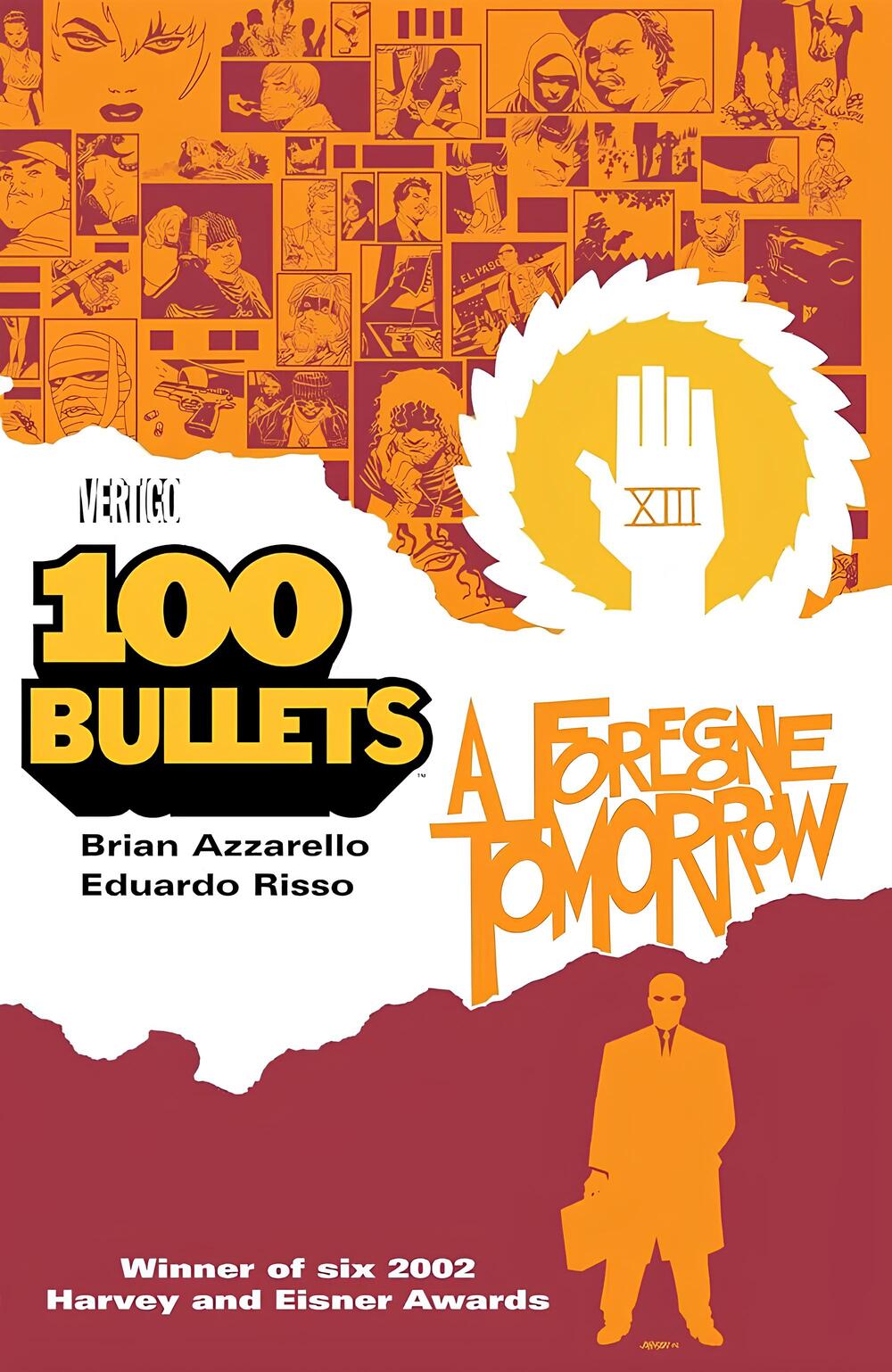
100 Bullets: Split Second Chance is a more challenging and rewarding book than its predecessor. It sacrifices some of the first volume’s focus and self-contained impact to lay the foundation for something much grander. This is the volume where the series starts to earn its reputation for dense, interwoven plotting. It is a work of deliberate, intricate world-building that asks the reader to be patient and pay close attention. It is not without its flaws—some stories feel more like necessary setups than complete narratives, and the unrelentingly grim tone can be exhausting. Yet, the moments of genuine human tragedy, like Rose’s story, and the thrilling expansion of the central mystery make Split Second Chance an essential step in the journey. It confidently expands the world of 100 Bullets, deepening its mythology and proving that this is a saga built for the long haul.

100 Bullets Volume Reviews
Guilty Pleasure No. 104: The Parker Series (by Richard Stark)


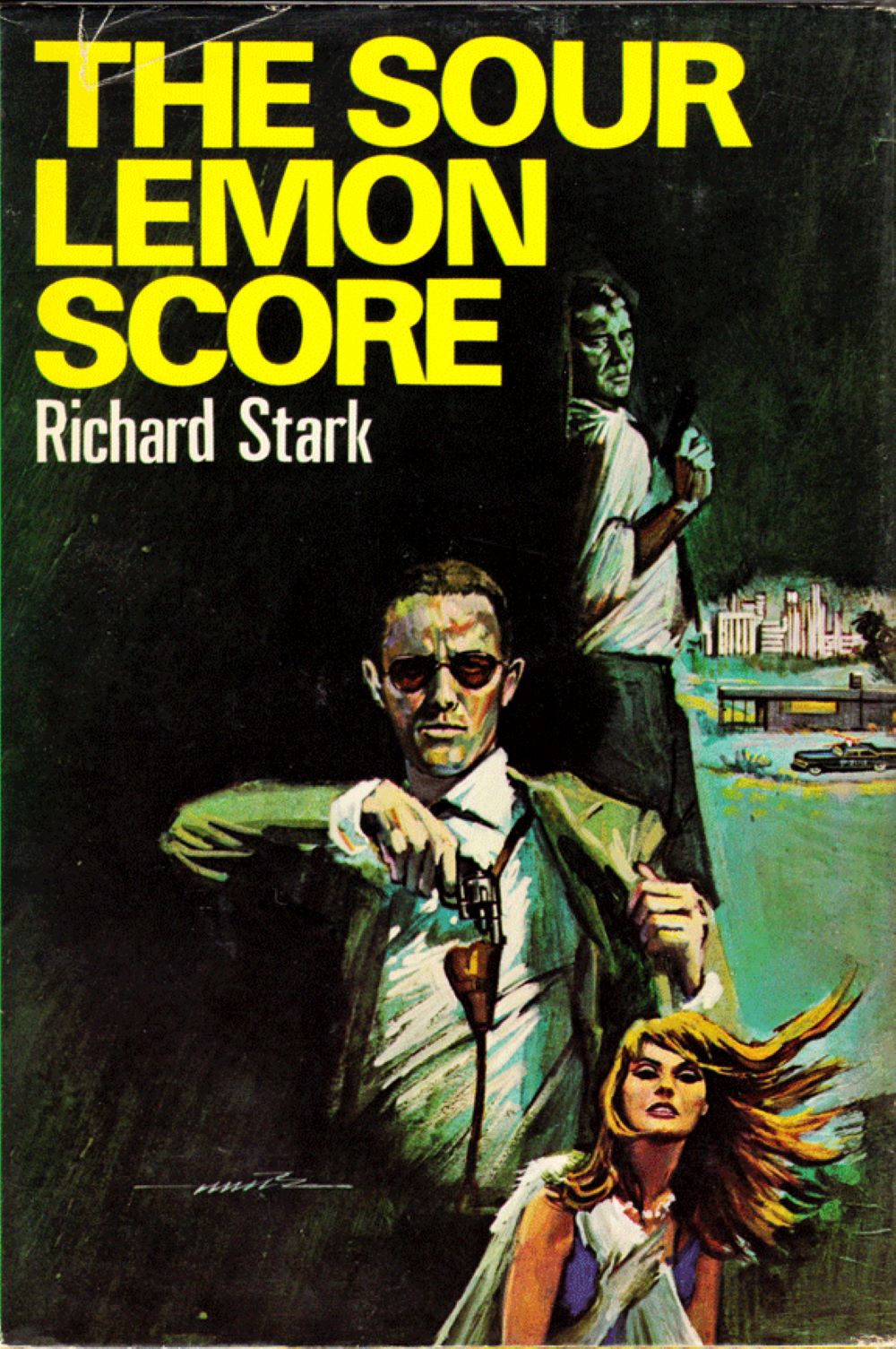
Richard Stark’s Parker novels are the kind of crime fiction that feel like they’re bad for you in all the right ways: lean, mean, amoral heist stories that work as both clinical studies of professional thieves and utterly shameless page‑turners. Taken across the 24-book run, from The Hunter in 1962 through Dirty Money in 2008, the series is remarkably consistent, yet also strange and jagged enough that you never quite relax into it. Reading Parker is like chain‑smoking noir paperbacks—self‑aware guilty pleasure with just enough bite and bleakness that you can pretend it’s good for you.

The basic premise barely changes, and that’s part of the appeal. Parker is a professional robber who prefers big, high‑yield scores: armored cars, payrolls, entire towns temporarily cut off from the world. He’s not an antihero in the modern prestige‑TV sense so much as a working stiff whose job happens to be violent crime, a man who approaches robbery with the same cold professionalism most people reserve for accounting. In The Hunter, the novel that kicks everything off, he’s double‑crossed by his wife and partner, shot, and left for dead, and the story is essentially one long act of payback as he claws his way back to New York and into the orbit of the Outfit, the crime syndicate that ultimately ends up with his money. That mix of stripped‑down revenge and procedural detail sets the tone for almost everything that follows, even when the later books drift away from personal vendetta into cleaner, job‑of‑the‑week capers.

What makes the series work—what makes it weirdly addictive—is how mercilessly Donald Westlake (under the Stark pseudonym) commits to Parker as an almost inhuman constant in a chaotic world. He’s often described by fans as a kind of force of nature, and that tracks with how he moves through these books: stoic, unadorned, perpetually assessing angles, crew members, and exit routes. Traditional redeeming qualities—sentimentality, guilt, even much curiosity about other people—just aren’t there; what you get instead is a kind of brutal efficiency that, perversely, becomes its own charisma. The guilty‑pleasure element kicks in because the novels quietly invite you to enjoy watching a ruthless pro outthink and outmuscle everyone in his path, even though the moral framework is closer to nihilism than romantic outlaw fantasy. There’s pleasure in the competence and in the clean lines of the plotting, even as you’re aware you’re rooting for someone who treats human beings like moving parts in a job.

Formally, the books have a recognizable skeleton that Stark keeps returning to and subtly bending. Most of the novels are divided into four sections: first, Parker’s point of view as he’s planning or executing a job; second, a continuation that usually ends with a betrayal or reversal; third, a shift into the perspective of whoever is double‑crossing or hunting him; and finally, a return to Parker as he fixes what’s gone wrong and settles accounts. This architecture does a couple things. It gives the series a strong procedural rhythm that fans can relax into—you know there will be a job, a screw‑up, and a payback—but it also keeps the tension high by delaying gratification until that fourth‑quarter rampage. You get both the chess match and the inevitable explosion. It’s formulaic in the same way a great blues progression is formulaic: you come for the structure, you stay for the particular variations each time.

The prose is another major part of the series’ guilty‑pleasure charge. Westlake pares the language down to something close to bare steel; the description is sparse, the sentences short, the dialogue practical and unfussy. Reviewers frequently point to how there’s “not a wasted word,” and that seems right: you feel like every line is there to move money, people, or bullets into position. In an age where a lot of thriller writing leans on verbosity and constant internal monologue, Parker’s tight focus can feel almost cleansing. At the same time, that same spareness means the violence can land with an extra jolt—there’s no cushioning around it, no moral throat‑clearing, just the fact of what Parker decides to do when someone gets in his way.

Across the series, the quality is not perfectly even, and that’s where a fair, balanced take has to admit some dips. The early stretch—The HunterThe Man with the Getaway FaceThe OutfitThe Score, and The Jugger—has a raw momentum and a sense of discovery as Westlake works out how far he can push a protagonist this cold. Later titles, especially in the first run up to Butcher’s Moon, often expand the canvas, giving more time to side characters and to elaborate, multi‑phase heists. Some readers and critics consider The Score, with its audacious robbery of an entire mining town, a high‑water mark; others see it as simply a particularly well‑executed entry in a series where the baseline is already high. Then, after the long break between the 1970s and the 1990s revival with Comeback and Backflash, you can feel Westlake adjusting the formula to a slightly different era, with Parker still fundamentally the same but the world around him updated. Those later books are often solid and occasionally excellent, but the sheer shock of the early ones is hard to recapture.

From a modern perspective, one of the more interesting tensions in reading Parker is the question of identification. The books are not satire, and they aren’t quite celebrations; they’re closer to case files written with a strong sense of style. The theme that emerges most strongly is the amoral logic of criminal enterprise: loyalty is provisional, greed is constant, and institutions—whether the Outfit or banks or small‑town cops—are just different power systems to be exploited. There’s no sentimental criminal code here, only practical rules about not talking, not freelancing, and not getting sloppy. That worldview can be bracing and, frankly, kind of fun to inhabit for a few hundred pages at a time, particularly because Westlake doesn’t ask you to endorse it; he just drops you in and lets you watch how it operates.

At the same time, that detachment and hardboiled minimalism can turn some readers off. If you need emotional growth, redemptive arcs, or a sense that the universe punishes the wicked, Parker is going to feel either empty or actively hostile to your expectations. The closest the series comes to sentiment is in Parker’s occasional, grudging respect for other professionals who do their job well—safecrackers, drivers, heist planners—and even that is strictly bounded by the demands of survival and profit. Women, in particular, can feel underwritten or instrumental in some entries, especially the earlier books, reflecting both the genre conventions of the time and the series’ focus on Parker’s narrow, self‑interested worldview. It’s possible to argue that this is part of the point—these are Parker’s stories, and he does not care about anybody’s inner life—but it does mean the books can feel airless if you’re reading a bunch in a row.

Still, that’s the strange magic of Parker: for all the limitations and repetitions, you finish one and almost immediately think about the next job, the next crew, the next betrayal. The series taps into a very specific pleasure center: watching a ruthlessly competent person navigate systems stacked with corruption and stupidity, using only planning, discipline, and a willingness to hit back harder than anyone expects. It’s not aspirational, and it’s not comforting, but it is undeniably gripping. If you can accept an unapologetically amoral center and you have a taste for stripped‑down crime fiction with a strong procedural spine, Parker is easy to devour and just as easy to feel a little guilty about enjoying as much as you do.

Previous Guilty Pleasures

  1. Half-Baked
  2. Save The Last Dance
  3. Every Rose Has Its Thorns
  4. The Jeremy Kyle Show
  5. Invasion USA
  6. The Golden Child
  7. Final Destination 2
  8. Paparazzi
  9. The Principal
  10. The Substitute
  11. Terror In The Family
  12. Pandorum
  13. Lambada
  14. Fear
  15. Cocktail
  16. Keep Off The Grass
  17. Girls, Girls, Girls
  18. Class
  19. Tart
  20. King Kong vs. Godzilla
  21. Hawk the Slayer
  22. Battle Beyond the Stars
  23. Meridian
  24. Walk of Shame
  25. From Justin To Kelly
  26. Project Greenlight
  27. Sex Decoy: Love Stings
  28. Swimfan
  29. On the Line
  30. Wolfen
  31. Hail Caesar!
  32. It’s So Cold In The D
  33. In the Mix
  34. Healed By Grace
  35. Valley of the Dolls
  36. The Legend of Billie Jean
  37. Death Wish
  38. Shipping Wars
  39. Ghost Whisperer
  40. Parking Wars
  41. The Dead Are After Me
  42. Harper’s Island
  43. The Resurrection of Gavin Stone
  44. Paranormal State
  45. Utopia
  46. Bar Rescue
  47. The Powers of Matthew Star
  48. Spiker
  49. Heavenly Bodies
  50. Maid in Manhattan
  51. Rage and Honor
  52. Saved By The Bell 3. 21 “No Hope With Dope”
  53. Happy Gilmore
  54. Solarbabies
  55. The Dawn of Correction
  56. Once You Understand
  57. The Voyeurs 
  58. Robot Jox
  59. Teen Wolf
  60. The Running Man
  61. Double Dragon
  62. Backtrack
  63. Julie and Jack
  64. Karate Warrior
  65. Invaders From Mars
  66. Cloverfield
  67. Aerobicide 
  68. Blood Harvest
  69. Shocking Dark
  70. Face The Truth
  71. Submerged
  72. The Canyons
  73. Days of Thunder
  74. Van Helsing
  75. The Night Comes for Us
  76. Code of Silence
  77. Captain Ron
  78. Armageddon
  79. Kate’s Secret
  80. Point Break
  81. The Replacements
  82. The Shadow
  83. Meteor
  84. Last Action Hero
  85. Attack of the Killer Tomatoes
  86. The Horror at 37,000 Feet
  87. The ‘Burbs
  88. Lifeforce
  89. Highschool of the Dead
  90. Ice Station Zebra
  91. No One Lives
  92. Brewster’s Millions
  93. Porky’s
  94. Revenge of the Nerds
  95. The Delta Force
  96. The Hidden
  97. Roller Boogie
  98. Raw Deal
  99. Death Merchant Series
  100. Ski Patrol
  101. The Executioner Series
  102. The Destroyer Series
  103. Private Teacher

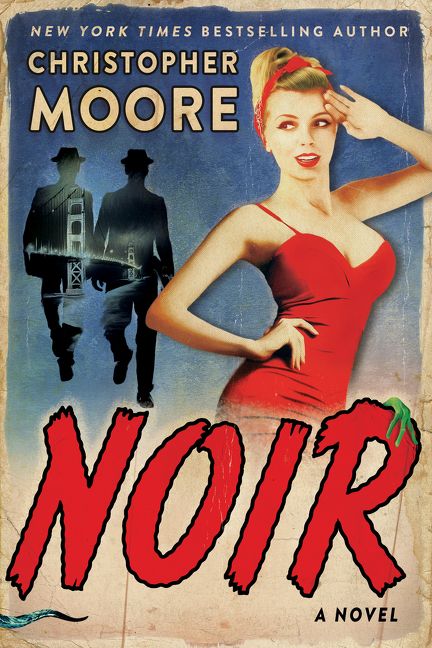
Book Review: NOIR by Christopher Moore (William Morrow 2018)


gary loggins's avatarcracked rear viewer

In between everything else I do, I read about a book a week, mainly mystery fiction. Current favorites include James Lee Burke, Lee Child, Michael Connelly, Janet Evanovich, and John Sandford, all with their own unique styles, and all masters of the genre. But when I need a good laugh, I pick up Christopher Moore. I first became aware of Moore’s work with his brilliant 2002 novel LAMB, OR THE GOSPEL ACCORDING TO BIFF, CHRIST’S CHILDHOOD PAL, an irreverent satire narrated by Jesus’s good buddy Biff that’s as outrageous as it sounds, and sinfully funny to boot.

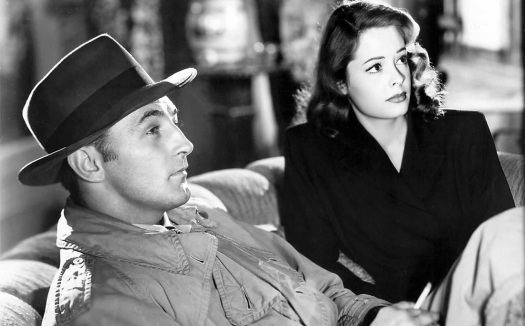
Robert Mitchum and Jane Greer in “Out of the Past” (RKO 1947) have nothing on Sammy and The Cheese!

This time around, Moore goes from taking on the Scriptures to the hard-boiled world of Raymond Chandler and Dashiell Hammett. The novel is set in 1947 San Francisco, a very good year for noir

View original post 303 more words

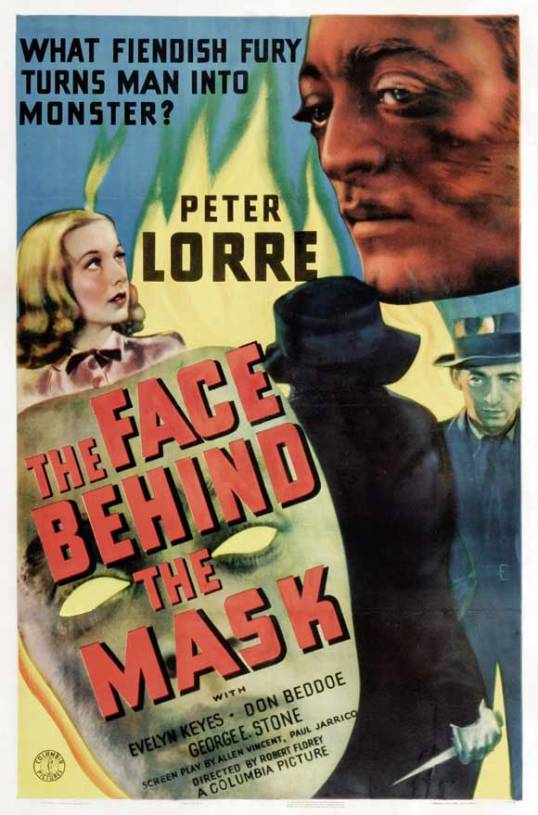
Revisiting an Old Fiend: THE FACE BEHIND THE MASK


the-face-behind-the-mask-1941-dvd-peter-lorre-evelyn-keyes-1189-p

Recently I switched from cable to DirecTV. As part of my package, I’ve officially joined the DVR generation. This is like being in heaven for an old movie buff like myself. Now I can record films of interest no matter what time they’re on and enjoy them at my leisure. Especially those older black & white gems that air mainly in the wee-wee hours. I can catch up with some classics I’ve only read about over the years but never had the opportunity to view, and those I only have vague memories of watching decades ago on snowy looking UHF channels.

THE FACE BEHIND THE MASK falls into the latter category. This 1941 Columbia film was directed by the criminally underrated Frenchman Robert Florey and stars everybody’s favorite madman Peter Lorre. The movie’s a very early example of 40s film noir, as was another Lorre vehicle, 1940’s  STRANGER ON THE THIRD FLOOR.

Lorre plays Janos Szabo, a newly arrived Hungarian immigrant watchmaker, come to America to find work and live the American dream. He’s befriended by police Lt. O’Hara (Don Beddoe), who buys the naïve newcomer a five dollar lunch and directs him to the Excelsior Palace, a low rent hotel. When another border’s negligence causes the joint to go up in flames, Janos is trapped inside, and suffers a horrible disfigurement.

O’Hara feels responsible for the poor guy’s plight and writes a message on one of his calling cards for Janos to contact him when he’s released from the hospital. Now unable to find work due to his terribly scarred visage, Janos goes to the waterfront, contemplating suicide. He meets up with a petty crook named Dinky, who takes a liking to Janos. Dinky has a safe job lined up but falls ill, and asks Janos to take his place. The Hungarian, good with his hands, takes care of business, When Dinky’s former comrades Benson and Watts show up wanting to know why they weren’t in on the score, the four decide to form a crime gang, with Janos (now nicknamed Johnny) as the ringleader. A crime wave ensues, baffling the police, and putting O’Hara under pressure to end the larcenous spree quickly as possible.

Janos wants the illicit dough so he can have plastic surgery and restore his features. A rubber mask is made from his passport photo for him to wear until the doctor returns. When the doc (an uncredited cameo by Frank Reicher, KING KONG’s Captain Englehorn)  finally does see Janos, he informs him that the facial nerves have suffered too much damage, and it would take fifteen years before any progress could be made!

Disheartened, Janos leaves the doctor’s office, where he (literally) bumps into Helen Williams. Helen is blind, but she can sense the goodness still inside the scarred master criminal. Eventually, Janos comes clean to her about his face, but not his illegal activities. Helen is played by the beautiful Evelyn Keyes, best known as Scarlet O’Hara’s Younger Sister (the name of her autobiography) in GONE WITH THE WIND.

Now in love with Helen, and with plenty of money stashed away, Janos decides to leave his life of crime behind and settle down in the country. This doesn’t sit well with his former cronies, especially Jeff, the gang’s new leader. When the cop’s calling card (remember?) is found in Janos’s old desk, they fear their former boss has turned stool pigeon. The gang beats and tortures Dinky, the only one who knows Janos’s whereabouts. Dinky spills the beans, and Jeff and company pay a visit to Janos and his new bride. While Jeff delivers a warning, the gang plants a bomb in his car, connected to the radio. Dinky gets dumped to the side of the road, badly beaten and shot, but manages to get to a phone and warn Janos. But it’s too late. While Helen’s unpacking the car, she wants to hear some music, turns on the radio, and KA-BOOM! She sadly dies in Janos’s arms.

Dinky’s still alive though, and tells Janos the gang has chartered a plane and are going on the lam. They take to the air and head west, unaware that Janos has ambushed the pilot and is flying the plane. He lands them smack in the middle of the Arizona desert and tells them he’s stranding them all there to die a slow, painful death. Soon after, O’Hara gets a hot tip (pun intended!)and flies west to discover a gruesome tableau. The gang members are all dead, including Janos, who’s been tied to the plane’s wing. O’Hara finds an explanation note in his little friend’s pocket, along with the five bucks for the lunch O’Hara bought him long ago.

Lorre is superb as a man trapped in circumstances beyond his control, showing a wider range of emotion beyond his standard pop-eyed psychopath roles. Keyes is also good as the doomed Helen, proving she could’ve been a much bigger star with better roles. FACE BEHIND THE MASK features plenty of familiar faces from the Mighty Columbia Arts Players brigade (Beddoe, George E Stone, Cy Schindell, John Tyrell, George McKay). The film’s a brisk 75 minutes of entertainment for lovers of 40s cinema in general, and Lorre in particular. The name Janos, by the way, was obviously inspired from the Roman god Janus, always depicted with two faces!

I’m glad I got to rewatch this movie and enjoy it without all that UHF snow.. I’ve got plenty more lined up in the DVR, and look forward to sharing my impressions of them with you, dear reader. So get that popcorn ready and let’s go to the show!

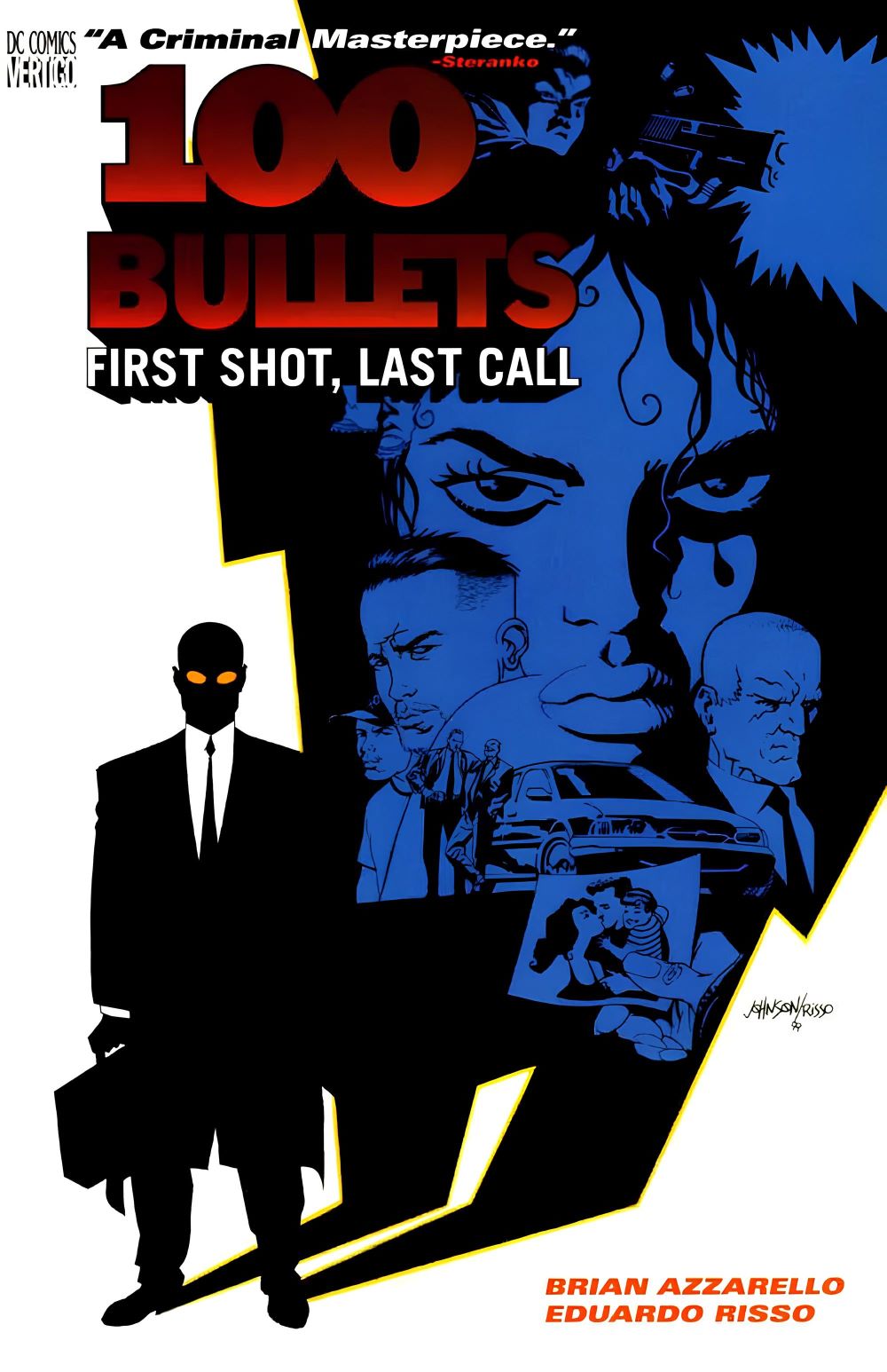
Review: 100 Bullets Vol. 1 – First Shot, Last Call


“I never told you to kill him. I just gave you the opportunity.” — Agent Graves

Brian Azzarello’s 100 Bullets stands as one of the strongest examples of mature storytelling to emerge from DC’s Vertigo imprint. From the outset, the series announces itself as something more than a standard crime comic. It is a hardboiled noir thriller, but one that pushes beyond mere style and atmosphere into the terrain of moral ambiguity, personal trauma, revenge, and consequence. In that sense, it recalls the classic detective and crime fiction of Dashiell Hammett, Mickey Spillane, and Raymond Chandler, while also feeling like a darker, more intricate evolution of the hyper-noir sensibilities Frank Miller explored in Sin City.

It would be easy to compare the two and simply declare one superior to the other, but the truth is more complicated than that. Sin City thrives on stark immediacy: its stories are blunt, violent, and stripped down to their most primal elements. 100 Bullets, by contrast, is more layered and methodical. Its stories take their time, constructing a web of motives, betrayals, and hidden histories that slowly reveal themselves. That extra complexity gives the series a different kind of power. Where Miller’s work depends on the force of simplicity, Azzarello and Risso create something that feels colder, more deliberate, and more psychologically unsettling.

The first collected volume, First Shot, Last Call, serves as a perfect introduction to the series’ central premise and tone. It introduces Agent Graves, the enigmatic figure who functions as the series’ catalyst and perhaps its most important symbol. Graves looks like the kind of man who has walked out of a government conspiracy, a private war, or a decade-long nightmare and come out the other side untouched. He approaches recently paroled Dizzy Cordova with an offer that sounds impossible: an attaché case containing a gun, 100 untraceable bullets, and proof that the people responsible for destroying her life are known and reachable. The choice, however, is entirely hers. Graves does not force revenge; he simply places it within reach.

That premise is the genius of 100 Bullets. On the surface, it is a crime story built around assassination, hidden conspiracies, and the promise of vengeance. But underneath, it becomes a series about free will and the burden of choice. The question is never just whether a character will kill. It is whether revenge can ever truly heal the wounds that created the desire for it in the first place. Azzarello understands that vengeance is seductive precisely because it feels so simple. It offers closure where life has given none. Yet the series continually suggests that closure is an illusion, and that the acts people commit in the name of justice or revenge often become the first step toward deeper destruction.

Dizzy Cordova is a strong opening example of this theme. She is not written as a simplistic victim, nor as an idealized avenger. She is angry, wounded, and psychologically cornered, but she is also complicated and fully human. Her eventual decision feels earned because the story understands her pain rather than merely exploiting it. Azzarello writes her as someone whose past has stripped away the comfort of easy morality. The same can be said of Lee Dolan in the second major story arc. Dolan’s life has been shattered by an accusation that contaminated both his public identity and his personal relationships. He, too, is offered Graves’s case and the temptation of retaliation. But his response is different from Dizzy’s, and that difference matters. It shows how carefully Azzarello constructs his characters as individuals rather than as variations on a single revenge fantasy.

What makes these early stories especially effective is that each one feels self-contained while also contributing to a much larger design. Even in this first volume, Azzarello is laying the groundwork for a sprawling narrative that will eventually run exactly 100 issues. The structure gives the series an unusual density: every issue matters, every choice matters, and every seemingly isolated encounter feels like it may be part of a larger hidden architecture. That sense of design keeps the book from ever becoming repetitive. Instead, it feels like a slow-burning conspiracy thriller where the real mystery is not just who is manipulating whom, but why these people are vulnerable to manipulation in the first place.

Eduardo Risso’s artwork is the perfect visual counterpart to Azzarello’s writing. His style is often described in relation to other noir-influenced artists, but it would be inaccurate to call it merely minimalist. Risso’s pages have a cinematic rhythm that gives the book a visual identity all its own. His compositions are deceptively economical: characters are posed with dramatic clarity, shadows are used with purpose, and every panel seems designed to move the eye like a camera tracking through a scene. Even in moments where little physical action occurs, there is a sense of tension and motion in the framing.

Risso also has a strong eye for character design. His people are not rendered with perfect realism, nor are they reduced to exaggerated caricatures. Instead, they occupy a space that feels stylized but believable, which is ideal for a story like this. Their faces and bodies communicate attitude before they even speak. That matters in a noir story, where so much of the drama lies in what characters conceal as much as what they reveal. The women in particular are drawn with a confident sensuality that reflects the hard-edged world of the series without reducing them to empty decoration. Characters like Dizzy Cordova and Megan Dietrich feel distinct not just because of Azzarello’s writing, but because Risso gives them physical presence, posture, and visual identity that reinforce who they are.

What is especially impressive is that Risso’s art enhances the noir mood without becoming self-conscious about it. The book never feels like it is trying too hard to imitate classic crime fiction. Instead, the visuals and writing work together to create a world that is stylish, dangerous, and morally unstable. That balance is difficult to achieve, and 100 Bullets succeeds because both creators understand that atmosphere alone is not enough. The mood has to be supported by character, and the character has to be supported by consequences.

100 Bullets: First Shot, Last Call is therefore more than just a strong debut volume. It is a declaration of intent. Azzarello shows that he is willing to write adults as flawed, desperate, and self-deceiving people rather than as heroes or villains in any conventional sense. Risso, meanwhile, gives the story a visual voice that is sleek, uneasy, and unmistakably noir. Together, they create a comic that is intelligent, hard-hitting, and deeply memorable.

As an opening volume, it does exactly what it should: it hooks the reader, establishes the mythology, and makes clear that this is a story about choice, consequence, and the cost of acting on one’s darkest impulses. More importantly, it does so with confidence and style. 100 Bullets earned its reputation not because it imitates the best noir stories, but because it understands what makes noir endure: wounded people, dangerous opportunities, and the terrible freedom of deciding what to do next.

10 Favorite Comic Books of the Past Decade


The first decade of the new millenium found me in a weird place when it came to one of my big hobbies after high school. From 1989 all the way through the 90’s I was a major comic book reader and collector. I would say that I wouldn’t deny the charge that I might have helped the so-called “comic book speculator era” rise to the forefront of the hobby. Artists like Jim Lee, Whilce Portacio, Todd McFarlane were like rock stars in that era and their titles would fly off the shelves the moment they came out. I and others would buy multiple copies, carefully board and bagged them (but also read them) and wait for their price to go up.

Some titles did go up in price and were sold for a profit thus feeding the notion that I could make a lot of money off of these comic books. I was one of the early adopters of the independent titles which really fed the speculator market. First there was buying up all the early Evil Ernie issues before most of the public got wind of just how awesome (and limited their printing were) then doing the same for William Tucci’s Shi title which I must say really defined a speculator’s dream title. It had buzz to it due to the bad girl art, the story was not bad and had an exotic taste to it and, best of all, the printing on the title character’s first appearance was practically non-existent.

By the time the speculator’s market finally burst it’s bubble and dragged the comic book industry down with it I was pretty much burnt-out on comic books. I still read them and bought the titles whcih caught my eye, but the days of buying every issue of most every title from Marvel/DC/Image were done with. I even stopped buying and reading them in the beginning of the 2000’s. The industry was in a creative rut in the early years of the new decade. While superhero titles were floundering and publishers (small and medium ones) were declaring bankruptcy and selling off properties to the highest bidder a curious thing happened. I got back into comic books and it wasn’t the hero titles which drew me back in but the mature, independent titles from Vertigo, Dark Horse, Image and small-indie publishers.

This was a very good thing since I missed having the books in my hands. I wasn’t buying them now to collect but to read. I still handled them with kid gloves but I wasn’t worried about whether they would turn me a profit anymore. So, for most of the decade I was an indie-fool who pretty much avoided most the titles from Marvel/DC. While I still read some titles from the two main comic book houses it wasn’t on the same level pre-2000’s.

Below is the list of the 10 titles that were my favorite of the decade. Some were considered the best of the decade and some just my favorite because they spoke to me as a reader. This time they will be in order of importance unlike my previous Best/Fave lists.

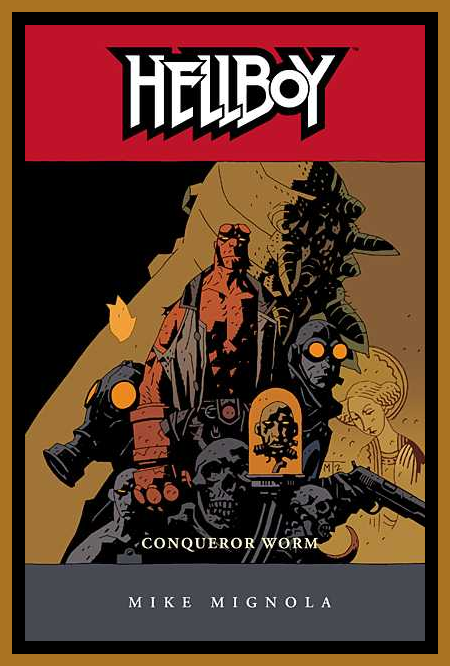
10. Hellboy by Mike Mignola (Dark Horse Comics)

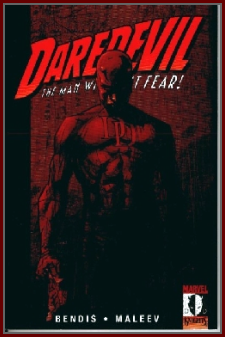
9. Daredevil by Brian Michael Bendis/Ed Brubaker (Marvel Comics)

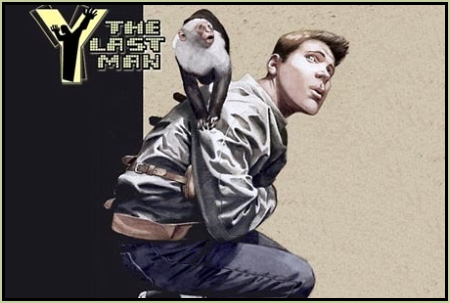
8. Y: The Last Man by Brian K. Vaughn (Vertigo)

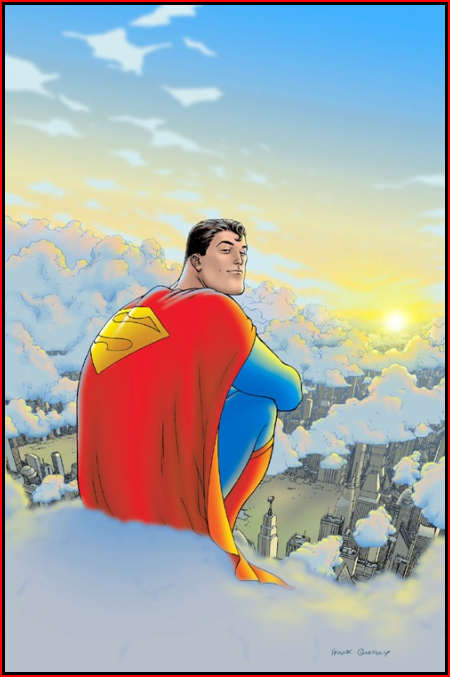
7. All-Star Superman by Grant Morrison (DC Comics)

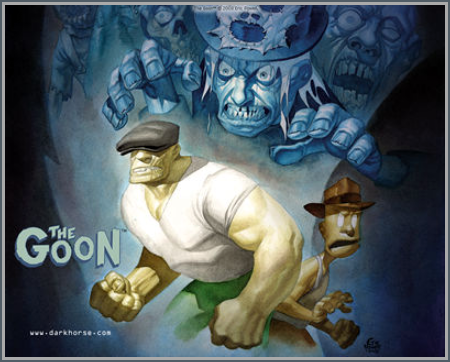
6. The Goon by Eric Powell (Dark Horse Comics)

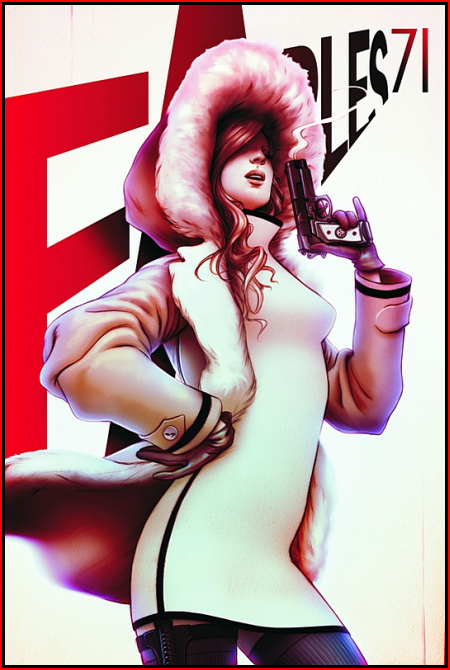
5. Fables by Bill Willingham (Vertigo)

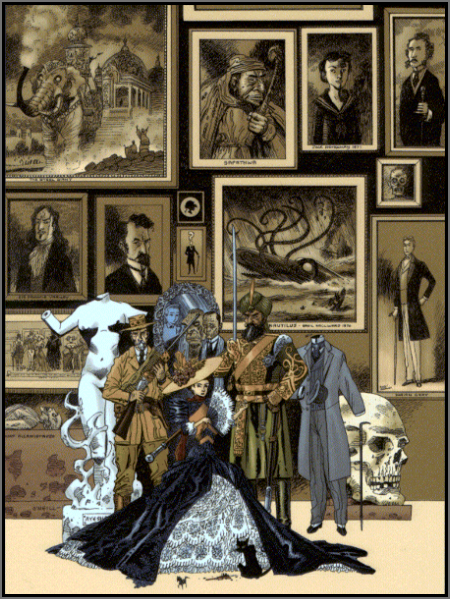
4. The League of Extraordinary Gentlemen by Alan Moore (America’s Best Comics)

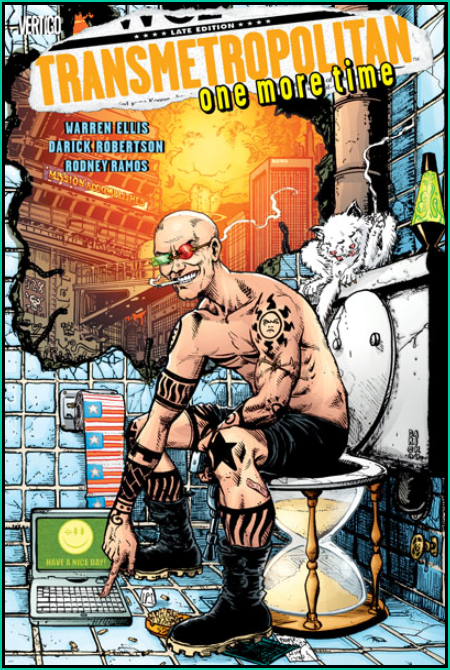
3. Transmetropolitan by Warren Ellis (Vertigo)

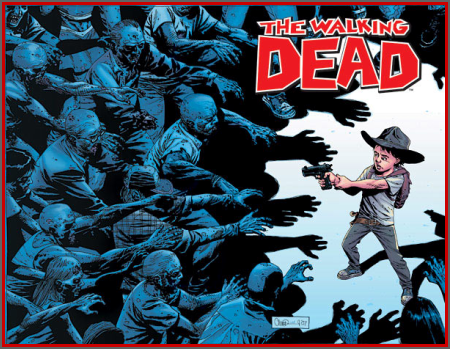
2. The Walking Dead by Robert Kirkman (Image Comics)

1. 100 Bullets by Brian Azzarello (Vertigo)