by Michael McCann
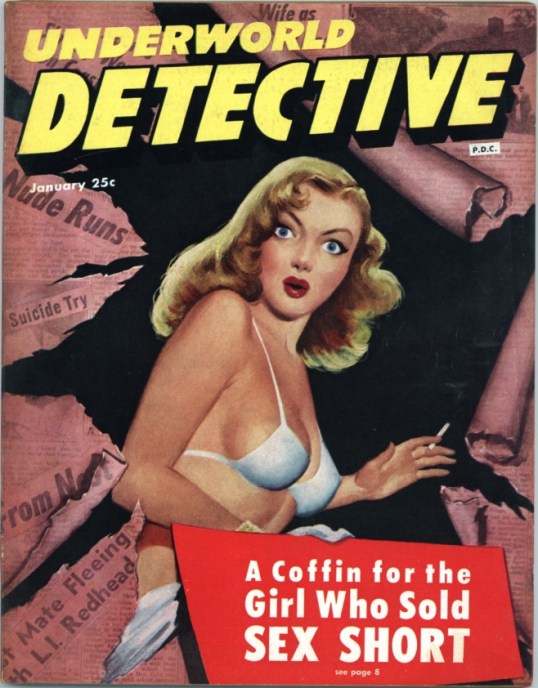
This cover is from 1951.
by Michael McCann
This cover is from 1951.
Conceived and performed by Andy Summers, the guitarist for the Police, 2010 was a re-imagining of Also Sprach Zarathustra and was included as part of the soundtrack of the 1984 film, 2010: The Year We Make Contact. Though the song itself did not appear in the film, a music video featuring scenes from 2010 was put together for the song and was occasionally played on MTV.
Enjoy!
Welcome to Late Night Retro Television Reviews, a feature where we review some of our favorite and least favorite shows of the past! On Sunday, I will be reviewing the Canadian series, Degrassi: The Next Generation, which aired from 2001 to 2015! The series can be streamed on YouTube and Tubi.
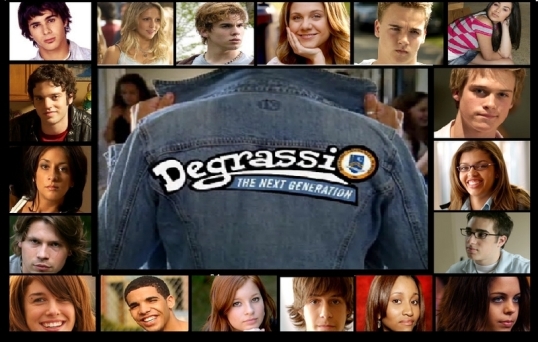
This week is Degrassi at its best and most important.
Episode 3.8 “Whisper to a Scream”
(Dir. Philip Earnshaw; originally aired November 12th, 2003)
Ellie is dealing with more than any teenager should have to.
Her father, Colonel Nash (Daniel Lévesque), is deployed overseas, leaving her to take care of her self-centered, alcoholic mother (Kirsten Kieferle). Ellie is up for an internship with Caitlin Ryan, but to get it she’ll have to beat out none other than Paige. Despite the fact that Paige starts wearing glasses to look smarter and “accidentally” spills a drink on Ellie’s shirt, Ellie still manages to get the internship. “I guess she really did feel sorry for you,” Paige says.
The internship is Ellie’s dream job, but now she has to balance it with school and taking care of her mom. Her grades struggle. The ladies in the front office start giving her nasty looks whenever she comes in for a late slip. Whenever the stress gets to be too much, Ellie cuts herself.
This episode is difficult for me to watch. For a time, Degrassi was advertised as the show that “goes there,” and this episode has always hit close to home for me. When I was much younger and blaming myself for my parents’ divorce and the fact that my mom usually had to work more than one job to support me and my sisters, I used to manage my stress in much the same way Ellie did, though I was usually too afraid of scars to actually break the skin. Cutting is a sensitive subject, and not one that is easy for other people to understand or for people who cut to really explain. This episode approaches the subject with intelligence and sensitivity, and Stacey Farber gives a commendable performance.
To the show’s credit, Ellie does not magically get over being a cutter in just 20 minutes. Even after her former rival, Paige, sees the scars on Ellie’s arms and encourages her to talk to the school counselor, Ellie isn’t suddenly better. In a future episode, Ellie will admit, “I’ll always be a cutter,” regardless of whether she’s actually cutting or not. It’s one of those honest moments that sets Degrassi apart from most other teen shows.
I should admit that when Ellie cuts herself, she does so with a drawing compass, and it’s obvious that the point is very dull. This was apparently done on purpose to keep the episode from becoming a “how-to” video. I can understand that. Degrassi shows the dangers of cutting, but it doesn’t shy away from admitting that it also provides an outlet for Ellie’s stress.
This episode’s B-plot is important as well. Someone has been leaving flowers at Terri’s locker. Terri fears that her secret admirer is Toby, and Toby doesn’t help things by saying stuff like, “I don’t know, am I?” Fortunately, it turns out that Toby is not her secret admirer and is just acting weird because he’s trying to test whether or not she has ESP. Instead, Terri’s secret admirer is cute, shy Rick Murray (Ephraim Ellis).
Considering Rick’s ultimate legacy as a Degrassi student, it’s always a bit surprising to be reminded that, in his first appearance, he just came across as a sweet romantic. “Awwww! He left her a poem!” When you already know that Rick is destined to (1) put Terri in a coma and (2) shoot Jimmy in the back, it completely changes how you react to Rick’s courtship of Terri.
Next week, Emma’s back and she’s trying to move on from Sean. Yeah, good luck with that!

What a sad week. We lost Dolly Parton and Tim Curry, not only in the same week but also the same day. While we mourn losing them, let’s not forget to also celebrate their lives and the happiness that they brought to countless people.
Here’s what I watched this week:
Films I Watched:
Live Tweets:
4 Shots From 4 Films:
Scenes I Love:
Songs of the Day:
Music Videos of the Day:
Artworks of the Day:
Heroes and Villains of the Day:
Links From Last Week:
News From Last Week:
Links From The Site:
“From duty and death there can be no respite.” — Imperial Devotional
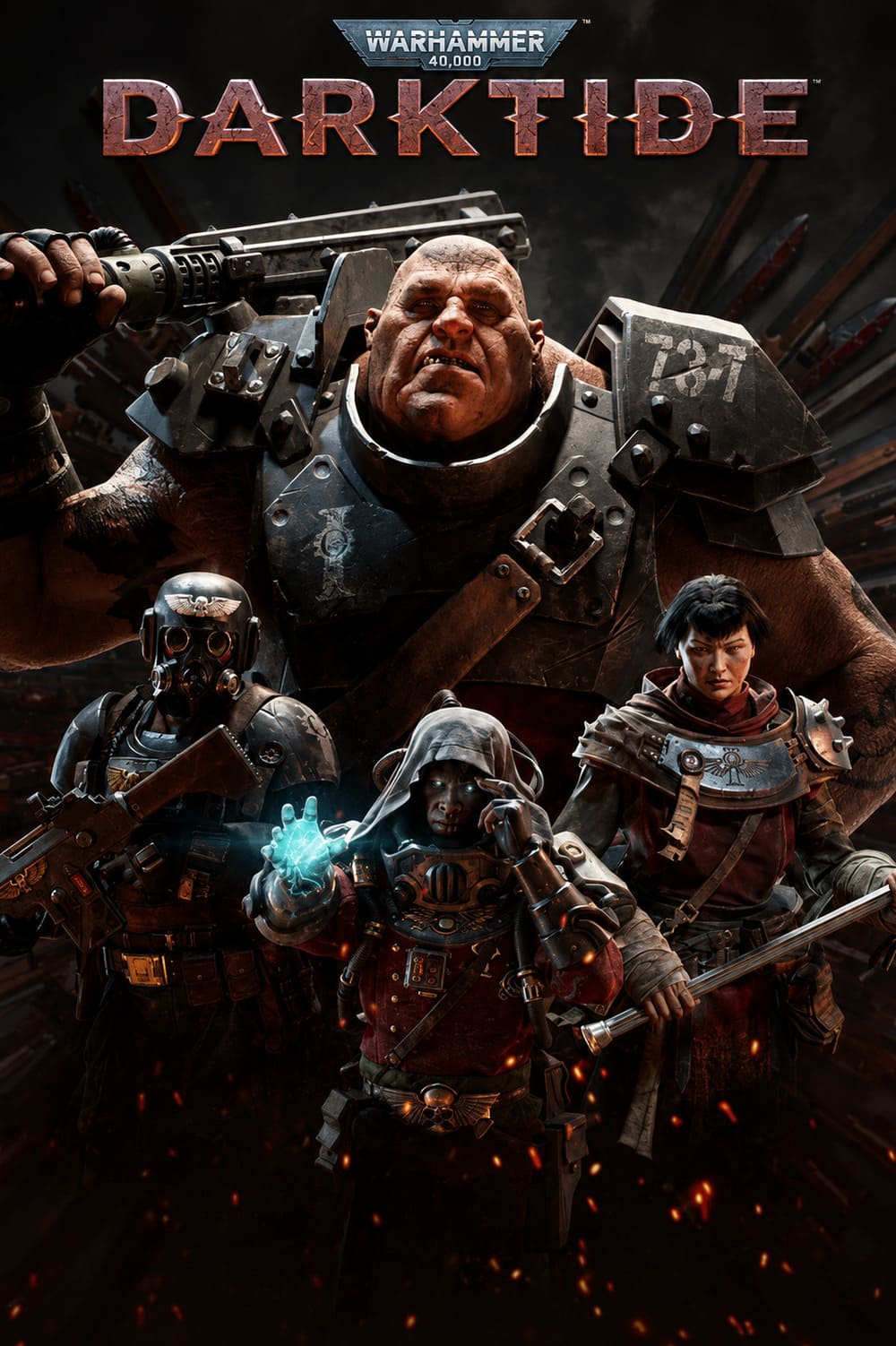
Warhammer 40,000: Darktide understands the core appeal of Warhammer 40K better than most games carrying the license: this is a setting where humanity is vast, miserable, paranoid, religiously fanatical, and constantly one bad day away from being devoured by something unspeakable. Rather than putting the player in the polished power armor of a Space Marine or making them a heroic commander steering armies across a galactic map, Darktide makes you one of the forgotten people at the bottom of the Imperial food chain. You are a convict, a disposable recruit, and—depending on your class—a soldier, preacher, psyker, or big angry guy with a shield. Your job is not to save the galaxy. Your job is to get sent into a plague-infested hive city, kill everything in the way, retrieve whatever your superiors need, and hopefully make it back onto the extraction shuttle alive.
That smaller scale is one of the game’s greatest strengths. Darktide does not try to explain every faction, era, Primarch, chapter, or cosmic crisis in the massive 40K setting. Instead, it traps players in Tertium, a decaying hive city that has been overwhelmed by a Chaos corruption outbreak. The city is a vertical nightmare of industrial machinery, polluted lower levels, cathedrals large enough to swallow city blocks, cramped hab corridors, manufactorums, rail lines, sewage tunnels, and military facilities. It feels like a place where billions of people might actually live, work, worship, suffer, and die without ever seeing the sky. More importantly, it feels unmistakably like 40K.
At its core, Darktide is a four-player cooperative horde shooter in the same broad family as Left 4 Dead and Fatshark’s own Vermintide games. Missions send a squad through hostile territory toward some objective: restore power, investigate a disturbance, assassinate a major enemy, retrieve data, sabotage an operation, or escape a sector before the situation becomes even worse. The basic rhythm will be familiar to anyone who has played a co-op action game. You move through an environment, fight waves of enemies, search for supplies, survive scripted events, and reach extraction. But Darktide succeeds because its moment-to-moment combat has a tremendous amount of weight and tension.
The shooting is excellent. Lasguns feel precise and satisfying, autoguns kick hard, shotguns deliver the expected up-close brutality, and explosive weapons can turn a packed corridor of cultists into a bloody mess in seconds. Every weapon has a distinct personality. A fast-firing infantry autogun feels wildly different from a heavy bolter-like weapon built to chew through armored targets, while a revolver can be a lifesaver when a special enemy needs to die immediately. The game encourages players to learn which tools work best against particular threats, because blindly spraying into a horde is rarely enough once the difficulty rises.
What really separates Darktide from many shooters, though, is its melee combat. This is not a game where you merely pull out a knife when ammunition runs low. Swords, axes, clubs, chain weapons, thunder hammers, and force weapons are central to survival. The melee system asks players to manage crowd control, dodge timing, blocking, pushing enemies back, and targeting priority. A horde of shambling Poxwalkers may look easy to handle, but being surrounded can become fatal almost instantly. Meanwhile, heavily armored Scab enemies require more deliberate attacks, and elite enemies such as Crushers can force a team to react quickly or get flattened.
There is a pleasing physicality to landing a heavy axe strike on a cultist or cleaving through a group with a chainsword. Weapons connect with a crunchy, ugly impact that suits the material perfectly. Darktide often feels like a desperate street fight happening inside a nightmare factory. You are not an invincible superhuman; you are a person trying not to get dragged down by dozens of infected bodies. Even when players become more powerful through better gear and refined builds, the game retains that sense of chaos. One missed dodge, one ignored Trapper, or one badly timed push into a dark hallway can wreck an otherwise successful run.
The four main archetypes offer enough variety to keep the game interesting. The Veteran is the most straightforward ranged specialist, built around firearms, target elimination, and battlefield awareness. The Zealot leans into aggressive melee combat, religious fury, and reckless survivability. The Psyker uses Warp-based abilities to control crowds, destroy priority targets, and bring some of the setting’s psychic horror into the action. The Ogryn is the team’s giant bruiser, capable of absorbing punishment, disrupting enemy formations, and smashing through crowds with the subtlety of a cargo hauler. Each class can be shaped in different directions through talent trees, allowing players to experiment with support roles, damage-focused builds, mobility options, and specialized weapon combinations.
The build system is one of Darktide’s more rewarding long-term features, even if it can become overwhelming for newcomers. A Veteran might become a precision shooter who deletes enemy specialists from across the room, or a more flexible squad leader who supports teammates with ammunition and defensive buffs. A Psyker can focus on popping elite enemies with psychic attacks, spread crowd-controlling flames through hordes, or wield lightning that locks down a dangerous room. The most successful teams usually have some degree of balance: players need horde-clearing power, anti-armor tools, reliable ranged damage, and someone ready to rescue allies when the formation collapses.
That need for cooperation is where the game is at its best. Darktide is much more enjoyable with a team that stays together, calls out threats, shares ammunition, and understands that rescuing a trapped teammate can matter more than chasing a few extra kills. The game’s enemy director is especially good at creating panic. A group can be calmly clearing a hallway when the audio suddenly signals a nearby Mutant, a Hound begins its distinctive howl, a Sniper takes position somewhere in the darkness, and a horde pours through every doorway at once. In those moments, Darktide becomes frantic without turning completely unreadable. Players have to make choices quickly: deal with the special enemy, hold the choke point, revive the downed teammate, or move before the entire squad gets buried.
The visuals do an enormous amount of work in selling the setting. Tertium is one of the best-looking locations in any Warhammer game, not because it is pretty in a conventional sense, but because it is so oppressive and detailed. The city is built from brutalist metal, rust, smoke, cables, oil, religious iconography, and vast Gothic architecture. One mission may take place in an industrial complex full of furnaces and machinery, while another sends players through an abandoned archive, a ruined marketplace, a cathedral-like transit station, or a lower hive district washed in toxic green light. There is always a feeling that the playable mission area is only a tiny piece of an impossible structure extending far beyond the map boundaries.
Darktide’s lighting is particularly effective. Darkness matters mechanically as well as visually, since enemies can emerge from blackened corridors with almost no warning. Flashlights create a narrow sense of security while making everything outside their beam feel more threatening. When the game shifts into a high-intensity combat sequence—sirens blaring, red emergency lights flashing, bodies charging down a corridor, gunfire lighting up the smoke—it can look spectacular. It captures the grimy grandeur that people expect from 40K without making the world too clean or overly polished.
Its sound design may be even better than the graphics. Weapons sound brutal, enemy barks are useful and memorable, and the audio cues for special threats become essential survival tools. The soundtrack gives the action a huge industrial-gothic pulse, mixing choir-like grandeur, metallic percussion, and aggressive electronic energy. It makes even routine fights feel like they are happening at the end of civilization, which, in the context of 40K, is basically an average Tuesday.
The game’s themes are equally faithful to the source material. Darktide is about oppression, faith, bureaucracy, militarism, decay, and survival inside a civilization that treats human life as expendable. The Imperium is not portrayed as a warm or aspirational institution. Your characters are prisoners recruited because the Inquisition needs bodies. The people giving orders are suspicious, ruthless, and generally willing to sacrifice anyone below them if it serves the mission. Yet the game also understands why ordinary citizens might cling to Imperial faith: in a universe full of daemons, alien horrors, and corruption that can literally infect the soul, belief can become a survival mechanism as much as a tool of control.
The lore handling is smart because it stays grounded. There are references to the Imperium, the Inquisition, Chaos, the Moebian Sixth, the Astra Militarum, the Adeptus Mechanicus, psykers, and the Warp, but Darktide does not stop the game every few minutes for a lore lecture. Veterans will recognize the details immediately, while newcomers can understand the basic situation through atmosphere and dialogue. The banter between characters is especially valuable here. It reveals differences in class, background, belief, and social status while making the squad feel more like actual inhabitants of the setting than generic multiplayer avatars.
Darktide has had its share of rough edges, particularly in how its progression, crafting, mission structure, and live-service ambitions have landed at different points in its life. The game can feel repetitive if players are not drawn in by the combat loop, and random teammates can make higher-difficulty missions either thrilling or deeply frustrating. Still, those issues do not erase what Fatshark has built. When Darktide clicks, it is one of the most convincing Warhammer 40K experiences available in games.
Warhammer 40,000: Darktide is not the place to go for a sweeping campaign about galaxy-changing heroes. It is better than that in a different way: it puts you in the boots of a disposable Imperial nobody and makes survival feel like an achievement. Its combat is vicious, its environments are wonderfully bleak, and its understanding of 40K’s grimdark atmosphere is exceptional. For fans of co-op shooters, melee-heavy action, or the Warhammer universe itself, Darktide delivers the rare experience of making the 41st Millennium feel enormous precisely because it lets you see how horrifying life is at ground level.
Today’s song of the day comes from Hans Zimmer’s score for Inception!
Welcome to Retro Television Reviews, a feature where we review some of our favorite and least favorite shows of the past! On Sundays, I will be reviewing Homicide: Life On The Street, which aired from 1993 to 1999, on NBC! It can be viewed on Peacock.
This week, we start season 6.
Episode 6.1 “Blood Ties: Part 1”
(Dir by Alan Taylor, originally aired on October 17th, 1997)
It’s a new season of Homicide and, while Pembleton and Bayliss have been off working in the robbery division, some changes have occurred. Sgt. Howard has left Homicide to work in another division. Brodie’s documentary won an Emmy and he’s moved to Los Angeles. Melissa Leo and Max Perlich are no longer a part of the cast.
Instead, we have three new detectives. Gharty and Falsone (ugh!) are now full-time members of the squad. Joining them is Laura Ballard (Callie Thorne), a recent transfer from Seattle. When Pembleton and Bayliss return to Homicide, the first that they see is Ballard and Gharty being given a commendation for solving “the Rico case.” Meanwhile, Falsone is walking around the squad room like he owns the place. Giardello praises the new detectives and basically acts as if Pembelton and Bayliss are useless.
And listen, as much as I dislike Falsone and Jon Seda’s mumbling performance in the role, I do think that Peter Gerety is well-cast as Gharty. And Callie Thorne seems like she’ll do a good job as Ballard, even if this episode does spend a bit too much time trying to convince us that she’s the greatest detective since Frank Pembleton. But, when it comes to Homicide, I want to follow detectives like Munch, Lewis, Pembleton, and Bayliss. I want to watch as Kellerman battles his demons and Giardello battles his superiors. My point is that I don’t care about these new people. I don’t care that Ballard is a hotshot detective. I don’t care that Gharty is a blue-collar guy who is looking to prove himself. I can’t stand Falsone. I don’t want any of these people to be the new lead characters on the show. I want Melissa Leo with her weird accent. What are we even doing here, Homicide?
This episode, however, seemed to be determined to force the new characters on me. For instance, Georgia Mahoney (Hazel Goodman) is in town, looking to get revenge for the death of her brother Luther. She’s got people shooting at Lewis, Kellerman, and Terri Stivers. Needless to see, Lewis and Kellerman get involved in tracking down and arresting not only Georgia but also Junior Bunk (Mekhi Phifer), Luther’s incompetent nephew. However, Falsone gets involved too. This means that we have to sit through an entire scene of Falsone attempting to interrogate Kellerman about the Mahoney shooting and the inconsistencies in the statements given by Lewis, Stivers, and Kellerman.. Hey, Falsone — YOU’RE THE NEW GUY! WE LIKE KELLERMAN! LEAVE HIM ALONE, YOU MUMBLING DOUCHEBAG!
Meanwhile, at a banquet honoring distinguished businessman and civil right activist Felix Wilson (James Earl Jones), a young Haitian woman is found beaten to death in the men’s room. Her name is Melia and she worked for the Wilsons. Now, in this case, Pembleton and Bayliss are the primaries but Ballard and Gharty still come along to provide support and soon, Ballard and Pembleton are arguing about the best way to handle the investigation. Ballard thinks that Pembleton is going easy on Felix Wilson because of Wilson’s standing in the black community. Pembleton thinks that Ballard should remember who the primary investigator is. And myself, I’m wondering why Pembleton and Ballard are having the type of conversations that Pembleton used to have with Bayliss. Whenever Pembleton and Bayliss debate prejudice, it works because we know who Pembleton is and we know how Bayliss is. We don’t know enough about Ballard for her debate with Pembleton to really mean anything.
Apparently, Homicide was nearly cancelled after the end of season 5. When it was renewed, it was done on the condition that had to improve its rating and win its time slot. This episode feature a lot of action. A man on a motorcycle fires at Falsone and Lewis. A sniper hits Kellerman in the arm. The cops stop Georgia’s private plane from taking off and arrest her. Visually, this episode is brightly lit and there’s none of the odd camera angles that dominated the previous few seasons. Comparing this episode to the episodes that came before it creates a tonal whiplash that can only be compared to going from the Steve Carell-led Office to the Ed Helms version. It’s not necessarily bad but it just doesn’t feel right.
This episode ends with Georgia in jail and Pembleton still investigating the death of Melia. Season 6 is off to a start and I’m not really happy about how it’s going so far but we’ll see what happens.
I remember where I was when I heard the news that Charles Bronson passed away on August 30, 2003. I was standing outside of my parents’ cabin watching the South Fourche River roll by, when my sister came out and told me that a news report had just come across the TV. My family was there celebrating the Labor Day holiday. The cabin has always been my place of peace, and I guess you can say it was the perfect place to get the news.
In honor of the importance of this day in my life, I thought I would share a couple of scenes that I love from my two favorite Bronson films.
First comes a scene from MR. MAJESTYK where Al Lettier’s mobster tries to bully Majestyk. It doesn’t work out so well for the bully.
Next comes an early scene from HARD TIMES where a smirking opponent underestimates Bronson’s seasoned character of Chaney. Once again, things don’t go well for the smartass.
I’ll never be able to fully explain why I developed a healthy obsession for Charles Bronson when I was a kid growing up in the 1980’s and why that obsession still persists to this day. I may try to put that down on paper someday before I die, but today is not that day. Today, I just want to celebrate my movie hero with some of my favorite films and moments.

The writer Mary Shelley was born on this date in 1797. Shelley, of course, is best-known for writing Frankenstein, a book that some claim is the first science fiction novel. (That’s debatable but it was still a major literary achievement.)
In this scene from 1936’s Bride of Frankenstein, Elsa Lanchester appears as Mary Shelley, continuing her story. (Of course, Lanchester also played the Bride herself.)
4 Shots From 4 Films is just what it says it is, 4 shots from 4 of our favorite films. As opposed to the reviews and recaps that we usually post, 4 Shots From 4 Films is all about letting the visuals do the talking.
These 4 Shots From 4 Films are dedicated to the memory of the great Maureen O’Hara.
4 Shots From 4 Maureen O’Hara Films
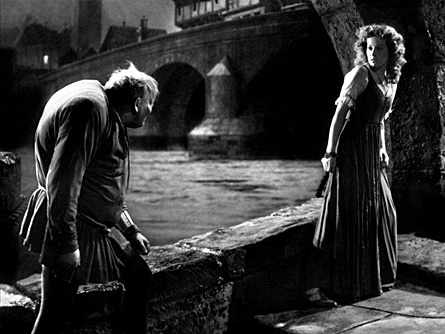
The Hunchback of Notre Dame (1939, dir by William Dieterle)

Dance, Girl. Dance (1940, dir by Dorothy Arzner)

Miracle on the 34th Street (1947, dir by George Seaton)

The Quiet Man (1952, dir by John Ford)
Sláinte!

