“For once in your life, be brave! Be brave for them.” — Finlay
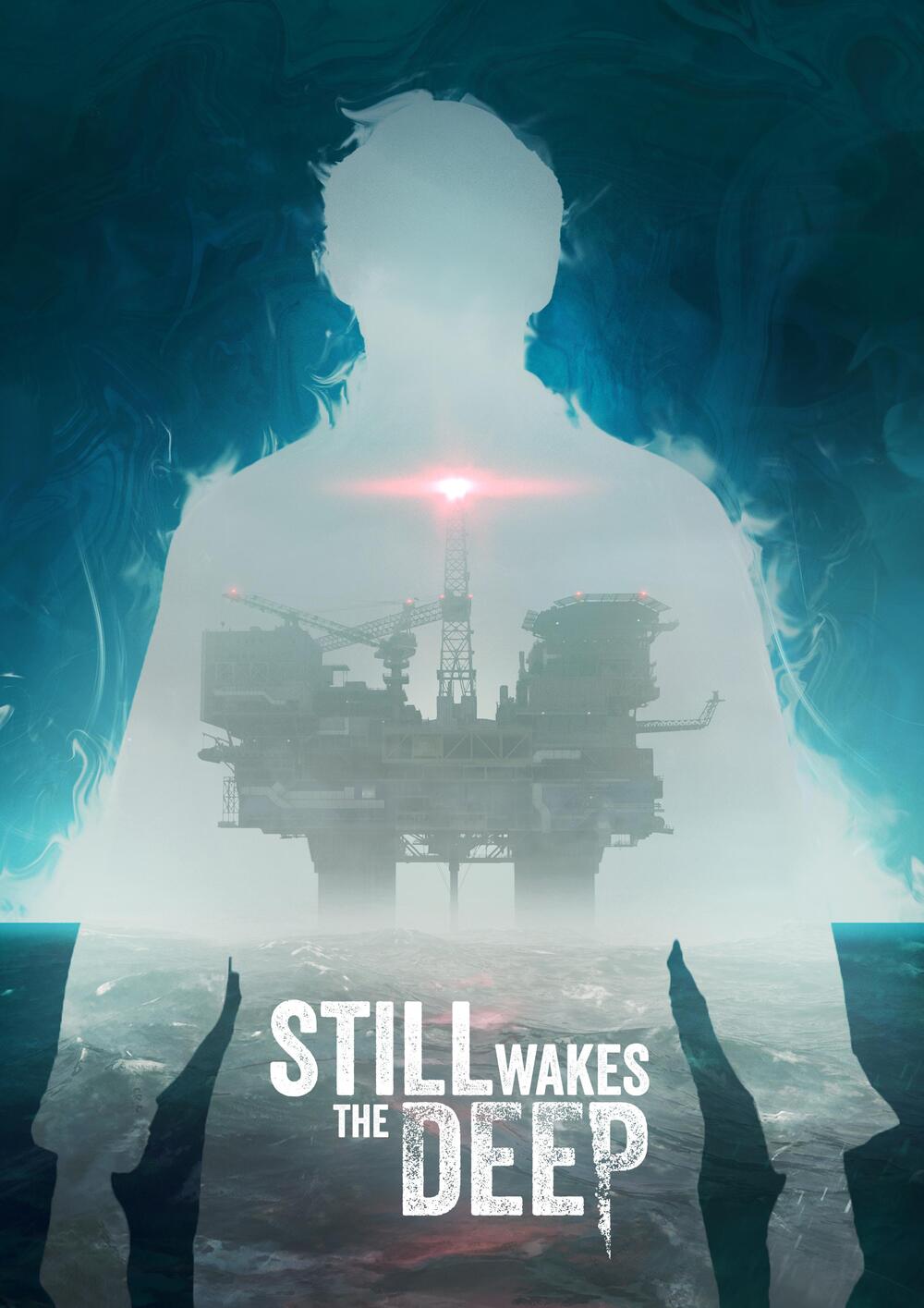
The ocean doesn’t care whether you make it home, and Still Wakes the Deep never lets you forget it. Even before its supernatural nightmare takes shape, the game makes life aboard an offshore oil rig feel like a fragile arrangement between people, machinery, and an environment that could swallow them without a second thought. Released in 2024 by British developer The Chinese Room, this first-person psychological horror game builds its strongest moments around that vulnerability. It isn’t the most mechanically ambitious horror game out there, but its unsettling setting, convincing performances, and emotional stakes make it more than a guided tour through some impressively disgusting scenery.
Set in December 1975, the story follows Cameron “Caz” McLeary, an electrician working aboard the Beira D oil rig in the North Sea off Scotland. Caz has brought plenty of trouble with him. His relationship with his family is strained, problems back home are catching up with him, and his job isn’t exactly secure. He’s already having a miserable time before the drilling operation disturbs something that should have remained buried. Once disaster strikes, getting off the rig becomes much more complicated than finding a boat. The appeal of that setup is how naturally it connects his personal circumstances with the surrounding danger. Home matters because his life there is unfinished, not because the script needs a convenient reason for him to survive.
Before everything falls apart, the game gives you enough time with the crew to understand what kind of place the Beira D is. Conversations are blunt, personalities clash, and the dialogue has the rough familiarity of people who work and live in close quarters. The regional accents and casual swearing help establish a workplace rather than a collection of horror-game characters waiting for their turn to scream. Nobody needs a lengthy introduction to suggest a history with the people around them. That makes the disaster more effective when it arrives. The rig isn’t just a location being destroyed; it’s a little community whose everyday routines suddenly become impossible.
Caz helps hold that human side together. Alec Newman’s performance gives him an appealing mixture of irritation, fear, stubbornness, and genuine concern for his coworkers. He isn’t instantly heroic, and the game doesn’t pretend that his personal problems make him especially noble. He can be difficult, but he remains understandable. More importantly, he sounds like someone struggling to cope with events rather than someone performing bravery for an audience. His family stays emotionally present even when the immediate situation demands all his attention. That connection gives the ocean beyond the rig a particular cruelty: somewhere past all that freezing water is a life he still has reasons to return to.
The Beira D itself does an enormous amount of the work. Its cramped interiors, exposed walkways, and heavy industrial machinery create a setting where comfort always seems temporary. Indoors, there’s barely enough room to feel safe; outdoors, the sea makes every exposed crossing feel worse. The visual detail grounds the place without making it inviting, while the lighting turns familiar spaces into increasingly hostile territory. What starts as an unpleasant workplace gradually becomes an environment you can no longer trust. The game understands that a damaged walkway or a flooding compartment can be frightening without a monster standing in the middle of it.
Sound design strengthens that feeling of instability. Machinery strains, metal bangs, and horrible noises travel through spaces where you can’t always see their source. The rig feels active even when you’re standing still, and not in a reassuring way. Sometimes you’re listening for a creature; sometimes you’re wondering whether the structure around you is about to give out. That overlap is one of the game’s best qualities. The supernatural threat doesn’t replace the practical dangers of being offshore. It makes them worse, leaving Caz caught between something impossible and hazards that require no explanation whatsoever.
The body horror is particularly effective because it corrupts people and spaces the game has already made recognizable. Human forms become grotesquely distorted, but traces of the people underneath remain, especially in their voices. That makes the creatures upsetting in a way that goes beyond impressive monster design. There’s something cruel about hearing recognizable humanity survive inside a body that has become a threat. The game draws on familiar science-fiction horror territory, but its specific setting and working-class cast give that material personality. These aren’t simply monsters loose on an oil rig. They’re part of the destruction of the crew’s shared world.
Playing Still Wakes the Deep is more straightforward than its imagery might suggest. There’s no combat system, so you spend your time navigating damaged sections of the rig, completing simple environmental tasks, climbing through obstacles, and avoiding threats. Keeping Caz defenseless is the right call. Handing him increasingly powerful weapons would undermine the sense that he’s an ordinary person trying to survive something far beyond him. The physical traversal also gives the experience more activity than the “walking simulator” label suggests. At its best, the game makes crossing a dangerous gap or moving through a compromised section of the rig feel like a substantial ordeal.
Still, its narrow design can become a problem. The game usually has a specific route and a specific solution in mind, and it doesn’t take long to notice how firmly it steers you toward both. Stealth encounters can lose some tension once their intended pattern becomes clear, while practical objectives occasionally feel like errands placed between dramatic scenes. There’s a meaningful difference between being trapped by the disaster and being restricted by the design. Still Wakes the Deep sometimes makes the latter too obvious. Anyone hoping for flexible survival systems, substantial exploration, or demanding puzzles will probably find its interactions thin.
That simplicity does help keep the focus on the characters and atmosphere, though. Without inventory juggling or repeated combat encounters, the game can move directly between physical danger and quieter emotional moments. Its roughly six-to-seven-hour length also suits the premise, even if some trips around the rig feel stretched out. The original story is strongest when it treats survival as something more complicated than reaching safety. Caz’s connection to his family, his responsibilities to the crew, and the terrifying circumstances around him give its horror an emotional dimension that carries beyond the immediate disaster.
The expansion Siren’s Rest, released in June 2025, picks up that lingering emotional thread rather than simply repeating Caz’s ordeal with another character. Set in 1986, it takes you beneath the North Sea to the wreck of the Beira D, where a specialist diving team hopes to uncover what happened and bring answers to the families of the lost crew. You play Mhairi, the leader of the dive, exploring the remains of a place that players know far better than she initially does. It’s a smart way to continue the story: the original shows the catastrophe from inside, while the expansion examines what it leaves behind.
That change of perspective gives the return to the rig a different kind of sadness. Spaces that once contained conversations, arguments, and hurried attempts to survive have become submerged remnants of those lives. Mhairi’s work involves photographing remains, collecting personal belongings, and examining evidence, turning familiar locations into places of recovery rather than escape. The connection to the original isn’t just geographical. Its crew members become people whose absence has shaped families for years, extending the first game’s concern with home and responsibility beyond the boundaries of Caz’s experience. The sea may have swallowed the rig, but it hasn’t neatly ended the story for everyone onshore.
Mechanically, Siren’s Rest replaces much of the original’s climbing and scrambling with underwater navigation. A cutting torch, crowbar, and camera give Mhairi practical ways to investigate the wreck, while her connection to the diving bell and communication with her colleague Rob reinforce how dependent she is on equipment and other people. The danger now comes with the added discomfort of being submerged inside a ruined industrial structure. The original made the water outside feel like something to avoid at all costs; the expansion makes entering it the entire premise. That reversal is a strong atmospheric hook, even when the interactions remain fairly straightforward.
The expansion is less convincing as a major escalation of the horror. Its roughly two-to-three-hour length makes it a compact follow-up, but that brevity also leaves less room for its new relationships to develop. Mhairi’s search gives the story a human focus, and the unsettling wreck provides plenty of atmosphere, yet the experience doesn’t consistently turn those advantages into scares as memorable as the original’s. It also shouldn’t be approached as a comprehensive explanation of every supernatural mystery. Its interests lean more toward grief, personal connection, and the desire for closure than toward spelling out exactly what the drilling uncovered. That restraint can preserve the unease, but it may frustrate players expecting more concrete answers.
Taken together, Still Wakes the Deep and Siren’s Rest tell a more interesting story than a simple disaster followed by a cleanup mission. The original makes you care about the people trapped aboard the Beira D, while the expansion asks what their loss means to those left searching for them. The base game remains the stronger experience, with a fuller cast and a more immediate sense of danger, but the follow-up gives its setting an effective second life as a place of mourning and investigation. Neither offers especially deep gameplay, yet both understand the value of putting human concerns inside an inhuman environment. The ocean remains indifferent throughout. What gives the story its weight is that the people living with the consequences never can be.

