Just as the world seems to be finally on the verge of accepting mutants, industrialist Warren Worthington II (Michael Murphy) announces that he has developed a shot that will suppress the X-gene, therefore “curing” mutants of their mutation. Magneto (Ian McKellen), Mystique (Rebecca Romijn), and a host of other mutants break out of prison to try to stop Worthington from offering up his cure. Meanwhile, at Charles Xavier’s school, Rogue (Anna Paquin) wonders if maybe she should take the shot and become a “normal” person.
Professor Xavier (Patrick Stewart) and Logan (Hugh Jackman) have an even bigger concern than Magneto and the cure. Jean Grey (Famke Janssen), thought to have died at the end of the previous movie, has returned but has given in to her dark side, the so-called Phoenix. She’s already destroyed Scott (James Marsden), and it doesn’t take her long to disintegrate Professor X. Can Logan and the Beast (Kelsey Grammer) rally what’s left of the X-Men to defeat both Magneto and the Dark Phoenix?
I can still remember seeing X-Men: The Last Stand on the day that it was first released. As an X-Men fan, I was excited to see how the Dark Phoenix storyline would be adapted for the big screen. It’s difficult to put into words how disappointed I was when Jean killed Scott. That one scene told me that X-Men: The Last Stand was not going to do the story justice. In the comic books, Jean and Scott’s relationship was the heart of the X-Men. When Jean became the Dark Phoenix, she proved herself capable of destroying an entire planet, but she couldn’t bring herself to kill Scott. She chose to destroy herself rather than him. (Marvel being Marvel, Jean was resurrected a few years later.) The X-Men films never really knew what to do with the characters of Scott and Jean. They weren’t as flamboyant as Logan or even Rogue, but fans of the comic knew who Scott and Jean were and understood their importance to the series, and having Jean destroy Scott showed that, unlike the previous two films, the third X-Men film was not being made for the fans.
A large part of the problem was that director Brett Ratner didn’t seem to be interested in the characters. X-Men: The Last Stand is a collection of action scenes with none of the small character moments that made the first two films memorable. Kelsey Grammer is a welcome addition to the cast as the Beast. (The Beast always was basically Frasier Crane with blue fur.) Otherwise, this is the most forgettable of all the X-Men films.
Even though the Dark Phoenix saga is one of the key X-Men storylines, it’s never really been given its due onscreen. A second attempt to tell the story, in Dark Phoenix, also failed to capture the drama and emotion of Jean’s transformation. The X-Men are now officially a part of the MCU, so I imagine the story will probably be told again. Maybe the third time will be the charm.
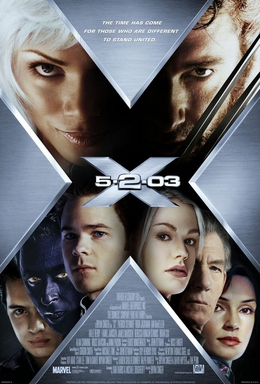
After Nightcrawler (Alan Cumming) causes a national security crisis by teleporting into the White House, Colonel William Stryker (Brian Cox) is given the authority to invade Professor Xavier’s School and investigate its connection to the mutants. Stryker, who not only wants to investigate the mutants but also destroy them by manipulating the same technology that Xavier uses to find them, just happens to be an old enemy of Logan’s (Hugh Jackman). In fact, Stryker is responsible for Logan fusing the adamantium to his bones. That’s a hell of a coincidence.
A sequel to X-Men, X2 tells a bigger and more complex story than the first film. Professor Xavier’s students are spread out by the chaos. Rogue (Anna Paquin) sees prejudice firsthand when Bobby Drake (Shawn Ashmore) is betrayed by his own family. Pyro (Aaron Stanford) is tempted to reject the X-Men’s philosophy of coexistence. After being underused in the first film, both Scott (James Marsden) and Jean Grey (Famke Janssen) are key players here. Magneto (Ian McKellen) and Mystique (Rebecca Romijn-Stamos) return, this time temporarily allying with Professor X (Patrick Stewart) to stop Stryker. Logan has his own reasons to go after Stryker. Surprisingly, X2 is not only bigger than the first film but it’s also better. The actors are more convincing in their roles, the action is more exciting, and director Bryan Singer capably juggles all of the different parts without losing the plot. He even manages to ably set up the Dark Phoenix Saga. In the first film, the X-Men had it almost too easy when it came to battling opponents like Toad and Sabretooth. This film has not only Brian Cox’s William Stryker but also Kelly Hu’s Deathstrike.
Those of us who were shocked when X-Men turned out to be good were even more shocked when X2 turned out to be even better. For a little while, it seemed like there would never be a bad X-Men movie! Later, that’s the way a lot of us would also feel about the Marvel movies. Those were good days.
For our final episode of Fear Itself, we have Echoes. In this episode, a man discover that he was a killer in a previous life. Director Rupert Wainwright also directed the remake of The Fog. Does anyone remember that remake?
Though this episode was meant to air in 2008, the show went on hiatus and was then cancelled before it could air. It was finally released in 2009, as a part of the Fear Itself box set.
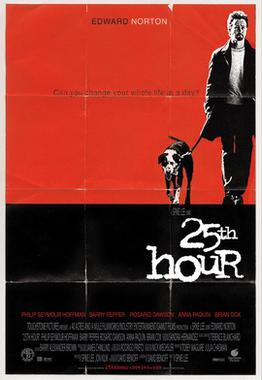
First released in 2003, 25th Hour is one of those films that gets better and better with each subsequent viewing.
Monty Brogan (Edward Norton) may have done some very bad things in the past but nearly everyone has benefited. His childhood friends, a trader named Frank (Barry Pepper) and a teacher named Jacob (Philip Seymour Hoffman), both get to live vicariously through their friend, even if neither one of them is quite willing to admit it. Monty’s father (Brian Cox) is a retired fireman who now owns a bar that was largely purchased with the money that Monty made from dealing drugs. Monty’s girlfriend, Naturelle (Rosario Dawson), is “living high” off of the profits of Monty’s drug deals. For that matter, so is Monty. Monty has a nice apartment, a loyal dog, and a supportive boss named Uncle Nikolai (Levan Uchaneishvili).
Of course, Monty understands that he’s in the business of destroying lives. When Monty first met Naturelle, he had just completed a transaction with a well-dressed businessman. Years later, when Monty is sitting on a bench with his dog, that same man approaches him and begs for more drugs. The man’s no longer wearing a suit. Now, he’s apparently homeless and so addicted that he takes it personally when Monty informs him that he’s no longer in the drug-selling business.
Why is Monty no longer selling? Someone told on Monty. When the DEA showed up at his apartment, it didn’t take long for them to find the packages that he had hidden in the cushions of the couch. For all of his swagger and confidence, it would appear that Monty wasn’t quite as clever as he thought he was. Monty was arrested and subsequently sentenced to seven years in prison.
The majority of 25th Hour takes place during Monty’s final night of freedom, a night that he’s planning on spending it with Frank and Jacob, both of whom could have made the same mistakes that he did but, for whatever reason, they didn’t. Needless to say, Monty’s got a lot on his mind. For all of his attempts to hide it, Monty isn’t as tough as he pretends to be. He knows that it’s not going to be easy for him to do seven years in confinement. He’s terrified of getting raped in prison and he worries that he’s going to be locked in a holding cell with 200 other criminals. Both he and his friends know that, even if he does survive, he’ll be a different man when he gets out. Frank suggests that he and Monty could open a bar when Monty is released but they both know this is an empty promise. Not only is Monty is scared of the future but he’s haunted by the past. Is he getting what he deserves? What if he had made different choices? Will Nautrelle wait for him or, as some of his associates suggest, is she the one who betrayed him in the first place?
Over the course of the night, both Frank and Jacob are also forced to deal with their feelings towards Monty. Frank is a Type A personality, the one who spends his day screaming into telephones and who eagerly looks forward to exploiting bad economic news for his own financial gain. Frank says that Monty is getting what he deserves but, as the film progresses, it becomes obvious that Frank knows that he has more in common with Monty than he wants to admit. Jacob, on the other hand, is a socially awkward teacher who is struggling to deal with a crush that he’s developed on one of his students (Anna Paquin). If Frank fears that he’s more like Monty than he wants to admit, Jacob wishes he could be more like him. At first, it’s hard to imagine that these three men could ever have been close friends but, as soon as you see them together, it all makes sense.
As directed by Spike Lee, one of American cinema’s greatest provocateurs, 25th Hour is more than just the story of one man’s last night of freedom. Over the course of the film, Monty becomes a symbol of not just New York City but of America itself. Driven by self-interest, Monty has spent his life ignoring the consequences of his actions and, now that he has no choice but to confront them, it’s too late. During the film’s most famous scene, Monty stares in a mirror while his reflection rants against every single neighborhood and ethnic group in New York City. The rant is such a powerful scene that it’s easy to miss the most important point. Only at the end of the rant does Monty’s reflection admit that he’s as much to blame for his life as any of them.
Oh yes, the Rant. The Rant is so famous that I was almost tempted to not mention it in this review, just because it doesn’t seem as if there’s much left to be said about it. Even people who dislike the film seem to be in agreement that the Rant is one of the most powerful and incendiary moments in early 21st century cinema. The Rant gives us a portrait of a divided and angry society in collapse and it’s a portrait that is probably even more relevant today than it was when the film was first released. The Rant feels like such a classic Spike Lee moment that it’s surprising to discover that the Rant was included in the script even before Lee was attached to the film.
A few things about the Rant:
The film deliberately leaves it ambiguous as to whether or not Monty is actually speaking. We see the back of his head and his reflection but the movement of his head rarely seems to match the movement of his reflection. Regardless of whether Monty is actually speaking or just imagining the rant, the scene does make clear that, even on his way to prison, Monty can only truly express himself while alone. Of course, once he’s locked up, Monty’s not going to be alone for at least seven years.
“Enron!” I have to admit that, when I recently rewatched film, I laughed when Monty started ranting about Enron. I can vaguely remember a time when everyone was obsessed with Enron and Halliburton and all that other stuff so I found it funny that I briefly had to struggle to recall just what exactly Enron was. 16 years from now, I wonder if people will watch old movies and TV shows and say, “Why are they all so obsessed with Russia?”
As well-done and brilliantly acted as it may be, the Rant has tended overshadow an even better moment. It has been said that the key to a successful work of art is a good ending. As a writer, I can tell you that endings are a hundred times more difficult than beginnings. Fortunately, 25th Hour has an absolutely brilliant ending.
After having finally convincing Frank to beat him up (in an effort to make himself look tougher once he arrives in prison), Monty is being driven to the prison by his father. As they leave New York City, Monty takes one final look at the city and it’s citizens enjoying freedom that he’ll never again have. (This is such a New York City that you can’t help but feel that it’s adding insult to injury that Monty’s going to have to serve his time upstate.) As he drives, Monty’s father begins to talk…
It’s all about decisions and consequences. Monty made his decisions years ago. Over the course of Monty’s last night of freedom, Frank, Jacob, Naturelle, and even Uncle Nikolai made their decisions. And now, as he drives his son to prison, Monty’s father is forced to make a decision of his own. There’s so much great acting to be found in 25th Hour but, during that final soliloquy, Brian Cox upstages all of them. Brian Cox is one of those character actors who seems as if he’s been around forever. He’s the type of dependable actor who, much like Monty’s father, is often taken for granted. If nothing else, you have to be thankful for a film like 25th Hour because it gives everyone a chance to be reminded of just how brilliant an actor Brian Cox truly is.
(Here’s a random bit of a Brian Cox trivia. While everyone knows that, in Manhunter, Brian Cox was the first actor to play Hannibal Lecter, he also played Winton Churchill the same year that Gary Oldman won an Oscar for playing the same role in Darkest Hour.)
25th Hour is not an easy film to watch. At times, it’s one of the most depressing films ever made. It’s tempting to say that, as bad as things ultimately turn out for him, you’re glad that Monty has his father and his friends but that’s really not true. No matter how much his friends care about him or how much Naturelle and his father love him, Monty’s going to prison and his story is simply not going to have a happy ending.
And yet, 25th Hour is one of those films that you can’t look away from and, after you watch it, you simply can’t forget. Every time I watch 25th Hour, I find new details to appreciate. With each subsequent viewing, the pungent dialogue becomes even more multi-layered. With each subsequent viewing, Monty becomes even more of an intriguing and tragic figure. This is a film that makes you appreciate the brilliance of Edward Norton and mourn the fact that Barry Pepper rarely gets roles as good as his role here. With each viewing, 25th Hour reminds you of what a great talent we lost when we lost Philip Seymour Hoffman. It’s film that gets better with each viewing.
Assuming that Monty survived and managed to stay out of trouble, he should be out of prison by now. Hopefully, wherever he is, he’s doing okay.
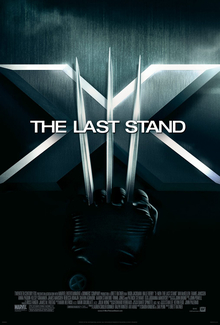 Just as the world seems to be finally on the verge of accepting mutants, industrialist Warren Worthington II (Michael Murphy) announces that he has developed a shot that will suppress the X-gene, therefore “curing” mutants of their mutation. Magneto (Ian McKellen), Mystique (Rebecca Romijn), and a host of other mutants break out of prison to try to stop Worthington from offering up his cure. Meanwhile, at Charles Xavier’s school, Rogue (Anna Paquin) wonders if maybe she should take the shot and become a “normal” person.