I’m a big fan of Robert De Niro, and I think it all started because of the movie MIDNIGHT RUN (1988). I was only 14 years old when it came out, but it was everything I wanted in a movie, which was primarily great action, with a dash of fun comedy. I was soon seeking out all of his great work, whether it be with Coppola, Scorsese, De Palma, or even Roger Corman. Well, just this evening, as I was browsing through Amazon Prime’s selection of horror films, I came across HIDE AND SEEK. Since I’d never seen it before, and it looked kind of creepy, I thought I’d give it a chance.
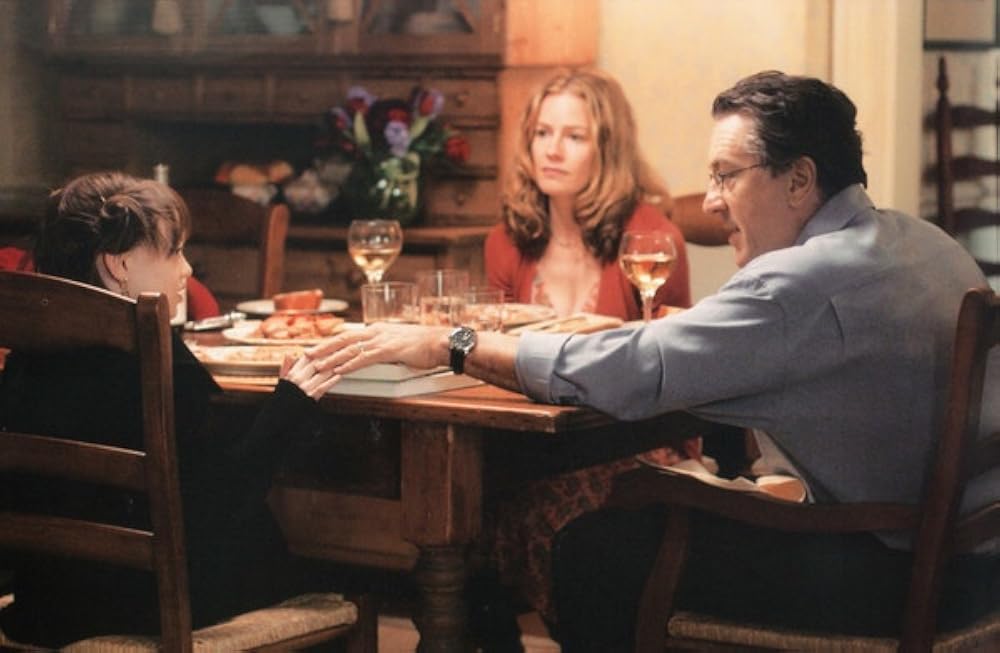
De Niro plays David Callaway, a psychologist who is struggling to cope with the death of his wife. He moves with his young daughter, Emily (Dakota Fanning), to a house out in the country in upstate New York, hoping that a change of scenery will help them both recover from their loss. Unfortunately, Emily begins acting strangely, talking about an imaginary friend named Charlie. Before long, David finds himself dealing with a series of increasingly disturbing events that seem to have something to do with this mysterious friend.
I’ve always enjoyed a good psychological thriller, especially one that keeps you guessing about what’s going on. HIDE AND SEEK is one of those movies that wants to freak you out and make you question whether or not you can trust what you’re seeing, or any of the people involved. Of course this being a psychological thriller, you can’t really trust anyone, especially the people who pretend to care the most.
Dakota Fanning is excellent as Emily. I’ve always held her performance in the great Denzel Washington film, MAN ON FIRE (2004), in high regard as an example of how great a child actress can be. Here, I think she does a good job of making Emily seem both vulnerable and a little scary at times. De Niro is also effective, particularly as the story gradually reveals more about the relationship between him and his daughter. The supporting cast, which includes Famke Janssen, Amy Irving, and especially Elisabeth Shue, adds to the mystery surrounding the film. I just like seeing Elisabeth Shue in any film, because I’ve had a crush on her since the fifth grade.
HIDE AND SEEK is the kind of thriller that depends on its twists and turns, and whether or not we’re willing to go along. I will say that I enjoyed the watching the story unfold, even when the ending doesn’t come off quite as clever as the filmmakers had hoped. My final verdict is that it’s an entertaining film with strong central performances from De Niro and Fanning. I enjoy movies that give me something to think about while I’m watching them, and this one kept me interested in finding out what was really going on. It was a fun watch on dark night in October.
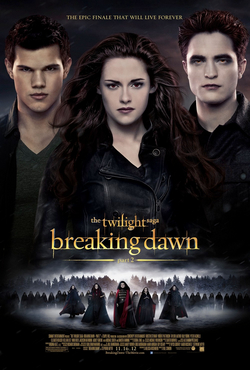
Earlier today, Lis and I finished up the Twilight Saga with Breaking Dawn Part 2.
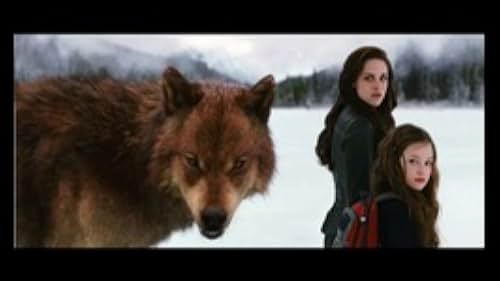
Bella (Kristen Stewart) is now a vampire and a mother to Renesmee (Mackenzie Foy), who is developing quicker than a normal child because she is half-vampire. Before Edward (Robert Pattinson) even lets Bella see her daughter, he takes her hunting, and he has to stop her from attacking a mountain climber who has scratched his arm on a rock. While Bella adjusts to being a vampire, Jacob (Taylor Lautner) adjusts to being Renesmee’s soul mate, and the Volturi prepare to make their move against the Cullens.
I’m going to get in trouble with my sister for saying this, but I was a little disappointed with the second Breaking Dawn movie. It bothered me that the entire movie was about the Cullens bringing together allies for their inevitable battle with Aro (Michael Sheen) and the Volturi, but then, when the big battle finally happens, it turns out that it was just one of Alice’s visions, and they end up deciding not to fight. After two hours of everyone talking about this huge battle and how everyone had to be prepared to fight for the lives, it was anticlimactic not to have a real one. It seemed like the whole movie could have just been 30 minutes long without really losing anything important. I really didn’t see the point of splitting the book into two movies because hardly anything happened during the second one.
Breaking Dawn Part 2 might not work as a standalone movie, but it does work as an end to the saga. After four movies and the longest senior year on record, Bella and Edward are finally together and they’re happy. And Jacob is happy too. At the end of the movie, when they showed everyone who had appeared over the course of the entire saga, I was really touched.
And that’s it for the story of Bella, Edward, and Jacob.
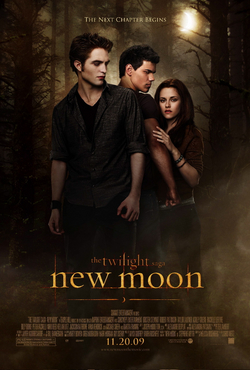
Lis and I have been rewatching the Twilight movies this October. Yesterday, we watched New Moon and then Eclipse.
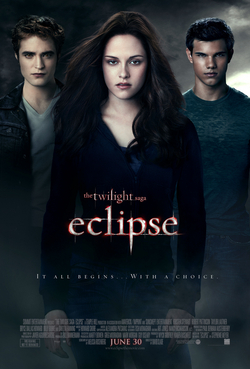
In Eclipse, Edward (Robert Pattinson) and the Cullens have returned to Forks because Edward was just so depressed not being near Bella (Kristen Stewart), and Bella somehow flew all the way to Italy to be with him without getting in very much trouble with her father. Edward has asked Bella to marry him, but Bella is upset that Edward won’t “change me,” and she’s also wondering if maybe she and Jacob (Taylor Lautner) are meant to be more than just friends. The first time I saw this movie, I was Team Edward all the way, but now I see Jacob as being the better choice because he could provide her with a stable and protective home without having to transform her into a supernatural creature beforehand.
While Bella is trying to choose between Edward and Jacob, vampire Victoria Sutherland (Bryce Dallas Howard) is gathering an army of “newborn” vampires to attack the Cullens and kill Bella to get revenge for the death of her lover, James, in the first Twilight film. Alice (Ashley Greene) is having visions of the newborns attacking. The Cullens enter an alliance with the werewolves to keep Bella safe.
There’s a lot going on in this movie. I feel bad for anyone who watched Eclipse as their first Twilight movie because they probably had no idea why Dakota Fanning showing up with her red eyes was such a big moment. Even while Bella is trying to pick between Edward and Jacob and get ready for the big battle, life goes on in Forks. She goes to her high school graduation, where Jessica (Anna Kendrick) is the valedictorian. She’s living both the life of a teenager and being vampire-stalked at the same time. Her father even tries to have “the talk” with her, but it’s not necessary. Edward doesn’t want to turn her into a vampire and he doesn’t want to have sex before marriage. He’s a 104-year-old virgin. That’s how strongly he believes in waiting for someone you love. That’s one of those things that seems sweet the first time you hear it and then obsessive the second time.
I liked Eclipse, even if parts of it seem pretty dumb now. My sister and I both agreed that it was foolish of Bella to ask Edward to make her a vampire before she even knew if they were sexually compatible. Becoming a vampire is an even bigger commitment than going exclusive. But it’s a fantasy. The big battle at the end is exciting and it actually happens instead of just being Alice having a vision. Edward proves that he can fight just as well as Jacob. I still think Jacob would be the better provider.
Today, Lis and I continued to rewatch the Twilight movies on Netflix.
New Moon was the second part of the Twilight Saga. Because people in town are starting to notice that he hasn’t aged in ten years, Carlisle (Peter Facinelli) decides that the Cullens need to move to a new location. Edward explains to Bella that the worst thing a vampire can do is allow humans to discover that they exist. Edward also says that Bella can’t come with the Cullens because it would raise suspicion and it would also put Bella in danger, since even the members of his family are tempted to drink her blood. Bella says, “Change me!” and Edward says not unless they’re married.
The Cullens leave and Bella has a breakdown, and even her father wants to send her back to Florida to live with her mother. Finally, Bella starts hanging out with Jacob (Taylor Lautner), a member of the Quileute Tribe who is also revealed to be a werewolf. Werewolves and vampires hate each other, but the Forks werewolves had arranged a truce with the Cullens where they wouldn’t attack them as long as the Cullens didn’t bite any humans. If Edward had changed Bella, the truce would have been canceled and the werewolves would have had to attack Bella.
When Alice (Ashley Greene) misinterprets a vision of the future and thinks that Bella is dead, Edward leaves wherever it is he’s living and goes to Italy to ask the ruling vampire council to destroy him. Even though Jacob’s in love with her, Bella goes to Italy to try to save Edward’s life.
I remember really liking New Moon when I saw it because I was in a long-distance relationship and I could relate to what Bella was going through. When we rewatched it, I had forgotten how long the movie was and how little actually happens until Bella goes to Italy, which doesn’t even happen until the movie’s nearly over. The other thing I forgot about this one was that they really overdid the vampire makeup on Robert Pattinson at the start of the movie. He was so pale and wearing so much lipstick that everyone should have been able to figure out that he was a vampire just by looking at him.
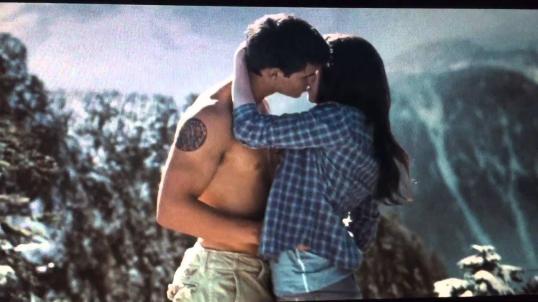
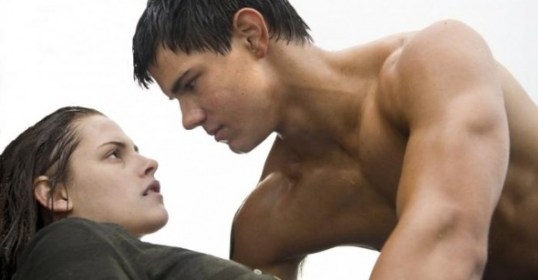
When this movie came out, everyone was either Team Jacob or Team Edward. I was Team Edward because, again, I was in a long-distance relationship. But rewatching it, I realized that I should have been Team Jacob because he really was nicer to Bella and he wasn’t constantly sulking about everything like Edward. Jacob came with a lot less baggage and he was part of that tribe where you’re apparently not allowed to wear a shirt. No one in the tribe wore a shirt and they all looked like models. They probably all were models. This movie knew what we wanted to see.
I still enjoyed rewatching the movie. The men were all sexy and brooding. Anna Kendrick was funny. Dakota Fanning had red eyes and sent psychic pain waves. Bella said, “Change me,” and Edward looked tortured. It wasn’t as good as I remembered and it probably could have been cut down to 30 minutes without really losing much of the plot but it’s Twilight. If you know, you know.
“This is not a war any more than there’s a war between men and maggots… This is an extermination.” — Harlan Ogilvy
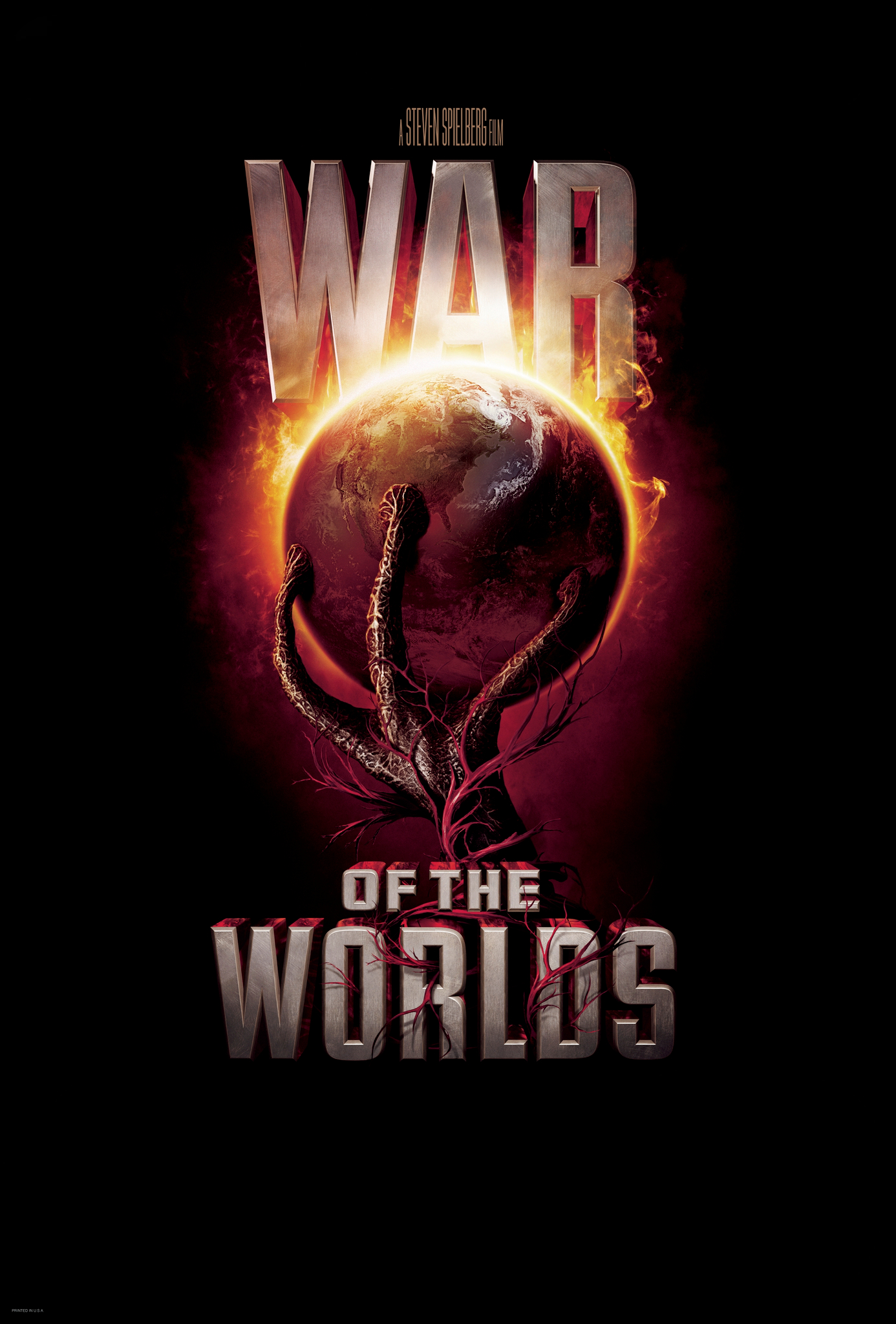
When looking back at the vast filmography of Steven Spielberg, science fiction usually evokes a sense of sweeping wonder, starry-eyed optimism, or at the very least, a deeply felt humanism. Films like Close Encounters of the Third Kindand E.T. the Extra-Terrestrial taught generations to look at the stars with hope rather than dread. Even when things took a darker turn in Jurassic Park or the neon-drenched corridors of Minority Report, there remained a foundational thrill—a cinematic ride that ultimately leaves the audience exhilarated. However, his 2005 adaptation of H.G. Wells’ classic novel, War of the Worlds, stands as a radically different beast altogether. It is arguably the bleakest, most claustrophobic blockbuster Spielberg ever directed, operating less as an adventurous alien invasion epic and more as a raw, nerve-shredding analog for collective trauma. Emerging a mere four years after the collapse of the Twin Towers, the film strips away the romanticism of cosmic exploration and replaces it with a visceral, ground-level nightmare of sudden, inexplicable annihilation.
The brilliance of Spielberg’s approach, working alongside screenwriter David Koepp, lies in how intensely localized the narrative remains. Rather than tracking the invasion from the traditional perspective of military command centers, global leaders, or brilliant scientists, the audience is trapped inside the chaotic, deeply flawed perspective of Ray Ferrier, played with a brilliant, unheroic franticness by Tom Cruise. Ray is not a savior; he is a deadbeat, blue-collar crane operator living in a graying New Jersey suburb. He is the kind of father who doesn’t know his son’s school schedule and has an empty refrigerator when his ex-wife drops off their two children, Robbie and Rachel. By centering the apocalypse around a fractured, working-class American family, Spielberg roots the cosmic terror in a painful reality. The impending destruction of the planet mirrors the collapse of Ray’s domestic stability, forcing a man who can barely manage basic parental accountability to suddenly navigate the literal end of the world.
From a purely technical standpoint, the first act of War of the Worlds features some of the most masterful suspense and terror ever committed to celluloid, heavily leaning on a barrage of explicit 9/11 visual imagery. The sequence where the first Martian Tripod emerges from beneath a New Jersey intersection is a masterclass in modern cinematic dread, directly weaponizing the fresh, collective trauma of the post-9/11 American public. Spielberg eschews the clean, omniscient visual language of standard disaster cinema for an organic, chaotic documentary style, mirroring the sudden, disorienting informational and electronic blackout experienced by millions during the real-world attacks. The camera lingers on heavy, ominous storm clouds moving against the wind, the eerie crackle of localized lightning strikes, and the unsettling silence of a neighborhood stripped of electronic life. When the asphalt fractures and the colossal, three-legged war machine rises from the earth, the sound design hits the audience like a physical blow. The Tripod’s horn—a terrifying, mechanical foghorn groan—instantly triggers an ancient, mammalian fight-or-flight response. As the machine opens fire with its disintegration beams, turning nearby pedestrians into literal puffs of ash, the camera tracks Ray running for his life through a massive, rolling cloud of dust and debris. When Ray finally makes it back to his house, the ash of his vaporized neighbors covers his clothes and face, an unmistakable and deeply unsettling visual that explicitly echoes the horrific reality of the streets of Manhattan on September 11, 2001.
This deliberate invocation of post-9/11 anxiety is the thematic engine that drives the entire film. Spielberg does not hide these parallels; he highlights them with a devastating accuracy that makes the film difficult to watch even decades later. When the invasion begins, a terrified, screaming Rachel asks her father if it is “the terrorists,” a line that perfectly encapsulates the collective, reactionary psyche of the mid-2000s American consciousness, where any sudden, catastrophic violence was instantly filtered through the lens of domestic terrorism. The imagery of walls plastered with photocopied missing-persons flyers, crowds of refugees trudging down desolate highways with whatever belongings they can carry, and a derailed, blazing passenger train hurtling past an abandoned station all tap into a very specific, historical vulnerability. In Independence Day, an alien invasion was an opportunity for global unity and triumphant, cigar-chomping counter-offensives. In Spielberg’s hands, the invasion is an overwhelming, asymmetric slaughter that reduces the world’s most powerful military to a collection of burning tanks rolling over a ridge into an invisible abyss.
However, while the film masterfully handles the grand-scale terror of the invasion, it stumbles significantly when navigating its internal family dynamics, particularly regarding Ray’s son, Robbie, played by Justin Chatwin. I completely agree with the widespread criticism that Robbie is an intensely annoying, deeply self-destructive presence whose actions and decisions repeatedly defy basic human survival instincts. Throughout the crisis, his behavior goes beyond typical teenage rebellion and crosses into pure narrative absurdity. Instead of helping protect his traumatized, screaming younger sister, Robbie consistently sabotages his family’s safety to aggressively gawk at a hopeless war zone. His sudden, obsessive urge to join a military force that is clearly being pulverized by an unearthly power feels entirely unearned and maddening to watch. His character arc reaches a peak of irritation when he blindly runs over a burning ridge directly into a mechanical meat grinder, abandoning his family for a bizarre, suicidal patriotic impulse. This makes his miraculous survival at the end of the film a massive narrative misstep; having him casually show up at his grandparents’ pristine Boston home after witnessing a literal military massacre completely undermines the high-stakes realism Spielberg spent two hours building, turning what should have been a tragic consequence of his own foolishness into a cheap, unearned happy ending.
As the narrative progresses past the family friction, the film shifts its focus from external spectacle to the internal breakdown of human morality under the weight of existential terror. This transition is embodied by the mid-movie introduction of Harlan Ogilvy, played with an unsettling, unhinged intensity by Tim Robbins. Trapped in a dark basement while the Martians harvest the surrounding countryside, Ray and Ogilvy represent two radically different, yet entirely believable, reactions to trauma. Ogilvy is consumed by a vengeful, nihilistic madness, obsessed with digging tunnels and launching a futile, suicidal guerrilla war against an enemy that operates on a completely different evolutionary plane. Ray, conversely, is driven solely by a desperate, animalistic urge to protect his daughter. The sequence culminating in Ray’s decision to kill Ogilvy behind closed doors to keep him from alerting the aliens is one of the darkest thematic beats in Spielberg’s career. It forces the audience to confront a disturbing truth: the true horror of the apocalypse is not just what the monsters do to us, but what we are willing to do to each other to survive another hour.
The film’s visual palette, masterfully crafted by cinematographer Janusz Kamiński, reinforces this pervasive sense of rot and despair. Kamiński utilizes a heavily bleached, high-contrast aesthetic that drains the world of vibrant color, leaving behind a cold, metallic landscape dominated by sickly slates, deep shadows, and stark whites. This visual harshness reaches its zenith during the infamous “Red Weed” sequence. As the Tripods begin carpet-bombing the landscape with human blood to fertilize an invasive, crimson alien flora, the film transforms into a surrealist, gothic horror show. The Earth itself is literally being terraformed by the bodily fluids of the slaughtered, creating a grotesque, bleeding ecosystem that visually mirrors the internal rot of the surviving human populations. It is a sequence that feels closer to the cinematic nightmares of H.R. Giger than the traditional whimsy of a Spielbergian adventure.
Despite its immense strengths, War of the Worlds is frequently criticized for its final act, a critique that deserves a nuanced evaluation. The abrupt resolution—wherein the seemingly invincible Martians suddenly succumb to Earth’s microscopic bacteria—is lifted directly from H.G. Wells’ original 1898 text. While narratively faithful, its execution in a modern Hollywood blockbuster can feel jarring, functioning as a biological deus ex machina that robs the human protagonists of a traditional, heroic victory. Furthermore, Robbie’s unearned survival represents a sudden, almost desperate pivot back toward Spielberg’s traditional family-first sentimentality. This neat resolution feels somewhat unearned given the preceding two hours of unrelenting, uncompromising nihilism, momentarily fracturing the film’s gritty, documentary-like reality.
Yet, looking past these structural stumbles, the final voiceover adaptation of Wells’ text offers a profound philosophical punctuation mark to the nightmare. The realization that humanity has earned its right to survive on this planet not through military might or moral superiority, but through millions of years of evolutionary struggle alongside the tiniest microbes, recontextualizes the entire ordeal. It reminds the audience of our inherent fragility and the hubris of believing ourselves to be permanently secure in our modern, technological fortresses. Spielberg’s War of the Worlds remains an incredibly potent piece of mainstream filmmaking precisely because it refuses to comfort its audience for the majority of its runtime. It stands as a brilliant, terrifying time capsule of an era defined by sudden vulnerability, demonstrating that even the master of cinematic wonder could look into the abyss of the cosmos and see nothing but our own reflections looking back in sheer terror.
Dreamer is based on the true story of a horse that did something that few horses have managed to do. It broke a bone but it still managed to make a comeback as a racehorse.
I love horses, which is why I’m not a fan of horseracing. I find horseracing to be cruel. The horses, which have an innate need to follow the orders of whoever is riding it, will literally run themselves to death to try to keep their jockeys happy. When you add that many racehorses are kept in deplorable conditions and that, with insurance, they are often worth more dead than alive, you have a sport that brings out the worst in a lot of people. Horses are wonderful animals because they are so loyal. That loyalty deserves better than being shot because they broke a leg due to their trainer’s negligence.
Given how I feel about horseracing, I’m amazed that I liked Dreamer when I saw it in the theaters and I was surprised that I still liked it when I watched it this weekend. I guess it’s because the horse in Dreamer is not euthanized. She would have been euthanized if not for the fact that her trainer (Kurt Russell) brought his daughter (Dakota Fanning) to work with him that day. Russell loses his job but he does gain a horse. After the horse recovers from its injury, Russell hopes to breed the horse. It turn out that the horse cannot have a foal but it can still race. With Russell and Fanning’s help, the horse returns to competition and shows up everyone who gave up on her. Russell and Fanning refuse to give up on the horse and the horse doesn’t give up on herself. Along the way, Russell and Fanning finally spend time together as father and daughter and Russell reconnects with his wife, Elisabeth Shue, and his father, Kris Kristofferson. Everyone involved gives a good job. The movie may be predictable but there aren’t any false notes in any of the performances. I not only wanted the horse to get better but I wanted the family to grow closer and I was happy when both those things happened.
Dreamer is a good family movie. If only every trainer was as kind and willing to admit his mistakes as Kurt Russell is in this film. There’s nothing surprising about Dreamer but it’s still a movie that makes me cheer. It makes me cheer in a way that a real horse race never would.
Robert McCall (Denzel Washington), the Equalizer, is killing people again.
This time, he goes to Sicily, where he invades a local winery, kills all of the guards, and then shoots the winery’s owner in the ass while the already wounded man pathetically crawls away. Admittedly, everyone that McCall killed was bad and the winery owner would have killed McCall if things had worked differently but still, it’s an awful lot of death and violence just to retrieve some money that was stolen in a cyber-heist.
As McCall leaves the winery, he sees the owner’s young son and he declines to kill a child because, in the movies, adults only kill other adults. Otherwise, the viewer might lose sympathy for them. The kid, however, does not live under the rules of Hollywood so he grabs a shotgun from his father’s car and shoots McCall in the back. McCall falls to the ground and attempts to shoot himself in the head. However, his gun is out of bullets.
That’s right, our hero nearly shot himself in the head. If he had succeeded, the movie would have been much shorter. But since he wasted all of his bullets on the guards at the winery, McCall just passes out from the shock. Eventually, he is found and taken to a village doctor named Enzo (Remo Girone). Enzo removes the bullet. When McCall awakens, Enzo asks him if he’s a good man or a bad man. Enzo later says that McCall’s inability to answer was all the proof the he needed to know that McCall was a good a man.
McCall recuperates in the village and soon, he becomes an accepted member of the community. He starts to contemplate leaving behind his life of violence and, in a well-done sequence, is haunted by the memory of how many people he killed at the winery. But when the local Camorra starts to harass the villagers and threaten McCall’s new friends, it’s time for McCall to once again go to action.
If I sound a bit snarky, it’s because I’ve lost track of the number of films that I’ve seen about stoic former intelligence agents who kill a lot of people. The Equalizer 3 is actually a well-made film, one that makes good use of its star’s charisma and the beautiful Sicilian scenery. Denzel Washington isn’t getting any younger but he’s still believable as someone who could take down an army single-handedly and, even more importantly, he does a good job of portraying what a life of violence would do to a man’s soul. Appropriately enough given the Sicilian setting, the film is full of religious imagery and The Equalizer 3, at its best, becomes a story about a man searching for redemption and a higher calling.
That said, the film is entertaining and it holds your interest (and I’m thankful that this is one mainstream film that does not feature an excessive running time) but the plot is undeniably formulaic and the villains aren’t particularly interesting. There’s a subplot featuring Dakota Fanning as a young CIA agent that feels tacked on. On a personal note, I find myself growing weary of CGI violence and stories about one-man killing machines. (When I was younger, I could easily celebrate a hundred henchmen getting taken out by our hero. Now, I found myself saying, “He probably had a family.”) The film ends on a note of redemption for McCall and I hope he takes it for all it’s worth.
I’m having a lot of mixed feelings right now, everyone.
Last night, my DVR overheated and I not only burned my thumb unplugging it but I’ve also probably lost the 265 things that I had recorded on there, including every episode of Twin Peaks: The Return. I called our provider about it and they are sending over a new DVR, which should arrive in two days. Personally, I was hoping they would say, “We’ll get someone out to your house immediately” but no.
So, that really sucks. However, as annoyed as I am by all that, I’m still happy because we have a new trailer for Once Upon A Time In Hollywood and it looks really, really good! As I sit here writing this, I’m waiting to here what type of reception the film got when it premiered on Cannes today. For now, though, enjoy the new trailer! Tarantino has said that the film takes place over three separate days in Hollywood and the trailer features Leonardo DiCaprio (as Rick Dalton) returning to Hollywood, Brad Pitt (as Dalton’s stunt double) apparently meeting the Manson Family, and Margot Robbie (as Sharon Tate) watching herself in the Wrecking Crew. Among the huge supporting cast, Timothy Olyphant, Kurt Russell, Dakota Fanning, Luke Perry, Margaret Qualley, and Al Pacino are specifically highlighted.
How exactly Once Upon A Time In Hollywood, which is being advertised as being a bit of a swinging comedy, will deal with the horrific reality of Charles Manson is something that I’ve been wondering around ever since the project was first announced. Is Brad Pitt maybe going to kill him, just as Eli Roth killed Hitler at the end of Inglourious Basterds? We’ll find out soon!
Moving right along with my look back at 2018, here are 10 good things that I saw on television.
Please note, I did not say that these were the ten “best” things on television in 2018. Instead, these are ten things that I enjoyed enough that, in January of 2019, they still pop to my mind whenever I ask myself, “What did I enjoy last year?” As always, this is just my opinion and you’re free to agree or disagree.
Got it? Okay, let’s go!
Showtime reran Twin Peaks: The Return
Okay, so maybe I’m cheating a little here. Twin Peaks: The Return originally aired in 2017. You may remember that, for about 6 months, the Shattered Lens essentially became a Twin Peaks fan site. Still, I can’t begin to describe how excited I was to discover that, over the course of a weekend, Showtime would be reairing the entire series. I binged every episode and I discovered that, even with the benefit of hindsight, it’s still one of the greatest shows of all time. Unfortunately, the Emmy voters did not agree. Bastards.
2. The Alienist
It took me a little while to really get into The Alienist but, once I did, I found myself growing obsessed with not only the sets and the costumes but the mystery as well! Daniel Bruhl, Luke Evans, and Dakota Fanning all did excellent work and I can’t wait for the sequel!
3. Jesus Christ Superstar Live
I was skeptical. I had my doubts. I thought I’d spend the entire two and a half hours rolling my eyes. Jesus Christ Superstar proved me wrong.
4. The Americans
One of the best shows on television went out on a high note.
5. Barry
Barry premiered on HBO and it quickly became a favorite of mine. While I agree that Bill Hader and Henry Winkler deserve all of the attention that they’ve received, I’d also say that Stephen Root continues to prove himself to be one of our greatest character actors.
6. Big Brother
The reality show that so many love to hate finally had another good season. Since I get paid to write about the show for another site, that made me happy. Seriously, some of the previous seasons were painful to watch so Big Brother 20 was a huge relief. (Plus, BB 20 inspired everyone’s favorite twitter game: “Will Julie Chen Moonves show up tonight?”)
7. Maniac
As much fun as it is to complain about Netflix, occasionally they justify the price of their existence by giving us something like Maniac.
8. You
Sometimes, I loved this show. Sometimes, I absolutely hated it. However, I was always intrigued and never bored. I can’t wait to see what happens during season 2.
9. Trust
For all the attention that was given to The Assassination of Gianni Versace, Trust was the best FX true crime series of 2018. Along with an intriguing story, it also featured great performances from Donald Sutherland, Hillary Swank, and Brendan Fraser. (Yes, Brendan Fraser.)
10. Westworld
I know a lot of people didn’t care much for the latest season of Westworld. I loved it and, in the end, isn’t that what really matters?
That’s it for television! Coming up next, it’s the entry in Lisa’s look back at 2018 that we’ve all been waiting for, my picks for the best 26 films of the year!