One what would have been her birthday, today’s song of the day comes to us from Olivia Newton-John.
One what would have been her birthday, today’s song of the day comes to us from Olivia Newton-John.
Today, the Shattered Lens wishes a happy birthday to actress Linda Hamilton.
This scene that I love is the haunting conclusion of the original Terminator. Even with the Terminator (momentarily) vanquished, there’s still a storm coming.
4 Shots From 4 Films is just what it says it is, 4 shots from 4 of our favorite films. As opposed to the reviews and recaps that we usually post, 4 Shots From 4 Films lets the visuals do the talking!
Today, we pay tribute to the cinematic year of 2005. It’s time for….
4 Shots From 4 2005 Films
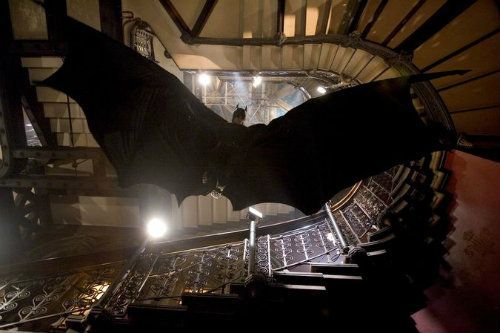
Batman Begins (2005, dir by Christopher Nolan)

The New World (2005, dir by Terrence Malick)
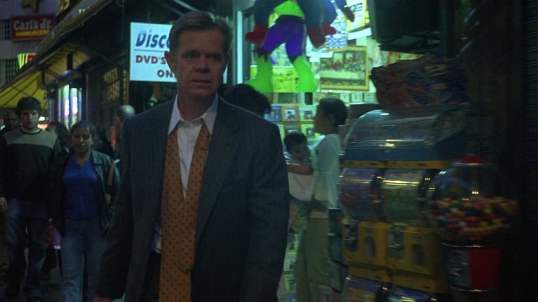
Edmond (2005, dir by Stuart Gordon)
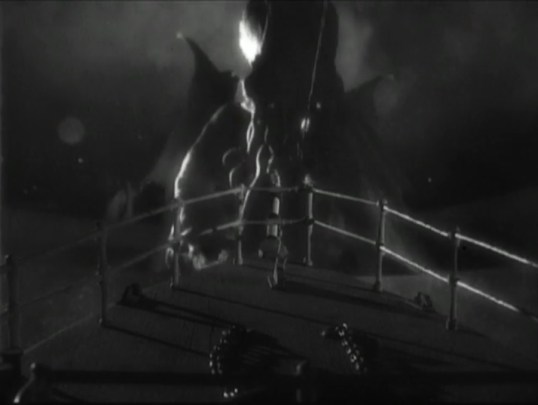
The Call of Cthulhu (2005, directed by Andrew Leman)
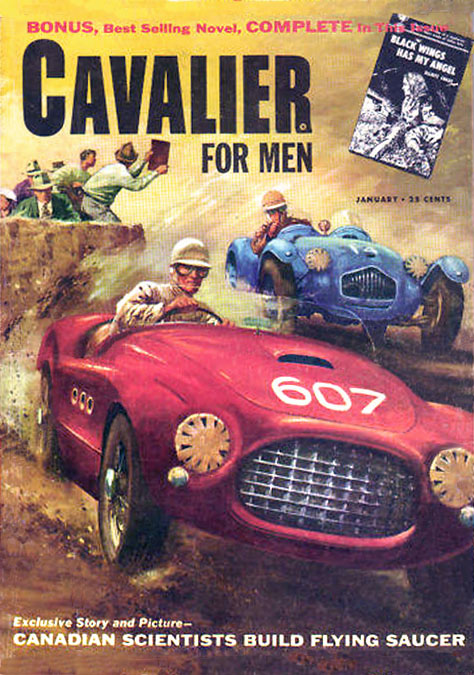
by Hamilton Greene
This cover is from 1954.
For this music video, director Mark Romanek was inspired by both Midnight Cowboy and The 400 Blows. Beck, wandering through New York City with his cowboy hat and his radio, was meant to be a modern-day Joe Buck while the freeze frames were inspired by the end of Truffaut’s portrait of alienated youth.
Two of the videos most memorable moments were accidental. When the car nearly runs over Beck, it is meant to recall the “I’m walking here!” scene from Midnight Cowboy but the car’s driver didn’t hit the brakes soon enough and Beck was actually hit by the car and injured his leg as a result. The other unplanned scene was when the pigeons took flight just as Beck approached them.
The video for Devil’s Haircut would go on to win two MTV Music Video Awards, one for Best Editing and one for Best Male Video.
Enjoy!
Welcome to Late Night Retro Television Reviews, a feature where we review some of our favorite and least favorite shows of the past! On Fridays, I will be reviewing SLEDGE HAMMER!, a cop comedy which ran on ABC from 1986 to 1988. The entire series can be found on Prime!

Trust him. He knows what he’s doing.
Episode 1.7 “All Shook Up”
(Dir by Jackie Cooper, originally aired on November 7th, 1986)
15 Elvis impersonators have been murdered in the city. Doreau wonders how anyone can be so evil. Sledge Hammer wonders about the person who draws the chalk outlines at crime scenes. “What type of life is that?”
Captain Trunk, who spends this episode dealing with a migraine, is upset that there aren’t more clues as to the identity of the murderer. Hammer suggests that it will be easier to solve the case once more Elvises have been murdered. To Trunk’s disappointment, Hammer turns out to be right. A woman witnesses the 16th murder and reports that the killer was not only dressed like Elvis but he was also carrying a golden microphone!
It’s time for Sledge Hammer to go undercover! Doreau enrolls him in a school for Elvis impersonators and then accompanies him to the National Elvis Impersonator Semi-Finals. The highlight of the episode is Sledge Hammer imitating Elvis. He can’t do the voice and he can’t do the dance moves but he’s totally convincing when he draws a gun and shoots it. Later, he shows off his karate moves and wins a trophy.
As for the murderer, he turns out to be the janitor (Raymond Ma) at the Elvis school. He feels that he’s the best Elvis in the world. Unfortunately, for him, he’s electrocuted when he accidentally holds his golden microphone too close to a live wire. With the city safe for Elvis impersonators, Sledge announces that he’s going to Graceland.
This week’s episode was just ludicrous enough to work. Between the Elvis puns and all of the bad singing and dancing, it kept me laughing (or, at the very least, smiling). As usual, David Rasche’s enthusiastic performance more than made up for any jokes that didn’t quite land. This was also a good episode for Anne-Marie Martin, who played Doreau’s relationship with Hammer with just the right combination of frustration and affection.
Sledge Hammer has left the building but he’ll be back next week.
As someone who was born in the early 70s, my Superman will always be Christopher Reeve. Born on September 25th, 1952, Reeve started out as the “Man of Steel” and developed into a darn good actor over the years. To celebrate his birthday, I thought I’d share a clip from a movie where he crossed paths with my favorite actor of all time, Charles Bronson. Back in 1993, they made the TNT cable movie THE SEA WOLF together. It’s my favorite Bronson film of the 90s, and he and Reeve are both excellent. Thanks for the memories, Superman!
Welcome to Retro Television Reviews, a feature where we review some of our favorite and least favorite shows of the past! On Fridays, I will be reviewing St. Elsewhere, a medical show which ran on NBC from 1982 to 1988. The show can be found on Daily Motion.
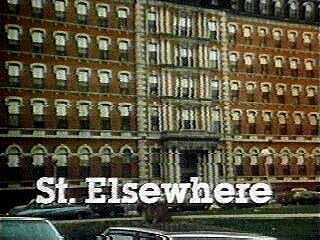
This week, St. Elsewhere gets topical.
Episode 4.12 “The Boom Boom Womb”
(Dir by Nicholas Mele, originally aired on January 8th 1986)
When Elliot’s car gets stuck in the snow, Luther offers to help in return for Elliot looking after Luther’s homing pigeon. Elliot, whose father was a veterinarian, agrees. Unfortunately, when Elliot attempts to turn his sink into a birdbath, the pigeon is electrocuted after it accidentally pulls an electric shaver into the water. Elliot originally tells Luther that the bird flew out a window and then froze to death on the windowsill. Luther accepts the story. A guilt-ridden Elliot later tells Luther the truth, and Luther shoves him to the ground.
Watching this storyline, I thought about how bad I always feel for Luther. In many ways, he’s the smartest guy on the show. He’s certainly the most compassionate and the least judgmental. (Yes, he pushed Elliot, but Elliot did lie to him about how the bird died.) And yet, because he didn’t grow up rich, Luther is stuck working as an orderly, and the doctors frequently seem to look down on him.
While Elliot’s lying to Luther, Helen Rosenthal is trying to figure out why her youngest son, Jeff (Ina Fried), keeps acting out in school and at home. She even takes him to see St. Eligius’s staff psychiatrist, Dr. Weiss (Philip Sterling). Dr. Weiss’s diagnosis is that Helen’s son is basically growing up to be a jerk.
As for the rest of the episode, it was all about current events, 1986-style. Pru (Amanda Wyss), the developmentally challenged teenager who got pregnant during her last hospital visit, has an abortion even though she doesn’t know what that means. Dr. Morrison struggles to reconcile his pro-life beliefs with his job as a doctor. Dr. Ehrlich, who has no beliefs, performs the operation. Meanwhile, a bomber (Rob Garrison) blows up the Boston Women’s Clinic and, as the episode ends, is seen sneaking a bomb into St. Eligius.
This is typically the type of storyline that would feature Westphall wandering around glumly. Westphall, however, is busy at a hearing to determine whether his housekeeper, Morena (Edith Diaz), will be deported back to El Salvador. Westphall is worried about her being deported because she’s so good with Tommy. In other words, this is yet another example of Westphall making someone else’s problem all about himself.
This episode was a bit too heavy-handed for my tastes, but I did appreciate that Dr. Morrison was at least not portrayed as a monster for his views. When it comes to being heavy-handed, the New Amsterdam episode that aired in 2022 and dealt with Roe v. Wade being overturned will always be the champion. That episode featured a slow-motion montage of people staring at their phones, dropping their coffee cups, and, in one case, running down a street. (“Maybe she’s running to the clinic to get an abortion while she still can,” Erin said when we saw the opening of the episode.) Compared to that, this episode of St. Elsewhere is actually pretty even-handed.
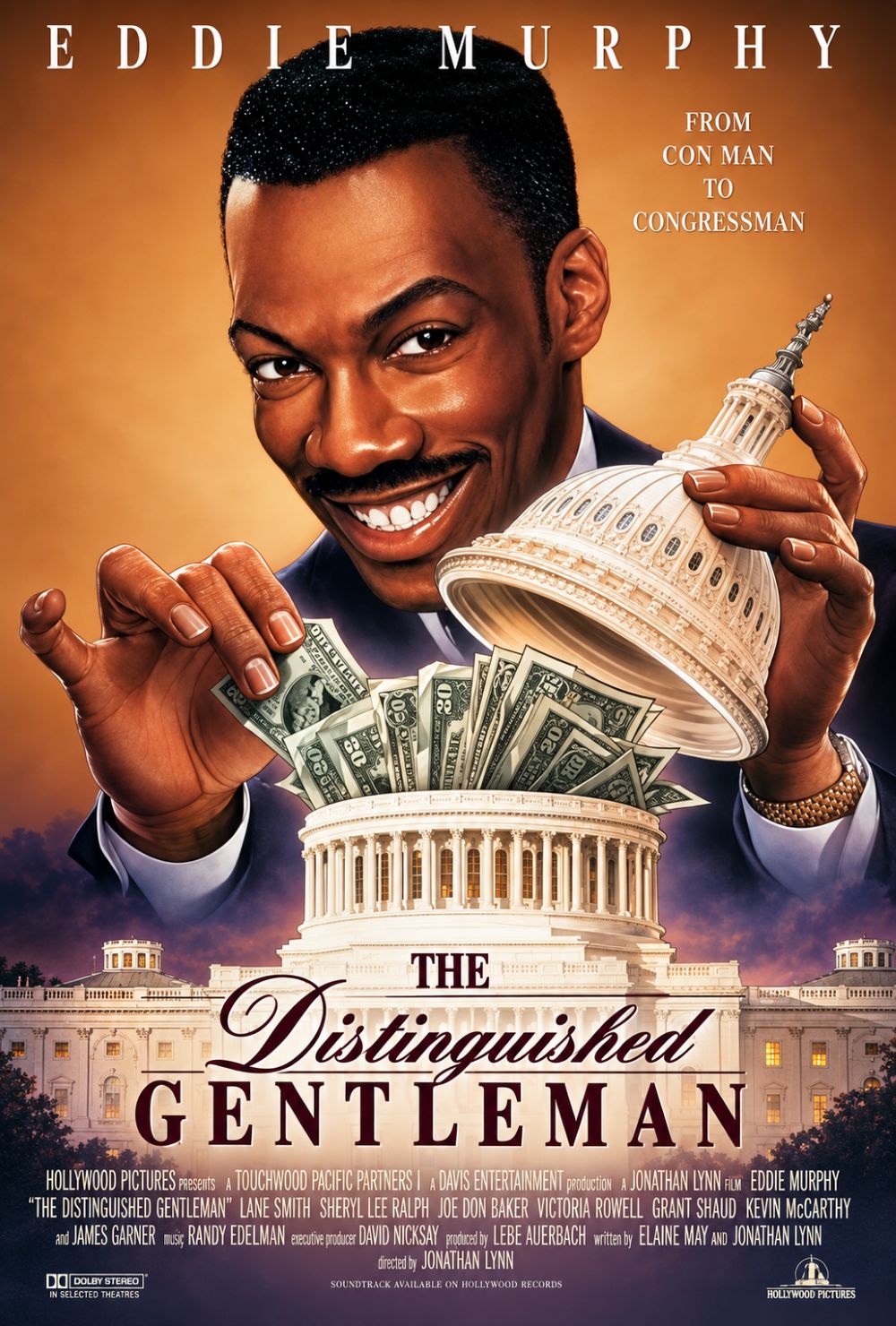
“With all this money coming in from both sides, how does anything ever get done?” — Thomas Jefferson Johnson
The Distinguished Gentleman is an uneven but enjoyable Eddie Murphy comedy whose premise has become more relevant with time. Directed by Jonathan Lynn, the 1992 film casts Murphy as Thomas Jefferson Johnson, a Florida con man who discovers that a recently deceased congressman had the exact same name. Seeing a shortcut to money and status, Johnson runs for the vacant House seat, wins largely on name recognition, and enters Washington with no meaningful political experience. In 1992, that premise played as broad political satire. Today, it carries a more uneasy edge, because its suggestion that image, recognition, and confidence can outrun scrutiny does not seem nearly as far-fetched.
That change in perspective makes the film’s central joke more interesting. Johnson begins as a small-time hustler who understands scams, pressure, ego, and persuasion. Once he reaches Congress, however, he discovers a political world that runs on many of the same instincts. The people around him do not call their dealings scams. They talk about donations, access, relationships, opportunities, and constituent concerns. But Johnson sees the transaction beneath the polished language immediately. The movie’s sharpest idea is that he may be a con man, yet he is not automatically the least honest person in Washington. He merely lacks the expensive suits and professional vocabulary used to make self-interest look respectable.
Murphy is exactly the right actor to make that contradiction work. Thomas Jefferson Johnson has to be selfish enough for the premise to hold together, clever enough to survive in an unfamiliar environment, and charming enough that the audience still wants to follow him after he wins office through deception. Murphy brings all of those qualities to the role. Johnson enjoys the attention, travel, influence, and special treatment attached to public office because he sees Congress as the biggest score he has ever found. At the same time, Murphy gives him enough quickness and warmth that he never becomes unpleasant. Even when Johnson does not understand what is happening around him, he moves through Washington with the confidence of someone who assumes he belongs there.
That confidence drives the movie’s strongest material. Johnson may not know committee procedure, legislative language, or public policy, but he knows people. He can recognize when praise is a setup, when a favor comes with strings attached, and when a supposedly helpful figure is treating him as an investment. This makes him an effective comic guide through Washington’s rituals. He is unqualified in the usual sense, but he is unusually qualified to identify the self-dealing hidden behind political formality. Jonathan Lynn understands the humor in that contrast and keeps the early scenes moving briskly through offices, hearings, fundraisers, press events, and lobbyist meetings. His direction is functional rather than visually distinctive, but it gives Murphy room to work and makes the political setting clear without drowning the comedy in procedure.
The problem is that the movie gradually moves away from the very idea that gives it its satirical bite. Johnson’s election is a pointed joke about name recognition, voter inattentiveness, and political branding. He wins because his name is familiar enough to inspire trust, not because anyone has evaluated his experience, policies, or character. That setup could have supported a more sustained comedy about campaigns, media manipulation, and the ease with which public image can substitute for qualification. Instead, the film shifts into a more conventional pharmaceutical-company corruption plot, giving Johnson an external villain and a clear reason to become more responsible.
That shift is understandable, since the story needs stakes beyond Johnson simply enjoying the perks of Congress. It also gives Murphy a more sympathetic character arc. Once Johnson sees the real-world consequences of corporate influence and political favors, he begins to use his instincts against people whose schemes are more damaging than his own. The change works because he does not become a completely different person. He remains fast-talking, opportunistic, and alert to every available angle. What changes is his sense of scale: his scams are about quick money, while the larger political and corporate schemes around him can hurt ordinary people while remaining hidden behind legal language and respectable appearances.
Still, making the conflict so clear-cut also weakens the satire. The opening suggests that corruption is part of a broader culture of money, access, public relations, and political influence. The later plot makes it easier to imagine that the problem lies mainly with a few especially corrupt people. Lane Smith’s Dick Dodge represents that polished form of corruption effectively. Dodge has the calm authority and practiced respectability of a politician who can make unethical behavior sound like normal procedure. He is a good villain precisely because he does not need to look obviously sinister; he simply treats power as something to be managed for private benefit.
Dodge’s presence becomes more useful because the film gives him a genuine counterweight in Charles S. Dutton’s Congressman Elijah Hawkins. Hawkins is almost Dodge’s opposite: plainspoken, principled, and committed to the idea that public office should mean public service. Dutton gives the role enough strength that Hawkins does not come across as a bland symbol of virtue. He is not there simply to lecture Johnson. Instead, he demonstrates that integrity and competence can exist within the same institution that has rewarded Dodge’s cynicism. Through these two men, Johnson sees both versions of political life: Dodge shows how power can be abused, while Hawkins shows what it is supposed to accomplish.
That contrast helps the film’s best themes land even when the plot becomes more routine. Johnson starts out believing that public office is just another hustle, only with better benefits and larger payouts. Hawkins gives him a reason to see the job differently, while Dodge proves that the cynicism Johnson brought to Washington is not entirely misplaced. Johnson’s eventual decision to push back against corruption therefore feels earned, even if the film resolves the conflict more neatly than its setup deserves. He does not become an idealist so much as a hustler who finally recognizes that the people above him are running a far bigger and more harmful game.
Viewed now, that idea carries more weight than it did in 1992. George Santos’s rise and eventual expulsion from Congress following repeated revelations about his background and finances offered a modern example of political presentation outpacing public scrutiny. Tommy Tuberville’s move from high-profile college-football coach and broadcaster into the U.S. Senate reflects a different but related reality: name recognition built outside politics can be a major electoral asset. The point is not that either man is literally comparable to Thomas Jefferson Johnson. It is that the film’s basic concern—how easily familiarity and confidence can be mistaken for qualification—has become harder to dismiss as mere comic exaggeration.
The same pattern can be seen beyond Congress. Donald Trump reached the presidency after decades as a celebrity businessman and television personality, while Arnold Schwarzenegger’s worldwide fame as a bodybuilder and movie star became a significant advantage in his successful run for governor of California. Celebrity alone never explains an election, and prior careers in sports or entertainment do not automatically make someone unfit for public office. Still, those examples show why the film’s name-recognition joke now feels more pointed. A highly recognizable candidate begins with a built-in audience, a simple public identity, and the kind of familiarity that many traditional candidates spend years trying to earn.
That dynamic has only become more visible as media personalities from different ideological camps seek office. Television hosts, pundits, podcasters, athletes, entertainers, and online figures can launch campaigns with established audiences, fundraising networks, and brand recognition already in place. In that environment, Johnson’s path to office feels less like an impossible gag and more like a deliberately exaggerated version of a real political tendency. The Distinguished Gentleman is not predicting every modern development, but it understands that voters may attach trust to a familiar name or face before they ask harder questions about qualifications, judgment, or policy.
This added relevance does not erase the film’s flaws. The comedy is still inconsistent, and the lobbyists, politicians, and corporate villains are often broader than they are funny. Murphy can make routine scenes entertaining, particularly when Johnson bluffs through official settings with total confidence despite not knowing the rules. But the movie often settles for familiar Washington stereotypes when it could push its satire further. It is rarely dull, yet it repeatedly avoids the messier implications of its best idea.
Even so, The Distinguished Gentleman remains worth revisiting as a mid-tier Murphy vehicle with more ambition than its reputation suggests. It does not have the comic consistency of Trading Places, the invention of Coming to America, or the effortless momentum of Beverly Hills Cop. Its pharmaceutical-company plot is too conventional, and its ending is more reassuring than genuinely sharp. Yet Murphy gives it a strong center, Dutton and Smith create an effective moral and political contrast, and the premise has gained resonance with time. What began as a funny story about a con man finding his way into Congress now plays as a reminder that political satire becomes less comfortable when reality starts catching up to it.
As some of our regular readers undoubtedly know, I am involved in a few weekly watch parties. On Twitter, I host #FridayNightFlix every Friday and I co-host #ScarySocial on Saturday. On Mastodon, I am one of the five hosts of #MondayActionMovie! Every week, we get together. We watch a movie. We tweet our way through it.
Tonight, at 10 pm et, I will be hosting #FridayNightFlix! The movie? 1967’s The Graduate!
If you want to join us this Friday, just hop onto twitter, find The Graduate on Prime, start the movie at 10 pm et, and use the #FridayNightFlix hashtag! I’ll be there happily tweeting. It’s a friendly group and welcoming of newcomers so don’t be shy.
See you there!

