When convicted murderer Fred Mason (Myron Healey) escapes during a prison transfer, frontier Marshal Rocky Lane (Allan Lane) is brought in to re-capture him. It’s believed that Fred has returned to the ghost town of Silver City so that he can retrieve a buried treasure of $100,000. But when Rocky tracks Fred down, Fred insists that he was set up and that he didn’t kill anyone. Rocky, Fred, and Nugget Clark (Eddy Waller) are soon captured by outlaw Brit Carson (Roy Barcroft), who is also searching for the money.
I wasn’t planning on watching Salt Lake Raiders today. I’ve long wanted to review a Whip Wilson western and I was hoping I would be able to find one of his films, Silver Raiders, on YouTube. However, every search that I did for Silver Raiders just returned Salt Lake Raiders. Instead of watching a Whip Wilson western, I ened up just watching another Allan Lane western.
Salt Lake Raiders is a competently-made but not very memorable western. The person who set up Fred is no big surprise. The ghost town is a good location and, as always, Allan Lane is a believable hero. Eddy Waller, as usual, plays sidekick Nugget Clark and lovely Martha Hyer plays the daughter of the man who Fred was accused of killing, The movie holds your interest but it’s also so predictable that it is easy to understand why the studios abandoned B-western movies once television started giving them to people for free.
Unless I missed it, there is no mention of Salt Lake City or any other salt lakes in this movie.
Welcome to Retro Television Reviews, a feature where we review some of our favorite and least favorite shows of the past! On Tuesdays, I will be reviewing Saved By The Bell: The New Class, which ran on NBC from 1993 to 2o00. The show is currently on Prime.
This week, we start the 2nd season of Saved By The Bell: The New Class!
Episode 2.1 “The Return of Screech”
(Dir by Don Barnhart, originally aired on September 10th, 1994)
After the disappointing reviews and ratings of the first season, Saved By The Bell: The New Class rebooted itself for the second season. Robert Sutherland Telfer, Isaac Lidsky, and Bonnie Russavage were all fired and the characters of Scott, Weasel, and Vicky were dropped from the show. (No mention was ever made of where they had gone. They just vanished.)
Suddenly, Megan and Lindsay’s best friend was Rachel Meyers (played by Sarah Lancaster, who appeared once during the first season). Meanwhile, Swiss exchange student Brian Keller (played by a German actor named Christian Oliver) became the new head schemer while Bobby Wilson (Spankee Rodgers) became the new annoying sidekick with a crush on Megan. From the start of the second season, everyone acted as if Brian and Bobby had always been there. As for Lindsay and Tommy D, they continued to date. And because Brian had a crush on Rachel, there was no longer anyone around trying to break the two of them up.
Mr. Belding was still the principal but now, he had a much bigger office with a window. He also got a new administrative assistant, an education major who was on a work/study program with Cal U. As you probably already guessed from this episode’s title, that administrative assistant turned out to be Screech Powers (Dustin Diamond).
Now, to give credit where credit is due, neither Screech nor Diamond are quite as annoying in this episode as they would eventually become. By the end of the series, Diamond was giving such a broad performance as Screech that it almost came across as being deliberately self-destructive. In this episode, though, Diamond just plays Screech as being overly earnest and too eager to please. He may get on everyone’s nerves but at least he’s not doing the weird voices or the twisted facial expressions that would later come to typify his performance.
As for the plot of this episode, it’s dumb. Rachel needs $700 so she can replace the jacket that she borrowed (without permission) from her mother. Brian throws a party and sells tickets to help her raise the cash but when it turns out that Bobby’s house is not available for the party, Brian tricks Screech into unlocking the gym and allowing the party to be held in there. When Belding shows up and demands to know what’s happening, Screech takes the blame and decides that he should return to Cal U. And, really, he probably should have. I mean, after all the years he spent with Zack, Screech should have been able to see that he was being manipulated. What a moron.
But Brian does the right thing and tells the truth to Belding. Brian and the Gang all get two-weeks detention. Belding tells Screech that the students respect him and that he taught them an important lesson about the telling the truth. I’m not sure how accurate any of that is but the important thing is that Screech stays at Bayside.
This episode was actually not as bad as I was expecting it to be. Brian is a bit more likable than the first season’s Scott and this episode didn’t feature any of the mean-spiritedness that seemed to typify so much of the first season. Even Screech was tolerable!
Don’t get used to it, though. The season’s just getting started.
When fans of Hong Kong cinema think of high-quality film craftsmanship, the name Wong Jing doesn’t immediately come to mind. Sure, he directed one of my all-time favorite films, GOD OF GAMBLERS (1989), and he’s had his share of box office success over the years, but he’s also churned out a lot of crap. His name is not often the stamp of quality on a film production, but there’s something about working with Chow Yun-Fat that will sometimes bring out his best.
THE LAST TYCOON tells the story of Shanghai crime boss Cheng Daqi, portrayed here in two separate timelines by actor Huang Xiaoming in his younger years, and by the legendary Chow Yun-Fat in his older years. When we meet young Cheng, he seems like an awfully nice guy and then fate places him in a jail cell with the shady Mao Zai (Francis Ng). To escape and save his own life, and with a little help from Mao, Cheng commits his first murder. Forced to flee, Cheng aligns himself with a gang led by Hong Shouting (Sammo Hung). A natural leader, and as badass as it gets, Cheng rises rapidly in the ranks. The narrative isn’t as straight forward as this sounds so far, because it leaps frequently back and forth between younger Cheng and older Cheng. When the film finally settles in with Chow Yun-Fat for its latter half, we have seen how Cheng rose to become one of the most powerful men in Shanghai. We also understand how he has found himself in an extremely difficult wartime position with the Japanese that will test his loyalty to his country, as well as to the people he loves.
Right out of the gate, I want to give kudos to Wong Jing for putting together a highly entertaining film, set against an incredible 30-year backdrop of historical Shanghai! I don’t mention it in the summary above, but THE LAST TYCOON finds time to feature an abundance of romance between Cheng and the two loves of his life. We’re talking about grand melodrama done right, offset periodically with awesome action sequences, whether they be hand-to-blade street brawls, heroic bloodshed shoot-outs, or explosive wartime bombing raids. The emotions and the blood flow very strongly in this one!
The role of Cheng Daqi fits Chow Yun-Fat like a glove. He emotes early and often, and when he takes a break from that, it’s usually to pick up a pistol that he’s able to wield with maximum precision and efficiency. For a long-time fan like me, it’s high-quality fan service that fits seamlessly into the pulpiness of the story. As the younger version of Cheng, Huang Xiaoming does a fine job with the romance and the action. It seems perfectly natural that he’d eventually turn into the legend. Huang gets a lot of screentime, and without his solid portrayal, I don’t think the film would have worked nearly as well.
I did want to mention some of the notable supporting performances in THE LAST TYCOON. Veteran Francis Ng is as reliable as ever as we see his character go from a mystery lifesaver at the beginning to an evil villain by the end. The role may be underdeveloped, but Ng makes it work. I’m going to be looking for more from actor Gao Hu, who’s a total badass in his role as Cheng’s loyal soldier Lin Huai. Present over the entire 30-year timeline of the film, the man’s expert switchblade skills and gun-handling abilities are crucial to Cheng’s safety! Yolanda Yuan and Monica Mok are very good as the two women in Cheng’s life. They are very different, but it’s easy to see why he loves them both, and I think the movie ultimately gets the ending right where the romance is concerned. Finally, I did want to mention that I was somewhat disappointed in the character of Hong Shouting, played by the legendary Sammo Hung. Even though he was a powerful boss, I don’t think he comes across very strongly in the film. For someone of his stature, I see this as one of the few missteps from writer / director Wong Jing.
Small quibbles aside, I recommend THE LAST TYCOON without any reservations. Fans of Chow Yun-Fat and Hong Kong cinema can’t go wrong!
THE LAST TYCOON is currently available for streaming on Amazon Prime, Tubi, PlutoTV, and Plex.
One of those 1980s sci-fi movies that sneaks up on you with more heart than flash, Enemy Mine turns a pulpy premise into something genuinely moving under Wolfgang Petersen’s steady hand. What starts as a straightforward tale of enemies forced together ends up digging deep into survival, prejudice, and the unlikely bonds that form when everything else falls away.
The storyline kicks off in the middle of an interstellar war between humans and the Drac, a reptilian alien species. Human pilot Willis Davidge, played by Dennis Quaid, crash-lands on a harsh, storm-battered planet after a dogfight with Drac warrior Jeriba Shigan. At first, it’s pure hate: they clash, scheme, and barely survive the planet’s brutal environment—freezing winds, toxic air, and hungry scavengers. But necessity breeds uneasy teamwork, and from there, the film charts a slow thaw into mutual respect and friendship. The plot builds to bigger stakes when Jeriba faces a pregnancy unique to their species, leading to themes of parenthood, loss, and legacy that give the story real emotional weight.
Interestingly, Enemy Mine‘s basic premise echoes John Boorman’s 1968 war drama Hell in the Pacific, where an American airman (Lee Marvin) and a stranded Japanese soldier (Toshiro Mifune) wash up on the same deserted island and must cooperate to survive after initial violent antagonism. Both films hinge on that classic setup of mortal enemies isolated together, grappling with a language barrier that heightens the tension—grunts, gestures, and improvised signals become their only bridge. But where Boorman leans into raw cynicism, ending on an ambiguous and bleak note that questions if reconciliation is even possible, Enemy Mine flips the script toward optimism, letting understanding bloom into a full-fledged familial bond.
What elevates Enemy Mine beyond typical space opera is its focus on themes that feel timeless, even if the delivery is pure ’80s cheese. The human-Drac conflict is a clear stand-in for racism and xenophobia, showing how propaganda and fear turn “others” into monsters in our minds. Davidge starts spouting all the usual human supremacist lines, while Jeriba embodies alien pride, but isolation strips away those defenses. The movie argues that empathy isn’t innate—it’s forged through shared hardship, language lessons (Davidge memorably recites Drac poetry), and vulnerability. There’s a queer undercurrent too, in the intense, almost parental intimacy that develops, challenging binary ideas of enemy and ally.
Dennis Quaid nails Davidge as a cocky everyman with a hidden soft side. He brings brash energy to the early fights—grinning through gritted teeth, improvising weapons from junk—but lets cracks show as grief and responsibility hit. His arc from hothead to devoted guardian feels earned, especially in quieter moments like teaching the Drac child human songs. Louis Gossett Jr. is even more impressive under layers of prosthetics as Jeriba, giving the alien a dignified, wry voice that cuts through the makeup. He conveys wisdom and humor without preaching, making Jeriba’s final lessons about tolerance land with quiet power. Their chemistry carries the film; you buy the shift from foes to family because these two sell every beat.
Thematically, Enemy Mine shines brightest in its exploration of fatherhood across species lines. After tragedy strikes, Davidge steps up for Jeriba’s child, Zammis, turning the story into a tale of nurture over nature. It’s about breaking cycles—passing on culture, rituals, and values not to perpetuate war, but to build peace. The film critiques blind loyalty to one’s side, showing how the real enemy might be the systems that demand it. Petersen, fresh off Das Boot, keeps the tone earnest, balancing tense survival scenes with tender rituals like Jeriba’s egg-laying or Davidge’s makeshift cradle. Sure, the effects age unevenly—those Drac faces look rubbery now—but the emotional core holds up.
Revisiting it today, Enemy Mine feels like a forgotten gem in the era of Aliens and Star Wars sequels. It dares to be intimate amid the spectacle, prioritizing character over conquest. The climax, with its courtroom-like showdown back in human space, hammers home the anti-war message without feeling forced. Quaid and Gossett elevate the script’s earnestness, making the bromance-turned-familial bond resonate. It’s not flawless—the pacing drags in spots, and some twists feel convenient—but its sincerity wins out. In a genre often about blowing stuff up, this one’s about building something human (or Drac) from the wreckage.
Enemy Mine reminds us that enemies are just strangers we haven’t met yet. Through Davidge and Jeriba’s journey, it champions understanding over ideology, legacy over vengeance. Quaid’s charisma and Gossett’s gravitas make it stick, turning a B-movie setup into a heartfelt plea for connection. If you’re into thoughtful sci-fi with soul, it’s worth a rewatch—imperfect, but profoundly kind.
This 1970 film, which was heavily influenced by Clint Eastwood’s Spaghetti westerns, featured a soundtrack from Ennio Morricone. It only seems appropriate that his excellent work should also provide us with our song of the day.
From Luis Bunuel’s 1965 short film, Simon of the Desert, the faithful Simon (Claudio Brook) finds himself transported from 6th Century Syria to the 1960s by the Devil (Silvia Pinal). The song playing at the club is called RadioactiveFlesh. Simon wants to go home. The Devil wants to dance.
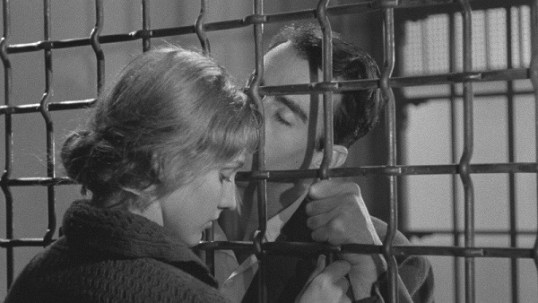
4 Or More Shots From 4 Or More Films is just what it says it is, 4 shots from 4 of our favorite films. As opposed to the reviews and recaps that we usually post, 4 Shots From 4 Films lets the visuals do the talking!
Happy Cinco De Mayo to all of our readers! It’s time for….
4 Shots From 4 Mexican Films
Simon of the Desert (1965, dir by Luis Bunuel, DP: Gabriel Figueroa)
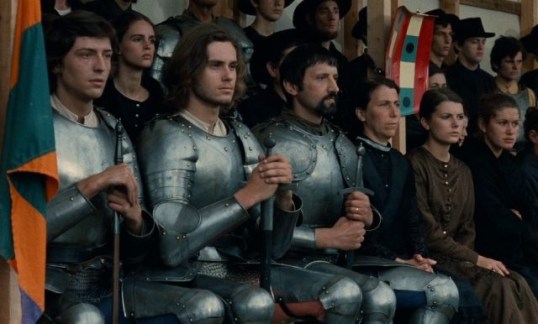
El Topo (1970, dir by Alejandro Jodorowsky, DP: Rafael Corkidi)
Like Water For Chocolate (1992, dir by Alfonso Arau, DP: Emmanuel Luzbeki)
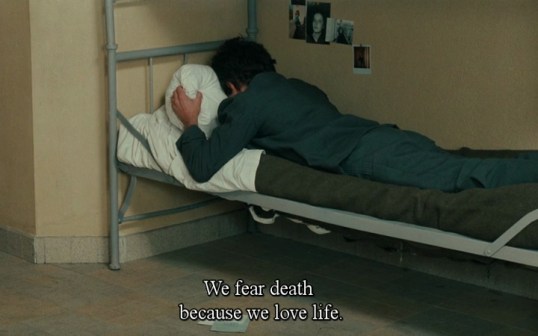
Pan’s Labyrinth (2006, dir. by Guillermo Del Toro, DP: Guillermo Nava)
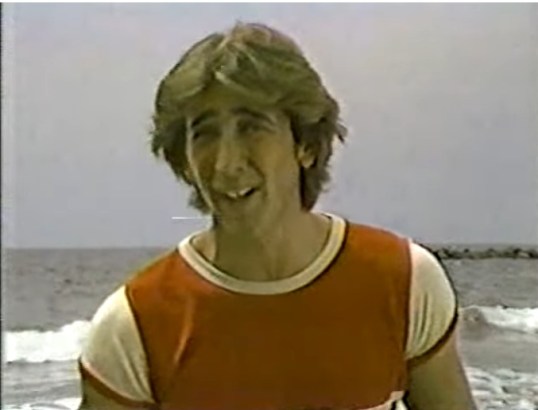
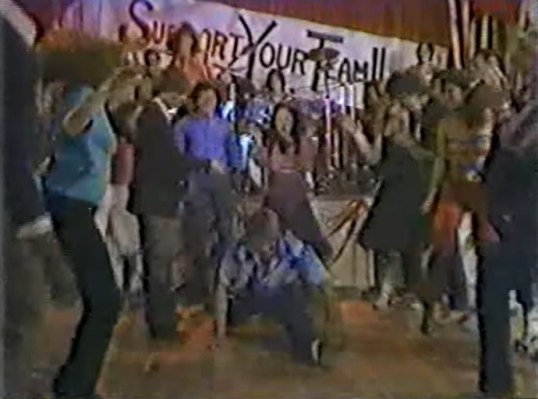
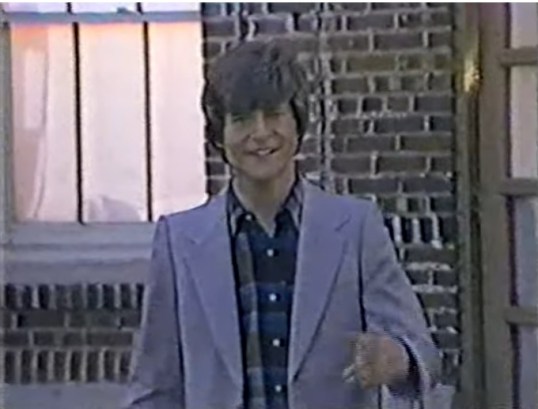
Welcome to Late Night Retro Television Reviews, a feature where we review some of our favorite and least favorite shows of the past! On Mondays, I will be reviewing CHiPs, which ran on NBC from 1977 to 1983. The entire show is currently streaming on Prime!
This week, it’s all about sibling rivalry and crashing cars.
Episode 5.18 “In The Best of Families”
(Dir by John Florea, originally aired on February 21st, 1982)
Getrear is not in a good mood.
He’s got a big inspection coming up but the members of the Highway Patrol keep screwing up. Bonnie’s patrol car is stolen while she’s on a coffee break. Baricza’s car is stripped of its lights and its CHP insignia. Ponch and Baker chase the thieves but somehow never manage to catch them. Finally, someone breaks into Getraer’s dry cleaner’s place and steals two of Getraer’s uniforms.
The Highway Patrol is squabbling, as all families do. They worry that Getraer is angling for a promotion and that they’ll have to “break in a new sergeant.” Fortunately, Getraer isn’t planning on going anywhere. Ponch, Baker, Bonnie, Turner, Grossie, Harlan, and Bear all get to keep their surrogate father figure.
Meanwhile, a real family is fighting. Anne Francis has planned the perfect armored car robbery. Now, she just needs her teenaged sons (Michael Morgan and Timothy Patrick Murphy) to steal a patrol car and some uniforms….
This episode had a pretty silly story but that doesn’t matter because it also featured some truly spectacular stunt work. The first crash occurs on a freeway and involves so many cars that it almost becomes a symphony of destruction. A reporter assures us that no one was killed or even seriously injured in the accident but having watched it (in slow motion), I’m not really sure how that could be true. Later, Turner’s car goes flying over a hillside and again, it’s such a spectacular crash that I’m shocked Turner was able to step out of the wreckage.
This was definitely an episode for those of us who enjoy watching spectacular car destruction. This was a pure demolition derby and entertaining in the mindless way that those often are. Even the best families enjoy automotive mayhem.