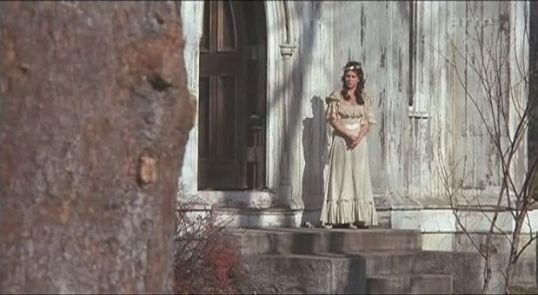
In this scene, from Arthur Penn’s 1967 film Bonnie and Clyde, Bonnie Parker (played by Faye Dunaway) writes a poem and tries to craft the future image of Bonnie and Clyde. Though it has none of the violence that made Bonnie and Clyde such a controversial film in 1967, this is still an important scene. (Actually, it’s more than one scene.) Indeed, this scene is a turning point for the entire film, the moment that Bonnie and Clyde goes from being an occasionally comedic attack on the establishment to a fatalistic crime noir. This is where Bonnie shows that, unlike Clyde, she knows that death is inescapable but she also knows that she and Clyde are destined to be legends.
(Of course, Dunaway and Warren Beatty — two performers who once epitomized an era but who are only seen occasionally nowadays — are already legends.)
4 (or more) Shots From 4 (or more) Films is just what it says it is, 4 (or more) shots from 4 (or more) of our favorite films. As opposed to the reviews and recaps that we usually post, 4 (or more) Shots From 4 (or more) Films lets the visuals do the talking.
104 years ago today, Arthur Penn was born in Philadelphia. In the 50s, Penn was one of the new crop of directors who made a name for themselves directing for television. Like most of his colleagues, he transitioned into film. Unlike many of his colleagues, he remained a fiercely iconoclastic director, one who was willing to challenge the conventions of Hollywood. While his early films often struggled at the box office, he was respected by actors and hailed as a visionary by the directors of the French New Wave.
In 1967, he and Warren Beatty changed the course of American cinema with Bonnie and Clyde. Penn followed up that classic film with movies like Alice’s Restaurant, Little Big Man, Night Moves, and a handful of others. When he died in 2010, Penn was hailed as one of the most influential (if sometimes underrated) directors of all time.
Today, in honor of the anniversary of his birth, the Shattered Lens offers up….
4 Shots From 4 Arthur Penn Films
The Chase (1966, dir by Arthur Penn, DP: Joseph LaShelle)
Bonnie and Clyde (1967, dir by Arthur Penn, DP: Burnett Guffey)
Alice’s Restaurant (1969, dir by Arthur Penn, DP: Michael Nebbia)
Little Big Man (1970, dir by Arthur Penn, DP: Harry Stradling Jr)
I may be going to Hell in a bucket but at least I’m enjoying the ride
The members of the Grateful Dead didn’t do many music videos. I think Hell In A Bucket was their second video, following the surprise hit that they had with A Touch of Grey. From what I’ve read, it was the band’s record label that insisted that the band make some videos to help promote their 12th studio album, In the Dark. Some members of the band were concerned that agreeing to do music videos would mean that they were “selling out.”
The video for Hell In A Bucket feels like it could be a parody of the type of videos that were popular on MTV. With his Miami Vice-Style outfit and the way he mugs for the camera, Bob Weir almost seems like he could be Huey Lewis’s coked-out older brother. The video opens in a biker bar, populated with the type of rough characters who most bands would never dream of featuring in a video. While Jerry Garcia keeps his distance, Bob Weir sings a song of rock and roll decadence that seems to be saying, “This is what it’s all really about.”
No, I don’t know why there’s a duck at the bar. It’s just there. Jerry daughter’s Trixie is also in the video. She plays one of the dancing devils.
Welcome to Late Night Retro Television Reviews, a feature where we review some of our favorite and least favorite shows of the past! On Saturdays, I will be reviewing Saved By The Bell, which ran on NBC from 1989 to 1993. The entire show can be purchased on Prime!
This week, Screech is actually good at something!
Episode 3.7 “Check Your Mate”
(Dir by Don Barnhart, originally aired on October 5th, 1991)
Bayside has got chess fever! Screech Powers has advanced to the all-city chess finals, where he will be facing off against Valley High’s Russian exchange student Peter Breschnev (Matt Kaminsky), the grandson of a legendary player. Screech fears that he won’t have a chance but then he remembers that he never seems to lose as long as he’s wearing the lucky red beret that Violet purchased for him.
Around the same time that Zack and Slater place a bet on the outcome of chess match, Allison (Hillary Hayes) shows up. She says that she’s from a chess magazine and she wants to do a profile of Screech. She even invites Screech to the magazine’s mansion so that he can swim in the pawn-shaped pool. However, it turns out that Allison is actually a spy from Valley High and she’s been sent to sabotage Screech’s game. Allison steals his lucky beret. How can Screech win now!?
Usually, I can’t stand any episode that revolves around Screech and Violet but I have to admit that I do like this one. Yes, Dustin Diamond and Tori Spelling are just as bad as usual (and Diamond really goes overboard with the goofy faces in this one) but, luckily, Mark-Paul Gosselaar and Mario Lopez are also present and they do some of their best work in this episode. Zack and Slater, for instance, kidnap the Russian and tie him up in a broom closet. Zack then pretends to be the Russian and forfeits the match after making one move. Meanwhile, Slater reports on the match for Bayside’s radio station and he does so with just the right amount of earnest enthusiasm. (Jessie: “And now the Russian is hopping out onstage in his underwear!?” Slater: “What an exciting match so far!”) Slater knows nothing about chess but he does know that he wants to see “that commie” defeated. Amongst the guest stars, Hilary Hayes and Matt Kaminsky are perfectly cast and score some laughs of their own. (“I’ll see ya …. at the Galleria.”)
In this episode, Screech nearly loses Violet when he lets his chess fame go to his head. Violet forgives him but this would still be her final episode. I guess dating a chess jock wasn’t all it was cracked up to be.
Again, this week was largely about getting ready for Horrorthon.
I did take the time to watch Big Brother. I’m so excited. Only a few more days to go and then this season will be over with and I’ll never have to think about it again! We are now down to the final three houseguests. I imagine that next Thursday, Devens will defeat Drew by a vote of 6-1. I’ve written a little about Big Brother over at the Reality TV Chat Blog.
On Netflix, SCTV continues to bring me happiness. This week, I watched a parody of The Godfather and I got to know Sammy Maudlin and his favorite guest, Bobby Bittman.
“Not extinct, just dormant… as in sleeping. And your volcano might just be waking up.” — Harry Dalton
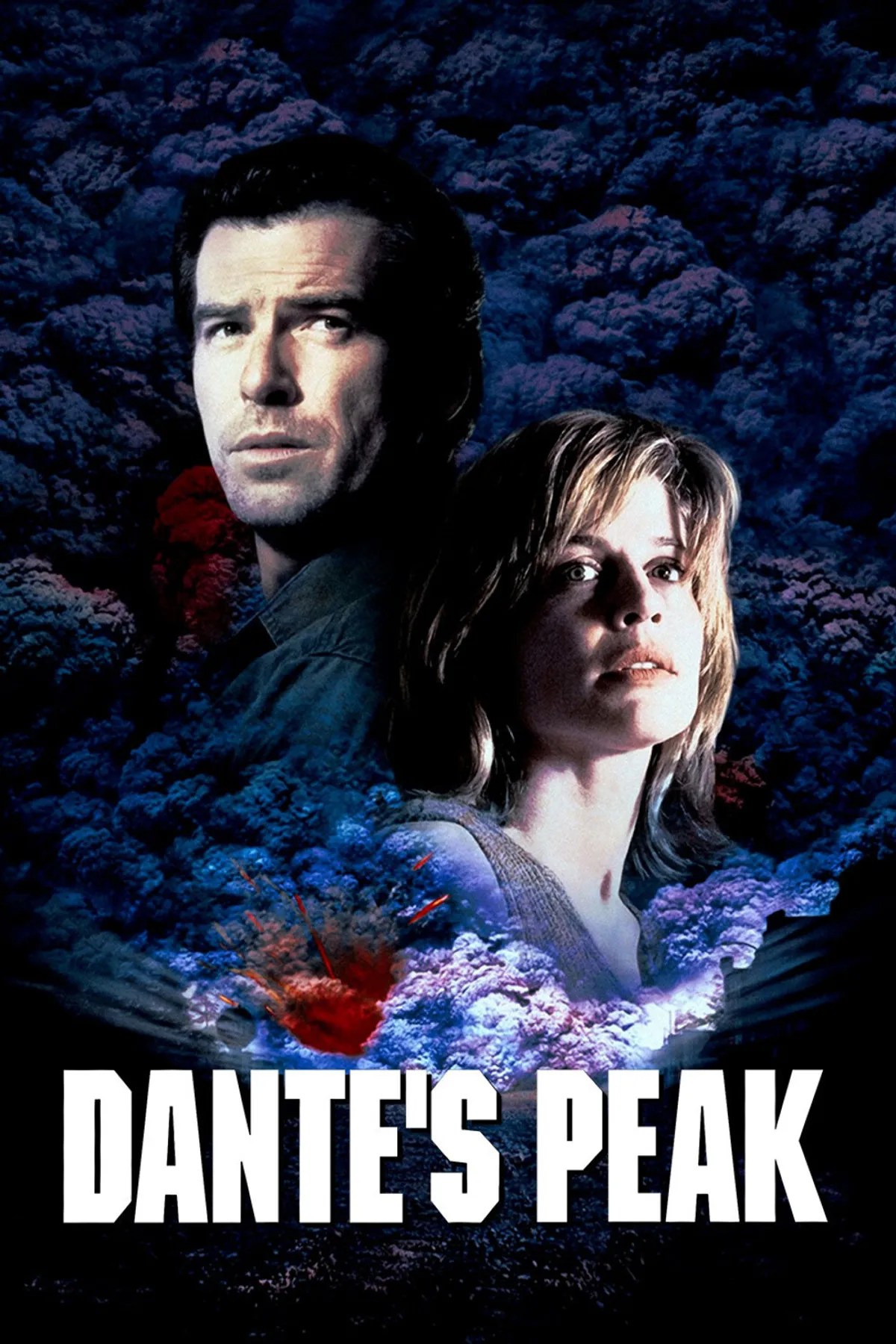
Dante’s Peak takes a simple but reliable disaster-movie setup—a quiet town sitting beneath a volcano that is very much not as dormant as everyone hopes—and turns it into a tense, highly watchable piece of 1990s spectacle. Directed by Roger Donaldson, the 1997 film is hardly subtle, and its character work can be pretty thin, but it remains an unusually watchable entry in the genre because it takes its central threat seriously. The movie spends enough time establishing the town and its people that, once the mountain finally blows, the destruction has some weight behind it. It is a familiar formula, but Dante’s Peak executes it with enough sincerity and old-school craftsmanship to stay entertaining.
Pierce Brosnan stars as Harry Dalton, a volcanologist for the U.S. Geological Survey who is still carrying the emotional scars of a prior eruption that killed his fiancée. Harry is sent to the picturesque Pacific Northwest town of Dante’s Peak after unusual seismic and chemical activity suggests that its supposedly dormant volcano may be waking up. His assignment initially sounds routine: inspect the mountain, collect some samples, talk to local officials, and determine whether there is any reason for concern. Naturally, there is. The water supply starts showing signs of dangerous acidity, tremors grow more frequent, steam vents become harder to ignore, and the mountain begins sending increasingly blunt warnings that it is ready to erupt.
The central tension is not whether the volcano will blow. The title alone pretty much gives that away. Instead, the first half works because of the fight over how seriously the warning signs should be taken. Dante’s Peak has just received national attention as one of the best small towns in America, and Mayor Rachel Wando, played by Linda Hamilton, is understandably hesitant to cause mass panic and wreck the town’s economy over an uncertain prediction. Harry believes the danger is real, but he also knows from painful experience that hesitation can get people killed. That conflict gives the movie a decent human foundation before the large-scale effects take over.
Brosnan is a good fit for Harry Dalton. This was the same period when he was newly established as James Bond, and Dante’s Peak makes smart use of his natural screen presence without turning Harry into an outright action hero. He is calm, capable, handsome, and articulate, but he is also clearly rattled by the possibility of repeating a tragedy he could not prevent. The role is not especially demanding on paper, yet Brosnan gives Harry enough fatigue and frustration that he comes across as a real professional rather than just a disaster-movie scientist whose only job is to shout warnings at dismissive bureaucrats.
Hamilton is arguably even more important to the movie’s success. Rachel could have been written as a generic authority figure who slows down the plot by refusing to believe the expert, but Hamilton makes her more sympathetic than that. She is not ignoring Harry because she is foolish or selfish. She has a town to protect, businesses that depend on tourism, residents who do not want to abandon their homes, and two children who become central to the film’s increasingly dangerous rescue mission. Hamilton had already cemented her action credentials in Terminator 2: Judgment Day, but here she plays a more grounded version of strength. Rachel is practical, stubborn, and brave without ever feeling like she has wandered in from another franchise with a shotgun and a leather jacket.
The supporting cast is more uneven. Charles Hallahan gets the familiar disaster-movie role of Paul Dreyfus, the superior whose skepticism creates a frustrating delay in the evacuation. Elizabeth Hoffman is memorable as Rachel’s grandmother, Ruth, even though the movie leans hard into the “stubborn elderly relative refuses to leave” setup. Rachel’s children, Lauren and Graham, mostly function as a way to push the adults back into danger after the eruption begins, and their choices can be maddening. Still, the cast sells the stakes well enough that the film avoids feeling completely mechanical.
Where Dante’s Peak really delivers is in its escalation. The first clear sign that things have gone wrong is genuinely creepy: the town’s supposedly pristine water supply turns corrosive. That detail is one of the movie’s best touches because it makes the volcano feel dangerous before it becomes visually spectacular. Then the film starts layering hazards on top of each other. There are earthquakes, falling volcanic debris, ash clouds, mudslides, a collapsing bridge, boiling water, and eventually a full eruption. It is an impressively varied disaster package. Rather than relying on one big explosion and calling it a day, the movie treats the volcano as a chain reaction that attacks the town from every direction.
The standout sequence is the drive across the lake after volcanic material has made the water acidic. It is ridiculous in the specific, memorable way that disaster cinema often is: a family in a damaged vehicle tries to outrun a lake that is essentially eating the vehicle out from under them. The science of the scene has been criticized plenty over the years, and fairly so, but it works as suspense filmmaking. Donaldson understands how to stage the moment visually, showing the immediate effects on the vehicle while keeping the characters trapped in a situation that gets worse by the second. It is the kind of scene people remember long after forgetting much of the dialogue.
Visually, the movie has aged better than some of its late-1990s peers because it balances computer-generated imagery with practical destruction, physical sets, and real locations. The effects do not always look flawless now, especially in wider shots of the erupting mountain, but the overall physicality helps. Buildings shake, roads split open, ash hangs in the air, and characters actually look buried in the mess rather than pasted in front of it. The town itself is also nicely chosen. Dante’s Peak looks like the sort of clean, friendly, postcard-perfect place that a disaster movie needs to destroy. The contrast between its calm opening scenes and its ash-covered final act is one of the film’s strongest visual ideas.
Roger Donaldson directs efficiently, even if he never quite gives the film a distinctive personality. He keeps the geography clear during most of the action, which matters a lot in a movie built around people trying to flee shifting dangers. You usually understand where Harry and Rachel are, what obstacle is in front of them, and why they cannot simply drive away. The pacing is a little slow in the middle, particularly when the scientific warnings begin repeating themselves, but that patience pays off once the final act kicks in. The movie takes a while to get to the eruption, then makes sure the eruption earns its screen time.
The screenplay by Leslie Bohem is where Dante’s Peak shows its limitations. The dialogue is often blunt, the romance between Harry and Rachel is predictable, and several characters exist mainly to make unwise decisions at the exact moment the plot needs more danger. The film also has a habit of making Harry right about nearly everything, which can flatten the debate around whether to evacuate. Still, there is something likable about how earnestly it embraces its own premise. It never winks at the audience or tries to become ironic. It wants viewers to care about the town, fear the mountain, and cheer when people narrowly escape certain death.
That sincerity is probably why Dante’s Peak has endured better than its mixed critical reputation might suggest. It is not a great disaster movie in the way that The Poseidon Adventure or The Towering Inferno can be called great, and it does not have the full-throttle spectacle of Twister. But it is dependable comfort-viewing for anyone who enjoys this particular brand of high-stakes Hollywood nonsense. The movie’s science is questionable in spots, its family drama can get corny, and its plot follows the disaster handbook almost page for page. Yet Brosnan and Hamilton give it enough credibility, Donaldson keeps it moving, and the volcanic destruction is still satisfying.
In the end, Dante’s Peak is a solid, unpretentious disaster thriller that understands the appeal of watching ordinary people try to outrun an extraordinary catastrophe. It may not reinvent the genre, but it delivers the basics with conviction: a looming natural threat, decent leads, escalating tension, and a finale full of lava, ash, and desperate escapes. Sometimes that is more than enough.
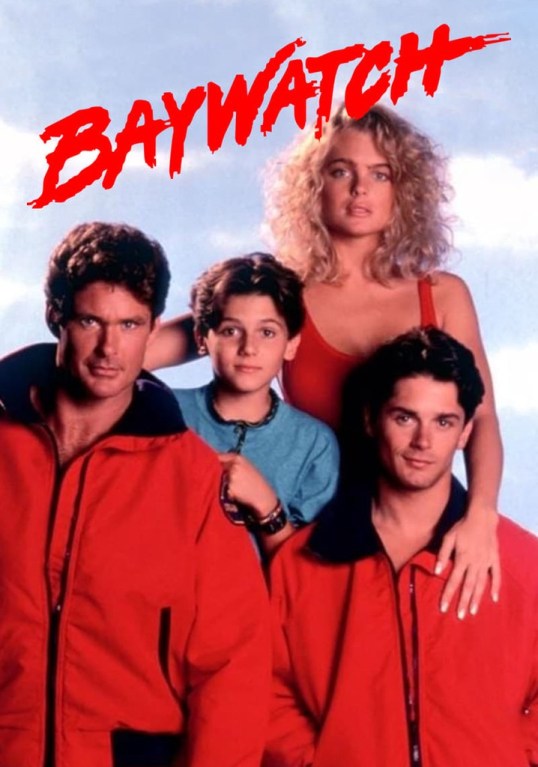
Welcome to Retro Television Reviews, a feature where we review some of our favorite and least favorite shows of the past! On Saturdays, I will be reviewing Baywatch, which ran on NBC and then in syndication from 1989 to 2001. The entire show can be viewed on Tubi.
This week, Harvey has a gambling problem.
Episode 2.21 “Game of Chance”
(Dir by Georg Fenady, originally aired on May 11th, 1992)
Harvey (Tom McTigue), the lifeguard who always appears in the opening credits but rarely does anything in the actual show, actually gets a storyline in this episode.
Harvey is on a boat in the ocean, taking part in a floating poker game. Mitch kayaks out to the game so he can tell Harvey to “fold” and get to work. Harvey, however, has a great hand. He wins everyone’s money. Unfortunately, a masked man then shows up and steals all the money for himself. (Whoever put this poker game together should have splurged a little on security.) Mitch and Harvey investigate the robbery and eventually discover that the thief owns an amphibious jeep. This leads to a less-than-exciting chase scene and Hasselhoff making jokes about a talking car.
Meanwhile, Shauni is frustrated because her father doesn’t approve of her dating Eddie. Even after Eddie saves Shauni’s older sister from drowning, her father continues to look down on him. Shauni finally decides to defy her father and move in with the man she loves. This would be really touching except for the fact that Shauni and Eddie have supposedly been living together for a while now. Just last week, someone asked Shauni what it was like to live with Eddie. I’m going to guess that this episode was originally meant to air earlier in the season but, for some reason, got pushed to the back.
This was all pretty silly, and the script itself felt like something left over from the first season, when Shauni was still a spoiled princess, Eddie was a rough-edged former delinquent, and John Cort was the resident trouble-making lifeguard.
As some of our regular readers undoubtedly know, I am involved in a few weekly live tweets on Twitter and Mastodon. I host #FridayNightFlix every Friday, I co-host #ScarySocial on Saturday, and I am one of the five hosts of #MondayActionMovie! Every week, we get together. We watch a movie. We tweet our way through it.
Tonight, at 10 pm et, #ScarySocial presents a 1978 film starring Kirk Douglas. It’s a film that was released under several titles, including Rain of Fire and Holocaust 2000. On Prime, it’s called The Chosen.
If you want to join us this Saturday, just hop onto twitter, start the movie at 10 pm et, and use the #ScarySocial hashtag! It’s a friendly group and welcoming of newcomers so don’t be shy.
The Chosen is available on Prime! (Make sure the version you watch lists 1981 as the release date and Kirk Douglas as the star.) See you there!