We’re only a few hours away from America’s 250th birthday! And what would an American birthday party be without some American celebrities of the present and the past?
Joan Crawford by Ruth Harriet Louise
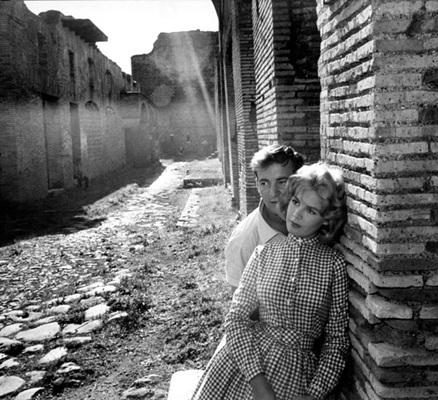
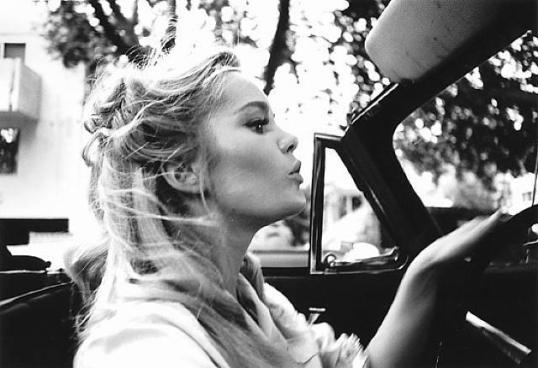
Bobby Darin and Sandra Dee by Leo Fuchs
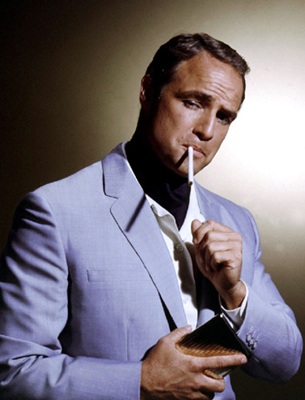
Marlon Brando by Leo Fuchs
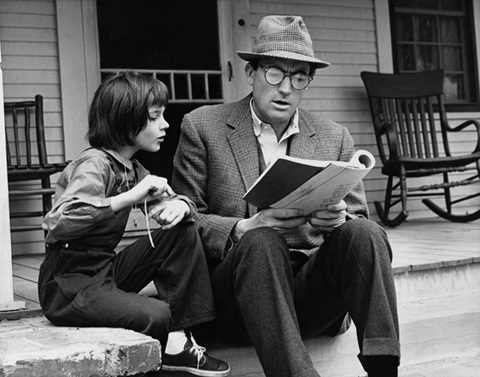
Mary Badham and Gregory Peck by Leo Fuchs
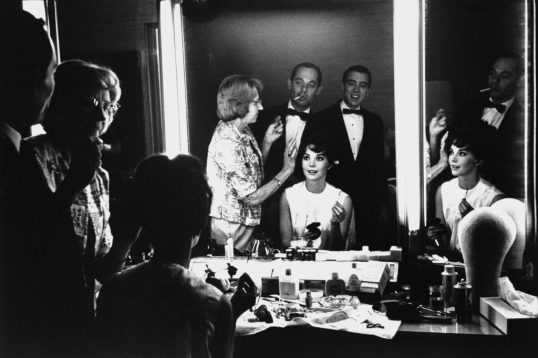
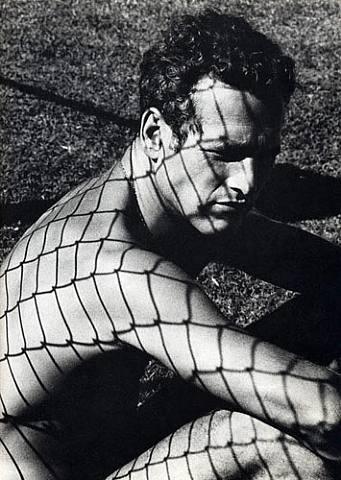
Natalie Wood by Alan Grant
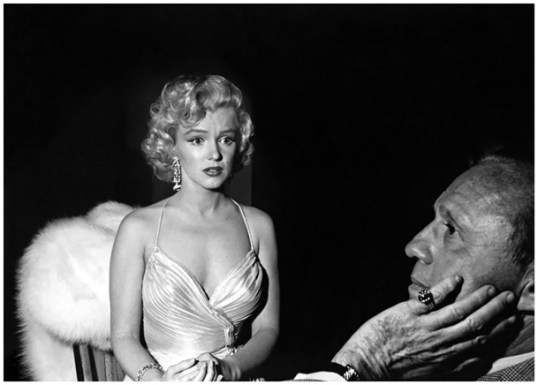
Marilyn Monroe and Jack Benny by Phil Stern
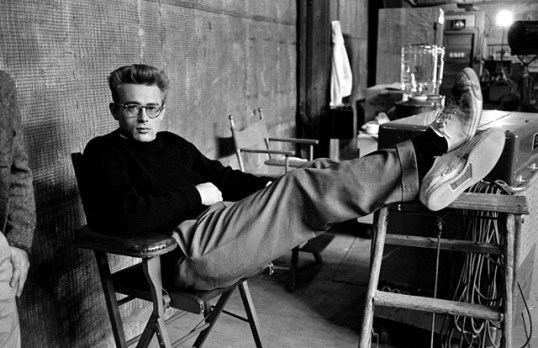
James Dean by Phil Stern
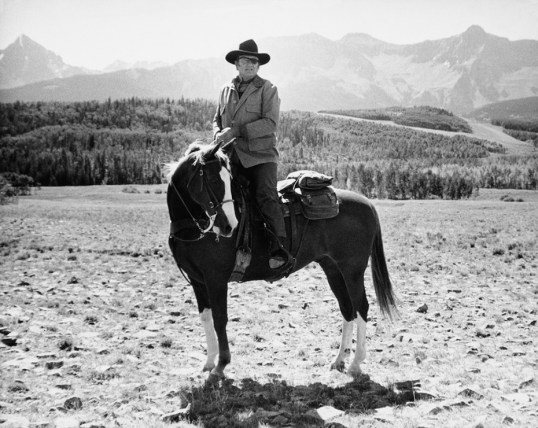
John Wayne by Phil Stern
Bruce Conner, Toni Basil, and Teri Garr by Dennis Hopper
“I may not do everything great in my life, but I’m good at this. I manage to touch people’s lives with what I do and I want to share this with you.” — Carl Casper
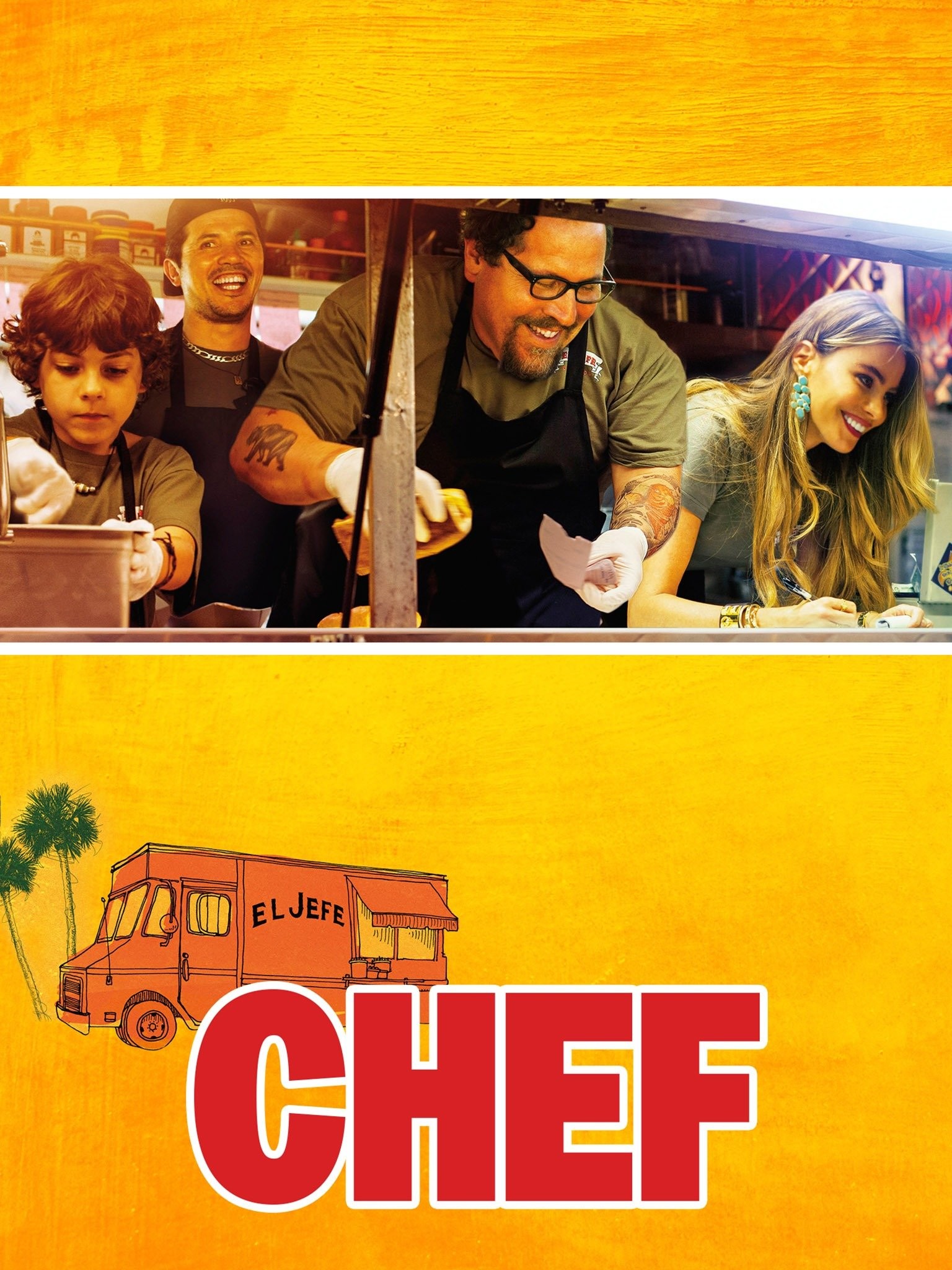
Jon Favreau’s Chef is one of those modest, crowd‑pleasing films that wins you over by staying sincere. It is not trying to be more elaborate than it needs to be, and that restraint is part of its charm. The movie understands that a good meal, like a good story, does not need to be overloaded to leave an impression.
At its center is Carl Casper, a Los Angeles chef who has spent too long under the thumb of a controlling owner and a punishing routine. Favreau builds the character as a man with genuine talent who has gradually been boxed into serving the same familiar dishes until the spark goes out of his work. That setup gives the film emotional weight without making it needlessly grim, and the early conflict feels grounded in the kind of professional frustration that many viewers can recognize.
What makes Chef work so well is that it treats food as more than decoration. The kitchen scenes have the energy of a workplace movie, but they also carry the warmth of a film about craft, pride, and rediscovery. Favreau clearly cares about the details, and the movie’s culinary authenticity helps make the food feel alive rather than merely photogenic.
The film’s strongest material often comes from its sense of rhythm. Favreau lets scenes breathe, whether Carl is cooking, arguing, bonding with his son, or slowly finding his footing again through the food truck. The road‑trip structure gives the movie a loose, easygoing momentum that matches its themes of starting over and rebuilding a life from something more personal. It is a familiar shape, but Favreau handles it with enough warmth and confidence that it never feels mechanical.
The cast also helps carry the movie’s laid‑back appeal. John Leguizamo brings dependable energy as Carl’s friend and partner, while Emjay Anthony gives the father‑son relationship a needed emotional anchor. Sofía Vergara and Scarlett Johansson add texture to the supporting ensemble, and the cameos help the film feel like it belongs to a broader world without turning into a stunt parade. Robert Downey Jr.’s appearance is especially in the spirit of the movie’s playful, slightly scrappy personality.
If there is a weakness in Chef, it is that the stakes are sometimes as light as the movie’s tone. The conflict is easy to understand, but the film is not interested in digging especially deep into the pressures of restaurant life beyond what it needs for Carl’s personal reset. Some viewers may also feel that the story moves so smoothly that it can occasionally glide past tension rather than fully wrestle with it. Still, those softer edges are part of the movie’s comfort‑food approach, and they fit the film more often than they hurt it.
There is also something undeniably self‑referential about Favreau making a film like this at this point in his career. After years of working in large‑scale studio filmmaking, Chef feels like a deliberate return to basics, a movie about rediscovering joy in the craft rather than chasing spectacle. That choice gives the film a little extra meaning, because it plays not just as a story about a chef but as a story about an artist reconnecting with the thing that made him care in the first place.
That connection carried forward in a very natural way with Netflix’s The Chef Show, which Favreau made with Roy Choi after the film. The show turned the movie’s culinary curiosity into a full‑fledged project, with Favreau cooking alongside celebrity friends and guests across its two‑season run. In that sense, Chef was not just a one‑off passion project; it became the foundation for a longer creative obsession that blended cooking, conversation, and filmmaking into the same kind of easygoing pleasure the movie already had.
What lingers most about Chef is its tone. It is upbeat without being fake, personal without becoming self‑pitying, and relaxed without losing its sense of purpose. Favreau understands that small victories can matter just as much as dramatic ones, and he shapes the film around that idea with real affection. The result is a feel‑good film with enough flavor to satisfy, and enough honesty to keep it from feeling empty.
And for anyone who had never been especially drawn to a Cubano sandwich, Chef also worked like a terrific advertisement for giving one a try. The film made the sandwich look less like a simple handheld meal and more like a kind of culinary payoff, something warm, rich, and memorable enough to make viewers hungry before the scene was even over. While most audiences understandably gravitated toward those rapturous Cubano moments, for me the real standout was the scene featuring the mojo‑marinated pork. There was something about the way the meat was staged—the slow rendering of fat, the caramelized crust, the faint sheen of orange‑garlic sauce—that made it feel less like a quick bit of menu decoration and more like the heart of the film’s culinary language. That sequence, in its quiet way, captured the same blend of craft and desire that the whole movie is built on.
Overall, Chef is a warm, appealing, and thoughtfully made film that succeeds because it knows exactly what it wants to be. It is funny, heartfelt, and easy to enjoy, even when it does not push its dramatic material as far as it could. Favreau serves up a movie that celebrates food, family, and creative freedom in a way that feels genuine, and that sincerity is what gives the film its staying power.
“A nutless monkey can do your job.” — Les Grossman
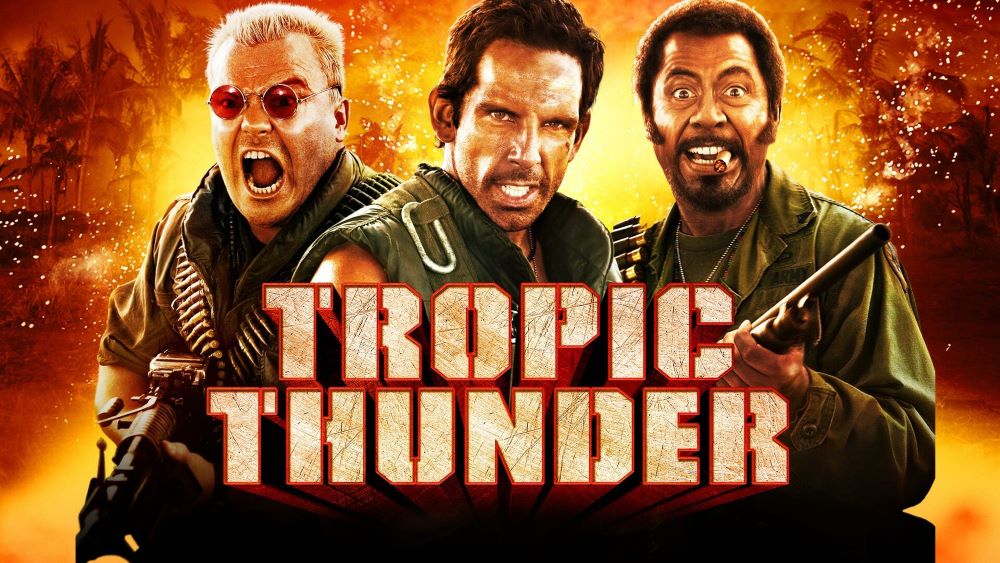
Ben Stiller’s Tropic Thunder is a bold, chaotic comedy that dives headfirst into the wild world of Hollywood satire. The film, which Stiller directed, co-wrote, and starred in, feels like a high-energy roast of the movie industry itself, blending action, parody, and sharp commentary into one explosive package. The cast is stacked with familiar faces like Robert Downey Jr., Jack Black, Jay Baruchel, Brandon T. Jackson, and even Tom Cruise in a shockingly hilarious cameo, all committed to the film’s madcap, anything-goes spirit.
A distinctive touch that shows Tropic Thunder’s deep commitment to Hollywood satire is how it begins—not with a typical studio logo or title sequence—but with a series of fake movie trailers. These trailers parody different film genres and Hollywood clichés, setting an irreverent tone before the actual film even starts. The highlight is undoubtedly the “Oscar-bait” trailer for Satan’s Alley, a pitch-perfect send-up of self-serious, emotionally heavy dramas designed for awards season attention. By embedding these faux trailers, the film immerses viewers in its meta commentary and signals from the outset that it’s willing to mock and take apart the film industry at all levels.
This movie-within-a-movie begins with a group of egotistical actors trying to make a serious war film based on the fictional memoir of a Vietnam veteran. Their attempt at gritty realism falters under the weight of their own vanity and cluelessness, turning the set into a feverish comedy of errors. When the director dies and the actors are abandoned in a real jungle with actual dangers, the film blurs the lines between fantasy and reality, leading to a relentless cascade of absurd situations and insider jokes about Hollywood machinery.
Robert Downey Jr.’s portrayal of Kirk Lazarus, a method actor who undergoes extreme skin pigmentation surgery to play a Black character, is both provocative and hilarious. His performance skewers Hollywood’s past mistakes with race and casting, while his tense exchanges with Brandon T. Jackson’s Alpa Chino, who plays a genuinely Black rapper, provide sharp moments that balance discomfort with comedy. Downey Jr.’s “blackface” was a conscious satire of method acting and Hollywood egos, an attempt to ridicule extreme lengths actors go for acclaim rather than an endorsement of offensive practices. However, even at its release in 2008, it sparked conversations about the boundaries of comedy and racial sensitivity—an issue that would be even more controversial in 2025’s cultural climate.
Similarly, the film’s handling of ableist humor through the subplot of Simple Jack, a fictional movie starring Ben Stiller’s character as a person with intellectual disabilities, drew mixed reactions. While intended as a biting critique of Hollywood’s exploitation of disability for sympathy and awards, the portrayal nonetheless walked a tightrope that made some audience members uncomfortable. This nuanced but risky satire highlights how Tropic Thunder throws a wide net in exposing Hollywood’s many blind spots, yet its fearless approach also invites legitimate questions about respect and representation.
Jack Black delivers wild physical comedy as Jeff Portnoy, a drug-addled comedian losing control, offering a blend of slapstick and oddly sincere moments. Meanwhile, Tom Cruise steals the film with his iconic turn as Les Grossman, the balding, foul-mouthed studio exec whose explosive rants and dance moves have reached legendary status. Industry insiders often note that Grossman’s tempestuous persona seems inspired by real-life producer Scott Rudin, known for a similarly volatile temperament.
Much of the film’s humor targets Hollywood’s obsession with awards and ego, skewering Oscar-bait films, blockbuster excess, and ridiculous celebrity antics. The fake trailers highlight these themes, and Lazarus’s infamous line “Never go full retard, man!” takes aim at acting extremes motivated by prestige rather than authenticity. Stiller’s direction embraces loud, over-the-top action sequences that mimic classic Vietnam War movies but infuse them with cartoonish chaos, while the lush jungle serves as a satirical arena for exposing the actors’ incompetence.
While Tropic Thunder is gleefully offensive and hilarious, its treatment of race and disability sparked debate about where satire crosses lines. The film’s biting self-awareness and sharp commentary doesn’t always prevent discomfort, but it highlights the difficulty of balancing edgy humor with social consciousness in comedy. The film’s reception reveals how comedy evolves with cultural awareness; what passed as biting satire in 2008 would face even fiercer scrutiny in today’s more sensitive and politically aware environment.
From an entertainment standpoint, the movie delivers nonstop laughs, with rapid-fire jokes, strong chemistry among the cast, and sharp Hollywood references that keep fans engaged. Downey Jr.’s method acting antics, Black’s physical comedy, and Cruise’s outrageous studio boss combine into a relentless comedic assault. It’s not a film for those who prefer safe or sanitized humor, but for those who appreciate biting satire with reckless energy, it’s a must-watch.
Looking back, Tropic Thunder stands as a snapshot of a moment before social media and instantaneous backlash reshaped Hollywood comedy. Its controversial content might not get greenlit today, much like the boundary-pushers Blazing Saddles and Airplane! before it. Yet, as history shows, comedy will always find new ways to challenge sensibilities and push limits. Only time will tell what the next film is that dares to cross such lines again.
If you haven’t experienced Tropic Thunder, prepare for a relentlessly funny, sharply satirical comedy that skewers everything from celebrity egos to studio politics with savage wit and over-the-top energy.
Opening with a swarm of helicopters spaying for medflies and ending with an earthquake, 1993’s Short Cuts is a film about life in Los Angeles.
An ensemble piece, it follows several different characters as they go through their own personal dramas. Some of them are married and some of them are destined to be forever single but they’re all living in varying states of desperation. Occasionally, the actions of one character will effect the actions of another character in a different story but, for the most part, Short Cuts is a portrait of people who are connected only by the fact that they all live in the same city. There are 22 principal characters in Short Cuts and each one thinks that they are the star of the story.
Jerry Kaiser (Chris Penn) cleans the pools of rich people while, at home, his wife, Lois (Jennifer Jason Leigh), takes care of their baby and works as a phone sex operator. Jerry’s best friend is a makeup artist named Bill (Robert Downey, Jr.) who enjoys making his wife, Honey (Lili Taylor), looks like a corpse so that he can take her picture. One of her photographs is seen by a fisherman (Buck Henry) who has already discovered one actual corpse that weekend. He and his buddies, Vern (Huey Lewis) and Stuart (Fred Ward), discovered a dead girl floating in a river and didn’t report it until after they were finished fishing. (The sight of Vern unknowingly pissing on the dead body is one of the strongest in director Robert Altman’s filmography.)
Stuart’s wife, Claire (Anne Archer), is haunted by Stuart’s delay in reporting the dead body. A chance meeting Dr. Ralph Wyman (Matthew Modine) and his wife, artist Marian (Julianne Moore), leads to an awkward dinner between the two couples. Claire works as a professional clown and Ralph ends up wearing her clown makeup while his marriage falls apart.
Earlier, Claire was stopped and hit on by a smarmy policeman named Gene Shepard (Tim Robbins), who just happens to be married to Marian’s sister, Sherri (Madeleine Stowe). Gene is already having an affair with Betty Weathers (Frances McDormand), the wife of a helicopter pilot named Stormy (Peter Gallagher). When Stormy discovers that Betty has been cheating, he takes a creative revenge on her house.
Doreen Pigott (Lily Tomlin) lives in a trailer park with her alcoholic husband, Earl (Tom Waits). Driving home from her waitressing job, Doreen hits a young boy. The boy says he’s okay but when he gets home, he passes out. His parents, news anchorman Howard Finnegan (Bruce Davison) and his wife, Anne (Andie MacDowell), rush him to the hospital, where his doctor is Ralph Wyman. As Howard waits for his son to wake up, he has a revealing conversation with his long-estranged father (Jack Lemmon, showing up for one scene and delivering an amazing monologue). Meanwhile, a baker named Andy (Lyle Lovett) repeatedly calls the Finnegan household, wanting to know when they’re going to pick up their son’s birthday cake.
Based on the short stories of Raymond Carver and directed by Robert Altman, Short Cuts can sometimes feel like a spiritual descendent of Altman’s Nashville. The difference between this film and Nashville is that Short Cuts doesn’t have the previous film’s satiric bite. As good as Nashville is, it’s a film that can be rather snarky towards it character and the town in which it is set. Nashville is used as a metaphor for America coming apart at the seams. Short Cuts, on the other hand, is a far more humanistic film, featuring characters who are flawed but, with a few very notable exceptions, well-intentioned. If Nashville seem to be a portrait of a society on the verge of collapse, Short Cuts is a film about how that society ended up surviving.
It’s not a perfect film. There’s an entire storyline featuring Annie Ross and Lori Singer that I didn’t talk about because I just found it to be annoying to waste much time with. (The Ross/Singer storyline was the only one not to be based on a Carver short story.) The conclusion of Chris Penn’s storyline wasn’t quite as shocking as it was obviously meant to be. But, flaws and all, Altman and Carver’s portrait of humanity does hold our attention and it leaves us thinking about connections made and sometimes lost. Seen today, Short Cuts is a portrait of life before social media and iPhones and before humanity started living online. It’s a time capsule of a world that once was.
Today, the Shattered Lens wishes a happy birthday to Oscar-winner Robert Downey, Jr.
This scene that I love comes from 1987’s Less Than Zero. It features Downey as the self-destructive drug addict, Julian. Downey has said that this role wasn’t too far from his real life at the time. Julian’s father is played by the great character actor, Nicholas Pryor.
Happy birthday to Robert Downey, Jr! I’m thankful that, unlike Julian, he got a second chance.
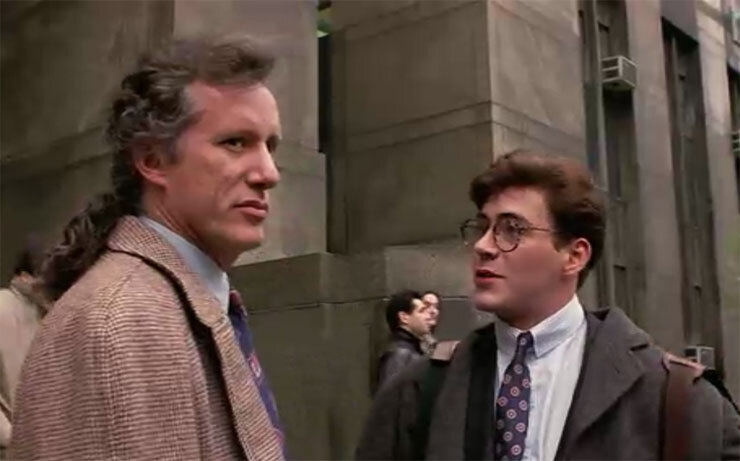
I’ve been going through my movies and re-watching some of my favorites. A movie that clearly falls into that category is TRUE BELIEVER starring James Woods and Robert Downey, Jr. I became a fan of James Woods around 1988 primarily based on the strength of two action films that he worked on around that time, those being BEST SELLER (1987) and COP (1988). I spent hours combing through the rental selections at our local Hastings Entertainment store and I remember both of these movies being in the “New Release” section at the same time. They’re both hard hitting, violent films, and Woods is especially good in both. Being an obsessive completist, I found myself searching out the prior work of the star for some more good movies. It was during this time that TRUE BELIEVER was released to the theaters in February of 1989. I enjoy courtroom dramas, and knowing the intensity that Woods brings to his films, I had no doubt I would like it.
The story revolves around Eddie Dodd (Woods), an attorney who used to fight for the cause of the little guy, but now mostly finds himself protecting drug dealers from the law. Enter Roger Baron (Downey Jr.), a recent law school graduate who idolizes Dodd, and is now disappointed to see his legal hero reduced to his current cynical state. When a Korean mother comes into the law offices one day and says her son, Shu Kai Kim, has spent 8 years in prison for a crime he didn’t commit, cynical Dodd doesn’t want to take the case. Young Baron shames him into it though, and soon the two men find themselves taking on the New York District Attorney himself Robert Reynard (Kurtwood Smith) as they try to prove Shu Kai Kim’s innocence and help him taste freedom once more!
Often when people ask me to name my favorite James Woods film, I’ll quickly answer TRUE BELIEVER even though there are many good films to choose from. There are a few reasons for that. First, even though the film is a serious legal thriller with many dark undertones, director Joseph Ruben has given his movie a dark sense of humor. Woods and Downey, Jr. are able to find the humorous elements inherent in their characters and that brings some fun to the otherwise serious proceedings. Second, I really enjoy the story of underdogs taking on the big, bad system. Shu Kai Kim is an underdog who maintains his innocence when all the evidence appears flawlessly stacked against him. Eddie Dodd, the once feared civil rights lawyer who is now a hopeless burnout, is an underdog who appears to be out of his league as he goes up against the most powerful attorney in New York. These underdog story lines give us something to really root for as the story plays out. And finally, the performances are phenomenal from top to bottom. James Woods, an actor known for his electric intensity, is at the top of his game and Kurtwood Smith is a great adversary. Robert Downey, Jr. brings a bright-eyed enthusiasm to the role that compliments the cynical Woods nicely. And Yuji Okumoto as Shu Kai Kim shows us quite a transformation from a man who goes from almost being dead inside as a result of his eight years in prison, to a man who allows a glimmer of hope to seep in for a second chance. I think Okumoto is great in the role. The story takes many twists and turns and I enjoy every moment as it plays out.
Framed on charges of dumping toxic waste, Morgan (Billy Zane) accepts a CIA mission to travel to the fictional African country of Zambeze and to track down his former friend, Jim Scott (Robert Downey, Jr.). Scott is an ex-CIA agent who faked his own death and who is now leading a revolution against the oppressive government of Zambeze. Scott knows the location of several barrels of uranium. Also searching for the uranium is the ruthless Mr. Chang (Cary-Hiroyuki Tagawa). Morgan teams up with Dr. Kim Woods (Lisa Collins) but soon discovers that he has to be careful of who to trust.
There is a surprisingly lot of talent in the cast of this film. Along with Zane, Downey, Collins, and Tagawa, Ron Silver appears as the shady political operative who joins Morgan in Zambeze. The cast may be good but it doesn’t take long to see that everyone in this film was there mostly for the money. No one brings their A-game to Danger Zone and both Downey and Silver often look like they’re struggling to deliver their lines with a straight face. Downey, especially, gives a self-amused performance, delivering his lines in a thick and indecipherable Southern accent.
(It is easy to forget that there was a time when Robert Downey, Jr’s career was regularly cited as being the ultimate Hollywood cautionary tale. Everyone knew he was talented but, in the 90s, his well-publicized struggle with drug addiction and the time that he spent in jail made him practically uninsurable and unhirable. He ended up appearing in a lot of films like this one before he eventually got clean and reinvented himself as the face of the MCU. In the 90s, most people would probably have been shocked to hear that Downey would eventually win an Oscar and receive a standing ovation as he accepted it.)
Danger Zone does have some good action scenes. The movie ends with an attack on a train that is actually pretty exciting. Unfortunately, the rest of the film suffers from bad acting and an incoherent plot that makes Danger Zone almost impossible to follow. You can fly into the Danger Zone but you won’t want to stay.
As some of our regular readers undoubtedly know, I am involved in hosting a few weekly live tweets on twitter and occasion ally Mastodon. I host #FridayNightFlix every Friday, I co-host #ScarySocial on Saturday, and I am one of the five hosts of Mastodon’s #MondayActionMovie! Every week, we get together. We watch a movie. We snark our way through it.
Tonight, for #MondayActionMovie, the film will be 1996’s Danger Zone, starring Billy Zane and Robert Downey, Jr!
It should make for a night of fun viewing and I invite all of you to join in. If you want to join the live tweets, just hop onto Mastodon, pull up Danger Zone on YouTube, start the movie at 8 pm et, and use the #MondayActionMovie hashtag!
Today, the Shattered Lens wishes a happy birthday to actor and now-Oscar winner Robert Downey, Jr!
Today’s scene that I love comes from 1987’s Less Than Zero. Long before he played Iron Man, Downey played Julian, a young, self-destructive drug addict in Los Angeles. In this scene, Julian talks to his father, played by the great character actor, Nicholas Pryor.
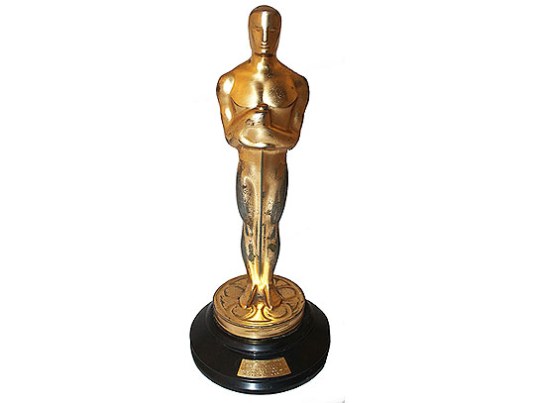
Downey has said that playing Julian was not a huge stretch for him as he was dealing with his own growing drug addiction while making Less Than Zero. (Considering how heavy-handed the film was in its anti-drug message, it’s interesting that both Downey and Andrew McCarthy have talked about first experimenting with cocaine while making the film.) It’s been quite a turn-around for Downey, who went from being a poster boy for self-destruction to a beloved pop cultural icon. Just last month, Downey won an Oscar for his performance in Oppenheimer. He deserved every minute of the applause he received.
Not that early, of course. In fact, towards the end of the show, Jimmy Kimmel came out and did his usual anti-Trump schtick just to pad out the running time so that the Oscars managed to make it to the allotted 3 hour and 30 minute mark. (And yes, it is schtick. The late night hosts need Trump just as much as Trump needs them.) The thing is, though, the Oscars usually run over by a good 30 minutes. The show ending on time means that it ended early. This is the first Oscar telecast, in my lifetime, to end on time. I could actually go out and do stuff after the show ended. It was fun!
As for the show itself, it was a relatively smooth production. No one got slapped. There were no major technical snafus. As to be expected, there were a few embarrassing acceptance speeches. I thought Zone of Interest was a powerful film and I also thought Under The Skin was brilliant but I can still do without ever having to listen to Jonathan Glazer give another speech. One can only imagine how Martin Amis would have reacted to Glazer’s “speech.”
(Martin Amis wrote the novel that served as the basis for the film that won Glazer an Oscar. Amis never had much use for the wimpy or the self-important.)
Ryan Gosling’s performance of I Am Ken was the highlight of the show. Of course, then the song failed to win the Oscar. It reminded me a bit of how, in 2021, the entire broadcast was designed to end with Chadwick Boseman receiving a posthumous award, just for a confused Joaquin Phoenix to read Anthony Hopkins’s name instead. Sometimes, the voters really do just vote for who or what they think should win, regardless of the preferred narrative.
In fact, for all the hype, Barbie wasn’t much of a factor in the awards. It won one Oscar, for the song that wasn’t I Am Ken. The Academy was far more impressed with Poor Things. Still, Barbie did better than Killers of the Flower Moon, which won not a single award. Poor Things‘s Emma Stone defeating Lily Gladstone was the upset of the evening. Am I the only one who briefly got worried that Poor Things would somehow win Best Picture over Oppenheimer?
The big winner, of course, was Oppenheimer. My top film of 2023 was Past Lives but Oppenheimer was a close second. (Until Glazer gave his speech, Zone of Interest was my third pick.) Robert Downey, Jr. became the first former SNL cast member to win an acting Oscar. Christopher Nolan accepted his Oscar from Steven Spielberg, which felt like a real changing-of-the-guard moment. Cillian Murphy won Best Actor. I would have voted for Paul Giamatti but Murphy still deserves a lot of credit for holding Oppenheimer together.
Godzilla is an Oscar winner! Yay!
All in all, it was a good show. Occasionally, it was even fun. It was very efficient, as if the Academy specifically picked this year to show ABC that it actually could put on an orderly show that didn’t preempt the entire network’s programming by an extra hour. My advice for next year would be to stop doing the thing where five previous winners came out to praise the current nominees. (That bit has always felt a bit condescending and I would much rather see clips of the nominated performances.) And maybe get John Mulaney to host because Jimmy Kimmel has become just way too impressed with himself.
Now, 2023 is done. Onward to 2024!
(Actually, you know what I haven’t done, yet? I haven’t posted my picks for the best of 2023. I’ll do that this week, even though I doubt anyone cares at this point. But I’ve posted my lists every year and I’m not going to break tradition now. I just have a handful of movies to watch today and tomorrow….)