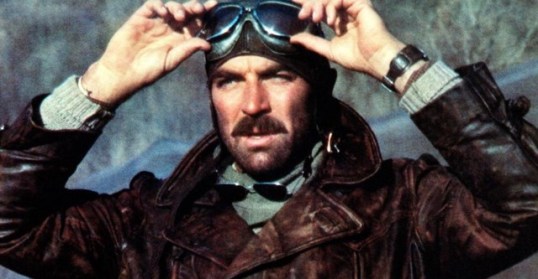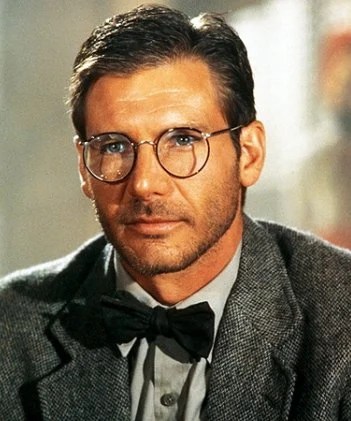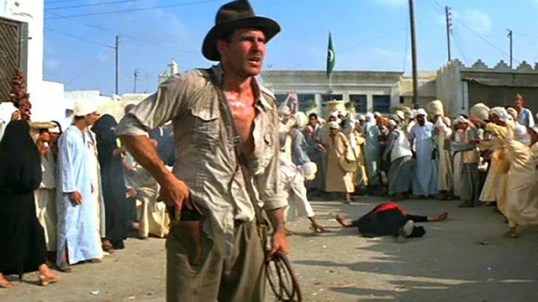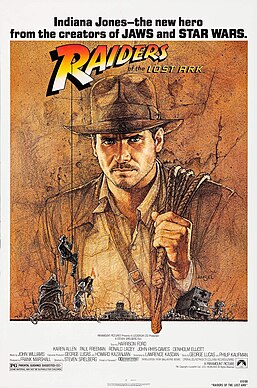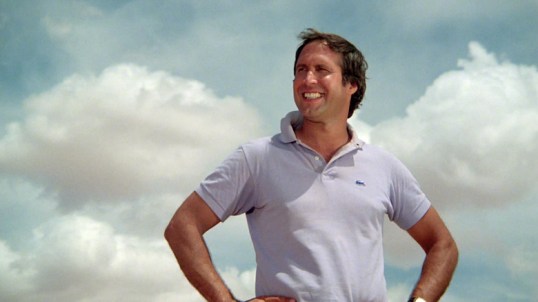
4 Or More Shots From 4 Or More Films is just what it says it is, 4 shots from 4 of our favorite films. As opposed to the reviews and recaps that we usually post, 4 Shots From 4 Films lets the visuals do the talking!
Today, the TSL wishes a happy birthday to Harrison Ford. It’s time for….
4 Shots From 4 Harrison Ford Films
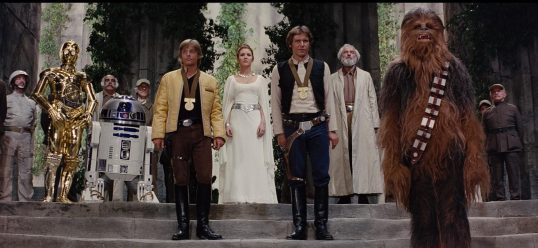
Star Wars: A New Hope (1977, dir by George Lucas)
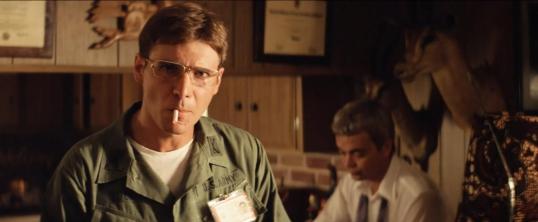
Apocalypse Now (1979, dir by Francis Ford Coppola)
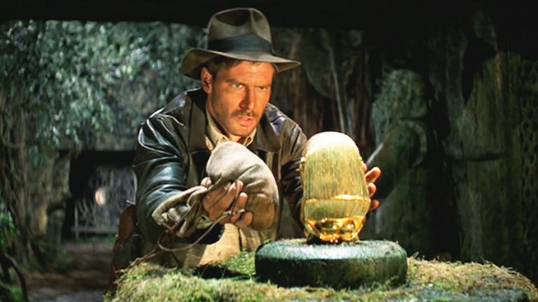
Raiders of the Lost Ark (1981, dir by Steven Spielberg)
Claire (Michelle Pfeiffer) is a former cellist who is still struggling to recover from a serious car accident and who has been at loose ends ever since her daughter left for college. Claire’s husband, Norman (Harrison Ford), is a scientist and a college lecturer. After their neighbor, Mary (Miranda Otto), disappears, Claire becomes convinced that Mary’s husband (James Remar) did something to her. Claire also becomes convinced that Mary’s ghost is trying to contact her, by appearing in the lake and filling the bathtub up with water whenever Claire isn’t looking. Norman tells Claire that she’s imagining things and pushes her to see a therapist. As Claire investigates, she discovers that Norman knows more than he’s letting on.
What Lies Beneath is a long and drawn-out ghost story that Robert Zemeckis made because he had time to kill while the filming of Cast Away was on hiatus so Tom Hanks could lose weight and grow a beard. That this movie was not a personal project for Zemeckis is reflected in his direction, which is surprisingly impersonal for a Zemeckis film. The film is a showcase for Michelle Pfeiffer, who gives a good performance as the emotionally fragile Claire and holds the film’s many disparate elements together. Harrison Ford sometimes seems disinterested but his casting still pays off when Norman gets to say and do some things that you normally would never expect Harrison Ford to do.
I remember seeing this in a theater in 2000 and being surprised by the ending. Looking back on it today, I just can’t believe that I sat through the entire movie.
1979’s Apocalypse Now reimagines the Vietnam War as pop art.
Jim Morrison sings The End in the background as slow-motion helicopters pass in front of a lush jungle. The jungle erupts into flame while in a dingy hotel room, Captain Benjamin Willard (Martin Sheen) gets drunks, practices his karate moves, and smashes a mirror before collapsing to the floor in tears. The next morning, the hung-over and bandaged Willard ends up at a U.S. military base where he has a nice lunch with Lt. General Corman (G.D. Spradlin) and Col. Lucas (Harrison Ford) and a nearly silent man wearing an undone tie. Willard is asked if it’s true that he assassinated an enemy colonel. Willard replies that he did not and that the operation was classified, proving that he can both lie and follow military protocol. Willard is told that a Col. Walter Kurtz (Marlon Brando) has gone rogue and his mission is to go into Cambodia and terminate his command with “extreme” prejudice. It’s a famous scene that features G.D. Spradlin delivering a brilliant monologue about good and evil and yet it’s often missed that Willard is getting his orders from Roger Corman and George Lucas.
(Roger Corman was the mentor of director Francis Ford Coppola while the pre-Star Wars George Lucas was Coppola’s business partner. Indeed, Apocalypse Now was originally somewhat improbably planned to be a George Lucas film.)
Up the river, Willard heads on a patrol boat that is populated with characters who could have come out of an old World War II service drama. Chief (Albert Hall) is tough and no-nonsense. Lance (Sam Bottoms) is the goofy comic relief who likes to surf. Clean (Laurence Fishburne) is the kid who is obviously doomed from the minute we first see him. Chef (Fredric Forrest) is the overage, tightly-wound soldier who just wants to find mangoes in the jungle and who worries that, if he dies in a bad place, his soul won’t be able to find Heaven. The Rolling Stones are heard on the boat’s radio. Soldiers on the other patrol boats moon the boat and toss incendiary devices on the roof. It’s like a frat prank war in the middle of a war.
Colonel Bill Kilgore (Robert Duvall) is a badass calvary officer whose helicopter raids are legendary amongst the enemy and a dedicated surfer who tries to turn every night into the equivalent of an AIP Beach Party film. He’s a brilliant warrior who speaks with Malibu accent (“Charlie don’t surf!”) and who doesn’t flinch when a bomb goes off near him. “I love the smell a napalm in the morning,” he says and, for a few moments, you really wish the film would just abandon Willard so we could spend more time with Kilgore. “Some day this war is going to end,” he says with a reassuring nod, showing a non-neurotic attitude that is the opposite of Kurtz’s. Willard says that he could tell Kilgore was going to get through the war without even a scratch and it’s true. Kilgore doesn’t try to rationalize or understand things. He just accepts the reality and adjusts. He’s a true surfer.
The film grows progressively more surreal the closer the boat heads up the river and gets closer to Cambodia. A USO show turns violent as soldiers go crazy at the sight of the Playboy Bunnies, dressed in denim outfits and cowboy hats and twirling cap guns like the love interest in a John Wayne western. A visit to a bridge that is built every day and blown up every night is a neon-lit, beautiful nightmare. Who’s the commanding officer? No one knows and no one cares.
The closer Willard gets to Kurtz, the stranger the world gets. Fog covers the jungles. A tiger leaps out of nowhere. Dennis Hopper shows up as a photojournalist who rambles as if Billy from Easy Rider headed over to Vietnam instead of going to Mardi Gras. Scott Glenn stands silently in front of a temple, surrounded by dead bodies that feel as if they could have been brought over from an Italian cannibal film. Kurtz, when he shows up, is an overweight, bald behemoth who talks in riddles and who hardly seem to be the fearsome warrior that he’s been described as being. “The horror, the horror,” he says at one point in one of the few moments that links Apocalypse Now to its inspiration, Joseph Conrad’s Heart of Darkness.
Directed by near-communist Francis Ford Coppola and written by the unapologetically right-wing John Milius, Apocalypse Now is actually less about the reality of Vietnam and more about how the images of the war shaped pop culture the world over. It’s a reminder that Vietnam was known for being the first television war and that counterculture was not just made up of dropouts but also of writers, actors, and directors. Kurtz may say that Willard’s been sent by grocery store clerks but actually, he’s been sent by the B-movie producers who first employed and mentored the directors and the actors who would eventually become the mainstays of the New Hollywood. The film subverts many classic war film cliches but, at the same time, it stays true to others. Clean dying while listening to a tape recording of his mother telling him not to get shot and to come home safe is the type of manipulative, heart-tugging moment that could have appeared in any number of World War II-era films. And while Coppola has always said the film was meant to be anti-war, Col. Kilgore remains the most compelling character. Most viewers would probably happily ride along with Kilgore while he flies over Vietnam and plays Wagner. The striking images of Vietnam — the jungle, the explosions, the helicopters flying through the air — stay in the mind far more than the piles of dead bodies that appear in the background.
It’s a big, messy, and ultimately overwhelming film and, while watching it, it’s hard not to get the feeling that Coppola wasn’t totally sure what he was really trying to say. It’s a glorious mess, full of stunning visuals, haunting music, and perhaps the best performance of Robert Duvall’s legendary career. The film is too touched with genius to not be watchable but how one reacts overall to the film will probably depend on which version you see.
The original version, which was released in 1979 and was nominated for Best Picture, is relentless with its emphasis on getting up the river and finding Kurtz. Willard obsesses on Kurtz and really doesn’t have much to do with the other people on the boat. It gives the story some much-needed narrative momentum but it also makes Kurtz into such a legendary badass that it’s hard not to be disappointed when Willard actually meets him. You’re left to wonder how, if Kurtz has been living in the jungle and fighting a brutal and never-ending guerilla war against the communists, he’s managed to gain so much weight. Brando, who reportedly showed up on set unprepared and spent days improvising dialogue, gives a bizarre performance and it’s hard to view the Kurtz we meet as being the Kurtz we’ve heard about. As strong as the film is, it’s hard not to be let down by who Kurtz ultimately turns out to be.
In 2001 and 2019, Coppola released two more versions of the film, Redux and The Final Cut. These versions re-inserted a good deal of footage that was edited out of the original cut. Most of that footage deals with Willard dealing with the crew on the boat and it’s easy to see why it was cut. The scenes of Willard bonding with the crew feel out of character for both Willard and the rest of the crew. A scene where Willard arranges for Clean, Lance, and Chef to spend time with the Playboy bunnies seems to go on forever and features some truly unfortunate acting. Worst of all, Redux totally ruins Kilgore’s “I love the smell of napalm in the morning” monologue by having Willard suddenly steal his surf board. Again, it’s out of character for Willard and it actually feels a bit disrespectful to Duvall’s performance to suddenly turn Kilgore into a buffoon.
But then there are moments that do work. I actually like the lengthy French Plantation scene. By the time Willard, Lance, and Chef stumble into the plantation, the journey upriver has gotten so surreal that it makes a strange sort of sense that they would run into a large French family arguing politics while a clown tries to keep everyone distracted. The new versions of the film are undeniably disjointed but they also shift the focus off of finding Kurtz and place it more on Willard discovering how weird things are getting in Vietnam. As such, it’s less of a disappointment when Kurtz actually shows up. Much as with the French Plantation scene, the journey has become so weird that Kurtz being overweight and pretentious feels somehow appropriate.
What all the versions of the film have in common is that they’re all essentially a neon-lit dream of pop cultural horror. Is Apocalypse Now a horror film? Critic Kim Newman argued that it owed a lot to the genre. Certainly, that’s the case when Willard reaches the temple and finds himself surrounded by corpses and and detached heads. Even before that, though, there are elements of horror. The enemy is always unseen in the jungle and, when they attack, they do so quickly and without mercy. In a scene that could almost have come from a Herzog film, the boat is attacked with toy arrows until suddenly, out of nowhere, someone throws a very real spear. Until he’s revealed, Kurtz is a ghostly figure and Willard is the witch hunter, sent to root him out of his lair and set his followers on fire. If the post-60s American horror genre was shaped by the images coming out of Vietnam then Apocalypse Now definitely deserves to be considered, at the very least, horror-adjacent.
Apocalypse Now was controversial when it was released. (It’s troubled production had been the talk of Hollywood for years before Coppola finally finished his film.) It was nominated for Best Picture but lost to the far more conventional Kramer vs Kramer. Robert Duvall was the film’s sole acting nominee but he lost the award to Melvyn Douglas’s turn in Being There. Douglas was very good in Being There and I imagine giving him the Oscar was also seen as a way of honoring his entire career. That said, Duvall’s performance was amazing. In his relatively brief screen time, Duvall somehow managed to take over and ground one of the most unruly films ever made. The Oscar definitely should have gone to him.
As for the film itself, all three versions, flaws and all, are classics. It’s a film that proves that genius can be found in even the messiest of productions.
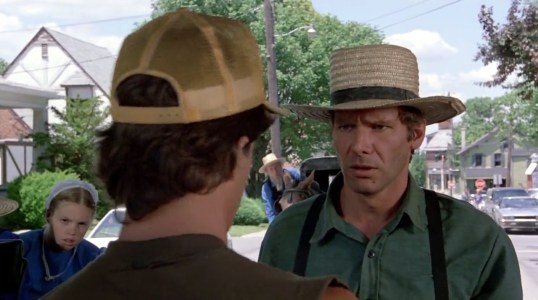
Today’s scene that I love comes from Peter Weir’s 1985 film, Witness. In this scene, the Amish come together and raise a barn. This scene celebrates community and also gives Harrison Ford a chance to show off his real-life carpentry skills.
Since today is the birthday of Harrison Ford, it seems only appropriate that today’s song of the day should come from John Williams’s score of one of Ford’s best films, Raiders of the Lost Ark!
Happy 83rd birthday to the legendary Harrison Ford!
Ford has had so many iconic roles, from Han Solo and Indiana Jones, to Dr. Richard Kimble and Jack Ryan, but one of my favorites has always been Henry Turner. There’s something about Henry that really resonates with me, and I think it’s the hope that people can change from selfish A-holes to caring people who love their wives, are good dads, and who will stand up for what’s right. Enjoy the scene below of Henry trying to make amends for being a slimy, scum-sucking lawyer in REGARDING HENRY!
(On a side note, I always enjoyed playing wrestling with my Star Wars figurines when I was in grade school. Han Solo was always one of the toughest guys to beat!!)
Harrison Ford stars as Rusty Sabich, a smart and ambitious prosecutor who is accused of murdering his former mistress, Carolyn Polhemus (Greta Scacchi).
A lot of people were taken by surprise when PresumedInnocent first came out in 1990. After a career of always being the hero and the type of person who took his fate into his own hands, PresumedInnocent featured a passive Harrison Ford whose fate was in the hands of his lawyer, Sandy Stern (Raul Julia) and in the prosecutors who are trying to send him to prison. For most of the movie, the audience doesn’t know if Rusty is innocent and a lot of what Rusty does makes him seem to be guilty. Just the fact that Harrison Ford was playing someone who would cheat on his wife (played by Bonnie Bedelia, who everyone had last seen sticking up for Bruce Willis in DieHard) was considered to be shocking at the time. It says a lot about Ford’s appeal as an actor that he remains sympathetic even though he’s playing a character who does a lot of bad things. He remains compelling, even though Rusty is forced to spend a good deal of the movie as a passive spectator. To anyone who underrates Harrison Ford an actor, this is the film to show them.
PresumedInnocent is a murder mystery but it’s also a sad-eyed look at a corrupt judicial system. Rusty is accused of murder largely due to the whims of fate. If Raymond Horgan (Brian Dennehy), Rusty’s former patron, had been reelected as district attorney, Rusty would never have been charged. When the trial moves to the courtroom, the Judge (Paul Winfield) himself is revealed to have been compromised by his own relationship with Carolyn, something that Sandy is willing to use to the defense’s advantage. John Spencer plays a detective who is willing to hide evidence to protect Rusty. Joe Grifasi plays a former detective who is motivated less by the evidence in the case and more by a personal grudge against Rusty. The idea of getting justice for Carolyn is pushed to the side by everyone’s personal drama. The ending challenges all of our preconceived notions about Rusty and the meaning of guilt and innocence.
Intelligently directed by Alan J. Pakula and featuring an excellent cast, PresumedInnocent is a top-notch legal thriller and also one of Harrison Ford’s best films.
I noticed that today is Harrison Ford’s 83rd birthday. Like most people born in the early 1970’s, I’m a big fan of Harrison Ford. My formative years included the Star Wars movies, the Indiana Jones movies, and many other great films like BLADE RUNNER (1982) and WITNESS (1984). He would go on to make more classics like THE FUGITIVE (1993) and AIR FORCE ONE (1997) as I got older and moved into adulthood, but one of my personal favorite films starring Harrison Ford is REGARDING HENRY (1991).
In REGARDING HENRY, Harrison Ford stars as Henry Turner, a ruthless bastard, who also happens to be a hugely successful and cutthroat attorney in New York City. This horrific approach to being a human being does seem to provide plenty of money for his wife Sarah (Annette Bening) and his daughter Rachel (Mikki Allen), but you don’t get the feeling there’s that much actual love being shared between the three. Then one night, after another successful day of sticking it to the masses, Henry’s world is turned upside down when he’s shot in the head at the corner convenience store by a guy sticking up the place (John Leguizamo). The bullet to the brain doesn’t kill Henry, but it does leave him with severe brain damage and extremely impaired motor skills. This turns out to be a nice turn of events for Henry, and his family, for several reasons. First, he meets Bradley (Bill Nunn), his physical therapist and all around nice guy, who really helps him get headed back in the right direction in health, and in life, again. Second, he begins to reconnect with his wife who likes this more thoughtful, caring and affectionate version of Henry that seems to be emerging. Finally, he starts to show his daughter some much needed love and attention, rather than just wanting to ship her off to boarding school as quickly as possible. Wouldn’t you know it though, just when things are going so perfect, the sweet, innocent Henry stumbles up some very uncomfortable truths about his former life. Will these revelations upend his new life, or will he be able to move forward with a fresh start and a household filled with love?!!
There are two main reasons that I love REGARDING HENRY. The first reason is undoubtedly the feel-good story at the heart of the film. This is J.J. Abrams second writing credit and his screenplay takes Henry from being an arrogant, selfish jerk who is only interested in his own glorification, to a sweet-natured man of integrity who elevates his wife and his daughter to the prominent positions they rightfully deserve. Is this transformation grounded in reality… no, but I love movies because I want to escape reality and live vicariously through the heroes on the screen. Henry may not be a hero in the same way as Superman, Charles Bronson, or Chow Yun-Fat, but he is someone that I can relate to. I want to be a better dad. I want to be a better husband. I want to be a man of principle and integrity in the workplace. I may not always be perfect, but watching Henry navigate his life and correct past wrongs is very satisfying and uplifting to see. I love the look in the eyes of his wife and daughter as they are so proud of him. I want my family to look at me in that same way. This movie just makes me feel good. When I want realism, I’ll go visit a shrink and watch documentaries about men and women dealing with traumatic brain injuries.
The second reason I love REGARDING HENRY stems from the performances of several of the cast members. Harrison Ford is so good in the title role. His transformation from a cold hearted lawyer to a simple-minded family man is one of those things that could be really bad with the wrong actor, but I’ll gladly follow Ford through the process. He’s believable on both sides, and he has to be for the movie to work. Annette Bening is also great as his wife, Sarah. Her transformation isn’t a physical transformation, but an emotional transformation, and she’s just as convincing. The love she conveys toward Henry as he embraces his new life, followed by the way she plays the scenes when Henry uncovers some of the painful truths of their former life, are actually some of the strongest moments in the film. Finally, I want to give an extra shoutout to Bill Nunn as Bradley, possibly the greatest physical therapist on earth. If dictionaries had pictures, the word “likable” should have a picture of Bill Nunn from REGARDING HENRY. Nunn was a fine character actor, with many credits to his name, but I will never see him in a role that doesn’t take me back to his performance in this film.
Overall, I highly recommend REGARDING HENRY to any person who enjoys a well-made and well-acted feel good story. It’s not the most realistic film in the world, but it’s one that I truly love.
4 Shots From 4 Films is just what it says it is, 4 shots from 4 of our favorite films. As opposed to the reviews and recaps that we usually post, 4 Shots From 4 Films lets the visuals do the talking.
Today is Harrison Ford’s 83rd birthday. There’s not much I can say about Ford other than my movie going life pretty much started as a 4 year old with the STAR WARS movies. As I was growing up, he was one of the biggest stars on the planet, and his movies were almost always really good. He’s quite simply one of the best.
When I was a kid, I loved the movie KING SOLOMON’S MINES (1985) with Richard Chamberlain and Sharon Stone, along with its follow up ALLAN QUARTERMAIN AND THE LOST CITY OF GOLD (1986). These movies don’t really hold up very well these days, but that does not change the fact that they still hold a special place in my heart. That was during my “Indiana Jones” phase and I wanted to watch any movie with adventurers in jungles. ROMANCING THE STONE (1984) is one of those types of movies that really does hold up; THE FURTHER ADVENTURES OF TENNESSEE BUCK (1988), not so much. While we were watching King Solomon’s Mines, I remember my parents telling us kids that Chamberlain was in a miniseries called THE THORNBIRDS, but I’ve never watched it. It intrigued me though. TV miniseries were a big thing in the 70’s and early 80’s and Chamberlain was a king of the TV miniseries age. I discovered that even further when I became obsessed with Toshiro Mifune. I discovered his great miniseries SHOGUN (1980) that also starred Chamberlain.
As an obsessed Charles Bronson fan, I also discovered that they starred together in an episode of the TV series DR. KILDARE (pictured above). He also worked with Bronson in the film A THUNDER OF DRUMS (1961). Richard Chamberlain may not be one of my all time favorite actors, but he was a part of my life growing up and he worked with my favorite actor of all time a couple of different times. That feeling of nostalgia causes me to mourn his loss. It’s like a part of me is now gone. RIP, Richard Chamberlain. Thanks for sharing your talent with us.