Horror Film Review: Zodiac (dir. by David Fincher)


“Just because you can’t prove it, doesn’t mean it’s not true.” — Robert Graysmith

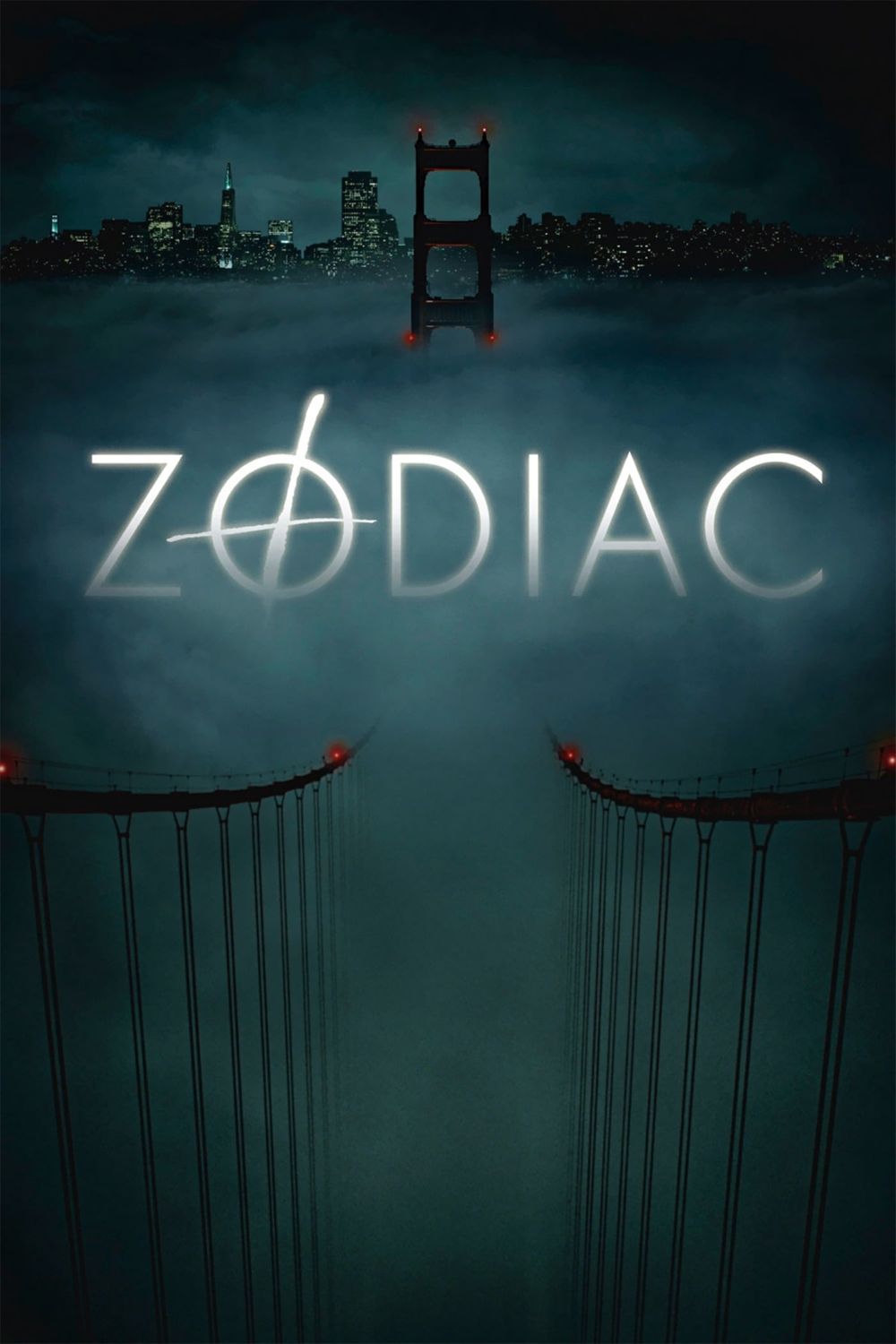
There’s a particular kind of dread in watching capable people do everything they can and still come up short. That’s the feeling David Fincher taps into throughout Zodiac, a movie where a promising lead can be almost as unnerving as a dead end. Every possibility raises hopes, invites scrutiny, and threatens to pull someone deeper into a mystery that refuses to settle. Released in 2007, it’s a remarkably absorbing thriller about a serial killer, but it’s just as interested in the people left sorting through his damage. Catching him is the goal. Living with the failure to catch him becomes the story.

The film approaches the Zodiac investigation through three men with different relationships to the case. Newspaper cartoonist Robert Graysmith, played by Jake Gyllenhaal, becomes fascinated by its puzzles. Crime reporter Paul Avery, played by Robert Downey Jr., follows it professionally, while police inspector Dave Toschi, played by Mark Ruffalo, works to build a prosecutable case. James Vanderbilt’s screenplay, adapted from Graysmith’s books Zodiac and Zodiac Unmasked, lets their paths overlap without making them a conventional crime-solving team. They share information and frustrations, but their responsibilities, methods, and personal stakes aren’t interchangeable. That distinction gives the investigation texture.

Although Zodiac isn’t a typical horror movie, its story and themes firmly belong in serial-killer horror. The fear comes from more than what happens at individual crime scenes. This is an entire region being terrorized by someone whose next move nobody can reliably predict. His letters extend that fear into homes and workplaces, keeping the possibility of another attack alive. The authorities appear almost helpless to provide reassurance, despite their efforts. Fincher doesn’t reduce that helplessness to incompetence. The disturbing point is that people can work diligently, follow procedures, and pursue credible leads without gaining the power to prevent another killing.

The early attacks make that threat feel horribly concrete. Fincher doesn’t treat the victims as disposable figures whose only purpose is to establish how dangerous the killer is. There’s an uncomfortable attention to their vulnerability, especially during the Lake Berryessa sequence. Its daylight setting strips away the familiar suggestion that darkness is what makes a place unsafe. Everything is visible, yet visibility offers no protection. The pacing is agonizing because it allows the situation to become clear without offering an escape from it. Rather than making the violence exciting, Fincher makes it something you want desperately to interrupt.

Once the film turns toward the investigation, it finds suspense in the distance between a discovery and a usable answer. Handwriting comparisons, witness descriptions, phone calls, and jurisdictional obstacles become compelling because their consequences are clear. A detail might matter enormously, but only if someone can verify it or connect it to something stronger. Fincher gets you invested in that process without making it look smooth. Information arrives late, recollections complicate things, and apparent breakthroughs lose their shape. The movie keeps generating momentum, then showing how easily that momentum can disappear. Progress is possible, but it’s never secure.

Ruffalo gives that uncertainty a persuasive human center. His Toschi is smart, engaged, and occasionally funny, but he isn’t presented as a detective whose instincts automatically outrank the evidence. He can suspect someone without possessing what he needs to move forward. Ruffalo makes that limitation frustrating without turning every setback into a speech. A tired expression or clipped response often carries the scene. His performance also gives the procedural material an emotional foundation: this isn’t paperwork for its own sake. It’s the work standing between an investigator’s conviction and the possibility of holding someone accountable.

Downey’s Avery brings a looser, more abrasive rhythm to the film. He’s comfortable with a cutting remark, and his humor initially makes him seem insulated from the ugliness he covers. Gradually, that apparent insulation wears thin. Downey lets the character’s wit remain recognizable even as the confidence behind it becomes less convincing. It’s an effective performance because the deterioration doesn’t feel like a separate dramatic subplot pasted onto the investigation. It grows out of his involvement. Avery’s trajectory also makes Graysmith’s increasing enthusiasm uneasy to watch. One man is getting pulled in while another shows the damage that involvement can leave behind.

Gyllenhaal handles Graysmith’s transformation with similar care. His curiosity starts out as something approachable: he likes puzzles, notices details, and wants people to take his observations seriously. Those qualities don’t vanish when his interest becomes obsession. They simply stop having sensible limits. Gyllenhaal makes it easy to understand the appeal of another conversation or another possible connection, even when the cost becomes obvious. The family scenes matter because they expose what the investigation can obscure. Time spent chasing the case is also time taken from people who need him, and being sincere doesn’t make him less capable of neglect.

Fincher’s control is evident in how naturally the movie makes years accumulate. The period setting feels functional rather than decorative, and the changing dates gradually become reminders of how much life this investigation consumes. Even the suspense changes character. Early fear of an attack develops into anxiety about what might have been missed or misunderstood. The basement sequence brings those feelings together beautifully. Graysmith goes looking for information, only to find himself questioning the safety of the room he’s standing in. It’s a genuinely frightening scene built around uncertain knowledge rather than a clear, visible threat.

The deliberate approach does have drawbacks. The volume of names and disputed details can become tiring, and viewers looking for a steadily escalating chase may find the later stretches repetitive. The shift toward Graysmith also sacrifices some of the balance that makes the earlier sections so engaging. There’s another tension worth keeping in mind: the film’s dramatic investment in a suspect isn’t the same as definitive proof. Its storytelling can make an interpretation feel persuasive without resolving every doubt. That distinction matters in a movie so concerned with how easily the desire for an answer can outrun the available evidence.

What makes Zodiac exceptional is that it never lets the investigation become separate from the lives carrying it. The suspense isn’t only about whether someone will find the right clue; it’s about what another year of searching will do to them. Fincher delivers frightening scenes, excellent performances, and an engrossing procedural, but the cumulative effect is more troubling than any single moment. The killer doesn’t need to remain constantly on-screen to dominate the movie. His absence leaves room for suspicion, fear, and unfinished business to spread—and for everyone else to discover how little control they have over where it ends.
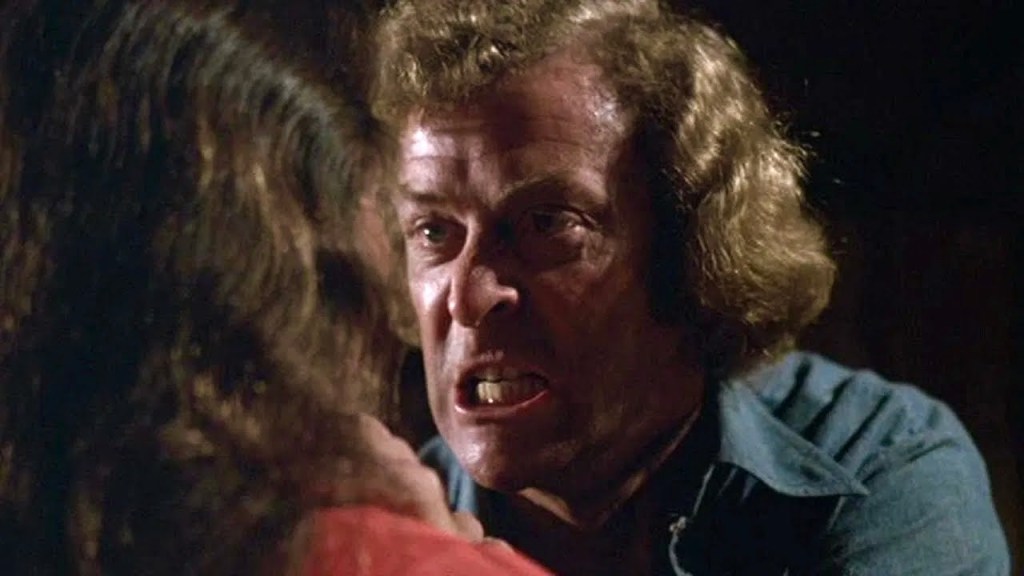
Brad reviews THE HAND (1981), starring Michael Caine!


One of my favorite things about my lifetime of loving movies has been those times when I’ve discovered the actors who really appeal to me. It all started with Charles Bronson when I was in grade school. I call it going through a phase, and while I’m in that phase, I try to watch everything that actor has done that looks the least bit interesting to me. Of course, my Charles Bronson phase has never ended, but there has always been room for additional phases, whether it be actors like Roy Scheider, James Woods, Toshiro Mifune, Chow Yun-Fat, or yes, Michael Caine. When I went through my initial Caine phase, I focused on movies like THE ITALIAN JOB, GET CARTER, and DRESSED TO KILL. Later in his career, I focused on his movies like A SHOCK TO THE SYSTEM, SECONDHAND LIONS, and HARRY BROWN. I knew about THE HAND, but I never watched it before moving on to the next phase. But this being Horror-Thon, and me looking for interesting movies I’ve never seen before, this seemed like the perfect time to spend a couple of hours with Michael Caine and his hand!

THE HAND finds Caine playing Jonathan Lansdale, a successful comic book artist whose life takes a turn for the worse after a car accident results in the gruesome loss of his right hand. That would be bad enough for anyone, but his newfound situation will no longer allow him to create his beloved comic book, and his struggling marriage only seems to be getting worse. When a series of increasingly disturbing events seem to be taking place around him, we’re left to wonder… is his missing hand somehow responsible for the escalating violence around him, or is he going out of his mind?!

One of the intriguing aspects of THE HAND is that it was directed by Oliver Stone who would go on to win Oscars for directing the films PLATOON and BORN ON THE FOURTH OF JULY. Having just won the Oscar for Best Screenplay for MIDNIGHT EXPRESS, Stone was a hot property at the time so it’s no surprise that he was given another chance to direct. He had written and directed the film SEIZURE back in 1974, but this was his first major studio film. With a man of his acclaim and talent in the director’s chair, and with a legendary actor like Michael Caine in the lead, THE HAND would have to be worth watching, right?

I’m going to definitely say “Yes!” Watching Stone deliver the absurd visuals of a creepy severed hand performing a series of gruesome killings brought a ridiculous smile to my face. I’m actually laughing as I type this and think about them again. Not content with my cheap thrills though, Stone also tries to get deep into his main character’s mind so he can play with the uncertainty between reality and imagination. I’m not saying this attempt at psychological depth always works, but it’s kind of fun seeing him try to turn such silly material into something of more substance.

And then there’s Caine in the lead role, which is my primary reason for watching the film. I always like it when he loses it on screen, and he definitely gets to explore his dark side as Jonathan Lansdale. There’s nothing suave about this guy. Rather, he’s playing a man whose life is falling completely apart. While we can at least superficially understand why he would be so frustrated, Caine’s eyes reveal a man who’s leaving the world of reality, and there’s no scenery that he’s not willing to chew by the end. I’ve read that Caine did this movie for the paycheck, and while that may be true, he definitely seems invested to me. Other solid performances come from Andrea Marcovicci as his wife, Bruce McGill as his friend, and Annie McEnroe as his lover. Unfortunately, no one who gets too close is safe from his hand of death!

I understand that not everyone is going to enjoy THE HAND. I’ve said many times before that I’m a fan of actors, and if a movie stars one of my favorites, I’ll give it a lot of grace. Still, I can’t deny that I had a good time watching it even if it might have overstayed its welcome just a bit. While I won’t give the movie a hearty, full-throated recommendation, if you’re a fan of Stone, Caine, or oddball horror films, you just may find a lot to enjoy about this film like I did.

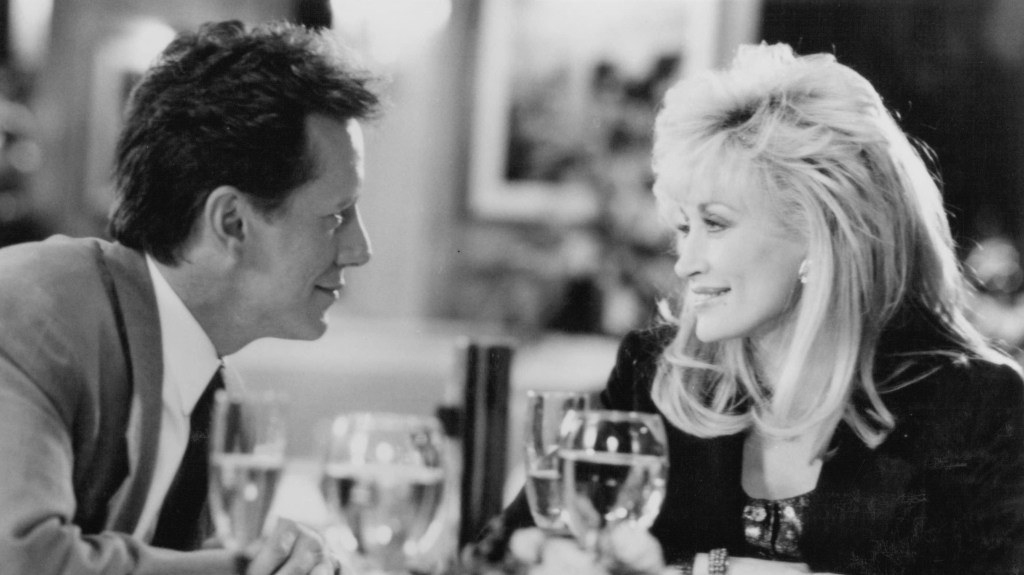
Brad reviews STRAIGHT TALK (1992), starring Dolly Parton and James Woods! 


STRAIGHT TALK opens with Shirlee Kenyon (Dolly Parton) having a bad day in the town of Flat River, Arkansas. First, she gets fired from her job at a dance studio because she likes to talk to the customers more about their problems than she does teaching them to dance. Then she goes home to her lazy, unemployed boyfriend Steve (Michael Madsen), who’s more interested in drinking beer and bowling than talking to her. She tells him she wants to leave town and go to Chicago for a fresh start. He heads to the bar, so she packs her bags and heads to the Windy City. Upon arriving, she finds a job as a receptionist at a local radio station. Through a case of mistaken identity that can only happen in the movies, Shirlee finds herself on air as “Dr. Shirlee,” where she begins fielding calls from people with all kinds of problems. With her homespun wisdom, Dr. Shirlee soon finds herself to be the toast of Chicago. Feeling guilty that the station is advertising her as a “Doctor” when she’s not, Shirlee reluctantly continues on when her boss Alan (Griffin Dunne) convinces her she’s a “doctor of the heart.” Alan takes that simple lie and creates an entire fake public identity for Shirlee. When reporter Jack Russell (James Woods), in serious need of a story, senses that something’s not adding up with Dr. Shirlee, he convinces his editor Milo Jacoby (Jerry Orbach) to let him try to get close to the city’s new star to see if he can dig up some dirt. As he gets to know her, however, he’s charmed just like the rest of city and the two begin to fall in love. With Shirlee feeling guilty about being marketed as someone she’s not, and with Jack feeling bad about deceiving her for a scoop, is there any chance that their love can survive when the truth finally comes out?

STRAIGHT TALK is one of those movies that lives or dies based on whether or not you like its stars. This early 90’s romantic comedy was made for Dolly Parton’s fans, of which there are many. She looks beautiful, she has a great wardrobe, she sings the catchy soundtrack tunes, and she dispenses down-home country wisdom in a way that only Dolly can. And then there’s James Woods as the cynical reporter / love interest. Not traditionally handsome or known for his performances in romantic comedies, he brings his unique style to the role, and somehow it really works. As a huge fan of Woods, I may be a little biased, but I think that he has a great chemistry with Dolly. There does seem to be some basis for my claim as the two seemed to really enjoy each other on the set. Dolly has been quoted as saying that he’s “a great kisser” and a “thrill to be around.” Woods recently posted on social media that “Dolly Parton is the nicest person I’ve ever worked with…. She’s everything you imagine and so much more. Anybody who’s ever spent any time with her absolutely adores her.” I think these genuine feelings show through on the screen and provide levels of entertainment that transcend what’s on the pages of the script.

Aside from the excellent chemistry of its leads, STRAIGHT TALK does lean hard into romantic comedy cliches, and honestly that’s okay with me. I enjoyed the familiar plot lines… Will Shirlee become a star in the big city? Will reporter Jack expose her past? Will the two fall in love? Will her old boyfriend Steve show up? Will her “on-air” advice cause some unexpected problems? Well, of course, on all accounts! As these well worn stories play out against the backdrop of an early 90’s movie version of Chicago, I enjoy the movie for what it is, an entertaining fluff piece. The interesting supporting cast (Griffin Dunne, Michael Madsen, Jerry Orbach, John Sayles, Spalding Gray, etc.) do their jobs well, further enhancing my appreciation of the movie. 

With all that said, I do recognize that the joy of movies is purely a subjective experience, and if you’re not a fan of Dolly Parton, you probably won’t enjoy STRAIGHT TALK. It’s not a great movie in traditional terms, but it is a great “Dolly Parton” movie. I like Dolly, and I especially enjoy her relationship with James Woods within the film, so this is another one of those movies from my youth that I like to watch every few years. I enjoy it every single time. 

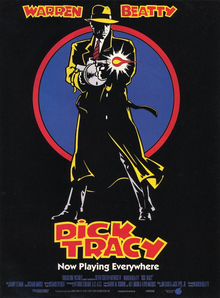
Dick Tracy (1990, directed by Warren Beatty)


The year is 1937 and “Big Boy” Caprice (Al Pacino) and his gang of flamboyant and often disfigured criminals are trying to take over the rackets.  Standing in their way is ace detective Dick Tracy (Warren Beatty), the yellow trench-wearing defender of the law.  Tracy is not only looking to take down Caprice but he and Tess Trueheart (Glenne Headly) are currently the guardians of The Kid (Charlie Korsmo), a young street kid who witnessed one of Caprice’s worst crimes.  Tracy’s investigation leads him through a rogue’s gallery of criminals and also involves Breathless Mahoney (Madonna), who has witnessed many of Caprice’s crimes but who also wants to steal Tracy’s heart from Tess.

Based on the long-running comic strip, Dick Tracy was a labor of love on the part of Warren Beatty.  Not only starring but also directing, Tracy made a film that stayed true to the look and the feel of the original comic strip (the film’s visual palette was limited to just seven colors) while also including an all-star cast the featured Madonna is an attempt to appeal to a younger audience who had probably never even heard of Dick Tracy.  When Dick Tracy was released, the majority of the publicity centered around Madonna’s participation in the film and the fact that she was dating Beatty at the time.  Madonna is actually probably the weakest element of the film.  More of a personality than an actress, Madonna is always Madonna no matter who she is playing and, in a film full of famous actors managing to be convincing as the members of Dick Tracy’s rogue gallery, Madonna feels out of place.  Michelle Pfeiffer would have been the ideal Breathless Mahoney.

It doesn’t matter, though, because the rest of the film is great.  It’s one of the few comic book films of the 90s to really hold up, mostly due to Beatty’s obvious enthusiasm for the material and the performances of everyone in the supporting cast who was not named Madonna.  Al Pacino received an Oscar nomination for playing Big Boy Caprice but equally good are Dustin Hoffman as Mumbles, William Forsythe as Flaptop, R.G. Armstong as Pruneface, and Henry Silva as Influence.  These actors all create memorable characters, even while acting under a ton of very convincing makeup.  I also liked Dick Van Dyke as the corrupt District Attorney.  Beatty knew audience would be shocked to see Van Dyke not playing a hero and both he and Van Dyke play it up for all its worth.  Beatty embraces the comic strip’s campiness while still remaining respectful to its style and the combination of Danny Elfman’s music and Stephen Sondheim’s songs provide just the right score for Dick Tracy’s adventures.  The film can be surprisingly violent at times but the same was often said about the Dick Tracy comic strip.  It wasn’t two-way wrist radios and trips to the Moon.  Dick Tracy also dealt with the most ruthless and bloodthirsty gangsters his city had to offer.

Dick Tracy was considered to be a box office disappointment when it was originally released.  (Again, you have to wonder if Beatty overestimated how many fans Dick Tracy had in 1990.)  But it holds up well and is still more entertaining than several of the more recent comic book movies that have been released.

Retro Television Review: Welcome Back, Kotter 4.19 “The Gang Show”


Welcome to Retro Television Reviews, a feature where we review some of our favorite and least favorite shows of the past!  On Saturdays, I will be reviewing Welcome Back Kotter, which ran on ABC  from 1975 to 1979.  The entire show can be purchased on Prime.

Gabe and Julie are gone but life continues at Buchanan High.

Episode 4.19 “The Gang Show”

(Dir by Norman Abbott, originally aired on March 17th, 1979)

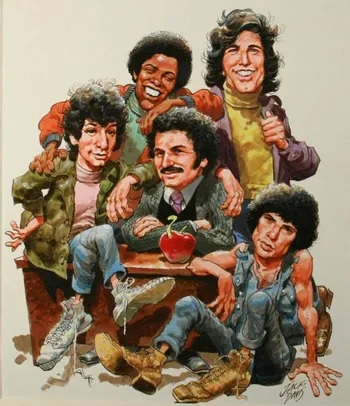
It’s time for the annual Buchanan High talent show and this year, Epstein and Washington are totally convinced that their lame mid-reading act is going to win.  They’ve lost every year that they’ve entered and, considering that both Epstein and Washington appears to be pushing 40, that’s a lot of failure!  Horshack and Beau talk about how their friends came in dead last during the previous show.  How does Beau know?  Beau’s the new kid.  Beau was in Louisiana or wherever he’s supposed to be from when the last talent show was held.

Epstein and Washington think that they’ve got this contest in the bag.  The judges are Horshack, Beau, and their classmate, Wilbur (Bob Harcum).  Their dedicated teacher, Jean Tremaine (Della Reese), is a bit concerned that the judges won’t be mature enough to set aside their friendships and truly honor the best act.  Maybe Mr. Kotter should talk to them….

Oh wait, Gabe isn’t in this episode.

Maybe Julie needs to cross her arms and tell the judges, “This is not funny….”

Oh wait, Julie’s not here either.

That’s right, this is another Welcome Back Kotter episode that doesn’t feature or even mention a single Kotter.  Woodman is there, making odd comments and carrying two hardboiled eggs.  (Woodman’s so cool.)  But the Kotters are gone and, for some reason, everyone’s acting like Ms. Treamaine has always been their teacher.

As for the talent show, Epstein and Washington’s act sucks.  Far more impressive is Carvelli (Charles Fleischer), who sings a blues song about peanut butter and jelly and show that there’s more to him than just being a bully.  Remember when Carvelli and Wilbur first appeared on the show and they were members of a rival gang and the implication was that both Carvelli and Wilbur had killed multiple people?  Now, suddenly, Carvelli is the king of the talent show and Wilbur is one of the judges.  It’s amazing how things change.  All they really had to do was get rid of Julie and suddenly, Carvelli is revealing himself to be a sensitive soul.

Horshack and Beau do the right thing.  They vote for Carvelli.  Wilbur votes for Washington and Epstein because he genuinely liked their dumb act.  Apparently, there were no other acts.  What a lame talent show!  Tremiane is proud of Horshack and Beau for doing the right thing.  She encourages Washington and Epstein to try again next year …. NEXT YEAR!?  Epstein’s going gray and Washington has laugh lines.  If they’re still in school next year, Buchanan needs to be shut down!

This was a weird episode.  I used to make fun of Gabe’s corny jokes but they would have been useful in this episode.  Seriously, this whole fourth season just feels wrong.  Kotter without Kotter just doesn’t work.

Retro Television Review: Welcome Back, Kotter 4.18 “The Sweat Smell of Success”


Welcome to Retro Television Reviews, a feature where we review some of our favorite and least favorite shows of the past!  On Saturdays, I will be reviewing Welcome Back Kotter, which ran on ABC  from 1975 to 1979.  The entire show can be purchased on Prime.

Buchanan High is in chaos!  Only one man can save the day but he’s not around anymore.

Episode 4.18 “The Sweat Smell of Success”

(Dir by Norman Abbott, originally aired on March 3rd, 1979)

Where is Mr. Kotter!?

I mean, don’t get me wrong.  I know why Gabe Kaplan was hardly ever on the show during the fourth season.  He was annoyed that the network refused to allow the Sweathogs to graduate from Buchanan High, despite the fact that the actors playing the Sweathogs were all in their late 20s and early 30s.  He was not happy about working with Marcia Strassman.  And he was shooting a movie for a good deal of the fourth season.  Kaplan felt that he moved on from the series and as such, he allowed his character to become vice principal and kept his appearances on  the show to a minimum,

But, in the narrative of the show, where is Mr. Kotter?  Usually, someone will mention that he’s out of town or busy with school business.  In this episode, he isn’t even mentioned.  It’s kind of disturbing how he’s vanished and no one seems to care.  The Sweathogs need his guidance and this episode, as dumb as it was, features a plot that feels like it would have been perfect for Mr. Kotter’s corny jokes and gentle mentoring.  Even more importantly …. who is the song welcoming back?  Kotter’s gone!  He’s not around to be welcomed back!

As for this week’s episodes, it appears that the show’s writers finally remembered that, at the start of the season, each of the Sweathogs was assigned a job around the school.  Freddie and Horshack run the school store.  Meanwhile, Epstein is in charge of the audio visual department.  But he sucks at his job so Woodman reassigns him to the school paper.  Horshack’s girlfriend, Mary Johnson, edits and writes the paper and is very earnest in her efforts to make the paper something worth reading.  That’s quite a chance from the Mary who tried to kill herself just a few episodes ago.

Anyway, Epstein turns the paper into a tabloid.  He suggests that Julie is having an affair with Woodman.  (“She’s not my type!”  Woodman declares, “Too tall!”)  He writes about Freddie Washington wore diapers until he was six months old.  Epstein describes Horshack as being a diva.  Epstein says that Beau is a member of the Ku Klux Klan. He says….

WAIT!  WHAT!?

Okay, one of these stories is far worse than the others.  Washington did wear diapers when he was a baby and Horshack is a diva and Julie probably is cheating on Gabe.  But Beau is a member of the Klan?  Where did this come from?  “I’m going to need a police escort to go home tonight,” Beau says while the audience laughs.

Seriously, don’t just toss around Klan accusations, folks.  It’s just common sense.

Anyway, Epstein’s friends get mad at him so Epstein quits the paper after publishing an expose of himself on the front page.  He returns to the audio visual department.  He still sucks at his job and I guess Mary is back to having to write, edit, and publish the entire newspaper by herself.  Is this a happy ending?

Well, at least Beau didn’t get killed.

Next week, it’s time for the school talent show!  Wow, Mr. Kotter would have loved that.  RIP.

Retro Television Review: Welcome Back, Kotter 4.17 “Come Back, Little Arnold”


Welcome to Retro Television Reviews, a feature where we review some of our favorite and least favorite shows of the past!  On Saturdays, I will be reviewing Welcome Back Kotter, which ran on ABC  from 1975 to 1979.  The entire show can be purchased on Prime.

This week, Horshack’s not going to take it anymore.

Episode 4.17 “Come Back, Little Arnold”

(Dir by Norman Abbott, originally aired on February 24th, 1979)

Arnold Horshack’s a drunk!

Well, not quite.  He’s not an alcoholic.  He does buy a bottle of cheap whiskey from Carvelli because he has a date coming up with Mary (Irene Arranga) and he’s nervous about it.  To the shock of everyone, Horshack gets mean when he drinks.  He calls the other Sweathogs out for always making fun of him.  He tells his teachers to leave him alone.  He throws all the money from the school store out into the hallway.  He starts wearing a leather jacket.  Horshack is out of control!

It’s a good thing that Vinnie is around to serve as a mentor…. oh wait, Travolta became a movie star and Vinnie Barbarino is no longer on the show.

It’s a good thing that Gabe has a good relationship with Arnold Horshack and …. oh wait, Gabe Kaplan was angry with the show’s producers and only appeared in a handful of episodes this season.  And this is not one of those episodes!

Maybe Julie could …. Marcia Strassman isn’t in this episode either!

Mr. Woodman could …. oh, who are we kidding?  Woodman doesn’t care.

Instead, it falls to Jean Tremaine (Della Reese) to gather all the Sweathogs together and let them know that Horshack needs help.  Jean Who?  Well, apparently, Ms. Tremaine has been around for a while and she’s as much of a mentor to the Sweathogs as Gabe ever was!  Oddly, we’ve never heard about or seen Ms. Tremaine before.  In fact, I thought the whole idea of the Sweathogs was that they weren’t allowed to attend regular classes, like the one taught by Ms. Tremaine.

It’s easy to see what happened here.  With Gabe Kaplan determined to leave and Marcia Strassman also tiring of the show, the show’s producers were trying to figure out how to continue Welcome Back Kotter without any Kotters.  With this episode, we saw one possible way to keep the show going.  Della Reese would be the new teacher and hopefully, she would have eventually gotten some new students.  It was time to let the Sweathogs graduate.  As I watched this episode, I noticed that Ron Palillo, the actor who played Horshack, actually had gray in his hair.

Surprisingly enough, this was actually a pretty good episode.  After spending the past two seasons playing Horshack as just being a weirdo with a strange voice, Ron Palillo finally got another chance to play the angry, misadjusted Horshack who  we first met during the show’s first season.  Palillo really got into the scenes where Horshack told off the Sweathogs, dropping the funny voice and delivering his lines with authentic anger.  Watching the episode, it’s hard not to get the feeling that Palillo was acting out some of his own frustrations in this episode.  It can’t be easy to play Arnold Horshack day-after-day.

And you know what?  As clumsily as she was introduced, Della Reese did a good job as Ms. Temaine.  The idea of her as the new regular teacher was not a crazy one, though it was one that was probably suggested too late to save the show.

This was a good episode.  I’m as surprised as anyone.

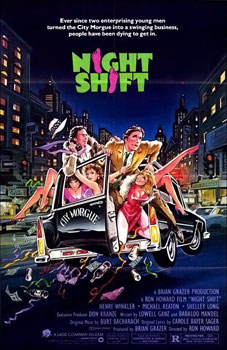
Night Shift (1982, directed by Ron Howard)


Chuck Lumley (Henry Winkler) was a Wall Street wizard until the stress of the job started to give him ulcers.  He dropped out of the rat race, got a less stressful job as an attendant at a New York City morgue, and eventually met and became engaged to Charlotte (Gina Hecht).  When Chuck’s supervisor decides to give Chuck’s day shift to his new guy, Chuck is promoted to the night shift.  “He has the same last name as you,” Chuck says when he learns the about the new employee.  “Yeah, I think he’s my nephew or something,” his supervisor replies.

Chuck finds himself working nights with “Billy Blaze” Blazejowski (Michael Keaton), a hyperactive “idea man,” who has so many brilliant plans that he has to carry around a tape recorder so he doesn’t forget them.  A typical Billy Blaze idea is to battle litter by creating edible paper.  Another one is to rent out the hearse as a limo and give rides to teenagers.  Chuck may not be happy about his new shift or coworker but he is happy that he shares his new work schedule with his upstairs neighbor, Belinda Keaton (Shelley Long).  Belinda is a high-class prostitute who first meets Chuck when she comes by the morgue to identify the body of her pimp.  When Chuck discovers that Belinda needs a new pimp, he and Billy take on the job themselves, which brings them into conflict with not only the vice cops but also with Pig (Richard Belzer) and Mustafa (Grand L. Bush).

Raunchy but good-hearted, Night Shift has always been one of my favorite comedies.  Along with being Ron Howard’s first movie for grown-ups, it also featured Michael Keaton in his first lead role.  Keaton is both funny and surprisingly poignant as Billy.  He’s hyperactive and impulsive and doesn’t think things through but his friendship with Chuck is real and later on in the movie, he reveals himself to have more depth than he lets on.  Also giving good performances are Henry Winkler and Shelley Long, two performers better-known for their television work than their film roles.  With his role here, Winkler proved that he was capable of playing more than just the Fonz.  Shelley Long has probably never been better (or sexier) than she was in this film.  The scene where she makes breakfast for Chuck is unforgettable.  Even though she’s playing a stock character, the prostitute with a heart of gold, Shelley Long brings her own unique charm to the role and makes Belinda seem like a real person.

Night Shift starts out strong but falters slightly during its second hour, when Chuck and Billy seem to magically go from being nerdy morgue attendants to successful pimps overnight.  Some of the violence feels out-of-place in what is essentially a buddy comedy with a dash of romance.  It’s still a funny movie that is full of memorable one liners and good performances.  As you might expect from Ron Howard, Night Shift is a surprisingly good-hearted look at the business of sex.  Ron Howard has directed a lot of films since but few of them are as much fun as Night Shift.

Retro Television Review: Welcome Back, Kotter 4.8 “X-Rated Education”


Welcome to Retro Television Reviews, a feature where we review some of our favorite and least favorite shows of the past!  On Saturdays, I will be reviewing Welcome Back Kotter, which ran on ABC  from 1975 to 1979.  The entire show can be purchased on Prime.

This week, Gabe Kaplan is missing.

Episode 4.8 “X-Rated Education”

(Dir by Norman Abbott, originally aired on October 28th, 1978)

Epstein, because he’s apparently the only student who works in the audio-visual department, is setting up the projector in the classroom so that it can be used to show a sex education film.  Carvelli and Wilbur enter the room and announce that they have a pornographic film that they want to watch.  Horshack and Washington then show up and decide that they want to watch the movie as well, even though Horshack doesn’t seem to be quite sure what an adult film actually is.

(Horshack also now appears to now be about 50 years old.  The Sweathogs are aging …. fast!)

Epstein says that they can use a different projector to watch the pornographic film.  The Sweathogs and Carvelli head off to the storage closet while Julie takes the first projector to the office so that she can show the sex ed film to a bunch of parents who are not sure they want their children taking sex ed.

You can guess what happens, can’t you?  The two films get mixed up.  The Sweathogs end up watching the tame sex ed film.  Horshack becomes obsessed with the butterfly that is featured in the film.  The protesting parents watch the adult film and demand that both Julie and Woodman be fired.  Can Julie talk Epstein into explaining what happened even though it’ll mean that Epstein will be running the risk of being expelled?  Much like Horshack, Epstein appears to be 50 years old in this episode so maybe getting expelled would be good for him at this point.

This episode raises a simple question.  Is it really an episode of Welcome Back, Kotter if Kotter isn’t around to be welcomed back?  Gabe Kotter is not in this episode and his absence is neither mentioned nor explained.  (Off-screen, Gabe Kaplan was not happy with the show’s direction and refused to appear in all but a handful of season four’s episodes.)  It’s a shame because the plot of this episode does actually feel like a throw back to the type of first and second season episodes that Kaplan usually did quite well with.  Instead of Kaplan’s understanding but firm Gabe Kotter, we get Julie telling Epstein to tell the truth and negotiating with the parents.  Julie now works at the school but I’m not totally sure what her job is actually supposed to be.  Sometimes, she appears to just be Woodman’s administrative assistant.  Other times, she appears to be a guidance counselor.  Sometimes, she’s a teacher.  Julie usually gives good advice but she’s an outsider and it’s obvious that, unlike her husband, she would never consider herself to be a Sweathog.  Whereas Gabe talks to the Sweathogs, Julie often seems to be talking down to them.

This episode also suffers due to the fact that Barbarino is not present, even though the idea of the Sweathogs watching a sex education film seems like a classic Barbarino plot.  Robert Hegyes is the main Sweathog now.  He was a good actor but he was also way too old, at this point, to be playing a high school student.  Lawrence Hilton-Jacobs continues to be underused and Ron Pallilo performance as Horshack has grown more and more grating as the fourth season has progressed.

In the end, only John Sylvester White’s unhinged performance as Woodman remains a consistent source of laughs on this show.  Woodman is not quite as antagonistic towards Julie as he is towards Gabe but his constant bitterness is still a lot of fun to watch.  Maybe they should have renamed this show Welcome  Back, Woodman.

Anyway, this was another fourth season episode that fell flat because the Sweathogs and Julie all seemed like they would rather be anywhere than appearing on Welcome Back, Kotter.  Seriously …. let the Sweathogs graduate!

Retro Television Review: Welcome Back, Kotter 4.5 “The Sweatmobile”


Welcome to Retro Television Reviews, a feature where we review some of our favorite and least favorite shows of the past!  On Saturdays, I will be reviewing Welcome Back Kotter, which ran on ABC  from 1975 to 1979.  The entire show is currently streaming on Tubi!

This week, the Sweathogs share a story about the time that they all tried to buy a car together.

Episode 4.5 “The Sweatmobile”

(Dir by Norman Abbott, originally aired on October 9th, 1978)

Barbarino, Washington, Epstein, and Horshack sit outside of the classroom and look at the lunches that their mothers prepared for them.  Epstein has a liver burrito.  Barbarino has corn flakes and he’s happy about that because his mother is saint.  Horshack has peanut butter and prunes and he’s not happy about that because he hates peanut butter.

(For those trying to keep track of the fourth season’s already confusing continuity, this episode features Barbarino as a student at the school, even though the previous two episodes insinuated that he was no longer attending classes.  Even though Babarino now lives in an apartment by himself, his mother apparently still makes his lunch.  As for the new Sweathog, Beau is neither mentioned nor seen in this episode, which leads me to suspect that this episode was originally meant to air even earlier in the season than it did.)

Carvelli and Murray walk up to the Sweathogs and Carvelli taunts them by revealing that he was able to drive to a fast food restaurant for his lunch.  Seeing how desperate the Sweathogs are for real food, Carvelli offers to sell them his used car so that they too can actually get hamburgers.  However, the Sweathogs tell him that they learned their lesson the last time they tried to buy a used car.

Flashback time!

The Sweathogs all pooled their money so that they could buy a used car from Vinnie’s uncle.  Vinnie insisted that he would be the one who would drive the car, as he had the most experience in cars.  Everyone warned the Sweathogs about the difficulty of multiple people owning and using one car.  But the Sweathogs were determined to do it.  They arranged to meet with Vinnie’s uncle at the hospital where Vinnie works as an orderly.  However, once they arrived at the hospital, they watched as Vinnie’s uncle was wheeled in on a gurney after having wrecked the car that he was going to sell.  Vinnie’s aunt mentioned that his uncle couldn’t wait to cheat whoever was dumb enough to buy a used car from him.

This was an odd episode.  It was nice to see the original Sweathogs together again but the whole flashback structure felt strange.  Usually, a flashback means that the audience is about to see something that happened long ago.  But, in this episode, it appears that we’re watching a flashback to something that happened maybe a day or two ago.  In the flashback, Barbarino is working at the hospital, Gabe is vice principal (and away at a teacher’s conference due to the fact that Gabe Kaplan was sick of doing the show), and Julie was already Woodman’s administrative assistant.  As well, Julie has her terrible new haircut in the flashbacks.  This is all stuff that didn’t happen until the start of the fourth season.  Again, it’s hard not to feel that this was an episode that was meant to air much earlier in this season but, for some reason, it was held back and a flashback framing device was awkwardly added.

Fortunately, the original Sweathogs, despite being clearly too old to be even remedial high school students, still have the chemistry that made this show a hit during its first season.  Given everything that I’ve read about just how difficult things got behind-the-scenes on this show, it was nice to see them having fun and obviously enjoying themselves.  Though the episode’s structure was weird, this episode still presents viewers with one last chance to see the chemistry and comradery that made Welcome Back, Kotter a hit in the first place.