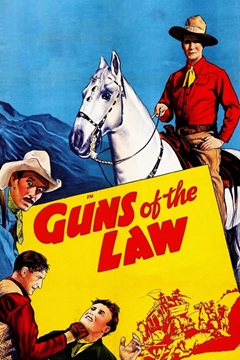
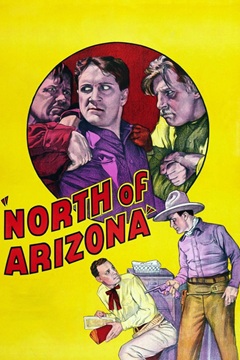
Newly hired ranch foreman Jack Loomis (Jack Perrin) comes to the aid of two Indians who were nearly swindled out of their land during a card game. The Indians inform Jack that his new boss, George Tully (Al Bridge), is actually a crook and the ranch is just a front for his criminal activities. When Jack says he doesn’t want to be a part of Tully’s schemes, Tully and his men frame Jack for a robbery.
After you watch enough of these Poverty Row westerns, you start to get the feeling that anyone in the 30s could walk into a studio and star in a B-western. Jack Perrin was a World War I veteran who had the right look to be the star of several silent films but once the sound era came along, his deficiencies as an actor became very apparent. He could ride a horse and throw a punch without looking too foolish but his flat line delivery made him one of the least interesting of the B-western stars. That’s the case here, where Perrin is a boring hero and the entire plot hinges on the villain making one really big and really stupid mistake. John Wayne could have pulled this movie off but Jack Perrin was lost.
Jack Perrin’s career as a star ended just a few years after this film but not because he was a bad actor. Instead, Perrin filed a lawsuit after a studio failed to pay him for starring in one of their films. From 1937 until he retirement in 1960, Perrin was reduced to playing minor roles for which he often went uncredited. Hollywood could handle a bad actor but not an actor who expected to be paid for his work.
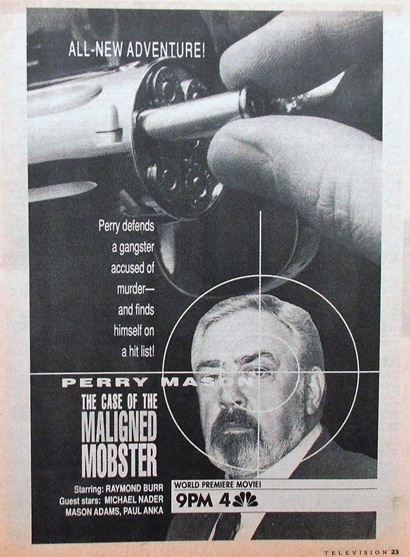
Despite being asked to take the case by an old friend (Mason Adams), Perry Mason (Raymond Burr) is reluctant to defend Johnny Sorrento (Michael Nader) in court. Johnny is a former gangster who has been credibly accused of murder in the past. Now, he’s on trial for killing his wife and not even Perry is totally convinced that he’s innocent.
Of the 18 Perry Mason films that I’ve watched so far, this was definitely the best. This is the first time that I’ve seen Perry defend someone who he both dislikes and, even more importantly, distrusts and Raymond Burr was really convincing whenever he got angry at Johnny. For once, the case wasn’t wrapped up as neatly as usual. Solving the murder of Johnny’s wife meant delving into a past murder and it uncovered a lot of dark secrets. The identity of the killer was a real surprise but there was a lot more going on than just solving the mystery of who killed Johnny’s wife. At the end of this movie, Perry looked like he was about to cry, no matter how much Della (Barbara Hale) tried to comfort him.
Sharing much more would be the same as spoiling all of the movie’s twists and turns so I’ll just repeat that this is the best of the Perry Mason movies that I’ve seen so far. The guest cast is great, especially Mason Adams and Paul Anka. The Perry Mason films always follow the same plot and sometimes, they can blend together but this one made a real impression and really took me by surprise.
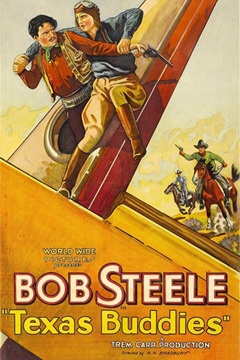
Ted “Jet” Morgan (Bob Steele) returns home from World War I. When he gets off the train in his small, western town, he’s met by Si “Old Timer” Haller (George “Gabby” Hayes). Si explains that Ted’s aunt is dead and his uncle was run out of town for being a drunk. Alice, “the girl next door” who Ted hoped to marry, married someone else. Si invites Ted to stay with him. Ted agrees and things start to look up when he meets Si’s niece, June (Nancy Drexel).
Meanwhile, a gang of outlaws led by Ken Kincade (Harry Semel) hijack a mail plane and steal the payroll that it was carrying. Ted is not nicknamed Jet for nothing. He not only know how to ride a horse but he’s good with planes too. With the help of Si and the local sheriff (William Dyer), he aims to stop those turn of the century skyjackers before they can force another unexpected landing.
Though the film takes place after World War I and features Bob Steele flying a plane and Gabby Hayes driving the same car he drove in Rainbow Valley, this is definitely a western. Before he proves himself as a pilot, Ted has to prove himself as a horseman and the movie ends with a traditional western gunfight. The postwar setting does still bring some unexpected elements to the story. Ted’s lonely arrival in his hometown reflects what it was like for many veterans returning home from Europe. At first, Ted doesn’t feel like he has a place in his old town but he soon gets a chance to prove to both himself and the townspeople that he belongs.
Bob Steele and Gabby Hayes are good heroes. Robert N. Bradbury, who was also Steele’s father, was one of the best of the B-western directors. For fans of the genre, this film is a definite treat.
To celebrate the incredible Takeshi Kitano’s 79th birthday, I decided to revisit his directorial debut, VIOLENT COP (1989). I first discovered Kitano in the late 90’s when I saw that his film FIREWORKS (1997) was available for rent at my local Hastings Entertainment Superstore. Of course I rented it. It was slow, but it was also incredibly powerful, and I found myself paying attention to Kitano’s career. He has this incredible screen presence, and I was soon watching everything he came out with from BROTHER (2000) and BATTLE ROYALE (2000) to the update of ZATOICHI: THE BLIND SWORDSMAN (2003). I also looked back at the earlier work in his career, which brings us back to VIOLENT COP.
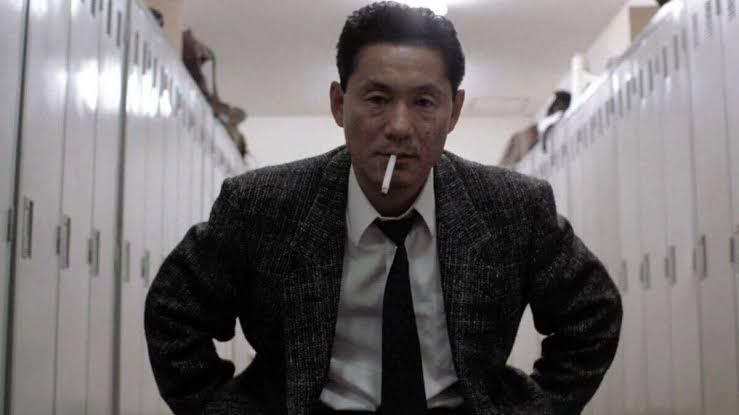
VIOLENT COP introduces us to Detective Azuma (Takeshi Kitano), a Tokyo cop whose methods are almost as brutal as the crimes he investigates. When his best friend, the corrupt cop Iwaki (Sei Hiraizumi), is murdered, Azuma uncovers a criminal network tied to drugs, corruption, exploitation, you name it! Through a series of beatings and threats, Azuma closes in on the professional killer, Kiyohiro (Hakuryu). Complicating matters is Azuma’s sister, Akari (Maiko Kawakami), a mental case and drug addict. When Akari is kidnapped due to his investigation, Azuma will stop at nothing to get his own, unique brand of justice.
First time director Takeshi Kitano brings an interesting and minimalist quality to VIOLENT COP through his long static shots and sparse dialogue. He’s able to create an atmosphere where the brutality of his story feels raw and natural. Actor Takeshi Kitano’s performance as Azuma follows suit. Once the violence comes, it resonates and lands extremely hard precisely because it’s presented in such a straightforward manner. Kitano’s film is way more realistic than most of us would probably care to admit.
Ultimately, VIOLENT COP doesn’t condemn or endorse Azuma, choosing to just observe him as his story leads to tragedy. As Kitano’s directorial debut, however, it introduces us to a unique and confident new voice… bleak, unsentimental, and unsettling. Kitano, the actor and the director, isn’t afraid to just stare at the camera and dare you to decide if there’s any difference between the good guy and the bad guy!
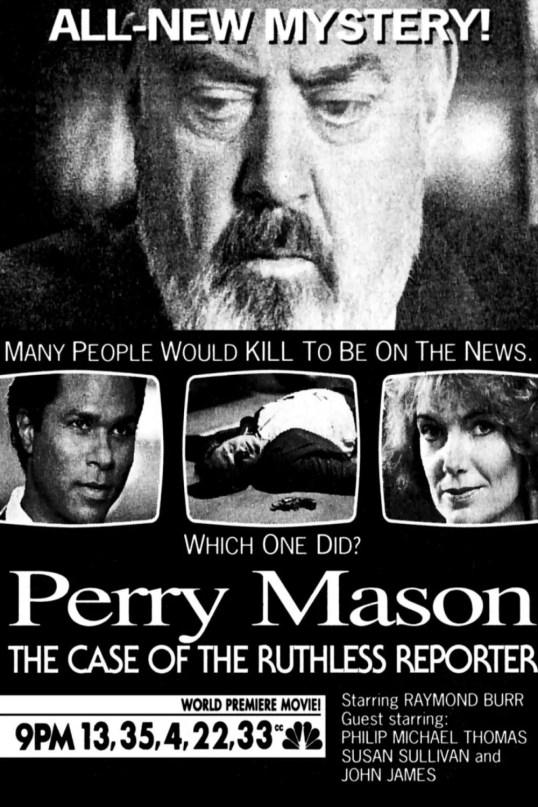
When arrogant news anchor Brett Huston (John James) is shot and killed, his co-anchor Gillian Pope (Kerrie Keane) is arrested and charged with the crime. It looks like an open-and-shut case because Brett was shot with Gillian’s gun. Luckily, Gillian is friends with Perry Mason (Raymond Burr) and soon Perry is on the case with Della Street (Barbara Hale) and Ken Malansky (William R. Moses).
Now this is how you do a Perry Mason movie! Brett’s murder is linked to a memo that he wrote in which he criticized the other members of the news team and argued that they should all be fired. All of the suspects are enjoyably eccentric. There’s a weatherman (Peter Jurasik) who wants to be a stand-up comedian. There’s the sports reporter (Philip Michael Thomas) who used and sold steroids. There’s the producer (Susan Sullivan), who was also Brett’s ex-wife. Brett even insulted the station manager (Jerry Orbach, who previously appeared as a different suspect in The Musical Murder). Ken, as usual, finds time for romance, this time with reporter Cassie Woodfield (Mary Page Keller) who appears to have someone trying to kill her as well. Along with a great cast of characters, this mystery had a solution that took me by surprise but which also made sense when I looked back on it. The final courtroom reveal was perfect. This is also probably the only Perry Mason film where the hours of a hamburger restaurant proved to be instrumental to the case.
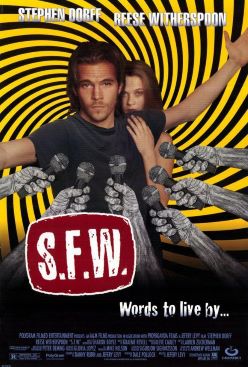
Cliff Spab (Stehpen Dorff), his friend Joe Dice (Jack Noseworthy), and teenager Wendy Pfister (Reese Witherspoon) are in the wrong convenience store at the wrong time and end up being taken hostage by a group of masked terrorists who have guns and video cameras. For 36 days straight, their ordeal is broadcast live on television. They become the number one show in the country and Cliff’s nihilistic attitude makes him a star. When the terrorists threaten to kill him, he spits back, “So fucking what!?” Alienated young people take up S.F.W. as a personal chant and credo. When Joe finally fights back, both he and the terrorists are killed in the shoot-out. Wendy and Cliff are now celebrities, even though they don’t want to be. Released into the real world, Cliff has to deal with everyone wanting to make money off of him. His alienation has been turned into a product. He just wants to be reunited with Wendy but his fans want him to tell them how to live their lives. Fandom turns out be a fickle beast.
Earlier this morning, I came across a news item that Jefery Levy, the director of S.F.W., had died at the age of 67. S.F.W. used to show up frequently on cable in the 90s but I hadn’t thought about it in years. When I first saw S.F.W., I didn’t care much for it. Cliff came across as being a poseur and Stephen Dorff came across like he was way too impressed with himself. With John Roarke playing everyone from Phil Donahue to Sam Donaldson and Gary Coleman appearing as himself, the movie seemed like it was trying too hard to be outrageous. Looking back on it now, though, I realize S.F.W. may not have been a good movie but it was still a very prophetic movie. What seemed implausible in the 90s — like the 36-day live stream from inside the convenience store hostage situation and Cliff Spab’s fans switching their allegiance to a self-righteous virgin who yells that everything matters while trying to assassinate him — feels far too plausible today.
In 1994, S.F.W. and Jefery Levy predicted the 2020s. The only thing it got wrong was having Cliff Spab not wanting to be a famous. Today, Cliff Spab would probably be presenting the Best Podcast award at the Golden Globes.
“Every skull is a set of thoughts. These sockets saw and these jaws spoke and swallowed. This is a monument to them. A temple.” — Dr. Ian Kelson
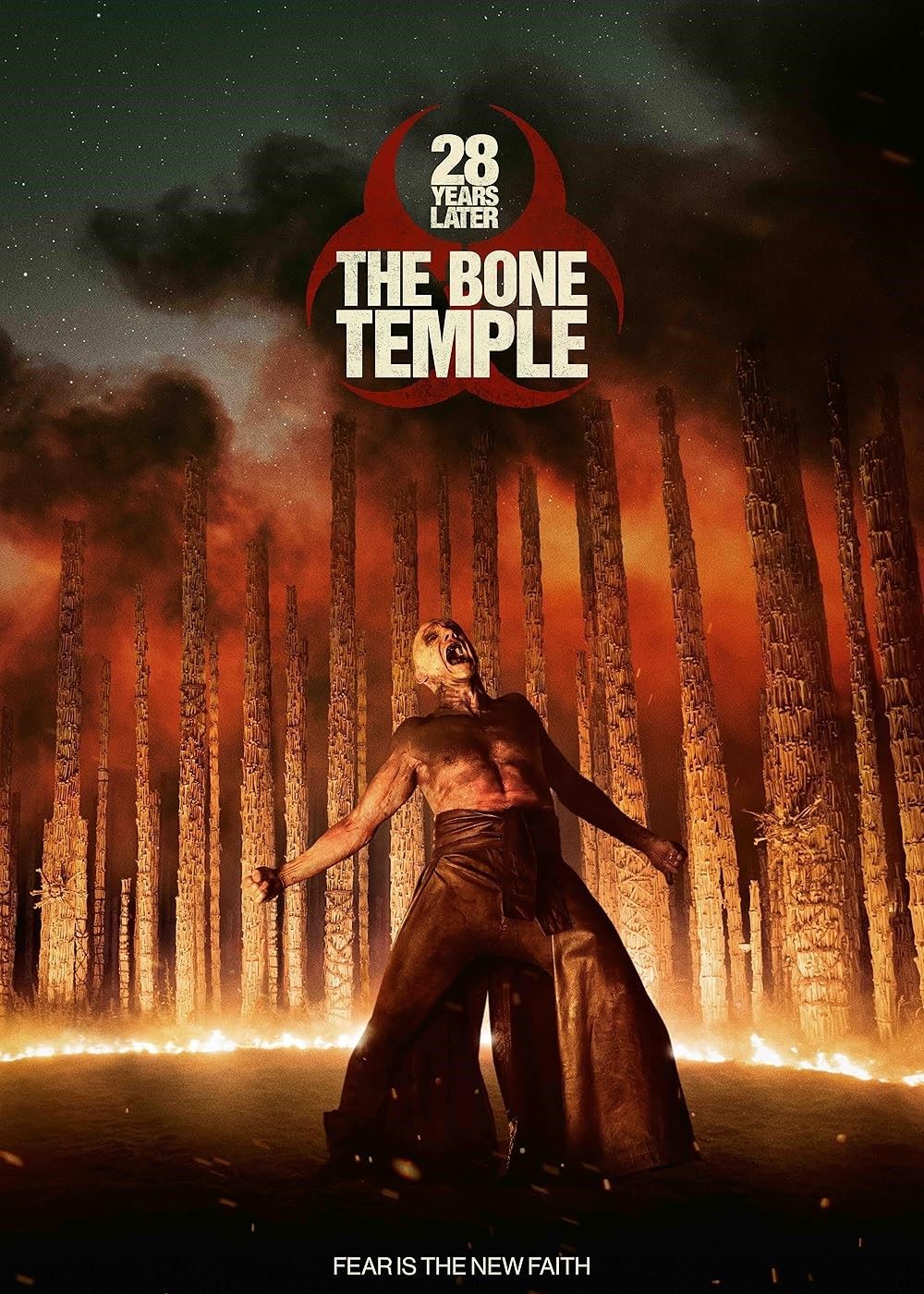
28 Years Later: The Bone Temple crashes into 2026 with the force of a Rage-infected sprint, claiming its spot as one of the year’s top films right out of the gate, flaws and all. Directed by Nia DaCosta, the film continues to showcase her evolving command as a filmmaker, building directly on the promise of her 2025 character study Hedda, where she dissected emotional isolation with surgical precision and atmospheric tension. Where The Marvels in 2023 felt like a worthy attempt hampered by a screenplay that couldn’t decide on a tone—swinging between quippy banter and high-stakes drama while beholden to the cinematic universe’s endless interconnections—The Bone Temple unleashes DaCosta at full throttle, free from franchise baggage to craft a horror epic that’s visually poetic, thematically fearless, and rhythmically assured.
Yeah, it revels in bleakness that can border on exhausting, and its structure wanders more than it charges forward, but those imperfections only underscore how fiercely original and alive it feels compared to the rote horror sequels we’re usually fed. Decades past the initial outbreak that defined 28 Days Later and 28 Weeks Later, the apocalypse here isn’t a fresh crisis anymore—it’s infrastructure, a grim new normal etched into the landscape. Survivors haven’t rebuilt so much as repurposed the ruins, carving out rituals and monuments that say as much about lingering trauma as they do about adaptation. The Rage virus still turns people into feral killers, ripping through flesh in those signature bursts of speed and savagery, but the infected have evolved in intriguing ways that deepen the world’s mythology without overshadowing the human core. The spotlight swings to human extremes: towering bone architectures raised as memorials, nomadic gangs treating murder like liturgy, and lone figures wrestling with whether dignity even matters when bodies pile up unmarked. This pivot lets the film breathe in ways the earlier entries couldn’t, expanding a zombie-adjacent thriller into something folk-horrific and introspective.
Dr. Ian Kelson embodies that shift, and Ralph Fiennes delivers what might be his meatiest role in years—a reclusive physician-architect whose Bone Temple dominates the story like a character itself, adding a profound level of tragic humanity that stands in stark, poignant contrast to the nihilistic worldview of Sir Lord Jimmy Crystal and his blindly devoted followers. Picture spires of meticulously arranged skulls and femurs, bleached white against misty Scottish skies, lit at night like profane altars: it’s production design that hits you visually first, then sinks in thematically as Kelson’s obsession with cataloging the dead. Fiennes plays him not as a villain or eccentric, but as a man fraying at the edges—tender when easing a dying woman’s passage (Spike’s mother, in a flashback that sets the whole narrative in motion), ruthless in his logic about preserving memory over sentiment. “Every skull is a set of thoughts,” he murmurs in one standout line, sockets staring empty, jaws frozen mid-word—a perfect encapsulation of the film’s meditation on legacy amid oblivion. Those quiet scenes, where Kelson debates ethics with survivors or observes the infected Samson with clinical curiosity shading into something paternal, ground the movie’s wilder swings and prove Fiennes can carry horror on sheer presence alone.
Spike, our entry point into this madness, carries scars from that childhood brush with the Temple and his mother’s end, propelling him toward Jimmy Crystal’s orbit like fate’s cruel magnet. He’s no square-jawed lead; he’s reactive, watchful, hardening through trials that test his humanity without fully erasing it. That arc collides with Jimmy’s cult—a roving pack of devotees renamed his “seven fingers,” all aping the leader’s bleach-blond hair, loud tracksuits, and flashy trinkets in a uniformity that’s both comic and chilling. Jack O’Connell chews the scenery as Jimmy, a pint-sized prophet whose charisma masks profound damage: twitchy grins, boyish rants blending kids’ TV catchphrases with fire-and-brimstone, devotion to his “Old Nick” devil figure turning every kill into theater. The Savile visual parallels—those garish outfits evoking the real-life abuser’s predatory fame—add a layer of cultural poison, implying charisma survives apocalypse by mutating into something even uglier, with institutions gone but the hunger for idols intact. O’Connell makes Jimmy magnetic and monstrous, a performance that elevates the cult from trope to tragedy.
If the film’s greatness shines through performances and visuals, its violence tests that shine—deliberately, one suspects. Infected attacks deliver franchise-expected chaos: heads torn free, eyes clawed out, bodies pulped in handheld frenzy. But Jimmy’s rituals amp the sadism—knife duels extended into endurance ordeals, flayings half-glimpsed but fully heard, victims’ pleas dragging until empathy fatigues. It’s grueling, sometimes overlong, risking audience burnout, yet it serves the theme: in a Rage world, human-inflicted torment outlasts viral rage because it feeds on belief. DaCosta pulls punches visually (smart cuts, shadows over gore) but lingers on emotional fallout, making cruelty feel earned rather than exploited— a maturation from The Marvels‘ tonal whiplash into controlled, purposeful discomfort. Counterpoints pierce through: Jimmy Ink’s furtive kindnesses toward Spike, Ian and Samson’s drug-hazy field dances blurring monster and man, fragments of backstory humanizing even Jimmy’s frenzy. These glimmers don’t redeem the world—they make its harshness sting deeper, proving flickers of connection persist as defiant accidents.
Technically, the film flexes non-stop, with DaCosta’s post-Hedda assurance evident in every frame. Anthony Dod Mantle’s cinematography weds gritty digital shakes to sweeping drone shots, turning Highlands into deceptive idylls ruptured by whip-pans and flame flares. Sound design hums with menace—whistling winds masking howls, train rumbles underscoring rituals, screams echoing into silence for maximum unease. Editing mirrors the narrative’s spiral: episodic loops around Spike’s hardening, Ian’s doubt, Jimmy’s collapse, eschewing linear escalation for dream-logic dread that suits a “settled” apocalypse. The Temple centerpiece ritual explodes into metal-thrash worship, cultists moshing amid pyres—a grotesque stadium parody where faith meets fandom in blood-soaked ecstasy. Even the score pulses with restraint, letting ambient horror fill gaps better than bombast ever could.
Tonally, it juggles masterfully: tender Kelson vignettes abut cult carnage, philosophical riffs on atheism versus delusion frame gore-fests, folk-horror monuments clash with infection thriller roots. Themes of faith-as-coping, grief-as-art, ideology’s pitfalls land without preaching—Kelson’s secular duty versus Jimmy’s ecstatic nihilism debates through action, not monologue. The ending circles back to series emotional cores (survival’s cost, hope’s fragility) while forging ahead, teasing Spike’s grim purpose without cheap uplift.
Flaws? The runtime sags in cult stretches, bleakness borders masochistic, sprawl might frustrate plot-chasers. But these are risks of ambition, not laziness—choices that make triumphs (Fiennes’ gravitas, O’Connell’s feral spark, visuals’ poetry) land harder, all under DaCosta’s steady hand that Hedda honed and The Marvels tested. In January 2026, amid safe genre retreads, The Bone Temple towers: a sequel philosophically dense, actor-propelled, unafraid to wound deeply then whisper mercy. It hurts because it sees us clearly—craving structure in chaos, building temples from bones, real or imagined. One of the year’s best, period, for daring to evolve rather than echo.
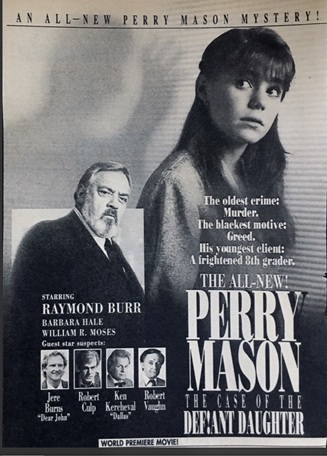
Perry Mason (Raymond Burr) and Ken Malansky (William R. Moses) are in Las Vegas for a boxing match but you know how it is when you’re the world’s most famous defense attorney. Perry can’t even go to Nevada without getting drawn into a court case. This time, David Benson (John Posey) is accused of shooting a blackmailer named Richard Stuart (Robert Culp). David’s teenage daughter, Melanie (Jenny Lewis), convinces Perry to take the case. She also tries to investigate on her own. It turns out that Richard Stuart was blackmailing several people. The suspects include Robert Vaughn, Jere Burns, Ken Kercheval, and Kevin Tighe.
I went back and forth on this entry. The best thing about this movie were the other suspects, who were all flamboyant Las Vegas characters. However, Melanie was sometimes annoying, even though it was understandable that she would be upset about her father being accused of murder. But I do think it was interesting to see how Perry related to Melanie. There’s a really sad subtext to the movie because Perry’s entire life is about his work. His friends are other attorneys. He doesn’t seem to have a family. While defending David, Perry became a surrogate father for Melanie but, at the end of the movie, Perry was once again alone.
In the end, The Case of the Desperate Daughter won me over. It was entertaining to see Perry in a different setting and dealing with characters who were more memorable than the usual cast of suspects. Even Perry Mason needed an occasional change of scenery.
Three Texas Rangers — Tex Wyatt (Dave O’Brien), Jim Steele (James Newill), and Panhandle Perkins (Guy Wilkerson) — ride into a small town. They each arrive separately and they all sing while sitting on their horses. They’re in town to help out Jed Wilkins, who was Panhandle’s superior officer during the Civil War. Jed is having a nervous breakdown because a crooked surveyor (Jack Ingram) and shifty lawyer (Charles King) are trying to cheat him out of his land. Jed thinks that he’s serving in the war again so Panhandle has to wear his old Confederate uniform to keep Jed from losing it any further.
The Texas Rangers starred in a series of B-westerns. This one is mostly amiable, though I think modern viewers will probably have a more difficult time with the Confederate uniform than viewers did in 1944. Having watched enough of these movies, I’ve lost track of the number of crooked lawyers that Charles King played over the years. He was one of the great B-movie villains, that’s for sure.
I don’t really know what to make of the singing cowboy genre. Why are they singing while riding through the wilderness and trying not to get shot? Do all of the Texas Rangers sing or is it just these three? This movie raises so many questions. What’s odd is that the songs in this movie are actually really catchy. I can still remember the tunes, if not all of the lyrics. Don’t break the law, the Rangers sang as they rode out of town at the end of the movie. Don’t break the law.
I was a bit shocked to realize that I hadn’t reviewed Escape from New York for this site. Leonard’s reviewed it.Jeff’s reviewed it. I’ve reviewed quite a few Italian films that were inspired by Escape from New York. Last year, I devoted an entire day to how much I love Kurt Russell. I’ve shared John Carpenter’s theme music, more than once. I’ve reacted to Mamdani’s election by telling my friends that it’s time to escape from New York. I’ve lost track of the number of times that I’ve told Leonard that it is “Time to leave the Bronx,” even though he doesn’t live in the Bronx. (What do I know? I live in Texas.) But I’ve never actually reviewed Escape From New York.
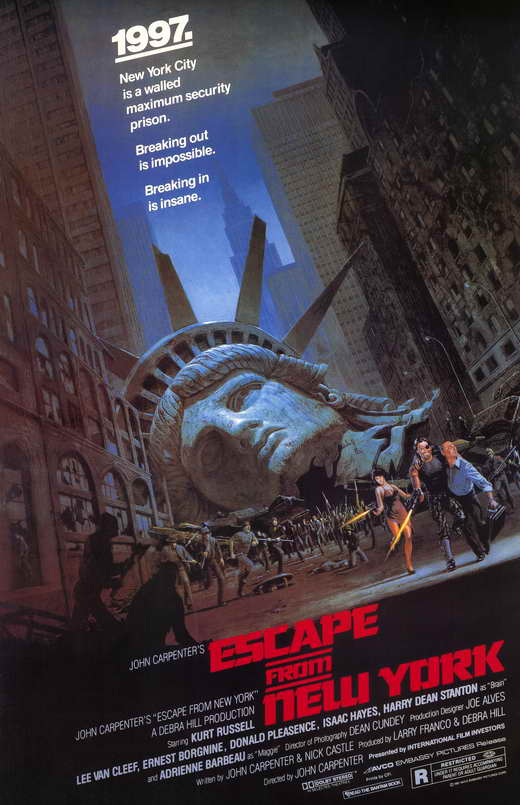
I love Escape from New York but I have to say that the film itself can’t live up the brilliant poster art. The first time I watched Escape from New York, I was really disappointed that the Statue of Liberty’s head never appeared in the middle of a street in Manhattan. If the film were made today, one imagines that the filmmakers would be able to do all sorts of things with the Statue of Liberty. But Escape from New York was made in 1981, in the days before rampant CGI. Escape from New York was made at a time when directors had to be somewhat clever and that definitely works to the film’s advantage. The lack of big time special effects meant that Carpenter had to emphasize character and atmosphere. Escape From New York might not feature the Statue of Liberty’s head but it does feature an amazing cast and a host of unforgettable characters. When you manage to get Kurt Russell, Ernest Borgnine, Donald Pleasence, Harry Dean Stanton, Adrienne Barbeau, Lee Van Cleef, and Isaac Hayes all in the same film, there’s no way it isn’t going to be memorable.
We all know the plot. Kurt Russell plays career criminal Snake Plissken. (Everyone thought Snake was dead.) When the President (Donald Pleasence) finds himself trapped on the prison island of Manhattan, Snake is the man who is sent to rescue him. The fate of the world depends on rescuing the President. If the President isn’t rescued, it could lead to nuclear war. Snake doesn’t really care about the fate of the world. He does care about the fate of himself, however. He’s been injected with a poison that will kill him unless he receives the antidote in 24 hours.
(The doctor who gives Snake the poison is named Dr. Cronenberg. Meanwhile, Frank Doubleday appears as a thug named Romero. Lee Van Cleef’s police commissioner is named Hauk, as in Howard Hawks. Tom Atkins plays Captain Rehme, as in producer Bob Rehme. The film may be about the collapse and possible end of the world but John Carpenter’s having fun. And, of course, so are we.)
The President has been captured by the Duke of New York (Isaac Hayes). It doesn’t take Snake long to track down the Duke. But rescuing the President and making it back to safety turns out to be far more difficult and violent than anyone was anticipating. Snake gets some help, from characters like Cabbie (Ernest Borgnine), Brain (Harry Dean Stanton), and Maggie (Adrienne Barbeau). Of course, that help is largely due to everyone’s self-interest. The recurring theme is that no one really cares that much about whether or not the President or even Snake lives or dies. Maggie loves Brain but, otherwise, there’s not much individual loyalty to be found in this film. Instead, everyone just cares about getting the Hell out of New York. In the end, even the President turns out to be a bit of a jerk.
(I do have to say that I absolutely love Donald Pleasence’s performance in Escape from New York. The “You’re the Duke! You’re the Duke! A Number One!” scene? That was Pleasence at his most brilliant.)
It’s a wonderfully acted and directed film, one that is often darkly humorous. (While Kurt Russell delivers his lines with a endearing self-awareness, Carpenter has a lot of fun imagining the type of criminal society that would emerge on an isolated Manhattan.) It’s also a film that understands the power of New York City. Depending on who you ask, New York either represents the worst or the best of America. That’s true today and, watching Escape from New York, it’s easy to guess that was probably true in 1981 as well. There’s a power to the “New York” name and it’s why this film wouldn’t have worked if it had been called Escape From Houston or Escape From Spokane. (One reason why Escape From LA failed was because the cartoonishness of Los Angeles couldn’t compete with the grit of New York.) We all know the saying — “New York, New York: If you can make it there, you can make it anywhere.” This film reminds us that it’s also true that if you can escape from there, you can escape from anywhere. Escape from New York brilliantly captures the way that most of the rest of country view New York but, by limiting the action to Manhattan, it also presents a story that can be enjoyed by people in Brooklyn, the Bronx, Queens, and Staten Island. I imagine the film is especially popular on Staten Island.
Escape From New York is a brilliant work of the pulp imagination. It’s a film that will probably outlive the city.
 Newly hired ranch foreman Jack Loomis (Jack Perrin) comes to the aid of two Indians who were nearly swindled out of their land during a card game. The Indians inform Jack that his new boss, George Tully (Al Bridge), is actually a crook and the ranch is just a front for his criminal activities. When Jack says he doesn’t want to be a part of Tully’s schemes, Tully and his men frame Jack for a robbery.