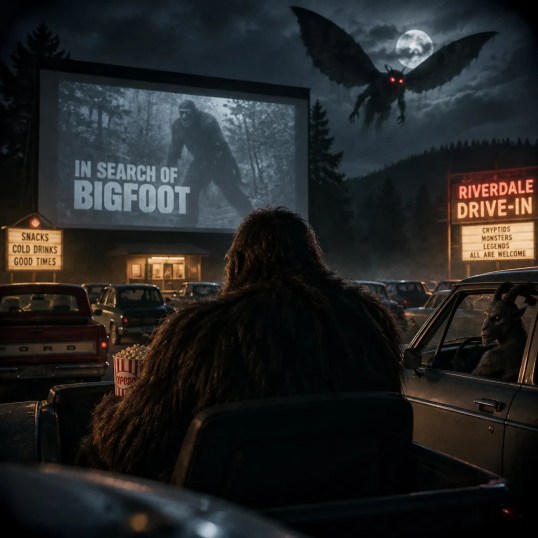
Today, we have In Search of Bigfoot, a 1976 documentary about the search for everyone’s favorite backwoods inhabitant. Will our hunters be able to find Bigfoot before the camera runs out of film? Will we hear stories about playing catch with Sasquatch? Watch to find out!
(Personally, I always love these pseudo-scientific documentaries. After the success of The Legend of Boggy Creek, they were apparently all the rage for a little while. Can you prove it didn’t happen?)
Before Marjoe Gortner was an actor, he was a preacher.
Actually, that might be a bit too glib on my part. According to Marjoe, he was never more of an actor than when he was standing under a tent and preaching.
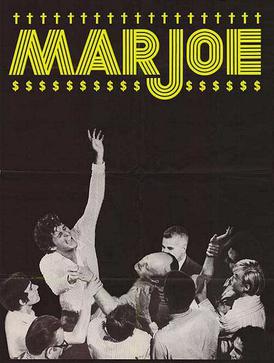
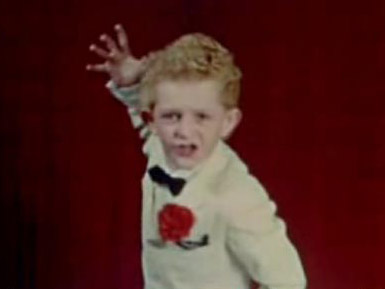
The 1972 documentary Marjoe opens with footage of a four-year-old Marjoe Gortner wearing a white button-down shirt and a bow tie and preaching about how all the sinners are going to burn in Hell. We watch as young Marjoe performs a marriage. We see his parents beaming as Marjoe delivers a fire-breathing sermon. In a voice-over, an adult Marjoe Gortner explains that he was named after Mary and Joseph and that both of his parents were active on the Pentecostal revival circuit. His father was a preacher. At four years old, Marjoe became the world’s youngest ordained preacher. Marjoe talks about how the novelty of a child preacher drew in crowds. By the time he was 14, he had brought in over four million dollars to his family’s ministry. When crowds turned out to be less interested in a teenage preacher than they had been in a child preacher, Marjoe’s father left the family and took the money with him.
We cut to Marjoe Gortner at 27. He’s tall, a little bit gawky. He has curly hair and a beak-like nose. He’s not exactly handsome, but when he speaks, he still has the charisma that once made him a superstar in evangelical circles. He’s talking to a documentary crew who are about to follow him on what he says will be his final revival tour. Marjoe claims that, even as a child, he never really believed or even understood what he was preaching. He was raised to perform, and that’s what he did. Now, Marjoe says that he’s had a crisis of conscience. In public, he’s still a fire-and-brimstone preacher who claims to be able to heal the sick and whose rhythmic sermons cause people to dance, speak in tongues, and give away their money. (The money, Marjoe explains, is the important part.) He preaches against drugs and sin and anyone who believes differently than he does. In private, Marjoe is a pot-smoking beatnik (and indeed, beatnik would be the right term to use because Marjoe’s a bit too cynical to be considered a hippie) who enjoys hanging out with the same people that he condemns from the stage.
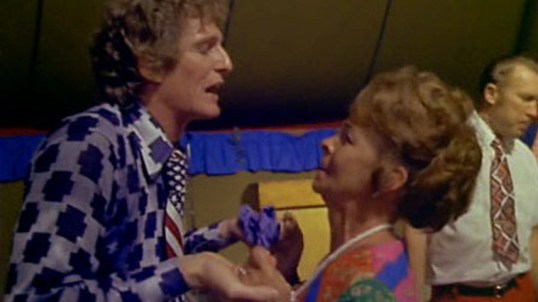
The documentary features a lot of footage of Marjoe at various revival meetings, preaching and showing off the moves that he says he copied from Mick Jagger. We watch as Marjoe has an awkward reunion with his estranged father, who shows up to preach under the same tent as his son. We watch as Marjoe repeatedly counts his money. Marjoe revels in being a showman and admits that he still loves the feeling of holding the emotions of his audience in the palm of his hand. As creepy as the footage sometimes is, there’s a definite elitism to the documentary crew, of which they don’t really seem to be aware. Of course, the film seems to be saying, this would happen in the South. We Northerners are too smart to fall for Marjoe’s act. And yet, just the fact that they’re filming him shows that they have fallen for his act. They just don’t realize it.
While the revival footage is indeed fascinating (one can really feel the audience getting swept up in Marjoe’s sermons), the film’s most interesting moments are when we see Marjoe talking to the documentarians. For all the talk about how he wants to finally be himself, Marjoe never stops performing. Even when he’s confessing and claiming to be telling the truth, Marjoe is acting. One gets the feeling that performing is all that Marjoe ever knew, and certainly it makes it easy to understand why, in the years following this documentary, he found success as a character actor. There’s never a moment in the documentary in which Marjoe isn’t “on.” In the end, one gets the feeling that he’s conning the documentarians just as easily as he’s conning the faithful. When Marjoe says that he is “bad but not evil,” it ultimately feels like another performance. Marjoe spends the documentary taking viewers behind the scenes, and yet he’s as much of an enigma at the end of the documentary as he was at the beginning. He’s a fascinating character, if only because it’s impossible to tell how much of anything is real to him.
(Indeed, watching Marjoe, I was reminded of Elizabeth Holmes’s disturbingly empty smile in the trailer for the upcoming documentary You Can See Everything.)
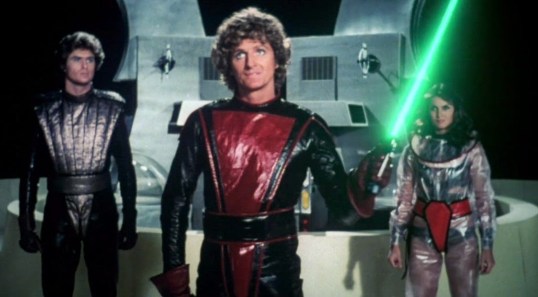
Released in 1972, Marjoe won the Oscar for Best Documentary. Marjoe Gortner, who passed away last week at the age of 82, had a lengthy acting career, one in which he often played con men and other outlaws. His final role was in 1995’s Wild Bill. He played a preacher. My favorite Gortner role will always be as Akton in 1978’s Starcrash.
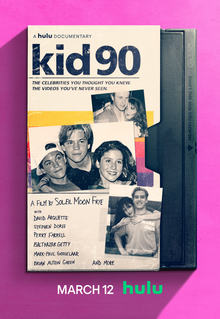
First released in 2021, Kid 90 is a documentary about what it’s like to be rich, famous, and young. Apparently, it sucks. The time that it sucks the most is when you’re no longer a teenager and you’re looking back on on your past and trying to somehow shape it all into a coherent narrative.
The documentary was produced, directed, and written by Soleil Moon Frye, a former child actress who originally found fame in the early 80s as the star of a sitcom called Punky Brewster. That show was a bit before my time but I do remember seeing her on that episode of Saved By The Bell where she pretended to like Screech for his spaghetti sauce money. She’s also appeared in a few horror films, many of whom have found a second life in the streaming era. The daughter of actor Virgil Frye (he was the creepy in security guard in Herb Freed’s Graduation Day), Soleil apparently started carrying a video camera around at a young age and was constantly filming her friends, who included people like Leonardo DiCaprio, Mark-Paul Gosselaar, Mark Wahlberg, David Arquette, Stephen Dorff, the skaters who appeared in Larry Clark’s Kids, and a host of others. She also saved all of her diaries and her voicemails. Kid 90 was assembled from those artifacts. Soleil tells her story while discussing the pressures of being a young woman in Hollywood and being objectified when she was barely old enough to be considered a teenager. She talks about drugs, sex, her friends who died young, and the unique trauma of growing up while the entire world watches and judges. She talks about a relationship with an older man, who she doesn’t name even while pictures of her with Charlie Sheen appear on the screen. What she doesn’t do is go into too much detail.
Indeed, while watching Kid 90, the main thing that struck me was how guarded everyone seemed to be, even in the candid footage that was shot when they were all teens. Young Soleil asks her friends about their philosophy of life and none of them can come up with anything particularly interesting. Instead, they all sound like their reading from a script that was handed to them by a publicist. The voicemails that we hear are largely generic and uninteresting and, if not for the title card that accompanies each one, we would have no idea who was talking. (There’s only so much meaning that one can wring out of, “Hey, just calling to see if you were around.”) Yes, Leonard DiCaprio appears in a clip or two but DiCaprio also served as a producer on the film so you can be sure that those clips were very carefully selected. In the present, a handful of actors talk about the process of going from being teen actors to adults. Brian Austin Green talks about the first time that he realized that there were people who did not like him. (His shock about the failure of his rap career is actually kind of poignant.) David Arquette is goofy but honest when discussing his history of drug abuse. Stephen Dorff is thoughtful. Mark-Paul Gosselaar is likable but obviously careful about saying anything that could come back to haunt him. (I’ve never seen Gosselaar give a bad interview, largely because he’s a master of revealing just enough without revealing too much.) And then you’ve got poor Soleil, who struggles to assign some sort of bigger meaning to her youthful memories. She obviously doesn’t want to be known as just another spoiled child actress but, when she shares footage of herself hanging out with a bunch of New York skaters, it’s hard not to see her as being anything other than a rich kid slumming.
(Not that’s anything wrong with that! I did plenty of slumming when I was in college.)
In the end, Kid 90 is really about the innate human desire to take all of the random events of our life and shape them into some sort of grand narrative. Unfortunately, life is never really that easy to explain or categorize. No one in the film, Soleil included, really lets their guard down. I can’t say that I blame them.
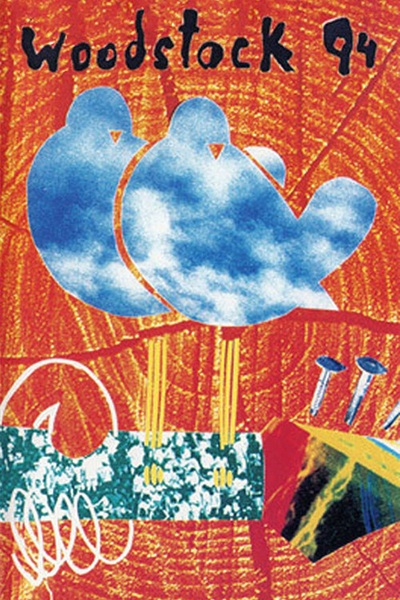
Taking place in a field in Saugerties, New York, Woodstock ’94 opened on August 12 and it ended two days later. Officially, it was held to celebrate the 25th anniversary of the original Woodstock and it was produced and promoted largely by the same people who were behind the original festival. They were hoping to actually make some money this time but that plan failed when the fence surrounding the concert area was torn down by people who wanted to see the bands and hear the music without having to pay an exorbitant amount of money for tickets. In all, 164,000 tickets were sold for Woodstock ’94 but it’s estimated that 350,000 attended. To be honest, that sounds like a good example of the Woodstock spirit to me. The people in charge of the festival disagreed, which is what led to the disaster that was Woodstock ’99.
Woodstock ’94 tends to be overlooked, precisely because it was neither the spontaneous celebration of the first Woodstock nor the epic trainwreck of the third Woodstock. Instead, the second Woodstock was a largely peaceful festival that featured a good mix of older and, at the time, newer acts. The original Woodstock featured open love and the third Woodstock featured random acts of arson. The second Woodstock, on the other hand, featured a lot of rain. Apparently, Green Day got pelted with mud. Maybe a time traveler went back to 1994 and told everyone about American Idiot before the band started playing. It makes sense if you think about it.
The first Woodstock lives forever as an epic documentary. The third Woodstock has inspired at least two docuseries, both of which examine the festival with the grim weariness of a true crime recreation. Earlier today, I discovered that the second Woodstock actually was filmed as well, though apparently Bruce Gowers’s Woodstock ’94 was never released in theaters and instead went straight to video. It’s a sign of how forgotten Woodstock ’94 is that the film has never even been released on DVD or Blu-ray. That said, after I learned of the film’s existence, I really did want to see it. (I’m a completist at heart.) I discovered that, fortunately, it’s been uploaded to YouTube.
From the start, Woodstock ’94 sets out to duplicate the style of the first Woodstock. There’s plenty of split screens. We open with people working hard to get the festival grounds ready. There are interviews with concert goers. There’s an interview with a guy selling food. We get a few random announcements from the stage. There’s a hint of nudity, though nowhere near as much as in the first film. Probably the funniest moment in the documentary is when we see a sign telling us that a certain area has been reserved for those wanting to watch the concert nude. During the first Woodstock, the nudity was spontaneous. For the second one, it was prepared for. The main thing that I noticed was how pleasant everyone seemed to be. There was none of the anger that defined Woodstock ’99. There was none of the bad brown acid that inspired so many warnings at the first Woodstock. Instead, everyone appeared to be having a good time. Even with Green Day getting pelted with mud, the Woodstock ’94 audience appeared to be rather mild-mannered. Most of them seemed like they probably play golf now.
The majority of the documentary is devoted to the music. We see tightly edited performances from, amongst others, Bob Dylan, Sheryl Crow, Aerosmith, Crosby Still Nash & Young, Nine Inch Nails, Metallica, The Cranberries, Green Day (though we don’t really get to see the incident with the mud, which is a shame), and Primus. The festival had a good lineup. Crosby, Stills, Nash & Young are a bit on the dull side but Primus more than makes up for it. My only real complaint is that we only get to hear one song from each featured group.
Woodstock ’94 was surprisingly pleasant. It’s too bad that, five years later, the whole idea of Woodstock fell apart.
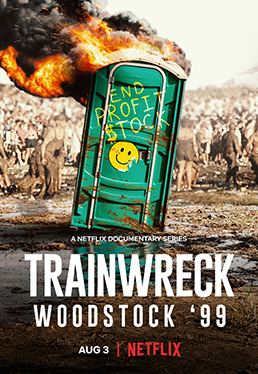
In August of 2022, Netflix premiered a three-part documentary about Woodstock ’99.
Trainwreck: Woodstock ’99 took a look at how the third Woodstock musical festival went from being the most highly anticipated event of the summer of 1999 to being a total disaster. I started watching the documentary the week that it premiered. I was halfway through the first episode when I realized that I needed to make sure that my car insurance had been renewed. I stopped the program, hopped online, made sure that my payment had been received and then….
Well, I don’t exactly remember what I did but I do know that I did not return to Woodstock ’99. Indeed, I kind of forgot about Woodstock ’99. It wasn’t until last night, when Jeff and I were looking for something to watch on Netflix, that I saw Trainwreck: Woodstock ’99 listed under “continue watching.” I did the math. I decided that, given that it had been nearly four years since I watched the opening 30 minutes of the first episode, it was perhaps to finally see what Woodstock ’99 was all about.
The three-part documentary features archival footage from the concert and also interviews with the people behind Woodstock ’99, a few people who attended, and some of the artists who performed. To be honest, I wish that more of the performers had been interviewed. Considering that one of the festival’s organizers literally blamed Fred Durst for the rioting, it’s a shame that Durst didn’t share his side of the story. I’m not a huge fan of Fred Durst but the decision to blame him for the crowd getting out of control has always seem to be a bit too convenient to me. As the documentary shows (sometimes unintentionally), people had reason to be angry long before Fred Durst stepped out on stage and told them to “break shit.” As a once popular performer who has since come to be seen as a bit of a self-parody, Durst makes for an easy scapegoat.
For all the talk about what Woodstock has represented throughout the years, all three of the festivals were ultimately about making money for the organizers. Michael Lang may have been a hippie who said the first Woodstock was about ending the war in Vietnam and that the third Woodstock was about promoting gun control but he was also a businessman. The first Woodstock only made money because of the success of the famous documentary. Woodstock ’94 lost money because the fence surrounding the festival was torn down and people were able to get in without buying tickets. Woodstock ’99 was designed to be secure and impenetrable. Instead of being held in a field, it was held on a deserted air force base where the asphalt made the summer heat unbearable and where the empty hangars helped to create a dystopian atmosphere. Woodstock ’99 was designed to be village. Unfortunately, it turned out to be a village where bottled water eventually ended up costing $14.00 and the toilets ended up overflowing. (One interviewee discusses waking up on the third day and discovering that she was suffering from something called “trench mouth.” Even the name sounds terrifying.)
The documentary features a few people who rightly point out that the festival’s organizers created a situation where the third night’s riot was almost inevitable. Michael Lang apparently had not listened to any new music since the 70s and, hence, didn’t understand that there was a world of difference between the mellow hippies of 1969 and the fans of Korn, Limp Bizkit, and Kid Rock. Amazingly, Lang thought it would be a good idea to hand out candles so that the festival could end with a candlelight vigil against gun violence. The candles were instead used to start fires. As the festival grounds burned, the fence was finally torn down, a sound tower was pulled to the ground, and eventually the national guard showed up. The organizers of the Festival, including Lang, put the blame on almost everyone but themselves.
I’ve often said that movie and documentaries made between 2019 and 2024 often feel as if they are artifacts from a different age. That’s how quickly the culture shifted after the election of 2024. That’s the case with Trainwreck: Woodstock ’99. The final thirty minutes of the documentary are spent classifying Woodstock ’99 as being an example of white privilege and it seems a little performative today but that was pretty much the prism through which everything was viewed and discussed in 2022. The truth of the matter is that there were a lot of reasons why Woodstock ’99 was a disaster and almost all of them come down to the greed at the heart of the enterprise. It was greed that led to festival being held in the worst possible location. It was greed that led to cutting corners when it came to security and the hiring of the half-assed “Peace Patrol,” a group of amateur security guards who failed to protect the most vulnerable people at the festival. (At least five rapes and numerous other sexual assaults occurred a the concert.) And it was ultimately Michael Lang’s desire to pretend that the concert was about something other than greed that led to a bunch of angry, tired, and intoxicated people being handed candles.
This documentary shows why Woodstock ’99 was the final Woodstock. (There was an attempt to put together a 50th anniversary festival in 2019 but, perhaps thankfully, it fell apart.) It’s a shame that Woodstock ended the way it did. It could have been a great American tradition. Instead, the festival of peace and love ended with fire and destruction.
When I was little, I didn’t really know that there was any controversy about the lyrics of Sweet Home Alabama or the fact that Lynyrd Skynyrd’s stage show usually featured a Confederate flag. I didn’t know what Tuesday’s Gone was about. I didn’t know that Free Bird was considered to be a classic by anyone other than my father. I didn’t even know about the tragic 1977 airplane crash. I just knew that when my Dad was driving he liked the Eagles, he enjoyed the Steve Miller Band, and he loved Lynyrd Skynyrd. Even today, whenever I hear Sweet Home Alabama, I imagine my Dad driving his big rig across this beautiful country of ours. The song may have been about Alabama and it may have been an answer song to a very specific song written by a Canadian (of all people) but it was still a song that could be listened to and enjoyed anywhere. It was a song about Alabama but it was also a song that uniquely American.
At least, that’s what I always thought. When I was in college, my friend Jen absolutely hated Sweet Home, Alabama (both the song and, believe it or not, the film) and she would always start going, “No, don’t do it!” whenever she saw that I was about to play it. That just made me play it louder.
By that time, of course, I knew that there was some controversy about both the song and the band. Because Lynyrd Skynyrd was proudly and defiantly Southern, there were quite a few people who interpreted Sweet Home, Alabama as being a defense of everything that was going on in Alabama during the early 70s. Of course, that’s not the case of all. The song was defending a group of people against other people who, like Mr. Young, looked down on Alabama while ignoring or excusing the very similar things that were happening in their own backyard. Massachusetts, for instance, was the scene of a good deal of violent racial strife throughout the 70s but Neil Young was never tempted to write Boston Man. While Alabama was finally starting to move away from Jim Crow, people in Boston were rioting about busing. The appeal of Lynyrd Skynyrd, at least as far as the original 70s version, was that they were tough, they were loud, and they didn’t apologize for being who they were. They weren’t going to apologize for being from the South and speaking with Southern accents. They were defiant in a way that brought together both hippies and rednecks.
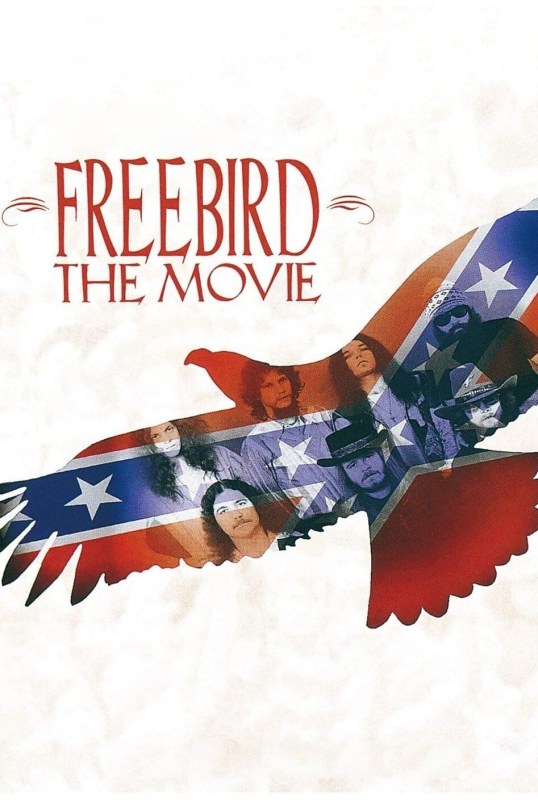
1996’s Freebird…. The Movie was one of the last films that my Dad watched before he died. The film is a mix of archival concert footage and interviews with the members of Lynyrd Skynyrd, all of whom are rather worshipful of lead singer Ronnie Van Zant. Van Zant emerges as such a charismatic performer and frontman that it’s easy to see why the members of the band and the audience would follow him just about anywhere. Of course, the main appeal of the film is the music. Sweet Home Alabama is performed with a blast of pure energetic Southern rock that stands in contrast to some of the band’s more mellow songs. Freebird is performed beautifully and Billy Powell’s piano solo remains amazing. As always, it probably helps to already be a fan of the band when watching a film like this. All I can say is that, on July 31st, 2024, my Dad smiled as he watched it and I cried as I watched it with him.
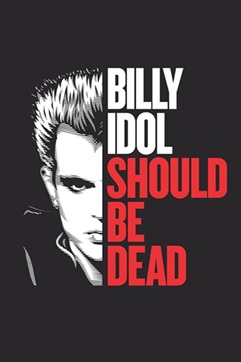
Billy Idol Should Be Dead is the title of a new documentary about Billy Idol and, watching the movie, it’s hard not to agree.
Billy Idol Should Be Dead covers Billy Idol’s storied career, from being a member of the Bromley Contingent to his time as lead singer of Generation X to his solo career and his current status as an unlikely elder statesman of rock and roll. The film features interviews with Miley Cyrus and Billie Joe Armstrong and, despite the age differences, you only have to listen to them and then listen to the 70-something Billy Idol to see the difference between a true rocker and a pretender. Even in his 70s and speaking in a gravelly voice, Billy Idol still has the charisma and the confidence that made him a star. He still has the genuine punk rock attitude that bands like Green Day have made a lot of money imitating but which they have never matched.
The documentary is as open about Billy Idol’s history of drug abuse as Idol himself has been. Idol became a heroin addict at an early age and doesn’t really start to think about cleaning himself up until his father comes over to America and scolds him. Throughout the film, we hear about overdoses and lost weekends and all the times that Billy Idol came close to dying. We also hear about the motorcycle accident that nearly lost him his leg and which ultimately inspired his most controversial album, Cyberpunk. Why did Billy Idol survive while so many of his contemporaries did not? Why was Billy Idol able to survive heroin while so many of the original punk rockers succumbed to it? Who knows? Luck of the draw, perhaps.
The theme of family runs through Billy Idol Should Be Dead. Though Billy’s father is no longer around to offer up his perspective, Billy’s mother is and she’s the epitome of the perfect English mum, amused by her son’s antics even when she doesn’t quite understand them. Billy Idol’s relationship with his father is one of the running themes of the film. It was a difficult relationship but one built on familial love. The relationship is reflected by Idol’s relationship with his own children, all of whom seem to be remarkably stable for someone who grew up with a rock star for a father.
The film alternates between archival footage of the young and cocky Billy Idol and black-and-white scenes of the contemporary Billy Idol. The older Idol still has his swagger but he also has a hard-fought wisdom that younger Idol lacked. The younger Idol thought he was indestructible while the older Idol is happy to be alive and be a grandfather. The older Idol also reveals himself to be far more thoughtful than I think anyone gave the young Idol credit for being. This documentary shows not only how Billy Idol survived a lifestyle that should have killed him but also how and why he’s earned his place as one of rock’s elder statesmen.
Billy Idol probably should be dead but this documentary will make you happy that he’s not.
In December of 2021, I was nearly attacked in a Target.
This was nearly two years into the COVID pandemic and the world was slowly reopening. (Since I live in Texas, my world reopened earlier than everyone else’s. Despite the predictions of folks up north, who were almost gleeful in their predictions that Texas would be wiped out by people coughing on each other at football games, we survived.) In 2020, my sisters and I couldn’t really celebrate Christmas the way we usually did because everything was closed. In 2021, we were l0oking forward to making up for lost time.
What I was not looking forward to was wearing a mask. Due to an ambitious politician named Clay Jenkins who was hoping to ride the COVID pandemic into the governor’s mansion, Dallas County still had a mask mandate. The mandate was unenforceable due to Governor Abbott’s executive order but still, a lot of people in Dallas were masking up. Sitting in the parking lot of Target, I told my three older sisters that I was not going to wear a mask inside the store. I have asthma. Having to wear a mask was more than just an inconvenience for me. Wearing a mask made it difficult for me to breathe and, given that more and more health authorities were starting to admit that masks didn’t make any difference as far as the spread of the disease was concerned, I didn’t see why I should have to unnecessarily suffer. My sisters said that they understood and that they would have my back if anyone said anything to me about my maskless state. “But no one will,” my sister Megan assured me.
As soon as I stepped into the store, I heard it.
“GET A MASK ON HER!”
It wasn’t a store manager or a cop or any other sort of authority figure yelling. It was an overweight, middle-aged woman riding around the store on her little scooter. Apparently, she spotted me as soon as I entered the store and immediately started driving herself in my direction, yelling the entire time. I couldn’t really understand the majority of what she yelled but I did manage to make out words like “Mask,” “kill all of us,” “selfish,” and a few others that I can’t repeat during Lent.
Again, because of Lent, I can’t tell you what my older sister Melissa said in response to her. My sisters, all three of whom had been masked up, removed their masks in solidarity. I wish I could say that the entire store applauded but most people were just trying to avoid looking at the fat banshee on her scooter.
Even after my sisters removed their masks, the woman continued to focus her anger on me, still yelling as I walked past her. (I attempted to smile politely at her, which did not help the situation.) Eventually, her voice faded away. She either left the store or found someone else to yell at.
I tell this story to illustrate one point. The COVID pandemic was a very strange time. One can both acknowledge the very real tragedy of COVID while also acknowledging that quite a few people fell down the doom rabbit hole and allowed themselves to be driven mad by the constant drumbeat of government officials, members of the media, and other commentators telling us that everyone was going to die unless we wore masks and maintained a distance of 6 feet from each other. Due to the COVID pandemic, businesses were forced to shut down. People lost their jobs. Families were not allowed to comfort each other. In many states, students were not allowed to go to school. To doubt any element of the government’s response to COVID meant running the risk of being listed as a “conspiracy theorist.” Blue states started to gleefully keep track of how many died in red states. Red states started to keep track of how many civil liberties were suspended by the blue states. (We all should have been keeping track of their number of politicians who violated their own mandates and simply shrugged off the outrage.) We were constantly told that we were in a war against the virus but if felt more as if the country was actually at war with itself and a lot of people seemed to be happy with that.
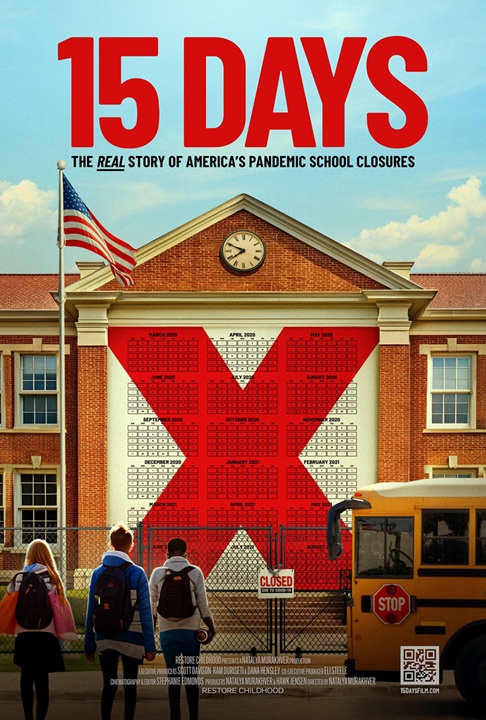
The documentary 15 Days opens with clips from a zoom meeting, in which Jane Fonda, Randi Weingarten, and a host of others discuss the pandemic as an opportunity to bring about social change. The documentary goes on to document how the school shutdowns went from being “15 days to slow the spread,” to nearly two years of remote learning. Parents discuss going from trusting the government and wanting to do the right thing to the growing disillusionment of realizing that “15 Days to Slow The Spread” was, from the start, an empty slogan. Epidemiologists who opposed the school closings discuss being censored and dismissed as “fringe extremists.” Student athletes talk about losing out on college scholarships. We learn about the struggles of doing remote learning. We learn how some students merely disappeared from the system.
As you probably already guessed, 15 Days has a political agenda and, as such, it won’t be for everyone. Certain parts of it were certainly not for me. (Personally, I think the film lets the Trump administration off too easily when it comes to the federal government’s COVID response.) But that doesn’t change the fact that 15 Days shows just how much damage was done to an entire generation by the senseless and largely partisan-driven decision to shut down the schools in so many states. In between clips of people claiming that “kids are resilient,” we get interviews with actual kids who lost two years of not just education but also social development to the shutdowns. The contrast between what we were told was happening with remote learning and what actually happened is stark. The director, a disillusioned and self-described “progressive Democrat” named Natalya Murakhver compares America during the pandemic to the totalitarian government that her family fled when she was a child and it’s hard not to feel that she has a point.
You may or may not agree with the film’s politics but, with each passing day, it becomes more and more obvious how screwed up the federal government’s response to the COVID pandemic truly was. Documentaries like this are important because right now, the gaslighting we’re seeing about what really happened in 2020 and 2021 is incredible. Neighbors turned against neighbor (or shopper, as they case may be). And an entire generation lost two of the most important developmental years of their lives.
In 2024’s Saturday Night, there’s a scene where the president of NBC (played by Willem DaFoe) tells a young and arrogant Chevy Chase (Cory Michael Smith) that, if he plays his cards right, he might someday replace Johnny Carson as America’s most popular talk show host. When Chase brags about this to one of the writers of Saturday Night Live, the writer — who is portrayed as being a weary industry veteran — tells Chase that he will never replace Johnny Carson. In exacting detail, he predicts that Chase will start strong. He’ll be one of the early stars of Saturday Night Live but then he’ll let the adulation go to his head and his arrogance will alienate everyone who once believed in him and, in the end, Chevy Chase will end up a faded, nearly forgotten star.
The film obviously meant for this scene to be a crowd-pleaser. Personally, I found it to be gratuitously cruel. While watching Saturday Night, we all know what the future holds for Chevy Chase but having a fictional character show up for just one scene so that he can say it to Chase’s face feels excessive. It’s not only a bit too on-the-nose but it’s also not necessary. However, the scene does speak to a larger truth. It’s socially acceptable to hate Chevy Chase.
The stories of Chase’s bad behavior are legendary. People have heard the stories about him being difficult to work with on the set of Community. They’ve heard about him suggesting a skit in which Terry Sweeney, the first openly gay member of the Saturday Night Live cast, would announce that he had AIDS. Everyone can visualize the famous brawl that occurred between Bill Murry and Chase when the latter first returned to host SNL and I think nearly everyone agrees that they’d rather have Bill Murray crash their wedding than Chevy. Chase is famous for being rude and for snapping at people in interviews. It’s not only socially acceptable to hate Chevy Chase but it’s kind of expected, especially if you’re an extremely online comedy nerd.
Myself, I have to admit that I wonder why Chase’s personality is the business of anyone other than the people who have work with him. Does the fact that he’s not lovable in real life somehow make Christmas Vacation less entertaining to watch in December and if so, why? One might be tempted to wonder if some grace can be given to an 82 year-old man who is obviously in frail health and whose ideas about comedy were developed in a time very different from today.
That many people would answer that question with a resounding “no,” is evidence of just how bad of a reputation Chevy Chase has. Marina Zenovich, the director of I’m Chevy Chase And You’re Not, described Chevy Chase as being the “rudest” person that she has ever interviewed and you can see more than a little of that while watching the documentary. He replies to one question with, “You b*tch.” (I gave up cursing for Lent and I’m not going back on my word just to quote Chevy Chase.) Another question leads to him telling the interviewer that she’s stupid. When asked about Terry Sweeney, Chase’s first reaction is to laugh and his second reaction is to say that he had heard Sweeney was dead. (Sweeney is alive and, like many of the people who have worked with Chase in the past, declined to be interviewed for the documentary. We can probably learn more from so many of them not wanting to talk about working Chase than we could from any of their interviews.)
And yet, there are scenes where you can see evidence of the aging and very human person hiding underneath all of the rudeness and the bluster. When Zenovich mentions that a lot of people dislike Chase, the pain in his eyes will take you by surprise. When he meets a fan in a diner, he seems to be genuinely touched. Chase’s love for his family comes through, as does their love for him. His daughter talks about a time when Chase nearly died and the viewer is reminded that, regardless of all the stories, he’s still a father and a husband. There’s a moment where Chase seems to forget the name of his first wife. Is he being a jerk or is he an 80-something man with memory issues? It’s far too easy to make assumptions, both good and bad, about famous people who we don’t actually know.
The first fourth of the documentary discusses the early days of Chase’s career while the second fourth deals with his declining stardom and his reputation for being difficult. Performers like Dan Aykroyd, Beverly D’Angelo, and Goldie Hawn all appear to defend him while others are a bit less charitable. And yet, the most important part of the documentary comes towards the end, when Chase attends a showing a Christmas Vacation and takes questions from people in the audience. Even then, Chase is a profane smart-aleck and the audience loves it.
And, for at least a little while, Chevy Chase seems to love it too.
“We are not enemies, but friends. We must not be enemies. Though passion may have strained, it must not break our bonds of affection.” — Abraham Lincoln
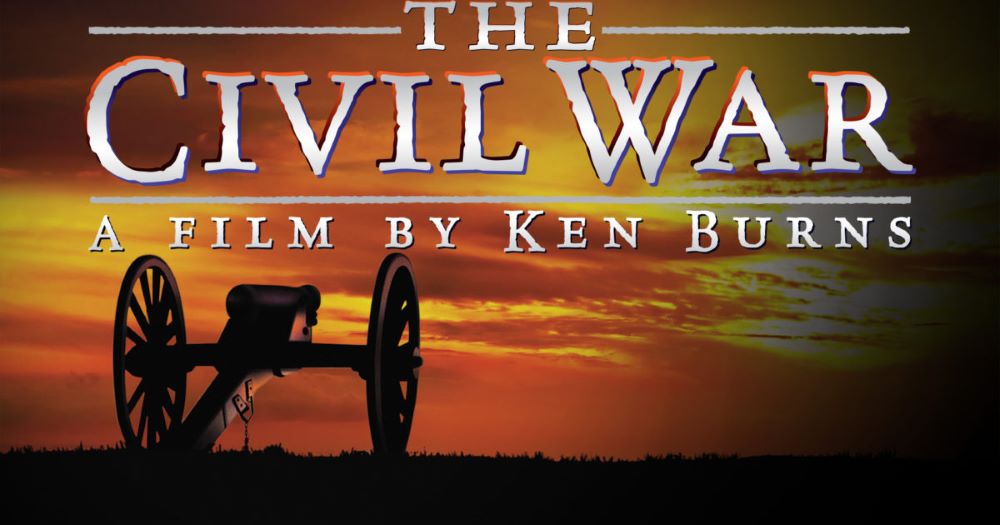
Ken Burns’ The Civil War stands as one of those rare documentaries that completely reshapes how people think about both history and the craft of documentary filmmaking. Released in 1990, it’s been over three decades since it first aired, yet it still feels monumental in its reach and emotional resonance. Instead of serving as a dry classroom recounting of battles and dates, it’s an experience that makes you feel the war’s human dimension—the people who fought it, lived through it, and were changed forever by its violence and ideals. Burns manages to take America’s bloodiest conflict and give it a pulse, telling the story not only through historians and statistics but through letters, diaries, and voices that make you feel connected to the 1860s as if it all just happened yesterday.
One of the most defining parts of The Civil War is its look and rhythm. Burns’ now-famous visual style—those slow pans and zooms across black-and-white photographs—became such a signature technique that it’s now built into editing software as “the Ken Burns effect.” It might sound simple, but the way he moves those still images feels like breathing life into ghosts. Every slow zoom on a soldier’s uncertain face, every fade over an empty battlefield, has meaning. Before Burns, most historical documentaries presented facts through re-enactments or stiff academic interviews. Burns dared to make photographs speak on their own. The pacing he uses is hypnotic—deliberate, unwavering, and emotionally tuned to each shot. It’s a visual rhythm that invites reflection instead of speed. The whole thing feels like time itself has slowed down so history can whisper its fullest story.
The narration, provided by David McCullough, ties the sprawling story together with a sense of calm authority. His voice is warm, measured, and almost timeless, acting less like a narrator and more like an old friend who knows the past intimately but never overstates it. McCullough’s presence builds trust—no hype, no theatrics, just thoughtful storytelling. Burns pairs that voice with readings from letters, diaries, and contemporary accounts, delivered by a lineup of talented voice actors like Jason Robards, Sam Waterston, and Morgan Freeman. Their readings never feel like performances; they feel lived in, restrained, and sincere. This combination of voice and image creates a tone that is both haunting and beautiful, one that makes history feel alive but not romanticized.
A huge part of why the series feels so moving is Jay Ungar’s “Ashokan Farewell.” Oddly enough, it’s not a Civil War-era tune at all—it was written in the 1980s—but it fits so organically with the documentary’s mood that it’s impossible to think about the series without hearing it. The plaintive fiddle melody has a mournful warmth, evoking the loss and longing that defines the entire project. Burns and his team used it in just the right measure: when the music plays, it deepens emotion rather than dictating it. Combined with other period-appropriate folk songs, banjo pieces, and hymns, the soundtrack acts as the emotional current guiding the story through landscapes of death, courage, and change.
The structure of The Civil War is deceptively simple but brilliantly executed. Spanning nine episodes and over eleven hours in total, it charts the war from its earliest, uneasy beginnings in the political debates over slavery and statehood through to its catastrophic conclusion and fragile aftermath. Burns understood that history isn’t static; it’s emotional and cumulative. The early episodes almost feel optimistic—the tone of youthful bravado and national pride fills the air as both sides believe the conflict will end quickly. As the series progresses, though, the optimism curdles into fatigue, despair, and grief. By the time the war drags into its later years, the imagery, narration, and music all carry the weight of shared tragedy. You begin to see how idealism eroded into acceptance of horror. The careful pacing of each episode allows viewers to feel that arc not just intellectually but emotionally.
Among the many creative decisions Burns made, choosing to anchor the series around personal letters was perhaps the most effective. Through these letters, anonymous soldiers, wives, and family members speak across time. Their words carry more power than any historian’s commentary could. One of the most unforgettable moments comes from Union officer Sullivan Ballou’s letter to his wife, written shortly before he was killed. His words are devastating in their tenderness and resignation, summing up both love and mortality in a way that feels timeless. Burns threads similar letters throughout the series—from soldiers on both sides, from civilians caught in the middle, and from the enslaved people whose freedom hung in the balance. Their voices form the emotional backbone of the documentary, constantly reminding us that this was not just a war of strategy but a catastrophe of human consequence.
Alongside these voices, there’s a chorus of historians offering perspective and context. Shelby Foote, with his Southern drawl and gift for anecdote, became one of the documentary’s most recognizable figures. His storytelling bridges the gap between scholarship and folklore, even if some critics later accused him of romanticizing the Confederate perspective. Counterbalancing that, historian Barbara Fields provides some of the series’ most profound reflections, particularly regarding race and memory. Her insistence that the war’s legacy continues to shape American identity feels just as relevant now as it did in 1990. Their alternating viewpoints give the documentary balance—emotion on one side, intellect and conscience on the other.
Burns’ handling of tone is one of the most striking things on a rewatch. It’s both deeply romantic in its love of storytelling and brutally realistic in its depiction of suffering. It doesn’t sanitize the war, but it doesn’t exploit it either. You’re never shown battle reenactments, explosions, or gore. Instead, Burns conveys the violence and despair through letters, photos, and silence. He trusts the audience to fill in the horror. That’s uncommon in modern documentary work, where there’s often pressure to explain or dramatize everything. In The Civil War, silence becomes a storytelling device. The pauses between sentences, the long holds on a tattered flag or a battlefield grave, carry meaning. The documentary refuses to rush toward catharsis; it lingers in grief.
In today’s media landscape—where documentaries tend to move fast and fight for attention—Burns’ slower, more contemplative approach stands out. Back in 1990, it riveted viewers. An estimated 40 million people watched it on PBS, an unbelievable number for a historical series on public television. For many Americans, it became their most vivid introduction to their own national history. It made people talk about Gettysburg, Lincoln, emancipation, and the moral aftermath of the war in living rooms across the country. It even sparked renewed interest in Civil War books, memorials, and battlefield preservation. Burns had tapped into something rare: a collective need to understand who Americans are by understanding what nearly destroyed them.
Even decades later, The Civil War holds up both artistically and historically. Watching it now, its moral clarity about slavery as the war’s central cause feels vital, especially in a time when debates over monuments and racial politics remain heated. Burns never let the series fall into the “states’ rights” trap that muddied so many earlier narratives. He continually foregrounded the human cost of defending or destroying the institution of slavery. Still, modern viewers might wish for even more emphasis on the experiences of Black Americans, beyond the selected diaries and Douglass excerpts. The documentary touched these stories with respect but within the limits of its early-1990s format. Later historians have expanded upon what Burns began, but his foundation remains solid.
Technically, the documentary’s aged well. Restored versions bring new clarity to the old photographs, and the audio’s crisp enough to make the letters feel freshly read. The storytelling, slow-moving as it is, rewards patience. It’s not content to skim across major events; it expects you to sit with sorrow, fatigue, and loss. Watching all eleven hours feels like reading an epic novel: it’s best done gradually, letting each episode resonate before starting the next. The cumulative effect isn’t just historical understanding—it’s emotional exhaustion tempered by awe.
The Civil War remains one of the greatest nonfiction works ever broadcast. It’s not simply about battles or leaders but about the psychology of a country divided by ideals and identity. It asks questions rather than delivering verdicts—questions about sacrifice, belief, morality, and what it means to be American. Few documentaries manage to tell old stories in ways that still feel alive, but Burns achieved that through patience, empathy, and an unshakable faith in the power of storytelling. Even now, it’s hard to watch without feeling the echo of those voices—some hopeful, some broken—that seem to reach out from still photographs and faded ink. Burns didn’t just document history; he let history speak for itself. That’s why The Civil War endures.
Perhaps it’s even more important now than when it first aired. In a time when historical revisionism has begun to creep from the fringes into mainstream discourse and when the nation feels dangerously forgetful of its own moral and political lessons, Burns’ documentary serves as both a warning and a reminder. It shows what happens when ideology overtakes humanity and when a country forgets the cost of its own divisions. Watching The Civil War today feels less like revisiting the past and more like confronting the present—proof that the ghosts of that conflict remain, quietly urging us not to repeat what we once swore to never forget.