Guilty Pleasure No. 109: SST — Death Flight (dir by David Lowell Rich)


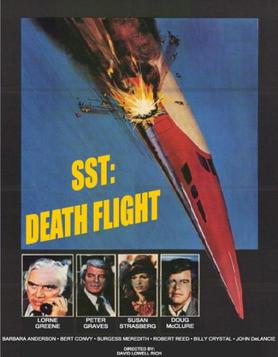
In 1977’s SST: Death Flight, we follow a supersonic jet as it makes it’s maiden flight, going from New York to Paris in just three hours.  Not surprisingly, there’s an “all-star” cast waiting for the plane to take off.

Regis Philbin appears as the reporter who breathlessly covers the excitement at the airport.  Lorne Greene plays the owner of the jet who is staying behind in New York.  Burgess Meredith is the plane’s designer.  Robert Reed is the hard-driving pilot.  Peter Graves is a businessman who is surprised to see that his former secretary (Season Hubley) has boarded the plane with her stick-in-the-mud fiancé (John De Lancie).  Doug McClure is a disgraced pilot who will also be on the flight.  Billy Crystal is a bowtie-wearing flight attendant.  Bert Convy is the PR man who is traveling with his pregnant mistress (Misty Rowe).  Martin Milner, Tina Louise, Susan Strasberg, they’re all on the flight!  Finally, there’s a epidemiologist (Brock Peters) who is transporting a box that contains a sample of the Senegal Flu.   Now, you might question why anyone would transfer a sample of a highly infectious disease that has a 30% fatality rate on a commercial flight and that’s a good question.

Unfortunately, a disgruntled executive (George Maharis) tries to sabotage the plane, which leads to an explosive decompression that causes the Flu box to burst open.  Uh-oh, people are getting sick!  And now, Paris refuses to let the plane land in their city because they don’t have time to set up a quarantine.  London, however, is willing to let the plane land at one of their airports.  However, London hasn’t finalized their quarantine plans so there’s a chance that landing there could lead to British people getting sick.

Brock Peters suggests that they land in Senegal, which already has a quarantine going on.  When it is reasonably pointed out that the plane might not have enough fuel to make it to Senegal and that everyone, including those who are not sick, might die in the resulting crash, Martin Milner gives a speech about morality and demands that all of the passengers agree to further risk their lives by going to Senegal.  John de Lancie argues for London.

And you know what?

Watching the film, I agreed with John de Lancie.  De Lancie points out, quite correctly, the no one on the airplane knew that they were going to be traveling with a deadly disease, that London is preparing a quarantine even while the plane is in flight, and that it’s unfair to demand that everyone on the plane agree to possibly die in a horrific crash.  We’re supposed to really hate de Lancie’s character but he makes sense!

The passengers and crew vote 3 to 1 to go to Senegal.

And, of course, the plane crashes.

“Did we do the right thing?” Susan Strasberg asks.

Well, the plane crashed.  I think that kind of answers your question.

Some survive and some don’t.  The epidemiologist survives without a scratch on him and somehow, no one in the film ever gets mad at him.  Seriously, though, what was he thinking bringing his deadly disease samples on a commercial fight!?

Why is this a guilty pleasure?  Well, first off, it’s a terrible movie but the cast is full of so many familiar faces that it’s hard to look away.  Just the casting of Peter Graves in a “serious” disaster film about an airplane makes this a guilty pleasure.  Secondly, the film is the epitome of both the 70s and the disaster genre.  The supersonic jet can break the sound barrier but it still looks incredibly tacky.  I’m surprised it didn’t have shag carpeting.

Finally, there’s a moment where Bert Convy tells his pregnant girlfriend, “Don’t worry.”

She replies, “That’s what you said last time and look what happened!”

Convy looks straight a the camera and shrugs.

Best guilty pleasure ever!

Previous Guilty Pleasures

  1. Half-Baked
  2. Save The Last Dance
  3. Every Rose Has Its Thorns
  4. The Jeremy Kyle Show
  5. Invasion USA
  6. The Golden Child
  7. Final Destination 2
  8. Paparazzi
  9. The Principal
  10. The Substitute
  11. Terror In The Family
  12. Pandorum
  13. Lambada
  14. Fear
  15. Cocktail
  16. Keep Off The Grass
  17. Girls, Girls, Girls
  18. Class
  19. Tart
  20. King Kong vs. Godzilla
  21. Hawk the Slayer
  22. Battle Beyond the Stars
  23. Meridian
  24. Walk of Shame
  25. From Justin To Kelly
  26. Project Greenlight
  27. Sex Decoy: Love Stings
  28. Swimfan
  29. On the Line
  30. Wolfen
  31. Hail Caesar!
  32. It’s So Cold In The D
  33. In the Mix
  34. Healed By Grace
  35. Valley of the Dolls
  36. The Legend of Billie Jean
  37. Death Wish
  38. Shipping Wars
  39. Ghost Whisperer
  40. Parking Wars
  41. The Dead Are After Me
  42. Harper’s Island
  43. The Resurrection of Gavin Stone
  44. Paranormal State
  45. Utopia
  46. Bar Rescue
  47. The Powers of Matthew Star
  48. Spiker
  49. Heavenly Bodies
  50. Maid in Manhattan
  51. Rage and Honor
  52. Saved By The Bell 3. 21 “No Hope With Dope”
  53. Happy Gilmore
  54. Solarbabies
  55. The Dawn of Correction
  56. Once You Understand
  57. The Voyeurs 
  58. Robot Jox
  59. Teen Wolf
  60. The Running Man
  61. Double Dragon
  62. Backtrack
  63. Julie and Jack
  64. Karate Warrior
  65. Invaders From Mars
  66. Cloverfield
  67. Aerobicide 
  68. Blood Harvest
  69. Shocking Dark
  70. Face The Truth
  71. Submerged
  72. The Canyons
  73. Days of Thunder
  74. Van Helsing
  75. The Night Comes for Us
  76. Code of Silence
  77. Captain Ron
  78. Armageddon
  79. Kate’s Secret
  80. Point Break
  81. The Replacements
  82. The Shadow
  83. Meteor
  84. Last Action Hero
  85. Attack of the Killer Tomatoes
  86. The Horror at 37,000 Feet
  87. The ‘Burbs
  88. Lifeforce
  89. Highschool of the Dead
  90. Ice Station Zebra
  91. No One Lives
  92. Brewster’s Millions
  93. Porky’s
  94. Revenge of the Nerds
  95. The Delta Force
  96. The Hidden
  97. Roller Boogie
  98. Raw Deal
  99. Death Merchant Series
  100. Ski Patrol
  101. The Executioner Series
  102. The Destroyer Series
  103. Private Teacher
  104. The Parker Series
  105. Ramba
  106. The Troubles of Janice
  107. Ironwood
  108. Interspecies Reviewers

Lisa Marie’s Take On Escape From New York (dir by John Carpenter)


I was a bit shocked to realize that I hadn’t reviewed Escape from New York for this site.  Leonard’s reviewed it.  Jeff’s reviewed it.  I’ve reviewed quite a few Italian films that were inspired by Escape from New York.  Last year, I devoted an entire day to how much I love Kurt Russell.  I’ve shared John Carpenter’s theme music, more than once.  I’ve reacted to Mamdani’s election by telling my friends that it’s time to escape from New York.  I’ve lost track of the number of times that I’ve told Leonard that it is “Time to leave the Bronx,” even though he doesn’t live in the Bronx.  (What do I know?  I live in Texas.)  But I’ve never actually reviewed Escape From New York.

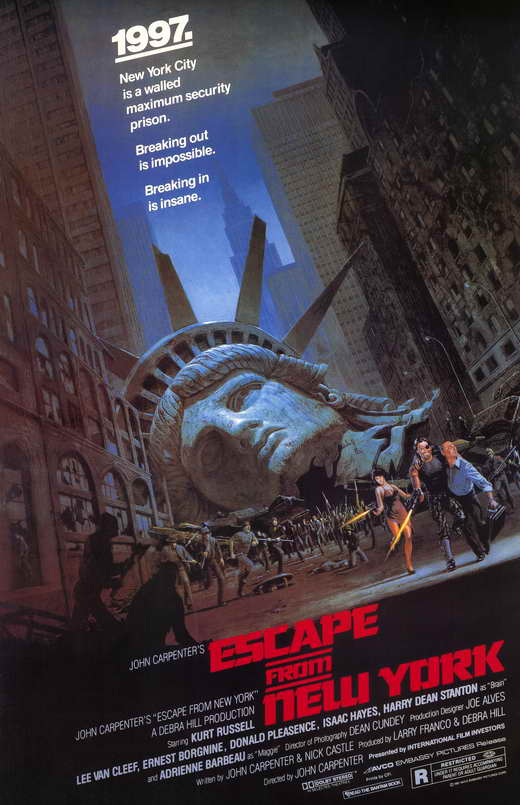
I love Escape from New York but I have to say that the film itself can’t live up the brilliant poster art.  The first time I watched Escape from New York, I was really disappointed that the Statue of Liberty’s head never appeared in the middle of a street in Manhattan.  If the film were made today, one imagines that the filmmakers would be able to do all sorts of things with the Statue of Liberty.  But Escape from New York was made in 1981, in the days before rampant CGI.  Escape from New York was made at a time when directors had to be somewhat clever and that definitely works to the film’s advantage.  The lack of big time special effects meant that Carpenter had to emphasize character and atmosphere.  Escape From New York might not feature the Statue of Liberty’s head but it does feature an amazing cast and a host of unforgettable characters.  When you manage to get Kurt Russell, Ernest Borgnine, Donald Pleasence, Harry Dean Stanton, Adrienne Barbeau, Lee Van Cleef, and Isaac Hayes all in the same film, there’s no way it isn’t going to be memorable.

We all know the plot.  Kurt Russell plays career criminal Snake Plissken.  (Everyone thought Snake was dead.)  When the President (Donald Pleasence) finds himself trapped on the prison island of Manhattan, Snake is the man who is sent to rescue him.  The fate of the world depends on rescuing the President.  If the President isn’t rescued, it could lead to nuclear war.  Snake doesn’t really care about the fate of the world.  He does care about the fate of himself, however.  He’s been injected with a poison that will kill him unless he receives the antidote in 24 hours.

(The doctor who gives Snake the poison is named Dr. Cronenberg.  Meanwhile, Frank Doubleday appears as a thug named Romero.  Lee Van Cleef’s police commissioner is named Hauk, as in Howard Hawks.  Tom Atkins plays Captain Rehme, as in producer Bob Rehme.  The film may be about the collapse and possible end of the world but John Carpenter’s having fun.  And, of course, so are we.)

The President has been captured by the Duke of New York (Isaac Hayes).  It doesn’t take Snake long to track down the Duke.  But rescuing the President and making it back to safety turns out to be far more difficult and violent than anyone was anticipating.  Snake gets some help, from characters like Cabbie (Ernest Borgnine), Brain (Harry Dean Stanton), and Maggie (Adrienne Barbeau).  Of course, that help is largely due to everyone’s self-interest.  The recurring theme is that no one really cares that much about whether or not the President or even Snake lives or dies.  Maggie loves Brain but, otherwise, there’s not much individual loyalty to be found in this film.  Instead, everyone just cares about getting the Hell out of New York.  In the end, even the President turns out to be a bit of a jerk.

(I do have to say that I absolutely love Donald Pleasence’s performance in Escape from New York.  The “You’re the Duke!  You’re the Duke!  A Number One!” scene?  That was Pleasence at his most brilliant.)

It’s a wonderfully acted and directed film, one that is often darkly humorous.  (While Kurt Russell delivers his lines with a endearing self-awareness, Carpenter has a lot of fun imagining the type of criminal society that would emerge on an isolated Manhattan.)  It’s also a film that understands the power of New York City.  Depending on who you ask, New York either represents the worst or the best of America.  That’s true today and, watching Escape from New York, it’s easy to guess that was probably true in 1981 as well.  There’s a power to the “New York” name and it’s why this film wouldn’t have worked if it had been called Escape From Houston or Escape From Spokane.  (One reason why Escape From LA failed was because the cartoonishness of Los Angeles couldn’t compete with the grit of New York.)  We all know the saying — “New York, New York: If you can make it there, you can make it anywhere.”  This film reminds us that it’s also true that if you can escape from there, you can escape from anywhere.  Escape from New York brilliantly captures the way that most of the rest of country view New York but, by limiting the action to Manhattan, it also presents a story that can be enjoyed by people in Brooklyn, the Bronx, Queens, and Staten Island.  I imagine the film is especially popular on Staten Island.

Escape From New York is a brilliant work of the pulp imagination.  It’s a film that will probably outlive the city.

Elvis (1979, directed by John Carpenter)


Elvis, not to be confused with the later film starring Austin Butler, is a historically-interesting film for a number of reasons.

Made for television, it was the first of many biopics to be made about the King of Rock and Roll.  Seeing as how it went into production just a year after Elvis’s death and that its script was vetted and approved by Priscilla Presley herself, it’s not surprising that Elvis doesn’t really delve into the darker aspects of his life.  Elvis shoots a television, gets frustrated with his bad movies, and wonders who he can trust but we don’t see him get fat nor do we see him popping pills.  The movie ends with Elvis making his comeback in 1969, allowing a happy ending for the title character.

The film was directed by John Carpenter.  It was his first film to be released after the monster success of Halloween, though Carpenter actually started work on Elvis before Halloween was released.  Though the film’s television origins means there aren’t many examples of Carpenter’s signature style in Elvis, Carpenter does a good job recreating Elvis’s performances and, most importantly, he comes up with a film that holds your interest for three hours.

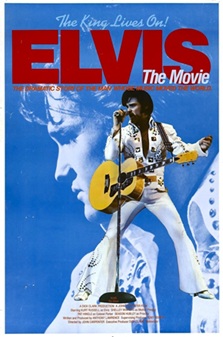
Finally, the role of Elvis is played by Kurt Russell, who was at the time still struggling to prove himself as being something more than just a Disney star.  Russell, who made his film debut kicking Elvis in the shins, throws himself into playing the role and captures the look, the swagger, and the voice of Elvis without ever descending into caricature.  His singing voice is dubbed for the performances but Russell is still convincing as the King.  It takes skill to wear that white jumpsuit without looking like you’re wearing a bad Halloween costume.  While this film showed that Russell was capable of more than just Disney films, it even more importantly launched his friendship with John Carpenter.  Escape From New York, The Thing, and Big Trouble In Little China all began with Elvis.

The movie doesn’t really tell us anything that we didn’t already know about Elvis but its entertaining and it has a big, colorful cast that include Pat Hingle as Tom Parker, Shelley Winters as Elvis’s mother, and Bing Russell (Kurt’s father) as Elvis’s father.  Priscilla is played by the beautiful Season Hubley, who married Kurt Russell shortly after filming.  (They divorced in 1983.)  Joe Mantegna, Ed Begley Jr., Ellen Travolta, and Dennis Christopher all appear in small roles and do their part to bring Elvis’s world to life.  Elvis is a fitting tribute to the King of Rock and Roll, one that gave Elvis a happy ending and started a great collaboration between a director and his star.

Horror On TV: The Hitchhiker 4.13 “Cabin Fever” (dir by Clyde Monroe)


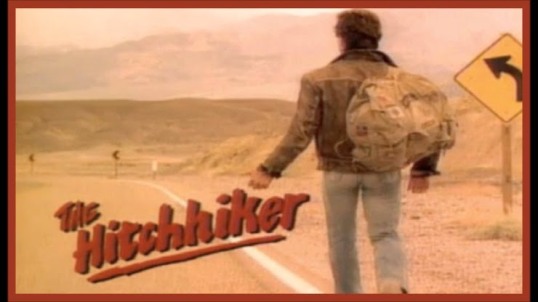
On tonight’s episode of The Hitchhiker, Michael Woods plays a cocky gigolo who spends the weekend at a cabin with an alcoholic director (Jerry Orbach) and his sultry wife (Season Hubley).  When Hubley suggests that Woods murder her husband, it seems like a standard noir-situation but it become obvious that Orbach is not quite as clueless as Woods assumed.  Who is playing which game?

This is an enjoyable episode, largely due to the performance of the wonderful Jerry Orbach.  This episode originally aired on May 12th, 1987.

Retro Television Reviews: Under the Influence (Dir by Thomas Carter)


Welcome to Retro Television Reviews, a feature where we review some of our favorite and least favorite shows of the past!  On Sundays, I will be reviewing the made-for-television movies that used to be a primetime mainstay.  Today’s film is 1986’s Under the Influence!  It  can be viewed on YouTube!

Noah Talbot (Andy Griffith) is an upstanding member of the community.  He owns a hardware store.  He has a large family.  He’s known as a gruff but folky storyteller.  He’s a deacon in his church and helps to collect the offering every Sunday.

He’s also a drunk and a bit of a bully.  His family walks on eggshells around him, fearful of setting him off on one of his benders.  He occasionally spends the night in jail, arrested for trying to drive drunk.  Even when he gets bailed out, his first instinct is to go back to the bar.  The folks at the bar love him, don’t you know.  The people at the bar are always happy to see him and never bother him about whether he’s had too much.  The people at the bar never let him down the way that he feels his family has left him down.

The members of his family each cope in their own individual way.  Noah’s wife (Joyce Van Patten) is in denial and spends a lot of her time popping pills.  His oldest daughter, Ann (Season Hubley), is driven to succeed at work and spends all of her time both hating her father and desperately hoping for his approval.  (When she tells him that she got a raise at work, he berates her for only getting a 6% increase in her salary.  “That’s just a cost of living increase!” he snaps at her.)  His eldest son, Stephen (Paul Provenza), fled to Los Angeles and is trying to make a career as stand-up comedian.  (“You’re no David Letterman,” Noah tells him.)  His youngest daughter, Terri (Dana Anderson), secretly replaces Noah’s liquor with water and food-coloring.  And his youngest son, Eddie (Keanu Reeves), is becoming an alcoholic himself.

Having read all that, you may be wondering just how exactly Keanu Reeves could be the son of Andy Griffith and it’s a fair question.  This was one Keanu Reeves’s first acting roles and he does a pretty good job in the role of Eddie.  That said, he looks so totally different from both Andy Griffith and Joyce Van Patten and the actors playing his siblings that I was half-expecting someone to mention that Eddie had been adopted.  Then again, Paul Provenza doesn’t really bear much of a resemblance to the actors playing his parents either.  Dana Anderson and Season Hubley do, at least, look like sisters.

Lack of family-resemblance aside, all of the actors in Under the Influence do a good job of inhabiting their characters.  For those who are used to seeing Andy Griffith playing friendly Southerners in reruns of The Andy Griffith Show and Matlock, it’s shocking and a little disturbing to see him playing an abusive, alcoholic jerk in Under the Influence.  Noah is someone who would not only destroy his own family to get a drink but who would then blame them for it happening in the first place.  Noah may be under the influence of alcohol but the entire family is suffering because they’re under the influence of Noah.  By the time Noah is spitting up blood and demanding that his youngest son sneak liquor into his hospital room, the viewer knows there is no hope for Noah but hopefully, his family will escape.

It doesn’t make for a particularly happy movie but, speaking as someone who grew up in an alcoholic household, I can attest that it does make for an honest portrayal of what addiction does not just to the addict but also to the people around the addict.  I cringed in sympathy through nearly the entire film, especially as I watched three of the four children react in the same ways that I did.  (Unlike Eddie, I never became much of a drinker and instead developed an aversion to alcohol in general.)  It’s a film that feels real and one’s heart aches for the entire family.  If it could happen to Andy Griffith, it could happen to anyone.

Stepfather III (1992, directed by Guy Magar)


As if Stepfather II was not bad enough on its own, 1992 saw the release of Stepfather III.

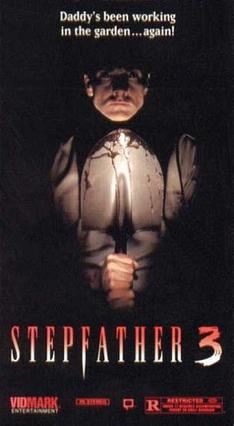
Once again, Jerry Blake/Gene Clifford manages to survive being mortally wounded at the end of the previous film.  After he recovers, he is sent to the exact same institution that he previously escaped from.  Guess what happens?  He escapes again!  Now using the name Keith, he marries Christine Davis (Priscilla Barnes) and become stepfather to her son, Andy (David Tom).  Andy is in a wheelchair.  Keith is convinced that Andy is faking his condition and keeps calling him “slugger.”  When Andy doesn’t respond, Keith prepares to move on to another single mother (Season Hubley).  But, before he can move on, Keith needs to take care of his current family.  Good thing that he has a woodchipper.

Terry O’Quinn did not return for Stepfather III.  The Stepfather is played by Robert Wightman, who looked and sounded nothing like Terry O’Quinn.  The film tries to explain it away by saying that the Stepfather got plastic surgery after he escaped from the institution but, unless the plastic surgeon was God, there’s no way that Jerry/Gene could ever have become Keith.

Stepfather III goes through the motions and even repeats the first film’s “buckle up for safety” gag.  By repeating all of the key scenes from the first (and even the second) movie, the third movie only succeeds in reminding us that The Stepfather doesn’t work without Terry O’Quinn’s performance and Joseph Ruben’s intelligent direction.  Keith becomes a standard movie slasher with a wood chipper.  He does inspire Andy to get out of his wheelchair, in a scene that will inspire more laughter than cheers.

One positive note: Season Hubley is in this movie!  Much as with Jill Schoelen in the first movie and Meg Foster in Stepfather II, this franchise had a way of attracting actresses who deserved better.

Dirty Boulevard: George C. Scott in HARDCORE (Columbia 1979)


gary loggins's avatarcracked rear viewer

Cracked Rear Viewer: “Back in the day….”

Dear Readers: (groaning) “There he goes again. Another history lesson!”

CRV: “B-but it’s important to put things in their proper historical context!”

DRs: (sigh) “We guess you’re right. Sorry.”

CRV: (beaming) “No problem! Now, like I was saying…”

Back in the day, every major urban city, and many smaller sized ones, had what was known as a “Red Light District”, where sex workers plied their trade. These streets were loaded with sex shops, peep shows, massage parlors, strip joints, and Triple-X movie palaces, with hookers and drug dealers hawking their wares. New York City had its Times Square/42nd Street area, Boston had The Combat Zone near Chinatown, and Montreal the infamous St. Catherine Street. For Los Angeles, the action was on Sunset Boulevard, and it’s into this seedy milieu that writer/director Paul Schrader plunges George C. Scott in 1979’s HARDCORE, which isn’t about…

View original post 999 more words

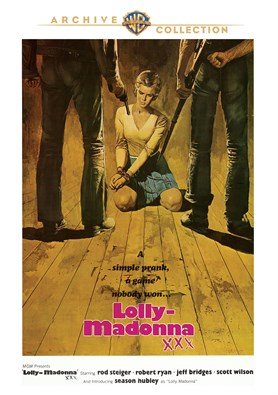
A Movie A Day #354: Lolly-Madonna XXX (1973, directed by Richard C. Sarafian)


In the backwoods of Hicksville, USA, two families are feuding.  Laban Feather (Rod Steiger, bellowing even more than usual) and Pap Gutshall (Robert Ryan) were once friends but now they are committed rivals.  They claim that the fight started when Pap bought land that once belonged to Laban but it actually goes back farther than that.  Laban and Pap both have a handful of children, all of whom have names like Thrush and Zeb and Ludie and who are all as obsessed with the feud as their parents.  When the Gutshall boys decide to pull a prank on the Feather boys, it leads to the Feathers kidnapping the innocent Roonie (Season Hubley) from a bus stop.  They believe that Roonie is Lolly Madonna, the fictional fiancée of Ludie Gutshall (Kiel Martin).  Zack Feather (Jeff Bridges), who comes the closest of any Feather to actually having common sense, is ordered to watch her while the two families prepare for all-out war.  Zack and Roonie fall in love, though they do not know that another Feather brother has also fallen in love with Gutshall daughter.  It all leads to death, destruction, and freeze frames.
Lolly-Madonna XXX is a strange film.  It starts out as a typical hicksploitation flick before briefly becoming a backwoods Romeo and Juliet and finally ending up as a heavy-handed metaphor for both the Vietnam War and the social upheaval at home.  Along with all the backwoods drama, there is a fantasy sequence where Hawk Feather (Ed Lauter) briefly imagines himself as an Elvis-style performer.  (Hawk also dresses up in Roonie’s underwear.)  Probably the most interesting thing about Lolly-Madonna XXX is the collection of actors who show up playing Feathers and Gutshalls.  Along with Steiger, Ryan, Martin, Bridges, and Lauter, everyone from Randy Quaid to Paul Koslo to Scott Wilson to Gary Busey has a role to play in the feud.  Lolly-Madonna XXX is too uneven and disjointed to really be considered a good movie but I can say that I have never seen anything else like it.

One final note: Lolly-Madonna XXX was directed by Richard Sarafian, who is best known for another early 70s cult classic, Vanishing Point.

Embracing the Melodrama Part II #59: Hardcore (dir by Paul Schrader)


Hardcore_(1979_film)

“Turn it off…turn it off…turn it off…TURN IT OFF!” — Jake Van Dorn (George C. Scott) in Hardcore (1979)

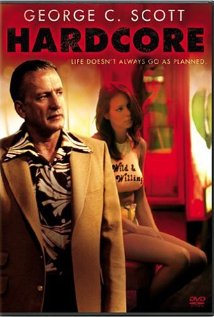
Jake Van Dorn (George C. Scott) is a businessman who lives in Grand Rapids, Michigan.  He’s a deeply religious man, a sincere believer in predestination and the idea that only an elite few has been prelected to go to Heaven.  Jake is divorced (though he occasionally tells people that his wife died) and is the father of a teenage girl named Kristen (Ilah Davis).

One of the first things that we notice about Jake is that there appears to be something off about his smile.  There’s no warmth or genuine good feeling behind it.  Instead, whenever Jake smile, it’s obvious that it’s something he does because that what he’s supposed to do.  Indeed, everything Jake does is what he’s supposed to do and he expects his daughter to do the same.

When Kristen goes to a church camp in California, she soon disappears.  Jake and his brother-in-law, Wes (Dick Sargent), fly down to Los Angeles and hire a sleazy private investigator, Andy Mast (Peter Boyle), to look for her.  A few weeks later, Andy shows Jake a pornographic film.  The star?  Kristen.

Jake is convinced that Kristen has been kidnapped and is being held captive.  Wes tells Jake that he should just accept that this is God’s will.  Andy tells Jake that, even if he does find Kristen, Jake might not want her back.  Finally, Jake tells off Wes, fires Andy, and ends up in Los Angeles himself.  Pretending to be a film producer and recruiting a prostitute named Nikki (Season Hubley) to serve as a guide, Jake searches for his daughter.

The relationship between Jake and Nikki is really the heart of the film.  For Jake, Nikki becomes a temporary replacement for his own daughter.  For Nikki, Jake appears to be the only man in the world who doesn’t want to use her sexually.  But, as Jake gets closer and closer to finding his daughter, Nikki realizes that she’s getting closer and closer to being abandoned.

Hardcore is a pretty good film, one that was shot in location in some of the sleaziest parts of 70s Los Angeles.  Plotwise, the film is fairly predictable but George C. Scott, Season Hubley, and Peter Boyle all give excellent performances.  (The scenes were Scott pretends to be a porn producer are especially memorable, with Scott perfectly capturing Jake’s discomfort while also subtly suggesting that Jake is enjoying himself more than he wants to admit.)  And, even if you see it coming from miles away, the film’s ending will stick with you.