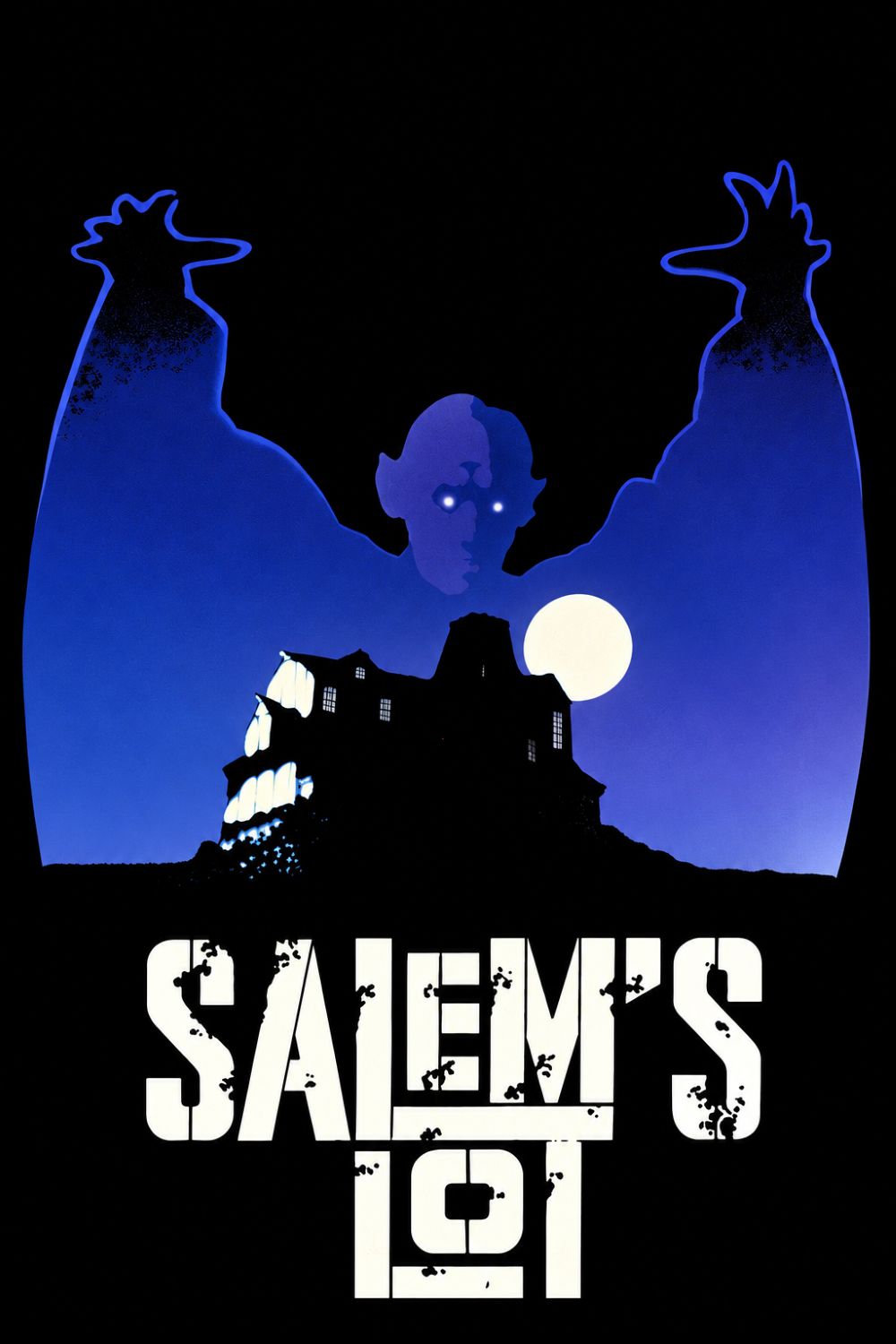
Horror Series Review: Salem’s Lot (by Tobe Hooper & Paul Monash)


“Open the window, Mark.” — Danny Glick

A town doesn’t have to look sinister to be hiding something rotten. That idea gives Tobe Hooper’s 1979 Salem’s Lot much of its staying power. Sure, there’s a creepy old house overlooking the neighborhood, but the real trouble settles into places that should feel reassuring: bedrooms, family homes, and familiar streets. Adapted from Stephen King’s novel, the miniseries turns an ordinary community into a feeding ground without losing sight of what made it ordinary in the first place. It’s uneven, occasionally stiff, and unmistakably a television production, yet its best moments deliver the sort of unease that expensive effects can’t guarantee.

The story begins with novelist Ben Mears, played by David Soul, returning to Jerusalem’s Lot, Maine. He’s drawn back partly by disturbing memories of the Marsten House, a property that seems to concentrate the town’s darkness. Unfortunately, antiques dealer Richard Straker and his mysterious partner, Kurt Barlow, have taken an interest in the place, too. Their arrival coincides with disappearances, illnesses, and deaths that suggest something worse than local bad luck. It’s familiar vampire territory, but familiarity works in its favor. We recognize the warning signs while the characters struggle to explain them away, creating tension between what the audience suspects and what the town will believe.

Hooper takes his time getting everyone into position, which is both a strength and a frustration. The early stretches contain plenty of conversation and everyday business before the supernatural threat becomes impossible to ignore. Some scenes could move faster, and a few supporting characters seem more interesting in principle than in practice. Still, the buildup matters. King’s novel isn’t simply about a vampire turning up; it’s about an entire town becoming vulnerable to him. The miniseries cannot reproduce the book’s full social landscape, but it establishes enough relationships and routines to make the destruction feel like more than a body count.

The town also isn’t an innocent paradise suddenly spoiled by an outside monster. Secrets, resentments, and unpleasant impulses already exist beneath its respectable surface. The vampires don’t invent those weaknesses so much as exploit them. This is an important part of King’s novel to preserve, and the adaptation gets the idea across even when individual subplots feel abbreviated. The Marsten House may be the obvious symbol of evil, but it doesn’t exist in isolation. Its presence above the town suggests a darkness everyone can see and would rather leave alone. That indifference makes the setting more interesting than a collection of unsuspecting victims.

Soul provides a steady center as Ben, even if his restrained performance sometimes borders on flatness. He’s convincing as a man returning to unfinished emotional business, and his seriousness keeps the increasingly bizarre events grounded. There’s little danger of him making the material feel campy. His reserve occasionally creates distance, though, especially when the story needs a stronger emotional response. Ben works best as an observer forced into action, someone whose interest in haunted history becomes considerably less comfortable once it stops behaving like material for a book. Soul conveys that shift more effectively than the warmer aspects of the character.

The romance with Susan Norton, played by Bonnie Bedelia, is less satisfying. Their relationship offers a glimpse of the life Ben might build in town, giving him something to move toward rather than simply something to investigate. That’s useful, but the scenes don’t always generate enough warmth to make the possibility compelling. Bedelia brings an appealing directness to Susan, yet the relationship can feel emotionally hurried even when the surrounding story moves slowly. You understand why it belongs without becoming invested in every exchange. A stronger connection would have given the supernatural threat a more painful personal dimension.

Lance Kerwin makes a livelier impression as Mark Petrie, a horror-loving kid whose interests become unexpectedly practical. Mark could have been a convenient walking instruction manual, but Kerwin gives him enough vulnerability to avoid that trap. He recognizes the danger without becoming immune to it. There’s also something satisfying about a character who takes the evidence seriously rather than endlessly refusing to accept it. His imagination helps him understand the situation, but it doesn’t make everything manageable. That distinction captures something essential about King’s treatment of childhood: knowing what the monster is can help you survive, but it won’t stop you from being terrified.

James Mason is the cast’s great weapon. As Straker, he brings such controlled unpleasantness that a polite conversation can feel like a threat. His calm suggests someone completely comfortable with things everyone else would find horrifying. Is he being dismissive, quietly amused, or openly contemptuous? Often, the answer seems to be all three. Mason gives the production authority whenever he appears, making civilized behavior look like something a predator has learned to imitate. He’s particularly effective because he doesn’t strain for menace. The performance lets us sense the cruelty beneath the manners without constantly dragging it into view.

That elegance becomes especially important because Barlow departs sharply from the novel. King’s vampire can speak, manipulate, and present a recognizable personality. Hooper and actor Reggie Nalder instead give us a largely silent creature, leaving Straker to handle the smooth conversation. Readers who miss the original Barlow have a fair argument: something is lost when an articulate villain becomes primarily a physical menace. Onscreen, though, the decision pays off. With his bald head, pointed ears, and jutting teeth, this Barlow recalls Nosferatu rather than a charming drawing-room vampire. He looks fundamentally unwelcome, and Hooper limits his appearances enough to keep that impression potent.

Even so, Barlow isn’t responsible for the miniseries’ most haunting imagery. That honor belongs to the children floating outside bedroom windows. These sequences create a nasty collision of recognition and wrongness: the face is familiar, but its position, movement, and expression are not. The glass offers protection, yet the request to be let inside makes that protection uncertain. Hooper turns the instinct to welcome someone you know into something dangerous. The possibility that affection might defeat caution makes these scenes more troubling than a straightforward attack. They threaten not only physical safety but the trust that makes a home feel secure.

The windows themselves are wonderfully simple horror devices. They let the characters see the danger while leaving them exposed to its attention. A wall would conceal it; an open doorway would admit it. The glass suspends the scene between those possibilities, stretching out the question of whether the barrier will hold. Mist and unnatural movement complete the effect without requiring elaborate explanations. Almost everyone understands the feeling of being awake in a dark room, looking toward a window and wishing something more substantial separated inside from outside. Hooper takes that common vulnerability and gives it a face.

Moments like these make the television restrictions feel less like a handicap than a challenge Hooper knows how to use. Without relying on graphic violence, he builds horror through faces, shadows, sound, and timing. The production doesn’t always escape its limitations: some exchanges feel conventional, transitions can be abrupt, and the pacing occasionally stalls. But the ordinary interiors also help establish the world being invaded. These look like rooms where people eat dinner, argue, and sleep. The adaptation sacrifices some of the novel’s complexity, thinning supporting characters and narrowing the town’s communal collapse, yet preserves the frightening contrast between everyday surroundings and impossible events.

What finally makes Salem’s Lot worth returning to isn’t perfect fidelity or flawless pacing. It’s the way Hooper understands what the vampires take away before they take anyone’s life: the ability to trust familiar surroundings and familiar faces. King explores that collapse more deeply, but the miniseries preserves its central nightmare with remarkable force. Its quieter stretches give the horror somewhere recognizable to live, and its strongest images make that recognition uncomfortable. By the end, the town’s comforting routines have become part of the trap. For a production working within network television’s boundaries, that’s an impressive achievement—and a more lasting scare than extra blood would have provided.
Horror On TV: The Cloning of Clifford Swimmer (dir by Lela Swift)


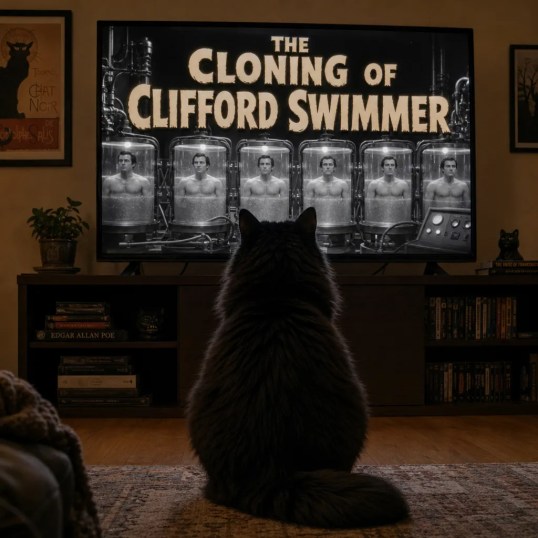
Tonight’s televised horror is The Cloning of Clifford Swimmer.  Peter Haskell stars as Clifford Swimmer, an angry jerk who is unhappy with his marriage.  He’s come up with a plan, though.  He’s going to have himself cloned and then, after leaving his clone with his family, he’ll be free to live his life.  However, Swimmer discovers that things never work that simply when it comes to creating a clone.  This is a clever story with a great twist at the end.

It originally aired on November 1st, 1974 as a part of ABC’s The Wide World of Mystery. 

Review: Enemy Mine (dir. by Wolfgang Petersen)


“Truth is truth.” – Jeriba Shigan

One of those 1980s sci-fi movies that sneaks up on you with more heart than flash, Enemy Mine turns a pulpy premise into something genuinely moving under Wolfgang Petersen’s steady hand. What starts as a straightforward tale of enemies forced together ends up digging deep into survival, prejudice, and the unlikely bonds that form when everything else falls away.

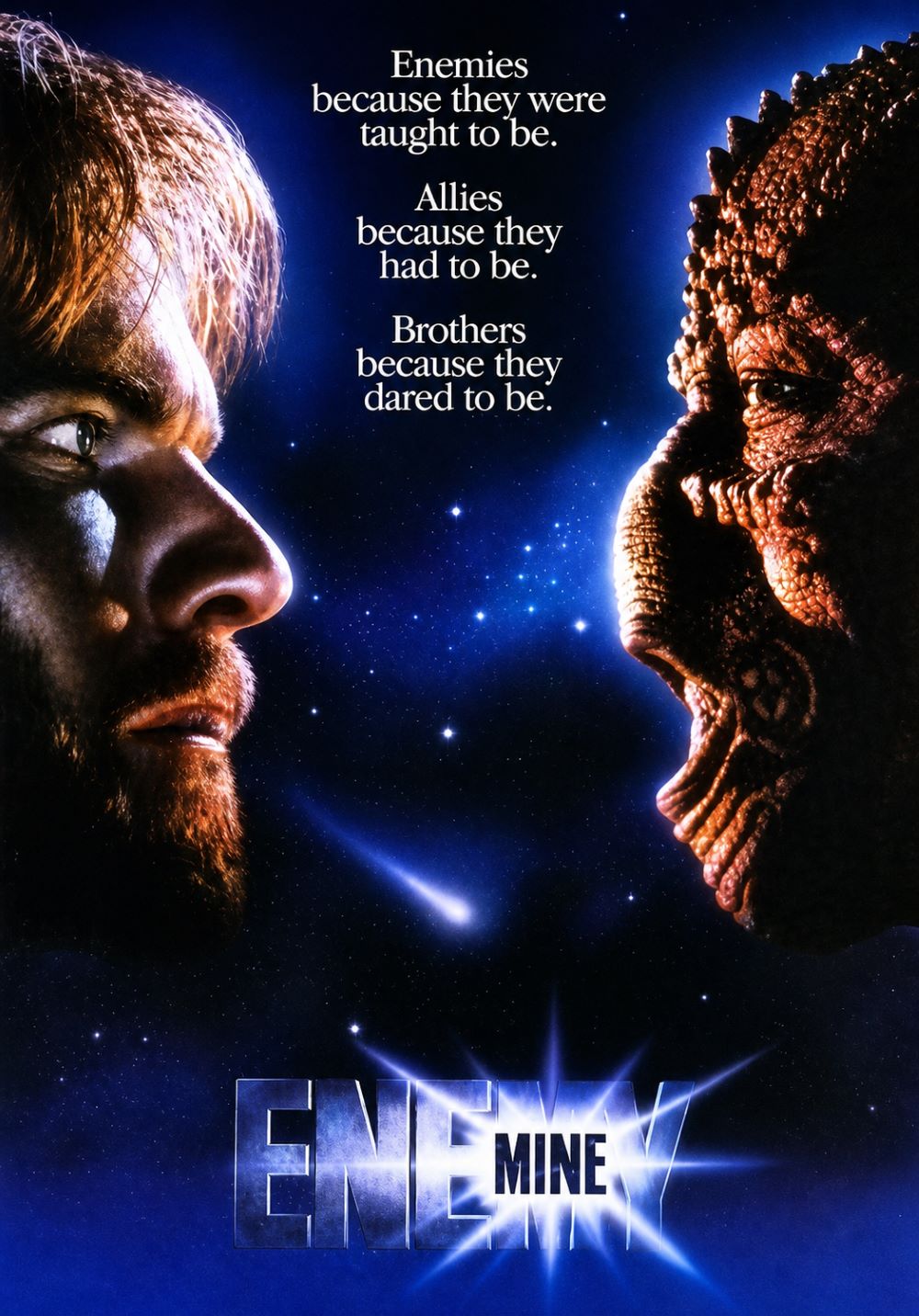
The storyline kicks off in the middle of an interstellar war between humans and the Drac, a reptilian alien species. Human pilot Willis Davidge, played by Dennis Quaid, crash-lands on a harsh, storm-battered planet after a dogfight with Drac warrior Jeriba Shigan. At first, it’s pure hate: they clash, scheme, and barely survive the planet’s brutal environment—freezing winds, toxic air, and hungry scavengers. But necessity breeds uneasy teamwork, and from there, the film charts a slow thaw into mutual respect and friendship. The plot builds to bigger stakes when Jeriba faces a pregnancy unique to their species, leading to themes of parenthood, loss, and legacy that give the story real emotional weight.

Interestingly, Enemy Mine‘s basic premise echoes John Boorman’s 1968 war drama Hell in the Pacific, where an American airman (Lee Marvin) and a stranded Japanese soldier (Toshiro Mifune) wash up on the same deserted island and must cooperate to survive after initial violent antagonism. Both films hinge on that classic setup of mortal enemies isolated together, grappling with a language barrier that heightens the tension—grunts, gestures, and improvised signals become their only bridge. But where Boorman leans into raw cynicism, ending on an ambiguous and bleak note that questions if reconciliation is even possible, Enemy Mine flips the script toward optimism, letting understanding bloom into a full-fledged familial bond.

What elevates Enemy Mine beyond typical space opera is its focus on themes that feel timeless, even if the delivery is pure ’80s cheese. The human-Drac conflict is a clear stand-in for racism and xenophobia, showing how propaganda and fear turn “others” into monsters in our minds. Davidge starts spouting all the usual human supremacist lines, while Jeriba embodies alien pride, but isolation strips away those defenses. The movie argues that empathy isn’t innate—it’s forged through shared hardship, language lessons (Davidge memorably recites Drac poetry), and vulnerability. There’s a queer undercurrent too, in the intense, almost parental intimacy that develops, challenging binary ideas of enemy and ally.

Dennis Quaid nails Davidge as a cocky everyman with a hidden soft side. He brings brash energy to the early fights—grinning through gritted teeth, improvising weapons from junk—but lets cracks show as grief and responsibility hit. His arc from hothead to devoted guardian feels earned, especially in quieter moments like teaching the Drac child human songs. Louis Gossett Jr. is even more impressive under layers of prosthetics as Jeriba, giving the alien a dignified, wry voice that cuts through the makeup. He conveys wisdom and humor without preaching, making Jeriba’s final lessons about tolerance land with quiet power. Their chemistry carries the film; you buy the shift from foes to family because these two sell every beat.

Thematically, Enemy Mine shines brightest in its exploration of fatherhood across species lines. After tragedy strikes, Davidge steps up for Jeriba’s child, Zammis, turning the story into a tale of nurture over nature. It’s about breaking cycles—passing on culture, rituals, and values not to perpetuate war, but to build peace. The film critiques blind loyalty to one’s side, showing how the real enemy might be the systems that demand it. Petersen, fresh off Das Boot, keeps the tone earnest, balancing tense survival scenes with tender rituals like Jeriba’s egg-laying or Davidge’s makeshift cradle. Sure, the effects age unevenly—those Drac faces look rubbery now—but the emotional core holds up.

Revisiting it today, Enemy Mine feels like a forgotten gem in the era of Aliens and Star Wars sequels. It dares to be intimate amid the spectacle, prioritizing character over conquest. The climax, with its courtroom-like showdown back in human space, hammers home the anti-war message without feeling forced. Quaid and Gossett elevate the script’s earnestness, making the bromance-turned-familial bond resonate. It’s not flawless—the pacing drags in spots, and some twists feel convenient—but its sincerity wins out. In a genre often about blowing stuff up, this one’s about building something human (or Drac) from the wreckage.

Enemy Mine reminds us that enemies are just strangers we haven’t met yet. Through Davidge and Jeriba’s journey, it champions understanding over ideology, legacy over vengeance. Quaid’s charisma and Gossett’s gravitas make it stick, turning a B-movie setup into a heartfelt plea for connection. If you’re into thoughtful sci-fi with soul, it’s worth a rewatch—imperfect, but profoundly kind.

Horror On TV: The Cloning of Clifford Swimmer (dir by Lela Swift)


Tonight’s televised horror is The Cloning of Clifford Swimmer.  Peter Haskell stars as Clifford Swimmer, an angry jerk who is unhappy with his marriage.  He’s come up with a plan, though.  He’s going to have himself cloned and then, after leaving his clone with his family, he’ll be free to live his life.  However, Swimmer discovers that things never work that simply when it comes to creating a clone.  This is a clever story with a great twist at the end.

It originally aired on November 1st, 1974 as a part of ABC’s The Wide World of Mystery.  Unfortunately, whoever uploaded this film to YouTube has disabled playback so you’ll have to click on the link to watch it!

Horror On The Lens: The Cloning of Clifford Swimmer (dir by Lela Swift)


Today’s horror on the lens is 1974’s The Cloning of Clifford Swimmer.

This short but entertaining sci-fi film may be a bit obscure but it’s a personal favorite of mine.  Check out my review here and then be sure to enjoy the show!

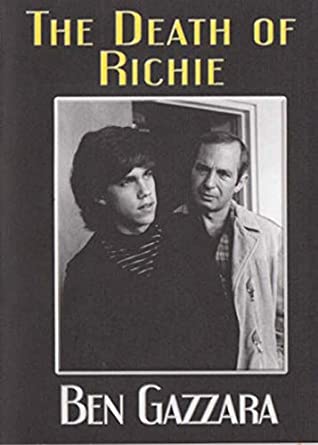
Retro Television Review: The Death of Richie (dir by Paul Wendkos)


Welcome to Retro Television Reviews, a feature where we review some of our favorite and least favorite shows of the past!  On Sundays, I will be reviewing the made-for-television movies that used to be a primetime mainstay.  Today’s film is 1977’s The Death of Richie.  It  can be viewed on YouTube!

It’s not a spoiler to tell you that this film ends with the death of a teenager named Richie.  It’s right there in the title.  We start the film knowing that Richie is going to die.  The only question is how it’s going to happen and who, if anyone, is going to be held responsible for it.

Played by Robby Benson, Richie Werner is a sensitive teenager living in the suburbs.  He’s painfully shy and he deals with that shyness by taking the drugs that are supplied to him by friends like Brick (Charles Fleischer) and Peanuts (Clint Howard, yes that Clint Howard).  His parents, George (Ben Gazzara) and Carol (Eileen Brennan), knows that Richie is struggling with both drugs and school.  However, neither one of them have a clue as to how to help him.  Carol spends most of the film silently hoping that things will somehow just magically get better.  Meanwhile, George can’t understand his son and, even worse, he makes no attempt to understand him.  George holds back his feelings and he’s obviously uncomfortable with his emotional son.  George is the type who retreats to his basement when he needs to get away from the world and yet, he can’t understand why his son needs a similar sanctuary.  When he discovers that Richie has set up a mini-bedroom in his closet, George destroys it.

Throughout the film, Richie tries to get his life straightened out.  He gets a job working at a restaurant but he quits after his friends laugh at his dorky uniform.  He tries to date a girl named Sheila (Cindy Eilbacher) but is heartbroken when he discovers that she’s going out with someone else.  When Richie tries to talk his dad, George refuses to listen.  When George tries to talk to Richie, Richie tells him to get out of his room.  Finally, after Richie crashes his car one last time, it leads to an act of shocking violence.  After all, the film is called The Death of Richie.

It’s also based on a true story, though there’s some debate over whether or not the film gets the story correct.  In real life, Richie’s named was George Richard “Richie” Diener and he lived in Long Island.  (The film appears to take place in a generic California suburb.)  Richie’s death inspired a magazine article and book, both of which inspired this film.  While I was doing research for this review, I came across a website about Richie’s death, one that argued that both the film and the book were too sympathetic to George’s version of what happened the day that Richie died.  The site has comments from many of the people who knew Richie and I recommend it to anyone who watches this film and want to know the other side of the story.

As for the film itself, it’s well-directed, intense, and, at times, rather heart-breaking.  As portrayed in the film, Richie is so desperate for some sort of approval that your heart just goes out to him.  Robby Benson is one of those actors who you come across in a lot of 70s films.  I’ve always found his performances to be a bit inconsistent and that’s certainly the case here.  He’s good when he’s allowed a quiet moment or two but there are other times when he gets so shrill that it takes you out of the reality of the film.  Ben Gazarra does a good job playing George as someone who loves his family but who is incapable of understanding his son’s pain.  Gazarra adds just a hint of ambiguity to his anger toward Richie.  Is he upset because Richie keeps getting trouble or has he reached the point where he’s just looking for an excuse to get Richie out of the family’s life?  According to the comments that I read at the blog mentioned above, both the film and the subsequent book based solely their portrayal of the last minutes of Richie’s life on George’s account.  Many people felt that there was more to what happened.

The film is a bit quick to blame all of Richie’s problems on the drugs.  While the drugs probably didn’t help, there are times when the film seems to suggesting that Richie would have been a happy, go-lucky kid if he had never taken that first Seconal.  Watching the film today, it’s obvious that there was a lot more going on with Richie than just weed and pills and it’s also obvious that calling the cops having them search his room while he watched was not the solution either.  Richie needed someone to talk to and, in the film at least, that was apparently the one thing that he could not get.  As the song says, things get a little easier once you understand.

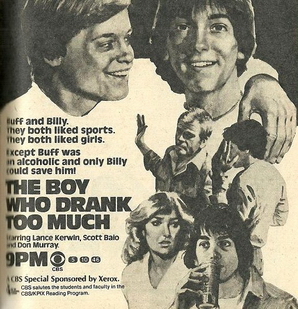
The Boy Who Drank Too Much (1982, directed by Jerrold Freedman)


“He wet his pants on my mother’s rug!”

That’s what happens when you’re the boy who drinks too much.

In this made for television social problem film, a young Scott Baio plays Buff Saunders.  Buff is a high school student, a star hockey player, and an alcoholic.  He drinks because he grew up with an alcoholic father (played by Don Murray) and he learned early that drinking could make him feel confident whenever he was feeling insecure.  When Buff’s drinking gets out of control and he starts getting into fights, blowing off school, and seriously injuring himself, he is sent to a rehab center, one that is out of town so that the hockey team doesn’t find out that he’s an alcoholic.  His best friend, Billy (Lance Kerwin), rides the bus every day so that he can be there to support Buff but Buff’s own father cannot bring himself to come down there.  At first, Buff refuses to admit that he has a problem and won’t even speak up in the group meetings.  Eventually, even Billy starts to get tired of Buff’s attitude and his refusal to admit that his drinking has gotten out of control.  When Billy says that he’s not going to spend his birthday watching Buff sulk at rehab, Buff is forced to take a look at what his life has become.

The Boy Who Drank Too Much was basically an after school special that got the primetime movie treatment.  Scott Baio was in a lot of these movies, which is one reason why it is sometimes tempting to laugh at them today.  Baio was never really a bad actor but he was one of those actors who came across as being smarmy even when he was supposed to be playing a sympathetic or sincere character.  That’s especially true in The Boy Who Drank Too Much.  Even when Buff finally seems to be serious about controlling his drinking, you still never believe his sincerity.  When he apologizes for all the harm that his drinking has caused, he still seems like he’s waiting for the chance to grab the flask that he’s hidden somewhere in the room.  For the most part, though, that works for the character.  Baio’s playing an alcoholic who, for the majority of the movie, just tells people what he thinks they want to hear to get them off his back.

The movie does a good job of showing how a problem like alcoholism can be passed down through the generations.  Lance Kerwin and especially Don Murray both give good performances as the two people closest to Buff.  Murray appeared in and helped to produce a lot of social problem films like this one and it’s obvious that his heart was really in his performance here.  Ed Lauter took a break from appearing in every single Charles Bronson film to play Kerwin’s father and the lovely Toni Kalem, who was one of the most underrated actresses of the era, appears as well.  For a television production that’s trying very hard to be socially relevant, The Boy Who Drank Too Much isn’t bad.

Horror On The Lens: The Cloning of Clifford Swimmer (dir by Lela Swift)


Today’s horror on the lens is 1974’s The Cloning of Clifford Swimmer.

This short but entertaining sci-fi film may be a bit obscure but it’s a personal favorite of mine.  Check out my review here and then be sure to enjoy the show!

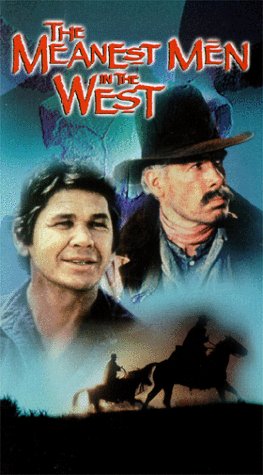
A Movie A Day #142: The Meanest Men In The West (1978, directed by Sam Fuller and Charles S. Dubin)


The Meanest Men In The West may “star” Charles Bronson and Lee Marvin and Sam Fuller may be credited as being one of the film’s two directors but don’t make the same mistake that I made.  Don’t get too excited.

There was once a TV western called The Virginian.  Starring James Drury as a ranch foreman, The Virginian ran for nine seasons on NBC.  A 1962 episode, which was written and directed by Sam Fuller, featured Lee Marvin as a sadistic outlaw who kidnapped The Virginian’s employer, a judge played by Lee J. Cobb.  Five years later, another episode features Charles Bronson as a less sadistic outlaw who kidnapped the Judge’s daughter.

The Meanest Men In The West mixes scenes from those two episode with western stock footage, a bank robbery that originally appeared in The Return of Frank James, an intrusive voice-over, and an almost incoherent prologue, all in order to tell an entirely new story.  Now, Charles Bronson and Lee Marvin are brothers and rivals.  After Marvin snitches on Bronson’s plan to rob a bank, Bronson blames his former friend, The Virginian.  In order to get the Virginian to come to his hideout, Bronson kidnaps Cobb’s daughter.  The Virginian manages to convince Bronson that he didn’t betray him, just to arrive back at the ranch and discover that Cobb has been kidnapped.  Meanwhile, Bronson and his gang set off after Marvin and his gang.  It ends with Charles Bronson, in 1967, shooting at Lee Marvin, who is still in 1962.

The Meanest Men In The West is so clumsily edited that the same shot of Charles Bronson holding a gun is spliced into a dozen different scenes.  Filmed on different film stocks, the Bronson scenes and the Marvin scenes look nothing alike and, since the two episodes were filmed five years apart, James Drury literally ages backwards over the course of the film.

The Meanest Men In The West is for Charles Bronson and Lee Marvin completists only.  I think Bronson and Marvin are two of the coolest individuals who ever existed and even I had a hard time making it through this one.  If you do watch it, keep an eye out for a young Charles Grodin, thoroughly miscast as a tough outlaw.