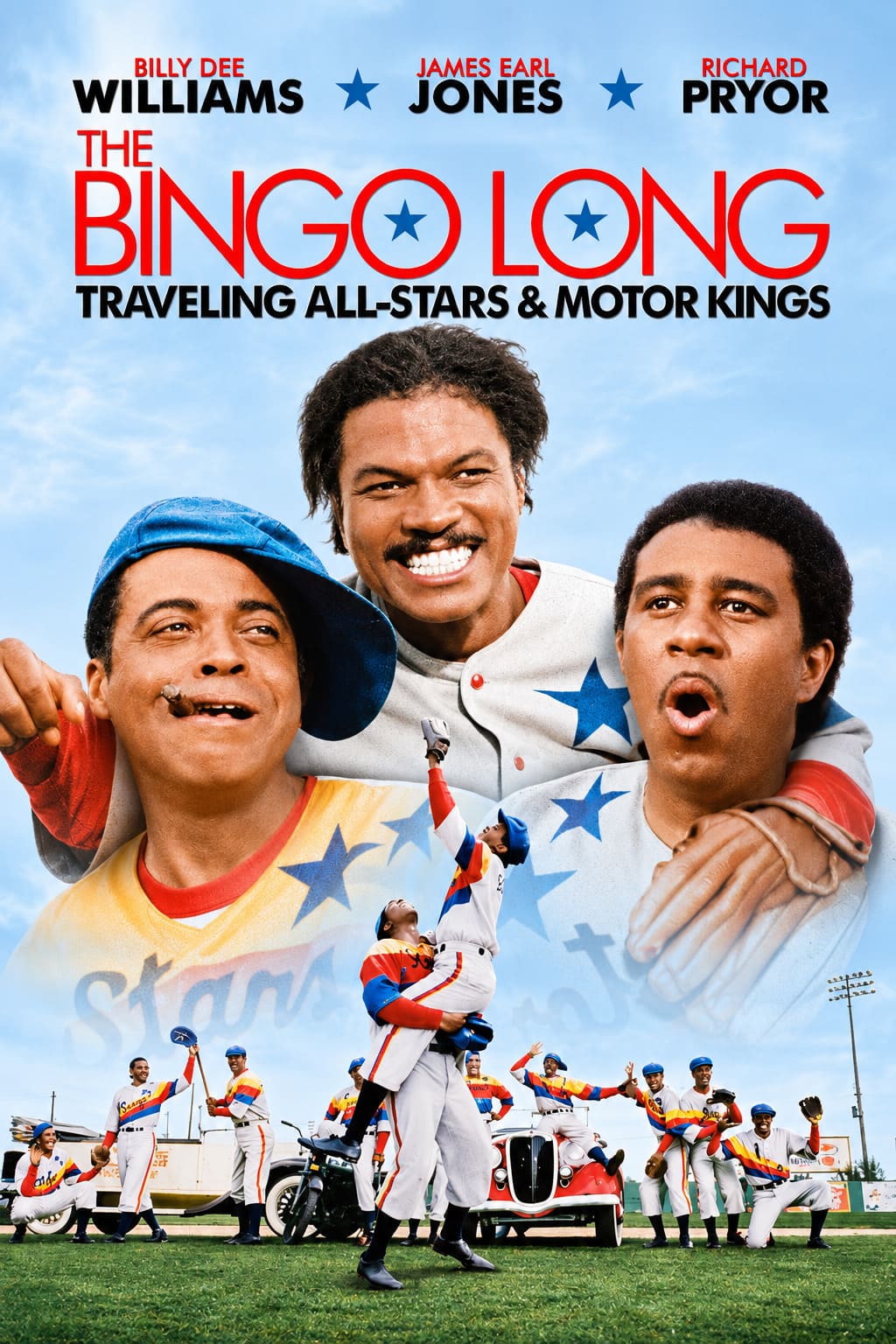
Film Review: The Bingo Long Traveling All-Stars & Motor Kings (dir. by John Badham)


“You put it in the plate, I put it on the fence.” — Leon Carter

The Bingo Long Traveling All-Stars & Motor Kings (1976), directed by John Badham, is a breezy baseball comedy with more on its mind than winning games. Set in the world of 1930s Negro League baseball, it follows star pitcher Bingo Long as he breaks away from an exploitative owner and builds a traveling club. Billy Dee Williams gives Bingo an easy confidence, James Earl Jones brings warmth to slugger Leon Carter, and Richard Pryor adds comic mischief as Charlie Snow. Together, they make this a lively underdog story about talented Black players trying to take control of their working lives.

The setup leaves room for the personalities to take over. Bingo is tired of making money for someone who treats him as replaceable, so he recruits other players to form an independent team. Their plan sounds appealing: travel, play ball, attract crowds, and split the proceeds. Making it work is another matter. Their former employers don’t want to lose their stars, and freedom comes with financial headaches. The story gives its familiar sports-movie premise a twist by making the players’ struggle about who benefits from their abilities, not simply who wins the next game.

The film’s look at the Negro Leagues is central to that struggle. This isn’t a comprehensive history, and its fictional team shouldn’t be mistaken for a documentary portrait. Instead, the movie presents a baseball world filled with skilled players, colorful personalities, demanding owners, and enthusiastic spectators. It treats Black baseball as a sporting culture with its own attractions and tensions, rather than merely a waiting room for acceptance into white professional baseball. That perspective gives the players’ work value on its own terms, even as segregation restricts their opportunities.

Just as importantly, the players aren’t reduced to noble victims. They’re ambitious, funny, proud, argumentative, and sometimes reckless. Their athletic ability is only one part of what makes them interesting. They also have to entertain crowds, negotiate bad arrangements, and figure out how to make a living in circumstances stacked against them. The movie’s affection for these men comes through in their banter and disagreements. It recognizes that surviving this baseball world requires more than a strong arm or a powerful swing; it also takes ingenuity, persistence, and people willing to stick together.

Williams makes Bingo a leader worth following without turning him into a flawless hero. His smile and swagger suggest a man who can sell an idea before he has settled every practical detail. That confidence gets the team moving, but it also creates problems when his instincts run ahead of everyone else’s concerns. He enjoys the spotlight, and Williams makes that vanity part of his appeal rather than an irritating distraction. Bingo’s desire for independence feels personal and believable, especially because he isn’t always certain what independence will require.

Jones provides an excellent counterweight as Leon. His steadier presence gives the film emotional weight without slowing its playful rhythm. Where Bingo gravitates toward spectacle and individual initiative, Leon is more concerned with the group and what the players owe one another. Their differences give the story something to explore beyond whether the team can beat its opponents. Both men want dignity and a fair return for their talent, but they don’t always agree about how to get there. The performances make those disagreements feel like conversations between teammates, not speeches inserted to explain a theme.

Pryor supplies a more mischievous energy as Charlie, whose attempts to maneuver around baseball’s racial barriers produce some of the broadest comedy. There’s a sting beneath the joke: being talented doesn’t mean he can simply present himself and expect a fair chance. Pryor keeps the material moving through his timing and restless confidence. The humor occasionally feels stretched, but Charlie’s schemes also underline how absurd the restrictions are. He’s another player forced to think beyond the game itself, looking for a way through doors that his ability should already have opened.

Badham makes the baseball entertaining without requiring viewers to know every rule. The team’s showmanship turns games into public performances, with crowd reactions and comic timing becoming almost as important as the score. This suits a story about players who must persuade people to pay attention wherever they stop. The on-field antics also let the movie celebrate their skill without becoming overly reverent. These men can be impressive athletes and shameless entertainers at the same time. The film is especially enjoyable when their confidence, coordination, and competitive instincts all come together.

The loose road-movie structure has drawbacks. Some stops are funnier than others, and the cheerful mood occasionally softens the economic exploitation and racial exclusion shaping the players’ lives. Anyone looking for a detailed examination of the Negro Leagues may find that the film raises more questions than it investigates. Still, its warmth is earned by the cast and its interest in the men beneath the uniforms. The Bingo Long Traveling All-Stars & Motor Kingssucceeds as an easygoing sports comedy whose real stakes extend beyond the scoreboard. Winning matters, but getting to decide how to live and work matters more.
The TSL Horror Grindhouse: Night of the Living Dead (dir by Tom Savini)


The dead are coming back to life! When her brother, Johnny (Bill Moseley), is killed by a zombie at the cemetery, Barbara (Patricia Tallman) flees and makes her way to an isolated farmhouse. It’s there that she’s joined by Ben (Tony Todd), a traveling salesman who is also fleeing from the zombies. Also hiding out at the farmhouse are young lovers Tom (William Butler) and Judy (Katie Finneran) and Harry (Tom Towles), his wife (McKee Anderson), and daughter (Heather Mazur). While the living dead lay siege to the house, Ben and Harry argue over whether it would be better to hide in the basement or to stay upstairs. Even in the face of an unimaginable crisis, the living just can’t stop bickering.

If the plot sounds familiar, it should. Unfortunately, this is not George Romero’s original Night of the Living Dead. This is a remake that came out in 1990. Apparently, when the original film was made, Romero forgot to include a copyright notice on the film and that, combined with a long court battle over the film’s profits, meant that he made next to no money off of its subsequent popularity. (In Romero’s defense, no one originally suspected that his low-budget zombie movie would go on to become a cultural phenomenon.) In the late 80s, when Romero heard that Menahem Golan was considering doing a remake, Romero contacted him and signed on to write the script and serve as an executive producer. Romero’s plan was to establish his copyright over the material while heading off a potentially terrible remake. And, of course, Romero hoped to finally make some money off of the whole thing. Tom Savini was originally brought in to do the special effects but Romero subsequently persuaded him to direct the film. Savini later said that directing the film was a nightmare. While Romero was supportive of Savini’s ideas for the film, the other producers were not and Savini estimated that only 40% of the film was his vision. Once filming was finished, Savini was contractually obligated to cut some of the film’s most gory moments to get an R rating.

Unfortunately, the remake doesn’t really work. Shooting the film in color robs the film of the harsh atmosphere and the almost documentary-style realism that made the first film such a nightmare-inducing success. What was once subtext is made explicit by the film’s script. As opposed to ending with a series of increasingly grainy still shots that bring to mind the records of real-life war atrocities, this film features Barbara watching a trigger-happy posse and literally saying that the living are just like the dead.

The biggest update is that Barbara no longer spends the entire movie in a state of shock. Instead, she grabs a rifle and turns out to be the best shot in the movie. Of course, after spending 90 minutes watching her shoot zombies in the head, it’s a bit hard to take seriously the idea that she would be offended by the sight of the posse. The remake tries to make Barbara a stronger character but then they cast someone who gave an absolutely terrible, one-note performance in the role, which kind of negates the whole thing. In the original film, Ben shoots Harry and it’s a sad moment because it shows that people cannot work together. In the remake, Barbara shoots Ben and we’re supposed to cheer because it’s a 90s film. Beyond that, though, one of the reasons why the first Night of the Living Dead was so effective is because Barbara had the reaction that we all secretly suspect we would have. I may not be happy to admit it but if the dead did come back to life, I’d probably be catatonic as well. Most people would. Not everyone is going to turn into an action hero whenever a crisis breaks out. I would be totally worthless in the face of a zombie apocalypse and so would you. The original Night of the Living Dead had the courage to admit that. The remake does not and that’s why the remake is ultimately just another zombie film.

(Of course, one could argue that by taking the original and spelling out its subtext and making Barbra into a stereotype, this film actually predicted everything from American Horror Story to Mike Flanagan’s Carrie.)

When it comes to the Dead, stick with the Romero originals.

4 Shots From 4 Films: Special Francis Ford Coppola Edition


4 (or more) Shots From 4 (or more) Films is just what it says it is, 4 (or more) shots from 4 (or more) of our favorite films. As opposed to the reviews and recaps that we usually post, 4 (or more) Shots From 4 (or more) Films lets the visuals do the talking.

Today is Francis Ford Coppola’s birthday! Coppola is a bit of a controversial figure among some film scholars. While everyone agrees that, with the first two Godfathers, he directed two of the greatest films of all time (and some people would include Apocalypse Now on that list as well) and that he was one of the most important directors of the 70s, his post-Apocalypse Now career is often held up as a cautionary tale. Some say that Coppola’s career suffered because of his own excessive behavior and spending. Others argue that he was treated unfairly by a film industry that resented his refusal to compromise his vision and ambitions. Personally, my natural instinct is to always side with the artist over the executives and that’s certainly the case with Coppola. Coppola has only completed five films since the start of this current century and three of them were not widely released. Say what you will about the films themselves, that still doesn’t seem right. For the record, I liked Megalopolis when I saw it but I don’t remember much about it now.

Regardless of how one views his latter career, Coppola is responsible for some of the best and most important films ever made. And today, on his birthday, it’s time for….

4 Shots From 4 Francis Ford Coppola Films

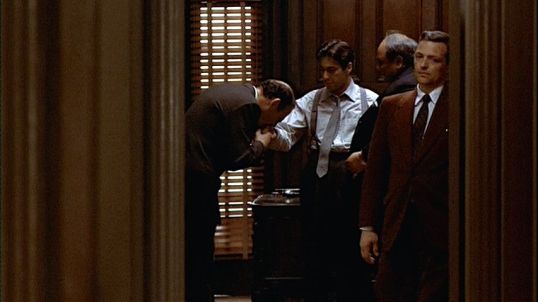
The Godfather (1972, dir by Francis Ford Coppola, DP: Gordon Willis)
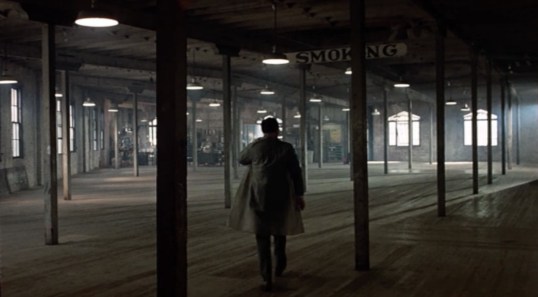
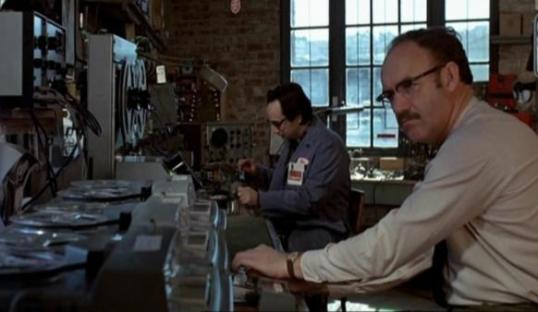
The Conversation (1974, dir by Francis Ford Coppola, DP: Bill Butler)
The Godfather Part II (1974, dir by Francis Ford Coppola, DP: Gordon Willis)
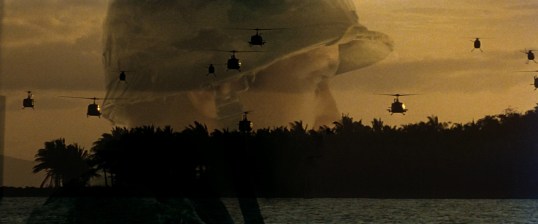
Apocalypse Now (1979, dir by Francis Ford Coppola, DP: Vittorio Storaro)

6 Shots From 6 Films: Special Steven Spielberg Edition


4 Shots From 4 Films is just what it says it is, 4 shots from 4 of our favorite films. As opposed to the reviews and recaps that we usually post, 4 Shots From 4 Films is all about letting the visuals do the talking.

Today, we wish a happy birthday to director Steven Spielberg!  It’s time for….

6 Shots From 6 Films

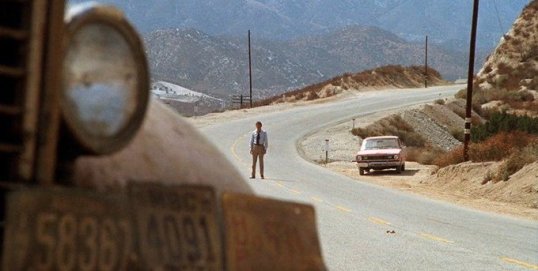
Duel (1971, dir by Steven Speilberg, DP: Jack Marta)

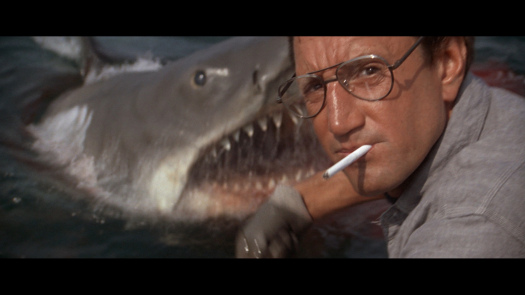
Jaws (1975, dir. by Steven Spielberg, DP: Bill Butler)

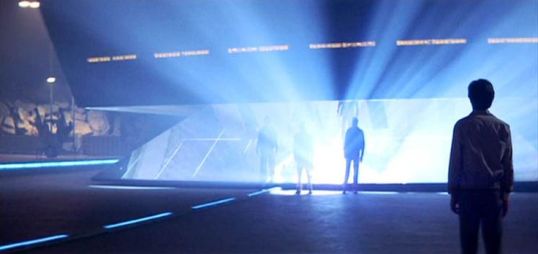
Close Encounters of the Third Kind (1977, dir by Steven Spielberg, DP: Vilmos Zsigmond)

1941 (directed by Steven Spielberg, DP: William Fraker)

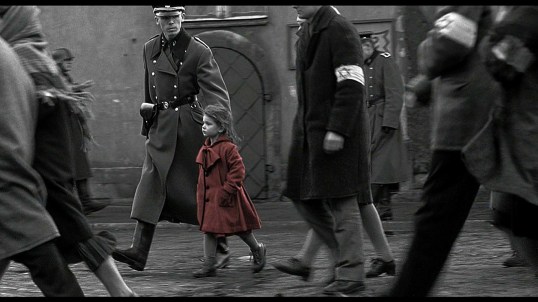
Schindler’s List (1993, dir by Steven Spielberg, DP: Janusz Kamiński)

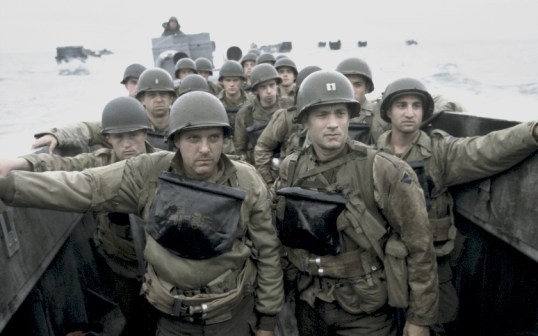
Saving Private Ryan (1998, dir by Steven Spielberg, DP: Janusz Kamiński)


4 Shots From 4 Films: Special 1974 Edition


4 Or More Shots From 4 Or More Films is just what it says it is, 4 shots from 4 of our favorite films. As opposed to the reviews and recaps that we usually post, 4 Shots From 4 Films lets the visuals do the talking!

Today, we pay tribute to a great year in cinema.  It’s time for….

4 Shots From 4 1974 Films

The Godfather Part II (1974, dir by Francis Ford Coppola, DP: Gordon Willis)

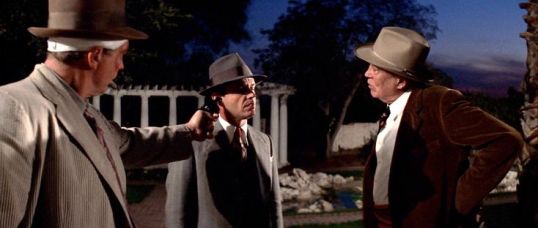
Chinatown (1974, dir by Roman Polanski, DP: John A. Alonzo)

The Conversation (1974, dir by Francis Ford Coppola, DP: Bill Butler and Haskell Wexler)

The Texas Chainsaw Massacre (1974, dir by Tobe Hooper, DP: Daniel Pearl)

4 Shots From 4 Films: Special Sylvester Stallone Edition


4 Or More Shots From 4 Or More Films is just what it says it is, 4 shots from 4 of our favorite films. As opposed to the reviews and recaps that we usually post, 4 Shots From 4 Films lets the visuals do the talking!

Today, the Shattered Lens wishes a happy birthday to Sylvester Stallone!  It’s time for….

4 Shots From 4 Sylvester Stallone Films

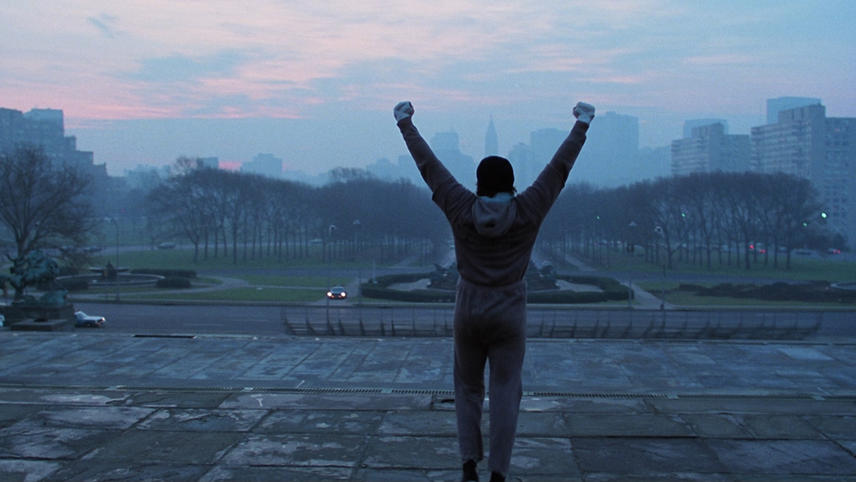
Rocky (1976, dir by John G. Avildsen, DP: James Crabe)

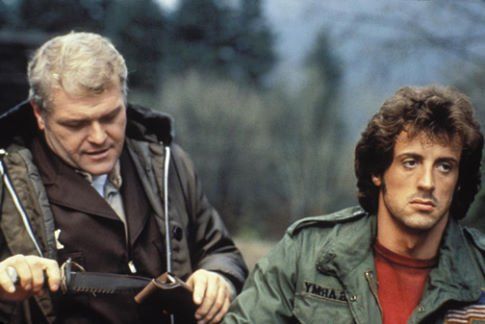
First Blood (1982, dir by Ted Kotcheff, DP: Andrew Laszlo)

Rocky III (1982, dir by Sylvester Stallone, DP: Bill Butler)

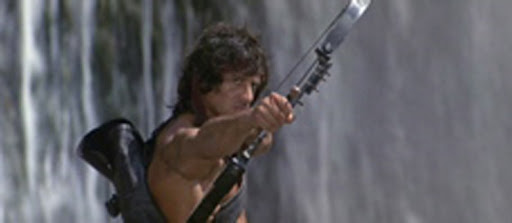
Rambo: First Blood Part II (1985, dir by George Pan Cosmatos, DP: Jack Cardiff)


4 Shots From 4 Films: Special Francis Ford Coppola Edition


4 (or more) Shots From 4 (or more) Films is just what it says it is, 4 (or more) shots from 4 (or more) of our favorite films. As opposed to the reviews and recaps that we usually post, 4 (or more) Shots From 4 (or more) Films lets the visuals do the talking.

Today is Francis Ford Coppola’s birthday! Coppola is a bit of a controversial figure among some film scholars. While everyone agrees that, with the first two Godfathers, he directed two of the greatest films of all time (and some people would include Apocalypse Now on that list as well) and that he was one of the most important directors of the 70s, his post-Apocalypse Now career is often held up as a cautionary tale. Some say that Coppola’s career suffered because of his own excessive behavior and spending. Others argue that he was treated unfairly by a film industry that resented his refusal to compromise his vision and ambitions. Personally, my natural instinct is to always side with the artist over the executives and that’s certainly the case with Coppola. Coppola has only completed five films since the start of this current century and three of them were not widely released. Say what you will about the films themselves, that still doesn’t seem right. For the record, I like Megalopolis.

Regardless of how one views his latter career, Coppola is responsible for some of the best and most important films ever made. And today, on his birthday, it’s time for….

4 Shots From 4 Francis Ford Coppola Films

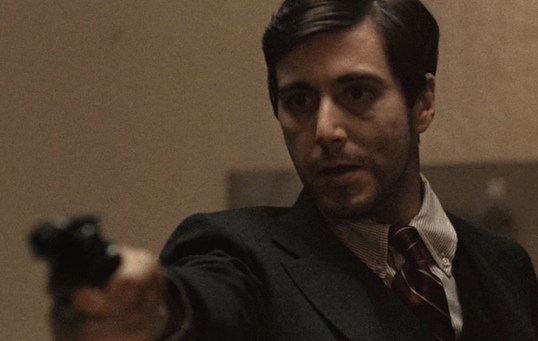
The Godfather (1972, dir by Francis Ford Coppola, DP: Gordon Willis)
The Conversation (1974, dir by Francis Ford Coppola, DP: Bill Butler)
The Godfather Part II (dir by Francis Ford Coppola, DP: Gordon Willis)
Apocalypse Now (1979, dir by Francis Ford Coppola, DP: Vittorio Storaro)

4 Shots From 4 Films: Special 1975 Edition


4 Or More Shots From 4 Or More Films is just what it says it is, 4 shots from 4 of our favorite films. As opposed to the reviews and recaps that we usually post, 4 Shots From 4 Films lets the visuals do the talking!

Today, we pay tribute to the year 1975.  It’s time for….

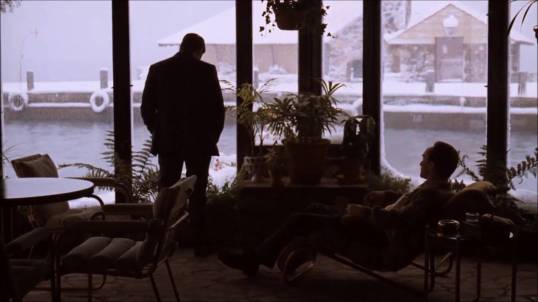
4 Shots From 4 1975 Films

One Flew Over The Cuckoo’s Nest (1975, dir by Milos Forman, DP: Haskell Wexler and Bill Butler)

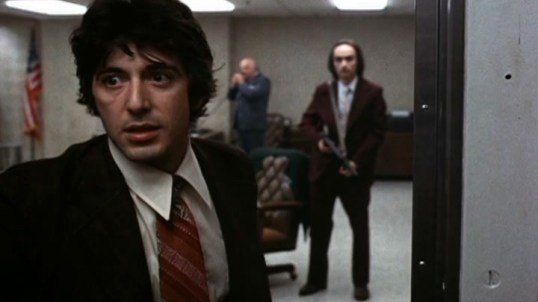
Dog Day Afternoon (1975, dir by Sidney Lumet, DP: Victor J. Kemper)

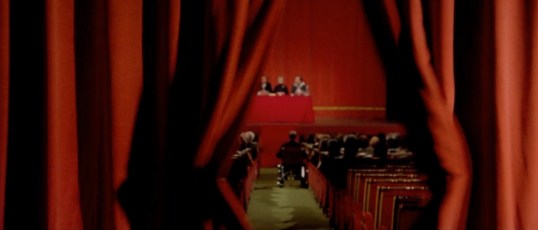
Deep Red (1975, dir by Dario Argento, DP: Luigi Kuveiller)

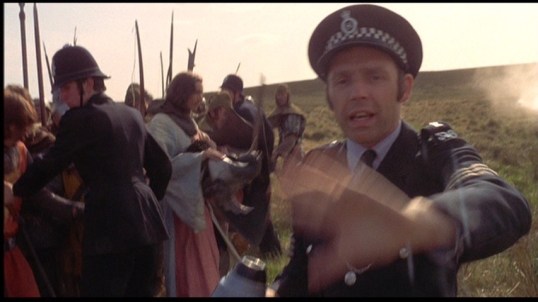
Monty Python and the Holy Grail (1975, dir. Terry Gilliam & Terry Jones, DP: Terry Bedford)

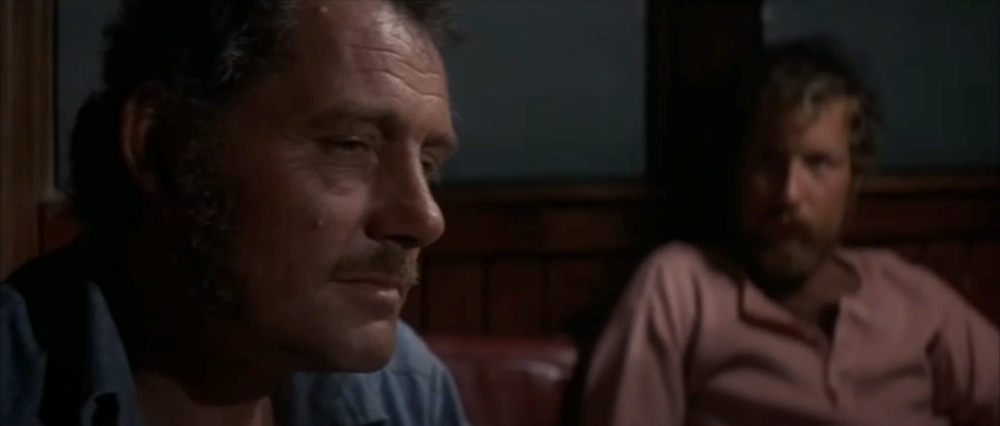
Scenes I Love: Jaws


“You know the thing about a shark, he’s got…lifeless eyes, black eyes, like a doll’s eye. When he comes at ya, doesn’t seem to be livin’. Until he bites ya and those black eyes roll over white.” — Quint

People have blamed Spielberg and his breakout film, Jaws, as the cause of the blockbuster mentality that studios have had since this film came out. Studios and producers wanted to recreate the ultra-successful box-office numbers of Jaws. Despite the fact that this film was modestly budgeted, people nowadays who think they’re film experts point to it as the culprit. They’ve called it the film that begun the dumbing down of Hollywood when creativity was sacrificed for profit.

Why did I pick a scene from this film as a favorite? I picked this particular scene because it’s one reason why the film succeeded and made people come back again and again. It’s a scene that perfectly captures one reason why we love to see films in a communal setting. We want to share the same experience and emotions this scene brought up from the pit of each audience’s psyche.

Jaws didn’t ruin the creativity in filmmaking. I like to think that this one film was a filmmaker at his most creativie (shark wouldn’t work properly so Spielberg kept it off-screen which just added to the terror and tension in the film). This very scene goes down as one of the greatest film monologues. It sets up the danger the trio faces with some anecdotal evidence from the very person who survived the experience, but who might have become unhinged because of it. I love the look of frozen terror on the face of Richard Dryefuss’ character as he listens to Robert Shaw tell the story of the ill-fated journey of the U.S.S. Indianapolis.

This latest “Scenes I Love” is why I consider Spielberg one of the best filmmaker of his generation and probably beyond that.

4 Shots From 4 Films: Special Francis Ford Coppola Edition


4 (or more) Shots From 4 (or more) Films is just what it says it is, 4 (or more) shots from 4 (or more) of our favorite films. As opposed to the reviews and recaps that we usually post, 4 (or more) Shots From 4 (or more) Films lets the visuals do the talking.

Today is Francis Ford Coppola’s birthday! Coppola is a bit of a controversial figure among some film scholars. While everyone agrees that, with the first two Godfathers, he directed two of the greatest films of all time (and some people would include Apocalypse Now on that list as well) and that he was one of the most important directors of the 70s, his post-Apocalypse Now career is often held up as a cautionary tale. Some say that Coppola’s career suffered because of his own excessive behavior and spending. Others argue that he was treated unfairly by a film industry that resented his refusal to compromise his vision and ambitions. Personally, my natural instinct is to always side with the artist over the executives and that’s certainly the case with Coppola. Coppola has only completed four films since the start of this current century and three of them were not widely released. Say what you will about the films themselves, that still doesn’t seem right. This year will bring us a new Coppola film, Megapolis. I know that we’re all hoping the best.

Regardless of how one views his latter career, Coppola is responsible for some of the best and most important films ever made. And today, on his birthday, it’s time for….

4 Shots From 4 Francis Ford Coppola Films

The Godfather (1972, dir by Francis Ford Coppola, DP: Gordon Willis)
The Conversation (1974, dir by Francis Ford Coppola, DP: Bill Butler)
The Godfather, Part II (1974, dir by Francis Ford Coppola, DP: Gordon Willis)
Apocalypse Now (1979, dir by Francis Ford Coppola, DP: Vittorio Storaro)